



The crack is not always the problem.
Neither is the sagging floor.
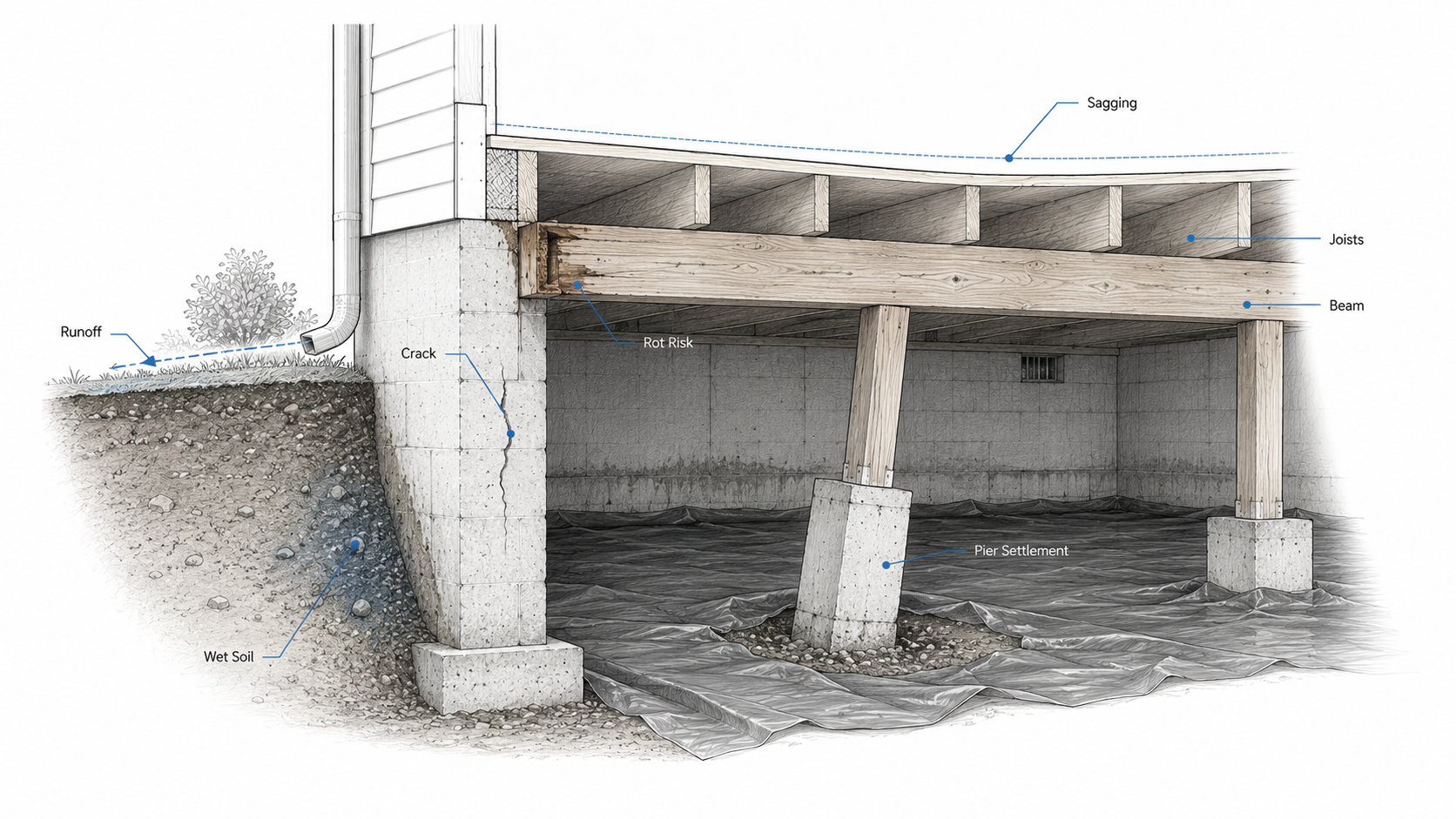
In a crawl space, the visible damage is usually where the failure shows up, not where it started. Water may be sitting under the house. The soil may be soft. A beam may be wet. A pier may be leaning. A post may be carrying weight on a weak pad.
Fix the wrong part first and the money goes fast.
Read the crawl space in order: water, soil, footing or pad, pier or post, beam, joist, then floor.
The repair gets clearer when the cause is found before the patch or jack goes in.
Name the failure before pricing the fix
"Foundation repair" is too broad to price honestly.
In a crawl space, that phrase can mean a cracked block wall, a settled pier, a soft beam, sagging joists, a sinking post, a wet sill, a poor footing, or floor framing that has been slowly damaged by moisture. Those failures do not behave the same way.
A crack may leak. A wet sill can rot. A weak beam can sag. A settled pier can shift the load into framing that was never meant to carry it. A damp crawl can feed mold and keep weakening the same repair area.
The expensive mistake is treating all of that as one contractor category.
Before repair, separate four things: soil, water, structure, and wood condition. If those are still mixed together, the quote may sound confident while the cause is still loose.
Crack, sag, rot, or settlement?
| What you see | Likely failure area | Physical consequence | Check before repair |
|---|---|---|---|
| Foundation wall crack | Wall movement, shrinkage, water pressure, soil pressure, or old stable cracking | Leakage, wall movement, trapped water, or failed patching if the cause remains | Crack pattern, width, moisture, exterior grade, and whether it is changing |
| Sagging floor above the crawl | Weak beam, damaged joists, bad post spacing, settled pier, or poor bearing | Sagging, cracked finishes, uneven floors, and poor load transfer | Joists, beam line, posts, piers, bearing points, and moisture damage |
| Soft or stained wood near the perimeter | Wet sill, rim damage, joist-end decay, plumbing leak, or exterior water entry | Rot, mold, weakened bearing, and repeat framing failure | Water source before wood replacement |
| Leaning or settled pier | Weak footing, poor soil bearing, bad installation, or moisture-softened soil | Load shifting, floor movement, and wasted money if another post is added blindly | Base condition, footing, load path, and soil moisture |
A quick fix under the lowest part of the floor may be the right repair.
It may also be a guess with hardware attached.
Water gets a vote
If the crawl is damp, muddy, or wet after rain, do not isolate the structural problem yet.
Water changes the repair.
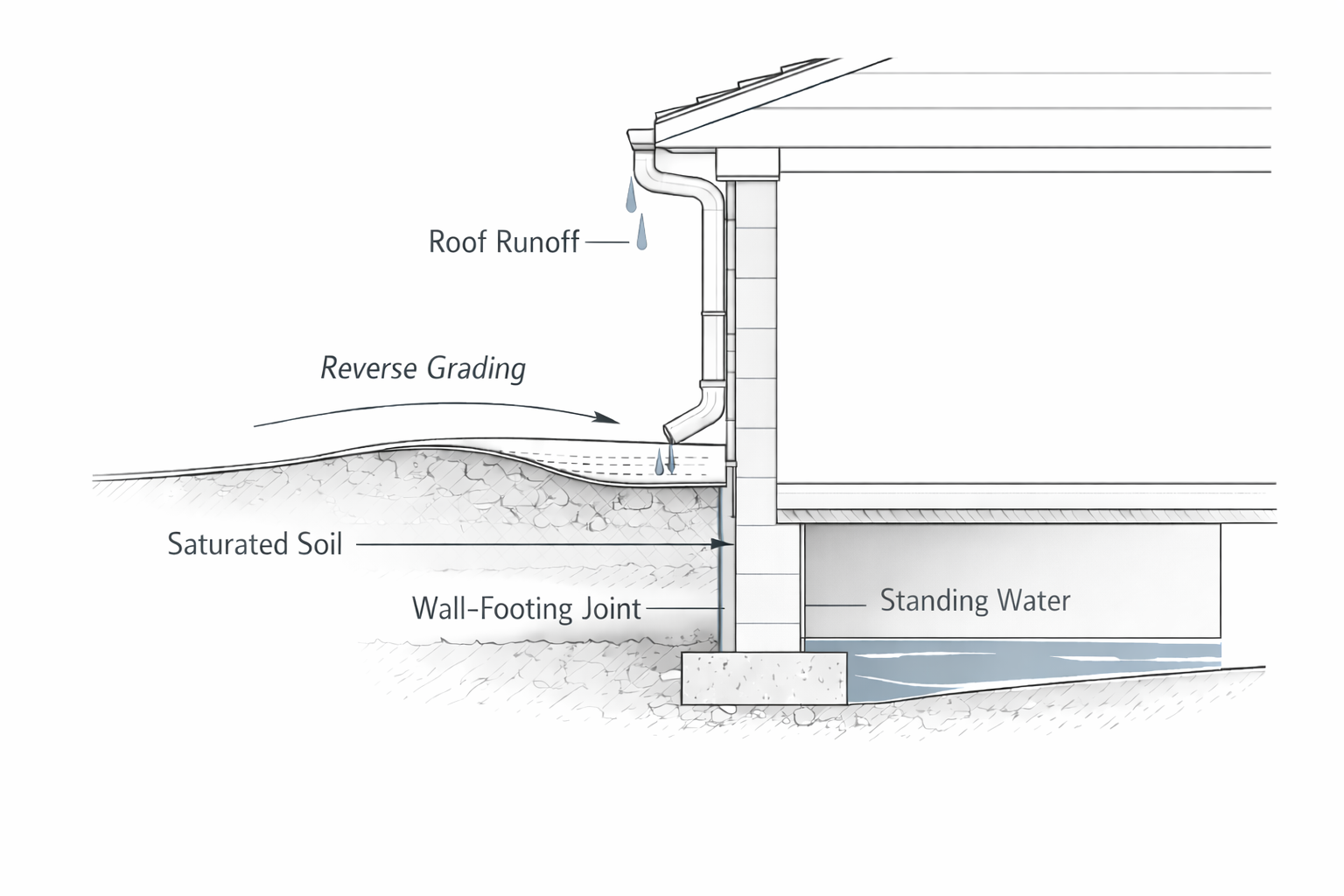
It softens soil. It corrodes steel connectors and jack hardware. It feeds rot at joist ends and sill areas. It keeps insulation wet, which can hold moisture against wood and encourage mold. It makes wall cracks more suspicious because a dry stable crack and a leaking crack do not belong in the same category.
This is where cheap structural work becomes dumb money. A post under a wet beam may lift the floor for a while. The house may even feel better for a season. But if the beam keeps taking moisture, the repair is supporting a material that is still losing strength. The new support looks decisive. The cause keeps working.
A dry crawl with one bad support is one job. A wet crawl with one bad support, stained joists, poor access, old insulation in the way, and roof runoff dumping at the foundation is not the same job. Same dip upstairs. Different risk below.
If water is still entering after storms, read water in a crawl space after rain, crawl space drainage system, and crawl space waterproofing before treating the structure as the only issue.
The floor complains before the crawl does
The crawl may be failing quietly for years before anyone looks under it.
Upstairs, the signs are easier to notice: a soft dip near the middle of the house, a door that starts rubbing, a tile crack that comes back, a floor that feels crowned near one wall and low near another. None of that proves the foundation wall is failing.
A sagging floor over a crawl space can come from weak joists, an undersized beam, old notching, moisture-damaged ends, a settled pier, poor post spacing, or several small failures stacked together. The repair changes depending on which one is carrying the load badly.
The worst move is to pick the visible symptom and call it the repair plan.
If the floor is the main symptom, use sagging floors over a crawl space after this page. Floor behavior can mislead people fast.
Jacks can hide a bad diagnosis
Crawl-space jacks and support posts can be useful.
They can also make a weak plan look official.
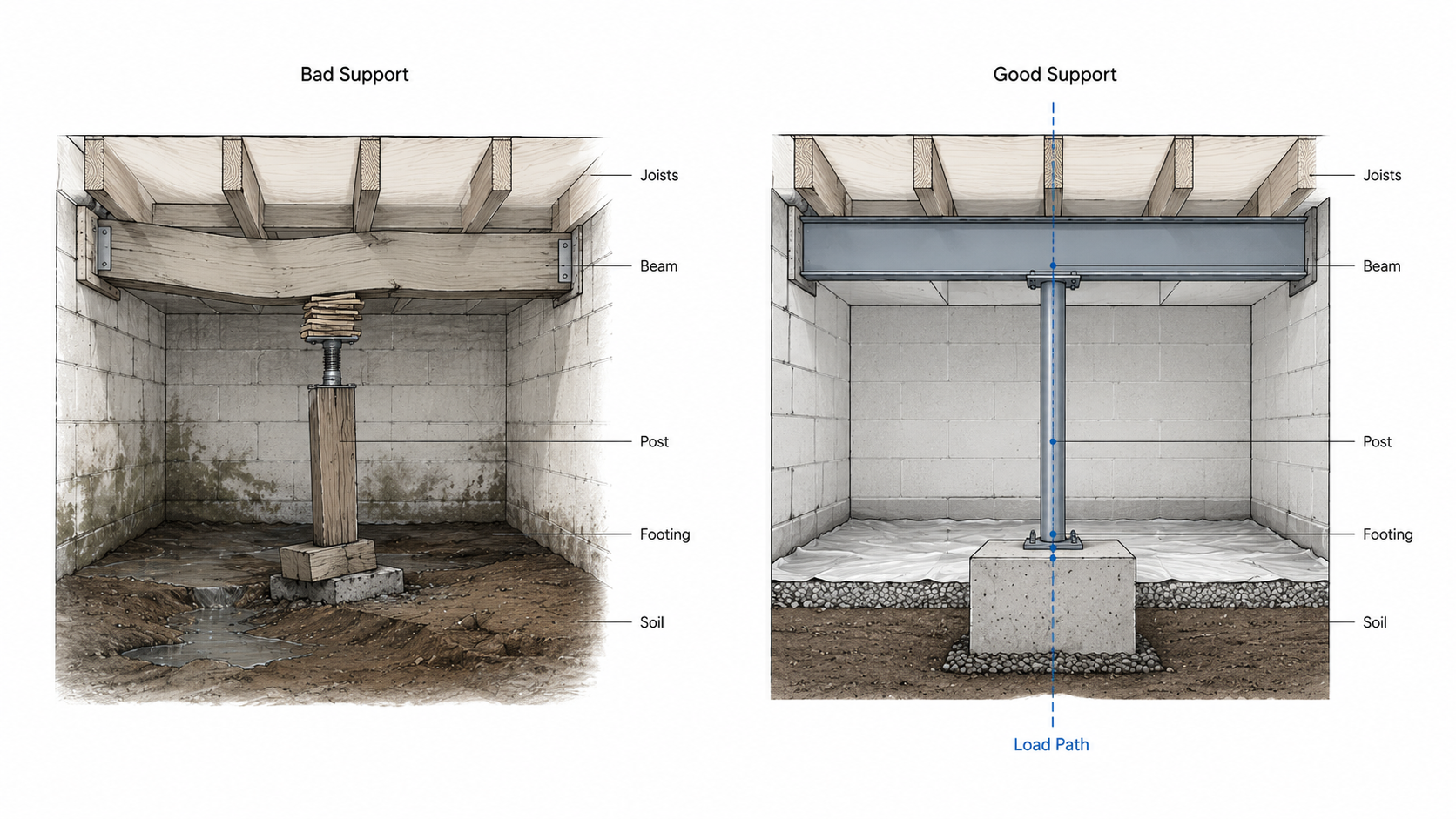
A post only helps if it lands under a real load path, bears on something that can carry the load, and supports framing that is still sound enough to be supported. A jack under a rotten beam is not a fix. A post sitting on soft soil is not a fix. A support added where the floor dipped, without checking why the floor dipped, is a shortcut with a steel label on it.
Slow down hard here.
Raising a floor is structural work. It can crack finishes upstairs, stress plumbing connections, and shift load into adjacent framing that was not designed to take it. It can also make the floor look level while the wet beam, bad pier, or poor footing stays in place.
If the work involves lifting, stabilizing, replacing beams, adding piers, or correcting settled supports, the repair should not be more confident than the diagnosis. Get the right contractor or engineer involved before hardware starts standing in for judgment.
For the support-specific branch, use crawl space jacks and supports.
When the contractor is selling the structural diagnosis
Some waterproofing contractors understand crawl-space structure well. Others mainly sell drainage, encapsulation, wall anchors, or post systems. The issue is not the trade label by itself. The issue is whether the person diagnosing the structure is independent from the product being sold.
A contractor may walk through the crawl, identify piers that need replacing, walls that need anchors, and floors that need posts. The pitch can sound confident. The scope can sound complete. But if the diagnosis always leads back to the same product line, the homeowner should slow down.
Before accepting a full structural scope from a waterproofing contractor, consider getting an independent structural engineer to look at the same space. The engineer has no hardware to sell. Their job is to say what is failing and what the correct repair logic is. In a repair that involves lifting floors, stabilizing walls, adding piers, or correcting beam lines, that independent opinion can be worth the consultation fee.
A good contractor will tell you when something is outside their scope. One that answers every structural question with its own product line deserves more scrutiny.
Follow the load
The load has to go somewhere believable.
Joist to beam. Beam to post. Post to pier or footing. Footing to soil that can carry it.
That chain is simple on paper. In older crawl spaces, it gets ugly. Posts lean. Shims stack up like a card trick. Blocks sit where a proper bearing point should be. A beam carries load but misses support where it needs help. A pier looks like somebody added it after the floor started complaining, not because the load path made sense.
One more random post does not fix broken load transfer.
The repair has to explain the path. If nobody can show where the load starts, where it transfers, and where it finally bears, the scope is not ready.
If the house uses a pier-and-beam system, the same crawl-space logic applies more directly. Use pier and beam foundation problems to diagnose symptoms first, then pier and beam foundation repair when the question becomes repair scope.
Cracks are evidence
A crack in a crawl-space foundation wall is not automatically a disaster.
It is also not harmless just because the house is old.
The pattern matters. Vertical cracks in poured walls usually mean shrinkage or minor movement. Horizontal cracks in block walls mean lateral pressure: soil or water pushing in from outside. Stair-step cracks usually mean settlement. Those are different failure modes, and they do not all get the same repair.
Wide cracks, wet cracks, and cracks that are changing belong in a different conversation than dry hairline cracks that have not moved in decades. So does the wall type. A concrete block wall with stair-step cracking is a different read from a poured wall with a thin vertical crack that has been stable for thirty years.
Be careful with cracks that widen, leak, pair with wall movement, sit near a drainage problem, or show up alongside floor movement above. A patch may stop air leakage or minor seepage at the surface. It will not stop soil pressure, wall thrust, footing movement, or water loading from outside.
The rot is part of the structure
Rotten joist ends, damaged rim areas, soft beams, and mold-stained framing can make a crawl look like a foundation failure when the foundation is only part of the story.
Wood can fail from long-term dampness. It can also fail from bad cuts, overloaded spans, plumbing leaks, termites, or a past repair that never should have been trusted.
The distinction matters because the consequence is different. A cracked wall may leak. A rotten beam can lose bearing. A damaged sill can weaken the edge of the floor system. Mold-stained framing may not always mean structural failure, but it does mean the crawl has been wet enough for biology to join the repair conversation.
Replacing or sistering framing, repairing a sill area, or correcting a beam line is different from repairing a foundation wall or pier. The trades may overlap. The failure is not the same.
If wet insulation and mold are in the same crawl, use wet insulation in a crawl space and crawl space mold remediation before pretending the structural quote explains the whole crawl.
The quote grows when the crawl tells the truth
This is where the owner usually feels blindsided.
The job started as one crack, one pier, or one sagging spot. Then the inspection finds drainage trouble, rotten joist ends, a weak beam, blocked service access, old insulation in the way, and a crawl that needs cleanup before anyone can work efficiently.
Now the quote is not one foundation repair. It is access, cleanup, temporary support, framing repair, pier work, drainage correction, maybe waterproofing, maybe mold cleanup.
That does not make every large quote honest. It means the crawl can turn one visible symptom into a larger scope once someone finally sees the system.
For the cost branch, use crawl space repair cost.
What changes crawl-space foundation repair cost
| Cost driver | Why it changes the job |
|---|---|
| Access | Low clearance, blocked routes, ducts, plumbing, and small openings slow the work. |
| Moisture | Wet soil, leaks, and poor drainage may have to be corrected before structural repair is finished. |
| Damaged wood | Rotten joists, sill plates, rim areas, or beams change the job from support correction to framing repair. |
| Support failure | Leaning piers, poor pads, weak posts, or bad shims require more than surface patching. |
| Engineering or permits | Beam replacement, new piers, wall stabilization, underpinning, or lifting may require approval before work starts. |
For a dedicated cost breakdown, use crawl space repair cost.
Bad access costs money
A miserable crawl is slower to repair.
Low clearance slows every move. Ducts block the route. Plumbing cuts across the work area. Old insulation hangs down. The access door is too small. The repair area is twenty feet from the opening and materials cannot get there cleanly.
That is not a contractor excuse. It is a job condition.
Bad access creates blocked service routes, slower labor, higher cleanup cost, and more chances for a small repair to become clumsy. A simple post replacement in a clean, high, dry crawl is not the same job as the same post replacement in a tight damp crawl with sagging insulation and a bad entry door.
Do not stare at one crack
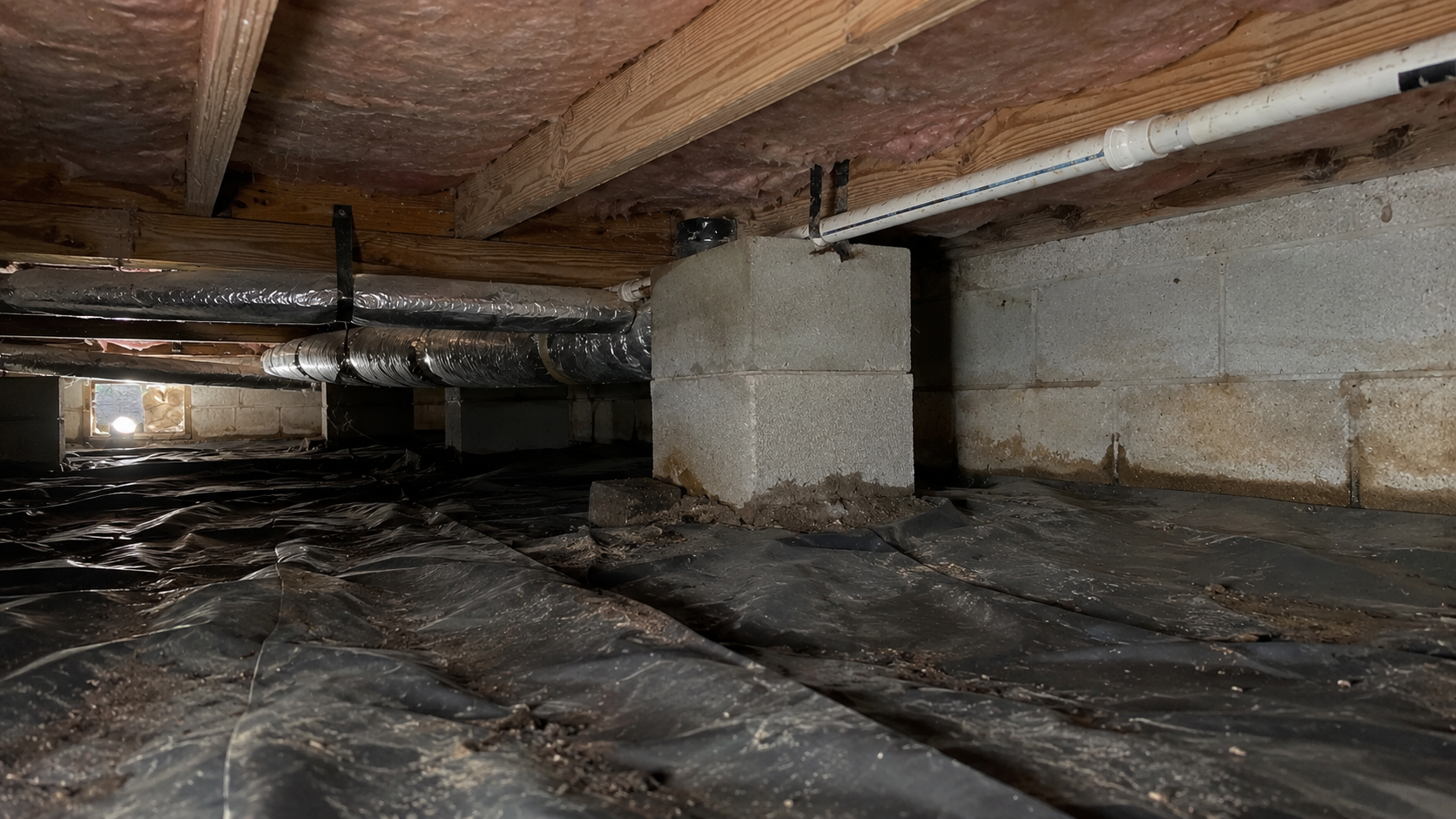
A serious crawl-space foundation inspection follows the structure.
Look at the joists. Follow the beam. Check posts and piers. Look at the bearing points. Look at the soil and moisture conditions around the supports. Check the perimeter foundation. Look for water staining, soft wood, pest damage, and earlier repairs added without a clear load path.
Then compare the crawl to the symptoms upstairs.
If the low floor does not line up with the weak support, something is missing. If the crack lines up with a drainage problem outside, that matters. If the beam looks rough but the floor above is flat and stable, that also matters.
Do not pay for this yet
Do not pay for a crack patch before knowing whether the crack is active, wet, or tied to wall movement.
Do not pay for a jack under a sagging floor before checking the beam and joists above it.
Do not pay for structural work in a wet crawl without a water plan.
Do not accept a quote that names the product before it names the cause.
Permits, engineers, and the rules that change the job
A small crawl-space repair may need a permit. A bigger one almost certainly does.
In many jurisdictions, structural work such as adding piers, replacing beams, underpinning a foundation, or installing wall anchors requires a building permit and sometimes engineer-stamped drawings. Homeowners usually find this out after a contractor has already started, after a quote comes back higher than expected, or when a neighbor's similar repair triggered an inspection that theirs did not.
Permits exist for a reason in this category. Crawl-space structural work done wrong can affect the floor system above, the load path through the house, and eventually the safety of the structure. The permit process is not just a nuisance. It is one check against confident wrong work.
Ask two questions before work starts: does this scope require a permit in this jurisdiction, and does it require engineer sign-off? A contractor who waves both questions away without specific answers is worth pushing harder on.
Ugly can wait. Movement cannot.
Some crawl-space foundation problems can wait long enough for a careful inspection and competing quotes.
Some should not sit.
Take it seriously if you see fast-changing cracks, visible wall movement, a beam that looks crushed or badly deflected, posts that are leaning or no longer bearing properly, wet rotten framing, or floors that are changing quickly upstairs.
The key word is movement. Stable old damage and active movement do not belong in the same category.
Mystery is a bad sign
A good repair usually sounds less dramatic than the sales pitch.
The water source is addressed or honestly separated from the structural work. The load path makes sense. The beam, post, pier, and footing logic can be explained without hand-waving. Damaged wood is repaired where needed. The crawl is left accessible enough to inspect later.
You should be able to understand what failed, why this fix is being used, what physical consequence it prevents, and what would make the problem come back.
FAQ
What are signs that a crawl-space foundation needs repair?
Sagging floors, foundation wall cracks, leaning piers, soft beams, rotten framing, recurring moisture damage, and doors or floors changing upstairs can all point to a crawl-space foundation or support problem.
Is a sagging floor always a foundation problem?
No. It may be a joist, beam, post, pier, moisture, or framing problem. The foundation may be involved, but the floor symptom alone does not prove that.
Can I add crawl-space jacks myself?
Do not treat jacks as a casual DIY fix. Lifting or supporting floor framing can affect load paths, finishes, plumbing, and adjacent structure. A bad lift can crack finishes, stress pipes, and move load into places that were not meant to take it.
Should water problems be fixed before foundation repair?
Often, yes. If water or damp soil helped create the damage, structural work without moisture control may rot, corrode, shift, or fail again.
Why do crawl-space foundation repair quotes vary so much?
Because one quote may price only the visible crack or post, while another includes access, drainage, damaged wood, piers, beam work, cleanup, and stabilization. Those are different scopes, even if both get called foundation repair.
Do I need a permit for crawl-space foundation repair?
Often yes, especially for structural work involving new piers, beam replacement, wall anchors, or underpinning. Check with your local building department before work starts, not after.
Should I get a structural engineer before hiring a foundation contractor?
For anything beyond minor crack patching, it can be smart. It becomes more important when the quote includes lifting, beam replacement, new piers, wall stabilization, or repeated movement after earlier repairs.
When is a crawl-space foundation problem urgent?
When damage is changing quickly, framing looks unsafe, supports are no longer bearing properly, or cracks come with visible movement or water entry.
Read This Next
If the visible symptom is a dipping or uneven floor, go to sagging floors over a crawl space.
If the quote is mostly about posts, piers, or adjustable supports, use crawl space jacks and supports before approving the scope.
If water is part of the crawl condition, go back to water in a crawl space after rain and crawl space drainage system.
For the broader foundation explainer, use crawl space foundation.