
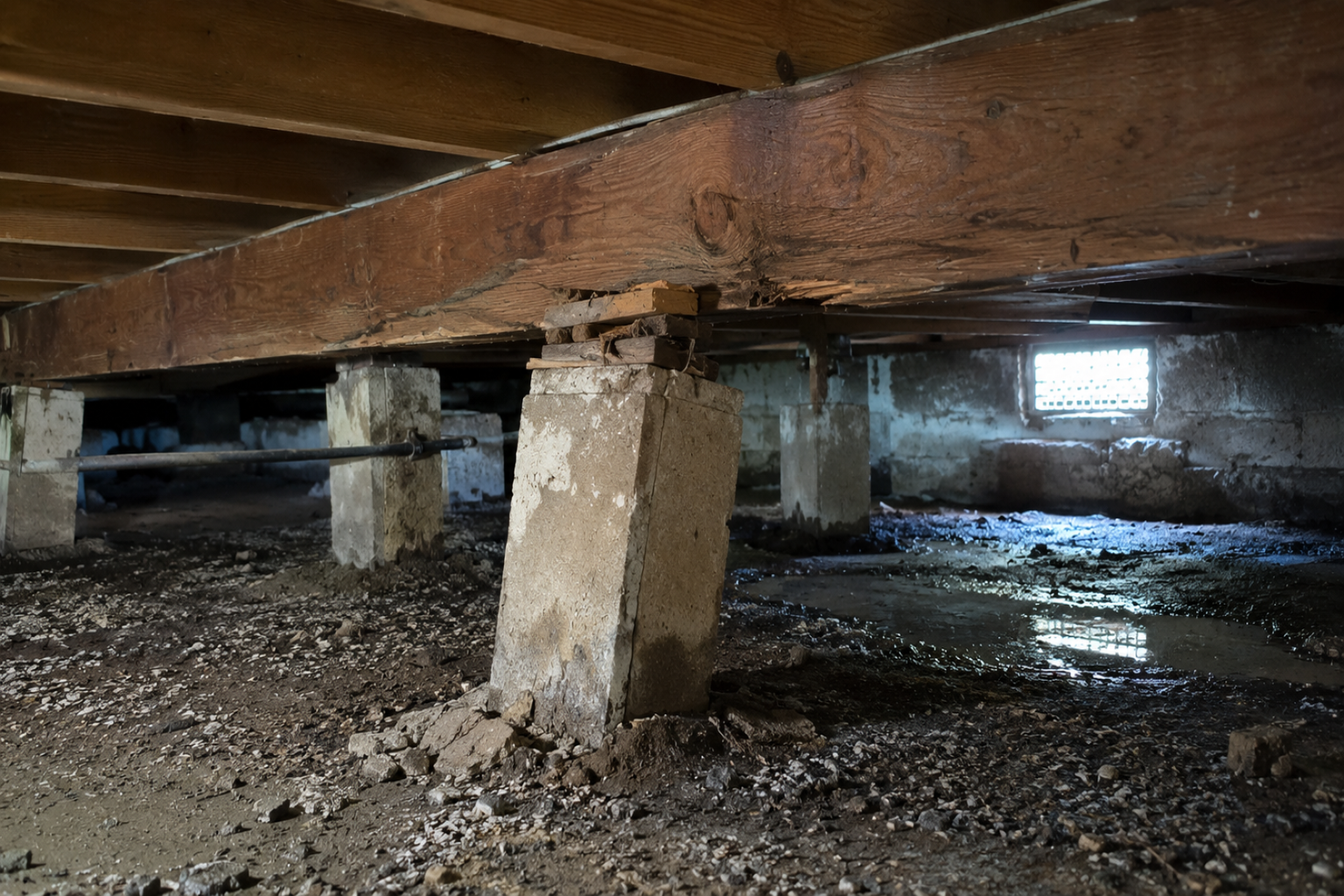

Pier and beam foundation problems usually show up inside the house first. Floors slope. Doors stick. Trim opens at the corners. A room feels soft underfoot. The real problem, though, is usually under the floor.
In a pier and beam house, the floor system depends on a chain of support: joists, beams, shims, piers or posts, footings or pads, and soil. If one part of that chain moves, rots, sinks, tilts, or gets wet, the floor above can start telling you something is wrong.
The mistake is guessing too fast. A sagging floor does not automatically mean the whole foundation is failing. It also does not mean you should add a jack post and call it fixed. The job is to read the symptoms before choosing a repair.
What pier and beam foundation problems usually mean
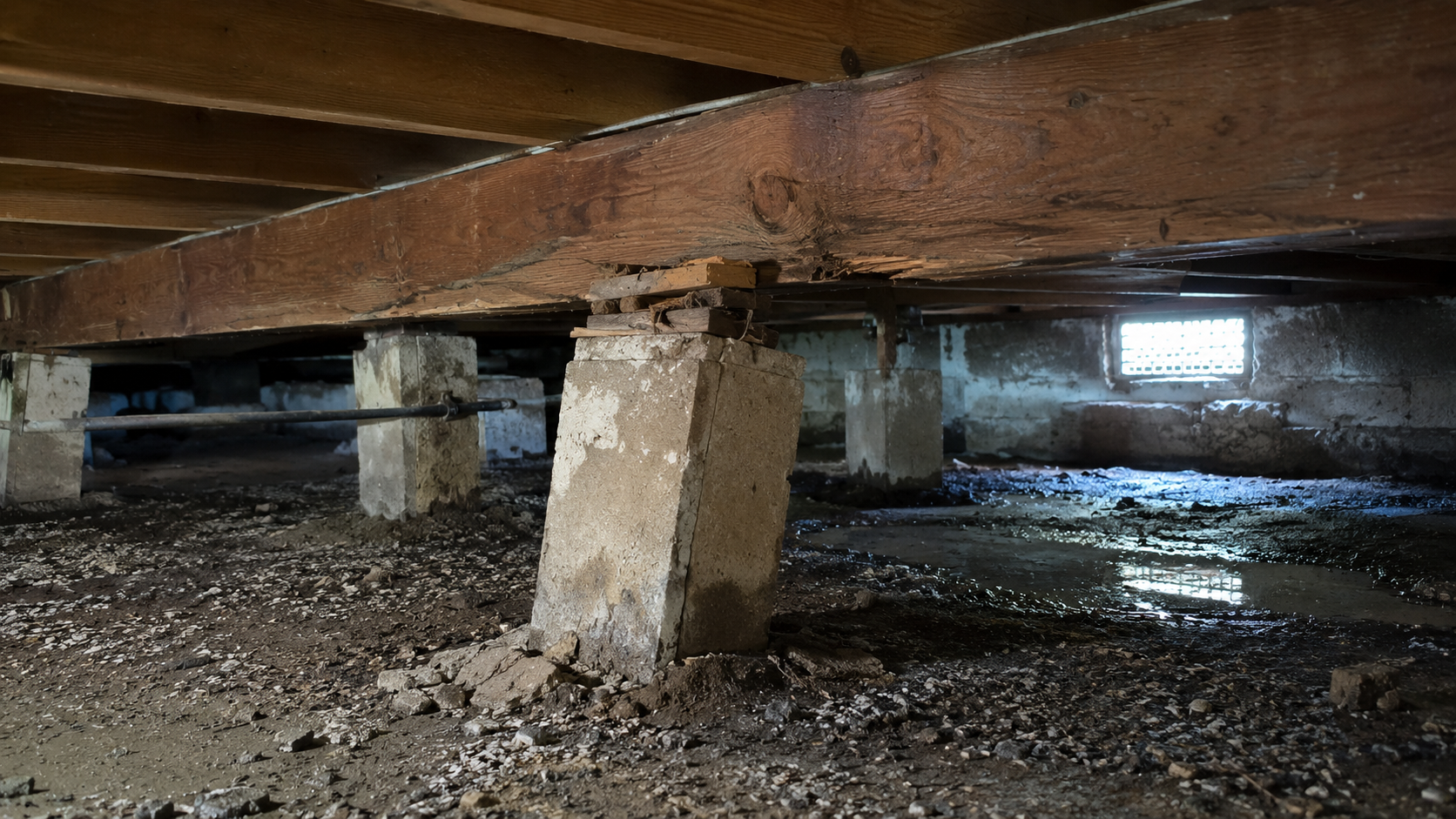
A pier and beam foundation problem is rarely just one visible defect. The low spot in the floor may be the result of a weak beam, a crushed shim, a sinking pier, damp soil, termite damage, or a repair that never carried the load correctly.
The useful question is not “How do I level the floor?” The better first question is: what changed under the house?
| What you notice | What it may point to | Why it matters |
|---|---|---|
| Sagging or sloping floors | Beam movement, joist damage, pier settlement, weak shims, or soil movement | The floor is the symptom. The support path below it needs to be checked. |
| Soft or bouncy areas | Damaged joists, weak subfloor, beam spacing problems, or rot | Softness can be a framing problem, not only a foundation support problem. |
| Doors sticking or swinging open | Floor slope, frame movement, settlement, or uneven support | Door symptoms can help locate movement, but they do not identify the cause by themselves. |
| Crushed or stacked shims | Poor bearing, earlier settlement, point loading, or bad repair work | Shims can hide movement until the beam drops again. |
| Leaning piers or posts | Weak pad, wet soil, poor alignment, lateral movement, or undersized support | A leaning support may not be transferring load safely into the ground. |
| Damp soil or standing water | Drainage, grading, plumbing leak, vapor barrier, or crawl-space moisture problem | Moisture can keep damaging wood and soil support even after the floor is lifted. |
If the signs already point to structural work, use pier and beam foundation repair for repair methods, contractor quote questions, jacking risks, and what should be fixed before the floor is lifted.
The load path explains most symptoms
A pier and beam house carries weight through several parts before the load reaches the ground. The floor joists carry the floor. The joists bear on beams. The beams bear on shims, posts, piers, or pillars. Those supports bear on footings, pads, or soil.
If that path is clean and stable, the floor has a better chance of staying level. If the path is broken, off-center, wet, rotted, or sitting on weak soil, the house can move even if the visible pier still looks present.
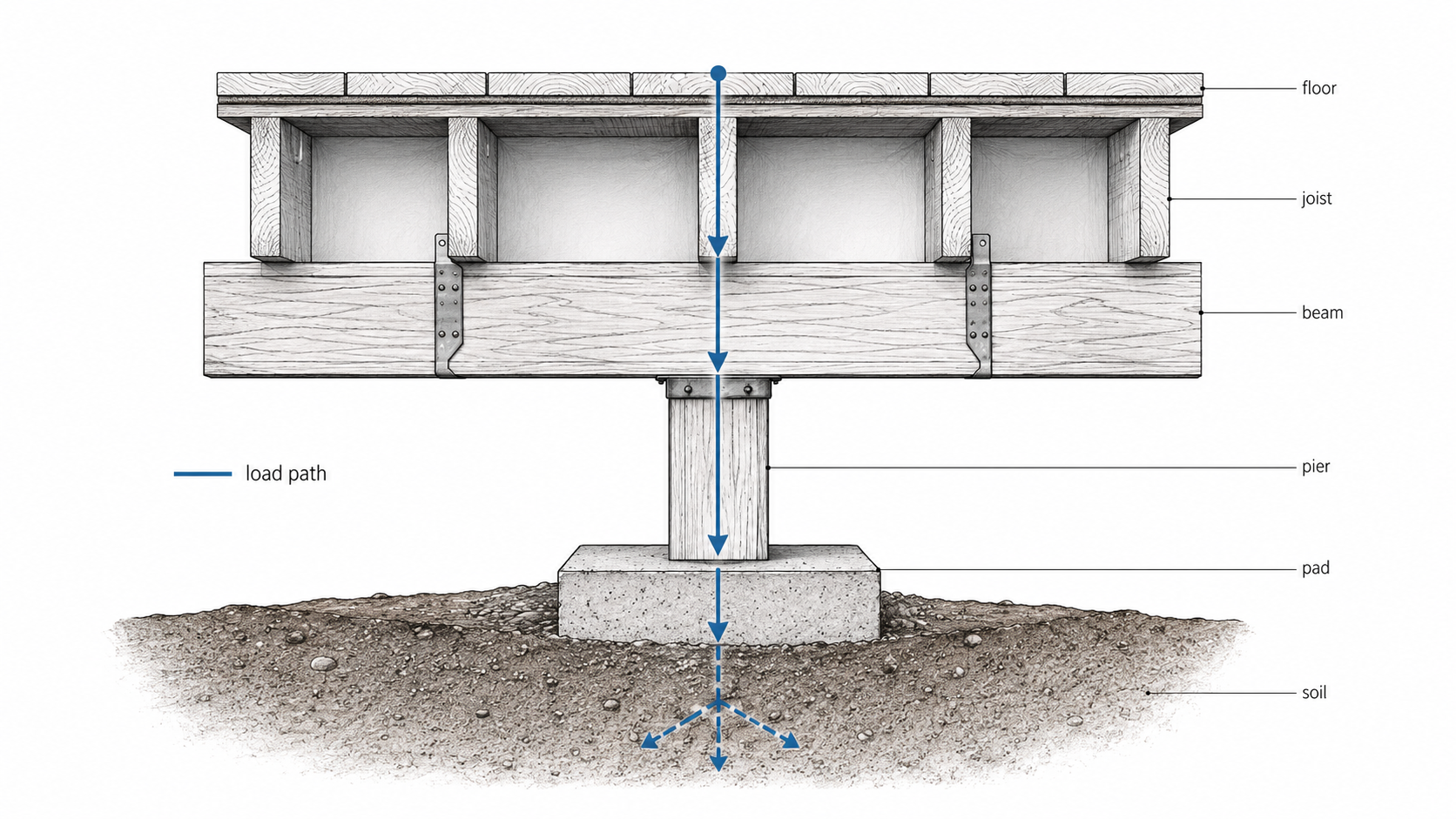
For the construction side of this support chain, see foundation pillar construction. For a broader comparison of foundation systems, see types of house foundations.
Sagging floors do not all come from the same problem
Sagging floors are one of the most common clues in a pier and beam house, but the cause can vary. Some floors sag because a beam has dropped. Some sag because joists are damaged. Some sag because the pier below the beam has settled. Others feel low because a previous repair lifted one area and left another area behind.
Look at where the floor changes. A long slope across several rooms may point to a main beam or support line. A soft spot in one room may point to joists or subfloor. A sudden dip near plumbing may point to water damage. A floor that changes near an exterior wall may connect to drainage, soil, or perimeter support issues.
The pattern matters. A contractor should not treat every sagging floor as the same job.
Bad shims are warning signs, not normal finish work
Shims are used to adjust bearing between a beam and its support. That does not mean any pile of wood scraps is acceptable. Crushed shims, loose wedges, stacked brick pieces, random blocks, and thin scraps can all mean the support has moved, the repair was rushed, or the bearing point is not stable.
Bad shims are especially important because they can make a support look active while the load path is still weak. The beam may be touching something, but that does not mean the load is being transferred evenly or safely.
When you see bad shims, do not only ask “Can these be replaced?” Ask why they crushed, slipped, or had to be stacked in the first place.
Leaning piers and posts usually point below the visible support
A leaning pier is easy to notice. The harder part is understanding why it leaned. The problem may be poor alignment, weak soil, a small pad, water movement, poor installation, lateral pressure, or an old repair that pushed load into the wrong place.
Straightening the visible support may not fix the cause. A pier sitting on soft or wet soil can move again. A post sitting on a small block can settle. A support that is off-center under the beam can keep crushing the bearing point above it.
This is why pier problems should be read from top to bottom: beam, bearing point, support, pad, soil, and moisture.
Moisture changes the diagnosis
Moisture is not a side issue in pier and beam houses. It can be the reason the support system failed.
Water can soften soil, rot beams, damage joists, encourage mold growth, attract pests, and weaken bearing conditions. A crawl space that stays damp can keep creating structural problems even after a low floor is lifted.
Common moisture clues include:
- standing water or muddy soil
- water stains on beams or joists
- musty smell inside the house
- mold or fungal growth on wood
- rusted metal connectors or fasteners
- fallen insulation
- rotted beam ends near plumbing or exterior walls
- missing or damaged vapor barrier
If water shows up after storms, see water in a crawl space after rain. If moisture, beams, piers, and crawl-space access are all part of the problem, see crawl space foundation repair.
Rotted beams and joists are different from settled piers
A settled pier and a rotted beam can both create a low floor. They are not the same problem.
A settled pier means the support below the beam has moved or lost bearing. A rotted beam means the wood carrying the load may no longer be sound. If both are happening at the same time, lifting the floor without replacing damaged wood can make the repair look complete while the structure remains weak.
Beam rot is often found near plumbing leaks, wet crawl-space edges, poor drainage, or areas with long-term damp air. Joist problems may show up as soft floors, bouncing, squeaks, or localized dips.
This is why a real diagnosis should include both the foundation supports and the floor framing above them.
Temporary jack posts are a clue, not proof of repair
A temporary jack post under a beam may mean someone tried to stop movement, support a repair, or hide a problem before sale. It may also be part of active work. The danger is when a temporary-looking post becomes the permanent solution without proper bearing above and below.
Look at what the post sits on. Is it on a footing, a pad, a block, loose soil, or a thin piece of concrete? Look at what it supports. Is it centered under the beam, pushing into a crushed area, or barely touching? Look at whether there are several posts in one area, which may signal a past attempt to chase a sagging floor without fixing the cause.
Temporary supports should make you ask more questions, not relax.
When interior clues matter
Interior symptoms can help map the problem before anyone crawls under the house. They do not replace crawl-space inspection, but they tell you where to look.
| Interior clue | What to check below |
|---|---|
| Door sticks at the top corner | Nearby floor slope, beam line, support settlement, or wall movement |
| Gap under baseboard | Floor drop along that wall or beam line |
| Crack above doorway | Localized movement, framing stress, or uneven support |
| Soft bathroom or kitchen floor | Plumbing leak, subfloor rot, joist damage, or beam decay |
| One room feels lower than the hallway | Localized joist, beam, or pier support problem |
Take notes before the inspection. The pattern inside the house can help connect symptoms to specific beam lines or support areas under the floor.
What to photograph before calling a contractor
If the crawl space is safe to enter, photos can help you explain the problem and compare repair proposals. Do not enter a crawl space with standing water, exposed wiring, sewage, strong mold odor, pests, unstable supports, or unsafe access.
Useful photos include:
- the low or sloping floor area inside the house
- doors that stick or trim gaps near the problem area
- main beams under the low floor area
- piers, posts, and pads below the beam
- crushed or stacked shims
- water stains, wet soil, or damaged vapor barrier
- rotted joists or beam ends
- temporary jack posts or unusual added supports
- plumbing lines near damaged wood
- downspouts and grading outside near the wet area
Photos are not just for the first call. They also help you compare what the contractor said before work with what was changed after work.
When the problem is urgent
Some pier and beam foundation problems can wait for a planned inspection. Others should be treated more seriously.
Call a qualified foundation contractor, structural engineer, or both when you see:
- a beam that looks split, crushed, or badly rotted
- a pier or post that is leaning sharply
- a support that has fallen away from the beam
- standing water near structural wood
- rapid floor movement instead of slow old-house slope
- temporary jacks carrying a major beam
- termite damage near beams or joists
- new cracks after recent leveling or support work
- seller repairs with no documentation
Do not jack beams, cut structural members, replace piers, or add load-bearing posts as a casual DIY fix. Those decisions change how the house carries weight.
What not to assume
Do not assume a pier and beam house is bad because the floor is not perfectly level. Older raised-floor houses often have some movement. The question is whether the movement is stable, old, documented, and minor, or active, moisture-driven, structural, and getting worse.
Do not assume a new post means the problem was fixed. A post without proper bearing below can become another weak point.
Do not assume dry-looking soil means moisture is solved. Wood can stay damp, plumbing can leak above, and grading can send water back under the house during storms.
Do not assume the cheapest leveling quote is the best repair. Leveling is only useful when the cause of movement is understood.
FAQ
What are the most common pier and beam foundation problems?
Common problems include sagging floors, leaning piers, rotted beams, weak joists, crushed shims, soft soil, standing water, poor drainage, termite damage, and temporary supports left in place too long.
Does a sloping floor always mean the foundation is failing?
No. A sloping floor can come from old settlement, framing deflection, damaged joists, beam movement, or localized moisture damage. The pattern and crawl-space conditions matter more than the slope alone.
Are bad shims under a beam serious?
They can be. Crushed, loose, or stacked scrap shims often mean the bearing point has moved or was repaired poorly. The beam, pier, pad, and soil below should be checked before assuming the shim is the only issue.
Can water under a pier and beam house cause foundation problems?
Yes. Water can soften soil, rot wood, damage joists and beams, and make supports settle or shift. Moisture problems should be diagnosed before structural repair is treated as finished.
Should I level a pier and beam house right away?
Not before diagnosis. Leveling may be needed, but lifting the floor without understanding beams, piers, shims, pads, soil, and moisture can hide the real failure or make other parts of the house move.
When should I call a structural engineer?
Call an engineer when there is major movement, repeated repair failure, severe beam or pier damage, uncertain load paths, major house lifting, unusual soil conditions, or conflicting contractor opinions.
Can pier and beam foundation problems come back after repair?
Yes. Problems often return when the repair lifts the floor but leaves wet soil, poor drainage, weak pads, damaged beams, crushed shims, or unstable supports in place.
Read This Next
Use pier and beam foundation repair when the diagnosis points to structural work, jacking, pier replacement, beam repair, or contractor quote decisions.
Use crawl space foundation repair when moisture, access, beams, joists, or crawl-space supports are part of the problem.
Read water in a crawl space after rain if the support problems appear with wet soil, standing water, musty air, or drainage failure.
Use foundation pillar construction to understand how piers, posts, pillars, beams, footings, and soil transfer the load.
Read concrete foundation leveling if the problem is a slab, concrete surface, garage floor, driveway, or walkway rather than a raised pier and beam floor system.
References
Sources used for this article
- International Code Council: 2024 International Residential Code, Chapter 4 Foundations
- U.S. Environmental Protection Agency: A Brief Guide to Mold, Moisture and Your Home
- U.S. Environmental Protection Agency: Mold Cleanup in Your Home
- Occupational Safety and Health Administration: Confined Spaces in Construction
- Occupational Safety and Health Administration: Confined Spaces in Residential Construction