
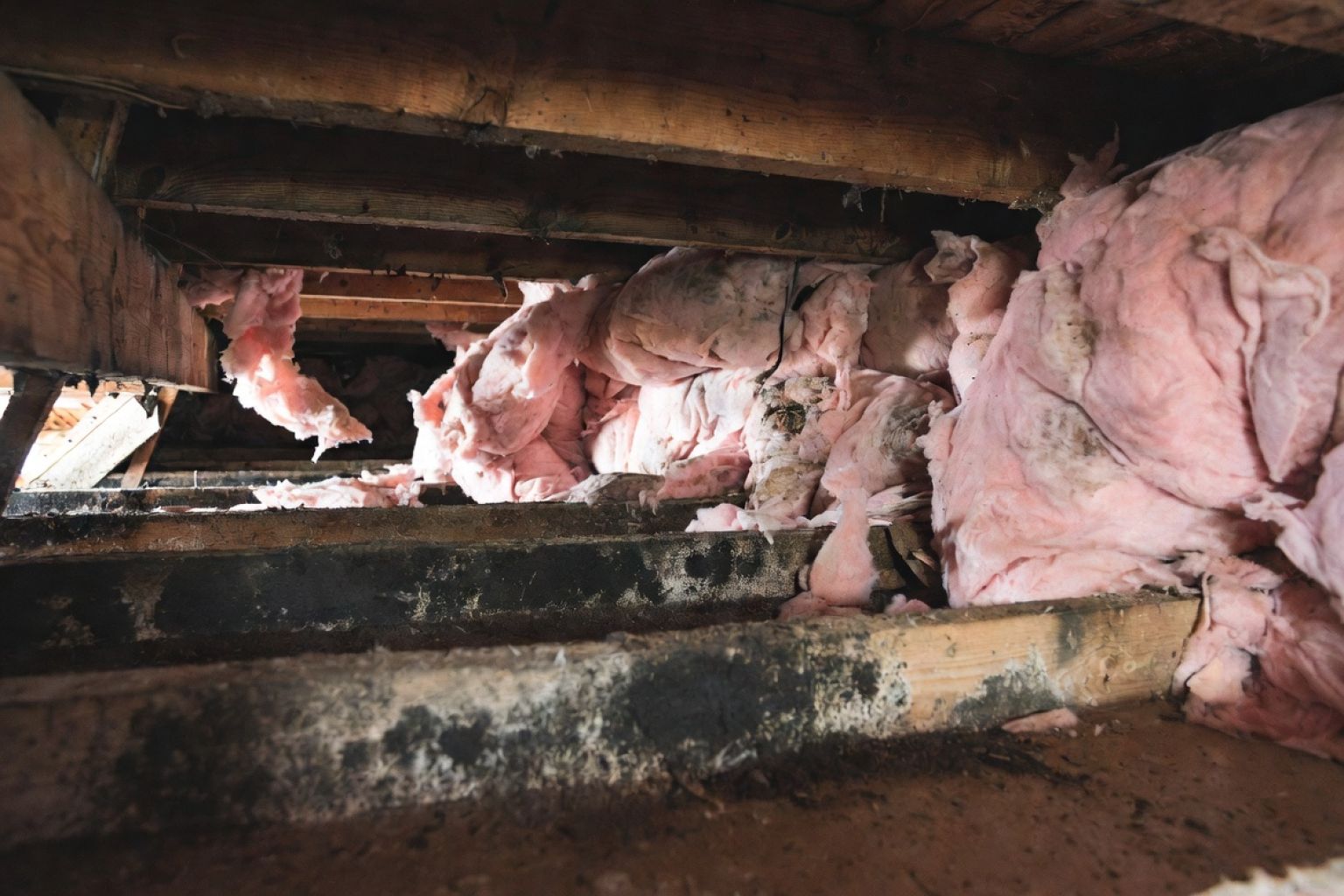

If the crawl space is still wet, mold remediation has not started yet.
At that point, the job is still water control. Sometimes the wood can stay and be cleaned later. Sometimes soaked insulation, debris, or an old vapor barrier has to come out first. Sometimes the mold is only the visible sign of a crawl space that has stayed damp for years.
This is where people waste money. They spray or fog the space before they stop the water. They clean the framing and leave wet insulation, damp soil, bad grading, open vents, or drain problems in place.
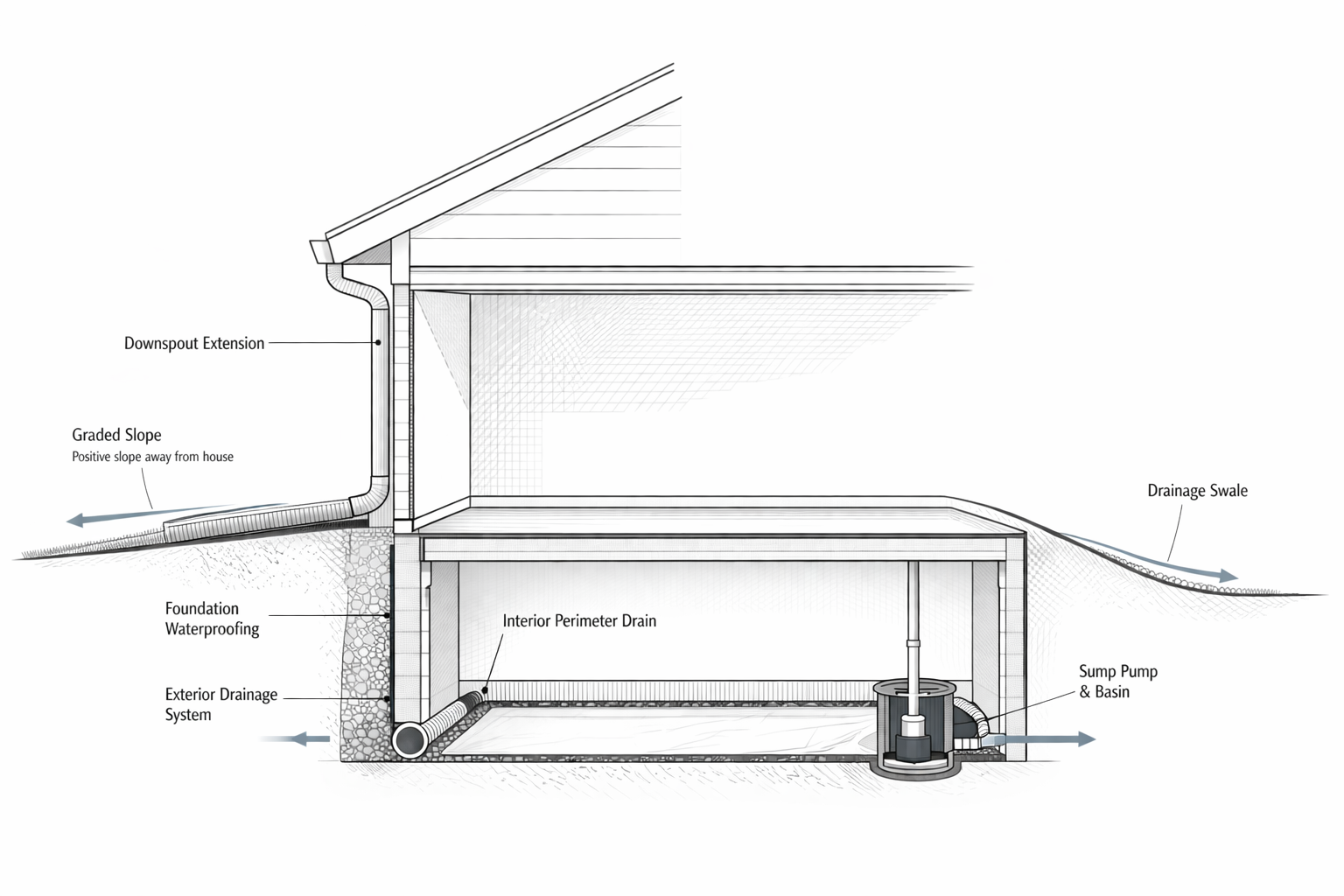
Illustration by ArchitectureCourses.org. Mold remediation starts with moisture control, not just surface cleaning.
Mold Remediation Is Not the Same as Spraying Something
That sounds obvious. It still gets missed.
Real crawl-space mold remediation means dealing with the mold you can see, the wet materials feeding it, and the moisture source that lets it keep coming back. If one of those three is left behind, the job is weak no matter how serious the invoice looks.
In practical terms, that usually means some mix of these:
- finding and stopping the water source
- removing wet or moldy porous materials
- cleaning salvageable hard or semi-hard surfaces
- drying the crawl space fully
- rebuilding the crawl space so it is less likely to stay wet again
That last part matters. Mold remediation in a crawl space is rarely just about the mold. It is usually about the crawl space that made the mold easy.
Stop the Water First
This is the rule that decides whether the rest of the job works.
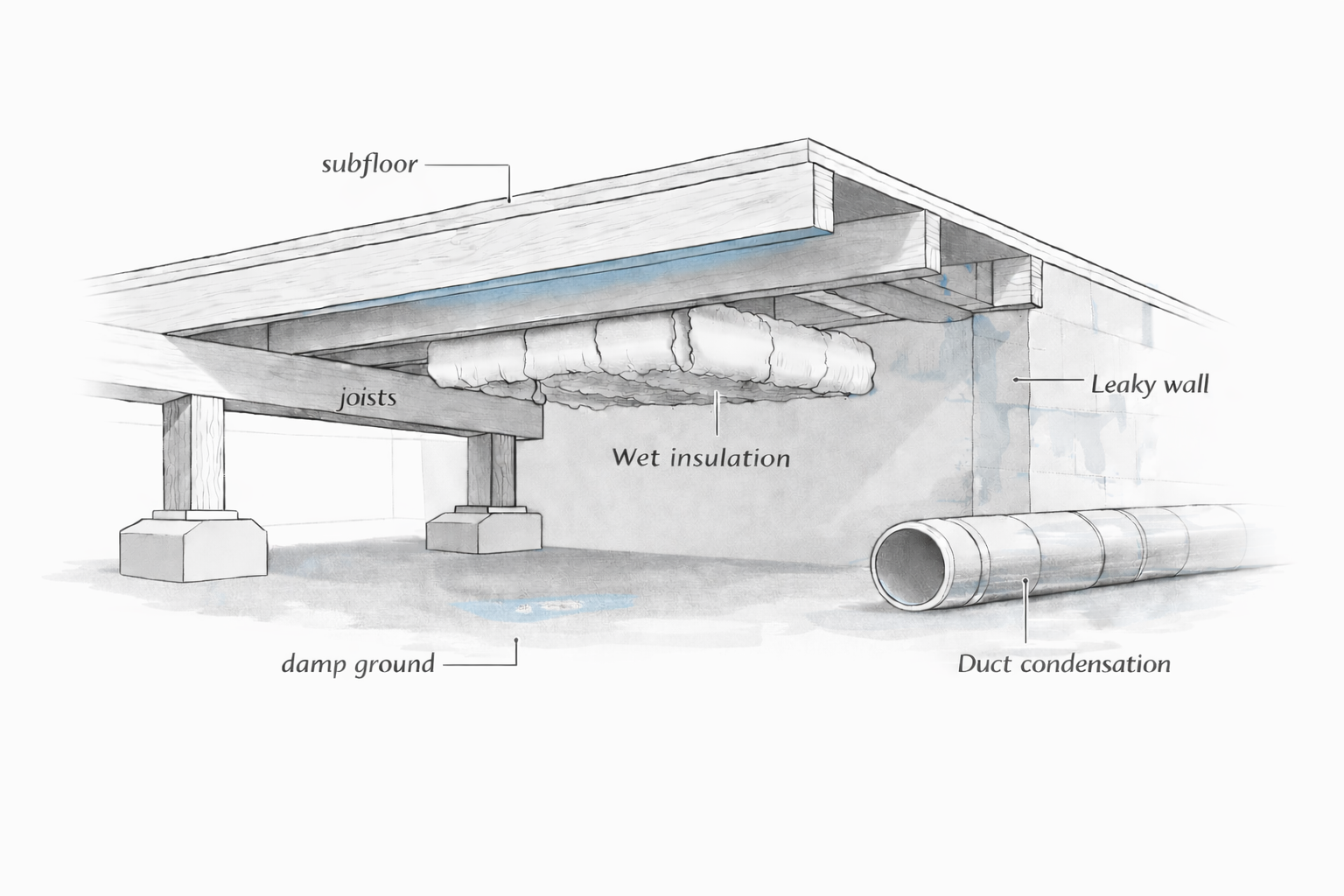
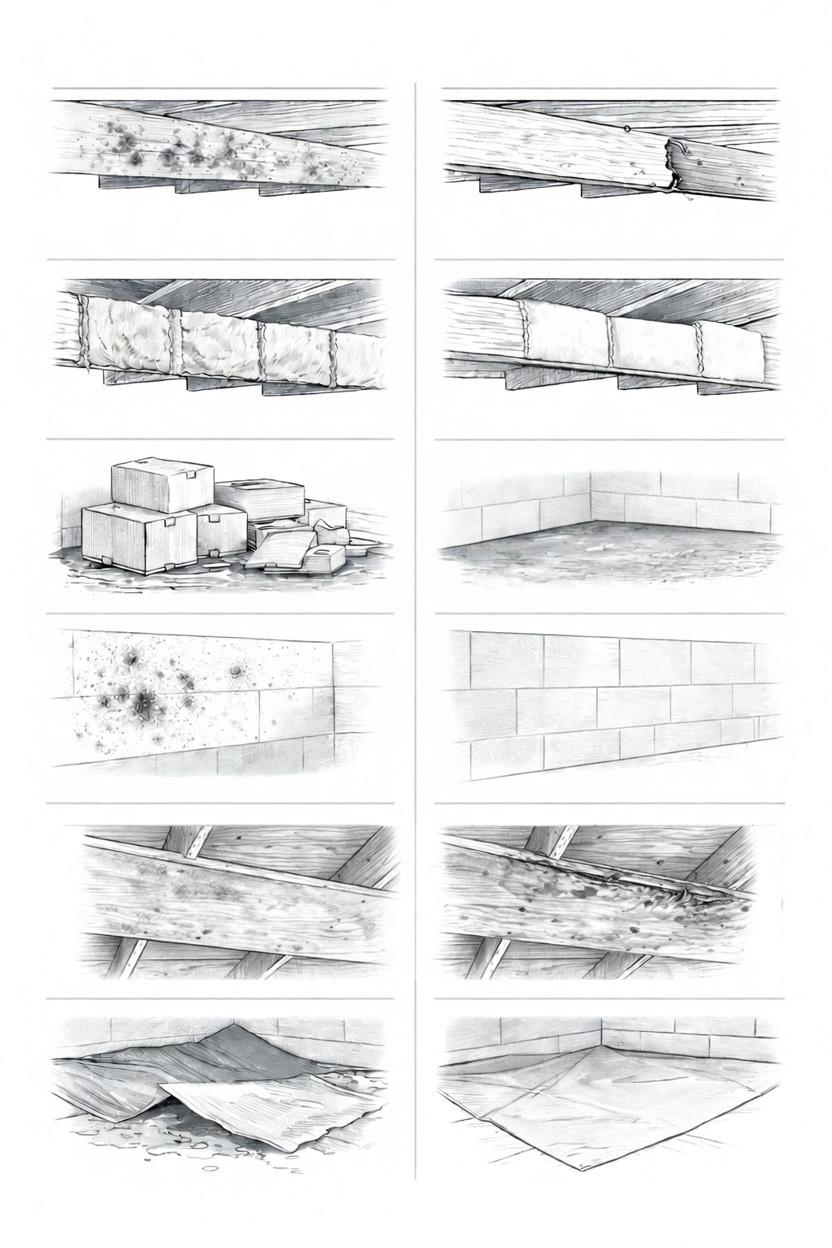
Illustration by ArchitectureCourses.org. Common crawl-space mold-start zones include the underside of the subfloor, wet insulation, the perimeter wall area, and duct surfaces in humid air.
If the crawl space is still taking on bulk water after rain, still holding wet insulation, still sweating from unsealed humid air, or still dealing with a plumbing or condensate leak, cleanup is not the first move. You can clean whatever you want. The mold pressure stays.
The first question is always: why is this crawl space wet?
Sometimes the answer is obvious. Standing water after storms. Muddy soil near one corner. Downspouts dumping at the wall. A crawl space with no drainage path and no sump. Other times it is slower and uglier: bare earth, high humidity, sagging insulation, and musty air moving into the house for months before anyone looks under the floor.
This Part Matters: If you are still sorting out why the crawl space gets wet, go first to crawl space waterproofing. Mold cleanup after that is a different job from mold cleanup before that.
What Usually Has to Go
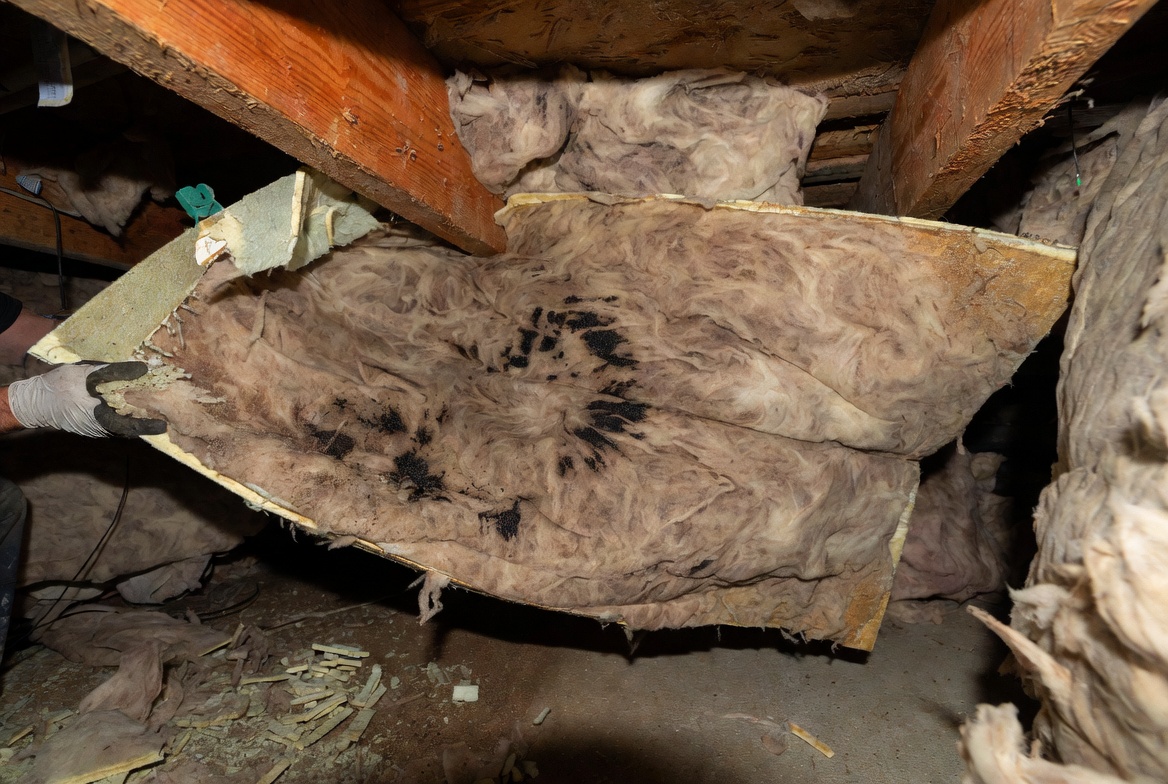
Image by ArchitectureCourses.org. Mold-stained fiberglass insulation being removed from a crawl space during remediation.
This is where the crawl-space version of remediation gets real.
A lot of materials under a house are porous, fibrous, or hard to clean completely once they have been wet and moldy. That does not mean every crawl-space mold job becomes a tear-out. It does mean some materials are cheap to replace and bad to keep.
| Material | Usually Cleanable? | Usually Better to Remove? | Why |
|---|---|---|---|
| Surface mold on solid wood joists or beams | Often, yes | Only if decay or structural damage is present | Wood framing can often be cleaned and dried if the damage is still surface-level |
| Fiberglass batt insulation | Sometimes in theory, rarely worth it in practice | Usually yes | It sags, holds contamination, loses performance, and is cheap compared with labor |
| Cardboard, paper, fabric, stored goods | Usually no | Yes | Porous, disposable, and not worth trying to save in a damp crawl space |
| Duct insulation or duct wrap | Case by case | Often yes if wet or moldy | Hard to clean fully once contaminated |
| Rigid plastic ground cover with surface contamination | Sometimes | Yes if torn, badly dirty, or poorly installed | Replacement is often smarter if the liner is already failing |
| Concrete, masonry, metal, hard plastic | Often yes | Usually no | Hard surfaces are easier to clean and dry |
| Subfloor sheathing | Sometimes | Yes if delaminated, soft, or structurally compromised | Once the panel itself is breaking down, cleaning is not the issue anymore |
Wood Is Not the Same as Insulation
This is where people either panic too fast or save the wrong thing.
Mold on framing looks dramatic. Sometimes it is still a surface problem. Moldy fiberglass looks cheaper and less serious. A lot of the time, that is the material that should leave first.
Why? Because floor joists and beams are structural members. If they are still sound, dryable, and only surface-affected, they often justify careful cleaning and follow-up moisture control. Fiberglass insulation is different. Once it has been wet, stained, sagging, and living in a moldy crawl space, it becomes low-value material with high nuisance potential.
The wrong instinct is to save every batt and replace every board. A lot of the time, the better move is the opposite.
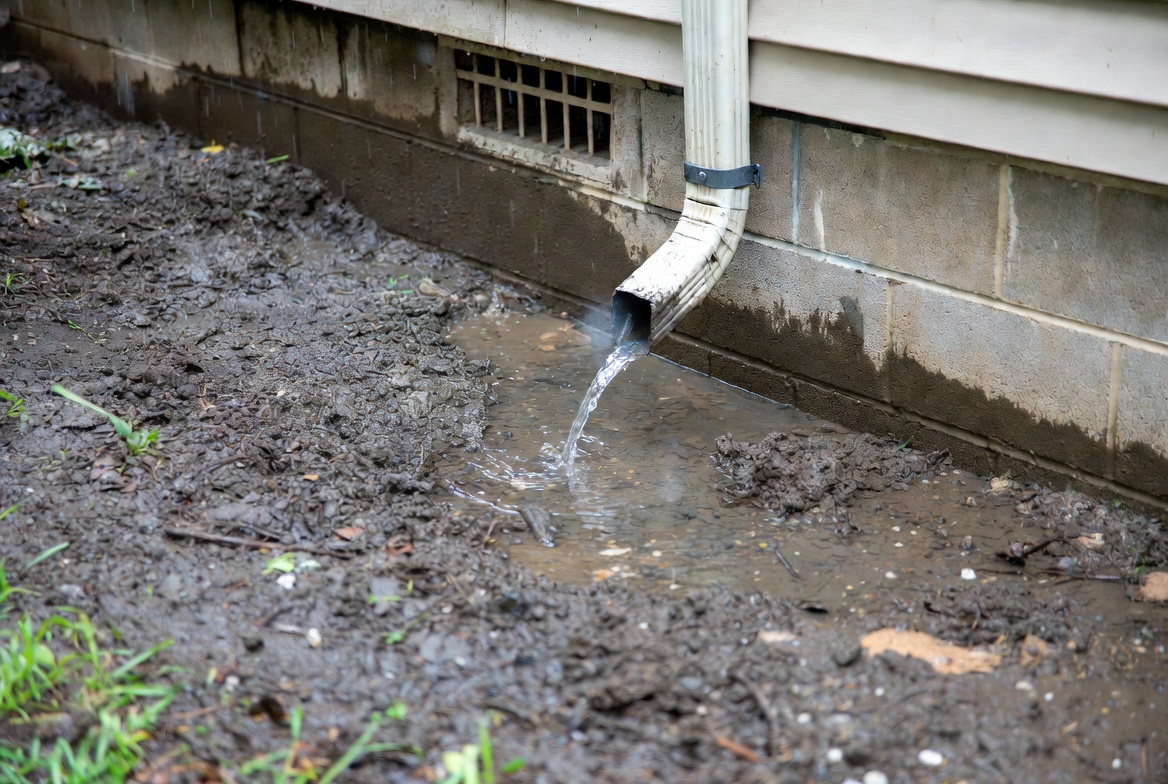
Image by ArchitectureCourses.org. Mold on framing and insulation in a damp crawl space is not one material problem. The wood and the insulation need different decisions.
What Works vs What People Commonly Do Wrong
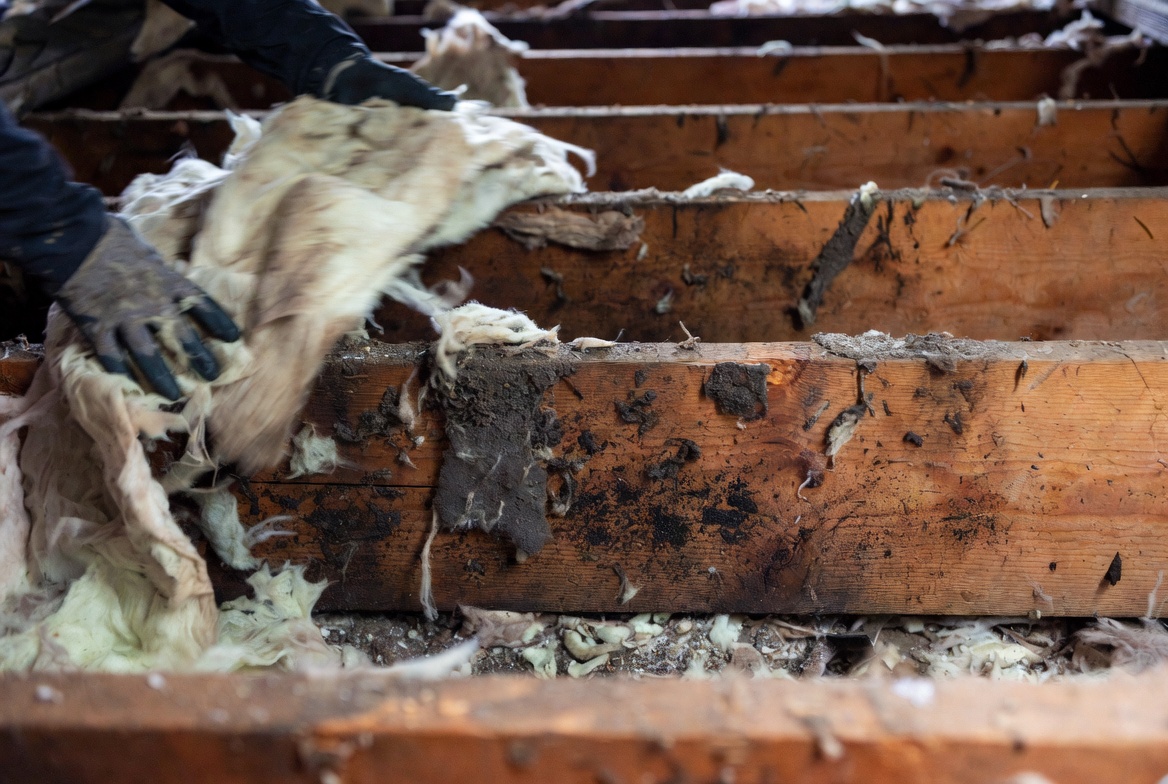
Image by ArchitectureCourses.org. Wet insulation being removed from mold-stained joists during crawl-space cleanup.
| Do This | Instead of This | Why |
|---|---|---|
| Fix runoff, drainage, or leak sources first | Start with sprays, fogging, or deodorizing | Mold comes back if the crawl space stays wet |
| Remove cheap porous materials that stayed wet | Try to save every batt, box, and scrap under the house | Low-value wet materials keep feeding odor and contamination |
| Clean sound framing and dry it fully | Tear out structural wood without checking its condition | Not every stained joist is a replacement job |
| Use proper protective gear and ventilation | Scrape and bag moldy material in a closed crawl space bare-faced | You do not need drama, but you do need basic protection |
| Rebuild the crawl space to stay drier afterward | Declare the job done once the visible mold is gone | The “after” setup decides whether the cleanup lasts |
When Cleaning the Wood Makes Sense
Cleaning structural wood makes sense when the problem is still mainly on the surface and the framing is still sound.
That usually means the joists, girders, or subfloor are stained or mold-spotted but not soft, crumbling, delaminated, or losing section. In that case, the job becomes:
- remove nearby wet porous material first
- clean the accessible surface contamination
- dry the space completely
- correct the moisture source
- watch the crawl space afterward instead of pretending the risk is over forever
This is where people get misled by appearances. Dark wood can look worse than it is. Fresh-looking insulation can be worse than it looks. The question is not “Which looks uglier?” The question is “Which material can still do its job after cleanup?”
When Replacement Is the Smarter Move
Replacement becomes the smarter move when the material is cheap, porous, contaminated, hard to dry, or already failing.
That is why crawl-space mold jobs so often include insulation removal. It is not because insulation is the headline problem. It is because wet, moldy batts are usually not worth the labor of pretending they are salvageable.
Replacement also becomes the right move when the material has crossed from dirty into damaged. Soft subfloor. Crumbling sheathing edges. Duct wrap that has stayed wet. Cardboard, stored fabrics, and old scraps that turned the crawl space into a damp sponge farm.
Worth Knowing: if the crawl space has mold plus fallen or soaked insulation, you are already halfway into the next topic. That future page is replacing crawl-space insulation.
What a Real Crawl-Space Mold Job Usually Looks Like
Not every job is large. But the sequence is usually more or less the same.
- Find and stop the water source or moisture source.
- Remove wet debris, damaged insulation, cardboard, and other porous junk.
- Protect yourself while disturbing moldy material.
- Clean salvageable hard or structural surfaces.
- Dry the crawl space thoroughly.
- Rebuild the crawl space so it is less likely to stay wet again.
That last step might mean a better ground cover. It might mean drainage. It might mean encapsulation. It might mean dehumidification. It depends on why the crawl space got moldy in the first place.
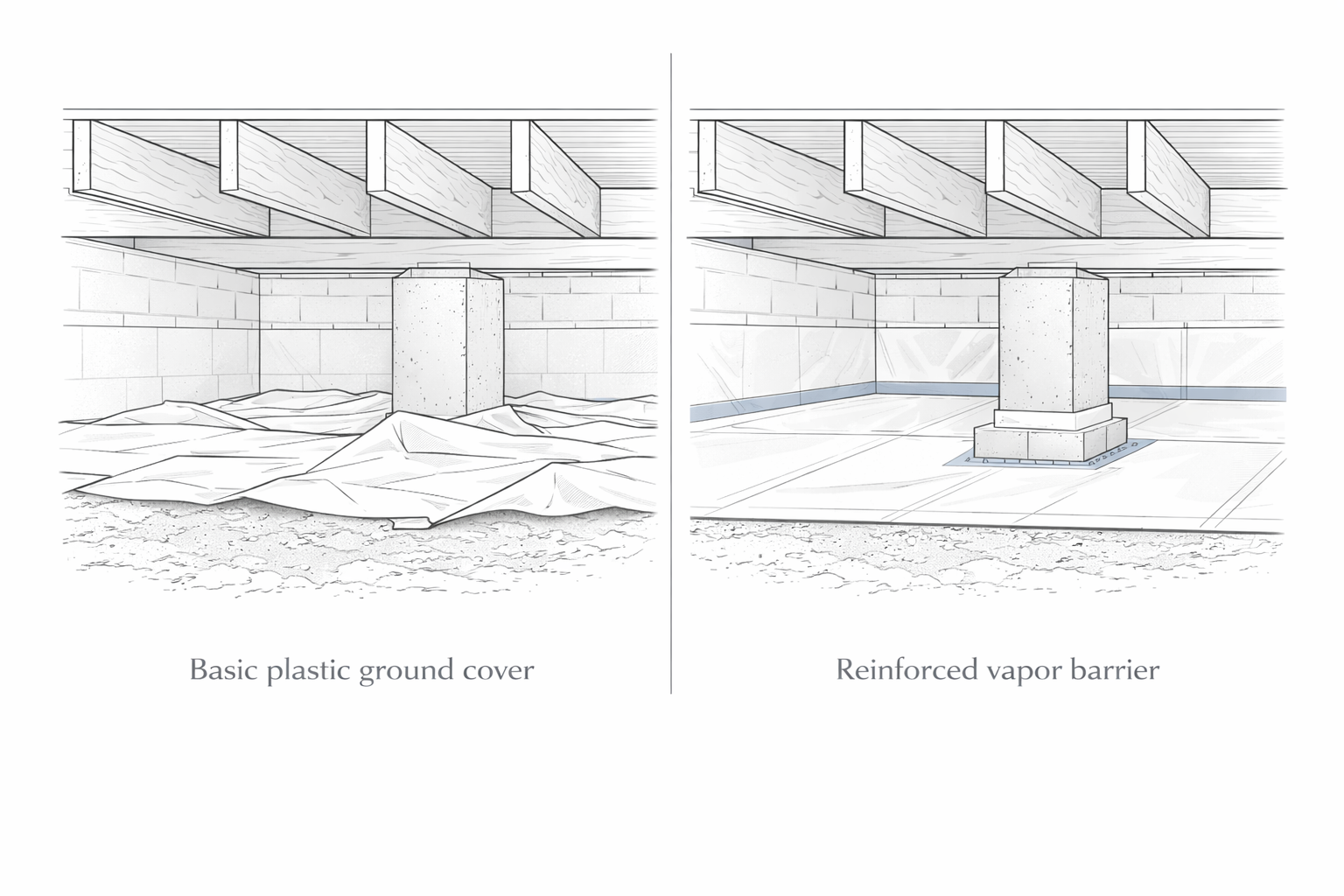
Illustration by ArchitectureCourses.org. Basic crawl-space ground cover compared with a reinforced vapor barrier with taped seams, wall turn-up, and cleaner pier fitting.
What a Cleanup Product Does Not Tell You
Product labels make this sound simpler than it is.
A cleaner can help clean. A disinfectant can disinfect. A smell-masking product can make the crawl space smell different for a while. None of those products decide whether the insulation should stay, whether the crawl space is dry enough, whether the joists are sound, or whether the mold problem is about to come back with the next humid stretch.
Mold remediation in a crawl space is less about the bottle and more about the decisions around the bottle.
How Big the Job Feels vs How Big It Is
Some crawl spaces look terrible and are still mostly a cleanup plus moisture-control job. Others look manageable and are already drifting into repair.
These signs usually mean you are still in cleanup/remediation territory:
- surface mold on framing with no obvious softness
- musty air and moldy insulation
- damp earth, weak ground cover, and high humidity
- localized contamination after a leak or seasonal wetting
These signs mean the scope may be bigger:
- soft or punky wood
- subfloor damage
- rot at joist ends or supports
- movement or sagging above
- repeated severe wetting with structural symptoms
If the problem has already reached the second list, cleanup is not the whole conversation anymore.
What People Get Wrong First
The first thing people get wrong is thinking mold is the first problem.
A lot of the time, it is not. It is the visible result of the first problem.
The second thing they get wrong is trying to save the wrong materials. The third is trying to skip the rebuild part — the part where the crawl space gets a better chance of staying dry after cleanup.
You can spend a lot of money making a crawl space look temporarily better. That is not the same as remediating it well.
What Comes After Cleanup
Once the moldy material is out, the surfaces are cleaned, and the crawl space is dry, the next decision is how the crawl space will behave from that point forward.
Some crawl spaces need a better ground vapor barrier and not much more. Some need full encapsulation. Some need dehumidification because the moisture source is controlled but the air still is not. Some need drainage work before any of that matters.
Also Useful: if the space is staying damp but not flooding, move next to crawl space humidity. If the crawl space is heading toward a closed-system approach, go to crawl space encapsulation.
When to Bring in a Pro
Not every crawl-space mold job needs a full remediation firm. Some absolutely do.
Bring in stronger help when the mold is extensive, the crawl space is hard to access safely, the wood may be damaged, the water source is still unresolved, or the job involves more removal and containment than you can do cleanly. The same goes for sewage-contaminated water or a crawl space that is still actively taking on water.
The line is not “Can I spray something?” The line is whether you can remove damaged material, clean what can stay, dry the space properly, and fix the cause without making the crawl space dirtier, wetter, or less safe.
What To Read Next
If the crawl space is still taking on storm water or pooling after rain, start with water in a crawl space after rain.
If the mold problem is clearly tied to broader water-entry or groundwater issues, go next to crawl space waterproofing or crawl space drainage system.
If the crawl space is staying wet in the air more than flooded on the ground, read crawl space humidity.
FAQ
Can crawl-space mold be cleaned without replacing everything?
Sometimes, yes. Surface mold on sound framing can often be cleaned and dried. Wet porous materials such as insulation, cardboard, and badly contaminated debris are much less likely to be worth saving.
What usually has to be removed in a crawl-space mold job?
Wet or moldy fiberglass insulation, cardboard, stored fabric goods, loose debris, and other porous low-value materials are often the first things to go.
Do I need to stop the water before cleaning mold?
Yes. If the crawl space is still wet, the cleanup is incomplete before it starts. Moisture control comes first.
Is bleach the main answer for crawl-space mold?
No. The bigger issue is removing the wet materials, cleaning what can actually stay, drying the crawl space, and correcting the moisture source.
Can I just fog the crawl space and be done?
No. A crawl-space mold problem is not fixed by making the air smell different for a while.
How do I know if the framing can stay?
If the mold is mainly surface-level and the wood is still dryable and structurally sound, it can often stay. If the wood is soft, decayed, or failing, the job has moved beyond simple remediation.
Does encapsulation fix mold?
Not by itself. Encapsulation can help control future moisture in the right crawl space, but it should not be used to bury an active water-entry problem.
When does mold remediation turn into repair?
When the crawl space shows soft or decayed wood, damaged subfloor, movement at supports, or floor symptoms above, the job is no longer just cleanup and moisture control.