
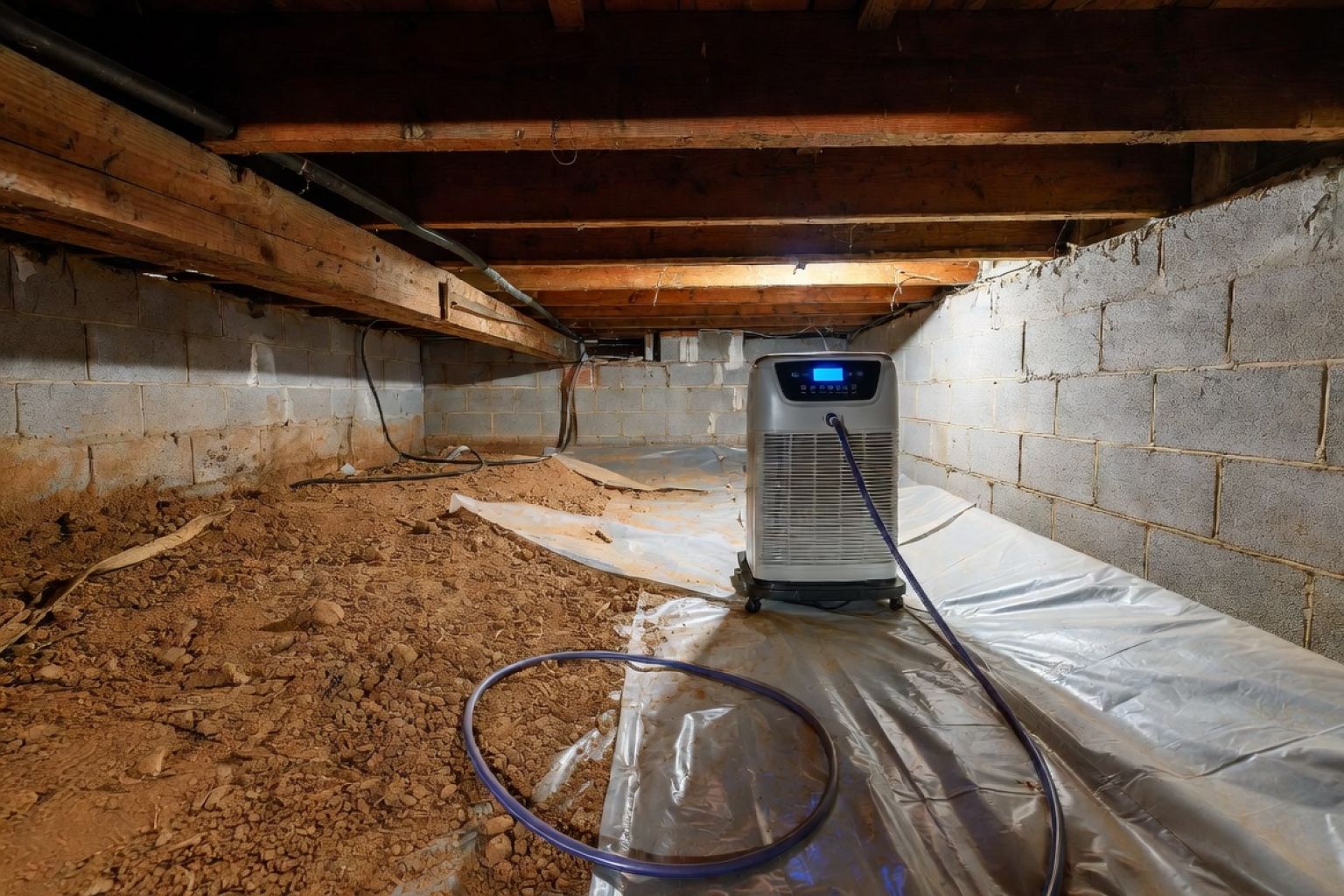


What Works, What Gets Missed, and What Wastes Money
Crawl-space dehumidifiers get blamed for problems they were never supposed to solve.
The unit gets installed, it runs for weeks, and the crawl still smells damp. The floor still feels clammy. The ducts still sweat. Then the owner decides the machine was a waste of money.
Sometimes it was the wrong machine. A lot of the time the bigger problem was the crawl itself. Open vents still pulling in summer humidity. Wet soil still feeding moisture upward. A drain line with nowhere sensible to go. A unit shoved into a dead corner because it fit there.
That is the real point of installation. A crawl-space dehumidifier works best after the crawl has already moved toward a drier, more controlled condition. It is usually a finishing move, not a rescue plan.
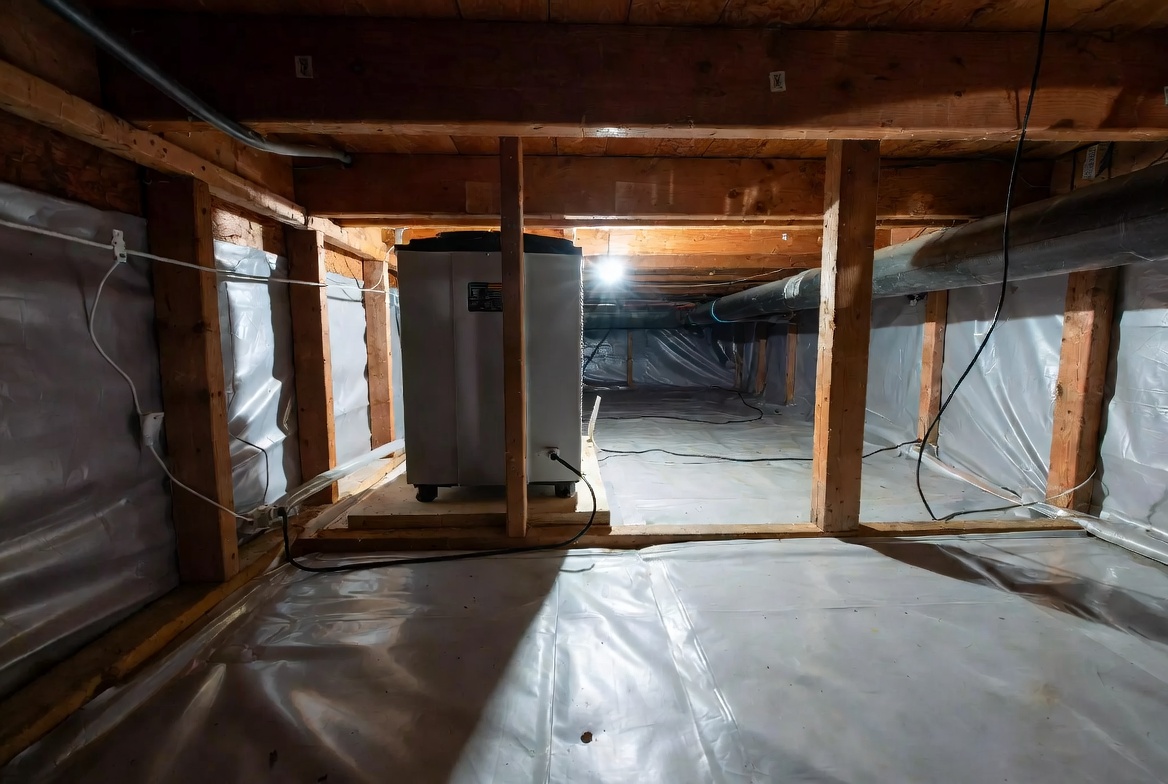
Image by ArchitectureCourses.org. A crawl-space dehumidifier works best after the floor is sealed, the crawl is cleaner, and the space is already behaving more like controlled space than outdoor space.
A dehumidifier comes after water control
This is where people burn money.
If the crawl still gets standing water after rain, still has obvious runoff trouble outside, or still has bare damp soil doing most of the moisture loading, a dehumidifier gets asked to do a job it will never win cleanly. It may remove some moisture from the air. It will not fix bulk water, bad grading, groundwater, or a crawl that is still being fed from below and outside at the same time.
That is why the first handoff is often not equipment at all. If the crawl gets wet after storms, go first to water in a crawl space after rain, crawl space drainage system, or crawl space waterproofing.
If the crawl is mostly damp and stale rather than visibly flooded, go to crawl space humidity. That is the decision layer this page belongs to.
When a crawl is ready for a dehumidifier
A crawl-space dehumidifier usually makes sense when most of the dumb moisture has already been pushed out of the system.
That means the crawl is no longer taking on bulk water after ordinary rain, the ground is covered well enough to slow vapor loading, the vents are either handled properly or the crawl is already moving toward a sealed controlled setup, and there is a realistic way to get the water out of the machine once it condenses it.
That last part gets missed more than it should. People buy the unit, place it in the crawl, and only then start wondering where the water is supposed to go.
If you are still deciding whether the crawl should stay loose and vented or move toward a more controlled sealed setup, use crawl space encapsulation vs vapor barrier only and can you use a dehumidifier in a crawl space without encapsulation first.
Do not install one in the wrong crawl and call it a fix
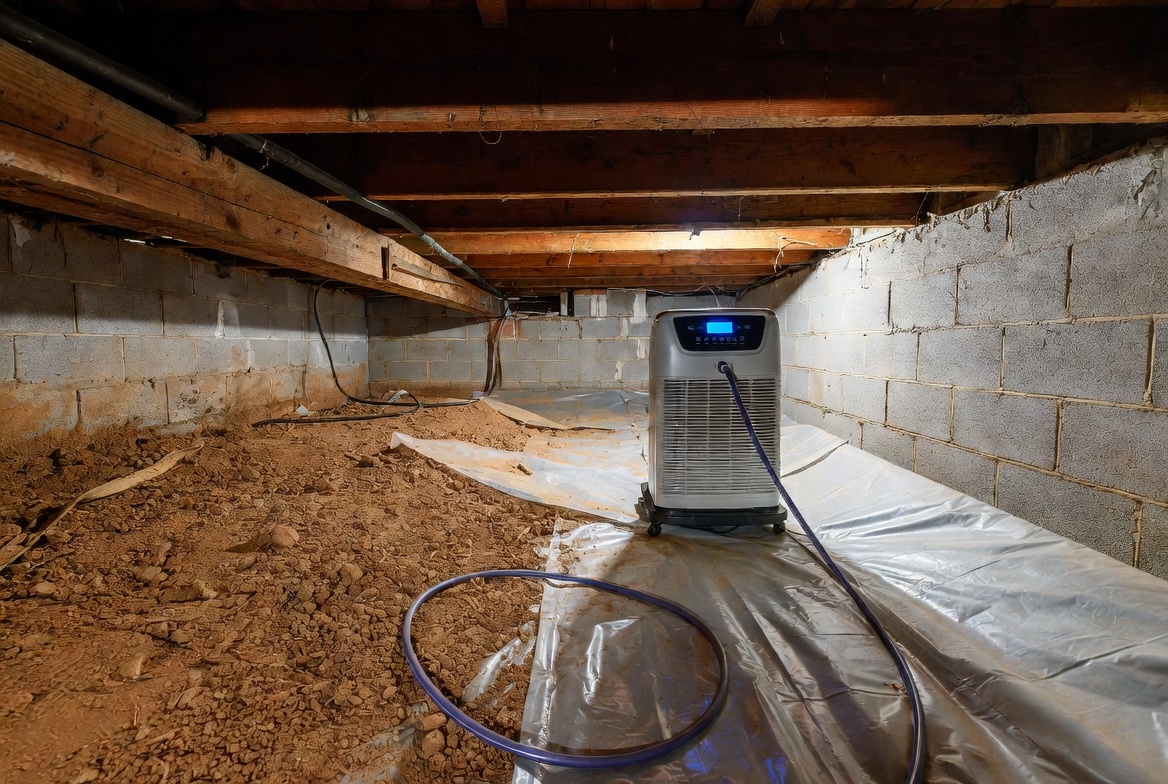
There are crawls where a dehumidifier is basically being used as a confidence prop.
The machine shows up because it feels like action. But the crawl is still vented to wet summer air. The soil is still partly exposed. The liner is loose or incomplete. The lowest corner is still muddy. Or the crawl smells bad because something upstream never got fixed.
That kind of installation can still lower humidity some days. It can also leave the owner paying for a machine that is carrying too much of the load by itself.
If the crawl is still obviously unfinished, the better question is not where to put the dehumidifier. The better question is whether the crawl is ready for one yet.
Placement is half the job
A lot of dehumidifiers underperform because they are installed where they fit, not where they work.
The unit needs to sit where air can actually move across the crawl volume instead of staying trapped in one blocked corner. It needs room for intake and discharge airflow. It needs enough access that somebody can service it, change filters, and check the drain without crawling through an obstacle course every time. And it needs to sit somewhere that is not the obvious wettest low point in the space.
This usually means avoiding the worst corners, avoiding cramped spots behind duct runs, and resisting the temptation to hide the unit in whatever dead zone looks least visible from the access hatch.
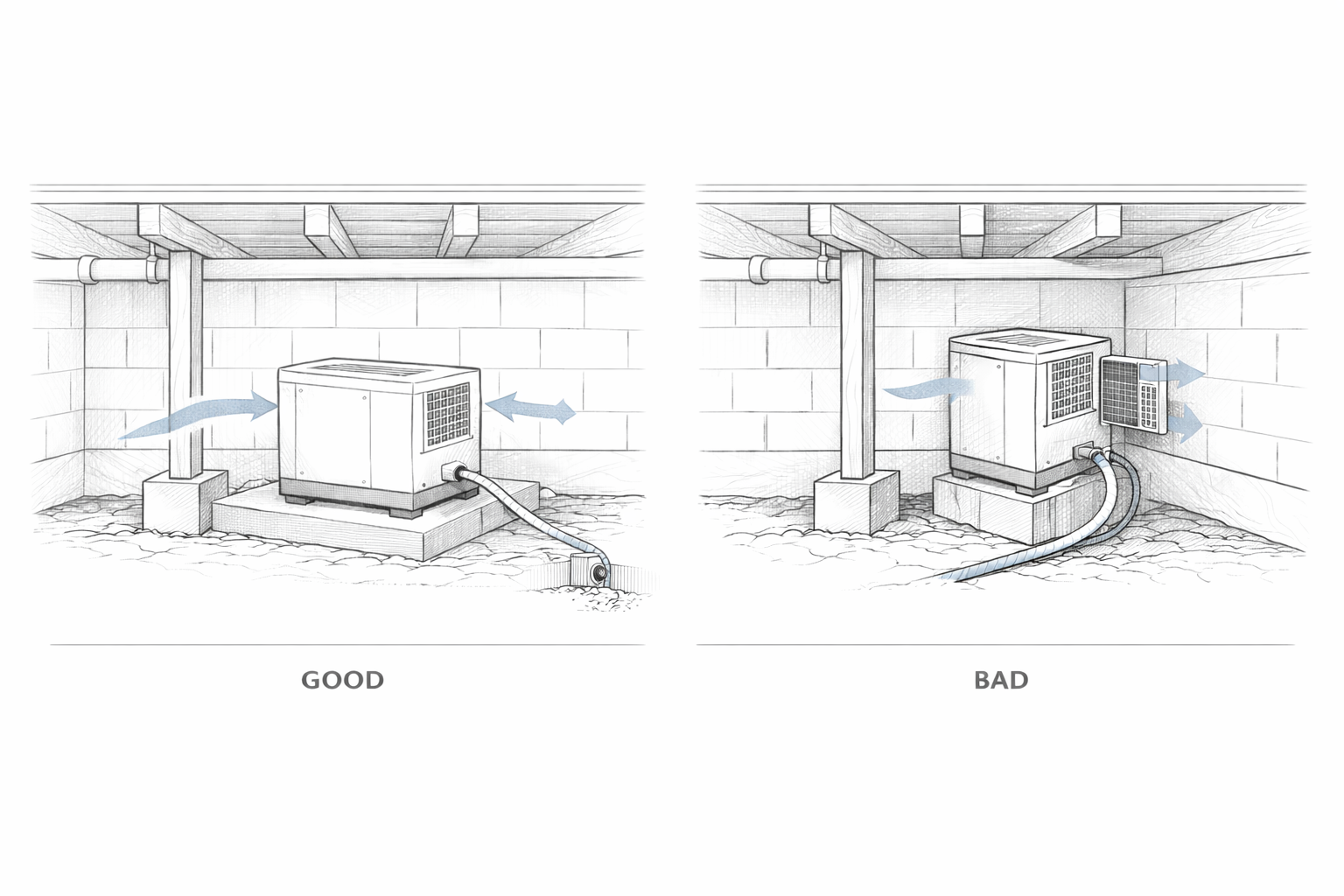
Illustration by ArchitectureCourses.org. Good placement gives the unit room to move air, room to be serviced, and a drain route that does not turn into a second problem.
Where it should usually go
There is no magic universal spot, but the usual good placement logic is pretty consistent.
- somewhere the airflow can reach the broader crawl, not just one bay
- somewhere a person can still access the filter and controls
- off the loose liner on a stable support or pad if the surface needs protection
- away from the obvious wettest low spot
- close enough to a realistic drain route that the water can leave cleanly
That does not mean the exact center of the crawl every time. It means the machine needs a useful air path, a service path, and a water path. If one of those is missing, the installation starts slipping even if the equipment itself is good.
Do not crush the liner to make the machine fit
This sounds small, but it is a real crawl-space tell.
People spend money sealing the floor, taping seams, and trying to make the crawl cleaner, then drop the machine on a loose wrinkle of liner or drag it across an area that clearly was not set up for equipment. Now the unit sits awkwardly, the liner gets stressed, and every service call turns into more abuse on the floor system below it.
A clean installation usually gives the machine its own stable surface. That may be a support pad, pavers, a small stand, or another durable base that protects the liner and keeps the unit from rocking around.
The point is not elegance. It is buildability. The machine should look like it belongs there.
Gravity drain or condensate pump?
This decision matters more than the exact model in a lot of houses.
If the unit can drain by gravity to a proper outlet with consistent fall, that is usually the simpler arrangement. Fewer parts. Less that can quit. Cleaner long-term logic.
But crawl spaces do not always give you that route. Sometimes the unit sits too low relative to the discharge point. Sometimes the path is too long or awkward. Sometimes the only sensible way to move water out is with a pump.
| Drain Option | Works Best When | What Goes Wrong |
|---|---|---|
| Gravity drain | You have steady fall from the unit to the discharge point | Lines sag, flatten, clog, or terminate badly near the house |
| Condensate pump | The discharge point sits above the unit or the route is awkward | Pump failure, poor routing, bad discharge location, added maintenance |
FIELD PICK: If your crawl space cannot drain by gravity, a small condensate pump is usually the cleaner answer than forcing a bad hose route. A common option is the Little Giant VCMA-20ULS condensate pump.
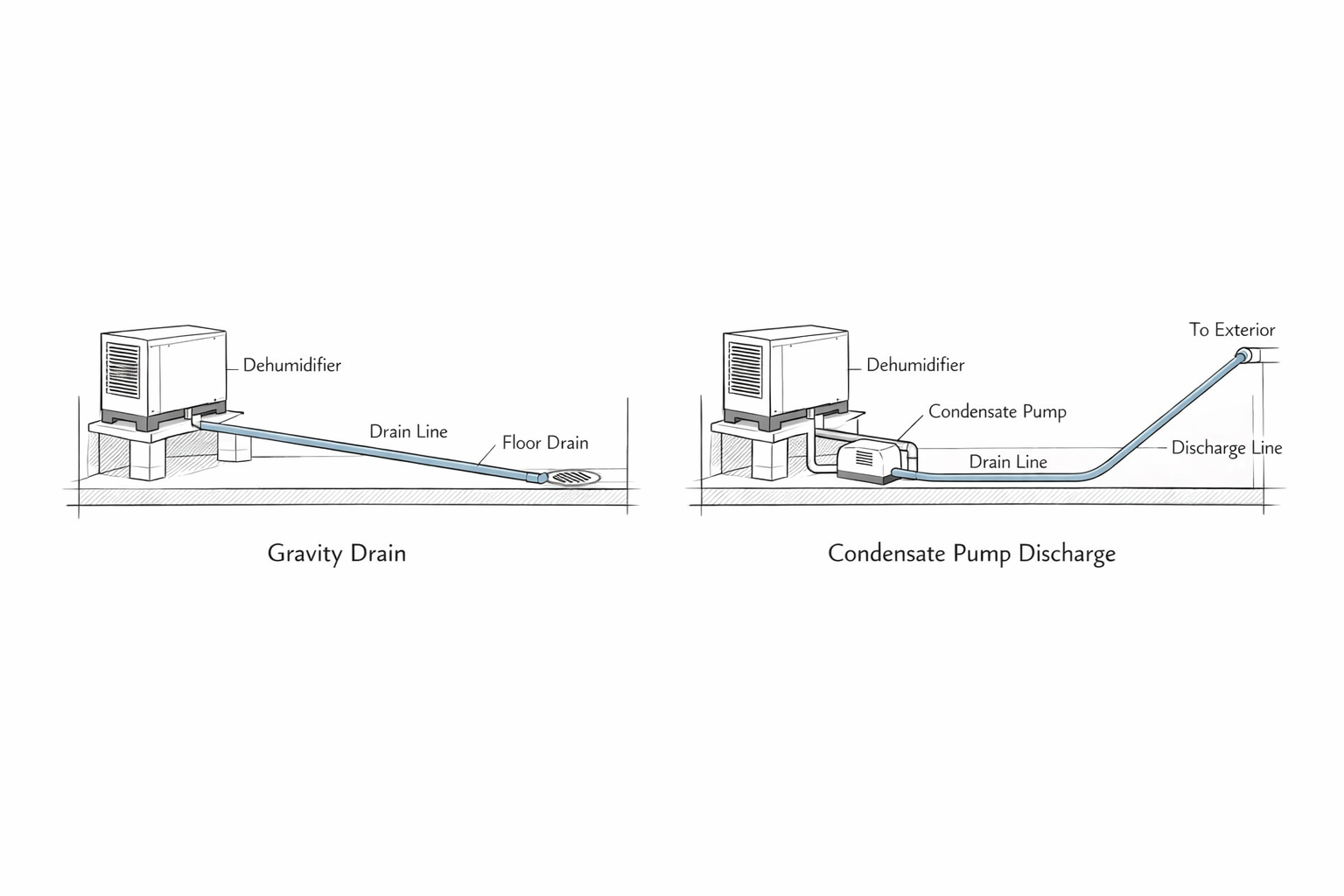
Illustration by ArchitectureCourses.org. Most crawl-space drain setups come down to two choices: let water leave by fall, or pump it because the crawl will not give you the slope you need.
Bad drain routing ruins good equipment
This is one of the easiest ways to make a good installation act cheap.
The line sags. The hose kinks. The route is too long and unsupported. The discharge ends too close to the foundation. The water leaves the dehumidifier correctly and then gets dumped back into the same zone that has already been fighting moisture.
That last one is especially dumb, and it happens all the time in crawl-space work more broadly. Water gets collected and removed, then sent right back to the house edge because the termination was an afterthought.
The drain route should be boring. That is the goal. Simple, reliable, inspectable, and not doing anything clever near the foundation.
RECOMMENDED TOOL: A simple continuous-drain hose often matters more than people expect. If your unit uses a standard threaded drain outlet, something like this dehumidifier drain hose is the kind of basic part that keeps the installation from turning sloppy.
Power and service access matter more than people expect
A crawl-space dehumidifier is not a decoration. It needs to be checked, cleaned, and sometimes repaired.
If the unit is jammed where nobody can reach the filter or even see the controls without dragging half their body across the liner, the installation will age badly. Maintenance gets delayed. Filters stay dirty. Drain trouble gets discovered late. The machine becomes one more thing under the house that technically exists but does not get managed well.
The best installations leave enough room to approach the unit, open it, clean it, and inspect the drain without turning the crawl into a wrestling match.
It also needs safe, proper power. That part should not be improvised. The exact electrical setup belongs to the actual house and local requirements, but the bigger point is simple: the machine needs a reliable power source that fits crawl-space conditions and does not turn maintenance into guesswork.
If you can only hide it, the spot is probably wrong
This is one of the cleaner rules on this page.
If the only way the installation works is by hiding the machine in a cramped dead corner where airflow is weak, service is miserable, and the drain run becomes awkward, that is usually the crawl telling you the placement is wrong.
The machine does not have to look beautiful under the house. It does have to work.
What still makes a good installation fail
A properly installed dehumidifier can still look disappointing when the crawl around it never really got finished.
Common reasons:
- the crawl still takes on bulk water after storms
- outside humid air still reloads the space
- the liner is incomplete or loosely detailed
- the unit is undersized for the moisture load
- airflow is blocked by bad placement
- the drain route is weak or unreliable
- the filter is dirty and maintenance gets skipped
That is why a crawl-space dehumidifier can be installed correctly and still fail to produce the result the owner imagined. The machine may be doing its part. The crawl may not be.
Do not use size to fix a bad setup
People try this a lot. The crawl still feels damp, so they jump straight to a bigger unit.
Sometimes the unit really was too small. A lot of the time the bigger miss was placement, drain logic, or the crawl still behaving like a wet vented space with a machine dropped into it.
That is why sizing and installation are tied together. If the machine question has become mostly about capacity, use what size crawl-space dehumidifier do you need and best crawl-space dehumidifiers. This page is about making the installed unit actually work once it is there.
FIELD PICK: If you are still comparing equipment before installation, a purpose-built crawl-space unit such as this ALORAIR crawl-space dehumidifier is the kind of machine people usually mean when they talk about a real crawl-space setup rather than a room dehumidifier.
When a dehumidifier without encapsulation still makes sense
There are crawls where a dehumidifier still helps even before full encapsulation. But that is not the same as saying the setup is ideal.
If the crawl is mostly dry, the moisture load is modest, the soil is covered well enough to reduce vapor, and the goal is to take the edge off seasonal humidity rather than rescue a bad crawl, then a dehumidifier can still be part of the answer.
But that is the narrower case. The more the crawl still behaves like outdoor space, the harder the unit has to work and the less elegant the installation logic becomes.
That is why the better companion page there is can you use a dehumidifier in a crawl space without encapsulation.
What I would check before calling the installation done
- the crawl is no longer taking on ordinary bulk water
- the machine sits in a place with usable airflow and service access
- the drain route is simple and believable
- the discharge ends somewhere that does not reload the house edge
- the liner around the unit still looks protected and intentional
- the crawl is dry enough overall that the machine is finishing the job, not carrying the whole job
If those are shaky, the installation is not finished yet, even if the machine is plugged in and running.
FAQ
Where should a crawl-space dehumidifier be installed?
Usually in a spot with good airflow reach, enough service access, and a believable drain route. The best spot is rarely the tightest hidden corner.
Does a crawl-space dehumidifier need a drain?
Yes. The water has to leave somehow. That usually means either a gravity drain or a condensate pump, depending on the crawl and discharge path.
Can I put a dehumidifier directly on the crawl-space liner?
It is better to give the unit a stable protected base if the liner needs protection or the surface is uneven. The machine should sit like it belongs there, not like it was dropped wherever it fit.
Will a dehumidifier fix a wet crawl space by itself?
Usually not. It can lower humidity, but it does not fix storm water, bad grading, groundwater, or a crawl that is still loading moisture from the soil and outside air.
Do I need encapsulation before installing a crawl-space dehumidifier?
Not always, but the more the crawl still behaves like outdoor space, the less cleanly the dehumidifier installation works. A more controlled crawl usually gets much better results.
Why is my crawl-space dehumidifier running but the crawl still feels damp?
Usually because the crawl still has a bigger moisture problem, the unit is badly placed, the drain setup is weak, or the machine is undersized for the load.