


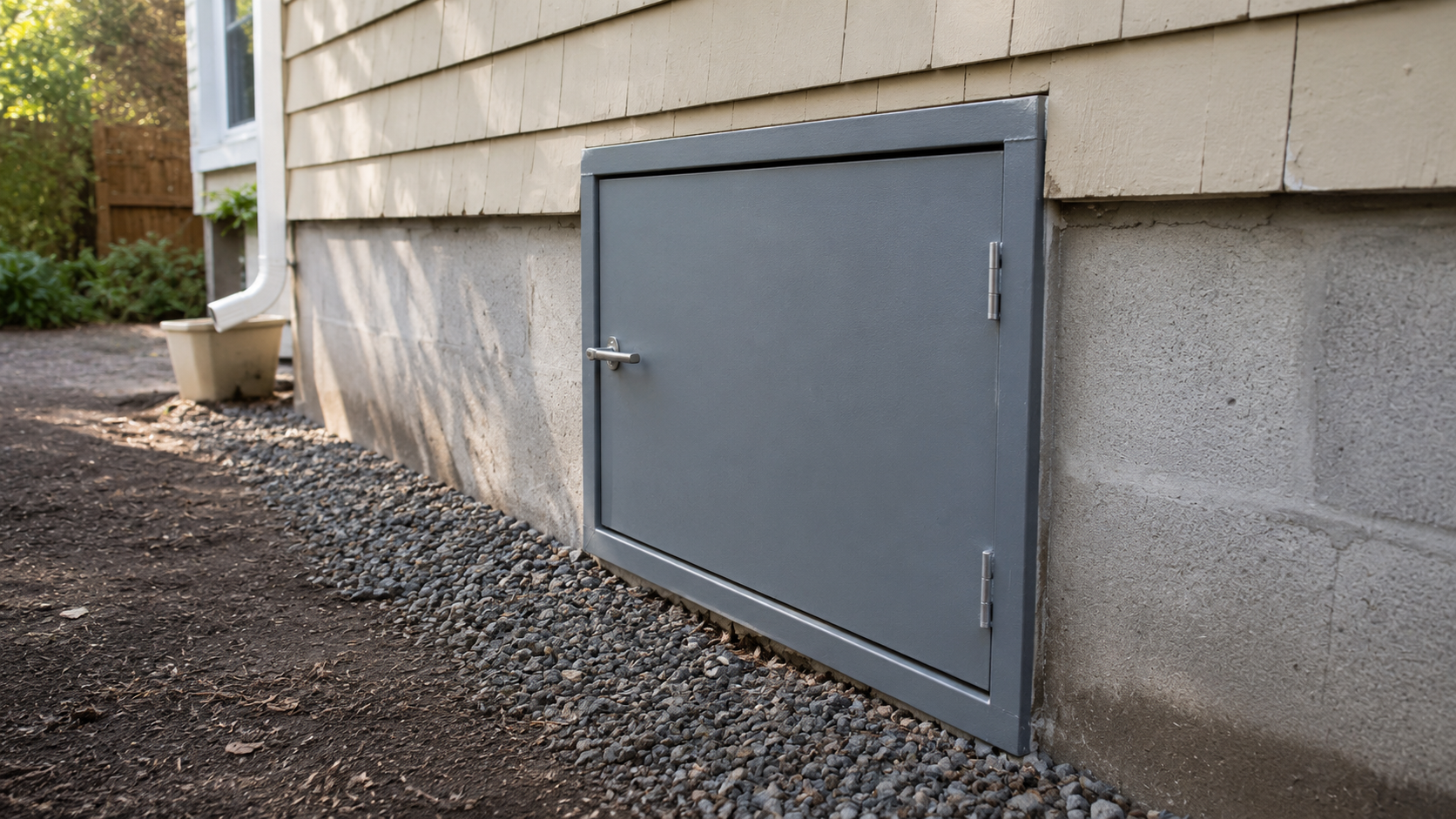
Image by ArchitectureCourses.org. A replacement crawl-space door works better when the opening is solid, the frame sits cleanly, and the area below the door is no longer holding dirt, splash, and moisture against the bottom edge.
Replacing a Crawl Space Door: When It Is a Simple Swap and When the Opening Needs Work
The old crawl-space door usually tells you whether this is a quick replacement or a bigger repair.
If the panel is tired but the opening is still sound, this can stay simple. If the lower edge rotted because the grade stayed wet, if the frame is loose, if the wall edge is patched and crooked, or if the door was too small and miserable to use from the start, then replacing the panel alone does not finish much.
That is where money gets wasted. A new door goes in, the same wet corner keeps beating it up, and two years later the replacement is already starting to look like the one it replaced.
A crawl-space door replacement works when the new unit lands in a clean opening, at a workable size, with the outside conditions under control. It fails when the panel changes and everything around it stays bad.
Start by deciding what kind of replacement this is
There are really two versions of this job.
One is a straight swap. The old panel is worn out, rusted, cracked, or ugly, but the opening is still usable. The wall edge is sound. The size is fine. The outside grade is under control. You replace the door, tighten the fit, clean up the edge conditions, and move on.
The other version looks like a door replacement from the driveway and turns into opening repair the minute you touch it. The trim is soft. The sill edge is chewed up. The opening is not square. The old unit was hiding a bad wall edge. Or the whole thing sits so low against wet grade that the new one will lose the same way.
The first version is a replacement. The second is a repair job wearing a door label.
| If the Old Door Looks Like This | What It Usually Means | Better Move |
|---|---|---|
| Panel damaged but opening still sound | Simple replacement may be enough | Swap the unit and tighten the fit |
| Rot or rust concentrated at the lower edge | Wet grade or splashback is still working the opening | Fix the outside condition before installing the new door |
| Crooked fit, patchwork, loose frame | The opening itself needs repair | Rebuild the bearing edges before replacement |
| Tiny opening that nobody wants to use | The real problem is access, not just the panel | Consider resizing instead of repeating the same bad access |
| Gaps, pests, weak latch, bad corners | Loose fit or poor prior installation | Replace with better fit and stronger closure |
If that area still stays wet, the new door is already behind
This is the first thing I would look at outside.
Not the color of the panel. Not the material. Not whether the new one is insulated. I would look at the ground below the opening and the wall around it.
If the old door failed because water keeps splashing the lower edge, because mulch and soil crept up against it, because a downspout keeps dumping nearby, or because that part of the foundation stays damp after storms, then the replacement has to start there.
The old door usually failed for a reason. Replace the panel without fixing the reason and you just shorten the time until the next replacement.
Read this next: If that corner gets wet after storms, use water in a crawl space after rain and crawl space drainage system before treating this as a basic door swap.
Measure the opening again
Even if you think you know the size.
People measure the old door face, order the replacement, and then discover the real opening is rougher, tighter, or less square than expected. Now the new unit gets forced in. The flange covers gaps. The caulk gets thicker. The fit is technically acceptable and visually weak.
That is a common way to turn a clean replacement into a sloppy one.
Measure the actual opening. Check both directions. Check the wall edge. Check the sill area. Look for little patches and distortions that the old unit was hiding. A crawl-space door replacement should not depend on optimism.
Some replacements should really be larger
This is where people stay too loyal to the old hole.
The existing door may be miserable. Too small to get through comfortably. Too tight for tools. Too tight for insulation removal. Too tight for service work under the house. Everybody who has had to use it hates it. Then replacement time comes and the same size goes back in because it feels easier.
That is not always the smart move.
If the real problem is access, not just a dead panel, then replacing the door with the same undersized unit may be cheap in the wrong way. You save effort now and keep paying for it every time someone has to crawl through that opening later.
When a straight swap is fine
Sometimes it really is that simple.
If the opening is sound, the size works, the wall edge is still solid, the outside grade is under control, and the old unit just wore out, cracked, rusted, or got ugly, then a straightforward replacement makes sense.
That kind of job should stay boring. Remove the old unit cleanly. Check the opening. Fit the new one properly. Seal it cleanly. Make sure the latch works. Make sure the lower edge is not sitting back in dirt and splash. Then move on.
Those are the good replacements. They do not need drama.
When the opening needs work first
This is the version that costs more and deserves to.
If the edge around the door is soft, broken, out of square, or patched badly, the new frame needs something real to sit on. If the sill area is chewed up, if the trim is loose, if the masonry edge is broken, or if the old unit was compensating for a wall condition nobody fixed, then the replacement starts with the opening.
A better door installed over weak edges is still a weak assembly. It may look improved for a while. It will not behave like a strong replacement.
This is also where the cheapest bid usually starts lying. It prices the panel. It ignores the part the panel has to land on.
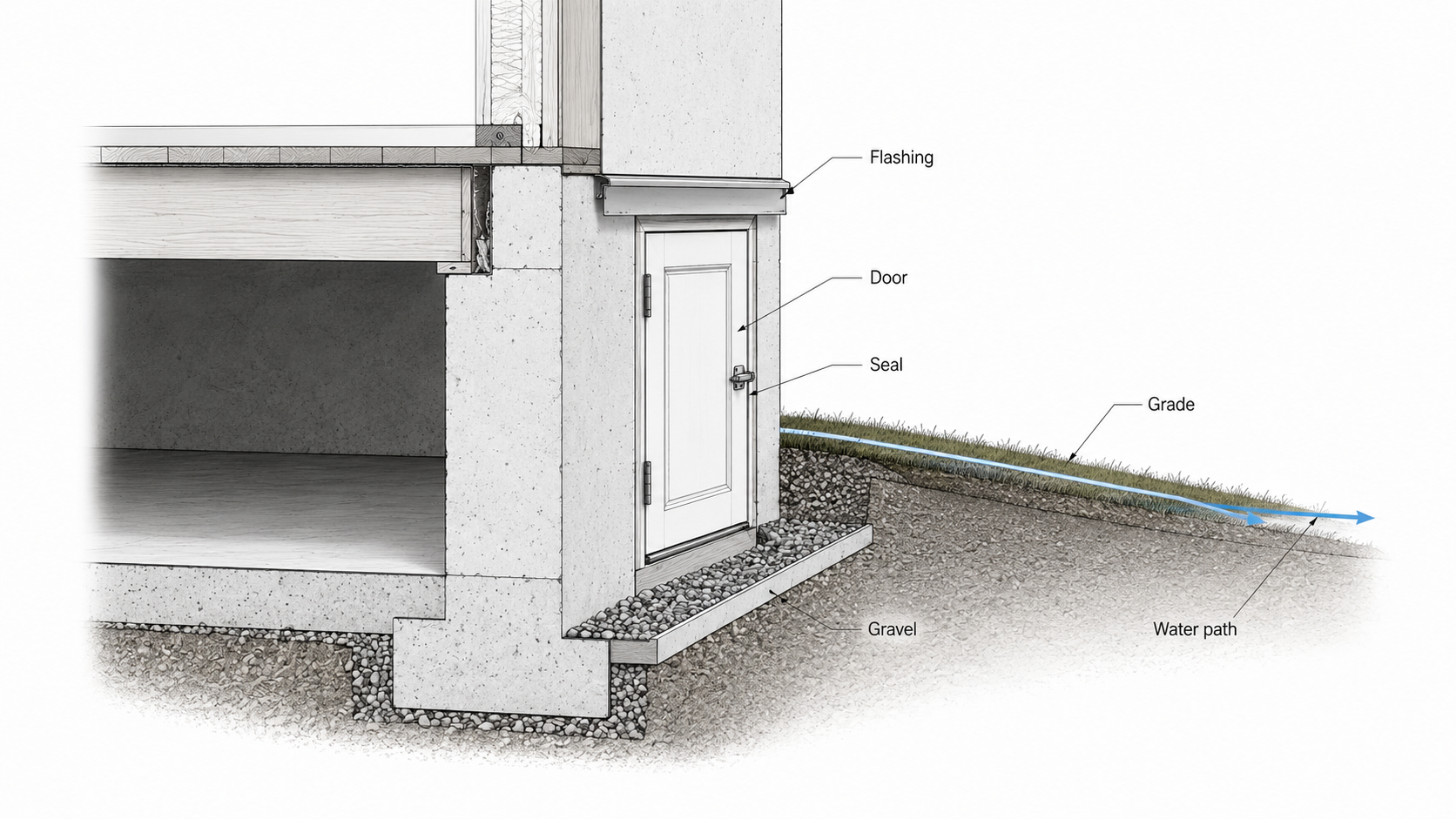
Illustration by ArchitectureCourses.org. The replacement lasts longer when the opening, seal line, flashing edge, and grade below the door work together instead of leaving the new unit back in the same wet vulnerable spot.
The bottom edge is where a lot of these doors lose
This part gets beaten up harder than the rest.
The lower edge catches dirt, splash, mulch, soil buildup, and constant damp contact. That is why old crawl-space doors so often rot or rust from the bottom first. It is not mysterious. That edge lives closest to the abuse.
So if the old one failed there, do not act surprised when the new one does the same unless the outside condition changes.
A little more separation from grade, a cleaner gravel strip, less splashback, and a little more respect for that lower edge can change how long the replacement lasts.
Do not let caulk become the whole repair
This is another way the job gets cheapened.
The new unit does not fit as cleanly as it should, so the gap gets buried in sealant. The wall edge is rough, so the flange hides it. The corner is weak, so the trim line gets thick with patching and hope.
Sealant belongs in the job. It should not be the whole logic of the job.
A crawl-space door should fit the opening cleanly enough that the caulk finishes the edge instead of rescuing the install.
Pick the new door after the replacement scope is clear
Material matters. Fit and exposure still matter more.
Plastic and molded composite units are common because they are light, cheap, and they do not rust. Some are fine in ordinary exposure. Some feel weak too fast.
Metal feels stronger, but metal in a wet splash zone still needs respect. Heavier framed access panels usually cost more, but they make more sense when the opening is larger, the use is heavier, or the location gets rougher weather.
The mistake is buying the “better” product before deciding what kind of replacement this really is. If the opening is bad, the grade is bad, or the access size is bad, the product upgrade does not solve the actual problem.
Keep the outside condition from beating up the new one
A replacement crawl-space door should not go back into a wall with dirt packed at the base and water pushed toward it.
Clear the area. Get the mulch away from it. Keep runoff from landing there. Give the lower edge a little room to stay dry between storms. Stop treating the foundation opening like something the yard can slowly swallow.
This is dull work. It matters.
A lot of replacements fail quietly because the door was installed decently and the outside condition stayed sloppy.
If the crawl is moving toward sealing, stop replacing the door like it is 1987
This changes the standard for the replacement.
If the crawl is being treated as a cleaner, tighter, more controlled space, the replacement door has to behave like part of that system. Better closure. Better fit. Less tolerance for sloppy corners and loose edges.
You do not need some heroic specialty product. You do need to stop reinstalling a loose hatch that would have been barely acceptable on an old vented crawl nobody expected much from.
The replacement has to match the crawl strategy now, not the crawl strategy from twenty years ago.
Also useful: If the crawl is moving that way, read crawl space encapsulation vs vapor barrier only and conditioned crawl space vs encapsulated crawl space.
Where replacement jobs usually go bad
Usually in familiar places.
- the new unit gets ordered before the opening is checked properly
- the wall edge is weak and nobody really fixes it
- the lower edge goes back into the same wet grade condition
- the same undersized opening gets repeated even though access was already bad
- the fit is wrong and sealant gets asked to hide it
Those are not rare mistakes. They are the normal ones.
That is why some replacements feel finished and some feel temporary on day one. The weak replacement usually solved the visible problem only.
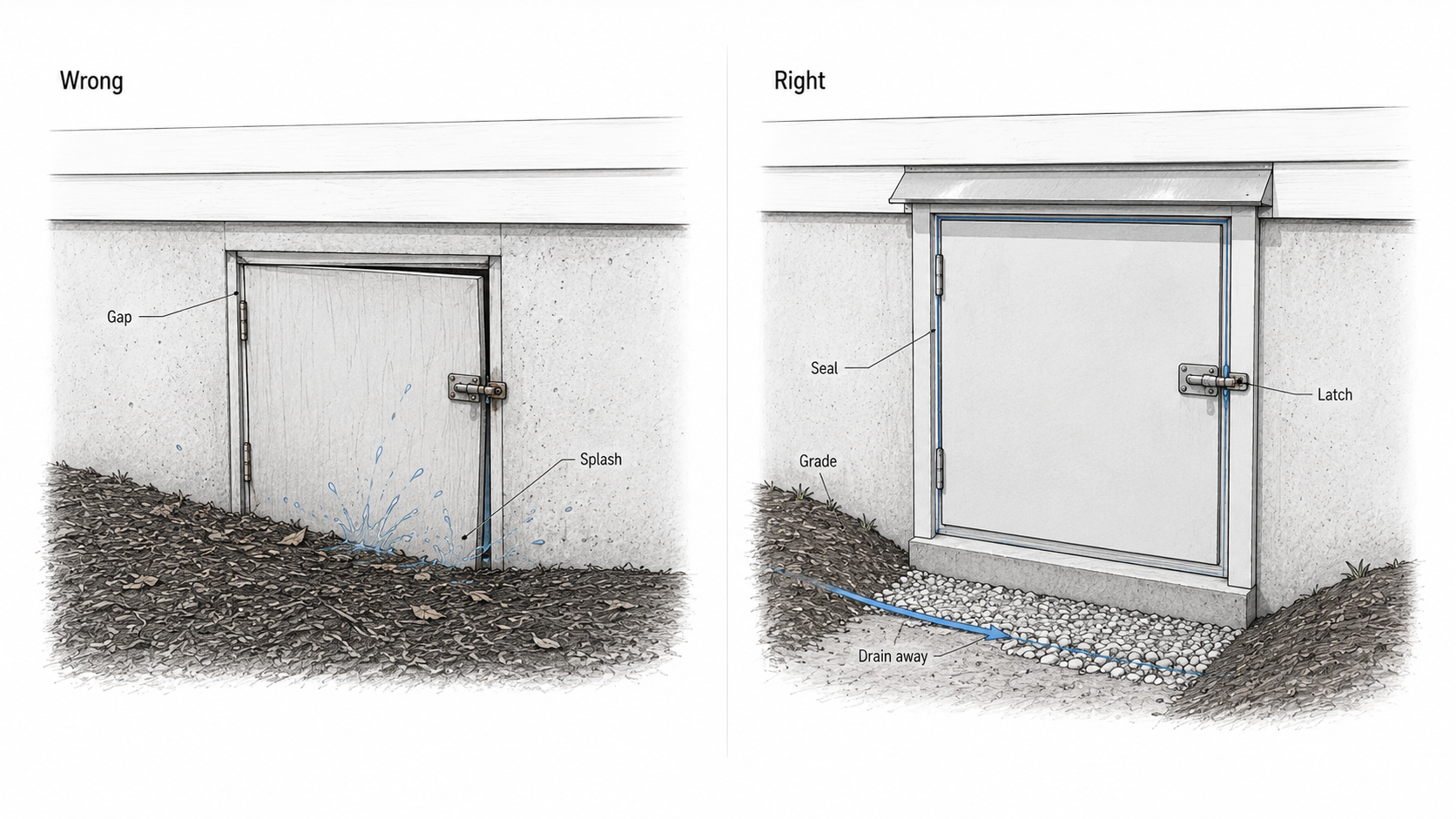
Illustration by ArchitectureCourses.org. A better replacement sits a little higher, seals tighter, and does not spend every rainstorm catching dirt and splash at the bottom edge.
This is really an access decision
That is the part worth keeping in view.
A bad crawl-space door slows down every later job. Inspection gets worse. Wet insulation removal gets worse. Plumbing access gets worse. Duct service gets worse. Moisture repair gets more awkward than it needed to be.
A good replacement lowers that friction for years. That is why I would rather fix the opening once and stop fighting it than save a little money now and keep paying for the same bad access later.
Check these before you call it done
- the opening is solid enough for the new frame
- the size still makes sense for real access
- the new door fits cleanly without being forced
- the lower edge is no longer sitting back in the same wet condition that ruined the last one
- the outside area below it is clear enough that dirt and water are not immediately working against the replacement
If those are still shaky, the job is not done just because a new panel is attached.
Read this next
If the bigger job is creating or rebuilding the opening itself, go next to crawl-space door installation.
If the bigger question is whether the access should move indoors instead, use crawl-space access from inside the house.
If the area around the opening still gets wet after storms, go back upstream to water in a crawl space after rain and crawl space humidity.
FAQ
When is replacing a crawl-space door a simple job?
When the opening is still sound, the size still works, and the old unit is just worn out.
When does a crawl-space door replacement turn into opening repair?
When the wall edge is damaged, the sill area is weak, the fit is crooked, or the opening has been losing to wet grade for years.
Should I replace the old door with the same size?
Only if the size still works. If the old opening was miserable for access, replacement is the moment to rethink that.
Why do replacement crawl-space doors fail again so fast?
Usually because the new unit went back into the same wet, dirty, badly fitted condition that killed the old one.
Can sealant fix a bad crawl-space door replacement?
No. It can finish a decent replacement. It cannot turn a bad opening into a good one.