
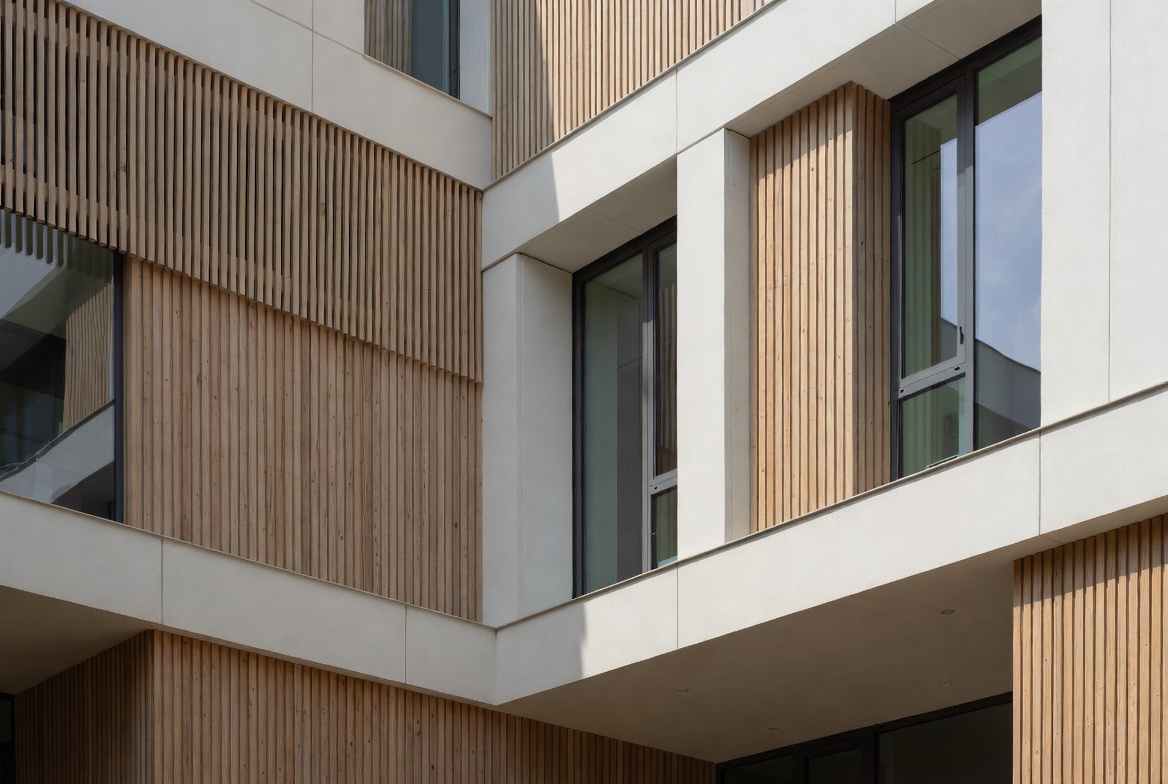
Modern facade combining timber screening, deep reveals, and durable mineral-faced surfaces. Photo: ArchitectureCourses.org.
Most sustainable material advice is written for a clean site and a new build. Renovation is not that.
You are choosing inside a house that already has weak windows, air leaks, aging equipment, and at least one problem nobody fully priced at the start.
So the material question changes. The best move is not always replacement. Often it is keeping more, fixing the assemblies that are underperforming, and using new materials only where they make a noticeable difference.
Some materials earn the premium. Some need repair. Some are not worth it.
Most “Sustainable Materials” Advice Starts Too Late
It usually starts at the finish schedule.
Countertops. Flooring. Cladding. Cabinet fronts. Maybe insulation if the article is trying a little harder. Meanwhile the house is still losing heat through attic bypasses, the windows are being blamed for problems coming from three different places, and the HVAC quote is being built around the existing bad shell.
That is backwards.
In renovation, material choice starts earlier. It starts with what stays, what goes, and what is already being opened up. It starts with the question most homeowners try to postpone: which parts of this house are actually failing, and which parts only look dated?
That question matters because sustainable building materials do not work the same way in renovation that they do in new construction. Reuse suddenly matters more. Access matters more. Demolition cost matters more. Repairability matters more. So does the way one trade’s “solution” can make the rest of the scope worse.
That is why the right order is usually something like this:
- find the assemblies that are leaking air, holding moisture, or costing comfort
- keep materials that still have real service life left
- upgrade insulation and enclosure layers where the payoff is clear
- repair windows before assuming replacement
- replace or add new materials where they change performance, not just appearance
- fit HVAC decisions to the improved house, not the old bad condition
| Do This Instead Of This | Better Move | Common Mistake | Why It Usually Wins |
|---|---|---|---|
| Start with the shell | Fix leakage, moisture, and weak assemblies first | Start shopping branded “green” finishes | You solve the part of the house that keeps wasting money and comfort |
| Keep good materials | Repair, refinish, reuse, or selectively replace | Full tear-out for visual reset | Less waste, less labor, more budget left for real performance work |
| Use access strategically | Upgrade assemblies already being opened | Open finished areas later for small gains | Renovation timing matters as much as product choice |
| Reduce loads before HVAC | Seal and insulate first where possible | Install new equipment into the same weak shell | You avoid oversizing and paying twice for the same problem |
Worth Knowing: if you want the broader field first, Sustainable Building Materials: What Works and What Fails is the right companion page. If your question is narrower and more residential, Sustainable House Materials is the cleaner next step.
Keep What Is Still Doing Its Job
This is still the most underappreciated sustainability move in renovation.
Keep the cabinet boxes if they are sound. Keep the hardwood if it can be refinished. Keep the trim if it is carrying the house better than any replacement millwork will. Keep the framing if it is dry and solid. Keep the brick if it needs repair, not concealment. Keep the older wood windows if they are repairable and the room problem is not really the sash alone.
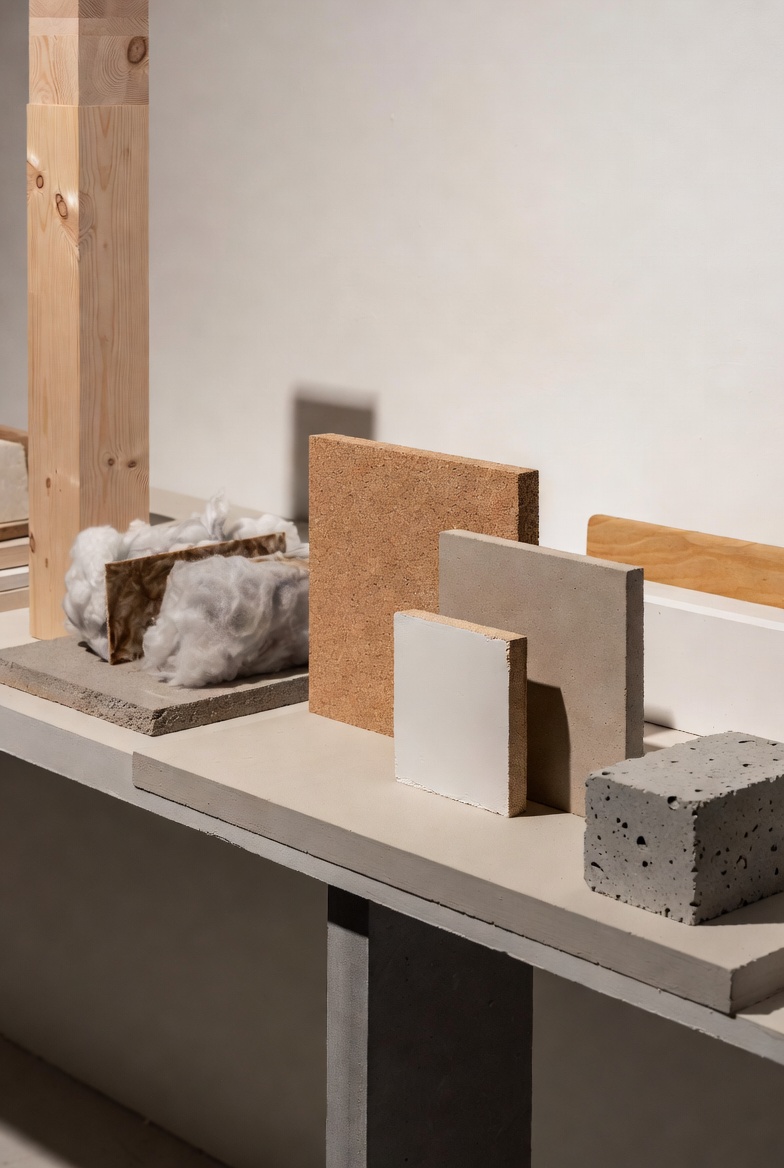
That does not mean save everything. Some materials are done. Some assemblies were weak from the start. Some old products become a maintenance trap if you cling to them too long. But there is a big difference between selective replacement and demolition as a reflex.
EPA’s current construction-and-demolition guidance is clear that source reduction, salvage, reuse, and preserving existing structures belong in the sustainable-materials conversation, not just recycling after the waste pile is already made. In renovation terms, that means the greenest material may be the one you do not throw away in the first place.
That sounds obvious. It still gets ignored.
A lot of “eco-friendly building materials for houses” articles quietly assume the only meaningful sustainable act is buying something new with a better label. Renovation is rougher than that. Service life matters. Repairability matters. Labor familiarity matters. So does the fact that a new material can push other needed work out of the budget.
Related Reading: if the wood side of the decision is part of the scope—trim, flooring, framing repairs, cladding, or cabinet work—go to Sustainable Wood. It fits this conversation better than generic “eco material” lists because it gets into where wood still earns its place and where it does not.
Insulation Changes The House Faster Than Finish Materials
If you want one material category that regularly changes how a house feels, this is it.
Not because insulation is always the most important line item. But because it shows up in comfort, energy use, and mechanical sizing faster than a lot of decorative “green” decisions ever will.
In renovation, the best insulation upgrades are usually not distributed evenly through the house. They are targeted. Attics. Rooflines. Rim joists. Floors over garages. Crawl-space boundaries. Basement edges. Sometimes walls, but not always first.
That is where renovation judgment matters.
If the wall is already open for rewiring or plumbing, the math changes. If siding is coming off, the math changes again. If the room is finished, the trim is delicate, and the wall upgrade is only going to move the needle a little, the wall may not earn demolition.
| Insulation Material | Use This When | Avoid This When | What Usually Matters In Renovation |
|---|---|---|---|
| Fiberglass batts | You need a low-cost cavity fill and the installer can fit it properly | You are pretending sloppy installation still counts as high performance | Cheap does not mean bad, but bad fit means weak results |
| Dense-pack cellulose | You need a retrofit wall option with limited disturbance | You have moisture or air-leakage problems you are not addressing | Good retrofit move when the enclosure logic is sound |
| Mineral wool | You want fire resistance, sound control, and a forgiving batt product | The budget is already tight and the premium displaces more important work | Often strong in renovation because it is tough and installer-friendly |
| Hemp or other natural insulation | You want lower-impact materials and the assembly supports it | You are forcing it into the wrong cavity or paying too much for too little gain | Good fit only when assembly, price, and installer base line up |
| Spray foam | You need air sealing and insulation in a difficult location | You are using it as a shortcut for bad moisture thinking | Powerful in the right place, overused in the wrong one |
Also Useful: if you are narrowing the insulation side of the decision, Natural Insulation Materials: Types, Benefits, and Practical Tips gives the lower-impact side of the field, while Sustainable Insulation That Saves Energy and Cuts Costs keeps it tied to performance and renovation reality.
Do Not Gut Good Walls For A Small Gain
This is where people talk themselves into work that sounds responsible and turns into a mess.
In a full gut, wall upgrades often make sense. The surfaces are already gone. Wiring is exposed. Trim is off. Patch scope is already baked in. Fine.
In a light remodel, it is a different job.
Opening finished walls means patching, painting, outlet-box adjustments, trim repair, casing problems, baseboard damage, maybe wiring surprises, maybe plumbing surprises. Sometimes one wall turns into four. That is renovation friction. It does not show up in the material brochure.
So the wall has to earn it.
Good reasons to go there:
- the wall is already open for other work
- the room has a clear comfort or condensation problem tied to that assembly
- cladding work is already giving you a chance to improve the wall from outside
- the house is underinsulated enough that the upgrade will materially change performance
Bad reasons:
- the product sounds virtuous
- you feel guilty not doing “everything”
- the scope was sold as simple when it obviously is not
Natural Materials Still Need A Real Job To Do
This is where plant-based and lower-impact materials get overpraised.
Yes, some of them are smart. Yes, some belong in renovation. No, they do not get a free pass because the story around them sounds cleaner.
Hemp is the obvious example. It attracts attention because it checks several boxes people want checked. Renewable. Lower-drama handling. Stronger environmental story. Fair enough. But on an actual renovation, the question is not just whether hemp sounds better than fiberglass. The question is whether the product fits the cavity, the moisture risk, the installer base, the budget, and the rest of the wall assembly.
That is why it helps to pull the discussion one level wider. If the project is drifting past insulation and into plant-based wall systems, blocks, infill, or broader low-impact material substitutions, use Hemp Building Materials Explained: Uses, Benefits, and Cost Breakdown as the follow-up. It is a better bridge between “should I use hemp insulation here?” and “where do hemp-based materials actually make sense in building work?”
That is a more useful question than treating every natural material like an automatic upgrade.
Window Upgrades Are Not The Same Thing As Window Replacement
This is one of the biggest budget traps in renovation.
People feel a draft near a window and the logic gets compressed fast. Old window. Bad window. Replace all windows. Problem solved.
Except the room may be cold because the sash leaks a bit, the trim-to-wall connection leaks more, the attic above the room is weak, the wall insulation is poor, and the supply register is undersized. Now the owner is shopping for full replacement to solve four smaller problems at once.
That is how window budgets get out of hand.
Window decisions in renovation need at least three buckets.
| Window Situation | Usually The Better Move | Why |
|---|---|---|
| Older wood windows still operating, mostly sound, but drafty | Repair, weatherstrip, improve air sealing, consider storms | You may gain a lot of comfort without full replacement waste and cost |
| Localized rot, glazing failure, rough operation, but salvageable frame | Targeted repair | The assembly may need maintenance, not disposal |
| Severe rot, repeated leaks, failed units, structural deterioration | Replace | At some point repair stops being the honest answer |
| Whole-house comfort complaint without a clear diagnosis | Check the shell first | Windows often get blamed for a wider enclosure problem |
The other question is material choice if replacement is justified. This is where a lot of articles get lazy. Wood, fiberglass, vinyl, aluminum-clad assemblies—none of them are universally “the sustainable option.” The right answer depends on durability, climate, maintenance tolerance, repairability, and how long the owner will actually keep the unit in service.
That is why window replacement belongs later in the material conversation than many people assume.
Before You Move On: if the windows are wood and still have a case for staying, use Wooden Window Frames: Everything You Need to Know. If parts of the assembly are already into repair-or-replace territory, Wooden Window Frame Replacement: Step-by-Step Basics is the better follow-up.
Heavy Materials Matter More Than Trendy Ones
If the renovation reaches structure, foundation, slabs, major openings, recladding, or facade work, the most important sustainable material choices often shift away from the decorative layers and toward the heavy ones.
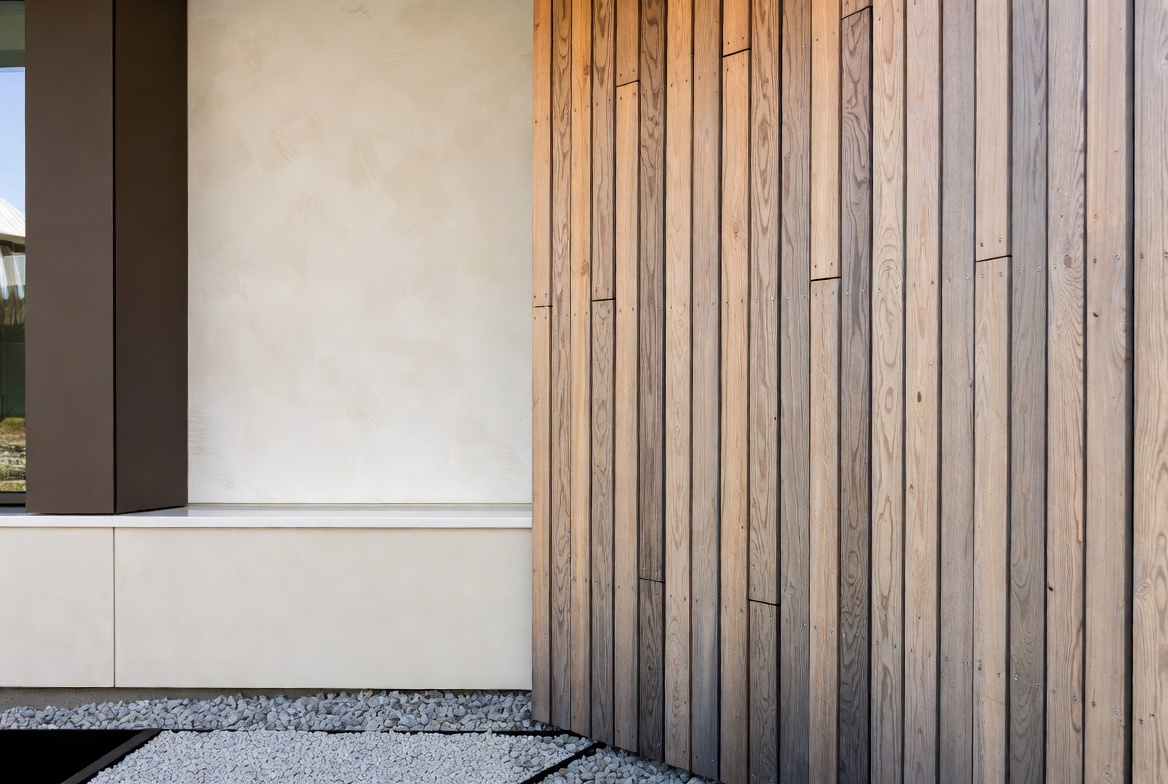
Facade detail showing timber cladding, mineral-finish surfaces, and a restrained material palette. Photo: ArchitectureCourses.org.
That is not a vibe point. It is where a lot of embodied carbon and a lot of permanent cost live.
If your project includes foundation repair, slab replacement, big steel inserts, new glazing packages, or masonry work, those decisions will often matter more than whether a finish line item has a greener story attached to it.
| Material Category | When It Matters Most | What To Watch | Common Renovation Mistake |
|---|---|---|---|
| Concrete and cement | Slabs, footings, basement work, hardscape replacement | Mix design, scope size, durability, whether you can repair instead of replace | Talking about eco finishes while pouring unnecessary new concrete |
| CMU and masonry | Foundation walls, retaining work, infill, repairs | Repair versus rebuild, moisture logic, insulation strategy | Replacing assemblies that could have been stabilized |
| Steel | Openings, structural repairs, additions, reinforcements | Whether it is actually required and how much of it is being introduced | Ignoring the structural material while obsessing over small finish items |
| Glass | Major window or facade replacement | Right-size the opening package, not just the glazing spec | Using full replacement where repair, storm panels, or selective swaps would do |
| Wood | Framing repairs, cladding, flooring, trim, cabinetry | Moisture exposure, species, durability, service life | Choosing “natural” wood without matching it to the real use condition |
Read This Next: if the project is moving into concrete, slabs, or foundation work, Sustainable Concrete Alternatives and Alternative Foundation Materials are the better follow-ups. They fit this section more honestly than broad “green materials” lists because they deal with the heavy end of the job, where real renovation decisions start getting expensive.
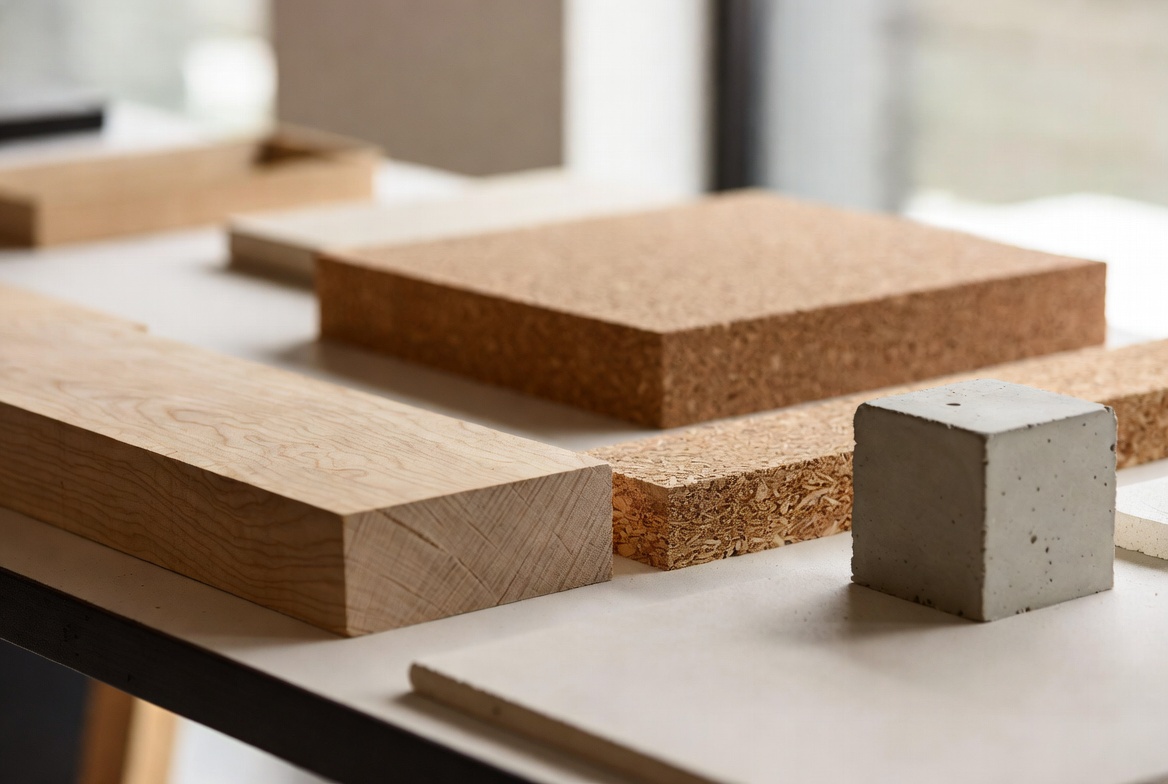
Material samples comparing timber, cork-based board, engineered wood, and concrete in an editorial study setup. Photo: ArchitectureCourses.org.
Heat-Pump Retrofits Reward Boring Material Choices
People treat heat-pump upgrades like a mechanical decision. They are partly a material decision too.
The boring materials around the system often matter more than the machine: duct insulation, air sealing, window condition, insulation continuity, pipe insulation, proper line-set routing, decent exterior supports, sound wall and roof penetrations, weather-tight transitions. None of that is glamorous. All of it affects how the retrofit performs.
This is where sustainable materials and systems start overlapping. A better-insulated shell can support a smaller or cleaner retrofit. Better windows in the right rooms can reduce load where it matters. Better duct and air-barrier details can keep the new system from being judged unfairly.
The mistake is swapping equipment into the same weak enclosure and then acting surprised when the comfort problem gets only half solved.
This Part Matters: if the project is already at quote stage, use Heat Pump Cost Guide: Prices, Installation, and What Drives Cost before comparing numbers that may not be scoped to the same house. If the equipment is staying for now, keep Heat Pump Maintenance close so the renovation does not ignore the system you still depend on.
Indoor Air Quality Still Counts As A Materials Issue
Especially in renovation.
A sustainable remodel can still make the house worse to live in if dust, disturbed finishes, coatings, adhesives, moisture, and bad work practices are handled badly. That is one reason material choice has to include more than embodied-carbon claims.
You also have to ask:
- How is this material installed?
- Does the installation create dust, fumes, or moisture risk that needs control?
- Can the room be ventilated during the work?
- Will this assembly trap moisture after the remodel?
- Is the old material being disturbed more dangerous than the new one is beneficial?
That last question matters a lot in older homes. Renovation is not just about what you add. It is also about how safely you disturb what is already there.
What Usually Is Not Worth Tearing Out
Not as a universal rule. As a renovation default.
- sound cabinet boxes
- solid hardwood floors with enough life left to refinish
- repairable wood windows
- good trim and doors that still suit the house
- brick and masonry with repairable damage
- framing that is doing its job
What usually is worth replacing sooner:
- materials with ongoing moisture failure
- assemblies that cannot be made safe or durable without major patchwork
- windows or doors that are structurally done, not just ugly
- flooring or finishes that keep demanding maintenance beyond their value
- cheap previous-renovation materials that are blocking better enclosure work
The general rule is simple. Replace when the old material is no longer doing its job honestly. Keep it when it still is.
What People Get Wrong
They let the finish schedule drive the sustainability discussion.
That is the wrong end of the job.
They assume new always beats old.
Renovation is full of assemblies that still have more life in them than their replacements will.
They talk about low-impact materials while ignoring concrete, steel, glass, and other heavy scope items.
That is a scale problem.
They treat window replacement as the automatic energy move.
Sometimes it is. Often it is not the first one.
They buy insulation by ideology instead of assembly.
Natural does not automatically mean right.
They do not account for access.
A good material choice in a full gut can be a bad one in a light remodel.
They forget indoor air quality.
A renovation can improve efficiency and still make the house worse to live in if dust, fumes, and moisture are handled badly.
Quick Checklist
- start by listing the assemblies that are actually underperforming
- keep materials with real service life left
- air-seal before you spend heavily on insulation
- upgrade insulation where access and payoff justify it
- repair or tighten salvageable windows before assuming full replacement
- pay attention to heavy materials if the project reaches structure, slabs, or facade work
- treat HVAC retrofits as shell-and-material decisions too
- plan for indoor air quality during demolition and installation
- treat each trade quote as partial, not final truth
FAQ
What are the most sustainable building materials for a house renovation?
Often the most sustainable materials are the ones already in the house that still have service life left. After that, the best new materials are the ones that improve insulation, durability, air sealing, moisture control, and long-term maintenance enough to justify the replacement.
Is insulation a better eco upgrade than new finish materials?
Usually yes. In many houses, insulation and air-sealing work change comfort and operating cost faster than decorative material swaps ever will.
Are natural building materials always better in renovation?
No. They still have to fit the assembly, moisture conditions, installer skill, budget, and access. Renovation is stricter than product marketing.
Should I replace all my old windows for sustainability?
Not automatically. Repair, weatherstripping, and storm-window options can often make more sense before full replacement, especially if the windows are still structurally sound.
What matters more in embodied-carbon terms: finishes or heavy materials?
If the project includes new slabs, structural work, major masonry, steel, or glazing, those heavy materials often matter more than the trendier decorative items people usually obsess over first.
How do I know if a material is worth keeping?
If it is still doing its job, can be repaired without ridiculous labor, and will stay in service for years after the renovation, it usually deserves a serious look before replacement.
Can a heat-pump renovation still fail if the equipment is good?
Yes. Weak insulation, leaky transitions, poor ducts, and bad window or room distribution conditions can all make a good system perform worse than it should.
What To Read Next
If you are still sorting the material side broadly, start with Types of Sustainable Materials: Real Costs and Trade-Offs.
If the project is leaning more natural, go next to Natural Building Materials: A Comprehensive Guide for Builders and Students.
If your renovation is already down in the structure, foundation, or slab zone, move straight to Sustainable Concrete Alternatives and Alternative Foundation Materials.
The point is not to make every part of the house new. It is to make the house waste less, work better, and last longer without tearing out more than the job can honestly justify.