
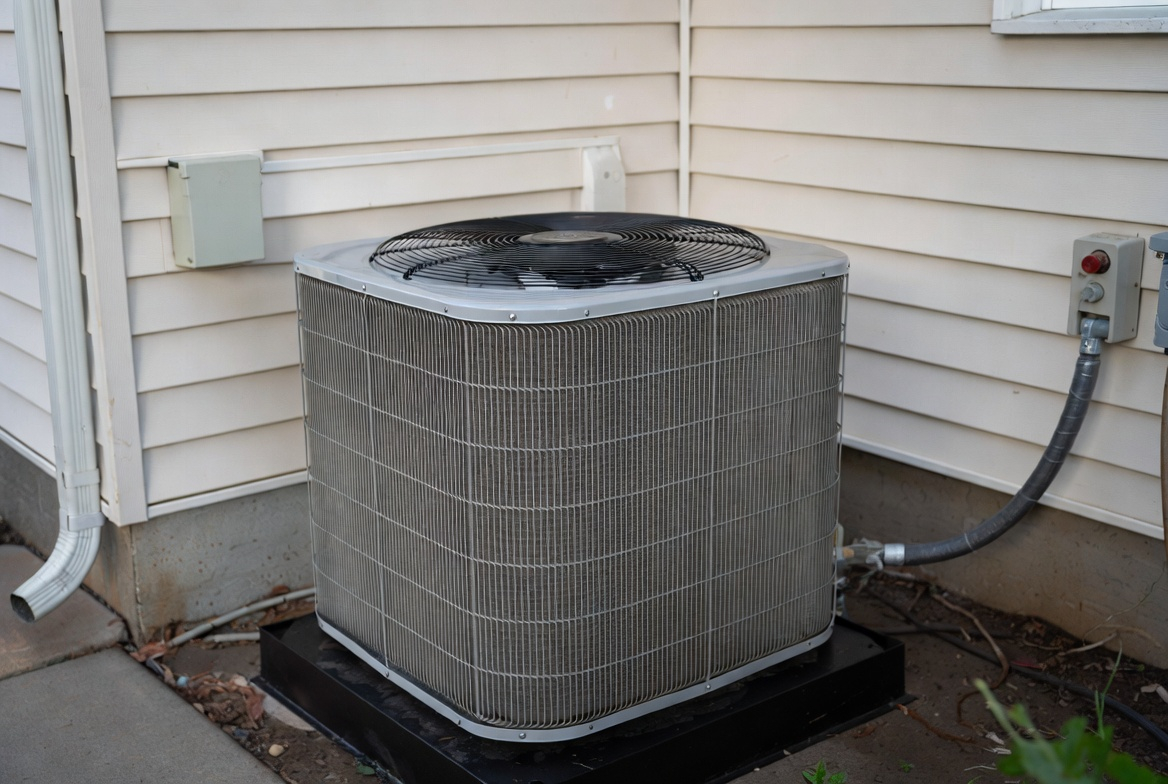
Most people price heat pumps like they’re buying a box: “unit cost + install.” That’s how you end up with two quotes that don’t even feel like the same job.
In real houses, you’re paying for a system change: equipment, electrical reality, air distribution, refrigerant routing, drainage, and the install details that decide whether it’s quiet and comfortable or loud and annoying for the next decade.
How Much Does a Heat Pump Cost? Real Prices + Install Factors
The Three Budgets Hiding Inside Every Heat Pump Quote
If you want to understand pricing fast, split the quote into these three buckets. Most “surprises” are just bucket 2 or 3 showing up late.
- 1) Equipment Package
Outdoor unit + indoor unit (air handler or heads) + matched coil + controls. Variable-speed and cold-climate equipment usually costs more. - 2) Electrical Scope
Breakers, wiring runs, disconnect, outdoor shutoff placement, and sometimes a panel/service upgrade when the existing setup can’t safely carry the new load. - 3) Air Side and Routing
Duct fixes (if ducted), returns, static pressure issues, line-set routing, condensate drains, wall penetrations, and the labor to do it cleanly without noise and vibration.
Installed Cost Ranges in the U.S.
These are broad ranges. Local labor rates, access, duct condition, and electrical capacity swing the price more than most homeowners expect.
| System Type | Typical Use | Installed Range (USD) | What Usually Pushes It Up |
|---|---|---|---|
| Ductless Mini-Split (Single Zone) | One room, addition, small apartment, finished basement area | $3,500–$7,500 | Long line-set route, tough exterior penetration, premium equipment, long electrical run |
| Ductless Multi-Zone | Several rooms without ducts | $7,000–$18,000 | More heads, complex routing, tight access, longer commissioning time |
| Ducted Split Heat Pump | Homes with existing ductwork | $8,000–$20,000 | Duct repairs, return upgrades, electrical constraints, airflow problems |
| Cold-Climate Whole-Home Systems | Colder regions, comfort-first upgrades | $10,000–$25,000 | Higher equipment cost, controls strategy, more setup and verification |
| Hybrid / Dual-Fuel | Keep gas as backup for peaks | $10,000–$26,000 | Controls integration, compatibility with old equipment, venting and safety checks |
| Geothermal | High-efficiency long-term play | $20,000–$50,000+ | Loop drilling/trenching, site access, geology, permitting |
“These ranges are usually before tax credits, rebates, and utility incentives.”
A clean way to read this: ducted replacements can be straightforward when ducts and electrical are already solid. Ductless can start cheaper, then climbs with each zone. Geothermal is not “a nicer heat pump.” It’s a site project.
See prices on Amazon
What Changes the Quote Most
1) Sizing and Load Assumptions
A serious bid is tied to a load calculation, not “square footage and a guess.” Oversizing is common. It can show up later as short-cycling, worse humidity control, and louder operation. Paying for correct sizing often saves money by avoiding the wrong equipment choice.
2) Ductwork Reality (If Ducted)
Heat pumps are picky about airflow. If ducts are undersized, leaky, crushed, or missing return air, the system can be “installed correctly” and still feel wrong in the rooms.
- Cost goes up when return paths, sealing, balancing, or duct rework is included.
- Comfort goes up when that work actually happens.
3) Electrical Capacity and Panel Space
Older houses get expensive fast when the panel is full, the service is limited, or the run to the outdoor unit is long. A panel upgrade is not automatic, but it becomes likely when you’re already stacked with other big loads (EV charger, electric water heater, range).
4) Cold-Weather Expectations
“I want a heat pump” is not one spec. Some homeowners want it to carry most of the winter. Others want a hybrid setup that leans on gas during the worst days. Those are different equipment and control strategies, so the quote behaves differently.
5) Line-Set Routing and Finish Damage
Finished basements, plaster walls, brick veneer, tile, tight joist bays, and “no clean chase” routes turn routing into labor. If a quote looks high, ask where the refrigerant lines and condensate drain are actually going.
6) Outdoor Unit Placement
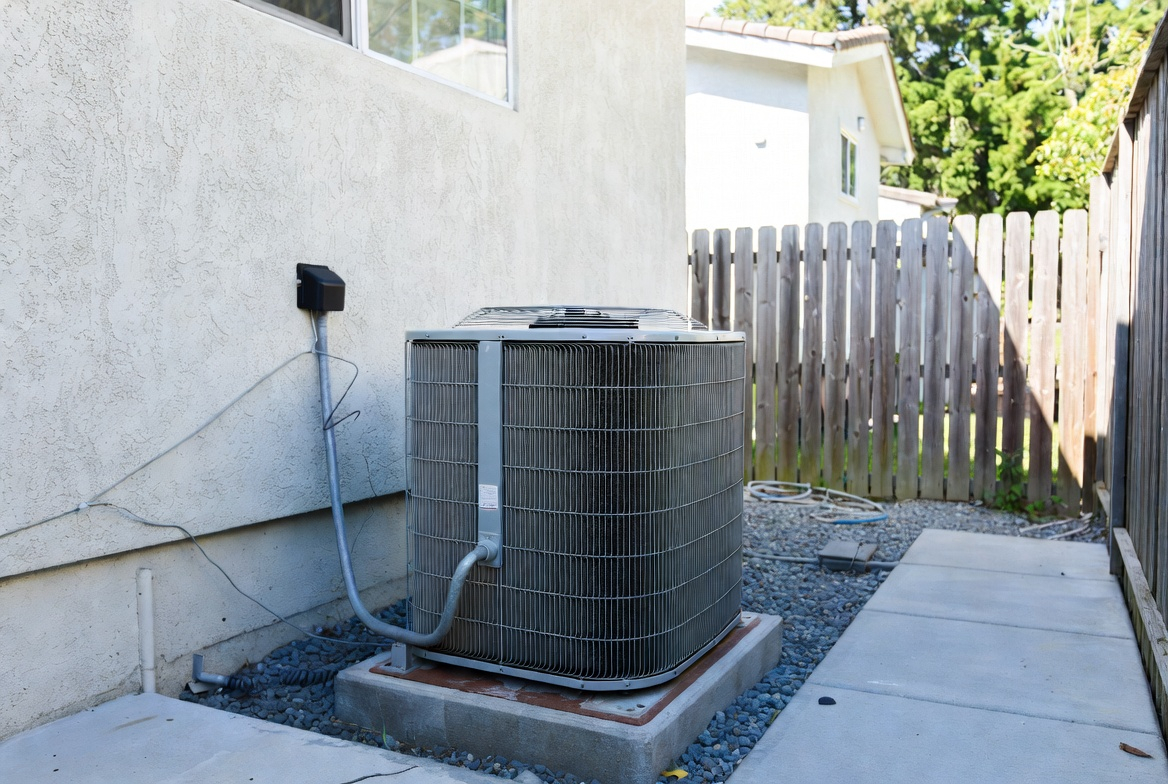
Bad placement is a slow burn: roof runoff icing the unit, snow drifting, noise into bedrooms, vibration through framing, or a unit jammed into a dead-air corner. A proper pad, clearances, and a serviceable location can cost more up front and save years of frustration.
7) Permits, Startup, and “Is It Actually Commissioned?”
A system is only “as-designed” when it’s set up and verified. For ducted systems, that usually means airflow and static pressure checks. For all systems, it means proper charge, drainage, control setup, and a clean handoff. If the quote has no commissioning language, expect a faster install model.
Real-House Mess That Adds Money
These are the repeat offenders. Nothing fancy. Just the stuff houses do.
- Finished basement ceiling, no path: the job becomes a routing puzzle. Lines and drains need a route that doesn’t wreck the finish or land in the wrong place.
- The “one sad return” problem: a single undersized return that was tolerated by an old furnace, but makes a modern air handler noisy and uneven.
- Panel is full, labels are wrong: you lose time to safe tracing, and sometimes that turns into real electrical scope.
- Attic access is hostile: low headroom, blown insulation, no walkway, and a setup that punishes anyone trying to do careful work.
When a contractor says, “Your house is going to take longer,” this is usually what they mean. Ask them which one they’re seeing.
How to Compare Quotes Without Getting Played
The easiest way to expose a lowball is to force every bidder to answer the same scope questions in writing.
Send This Checklist to Every Bidder
- Exact equipment: outdoor unit + indoor unit + coil/air handler + thermostat/controls.
- Sizing basis: load calculation, existing equipment match, or rule-of-thumb?
- Electrical included: breakers, disconnect, wire runs, any panel/service changes.
- Duct scope included: sealing, balancing, returns, filter rack, static pressure checks.
- Cold-weather plan: heat strips, dual-fuel lockout, or heat-pump-only target.
- Startup/commissioning: what gets measured and documented?
- Exclusions: patching, pad relocation, condensate pump, line-hide, permit fees.
If one quote is vague and one is specific, the specific one is usually closer to the real cost of the job. The cheaper one might still be fine. It’s just easier for it to grow later.
Running Cost: A Fast Reality Check
The mistake is comparing “heat pump vs gas” using national average utility rates. Use your own.
- 1 therm of gas = 100,000 BTU.
- 1 kWh = 3,412 BTU.
A heat pump’s efficiency changes with outdoor temperature. That’s normal. The practical takeaway: in milder weather, heat pumps are usually very efficient; as it gets colder, efficiency drops and the cost comparison can tighten depending on your rates and backup strategy.
If you want the cleanest comparison without turning it into a spreadsheet, ask each bidder for: (1) the assumed heating balance point strategy, and (2) what backup heat does on the coldest days in your area.
Maintenance Costs (Short Version)
Most “maintenance costs” are really neglect costs. Filters and airflow matter. Drainage matters. Keeping the outdoor unit clear matters.
- Owner tasks: change filters, keep the outdoor coil clear, watch for condensate issues.
- Pro tasks: performance checks if comfort drops, electrical connection checks, airflow verification on ducted systems.
See our heat pump maintenance checklist for filters, coils, drains, and outdoor unit care.
What’s Next
Write a one-page scope sheet before you request quote #2: ducted vs ductless, target rooms/zones, known electrical constraints, duct condition (good, questionable, terrible), and whether you want full winter heating or a hybrid strategy. Send that same sheet to every bidder.
Then compare quotes on scope and verification, not just sticker price. If a contractor can’t tell you where lines and drains go, what electrical changes are included, and what gets measured at startup, you’re not looking at a complete plan yet.