
Renewable building materials are not a clean renovation decision.
You are not picking from a blank palette. You are working inside a house that already has weak insulation in one area, trim worth keeping in another, assemblies that still have years left in them, and at least one expensive problem hiding behind something that looks fine from the room side.
So the question is not just which material sounds greener. It is what should stay, what should be repaired, and where a renewable material will do enough to justify the cost and disruption.
In renovation, the best choice is often less replacement, not more. Keep more of the house. Fix the assemblies that are wasting comfort and energy. Use renewable materials where they solve a real building problem.
Not every sustainable material is renewable. Not every renewable material is low-risk. And not every low-carbon spec belongs in an old house or a light remodel.
Renewable Is Not The Same As Sustainable
This is where a lot of bad articles fall apart in the first five paragraphs.
Renewable usually means the source can regenerate on a human timescale. Wood from well-managed forests can fit. Cork fits. Bamboo fits. Hemp-based materials can fit. Wool and some natural-fiber insulation products fit.
That does not automatically make them the right choice.
A material can be renewable and still be a bad renovation move if it does not suit the assembly, if it needs too much processing, if the supply chain is messy, if the installer base is thin, or if the product fails early and has to be replaced again. That last point matters more than people want to admit. Service life is part of sustainability. So is repairability. So is keeping decent material in place instead of throwing it into a dumpster for the sake of a newer label.
It also works the other way. Some materials that belong in a serious low-impact conversation are not renewable at all. Recycled steel is not renewable. Recycled aggregate is not renewable. Yet both may matter more than a fashionable plant-based finish if the project reaches structure, slabs, or major openings.
So for renovation work, this is the cleaner framing:
- renewable materials are one useful category, not the whole answer
- reuse belongs in the same conversation
- heavy materials can outweigh decorative eco gestures fast
- the right material still has to fit the real building
Keep More Before You Spec More
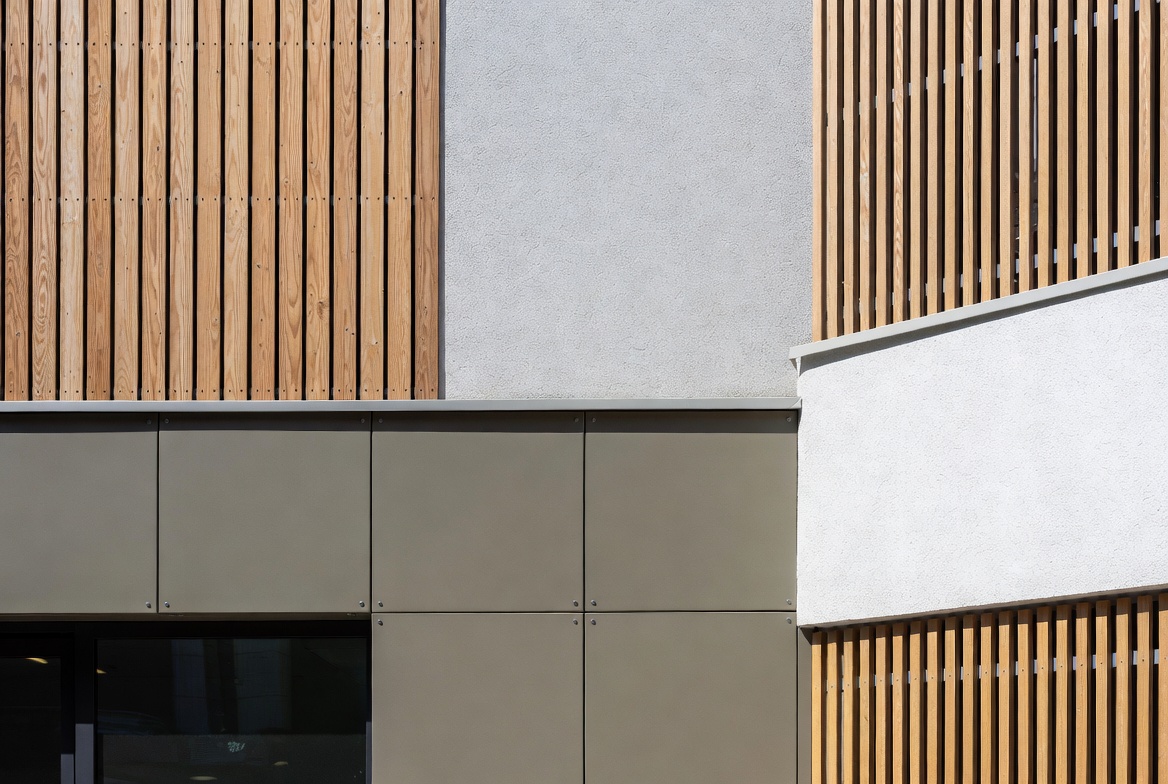
Exterior detail comparing timber screening, rendered surfaces, and panelized cladding in one facade composition. Photo: ArchitectureCourses.org.
This is still the strongest sustainability move in most renovation jobs.
Keep the hardwood if it can be refinished. Keep the trim if it still suits the house. Keep framing that is dry and solid. Keep the brick if it needs repair, not concealment. Keep repairable wood windows. Keep cabinet boxes if the problem is the door style, not the box itself.
That is not sentimentality. It is material discipline.
Too many “green” renovations start with a full tear-out of decent material, then spend the next two months congratulating themselves for ordering something with a better environmental backstory. That is not a serious building strategy. It is branding.
There are materials that deserve replacement sooner—wet rot, structurally failed windows, cheap previous-renovation junk that blocks better enclosure work, finishes that will keep demanding maintenance beyond their value. Fine. Replace those. But the default should still be: what can stay in service honestly for another fifteen or twenty years if we repair it properly now?
Worth Knowing: if the wood side of the job is part of the scope—trim, flooring, framing repairs, cabinetry, cladding—start with Sustainable Wood. It is a better follow-up than generic eco-material roundups because it gets into use condition, service life, and where wood still earns its place.
| Do This Instead Of This | Better Move | Common Mistake | Why It Wins |
|---|---|---|---|
| Reuse first | Keep and repair materials with real service life left | Tear out everything for a reset | Less waste, less labor, more budget left for real performance work |
| Match material to assembly | Choose products that fit moisture, wear, and access conditions | Choose by story alone | Renewable still has to mean durable and buildable |
| Use access strategically | Upgrade assemblies that are already being opened | Open finished work later for small gains | Timing matters as much as material choice |
| Fix the weak shell first | Air-seal and insulate before buying visible “green” finishes | Start with statement materials | The enclosure changes comfort and operating cost faster |
Wood Still Does More Useful Work Than Most Renewable Materials
Not the trendiest one. The most useful one.
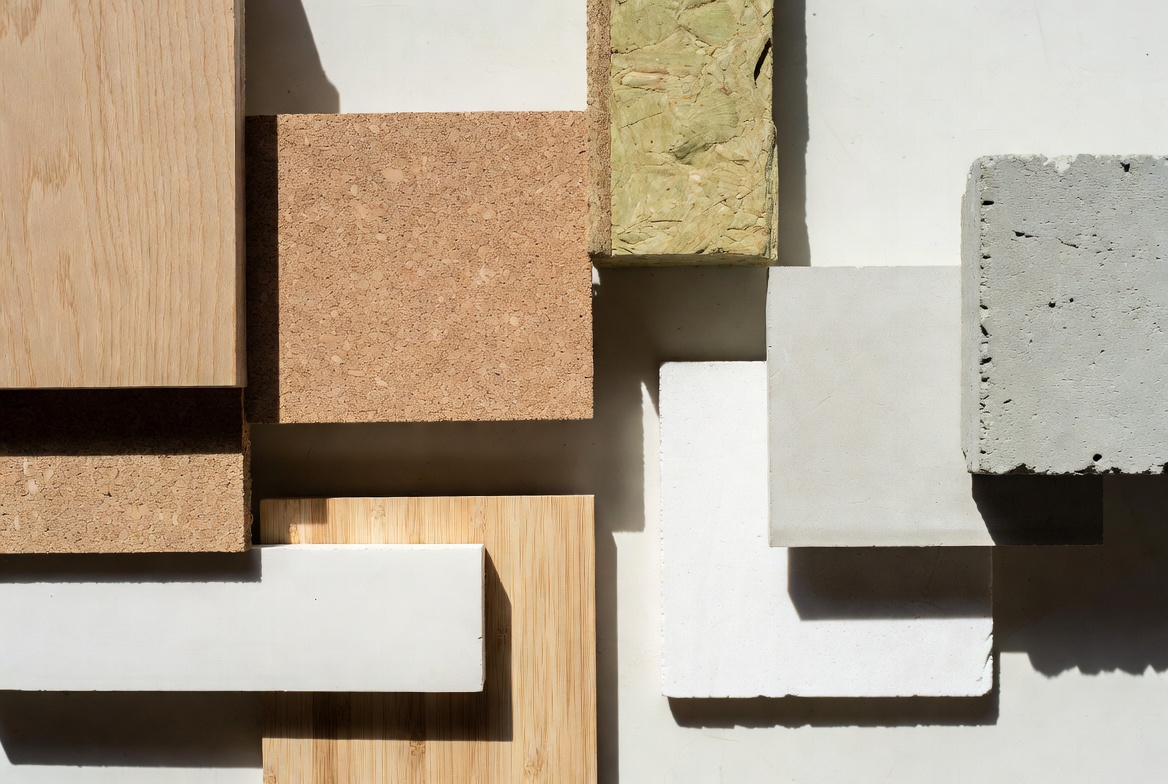
Material comparison layout showing several lower-impact construction products with different textures and likely trade-offs. Photo: ArchitectureCourses.org.
Wood earns its place in renovation because it already exists in so many parts of the house. Floors. Framing. Trim. Doors. Cabinet boxes. Sheathing. Exterior details. Porch repairs. Millwork. Window components. If you are trying to make a house more materially responsible, wood is usually the first category worth sorting carefully instead of replacing blindly.
That does not mean wood gets a free pass. Exterior exposure, species, finish, detailing, ventilation, and maintenance all matter. Some wood assemblies age beautifully. Some rot because the detail was weak from day one. Some engineered wood products are excellent. Some are the wrong choice anywhere near repeated wetting.
Still, if a house gives you good original wood materials, they often deserve a second look before replacement. That is especially true with older trim, hardwood floors, interior doors, and some window parts. Renovation gets expensive fast when you throw out materials that still outperform the products replacing them.
Wood is also one of the few renewable categories that can operate across both repair and new insertion. You can keep the old floor, patch the damaged boards, add matching material, and move on. You can stabilize old framing and still add new wood where the structure needs help. That flexibility matters in renovation more than the perfect purity of the material story.
Hemp Works Best When The Assembly Needs What Hemp Is Good At
Hemp gets more attention than most renewable materials because it checks a lot of boxes people want checked. Renewable input. Lower-drama handling. Strong environmental story. Often appealing to clients who want a material that feels different from the usual lineup.
Fine. That is not enough by itself.
In renovation, hemp materials only make sense when the actual assembly justifies them. Hemp insulation may be worth considering in the right wall, roof, or partition. Hempcrete can make sense in certain infill, retrofit, or low-rise assemblies where moisture handling, vapor openness, and a broader low-impact approach are part of the plan. But the real comparison is not hemp versus some abstract villain material. It is hemp versus fiberglass, hemp versus mineral wool, hemp versus cellulose, at a specific depth, in a specific cavity, at a specific price, with a specific crew.
That is where the hype usually falls away.
Hemp tends to get oversold in two ways. First, as if it belongs everywhere. It does not. Second, as if its environmental story excuses weak detailing, sloppy sequencing, or cost that displaces more important work. It does not.
Also Useful: if the project is drifting beyond insulation and into blocks, infill, or wider plant-based wall systems, use Hemp Building Materials Explained: Uses, Benefits, and Cost Breakdown. If the conversation is narrower and more assembly-specific, Hempcrete: The Green Revolution in Construction is the better follow-up.
Cork Is Good In Small, Specific Ways
Cork gets sold like a miracle product. It is not. It is still useful.
In renovation, cork makes the most sense where softness underfoot, acoustic damping, moderate thermal comfort, and lower-impact sourcing matter more than brute wear resistance. Flooring is the obvious use. Underlayment and some wall applications can also make sense. Bedrooms, offices, quiet rooms, and lighter-use spaces are where cork usually does its best work.
What it is not is a universal answer for every wet zone, every hard-use room, or every client who wants a “natural material” line item. Renovation punishes those shortcuts. The better cork jobs are the ones where the owner understands exactly what the material is supposed to do and what it is not.
Bamboo Is A Product Decision, Not A Building Philosophy
Bamboo is another material that gets forced into bigger claims than it can carry.
Yes, it grows fast. Yes, it belongs in the renewable-material conversation. No, that does not tell you whether it belongs in your renovation.
In real projects, bamboo tends to make more sense in finished products than in broad building theory. Flooring. Panels. Cabinet material. Some millwork. Sometimes furniture. That is where most homeowners will meet it.
The real questions are more ordinary than the marketing language suggests:
- How stable is the product?
- How was it processed?
- How much adhesive is in it?
- Can your installer work with it properly?
- Does it suit the room, or are you forcing it because the material story sounds good?
Bamboo can be a smart renewable choice. It can also be a mediocre finished product with a strong sales pitch. Renovation does not care about the pitch. It cares how the floor, panel, or cabinet behaves after the house is occupied and the novelty wears off.
Related Reading: if you want the broader design-and-build angle on this material before using it beyond finish selections, see Sustainable Architecture: Building with Bamboo.
Insulation Usually Matters More Than Fancy Renewable Finishes
If you are trying to make a house materially more responsible, insulation usually beats decorative material swaps for impact.
That is not because insulation is always the most glamorous line item. It is because it shows up in comfort, operating cost, and mechanical sizing faster than a lot of visible “green” upgrades ever will.
In renovation, the better insulation decisions tend to happen in the attic, roofline, rim joist, crawl-space boundary, floor over garage, or basement edge long before they happen at the countertop showroom. That is where the building starts behaving differently.
The material question here is not just “which insulation is greener?” It is “which insulation strategy fits the assembly, the access, the moisture risk, and the budget?” Dense-pack cellulose often makes sense because it works well in retrofit situations. Mineral wool stays useful because it is durable and fire-friendly. Natural-fiber options can fit too, but only if the project can support them honestly. A low-impact story is not enough if the wall still leaks air, the roofline stays cold, or the crew is learning the product on your house.
This Part Matters: if the decision is leaning more natural, go to Natural Insulation Materials: Types, Benefits, and Practical Tips. If you want the more practical cost-and-performance angle, use Sustainable Insulation That Saves Energy and Cuts Costs.
| Material | Best Renovation Use | What To Watch | When It Is Not Worth It |
|---|---|---|---|
| Wood | Floors, trim, framing repairs, cabinetry, cladding details | Moisture exposure, species, finish, detailing | When the assembly will stay wet or the product is a poor species fit |
| Hemp materials | Selective insulation or plant-based wall systems | Installer skill, drying, assembly logic, price | When the cost pushes out more important enclosure work |
| Cork | Flooring, underlayment, acoustic layers | Wear, room use, moisture, finish quality | In heavy-wear or chronically wet conditions |
| Bamboo products | Flooring, panels, cabinetry, some millwork | Product stability, adhesives, processing quality | When the finished product is weak or poorly suited to the room |
| Cellulose | Retrofit insulation where access is limited | Air sealing, moisture, installer quality | When the assembly problems are really air or water problems first |
Rammed Earth Is Low-Carbon, But It Is Not A Normal Renovation Answer
Rammed earth shows up in too many material lists as if it is one step away from a normal homeowner project. It is not.
Beautiful material. Strong visual presence. Low-carbon story that beats a lot of conventional wall options. Still, in renovation work, it is a niche answer. It makes more sense in additions, specialty walls, or projects with enough design control and patience to support it. It is not where most homeowners should start if the house still has basic enclosure problems unresolved.
The reason is simple. Renovation budgets and schedules are usually already under pressure. A material that needs careful soil logic, detailing, moisture management, and a team that knows what it is doing can be a smart move in the right project. It is still not the first answer to most retrofit needs.
Before You Move On: if you are serious about this category, start with Rammed Earth: An Ancient Technique for Modern Sustainable Construction. It is better to get clear on the limits early than to force the material into the wrong job.
Heavy Materials Can Cancel Out Smaller Eco Gestures Fast
This is where a lot of sustainability writing gets childish.
If the renovation includes slabs, footings, basement work, masonry repair, structural steel, or large glazing packages, the heavy materials may matter more than the renewable finish choices people usually obsess over.
That does not make renewable materials unimportant. It just puts them in scale.
A project can feel very pleased with itself for choosing cork flooring and hemp insulation, then wipe out a big chunk of the benefit by pouring a lot of unnecessary concrete, oversizing new structural work, or replacing more glazing than the building really needed. That is not a renewable-material failure. It is a scope failure.
So yes, recycled steel and lower-cement mixes still belong in the conversation even though they are not renewable. If the project reaches the heavy end of the job, they may matter more than the smaller eco gestures.
Read This Next: if the renovation is moving into slabs, foundations, or heavier structural work, go straight to Sustainable Concrete Alternatives and Alternative Foundation Materials. Those pages fit the heavy end of renovation better than broad renewable-material lists do.
Light Remodel And Partial Gut Need Different Material Decisions
Sounds obvious. People still budget them as if they are the same job.
A partial gut gives you opportunities a light remodel does not. If the walls are open for rewiring anyway, it may be the right time to improve insulation, air sealing, or low-impact wall infill. If siding is already coming off, exterior insulation or better sheathing choices become more realistic. If a floor is already up, some material decisions suddenly get much easier to justify.
In a light remodel, the better move is usually more selective. Keep more. Fix the weak points that are accessible. Do not open a finished room for a minor gain just because a material article told you that bamboo, cork, hemp, or wood fiber is “the future.”
Renovation is harder than that. Access changes the answer.
What People Get Wrong
They start with finishes.
That is usually the wrong end of the job.
They assume renewable means better.
Renewable still has to mean durable, buildable, and right for the assembly.
They forget reuse counts.
Keeping a material in service is often more meaningful than replacing it with something trendier.
They ignore the heavy scope.
If the project includes concrete, steel, masonry, or major glazing, those decisions can outweigh the smaller eco gestures fast.
They buy insulation by ideology.
Natural is not automatically right. Retrofit access, moisture, cost, and installer skill still matter.
They do not match the material to the level of renovation.
A good material choice in a full gut can be a bad one in a light remodel.
Quick Checklist
- start with the assemblies that are underperforming
- keep materials with real service life left
- use renewable materials where they solve a real building problem
- do not let bamboo, hemp, cork, or reclaimed wood become a substitute for enclosure work
- pay attention to heavy materials if the project reaches slabs, structure, or major openings
- treat access as part of the material decision
- separate renewable, recycled, and reused instead of pretending they are the same thing
FAQ
What are renewable building materials?
They are materials derived from resources that can regenerate on a human timescale, such as wood, cork, bamboo, hemp, and some natural-fiber products.
What is the best renewable building material for renovation?
Usually wood is the most useful category because it already appears in so many parts of a house and can often be repaired, refinished, or selectively replaced.
Is bamboo the most sustainable building material?
Not automatically. It can be a smart renewable option, but the finished product, processing quality, adhesives, durability, and room conditions still matter.
Are hemp building materials worth using?
Sometimes, yes. But they still need the right assembly, the right budget, and a contractor who knows what they are doing.
Is cork good for renovation?
It can be. Flooring, underlayment, and some acoustic uses are the usual sweet spots. It is not a universal answer for every room.
What is greener in renovation: new renewable materials or keeping old materials?
A lot of the time, keeping old materials that still have service life left is the stronger move.
What To Read Next
If you want the broader overview first, go to Sustainable House Materials.
If you need the harder cost-and-trade-off side, use Types of Sustainable Materials: Real Costs and Trade-Offs.
If the project is becoming more technical and you need the wider material map, Sustainable Building Materials: What Works and What Fails is the better next step.
The point is not to make every part of the house look greener on paper. It is to make the house waste less, work better, and last longer without blowing the budget on the wrong material first.