
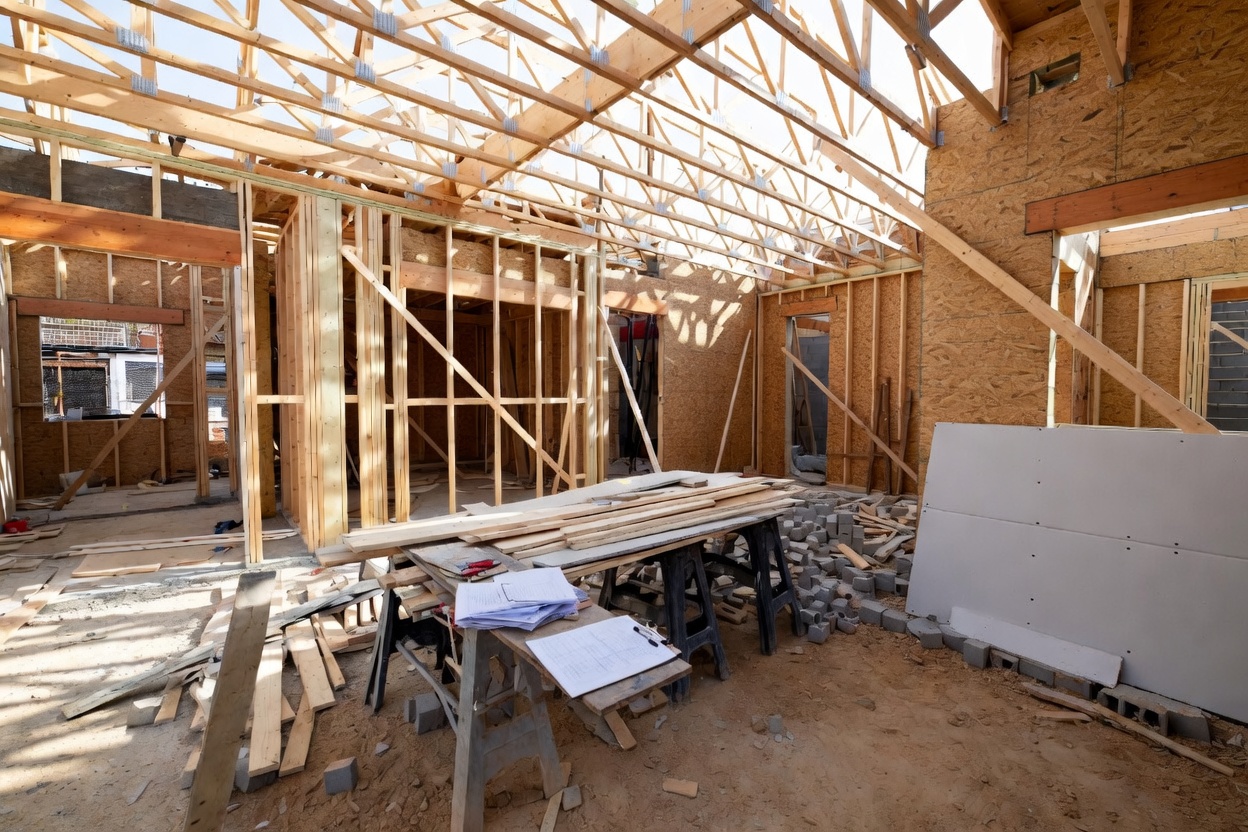
Residential construction management looks simple from the street. Excavation. Framing. Rough-ins. Drywall. Finish. On paper it reads like a straight line.
On the job it never is. Trades stack on each other. Inspections slip. Materials come late. Owners change their minds. One lazy decision in site prep shows up again in framing, then again in finishes, then again in the punch list.
That is why residential construction management matters. It is not just watching the site and answering phone calls. It is the work of planning, sequencing, buying, checking, documenting, and correcting before small misses turn into expensive rework.
If you want the wider framework first, read construction management fundamentals, construction project management, and construction project management workflow. This page stays tighter. It is about residential work specifically: houses, additions, renovations, small multifamily jobs, and the field logic that keeps them moving.
What This Guide Covers
Built around the core CM functions emphasized by CMAA, NAHB, AGC, and OSHA—scope, cost, schedule, quality, risk, safety, and communication.
- what residential construction management actually includes
- what has to be controlled before the first crew arrives
- how schedule, budget, trades, inspections, and owner decisions interact
- where residential jobs usually go off track
- when a dedicated management approach matters most
- what to check every week if you want fewer surprises
The Mistake People Make First
Most people think residential construction management starts when the site trailer shows up or the framing crew unloads lumber.
Too late.
The real job starts earlier, during scope definition, estimating, scheduling, permitting, procurement planning, and site coordination. If those pieces stay fuzzy, the field team spends the rest of the job paying for it.
That is why good managers spend real time in preconstruction planning, planning and scheduling, and cost planning before the first major mobilization.
What Residential Construction Management Actually Covers
In practice, residential construction management is the control layer between the drawings, the money, the field crews, and the owner.
| Phase | What gets managed | What usually goes wrong if it is weak |
|---|---|---|
| preconstruction | scope, estimates, permits, schedule logic, procurement, site strategy | unclear pricing, bad sequencing, slow starts, scope drift |
| sitework and structure | excavation, utilities, foundations, framing sequence, inspections | rework, missed inspections, framing delays, field conflicts |
| rough-ins | trade coordination, layout control, procurement, access planning | clashes, missed openings, schedule compression, change-order noise |
| finishes | selections, lead times, quality checks, owner approvals, punch strategy | backorders, damage, bad install quality, last-minute substitutions |
| closeout | punch list, manuals, warranties, turnover, final payment tracking | lingering defects, paperwork gaps, delayed occupancy, owner frustration |
If you need the broader phase map beside this, keep building construction phases and construction document set parts nearby while you read.
Start Before the Site Moves
A residential project gets easier or harder before the footing trench is even dug.
The preconstruction side usually includes:
- scope definition
- preliminary budgeting
- schedule drafting
- permit and approval tracking
- long-lead item identification
- site access, delivery, and storage planning
- bid package and trade buyout strategy
On residential jobs, this matters more than people think. A delayed window package, a vague cabinet allowance, or an unresolved structural question does not stay small. It rolls forward and starts blocking trades.
For the groundwork side, connect this with site prep and groundwork, foundation basics before you build, and soils, foundations and site investigation. Also: Construction Site and Groundwork: Step-by-Step Guide for Builders
Budget Control Is Not Just Estimating
Residential managers do not just price the job once and hope the number survives.
They track the number against scope, selections, allowances, procurement timing, field conditions, and owner changes. That is the real work.
A house can look on budget right up until finishes and change orders start piling up. The usual trouble spots are easy to recognize:
- under-scoped sitework
- weak allowances for kitchens, tile, lighting, or millwork
- owner upgrades with no written cost trail
- labor creep from resequencing or incomplete decisions
- missed coordination that forces rework
That is why cost control, project data basics, and residential construction cost per square foot matter more in management than they do in marketing.
The Schedule Is the Backbone
Residential jobs get sold emotionally, but they fail operationally.
Schedule is the backbone because every trade depends on another trade clearing space, finishing properly, and not damaging the work behind it. If the sequence is wrong, the whole house starts working against itself.
A typical residential sequence sounds straightforward:
- site prep and utilities
- foundations and slab or floor system
- framing and dry-in
- rough mechanical, electrical, and plumbing
- insulation and drywall
- interior trim, cabinets, flooring, painting
- fixtures, finishes, punch, and closeout
But real schedules need more than phase names. They need hold points for inspections, lead times for windows and doors, weather exposure risk, and enough float to absorb the jobs that never go exactly to plan.
That is where planning and scheduling and preconstruction checklist start earning their keep.
Trade Coordination Is Where the Money Leaks
Residential construction management is often just coordination under pressure.
Electricians want walls framed and stable. HVAC wants routes protected. Plumbers want layout decisions early. Drywall wants rough-ins complete. Cabinet installers want finished surfaces and accurate dimensions. Flooring wants moisture conditions controlled. Painters want people to stop touching the walls.
None of that is dramatic. It is still where jobs bleed time and money.
Good residential managers do four things here:
- confirm layout before the trade starts
- check what must be in the field before the next trade arrives
- document changes immediately
- push decisions early enough that the schedule does not get forced into overtime
This is especially important in kitchens, bathrooms, stair details, window and door coordination, and any house with custom work. Useful side reads here are windows reference, door and window schedule, and blueprints basics.
Quality, Safety, and Inspections Cannot Be Left to the End
Residential jobs get into trouble when quality control turns into punch-list theater.
If waterproofing, flashing, framing tolerances, rough-in locations, or substrate prep are weak, the finish work only hides the problem for a while. It does not solve it.
Good management means checking the work at the stage when it can still be corrected cheaply.
- check layout before concrete
- check framing before rough-ins close the walls
- check waterproofing before tile and cladding cover it
- check windows, doors, and envelope details before finishes bury the evidence
- check safety every day, not only when someone important visits
For the system side, use construction quality management, construction inspection process, and building envelope commissioning checks.
Owner Communication Is a Real Management Task
Residential work is personal. That changes the management load.
Owners do not just care about schedule and budget. They care about finishes, room feel, kitchen use, lighting placement, hardware, storage, and a hundred small decisions that do not show up cleanly in a generic project chart.
That means residential managers need tighter communication than a lot of light commercial work:
- written decision logs
- dated selection deadlines
- clear change pricing before install
- weekly updates tied to actual field conditions
- no vague promises about timing when procurement is still unresolved
On residential jobs, a change that feels small to the owner can ripple through cabinetry, electrical, tile layout, trim, and inspections. If it is not documented early, it becomes an argument later.
Residential Construction Manager vs Superintendent vs Project Manager
These roles overlap on smaller jobs, but they are not identical.
- Project manager usually handles cost, contracts, schedule reporting, submittals, procurement tracking, and owner coordination.
- Superintendent usually handles the field: daily trade control, site logistics, sequencing, inspections, and workmanship checks.
- Residential construction manager may cover both layers on smaller projects or act above them on larger custom homes and multi-unit residential work.
That is one reason the role expands fast once the house gets more custom, the site gets tighter, or the owner expectations get more detailed. For the wider role map, see construction management fundamentals and construction management overview.
When Residential Construction Management Matters Most
Not every house needs the same management intensity.
Dedicated residential construction management matters most when the project has one or more of these conditions:
- custom home scope
- major renovation with unknown existing conditions
- phased occupancy or owner move-in pressure
- tight urban infill site
- high-end finishes and detailed coordination
- multiple consultants and specialty trades
- long-lead windows, kitchens, or mechanical equipment
When the job is a simple repeatable build, lighter management can still work. Once the variables stack up, weak coordination gets expensive fast.
Simple Weekly Residential CM Checklist
- confirm the two-week look-ahead schedule with actual trade dates
- check open RFIs, missing decisions, and unresolved selections
- verify material deliveries against upcoming work
- walk quality issues before they get covered up
- confirm inspection requirements for the next phase
- update budget exposure from changes, allowances, and buyout gaps
- send the owner one clear written status update
- clean the punch list as you go instead of saving everything for the end
The Detail People Miss
Residential construction management is not mainly about reacting well when something goes wrong.
It is about making fewer things go wrong in the first place.
That sounds obvious. Still gets missed. A lot of managers get dragged into solving yesterday’s mess all day because nobody protected next week’s decisions. Residential work punishes that faster than most sectors because the sequence is tight, the spaces are smaller, and the owner usually notices every visible mistake.
FAQ
What is residential construction management?
It is the planning and control of a residential project’s cost, schedule, quality, procurement, trade coordination, inspections, and closeout from preconstruction through turnover.
What does a residential construction manager do day to day?
Usually some mix of scheduling trades, tracking costs, reviewing progress, solving coordination issues, documenting changes, managing owner communication, and checking site quality and readiness for the next phase.
Is residential construction management only for big custom homes?
No. It matters most there, but additions, renovations, infill builds, and small multifamily jobs also benefit when the schedule, site, or owner decision load gets complicated.
What is the biggest cause of residential schedule drift?
Usually not one disaster. More often it is stacked smaller issues: late decisions, missing materials, poor trade sequencing, failed inspections, and weak communication.
What is the difference between estimating and cost control?
Estimating sets the number. Cost control keeps the number from drifting once scope, procurement, labor, and owner changes start moving in real time.
Why do residential jobs need stronger owner communication?
Because residential work carries more visible finish decisions and more emotional decision-making. Small changes in kitchens, bathrooms, lighting, storage, and layout can ripple across multiple trades.
What should be checked before drywall?
Rough-ins, blocking, framing corrections, insulation readiness, waterproofing details where applicable, and any issue that becomes expensive once the walls close.
What is the best first improvement on a messy residential job?
Rebuild the look-ahead schedule, write down open decisions, verify procurement status, and walk the field for hidden quality problems before another layer covers them.
Final Notes
Residential construction management is not glamorous. It is mostly timing, documentation, judgment, and repetition.
Still, that is the layer that decides whether a house build feels controlled or chaotic. The drawings matter. The trades matter. The materials matter. But the management layer is what keeps those pieces from colliding.
If the project is simple, the management can stay lighter. If the site is tight, the finishes are detailed, the owner is involved, or the schedule is aggressive, then the management plan has to get sharper early or the field will do it the expensive way later.