
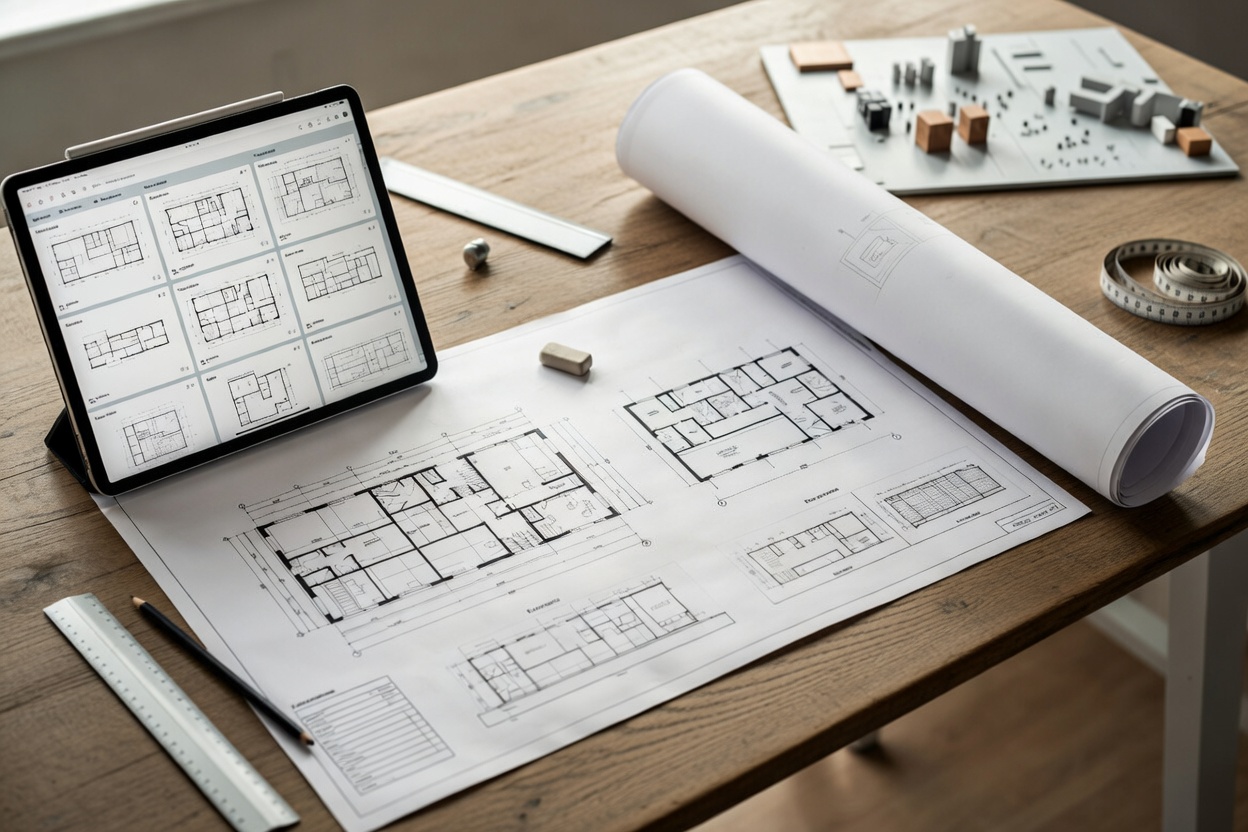
A construction document set is not one pretty floor plan with a few notes around it.
It is the working package that lets a project get priced, reviewed, permitted, coordinated, and built without everybody inventing their own version of the building.
That is the part people miss. The set is not there to impress anyone. It is there to keep the job from drifting.
If you are still new to plan reading, keep Reading Blueprints: How to Read Plans Like a Pro and Architectural Drawing Symbols: Complete Guide for Students and Professionals close while you go through this. Most confusion starts there.
What is a construction set
In plain terms, the construction set is the full drawing and information package behind the build. Not just the layout. Not just the exterior look. The whole chain.
That usually means site information, plans, elevations, sections, structural drawings, schedules, notes, details, and the technical material that connects design intent to actual work in the field.
People still call all of this “the blueprints,” but that word hides the real problem. A project is not explained on one sheet. It is explained in pieces, and those pieces have to agree with each other.
If you need the broad drawing vocabulary first, Architectural Drawing Basics Every Architect Must Know and List of Architectural Drawings: 67 Types You Must Know are better starting points than guessing your way through a random PDF.
One sheet will not save you
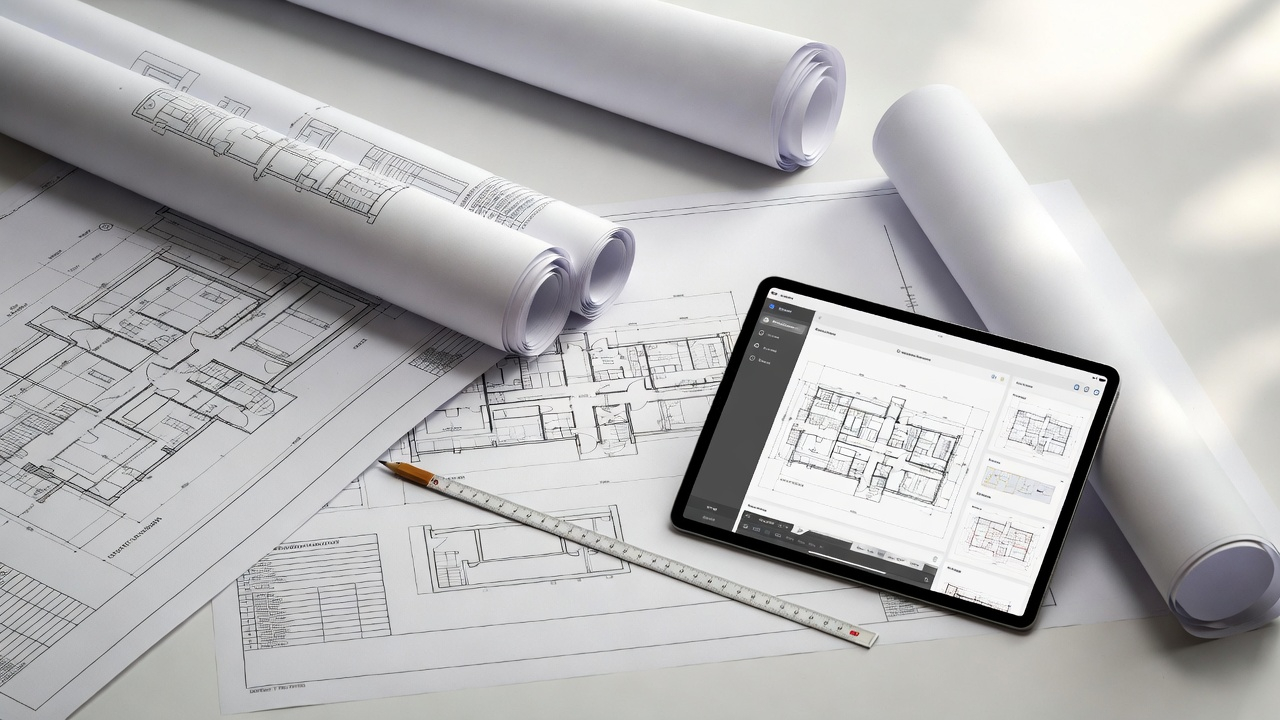
This is where beginners get turned around fast.
The floor plan is not the project. The elevation is not the project. The section is not the project either. Each drawing answers a different question.
The plan tells you where things sit. The elevation shows the face. The section shows how the building stacks through the cut. The detail shows how one small piece is actually supposed to go together. The schedule tells you which exact door, window, finish, or assembly was intended.
Miss one of those links and the set starts feeling broken. Usually it is not broken. You just stopped one sheet too early.
What is usually inside a full set
| Part of the set | What it does | What usually connects to it |
|---|---|---|
| Cover sheet | Names the project, lists the sheets, and sets the basic scope | General notes, code summary, issue history |
| Site plan | Shows where the building sits and how it meets the lot | Setbacks, grading, utilities, access, survey information |
| Floor plans | Show layout, dimensions, openings, circulation, and room use | Elevations, sections, schedules, consultant sheets |
| Elevations | Show exterior faces or interior wall conditions vertically | Material notes, window positions, heights, details |
| Sections | Show how walls, floors, roofs, and structure stack together | Envelope details, framing, ceiling heights, connections |
| Details | Zoom in on junctions and assemblies that cannot stay vague | Flashing, waterproofing, stairs, windows, edge conditions |
| Schedules | List exact door, window, finish, room, or equipment information | Tags on plans and elevations |
| Structural sheets | Carry the load path and support logic | Foundations, framing, slabs, beams, connections |
| MEP sheets | Show services that make the building usable | Mechanical, electrical, plumbing, fire protection |
| Specifications | Set material and performance requirements in writing | Drawings, product standards, submittals |
That list sounds tidy on paper. Real sets are not. They grow unevenly. Renovation sets get weird. Small house sets stay leaner. Commercial sets sprawl fast.
The sheets that usually matter first
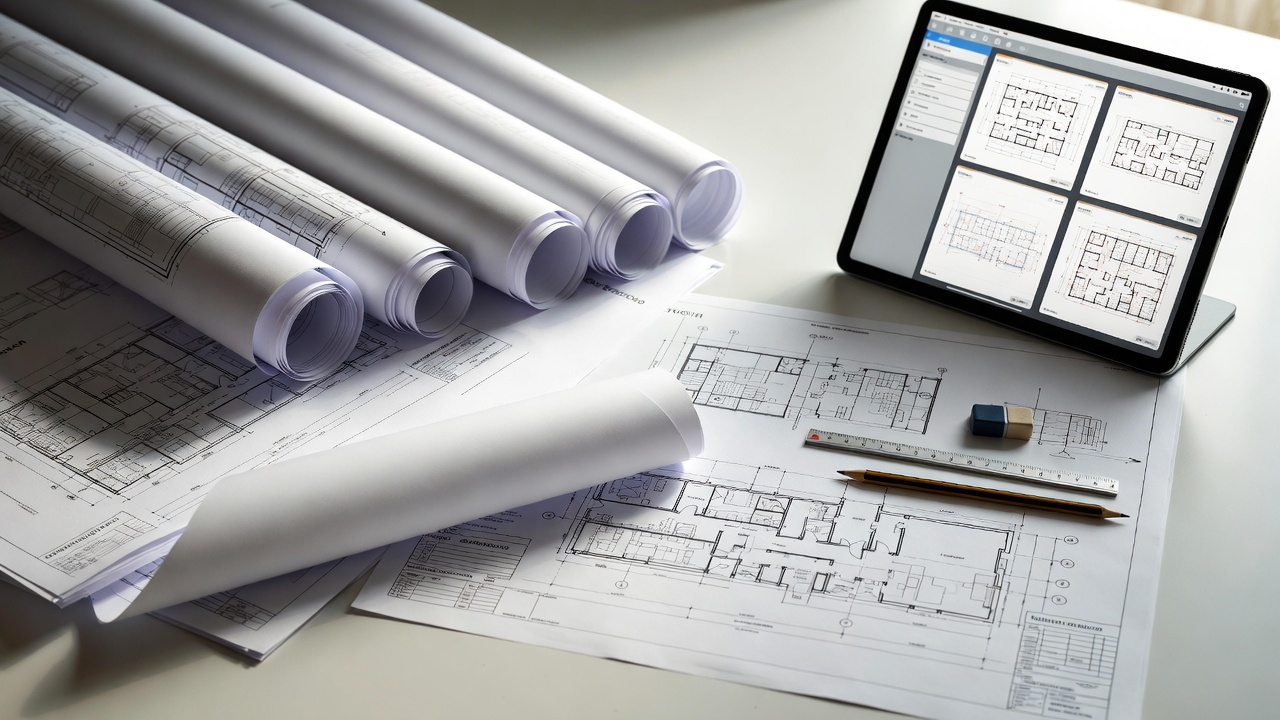
On a real review, people do not read every page in a perfect sequence. They jump around. Still, there is a cleaner way to get your footing.
- Start with the cover sheet and sheet index.
- Check the issue date and make sure you are not reading stale paper.
- Open the site plan if the project has site constraints, grading, setbacks, or utility problems.
- Move into the main plans.
- Then chase the callouts into sections, details, and schedules.
- Only after that should you start comparing the architectural set against structural and MEP.
That sounds basic, but it saves people from a lot of stupid confusion. Wrong revision. Wrong detail. Wrong schedule. Same building. Different sheet. Expensive mistake.
If the set starts sending you into tags and schedule marks, How to Prepare a Door and Window Schedule for Construction helps because that is one of the first places a clean plan turns messy.
Site and structure start shaping the set early
This is another place where the fake glossy version of architecture falls apart.
The drawing set is already being pushed around by the site before the project looks “finished.” Slope. Access. Drainage. Soil. Foundation type. Utility routes. Setbacks. Easements. Existing trees. Neighbor exposure. All of that starts bending the drawing package long before someone is fussing over finishes.
That is why Step-by-Step Site Analysis for Residential Architecture and Foundations, Soil Analysis, and Site Investigation matter more than people think. A lot of drawing problems are really site problems that just showed up late.
Structure does the same thing. Nice layouts get harder once spans, bearing points, roof geometry, and foundation constraints join the conversation. Structural Design 101: Key Principles Every Architect Should Know is useful here because the set only stays clean if the structure and architecture stop fighting each other early.
Where the set starts getting bulky
Usually not because somebody likes paperwork.
The set gets bigger because the project gets more specific. More consultant input. More notes. More schedules. More review comments. More code checks. More details where the building could leak, fail, burn, crack, or get rejected.
Small residential work can still be pretty lean. A house set may stay readable if the scope is tight and the geometry is not doing anything dramatic. But once the project gets more custom, more technical, or more regulated, the drawing package expands because it has to.
For homeowners, the surprise is usually not that the set grew. It is that every revision touches more than one sheet. Move a window and now you may be changing plan, elevation, section, schedule, structure, energy, and permit review comments all at once.
The part clients underestimate
Revisions are cheap when they are still rough. They stop being cheap when the set is coordinated.
That is the part no one enjoys hearing. A late “small change” can drag a tail behind it. Not every time, but often enough. Shift a stair. Move plumbing. Raise a ceiling. Change a wall type. Suddenly several consultants need to touch the job again.
This is also why drawing packages need order, not just talent. Clean naming. Clear issue dates. Legible callouts. Consistent sheet references. Otherwise the job starts splitting into private versions living on desktops, in inboxes, or in somebody’s marked-up print set.
If your project is still earlier in the planning chain, House Planning for Beginners: A Step-by-Step Guide and Spatial Planning and Design: A New Perspective on Architecture and Interiors help before the set gets heavy and expensive to move around.
Codes, permits, and the review nobody enjoys
The construction set is not just there for the builder. It is also there for reviewers, permit staff, consultants, and inspectors who need to see whether the project is legal, safe, and buildable.
That means code information cannot be hand-waved. Occupancy, egress, fire separation, stairs, guards, light, ventilation, energy requirements, structural assumptions, accessible routes, and location-specific rules all start showing up in or around the set.
For a simple entry point, use Guide to Understanding Building Codes Simplified for Beginners. If the project is residential, Residential Building Codes Simplified: What You Need to Know is the tighter fit. If the permit side is confusing people, Drawings for Planning Permission: What You Actually Need is another useful bridge.
RECOMMENDED TOOL
If you keep one code reference nearby while reviewing residential sets, Building Codes Illustrated is still one of the easier ways to make dense code language usable.
What a good set actually does
It does not make the project perfect. It makes the project legible.
A good set lets different people read the same job without inventing the missing parts. It gives the estimator enough clarity to price the work. It gives the builder enough direction to sequence it. It gives the permit reviewer enough information to judge it. It gives the owner fewer surprises, or at least better reasons for the surprises that remain.
That is the real standard. Not beautiful linework alone. Not a polished rendering. A usable package.
FAQ
What is the difference between a floor plan and a construction set?
A floor plan is one drawing. A construction set is the full package around the project: plans, elevations, sections, details, schedules, consultant drawings, notes, and usually specifications.
Does every project need a full construction set?
Not every project needs the same depth, but every real build needs enough documentation to price, review, permit, and build the work without guesswork. Small jobs stay leaner. Complex jobs do not.
Why do drawing sets get so large?
Because buildings are coordinated in layers. Once code, structure, site conditions, services, and detailed assemblies start joining the job, the package grows. That is normal.
What sheets should beginners learn first?
Start with the cover sheet, site plan, floor plans, sections, elevations, and schedules. Then learn how callouts and references move you from one sheet to another.
Do specifications matter as much as drawings?
Yes. The drawings show where and how things go together. The specifications carry a lot of the written material, performance, and execution requirements the drawings should not be trying to hold by themselves.
What is the biggest mistake people make when reviewing a set?
Treating one sheet like the whole job. That is how people miss the section, ignore the schedule, or price the wrong thing off an incomplete read.
Final Notes
Construction document sets feel overwhelming when you expect one sheet to explain the whole building.
They get easier once you stop asking for one magic page and start reading the set for what it is: a coordinated chain of decisions. Site first. Plans next. Then sections, details, schedules, structure, services, and code.
That is the job. Not glamorous. Still the thing that keeps projects from getting stupid.
Related
- Reading Blueprints: How to Read Plans Like a Pro
- Architectural Drawing Symbols: Complete Guide for Students and Professionals
- List of Architectural Drawings: 67 Types You Must Know
- How to Prepare a Door and Window Schedule for Construction
- Residential Building Codes Simplified: What You Need to Know