
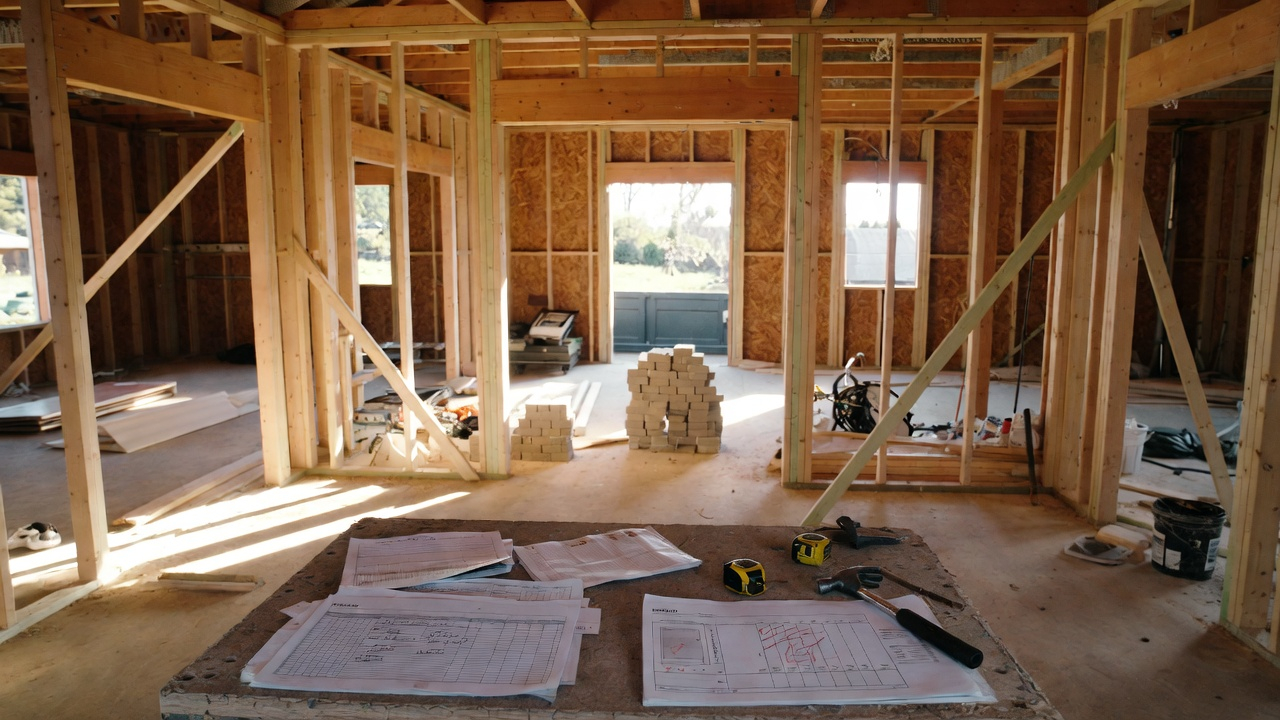
Construction planning and scheduling shape how a project moves from early setup to finished building. They affect the order of the work, procurement timing, trade coordination, and how well the job holds together once the site gets busy.
A schedule can look complete on paper and still start failing once materials slip, approvals drag, or field work begins moving around decisions that should have been settled earlier. That is usually where the difference between a neat schedule and a usable one becomes obvious.
This guide explains how construction planning and scheduling work, how they connect, what a usable schedule needs, and where jobs usually start losing control.
What This Covers
- What construction planning and scheduling actually mean
- The difference between planning and scheduling
- How a schedule gets built from the work
- Why CPM still matters and where it gets abused
- What look-ahead planning and pull planning are supposed to do
- The problems that keep wrecking schedules on real jobs
Planning and Scheduling Are Connected, but They Are Not the Same Thing
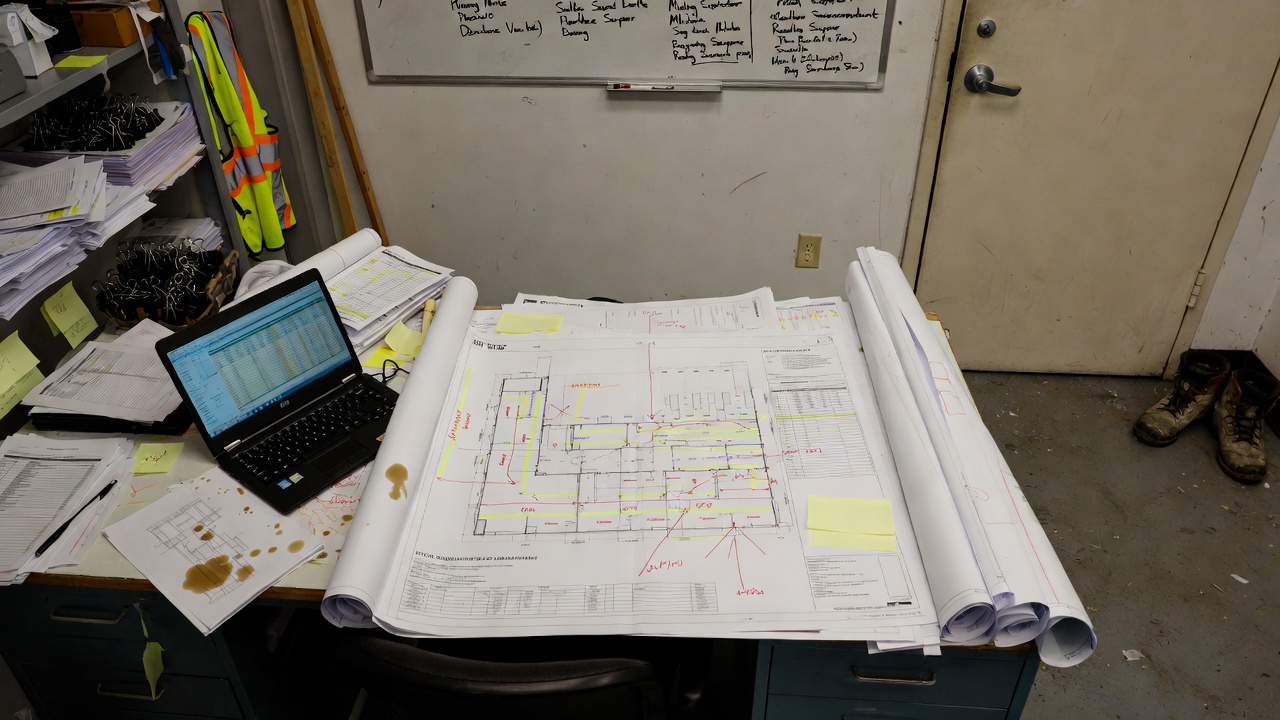
Construction planning is the process of deciding how the work will be done. Construction scheduling is the process of placing that work in time, with logic, durations, milestones, calendars, and dependencies that make the sequence visible.
That distinction matters because some bad projects technically have a schedule. What they do not have is much planning behind it.
The bars exist. The milestone dates exist. The update meetings happen. But the sequence underneath is weak. Procurement is disconnected from installation. Site logistics are not fully thought through. Access assumptions are too optimistic. Permits are treated like one clean checkpoint. Labor availability is assumed instead of tested. The field keeps working around the schedule instead of with it.
Planning is broader. It includes work packaging, means and methods, logistics, approvals, procurement timing, temporary conditions, inspection sequence, site access, turnover strategy, and who needs what from whom before the next activity can actually start. Scheduling is what happens when that planning gets translated into time.
If the project is still being structured at a broader level, construction project development, preconstruction planning, and construction project management workflow are the closest companion reads.
Start With the Work, Not the Software
One easy way to weaken a schedule is to start by building the file before the team has thought through the work properly.
The software is not the plan. It is the container.
Before a credible schedule can be built, the team needs to understand the actual shape of the job. What is being built. In what areas. In what sequence. With what dependencies. With what access. Under what permit conditions. With what long-lead items. With what temporary works. With what turnover logic. Otherwise the schedule gets built around assumptions that were never stable enough to deserve dates.
That early planning stage usually has to answer some plain questions:
- What are the real work packages?
- Which milestones are fixed and which are movable?
- Which approvals or inspections gate the next release of work?
- What procurement items can quietly become the real schedule?
- What work can truly overlap, and what only looks like it can?
- What owner decisions are still open but already threatening downstream coordination?
That list is ordinary. That is exactly why it matters. Most schedule trouble starts with ordinary planning gaps that did not look dangerous early enough.
If that early-stage planning still feels loose, preconstruction planning is the better place to slow down and sort it out before the schedule starts pretending the job is more settled than it is.
A Construction Schedule Is Supposed to Help Run the Job
A usable schedule should do a few basic things well.
It should show the scope. It should identify the real milestones. It should establish logic between activities. It should reflect durations people can defend. It should make the controlling path visible. It should include procurement, submittals, approvals, and inspections where they genuinely affect the work. It should be updateable without turning into fiction.
That last point is bigger than it sounds. Some schedules are mainly produced because the contract requires them. They satisfy the paperwork. They do not help run the project.
A good schedule should let the team answer real questions quickly:
- What is controlling completion right now?
- Which path has float and which does not?
- What has become critical that was not critical a month ago?
- What decision this week protects work three weeks from now?
- What slips if one procurement item moves?
- Is the overlap the schedule assumes physically possible on this site?
If the schedule cannot answer those questions, it may still look official. That does not mean it is doing its job.
CPM Still Matters, but It Does Not Save a Weak Plan
Critical Path Method scheduling still matters on serious projects because it forces logic into the sequence and makes it easier to see which path is actually controlling completion.
That is useful because construction is not just a list of tasks. It is a chain of dependencies. Excavation affects foundations. Foundations affect structure. Structure affects enclosure. Enclosure affects interior conditions. Interior conditions affect finishes, testing, commissioning, and turnover. A CPM schedule makes those relationships more visible than a simple bar chart usually can.
But CPM gets abused all the time.
Some schedules are technically CPM schedules and still not very useful. Logic is overbuilt. Durations are soft. Constraints get hidden in vague activity names. Procurement is disconnected from installation. Calendars do not reflect how the job will actually work. Float gets misunderstood, or worse, used like a political weapon instead of a management tool.
The critical path should tell the team what sequence is genuinely driving the finish date. If it keeps shifting for no clear reason, or if everyone on the project has a different private opinion about what is truly critical, the schedule probably has a quality problem before it has a field problem.
A schedule can be mathematically valid and still be operationally weak. That is the part people miss. A clean network is not the same thing as a believable job plan.
Baseline Schedules Need to Be Earned

The baseline schedule is supposed to be the agreed plan for how the project gets finished. That sounds simple. In practice, teams often rush to baseline too early because it feels good to say the job now has a schedule.
A weak baseline becomes a false reference point. Then every update turns into the same stale argument: did the project slip, or was the baseline unrealistic from the start?
A serious baseline should reflect:
- the actual scope being bought and built
- known procurement lead times
- approved or reasonably stable milestones
- site access and phasing constraints
- permit and approval dependencies
- work calendars that match the real staffing plan
- logic the field team, scheduler, and management team all recognize as credible
This is why baseline development needs more than one person quietly building a file. On any project with real complexity, the superintendent, PM, scheduler, major trades where relevant, and sometimes even the design side all need to weigh in early enough to catch the fantasy before it becomes official.
The dates that deserve the most suspicion are usually the confident ones with the least explanation behind them.
Look-Ahead Planning Is Where the Schedule Starts Touching Reality
Master schedules matter. They do not install the work by themselves.
That is where look-ahead planning comes in. Whether the team runs a three-week look-ahead, six-week look-ahead, or some other short-horizon planning system, the point is the same: take the bigger schedule and test what is actually ready to happen next.
This is where teams are supposed to identify constraints before those constraints start calling themselves delays. Is the submittal approved? Is the material released? Is the area accessible? Is the predecessor genuinely complete? Is the inspection booked? Is the owner decision closed? Can the work happen with the trades stacked the way the schedule claims it can?
A lot of schedule drift starts because teams skip this step and assume short-term work is ready because the master schedule says it should be.
It is not enough for work to be due. It has to be made ready.
That is one of the most useful distinctions on any job. Scheduled work is what the file says should happen. Ready work is what can happen without inventing missing conditions in the moment.
Pull Planning Helps When People Use It Honestly
Pull planning gets mentioned a lot now, sometimes by teams who mean “we had a sticky-note session once.” The real value is better than that, and also less forgiving.
Pull planning works backward from a target milestone through the conditions needed to hit it. It is not magic. It does not replace every other schedule tool. What it does, if the team uses it honestly, is make it harder to hide weak handoffs behind a polished master schedule.
Used well, it exposes things traditional schedule reviews keep missing:
- handoffs that are too optimistic
- batches that are too large to flow cleanly
- constraints the office did not see clearly
- trade stacking that only works on paper
- milestones being pushed without enough readiness behind them
Done badly, though, pull planning becomes another performative meeting. Plenty of color. Plenty of talk. Not much real commitment. The point is not visual energy. The point is better workflow reliability.
Resource Planning Is Where “On Schedule” Jobs Start Lying
A schedule can be logically correct and still be operationally weak if the labor and equipment assumptions underneath it are not credible.
This is where teams tell themselves dangerous things. That framing can overlap everywhere. That labor will show up exactly when needed. That two critical work fronts can both be fully staffed. That key supervision can manage everything at once. That the crane schedule can flex endlessly. That weekend work is a backup plan instead of evidence the baseline was already too tight.
Resource planning is not always captured perfectly inside the main schedule file, but it still has to be managed. Otherwise the project ends up with a sequence that works in theory and nowhere else.
Common warning signs look like this:
- too many critical activities fighting for the same area
- trade manpower assumptions disconnected from the local market
- recovery plans based mainly on “add more people”
- site logistics ignored in overlap assumptions
- field supervision stretched too thin across too many fronts
Jobs do not only slip because the logic was wrong. They slip because the logic assumed a resource picture the project never actually had.
Procurement and Submittals Belong Inside the Schedule Logic
If a piece of equipment, a material package, a delegated design submission, or a mockup can delay the field, it belongs in the planning and scheduling conversation early enough to matter.
Not just on a separate tracking sheet. In the real schedule logic.
Some of the ugliest schedule failures are really procurement failures with better public relations. Switchgear. Elevators. Curtainwall. HVAC equipment. Fire alarm panels. Custom windows. Specialty finishes. Owner-furnished equipment. Any item with approvals, fabrication time, shipping exposure, startup needs, or site-readiness dependencies can quietly become the real project.
Submittals behave the same way. A late or incomplete submittal may not look dramatic the day it is sent. Two review cycles later, the installation window is gone and the field is pretending the delay came from somewhere else.
That is why the better teams build procurement and submittal activities into the schedule in a way the field can actually read against the work plan. Otherwise everybody says they knew it mattered, but nobody scheduled it like it mattered.
Related reading: project data basics, cost control, and cost planning all connect here, because schedule trouble and cost trouble stop being separate topics quickly once procurement starts moving badly.
Why Construction Schedules Usually Start Slipping
Not from one giant catastrophe. Usually from a stack of ordinary misses.
- The baseline was too optimistic. It looked clean because it did not carry enough approval time, procurement time, weather exposure, or site friction.
- Owner decisions stayed open too long. Finish selections, equipment approvals, and scope clarifications drifted until downstream work had no clean answer.
- Submittals started late. The field schedule assumed approvals that had not actually been earned.
- Procurement was tracked outside the real schedule logic. Everyone knew the item was important, but the sequence still behaved as if it would arrive on cue.
- Trade stacking was too aggressive. The area could not support the overlap the schedule was counting on.
- Recovery plans were mostly hope. “We’ll add manpower” is not the same thing as a real recovery sequence.
- Updates were political instead of honest. The schedule kept reporting confidence after the short-term plan had already stopped matching the field.
That pattern is why schedule management cannot be a once-a-month reporting exercise. It has to be part of how the project is actually run.
The Decisions That Hurt the Schedule More Than People Admit
Some late decisions are annoying. Some late decisions damage the sequence immediately.
The ones that hurt hardest are usually these:
- Equipment selections that stay vague too long. That affects pads, power, clearances, controls, startup, and sometimes the entire release path for a space.
- Owner-furnished items with weak procurement discipline. The project assumes they will show up when needed. They often do not.
- Late finish decisions. That hurts buyout, submittals, mockups, shop drawings, and turnover timing.
- Site utility routing not settled early enough. That is how trenches get reopened and finished work gets cut back apart.
- Area release assumptions made too casually. The next trade gets promised a space that is not actually free, dry, inspected, or ready.
A good team does not try to eliminate every late decision. That is not realistic. It identifies which ones are sequence-critical and refuses to let those drift quietly.
The Difference Between a Good Schedule Update and a Performative One
A real schedule update tells the truth about where the job stands, what changed, what is now critical, and what actions are needed to protect completion.
A performative update does something else. It preserves optics. It hides uncertainty behind vague language. It keeps logic dirty because cleaning it up would expose how far the project actually moved. It reports calm after the short-term plan has already started breaking down in the field.
A good update should answer questions like:
- What changed on the critical path this period?
- Which activities actually finished, and which only partially advanced?
- What new near-critical paths are forming?
- What procurement, submittal, or approval items have become schedule drivers?
- What recovery actions are real, and what do they require?
If the update cannot answer that, the project is not being read clearly enough.
The ugliest updates are usually the calm ones on jobs that are already obviously stressed.
Field Coordination Is Scheduling, Even When People Pretend It Is Not
Weekly planning meetings, superintendent coordination, area release discussions, trade huddles, logistics reviews, turnover boards, and inspection prep are all schedule work, even when none of it is happening inside scheduling software.
That matters because a project can have a technically sophisticated schedule and still fail in the field if the short-horizon coordination is weak.
This is where real friction shows up:
- one trade says the area is ready and another says it is not
- ceiling closure is planned before enough MEP coordination is actually closed
- finishes are sequenced as if humidity, cure times, and inspection access do not exist
- equipment delivery gets booked before the route and lift window are settled
- a turnover date gets announced before testing and training logic are actually aligned
These are not side issues. They are scheduling problems wearing field clothes.
If the job is already in that execution phase, construction quality management and inspection process are the right follow-up pages because schedule discipline and quality discipline start colliding there every day.
What a Usable Planning and Scheduling Process Looks Like
No single format solves this. Strong projects still tend to share a few habits.
- They build the baseline with real participation and real assumptions.
- They connect procurement, approvals, submittals, and field work instead of pretending those are separate worlds.
- They run look-ahead planning seriously enough to expose constraints early.
- They use weekly coordination to test readiness, not just to review yesterday’s excuses.
- They update the schedule honestly, even when the answer is uncomfortable.
- They distinguish between work that is scheduled and work that is actually ready.
That last distinction is one of the most useful on any job. Scheduled work is what the timeline says should happen. Ready work is what can happen without inventing missing conditions in the moment. Strong planning and scheduling keep pushing the work toward readiness before the date arrives.
That is also where the schedule stops being a document and starts becoming a management tool. Until that shift happens, the project usually has a schedule file, not schedule control.
A Practical Checklist Before You Trust the Schedule
Before a team leans too hard on a schedule, these are the questions worth asking:
- Does the schedule reflect the full scope, not just the visible field activities?
- Are the logic ties believable to the people actually building the work?
- Have procurement and submittal drivers been tied into the sequence?
- Do the calendars match how the job will really be staffed and worked?
- Have permit and approval dependencies been included honestly?
- Can the site physically support the overlap the schedule is assuming?
- Is there a real look-ahead process making work ready?
- Are updates being used to manage the job, not just report it?
That is enough to expose a surprising number of weak schedules before the damage gets expensive.
What To Do Next
Preconstruction planning is the right next read if the real problem is not the schedule file itself, but the early planning behind it.
Construction project development helps if you want the bigger sequence around feasibility, design, approvals, procurement, and closeout.
Construction project management workflow is the better next read if you want the wider coordination picture around scheduling, procurement, decisions, and field control.
FAQ
What is construction planning and scheduling?
Construction planning is the process of deciding how the work will be done. Construction scheduling is the process of placing that work in time, with logic, durations, milestones, and dependencies that show the path to completion.
What is the difference between planning and scheduling in construction?
Planning is broader. It includes strategy, sequence, logistics, procurement, means and methods, readiness, and handoffs. Scheduling turns that into a time-based structure the team can manage against.
Why is CPM used in construction scheduling?
CPM helps identify the activity chain controlling the completion date. It makes logic and critical paths more visible, which is why it remains a core scheduling method on many serious projects.
What is a look-ahead schedule?
A look-ahead schedule is a short-horizon planning tool, often covering a few weeks, used to test what work is actually ready to happen next and what constraints need to be removed first.
What is pull planning in construction?
Pull planning is a collaborative planning approach that starts from a target milestone and works backward through the conditions needed to hit it. Done well, it improves workflow reliability instead of just creating a more visual meeting.
What usually causes construction schedule delays?
Usually a stack of ordinary things: optimistic baselines, late owner decisions, submittal lag, procurement delays, unrealistic overlap assumptions, weak short-term planning, and updates that are more political than honest.
Can a project be on schedule and still be in trouble?
Yes. A project can still be reporting against the baseline while procurement, submittals, quality issues, or trade stacking are quietly building the next delay. That is why schedule management has to go beyond headline dates.
What is the biggest warning sign that a schedule is weak?
Usually not the software. It is when the field keeps working around the schedule instead of with it. That is often the clearest sign that the planning underneath the dates was never strong enough.
Official sources
- VA / WBDG – Project Schedules
https://www.wbdg.org/FFC/VA/VAASC/VA%2001%2032%2016.15.pdf - GSA – Schedule Management for Small Projects
https://www.gsa.gov/real-estate/use-our-schedule-management-for-small-projects - AACE – Schedule Development
https://web.aacei.org/docs/default-source/toc/toc_91r-16.pdf - AACE – Schedule Change Management
https://web.aacei.org/docs/default-source/toc/toc_109r-19.pdf - Lean Construction Institute – Last Planner System
https://leanconstruction.org/lean-topics/last-planner-system/ - Lean Construction Institute – Last Planner System Standard Work
https://leanconstruction.org/wp-content/uploads/2022/08/1_LPS_Introduction_Principles.pdf