
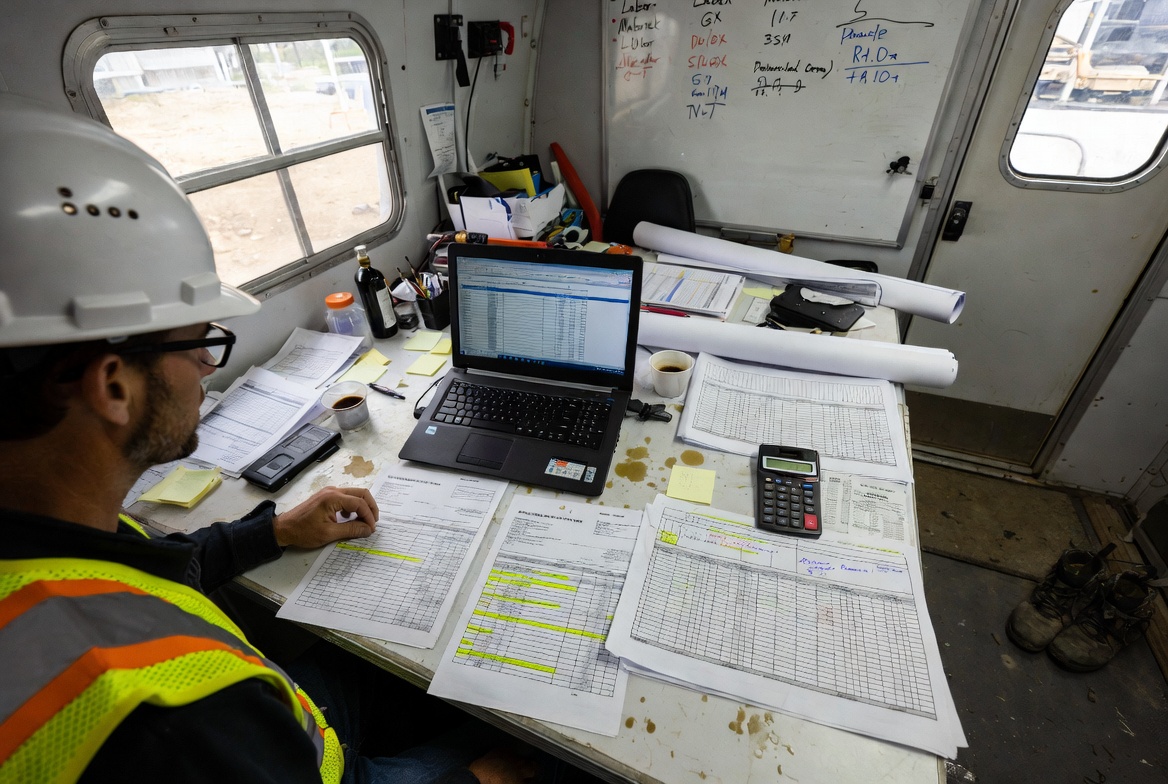
Cost control in construction rarely falls apart in one dramatic moment.
More often it leaks out through ordinary misses: a scope gap in buyout, a labor crew that never hits the planned rate, a schedule shift that turns into overtime, a field ticket that sits too long, a change that gets built before it gets priced, or a material release made on old drawings.
That is why cost control is not just accounting with a harder hat. It is the discipline of keeping budget, scope, schedule, procurement, field production, and change management tied together while the job is moving.
If you want the phase before the money starts moving in earnest, read preconstruction planning first. This page stays with live project control: what cost control means on an active job, what needs to be tracked, where projects start drifting, and what strong teams do before the month-end report tells them they are already late.
What Cost Control Means on a Construction Job
Cost control is the work of comparing what the project was supposed to cost, what it has cost so far, and what it is now likely to cost by the end.
That sounds simple until the job starts moving. The budget is usually built one way, the subcontracts are bought another way, accounting codes may not line up neatly with bid packages, field quantities change, labor productivity rises and falls, and schedule pressure starts pulling money into places the estimate never meant to carry it.
So good cost control is not just “tracking spend.” It is building a control system that can answer four questions quickly:
- What did we plan to spend?
- What have we committed and spent?
- What work have we truly earned or installed?
- What is the best forecast for final cost now, not last month?
It Starts Before Mobilization
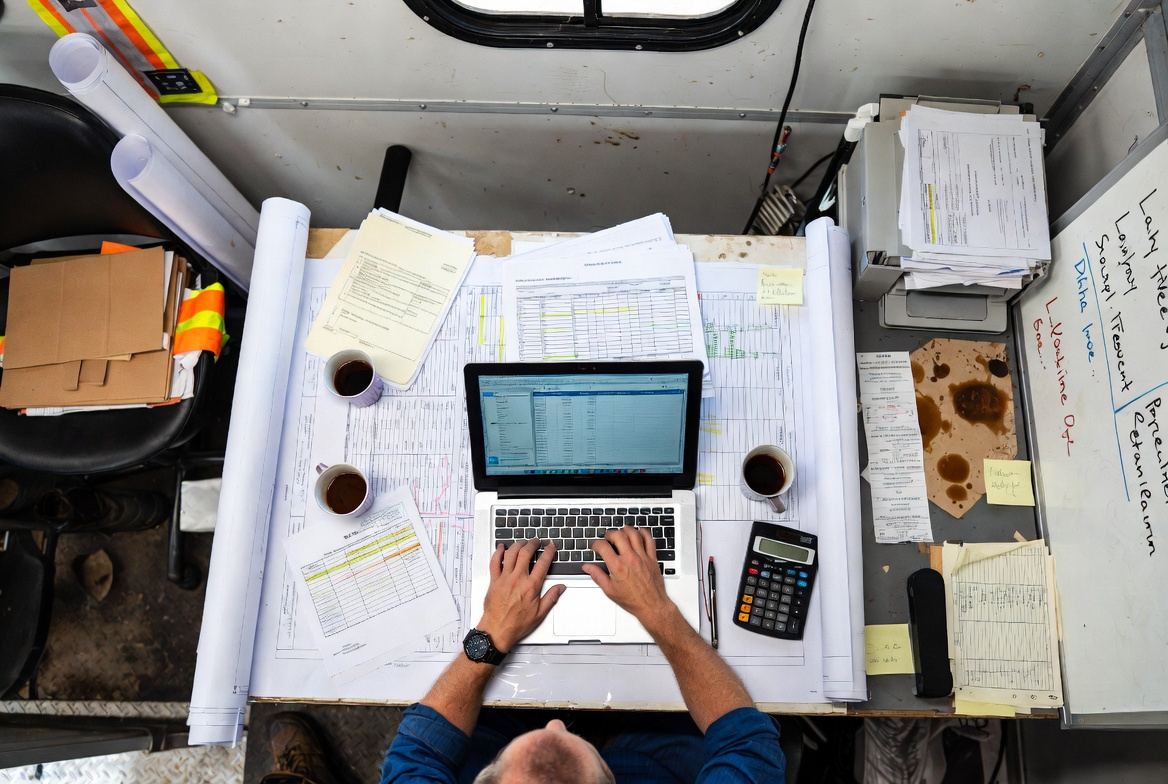
Cost control starts before the field trailer lands.
If the estimate is thin, the bid scopes are loose, the schedule logic is weak, or the buyout strategy is reactive, the cost report will spend the rest of the job explaining damage instead of preventing it.
That is why the handoff from preconstruction matters so much. The control budget needs to reflect the job the team is about to build, not the rough shape of the pursuit estimate. Scope carried as allowance has to be visible. Clarifications have to stay attached to the trade packages they affect. Procurement risks and long-lead items need to be called out early.
Before You Move On. Cost planning is upstream from cost control. If that part is weak, the project team starts with a blurry baseline.
The Baseline Comes First
Every cost control system depends on a baseline.
On a building job, that usually means a control budget tied to cost codes, bid packages, schedule assumptions, allowances, contingency logic, and a procurement plan that reflects how the work will be bought and built.
If the baseline is too high-level, the team cannot see problems until they are large. If it is too fragmented, the reporting gets noisy and nobody trusts it. Good baselines are detailed enough to expose drift without turning the project into a bookkeeping exercise.
This is also where project data basics start mattering. If cost codes, quantity tracking, and schedule logic do not line up, the job can look healthy on one report and troubled on another.
What You Need to Track Every Week
Monthly reports matter, but weekly control is where most jobs stay alive.
A useful weekly review usually tracks:
- original budget by code or package
- approved budget revisions
- subcontract and purchase order commitments
- actual cost to date
- pending and approved change orders
- labor hours used versus hours planned
- installed quantities or percent complete backed by field logic
- forecast cost at completion
- remaining contingency and where it is already under pressure
That last item matters more than it gets credit for. Teams often talk about contingency like untouched backup money. On weak jobs, it gets eaten quietly by underbought scope, schedule compression, and field inefficiency long before anyone labels it that way.
Labor Is Where Money Moves Fastest
On many jobs, labor is the first place cost control gets exposed.
Materials may be committed early and subcontracts may be largely fixed, but labor can slide week by week without looking dramatic at first. A crew stays one day longer on layout. Access gets worse. Another trade is in the way. Rework starts nibbling at productive hours. Overtime enters as a schedule fix and leaves as a cost problem.
That is why field production matters more than polished reporting. If labor hours are being spent faster than quantities are being installed, the job is already telling you something. Waiting for the full month-end close just makes the message more expensive.
| Early Signal | What It Usually Means |
|---|---|
| Hours rising while installed quantity stalls | Productivity problem, congestion, access issue, or rework |
| Overtime becoming routine | Schedule pressure is now a cost issue |
| Field staff carrying unresolved RFIs too long | Unclear documents are starting to burn labor |
| Trade stacking in the same area | Sequence is hurting productivity |
Schedule Trouble Becomes Cost Trouble Fast
Cost control and schedule control are not separate conversations for long.
Once sequence starts slipping, the cost side usually follows: overtime, lost productivity, stacked trades, temporary protection, remobilization, extended general conditions, missed equipment windows, and procurement decisions made under pressure instead of on plan.
That is why strong teams read the schedule as a cost document too. A date slip is rarely just a date slip.
If that part of the process is weak, planning and scheduling is the page to read next. Cost control gets much harder when the project team is still treating time and money like different systems.
Buyout and Procurement Can Save or Sink the Margin
Jobs do not lose money only in the field.
They also lose it during buyout when scope is split badly, bidder coverage is thin, substitutions are accepted without enough follow-through, or long-lead procurement gets delayed until the team is paying to recover time.
A low trade number is not a cost-control win if the exclusions are carrying tomorrow’s dispute. The same goes for unbalanced subcontract values, weak scope letters, or vendor quotes based on drawing sets that were already stale when the commitment was made.
Also Useful. The construction bid process matters here more than many PMs want to admit. Bad buyout decisions often look like field overruns later.
Changes Need to Be Tracked Before They Are Priced Perfectly
Change management is one of the places cost control either stays disciplined or starts lying to the team.
A change does not become harmless because pricing is still pending. If the work is moving, the cost exposure is already on the job whether the paperwork is clean yet or not.
Good teams separate change status clearly:
- potential changes identified
- field-directed work underway
- priced but not approved
- approved and folded into budget
- rejected or absorbed elsewhere
That keeps the forecast honest. Otherwise the pending change pile becomes a hiding place for margin erosion.
Rework Is a Cost Control Problem, Not Just a Quality Problem
Rework rarely shows up as one clean line item.
It leaks through labor, cleanup, remobilization, schedule disruption, patching, trade friction, and management time. That is why quality and cost control belong in the same conversation earlier than many teams realize.
A bad layout, a missed inspection hold point, incomplete coordination, or work installed from the wrong revision can hit the budget several times before accounting ever names it properly.
This is where quality management and the inspection process stop being side topics. They are part of budget protection.
Forecasting Matters More Than Historical Cost
One of the more common project-management mistakes is treating the cost report like a rearview mirror.
Historical cost matters, but the forecast matters more. A job can be under budget to date and still be heading toward a bad finish if the production rate is weak, the buyout is incomplete, or pending changes are being carried too optimistically.
That is why the best project managers keep asking a harder question than “How do we look this month?”
They ask: if the job keeps behaving like this, where do we finish?
On larger or more controls-heavy projects, that forecast may include earned value methods. On many contractor-run building jobs, it shows up through quantity installed, labor productivity, committed cost, and a revised estimate at completion. The method can vary. The discipline cannot.
Allowances and Contingency Need a Short Leash
Allowances and contingency are useful, but they get abused quickly.
An allowance is not free money. It is unresolved scope carried temporarily. Contingency is not a comfort blanket. It is risk money that should be released or spent intentionally.
Once teams start using those buckets to smooth over weak buyout, poor productivity, or slow decisions, cost control gets muddy fast. You can still produce a clean report. It just stops telling the truth.
Who Owns Cost Control
The project manager usually owns the system, but not alone.
Cost control on a construction project is shared whether the team admits it or not. Estimating sets the starting logic. Procurement affects commitments. Accounting affects visibility and timing. Superintendents and field engineers affect labor, quantities, rework, and production. Executives affect contingency, staffing, and recovery decisions.
If the superintendent is not feeding the cost conversation, the forecast is weaker than it looks. If accounting closes slowly, the PM is driving off old numbers. If operations and precon are disconnected, the control budget may never match the job the field inherited.
That is why project management workflow matters so much. Cost control breaks down when each department thinks it is only handing off information, not risk.
What a Good Cost Review Looks Like
A useful cost review is not a ceremonial meeting around a spreadsheet.
It should answer, package by package, where the job is drifting and why. Not just which code is red.
A good review usually includes:
- budget versus committed versus spent
- installed quantity or percent complete that the field team agrees with
- labor hours used versus production achieved
- pending change exposure
- procurement risk and long-lead status
- schedule events that are already affecting cost
- action items with owners and dates, not just observations
If the meeting ends with “we will watch it next month,” the job is probably already giving the team more warning than the team is willing to hear.
FAQ
What is cost control in construction?
It is the process of comparing budget, commitments, actual cost, progress, and forecast so the team can catch overruns early and make corrections while the job is still moving.
What is the difference between cost planning and cost control?
Cost planning happens before or during early project development and sets the cost strategy and baseline. Cost control happens during execution and checks whether the project is still tracking against that baseline.
What causes most cost overruns on construction jobs?
Usually a mix of scope gaps, labor productivity loss, weak buyout, schedule drift, unpriced changes, rework, and late decisions.
How often should construction cost control be reviewed?
Formal reporting may be monthly, but the useful controls are usually weekly. Waiting only for month-end is too slow on an active job.
Is cost control the same as accounting?
No. Accounting records what has happened. Cost control uses that information, along with production and forecast data, to steer what happens next.
Bottom Line
Cost control in construction is not a finance exercise bolted onto the side of the project.
It is project management in its most exposed form: scope, labor, procurement, schedule, quality, and change all passing through the budget at once.
Good teams catch the drift early. Weak teams keep producing neat reports while the margin leaks out somewhere else.