
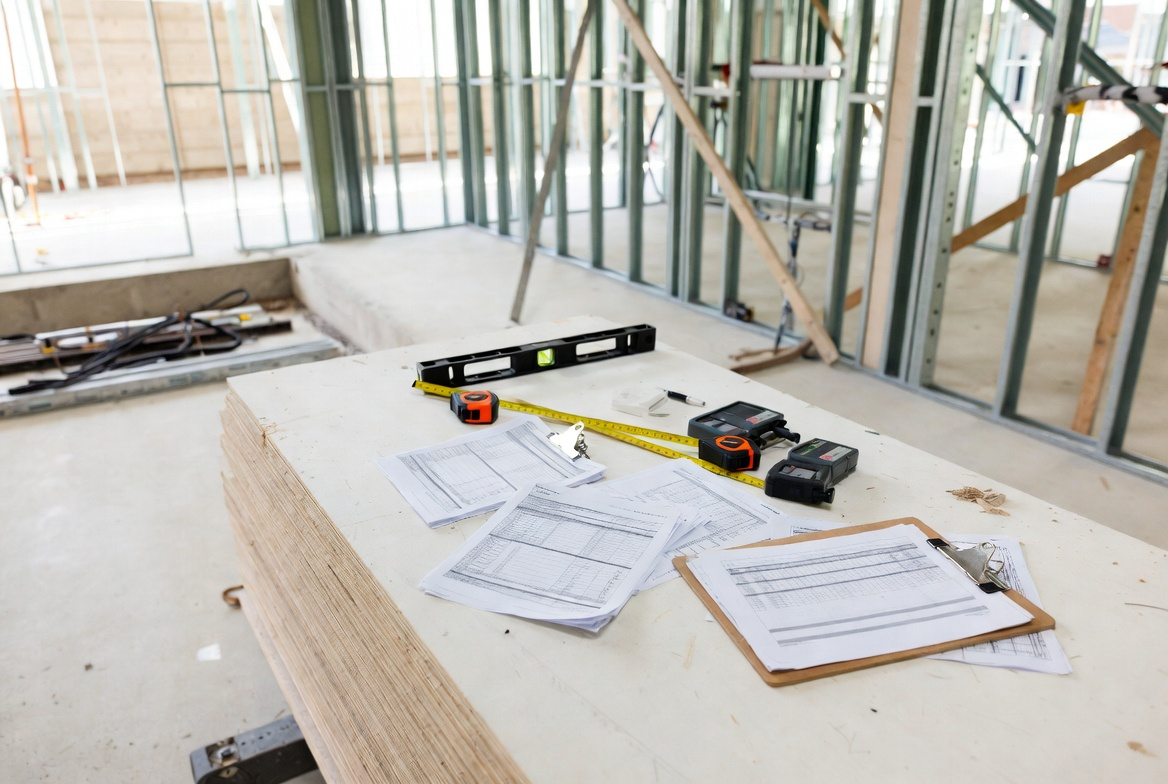
A lot of people talk about “the inspection” like it is one visit near the end.
It is not.
Construction inspection is a chain of checks that happens as the work moves forward and, just as important, before the next layer hides what was done. Footings before concrete. Rough-ins before insulation or drywall. Final approvals before occupancy. That is the real pattern.
Miss that rhythm and the job gets stupid fast. Work gets covered too early. Trades get stacked on top of each other. Somebody swears the last version was approved. Somebody else is holding an older print. Then the inspector shows up and asks the one question that matters: who built what, where, against which approved set, and is any of it still visible.
If your team is still slow on the drawing side, keep Reading Blueprints: How to Read Plans Like a Pro and Architectural Drawing Symbols: Complete Guide for Students and Professionals nearby. A lot of “inspection problems” are really reading-the-set problems that showed up late.
What the inspection process actually is
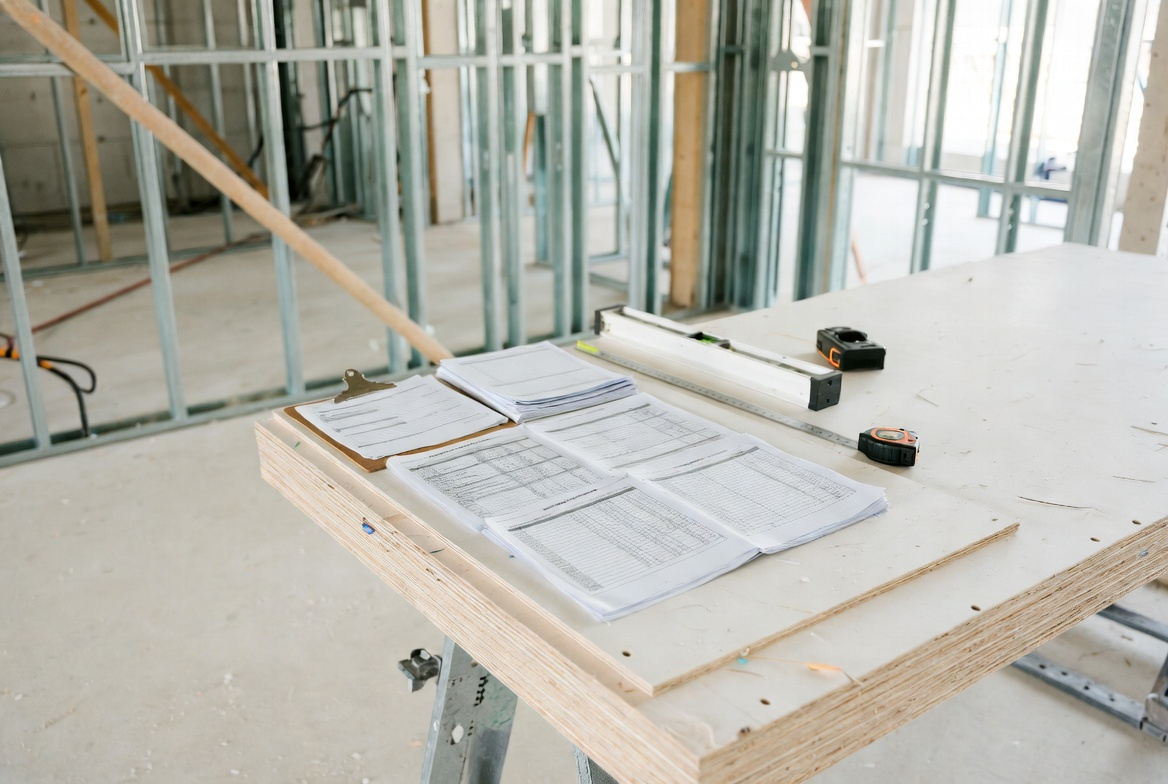
In plain language, the inspection process is the approval path that lets work move from one stage to the next without burying mistakes, code violations, or missing pieces.
That sounds neat. Real jobs are not neat.
On site, inspection is part scheduling problem, part document-control problem, part code problem, and part field-coordination problem. The clean version is simple: build the stage, make it fully ready, get the right inspector there, answer questions against the approved set, close any corrections, then move on. The messy version is what most people remember.
The key thing is this: inspections do not exist to “bless the project” in a vague way. They exist to verify specific conditions at specific points before the work disappears behind the next trade.
Who is actually inspecting what
This part gets confused all the time.
The local building department, or AHJ, handles code enforcement and stage approvals. On many jobs, that means building, electrical, plumbing, mechanical, gas, and sometimes energy or fire reviews happening in sequence, not as one big all-purpose visit.
On some commercial and engineered work, you also get special inspections. That is a different lane. Those inspections are tied to code-required structural or life-safety items that need qualified review and reporting beyond the normal permit inspection cycle.
And then there is the part people do not like hearing: city inspection is not the same thing as full project quality control. Passing code inspection does not mean every finish is clean, every layout choice is smart, or every workmanship dispute vanished. The permit side checks what it is there to check. The builder, superintendent, trades, and design team still own the rest.
The usual order, even though every city tweaks it
The exact list changes by jurisdiction and project type, but the sequence usually stays close to this.
Footing, foundation, and anything that gets buried first
This is the early hard-stop stage. Footing trenches, reinforcement, forms, under-slab items, grounding, anchor requirements, foundation walls, drainage, and other buried work usually need review before concrete placement or backfill.
Site conditions push this stage around more than people expect. Soil, bearing questions, drainage routes, utility conflicts, and foundation type all start affecting inspection timing before the building even feels real. That is why Foundations, Soil Analysis, and Site Investigation and the broader site and groundwork guide matter so much. A lot of later inspection fights started down here.
Rough-ins before you close anything up
Plumbing, electrical, mechanical, gas, ductwork, and similar concealed systems usually need rough inspection before insulation, drywall, or other cover materials go on.
This is one of the big choke points on real jobs. One trade is ready. Another is not. One pressure test is missing. One penetration is still open. One inspector wants a gauge visible at the entry. Suddenly the whole sequence backs up over something that should have been caught two days earlier.
Framing after the skeleton and roughs are ready
Many jurisdictions want framing after the structure is up and required rough-ins have already passed or are otherwise complete enough for the frame check to mean something. That can include framing, roof structure, fire blocking, bracing, shear elements, connectors, and the stuff that will be hidden once insulation and board go in.
If the team is weak on structure, this is where the job gets exposed fast. Spans, truss layout, nailing, hardware, hold-downs, bearing, braced-wall logic, and load path are not forgiving when the approved plans say one thing and the field did another. Structural Design 101: Key Principles Every Architect Should Know is worth keeping close if people need a cleaner mental model of what the inspector is actually looking for.
Insulation, air sealing, and envelope checks
After framing and rough work, many jurisdictions add insulation and energy checks. Sometimes that includes air barrier work, duct testing, weather-resistive barrier checks, or envelope items that must be seen before finishes cover them.
This is one of those stages people underestimate because it feels less dramatic than structure. Then a missed seal, missing baffle, bad wrap sequencing, or sloppy penetration treatment holds the job anyway.
Finals, closeout, and occupancy
Final inspection is not just “the house looks done.”
Final means the building, systems, and site conditions that the jurisdiction cares about are ready for final review. That usually depends on prior trade finals being signed off first. On some jobs that also means grading, drainage, addresses, life-safety devices, service approvals, or other final site items are in place before occupancy is granted.
What has to be ready before you call for inspection
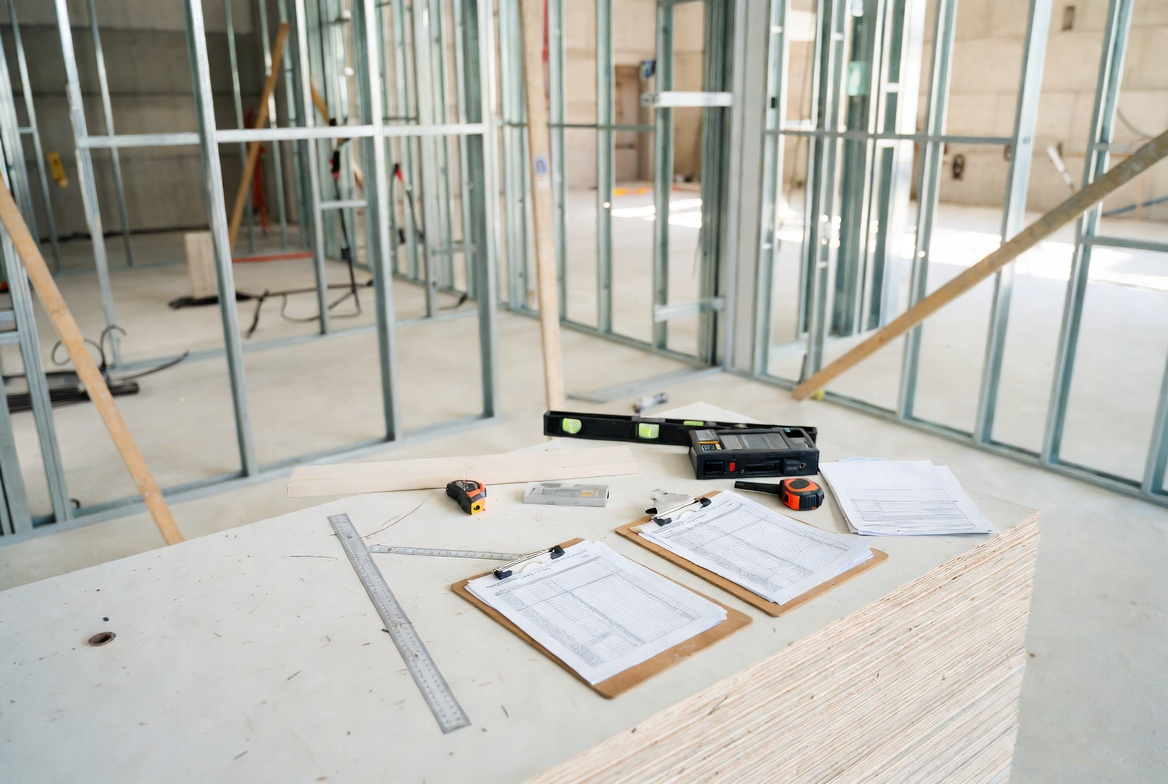
Honestly, this is where a lot of failed inspections come from. Not some mysterious code trap. Just calling too early.
The approved plans should be on site. The permit should be posted if your jurisdiction requires it. The stage should actually be complete, not “mostly there.” Required tests need to be active and visible. Access has to be clear. The inspector has to be able to see the work without climbing over debris, guessing what changed, or waiting for someone to explain which wall is which.
If you are still sorting out the code side, Guide to Understanding Building Codes Simplified for Beginners is the easier entry point. If the job is residential, Residential Building Codes Simplified: What You Need to Know is the tighter match.
RECOMMENDED TOOL
For residential plan review and inspection prep, Building Codes Illustrated is still one of the easier code books to keep usable in the field.
What inspectors usually care about first
Not your presentation. Not the story. Not how close you are.
They usually start with the approved set, the stage of work, and whether the required items for that stage are visible and complete. After that, it gets specific fast: reinforcement in place, pressure tests active, framing matches plan, penetrations sealed where required, safety items installed, service clearances respected, and prior corrections actually fixed instead of talked around.
That is why stale plans are poison. So is private redlining that never made it back into the shared set. One of the fastest ways to turn a routine inspection into a fight is letting three different versions of the job exist at once.
Where jobs usually get jammed
Same patterns. Over and over.
- Calling for inspection before the stage is fully ready.
- Covering work before the required inspection happened.
- Having the wrong set on site or no approved set at all.
- Scheduling roughs too late and trapping the next trade behind them.
- Treating corrections like a personal insult instead of a work list.
- Assuming the city inspector is there to solve every quality dispute on the project.
- No one on site who can answer what changed, where, and why.
You see the same complaints again and again on active jobs. The crew is ready to close walls. The inspection window drifts. One missing test or one unresolved note holds the whole line. Everybody starts blaming the inspector, the office, the plan reviewer, the plumber, the county, the weather. Usually the real problem showed up earlier: the inspection calendar was loose, the stage was not actually complete, or the job was trying to outrun its approvals.
Why framing inspections fail so often
Because this is where a lot of hidden decisions finally become visible at the same time.
Rough mechanical, electrical, plumbing, gas, framing, fire blocking, bracing, hardware, shear details, truss paperwork, openings, and sometimes air-seal or wall-cover items all start colliding here. That makes framing inspection less like one simple check and more like a gate where unfinished coordination gets exposed.
The ugly version is familiar. One wall moved. One opening changed. One hold-down is missing. One rough-in is still open. One inspector note from the prior visit never got closed. Now the drywall crew is waiting and everybody is pretending the only problem is “the city is being picky.”
Commercial jobs add another layer
Commercial inspection looks similar from far away. Once you are in it, the coordination load jumps fast.
More systems. More disciplines. More phasing. More fire and life-safety coordination. More documentation. More special inspections. Sometimes separate approvals for fire alarm, sprinkler, grease interceptors, accessibility items, site work, utilities, energy, and final occupancy conditions.
That is where the control layer matters. Inspection calendars, submittals, test reports, correction tracking, and trade sequencing stop being side paperwork and start becoming the schedule itself.
A simple way to run inspection control on site
Keep it boring.
One current approved set. One inspection log. One clear list of what has to pass before the next layer moves. One person responsible for making sure the stage is truly ready before the call goes in.
That does more for most jobs than any fancy software pitch.
If the project is getting harder to coordinate at the field-management level, residential construction management and the broader building construction process page are useful next reads because inspection failures are often a sequencing problem wearing a code hat.
FAQ
What is the normal construction inspection sequence?
It varies by jurisdiction, but a common order is footing or foundation, under-slab where applicable, rough-ins, framing, insulation or energy checks, then finals. Some places add wall-cover, duct-test, driveway, grading, sewer, gas-service, windstorm, or fire-related steps.
Can you keep building while waiting on inspection?
Not past the point the code or the inspector requires approval for that stage. In practical terms, do not cover or bury work that still needs to be seen.
Who requests the inspection?
Usually the permit holder or the permit holder’s authorized agent. On site, that often means the contractor or superintendent is making the call and coordinating timing.
Why did the inspection fail if the work looks fine?
Because “looks fine” is not the standard. Wrong stage, wrong plan set, missing test, incomplete work, missing hardware, unresolved correction, or hidden conditions can all stop approval even when the area looks close.
Is city inspection the same thing as quality control?
No. Permit inspection is code and approval control. Project quality control is wider than that and still belongs to the builder, trades, and project team.
Do commercial projects use the same inspection process as houses?
Same basic logic, but usually with more layers. More trades, more life-safety systems, more separate approvals, and often special inspections tied to structural or critical systems.
Final Notes
The construction inspection process is not there to slow the job down for fun.
It is there to stop people from hiding the evidence too early.
Once you look at it that way, the sequence makes a lot more sense. Get the stage ready. Use the current approved set. Make the work visible. Answer the questions cleanly. Close the corrections. Then move.
That is the whole game, really. Not glamorous. Still the difference between a controlled job and one that keeps tripping over work it already did.
Official sources
- ICC: 2021 International Residential Code, Chapter 1
- ICC: 2021 International Building Code, Chapter 1
- ICC: 2021 International Building Code, Chapter 17 Special Inspections and Tests
- City of Auburn: Required Inspections
- City of Corcoran: New Home Construction 2025
- City of Beaumont: Residential Inspection Checklist
- Bradley County: Permitting Process, Required Inspections