
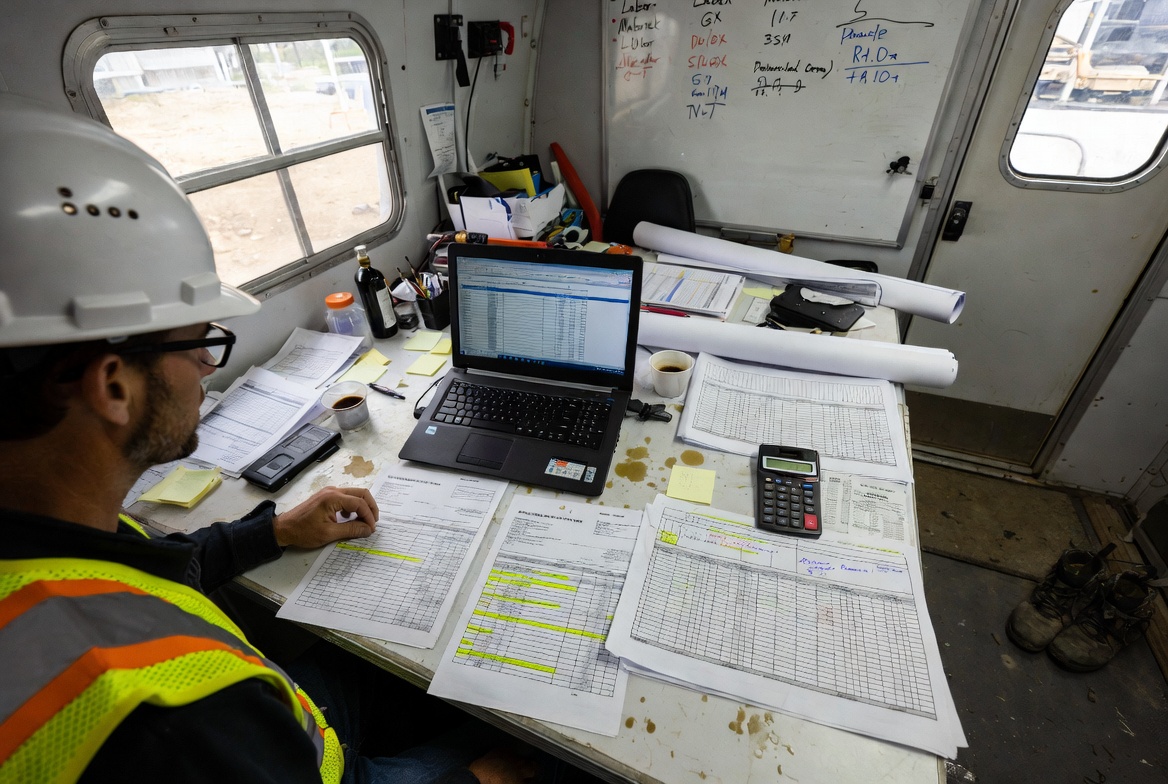
Construction project development is where a job either gets structured properly or starts collecting problems with nicer names.
By the time there is a permit set, a date somebody is calling “the start,” and a few optimistic schedule bars on a meeting screen, a lot has already been decided. Budget logic. Site risk. Approval risk. Delivery method. Long-lead exposure. Who gets to make decisions and how fast they have to make them. What the drawings have resolved and what they are still skating past. That is project development.
It is not one meeting. Not one phase. Not just design, and not just preconstruction. It is the whole chain that takes a project from first idea to handover, with all the judgment, coordination, pricing, approvals, and cleanup in between.
This guide lays that chain out the way it tends to behave in practice. No padded lifecycle language. No fake neatness. Just the real stages, what each one is supposed to do, where jobs start slipping, and why a lot of construction trouble is already built into the project before the site gets noisy.
What This Covers
- What construction project development means
- The real sequence from first idea to closeout
- What owners, architects, consultants, builders, and authorities are doing in each stage
- The decisions that affect cost, schedule, and risk the most
- The points where projects usually start going sideways
What Construction Project Development Actually Means
Construction project development is the full process of moving a project from concept to completed building. That includes the business case, site review, briefing, budgeting, design, preconstruction, approvals, procurement, construction, turnover, and closeout.
That broad definition matters because projects do not fail neatly inside one labeled phase. A bad bid result may have started with a weak brief. A schedule miss in the field may trace back to permit assumptions nobody tested early enough. A miserable closeout usually starts months earlier, when submittals drift, owner decisions stay open too long, and nobody decides who is carrying record documents, training, startup support, and warranty turnover.
That is why serious project-delivery guidance treats the process as one chain. Time, cost, scope, quality, approvals, coordination, and procurement are connected from the start. Treat them like separate conversations and the job usually spends the rest of the year trying to sew them back together.
Before you move on: if the site itself is still the main unknown, start with site prep and groundwork. If the job is already moving out of concept and into organized risk, preconstruction planning is the closest companion page.
1) Start With the Business Case, Not the Building Shape
Some projects start backward. Somebody wants a building. The conversation jumps to square footage, layout, appearance, maybe a quick massing sketch. Then months pass before anyone says clearly what the project is for, what success looks like, and what level of spending the owner can actually live with.
The safer sequence is less exciting. Start with the reason the project exists. Capacity. Revenue. Operational need. Deferred maintenance. Code pressure. Expansion. Replacement. Change of use. Something has to be driving the investment, and it has to be stronger than “we need something new.”
At this stage, the owner or sponsor should be able to answer a few blunt questions:
- What problem is the project solving?
- What happens if the project gets delayed, resized, phased, or dropped?
- What budget range is realistic, not just comfortable to say out loud?
- What schedule pressure is real, and what pressure is mostly internal?
- What matters more if choices get tight: speed, first cost, operations, flexibility, or long-term performance?
This is also where the first quiet mistake often shows up. The target budget gets set by comfort level instead of by scope logic. Nobody wants to challenge it early because the project still feels conceptual. Then the project develops, the real building starts appearing, and the original number suddenly has no clean relationship to what the team is drawing.
2) Feasibility Is Where the Project Gets Honest
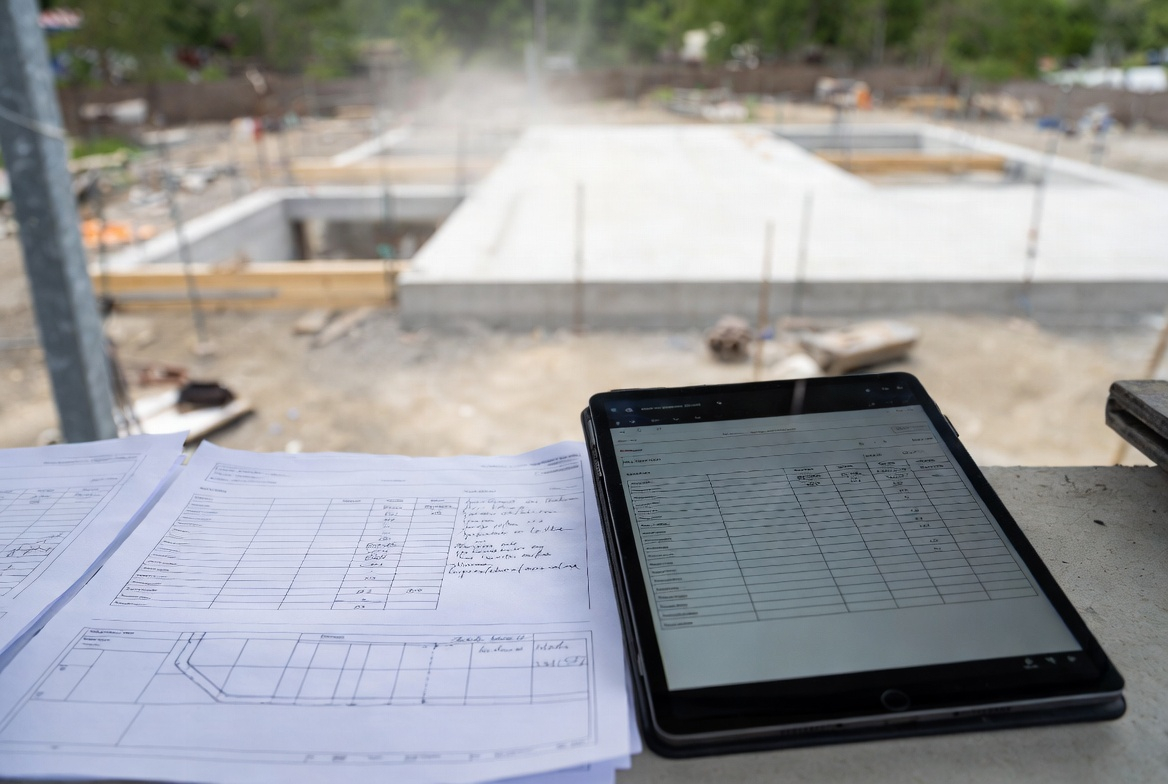
Once the project has a reason to exist, it has to survive contact with the site, the jurisdiction, the utilities, the market, and the calendar.
That is the job of feasibility. Can the lot support the building? Is the use allowed? Are servicing upgrades going to hit harder than the owner expects? Are there soil issues, grading problems, access limits, environmental constraints, flood conditions, neighboring impacts, or approval layers that change the picture?
Real feasibility work is not a soft memo with a rendering clipped to the back. It is where the job starts getting less polite and more useful.
Depending on the project, feasibility usually includes some mix of:
- site due diligence and survey review
- zoning and land-use review
- soil and foundation risk review
- utility servicing questions
- high-level code review
- environmental or contamination screening
- rough cost planning
- schedule and approval risk review
This is one of the stages teams try to cheap out on. Then the project spends the next phase paying interest on that decision.
A common version looks like this: the site “works” in principle, so design starts. A few months later, civil work is heavier than expected, servicing upgrades show up, the authority comments take longer than assumed, and the owner wants to know why the early number looked so much cleaner. The answer is usually not mysterious. Feasibility was too thin.
This part matters: if site and foundation questions are still carrying most of the uncertainty, site prep and groundwork and house foundations and groundworks are the right place to firm that up before design starts outrunning the ground.
3) Set the Project Brief Before Design Starts Filling the Gaps
Once the job survives feasibility, the next step is not “start drawing.” It is define the project clearly enough that the design team is not forced to invent the owner’s priorities while pretending the project is already decided.
This is where the brief matters. Not as ceremony. As control.
The project brief should lock down the basic use, size, functional requirements, operational constraints, budget framework, schedule targets, phasing logic, performance expectations, and what the owner is not willing to trade away. If the project has to stay operational during renovation, that belongs in the brief. If the deadline is tied to school opening, tenant turnover, equipment replacement, or seasonal revenue, that belongs there too.
A weak brief creates fake progress. The drawings advance. Meetings happen. The model gets cleaner. But the project is still unsettled underneath. Later, those unresolved decisions come back as redesign, scope cuts, bid confusion, and change noise that gets treated like bad luck instead of what it was: deferred decision-making.
This is also where document discipline begins. A serious job cannot run on scattered notes, old markups, and verbal memory. It needs a current brief, a decision log, and a drawing set structure people can actually work from. If you want the document side framed more clearly, construction document set parts is the right companion read.
4) Pick the Delivery Method Early Enough for It to Matter
Construction project development is not only about what gets built. It is also about how the job gets delivered, priced, coordinated, and contractually controlled.
That means the delivery method has to be chosen early enough to shape the process instead of getting bolted on late. Design-bid-build, design-build, CM at-risk, negotiated work, phased packages, early trade involvement. Each one moves pricing, sequencing, decision pressure, and risk around differently.
This part gets simplified too much. People ask which method is best. Usually the better question is which method fits the project’s level of design certainty, schedule pressure, owner involvement, coordination complexity, and appetite for risk.
- Design-bid-build works best when the scope can be resolved far enough ahead of pricing and the owner wants a more linear sequence.
- Design-build can move faster and reduce split responsibility, but it only works well when the owner is clear about priorities and disciplined about scope.
- CM at-risk is often stronger on more complicated jobs where phased packages, constructibility review, and earlier builder input will genuinely help.
Pick the method too late and the project ends up with the wrong process for the kind of uncertainty it actually has. That is not just contract language. It changes when pricing enters, how conflicts get handled, and whether the field will inherit problems that should have been surfaced earlier.
5) Design Development Is Where Budget Drift Usually Starts
Design has to do several jobs at once. It has to resolve the building technically, coordinate disciplines, satisfy code, support pricing, and stay aligned with the owner’s goals. That takes time. It also takes honesty, which is where some teams start getting soft.
This is where budget drift usually starts. The concept was light. The early estimate was rough. The approvals were still assumptions. Then the building gets more real. Structure gets heavier. Mechanical space grows. The site pushes back. The fire strategy changes. The envelope gets more demanding. Equipment wants more clearance than the plan allowed. No one resets expectations fast enough.
That is not unusual. It is normal. The mistake is pretending the job is still inside the original assumptions because nobody wants to be the one to say the number is moving.
Good development work during design usually includes:
- scope checks against the brief at real milestones
- updated cost estimates before drift becomes a crisis
- constructibility review where it will actually help
- discipline coordination before conflicts get buried
- schedule review against live design and approval progress
- clear decisions on alternates, allowances, deferred items, and owner-supplied work
That last line carries more pain than it looks like. Owner-supplied items, late finish decisions, deferred kitchen equipment, unresolved lighting packages, “we’ll decide later” hardware sets. Those are not harmless placeholders. They land in coordination, procurement, and schedule at the worst possible time.
If the project is starting to blur sequence and responsibility, construction project management workflow helps clarify what should be happening between design coordination, planning, and field execution.
6) Preconstruction Is the Stage People Rush and Regret
Preconstruction is where the project shifts from design intent to buildable plan. It is also where a lot of teams lose discipline because everybody wants to get to site.
That urge is understandable. It is also where some of the worst schedule lies get told.
Preconstruction should be doing actual work:
- detailed estimating and scope review
- schedule development with real logic
- permit and approval tracking
- site logistics planning
- submittal planning
- long-lead procurement strategy
- trade packaging and bid strategy
- constructibility review
- risk register updates and contingency thinking
This is where repeated field complaints keep circling back. The schedule looked fine because nobody tested it against permit durations, switchgear lead times, elevator review, curtainwall fabrication, roofing sequence, or actual subcontractor capacity. Drawings were “good enough” until bidders started qualifying everything. Long-lead items were known in theory but not owned by anyone. The team wanted a mobilization date more than it wanted a credible preconstruction plan.
That usually works badly.
Another common miss: trade packaging gets left vague too long. Scope that looked clean in an internal meeting turns out muddy at bid time. Who owns temporary weather protection? Who carries penetrations? Who is furnishing embedded steel? Who is responsible for startup support? On a clean job, that gets settled before buyout. On a loose one, it turns into exclusions, finger-pointing, and change noise later.
Related reading: preconstruction planning and preconstruction checklist sit directly under this stage.
7) The Decisions That Hurt Most When They Slip
This section earns its place because the same late decisions keep damaging otherwise decent jobs.
Not every open item hurts equally. Some can move a few weeks without much damage. Others poison the sequence the minute they drift.
The ones that hurt hardest are usually these:
- Structural changes after coordination is underway. One shift can ripple into steel detailing, slab edges, penetrations, equipment pads, roof loads, and trade coordination.
- Mechanical and electrical equipment selections left vague. Rooftop units, switchgear, generators, fire pumps, elevators, and specialty equipment quietly become the real schedule.
- Owner-furnished items with no procurement discipline. The project assumes they will arrive when needed. They often do not.
- Finish packages decided too late. That hurts bidding, submittals, mockups, shop drawings, and often occupancy sequence too.
- Site and utility routing not settled before field work starts. That is how trenches get reopened and finished work gets cut back apart.
A good team does not try to eliminate every late decision. That is fantasy. It identifies which decisions are sequence-critical and refuses to let those drift quietly.
8) Permits and Approvals Are Not a Single Checkbox
This is where inexperienced schedules start falling apart.
People talk about “the permit” as if it is one submission, one reviewer, one answer, one date. On real jobs, approvals are layered. Zoning review. Site plan. Utility comments. Environmental comments. Building permit. Fire comments. Structural comments. Accessibility review. Resubmissions. Sometimes outside-agency dependencies too. Some approvals run in parallel. Some do not. Some statutory review periods look neat on paper and messy in practice because the submission was incomplete or the coordination was weak.
That does not automatically mean the authority is the problem. Sometimes the submission is the problem. Sometimes the civil and architectural sets disagree. Sometimes the code path changed and not everyone caught up. Sometimes the owner started late and still wanted the schedule to sound clean.
The practical rule is simple: permit planning belongs in project development, not in wishful thinking. If approval drag will hurt the job, the team needs a real submission map, a review strategy, and a schedule that allows for comments, corrections, and outside dependencies.
This is also where field-specific friction shows up in a way office schedules tend to hide. A permit comment that seems small can stall excavation release. A utility approval can delay energization. A missing fire-protection detail can hold a package the rest of the building was counting on. These are not trivia issues. They move the job.
Also useful: inspection process helps connect the permit path to what actually happens later in the field.
9) Procurement Is Where Scope Meets Market Reality
Once the project is designed far enough and preconstruction is serious enough, procurement starts turning paper into real commitments.
That can mean a negotiated contract, competitive tender, phased buyout, early release packages, trade packages, or some mix of those depending on delivery method. The important point is that procurement is not just “get prices.” It is where the project finds out what the market is willing to do, for how much, on what schedule, and with what exclusions hiding in the notes.
This stage punishes vague scope fast. If the bid documents are unclear, pricing comes back uneven and defensive. If the schedule logic is soft, bidders either carry risk money or quietly plan to fight later. If allowances and alternates are sloppy, the owner thinks there is flexibility when there is really just uncertainty with a nicer label.
Good procurement depends on a few basic things:
- documents coordinated enough to support pricing
- a scope breakdown that matches how the work will actually be bought
- a real schedule, including approvals and lead times
- a clear commercial structure for allowances, alternates, unit prices, and owner decisions
Bad procurement tends to look busy at first. Lots of numbers. Lots of calls. Lots of tracking sheets. Then the holes show up. One bidder excludes temporary heat. Another excludes controls integration. A third carries a different assumption on commissioning support. A fourth assumes owner-furnished equipment arrives fully ready. The owner thinks they have comparable prices. They do not.
Late value engineering can make this worse. Not value engineering in principle. Value engineering after the job is already coordinated around one answer. That usually means the team pays once to design it, once to rework it, and once more in schedule friction because the “savings” arrived at the exact wrong time.
10) Construction Execution Is Project Development in Public
By the time the project reaches site, most of the big strategic decisions have already been made. That does not mean development stops. It just becomes visible.
Now the work is about execution, coordination, control, and response. Drawings become RFIs, submittals, deliveries, inspections, field changes, sequencing problems, labor coordination, quality checks, and cost decisions that need answers fast enough to keep the job moving.
A strong project can still get bruised here. A weakly developed one usually gets exposed.
The field side needs a few things to stay healthy:
- a baseline schedule people still believe
- weekly coordination that is honest, not performative
- submittal and procurement tracking that stays ahead of the field
- quality control that catches problems before they get buried
- clear authority on owner decisions and change approval
- site logistics that still make sense after the job gets crowded
This is where teams find out whether their cost control is real or decorative. A bid number is not cost control. A monthly report is not cost control. If owner changes are unresolved, if field conditions are still being “figured out,” if approved submittals are late, if trade stacking is out of control, the job may still be moving, but it is not being controlled cleanly.
One ugly version shows up when the schedule keeps claiming the job is on track while every short-interval plan says otherwise. Another shows up when above-ceiling work races ahead before enough coordination is actually closed. The ceiling gets shut. Then a conflict that should have been solved upstream turns into rework because the field was asked to absorb a coordination failure that belonged somewhere else.
Read this next: construction quality management and construction project management workflow are the right follow-ups once the site is live.
11) Turnover, Commissioning, and Closeout Are Part of the Development Process Too
Too many articles end the story at substantial completion. Real projects do not end there.
Construction project development includes the last phase too: testing, turnover, punch completion, documentation, training, commissioning where required, occupancy handoff, and financial closeout. This is where rushed jobs reveal a different kind of weakness. The building may look finished, but owner training is thin, closeout documents are late, startup support is unclear, warranty logs are messy, and record drawings are somewhere between incomplete and fictional.
Closeout should include some version of:
- punch list completion
- inspection closeout
- commissioning and testing records where applicable
- as-builts or record documents
- O&M manuals and warranty information
- owner training
- final payment and contract closeout
This phase also gets hurt when it is treated as an afterthought all year. If submittals were disorganized, if field changes were not tracked, if equipment data was collected lazily, if training scope stayed vague, closeout turns into a scavenger hunt. The building is occupied, but the job is still dragging because turnover was never properly built into the project-development chain.
It is not glamorous work. It is still the point where the owner finds out whether they received a building or just received the quiet version of a construction site.
What Repeatedly Goes Wrong on Real Jobs
The same problems keep coming back, and they are rarely exotic.
- The schedule was fantasy from the start. Design, permits, approvals, bidding, trade availability, and fabrication times were all underestimated, then the field was expected to absorb the lie.
- The documents were not ready enough for pricing. Bids came back uneven, full of gaps, or full of defensive contingencies.
- Long-lead items were identified too late. Switchgear, generators, elevators, curtainwall, custom equipment, or specialty systems quietly became the real schedule.
- Subcontractor availability was assumed, not confirmed. The schedule worked on paper and nowhere else.
- Owner decisions stayed open too long. Teams kept designing and pricing around unresolved choices, then had to unwind work later.
- Permits were treated like administration. In practice, they were a coordination path with revisions, outside dependencies, and release risk.
- Cost control happened too late. The project found out what it cost after design had already grown into that cost.
- Closeout was never really planned. The building finished physically before it finished operationally.
None of that is dramatic on its own. That is why it is dangerous. The failure pattern looks ordinary right up until it gets expensive.
A Practical Development Checklist
Before a project moves from idea to real commitment, this short checklist catches most of the important misses:
- Is the business case clear enough to justify the project?
- Has the site been reviewed for actual constraints, not assumed ones?
- Is the brief written clearly enough to guide scope and budget decisions?
- Has the team chosen a delivery method that matches the project?
- Are cost checks happening during design, not after it?
- Is there a real preconstruction plan for permits, long leads, logistics, and bid strategy?
- Are approvals mapped instead of treated as one vague milestone?
- Does the baseline schedule include submittals, reviews, procurement, and field sequencing?
- Are quality, inspection, commissioning, and closeout expectations defined before the field starts rushing?
That is not the whole process. It is enough to tell whether the team is developing the project or just pushing it forward and hoping the weak parts stay polite.
What To Do Next
Preconstruction planning is the right follow-up if the project is already past concept and the real problem is organizing scope, schedule, logistics, and early risk.
Construction project management workflow helps once the question shifts from development to execution and handoffs between office planning and field control.
Construction quality management is the better next read if your concern is not how to start the job, but how to keep it from getting loose once the site gets crowded.
FAQ
What is construction project development?
Construction project development is the full process of moving a project from concept to completed building. It includes feasibility, scope definition, design, preconstruction, approvals, procurement, construction, and closeout.
When is a project real enough to price seriously?
Not when the concept first feels exciting. Serious pricing needs enough scope definition, enough site information, and enough technical coordination to reduce guesswork. Early numbers are still useful, but they should be treated like early numbers, not like promises.
What usually breaks construction schedules first?
Usually not one dramatic event. More often it is a stack of smaller misses: thin feasibility, slow owner decisions, permit resubmissions, long-lead items identified too late, uneven bid documents, and submittals that start behind instead of ahead.
Is preconstruction the same as construction project development?
No. Preconstruction is one part of construction project development. It sits after early concept and design work begin to solidify, and before field execution takes over. It is critical, but it is not the whole process.
Why do projects go over budget so often?
Usually because the project was allowed to grow ahead of cost control, approvals were underestimated, the documents were not ready enough for clean pricing, or key risks were left unresolved too long. Budget overruns often start early, not late.
When should a contractor get involved?
That depends on the delivery method and the job. On straightforward work, the contractor may come in later through a bid process. On more complex or schedule-sensitive jobs, earlier builder input during preconstruction can help with constructibility, phasing, pricing, logistics, and procurement planning.
What decisions hurt most when they get pushed late?
Equipment selections, structural changes, owner-furnished items, finish packages, and site utility routing are common offenders. Those decisions do not just affect one line item. They ripple into coordination, bidding, shop drawings, fabrication, and field sequence.
How do permits affect project development?
Permits and outside approvals shape schedule, sequencing, and sometimes scope. They are not just paperwork at the end of design. They need to be mapped early because incomplete submissions, agency dependencies, phased releases, and revisions can slow the whole job down.
What happens after construction is substantially complete?
The project still has to go through closeout. That usually includes punch work, testing, inspections, commissioning where required, record documents, training, warranties, and financial closeout.
Official sources
- CMAA – Owner’s Guide to Project Delivery Methods
https://www.cmaanet.org/sites/default/files/inline-files/owners-guide-to-project-delivery-methods.pdf - CMAA – From Concept to Breaking Ground: The Ultimate Guide to Preconstruction
https://www.cmaanet.org/sites/default/files/resource/From%20Concept.pdf - RAIC – Predesign
https://chop.raic.ca/chapter-6.1 - WBDG / GSA – Project Planning Guide
https://www.wbdg.org/gsa/criteria/project-planning-guide - GSA – Project Management Plan
https://www.gsa.gov/real-estate/project-management-information-system/training-project-management-tool/project-management-plan-modern-version - City of Brampton – Residential building permit process
https://www.brampton.ca/EN/residents/Building-Permits/homeowners