
Windows are never just holes cut in walls. They decide how a room breathes, how heat moves, how the street reads the façade, and how people feel in the space once it is lived in. You learn that fast when the wrong window floods a kitchen with glare or when a poorly chosen frame starts sweating in January.
We are not dealing with theory here. What follows comes from real projects, job sites, and long hours watching what works and what fails. Windows prove themselves in practice, not in drawings. Everything here comes from built work, site visits, and years of detailing windows that had to last.
This guide covers the whole picture. Design, material choice, glazing, proportions. Where each window type belongs and where it fails. How windows are installed, how they are detailed, and how they are restored when age or weather takes its toll. From houses to towers, from first sketch to final fix, the aim is simple: show every role windows play in architecture and construction.
Think of it as the field manual we all wish was handed out before the first design studio. Not pretty slogans. The real levers that make buildings work.
How Materials Decide if Windows Last
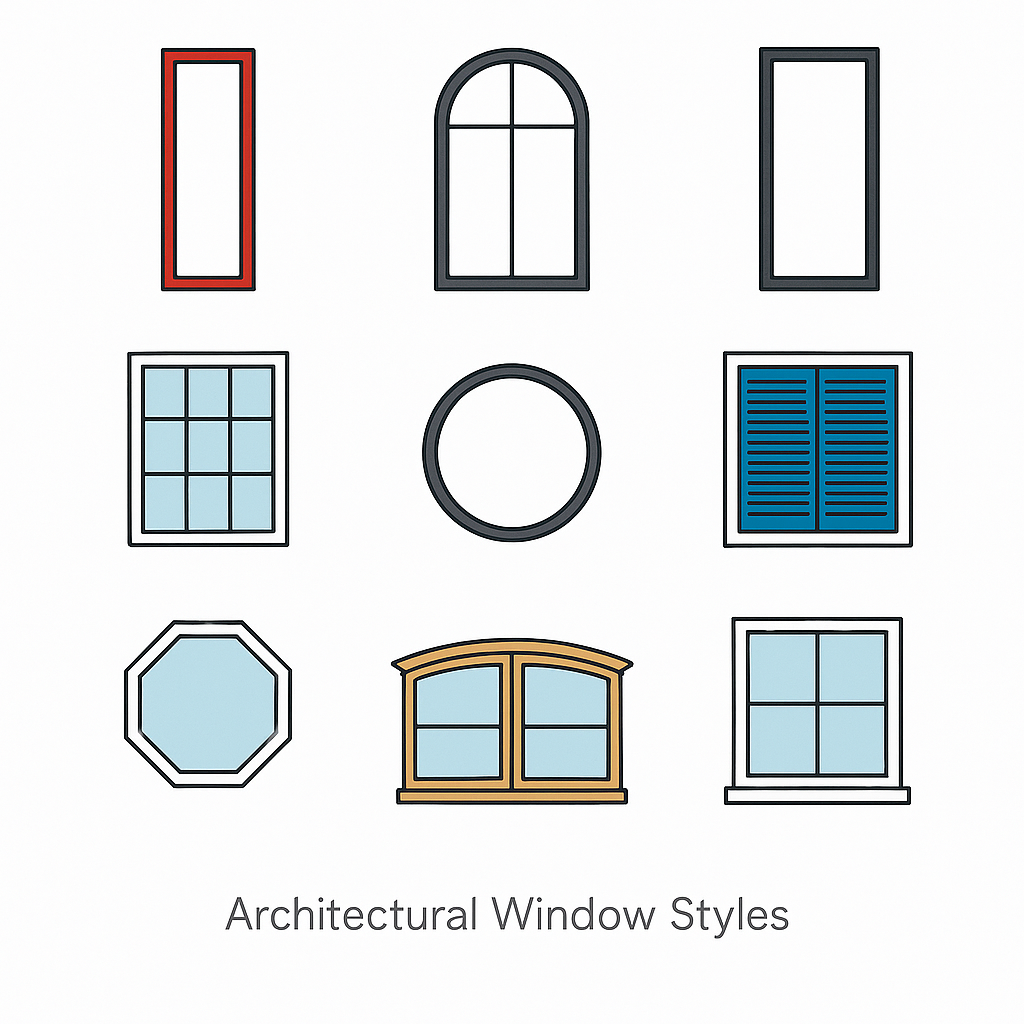
Windows succeed or fail on materials. Frames, glass, and details decide if they hold up or fall apart.
Frames, and What They Can Take
Aluminum works in high-rise jobs where corrosion is a risk. Wood belongs in houses and restoration work where proportion and warmth matter. Reclaimed or certified stock keeps it authentic and responsible.
Glass Beyond Just Clear Views
Double glazing is basic in cold climates. Tempered or laminated panes are required in storm zones. Low-E coatings cut heat while keeping daylight.
When Scale Needs Strength
Large spans demand reinforcement. Steel frames carry weight without twisting, letting big glass stay clean and safe.
Materials That Push Forward
Composites give the look of wood without the upkeep. Smart glass shifts tint as light changes or on command.
Building for the Long Haul
Certified woods, recycled metals, and rated glazing help meet both performance standards and green goals like LEED.
The Truth About Window Materials
Materials are not decoration. They are structure, comfort, and longevity. Get them right, and the window carries the building. Get them wrong, and the window becomes the building’s weakness.
History of Windows in Architecture and Construction
Windows have always been more than openings in a wall. From clay and wood shutters to modern smart glass, each era added a new step in design and technology. Below is a short timeline you can open if you want the details.
Click to expand the full history
Ancient Beginnings
Egypt: small stone and mud-brick openings, high on walls for light and air. Rome: first to use glass (around 100 AD). Thick and cloudy, but the start of glazing. Pliny the Elder noted glass used in bathhouses to trap heat.
Middle Ages
Wood shutters and oiled parchment. The big step was crown glass, spun into small circular panes. Allowed larger glazed openings in houses and civic halls.
Renaissance to Baroque
Sash window (England, late 1600s): credited to Robert Hooke, changed design across Europe. Flat glass casting: made wider, clearer panes for decorative facades.
Industrial Revolution
Cast iron and steel frames: enabled wide spans with thin mullions. Crystal Palace (1851): Joseph Paxton’s glass-and-iron building proved windows could scale up to architecture itself.
Modern Era
Plate glass: true clear sheets, entire facades possible. Le Corbusier: ribbon windows of the 1920s. Curtain wall systems: SOM’s Seagram Building (1958). Double glazing: 1930s invention, mass use after WWII.
Late 20th Century to Today
Tempered and laminated glass: safety breakthroughs. Low-E coatings (1970s): reflected heat, cut energy loads. Smart glass (1990s): electrochromic tint-on-demand. Composite frames: fiberglass and recycled PVC improve durability and sustainability.
Types of Windows in Architecture and Construction
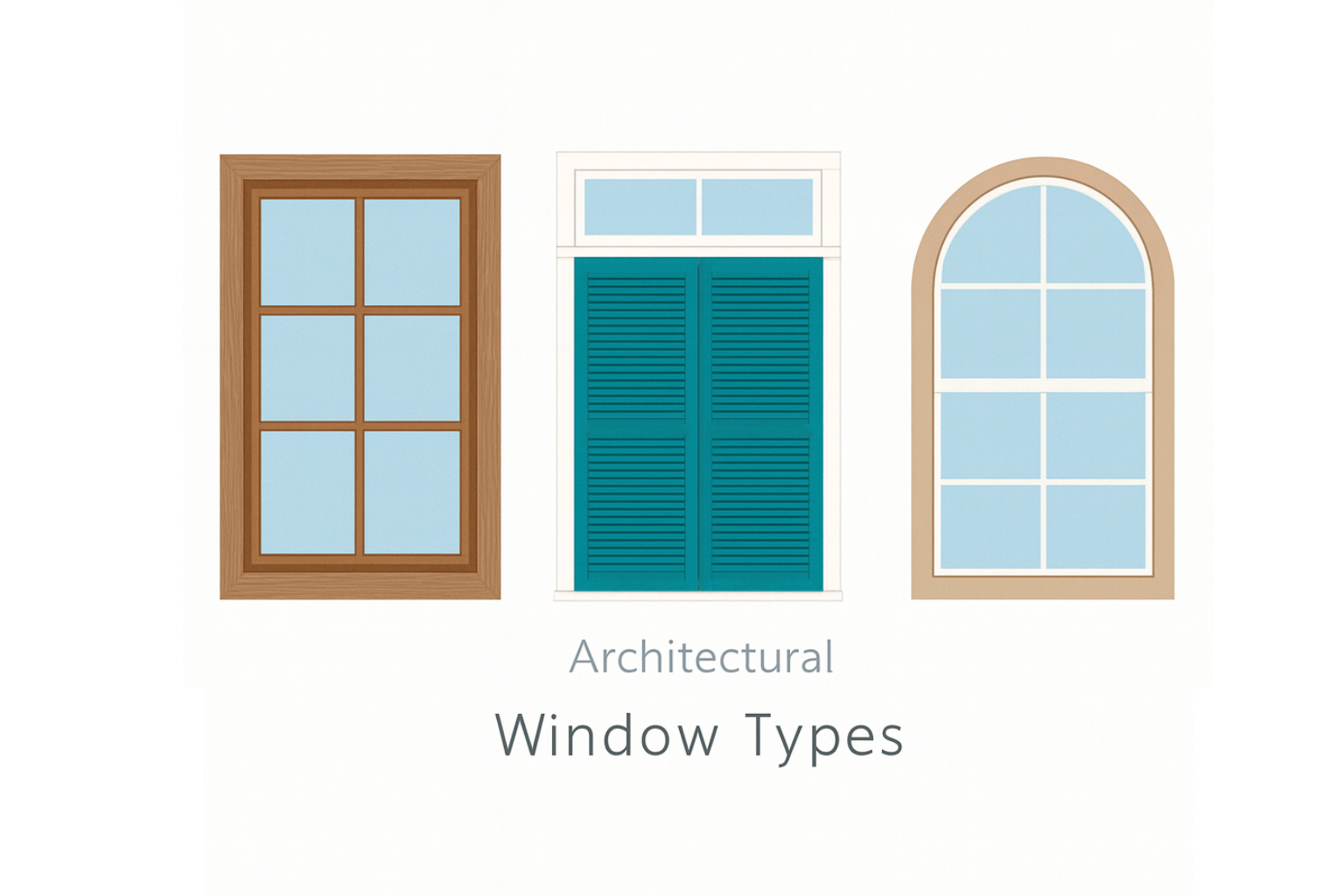
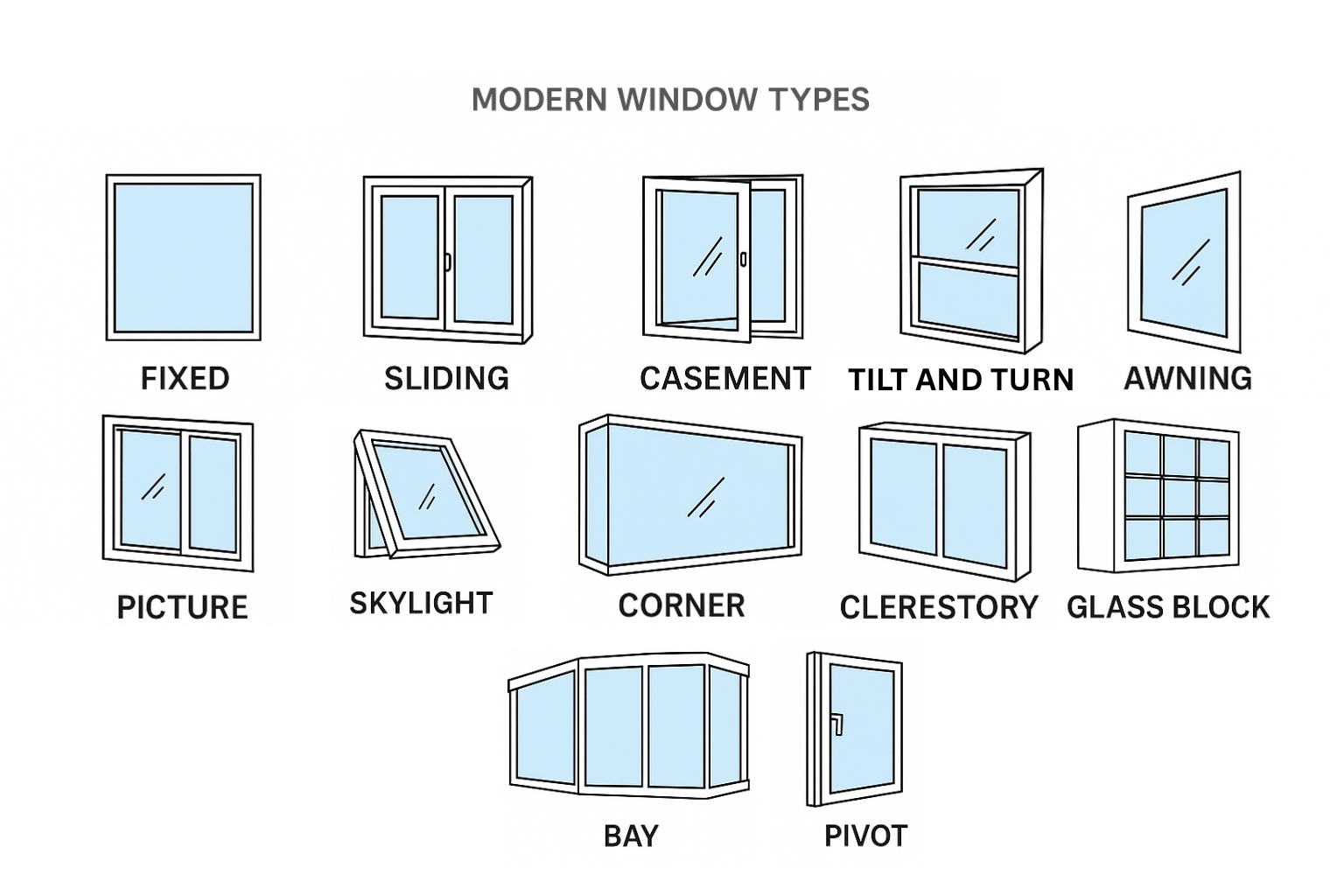
Windows decide how a building breathes, how it looks from the street, and how it feels inside when the light shifts. They are not just styles on a list. They are tools. Each one belongs somewhere and fails somewhere else.
Casement Windows
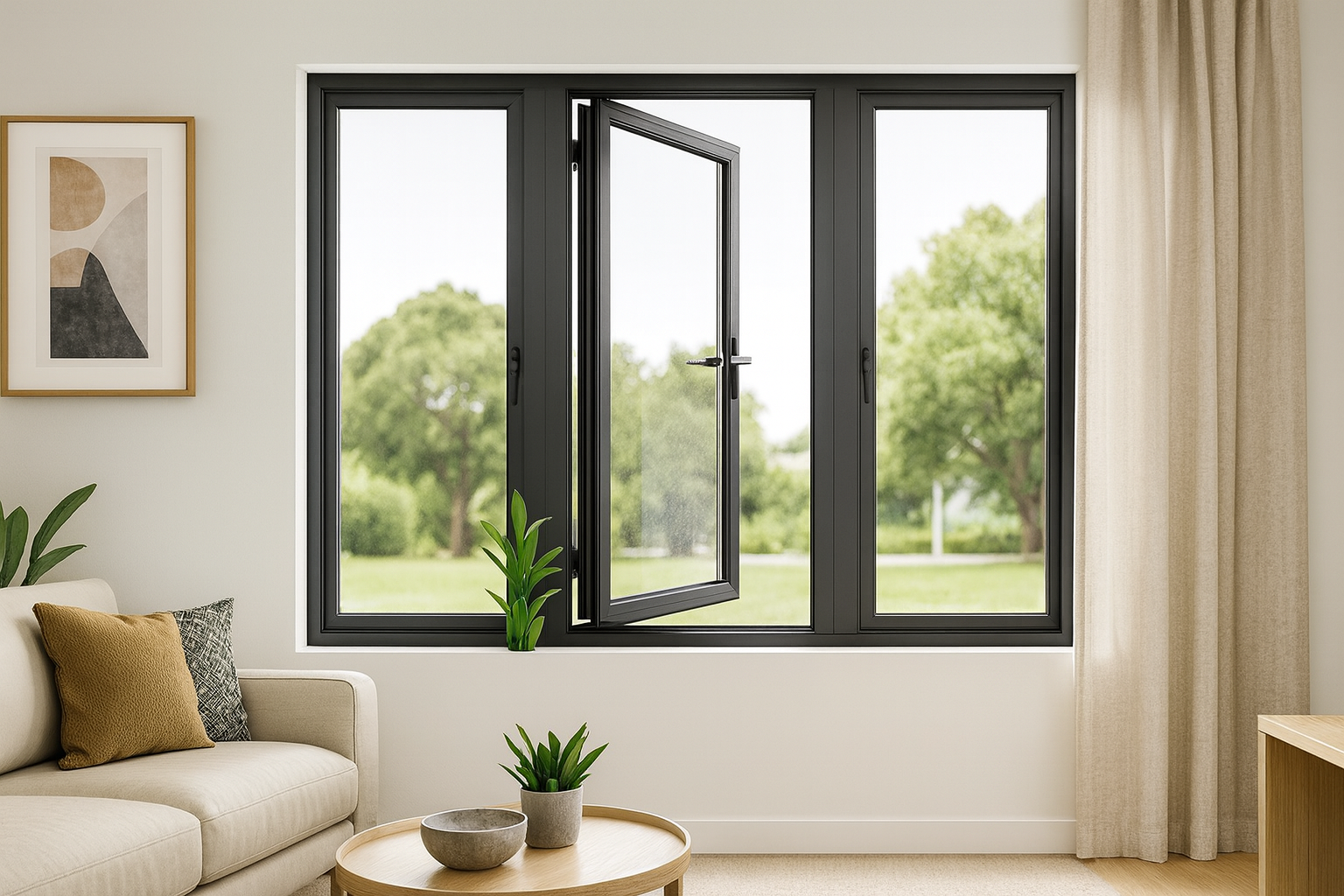
Casements swing outward like doors. They are the windows you crank open above a kitchen counter when you need the steam gone fast. They are also the ones that grab a side breeze and funnel it in. French casements open wide without a middle bar, giving a clear view. They fit well in farmhouses or heritage restorations. Steel casements belong in industrial lofts or stripped-down modern houses. They look sharp but they need careful treatment against rust.
Sliding Windows
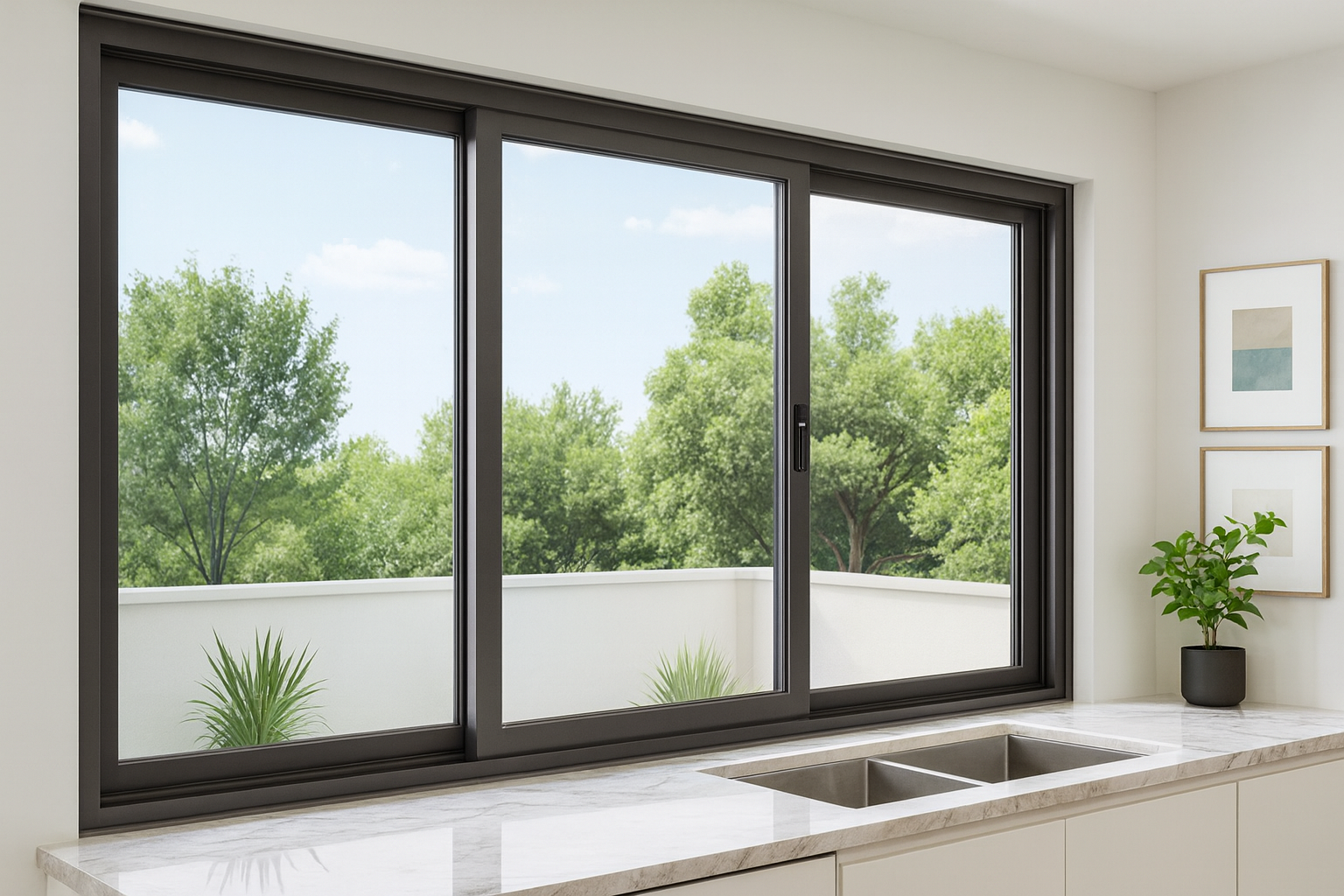
Sliders move sideways on tracks. Nothing sticks into the room or patio. That makes them practical for apartments, bathrooms, and smaller bedrooms. They live or die on the quality of their tracks. Cheap ones jam. Near the coast, poor tracks corrode in a year. Good ones last and keep their smooth glide.
Double-Hung Windows
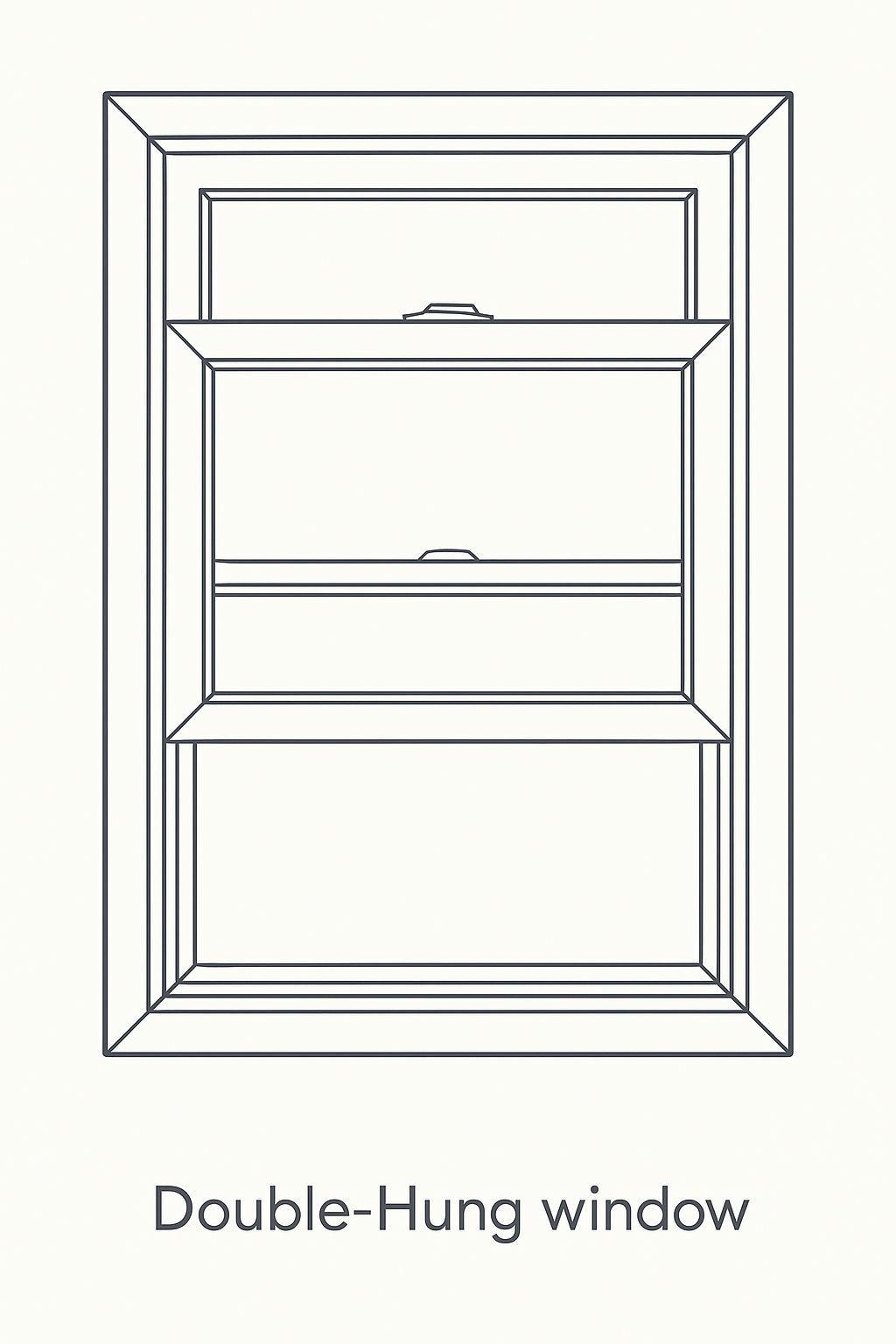
Double-hung windows have two sashes that move up and down. They are the face of colonial houses and a steady choice for bedrooms and living rooms. They give flexible ventilation and are easy to clean with tilt-in frames. Wood versions bring warmth but need upkeep. Vinyl versions trade character for less maintenance.
Awning Windows
Awnings hinge at the top and open outward. They let air in even when it rains. You find them above fixed windows in living rooms or high up in bathrooms where privacy matters. Their weak spot is the seal. If it fails, water comes in. When done right, they are reliable and subtle.
Bay and Bow Windows
Bay and bow windows push out from the wall and change a room’s character. They flood space with light and add a nook for sitting or reading. They work in both traditional Victorian houses and in newer builds that want a panoramic feel. They are complex to install and need structural support. Done right, they change how a space feels.
Picture Windows
Picture windows do not open. They frame views and bring light deep into a room. They work best when paired with operable windows nearby so you do not lose ventilation. They belong in living rooms with a mountain view or a garden you want to make part of the room.
Skylights
Skylights bring light from above into rooms where walls cannot. Attics, bathrooms, and hallways benefit most. They open up spaces that would otherwise feel closed in. The weak spot is waterproofing. A poorly installed skylight leaks. A properly installed one changes a room’s mood completely.
Jalousie Windows
Jalousie windows are glass slats that angle open. They are built for warm climates where airflow is critical. They work on porches, sunrooms, and coastal houses. They let air in even in light rain. They are weak in insulation and security, so they belong only where air is more important than heat retention.
Fixed Windows
Fixed windows do not open. Their job is light and view. They combine well with other types that provide ventilation. You see them in stairwells, foyers, or large glass walls in modern houses. They are efficient and simple but need cleaning to stay clear.
Arched Windows
Arched windows carry a rounded top that softens a façade. They bring elegance to entry halls, churches, and classical homes. In modern houses they are used sparingly, often to break the monotony of flat lines. They usually need custom fabrication which adds cost and time.
See also: Architectural Window Types Explained by an Architect
For more on the standards for impact windows, refer to the guidance from the Federal Emergency Management Agency (FEMA) here.
Best Materials for Windows in Architecture and Construction
Picking a window is really about picking its frame. The material sets the rules — how much light you get, how much maintenance you sign up for, and how long the thing will survive before you’re fixing it again.
Wood
Still the warmest and most forgiving frame. It takes paint, holds glass, and insulates better than most. Oak or mahogany carry weight and prestige; pine is the budget choice that goes up fast and looks good if detailed right. The problem is upkeep. Leave it raw in rain or sun and it swells, cracks, or rots. On restorations I’ve seen oak hold up for a century, but I’ve also seen cheap pine eaten alive in under ten years because nobody sealed it.
Aluminum
Light, slim, and strong. Perfect when the design calls for big glass and thin lines. I’ve used it on towers where nothing else would span the width. The catch is heat transfer. Raw aluminum bleeds temperature inside. The fix is “thermally broken” frames — two aluminum pieces separated by an insulator. Without that, you end up with condensation in winter and heat spikes in summer.
UPVC
The workhorse of housing developments. Cheap, low-maintenance, and quick to install. Tilt-and-turn UPVC windows can handle both light and air well. They shrug off rain and salt, but I’ve watched them get brittle in extreme cold. In moderate climates they’re a safe bet; in harsh winters or hot deserts they age faster than expected.
Steel
Strong enough to carry large panes with the thinnest profiles. That’s why you see it in loft conversions and industrial-style houses. The weakness is rust. Uncoated steel will start bleeding in a season. With proper powder coating or galvanizing, it lasts and looks sharp. I’ve specified steel on projects where the client wanted floor-to-ceiling views without heavy mullions — it’s the only material that could carry the load.
Field note: Wood is about craft, aluminum about scale, UPVC about budgets, steel about strength. Match the frame to the building’s climate, use, and ambition. Get that wrong, and you’re solving problems instead of designing.
Window Glass Types in Architecture and Construction
Glass is not filler. It sets safety, comfort, light, and energy spend. Pick it with the same care you give structure and detailing. Here is what earns a place in the spec, where it fits, and the traps to avoid.
Tempered glass
Where it fits entries, schools, sports zones, fast circulation areas. Tempered panels are several times stronger than annealed and granulate on failure so cleanup is safer. For rough-duty buildings, step up thickness or pair an outer tempered lite over an inner laminated lite to cut flex and callbacks.
Prime-Line EntryGard Dual Arm Casement Operator »
Laminated glass
Where it fits hotels, city apartments, banks, low zones where shards would be a hazard. Two lites and a clear interlayer stay intact on impact and tame street noise. It also filters most UV that fades interiors. Use for guardrail infill, interior borrowed lights, and any space that wants quiet without shutters.
Double glazed units
Where it fits retrofits, offices, homes with comfort goals. Two panes with a sealed gap slow heat flow and drafts. Use warm-edge spacers to keep sightlines clean and reduce condensation at the edge. On heritage work, double glazed timber sash keeps the look and fixes the leak.
See frame choices in Wooden Window Frames: Complete Guide and Aluminum Window Frames.
Low E coated glass
Where it fits hot sun, west and south façades, glass-heavy rooms. The coating reflects heat and passes visible light so rooms stay bright without running hot. Pick the coating for your climate. High solar gain for cold regions that want winter sun. Low solar gain for warm regions that want shade without tint.
Frosted and obscure glass
Where it fits baths, stairs, tight urban sites. Etched and frit finishes give privacy and a soft glow. Keep a clear band at the top to pull sky light deep into the plan. Mix clear and obscure lites in one system so hardware and seals stay consistent.
Layout tips in How to Design Glass Windows.
Architectural Detailing by Edward Allen »
Security and impact glass
Where it fits banks, government entries, coastline, high-risk storefronts. Makeups are tuned for forced entry or storm load. The frame, bite depth, setting blocks, and anchors must match the rating or the glass choice will not matter. In coastal work, confirm stainless fasteners and verified sealant joints.
Plan your next step
If comfort and bills are the driver, start with double glazed units and the right Low E. If privacy or safety leads, pick laminated or a clear over laminated build. Then match the frame to the climate and look in Modern Windows: From Frames to Glass.
Window Functions and Features
Windows control air, light, energy, and security. Everyone knows that. What books and manuals rarely show are the field lessons: the small fixes and failures that actually decide if a window performs. Years of trial, error, and corrections on site teach more than any spec sheet. In both construction and architecture, those details are what matter when you choose them.
Ventilation and Natural Light
Placement is everything. On a coastal build we lined up operable windows to catch cross-breezes and cut cooling loads. In a city office renovation we paired fixed glass for skyline views with operable units in the corners so staff could crack them open for fresh air. A mix usually works better than one type across the board. See Window Design: Complete Guide for layout strategies that make this easier.
Energy Efficiency
On a retrofit we pulled out single-pane relics and dropped in double-glazed units. Bills fell fast and rooms finally felt balanced in winter and summer. Low-E coatings and thermally broken frames do the heavy lifting. In LEED work, those specs often tip the scorecard. More on frames in Aluminum Window Frames.
MUST READ
Building Construction Illustrated – Francis Ching
Clear drawings on how glass and frames tie into walls. Still my go-to reference when detailing.
Acoustic Insulation
Noise kills comfort. Laminated glass fixes that. On a downtown apartment build, swapping in laminated panes turned a constant traffic roar into background hush. The interlayer doubles as security too. If you need calm in the middle of chaos, start here.
Security Features
Locks and glass must work together. On a gated estate we used impact glass with multi-point locking hardware. Even tested against break-in drills, the windows held. On a hurricane build, impact-rated units kept debris out and survived a storm that shredded neighboring houses. Architectural Window Types shows where security glass fits into design.
FIELD PICK
Prime-Line EntryGard Dual Arm Casement Operator
Installed it on a 20-year-old casement. Smooth crank and tight action after two winters.
When Windows Make or Break Design
Window Styles and Architectural Impact
Windows are not just openings. They set the rhythm of a façade, carry light deep into a plan, and decide whether a building feels true to its style or slightly off. The trick is matching type to architecture. Miss that, and even the best detailing won’t save you.
Traditional Styles
Restoring older buildings is all about accuracy. On a Victorian home refit, modern replacements had killed the character. We brought back sash windows in oak, and the house immediately looked right again. In Colonial work, proportion matters—tall double-hungs with narrow muntins make the style. For Gothic-inspired civic buildings, arched windows with slender frames carry the vertical pull without turning the wall into a cartoon of itself.
Modern Styles
Minimalist and industrial projects demand clean spans. On a downtown office build, we specified slim aluminum frames that could hold glass walls without breaking the aesthetic. In loft conversions, steel grids reinforce the industrial feel while keeping structure honest. These moves are less about decoration and more about getting the bones of the building to read clearly.
Blended or Transitional
Some projects sit between eras. A Colonial house we worked on needed modern performance without losing charm. The solution: double-hung profiles fitted with Low-E panes. Outside, the windows looked period-correct. Inside, the glass cut drafts and energy loss. That balance is where transitional work succeeds.
For deeper context on period-accurate choices, see Architectural Window Types and Wooden Window Frames.
Windows Inside the Plan
Inside, windows decide how a room feels. Picture windows can turn a penthouse wall into a framed skyline. Bay and bow windows add both light and usable space in smaller houses. Kitchens often rely on casement or awning types for fast ventilation. Bathrooms need obscure glass for privacy. Bedrooms work best with double-hungs where air control and security both matter.
Shaping the Exterior
From the street, windows are the face of the building. A mid-century modern home we renovated kept its slim steel look but upgraded to thermally broken aluminum. The curb appeal stayed intact, but the performance improved. Traditional façades rely on bay or arched windows for depth, while flat-front modern work can be ruined if frames are too heavy or glass is cut wrong.
Custom Work
Custom designs carry the project beyond catalog choices. On a residential commission, we worked with a glass artist to set stained panels into the entry. It added privacy but also gave the house a clear identity. Circular openings, tall slits, or angled compositions can do the same if they respect the rest of the structure.
If you want inspiration, New Window Design Inspirations and Edward Allen’s Architectural Detailing (Amazon) both show how windows can anchor design instead of just filling holes.
The Architect’s Guide to Window Design
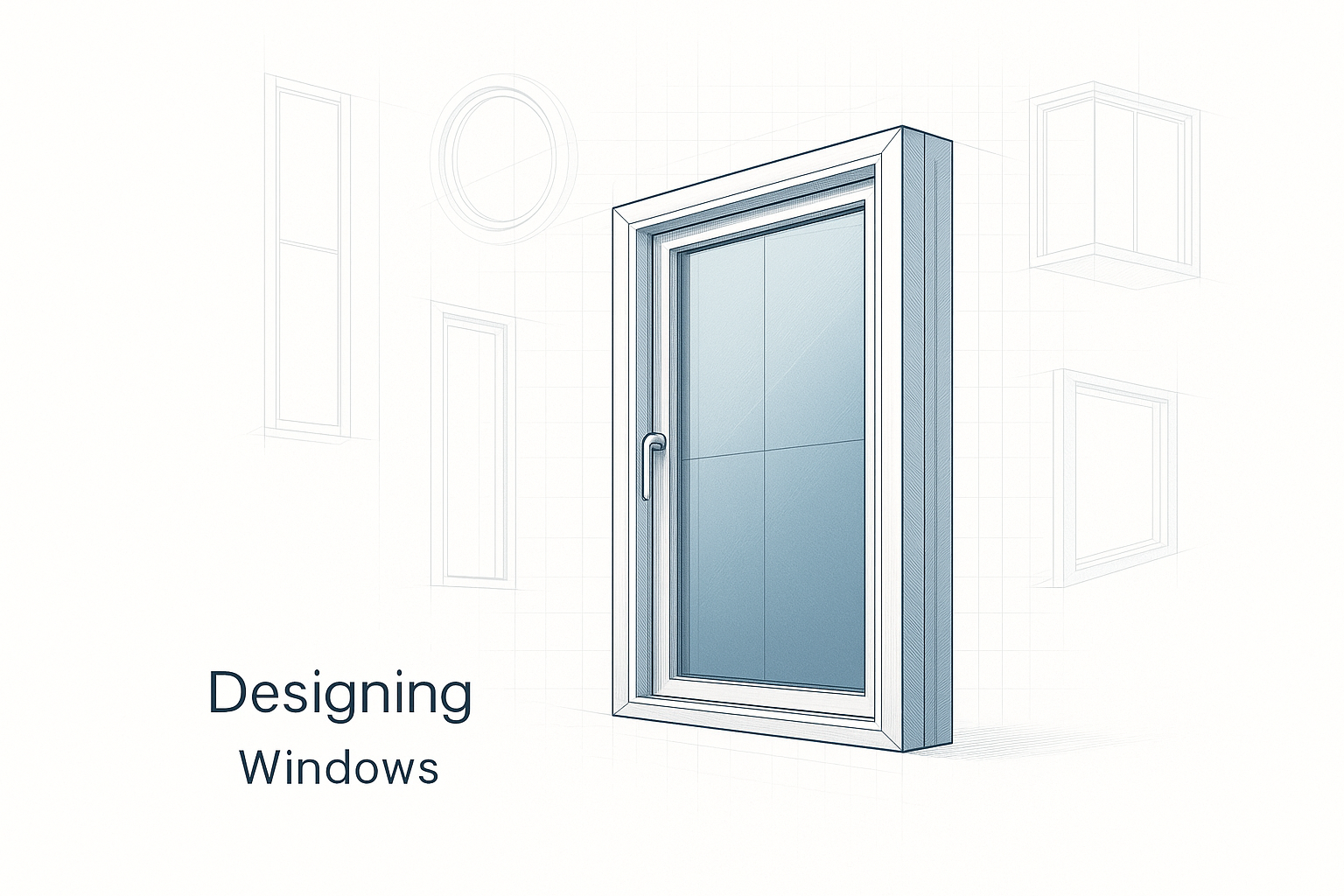
Design principles that hold under pressure
Good windows solve light, air, view, and load at the same time. Large glass needs performance to match its scale. Pair generous openings with low-E coatings and insulated frames so the room stays bright without punishing the utilities. If the architecture leans minimalist, keep profiles slim and repeatable so the façade reads as one idea, not a catalog.
Custom is for specific pressures: coastal wind, impact zones, or privacy without blackout. Impact-rated glass and reinforced frames protect exposure while keeping the sightlines you drew. On character buildings, match proportions and sightlines first, then hide modern performance inside. More on proportions and type matching in Architectural Window Types and frame selection in Wooden Window Frames.
Materials that fit the brief
Pick materials for climate and care, not trend. Thermally broken aluminum carries long spans without bulk. Fiberglass and composite frames ride through temperature swings without warping. Wood stays king where touch and repairability matter, but only with disciplined sealing. For a modern overview of frames plus glass combos, see Modern Windows: From Frames to Glass.
Quiet tech that earns its keep
Electrochromic or tint-on-demand glass controls glare on west elevations without blinds. Triple glazing with argon and low-E layers makes glass walls livable in cold zones. Keep control simple: daylight sensors and a manual override beat complicated scenes.
Building Windows
Two production paths, one standard
Hand-built units win when profiles, wood species, or unusual shapes define the project. Factory lines win on repeatability, tight tolerances, and modern coatings. Either way, insist on straight stock, square corners, dry glazing, and weathertight joinery.
Assembly that lasts
Prepare material to spec, assemble square, glaze clean, then finish so water sheds and seals stay compressed, not crushed. Check corner keys, drainage paths, and hardware backing before finish goes on. A fast visual: sills that slope, weeps that breathe, seals that are continuous.
For performance labeling and comparisons, check NFRC ratings and ENERGY STAR criteria before you sign. Links: NFRC, ENERGY STAR.
Window Installation and Maintenance
Set it once, keep it dry forever
A square frame in a crooked opening still leaks. Shim to plane, not just to plumb, and flash in layers: pan first, jambs next, head last. Tie flashing into WRB, then seal the exterior joint with backer rod and a compatible sealant. Verify operation before trim.
DIY with guardrails
Measure rough opening, dry-fit, correct racking, then fix with structural screws through the frame where the manufacturer allows. Insulate the gap with low-expansion foam, not the gap-blowing kind. Follow the install sheet line by line. If the opening is out of square more than tolerance, stop and correct the framing.
Care that actually matters
Clean drains and weeps every season. Re-caulk failed joints. Touch up cut ends on wood and bare scratches on metal. Fog between panes points to a failed unit, not just a dirty one. More practical setup and detailing basics in Window Design: Complete Guide.
Advanced Window Technologies
Smart glass and simple controls
Electrochromic glass tints under load to kill glare. Photo and thermal sensors automate tint and ventilation. Keep the system serviceable: accessible power supplies, documented wiring, and a manual mode that facilities can trust.
High-performance assemblies
Triple panes with warm-edge spacers, argon or krypton fills, and low-E stacks turn big openings into steady rooms. Pair with thermally broken frames to avoid cold edges. If you plan exterior shading, design it with the glass package, not after.
Sourcing and Buying
Local first when schedules are tight
Local shops shorten lead times, match site conditions, and adjust profiles without customs delays. Use them for custom shapes, service parts, and quick turnarounds. For standard units with deep options, regional factories often hit the value sweet spot.
Spec by numbers, not adjectives
Lock U-factor, SHGC, VT, DP rating, finish system, hardware type, and warranty in the spec. Ask for NFRC labels and submittals that show glazing build-up and spacer type. If acoustic control matters, request STC/OITC test reports. Planning predesign? Modern Windows: From Frames to Glass has a solid overview.
Importing with eyes open
Count duty, broker, inland freight, and crates in the budget. Verify certifications translate to your code. Order extra gaskets and hardware now, not after occupancy.
Cost Considerations
What drives price
Frames: wood at the top, steel close behind, thermally broken aluminum mid-high, fiberglass and composite steady mid, uPVC most economical. Glass: laminated and low-E stacks add, triple adds more. Shapes, finishes, and hardware multiply fast.
Where projects save
Standardize sizes, repeat modules, and select one finish per elevation. Spend where it pays back: performance glass on tough exposures, durable hardware on daily-use openings. Energy upgrades often return through lower bills within a few seasons.
Buying Products: Field Notes
Builders and serious DIY
Buy frames, glass, and hardware that play well together. Confirm sealant compatibility with finishes and glazing. When in doubt, pull a mock-up and water-test it before releasing the lot. See practical planning steps in How to Design Glass Windows.
Bulk and business
For volume, negotiate spare operators, weather-strip, and touch-up kits in the same PO. Stage deliveries to limit site damage. Keep one trained tech from the supplier on call through install and punch.
Custom Window Solutions
Shapes, glass, and finishes that fit one address
Non-standard openings demand tight coordination. Lock geometry, tolerances, and hardware clearances early, then build a full-size corner or one complete unit as a prototype. Approve sightlines, drainage, and service access at that mock-up.
Glass that does more than fill a hole
Combine performance with character: laminated for security and sound, patterned for privacy, low-E stacks tuned to orientation. If you want design inspiration with practical setup, Simple Window Design pairs well with Modern Window Designs.
Finish to last
Coastal jobs need marine-grade coatings and stainless hardware. Urban façades benefit from anodic or high-performance fluoropolymer finishes that clean easily. Interior face can carry wood or bronze where touch matters.
Next-Generation Window Design
Forms and frames that disappear
Bespoke geometries and ultra-slim frames put the structure back into the wall and the glass in the view. Use reinforced sections and proper anchors so the profile stays quiet under wind and movement.
Sustainable by default
Recycled aluminum, FSC wood, and low-VOC finishes should be table stakes. Document recycled content and chain-of-custody once, then reuse that package across similar jobs.
Closing Notes
Windows decide how a building breathes, how much it costs to heat or cool, and how the façade holds itself against time.
The choice comes down to fit: climate, structure, and use. Aluminum holds up in dense cities, wood keeps its soul in restorations, laminated glass keeps people safe in storms, and oversized panes only work when the frame is built to carry them.
What matters just as much is how they’re installed, sealed, and maintained. A strong design still fails if the joinery leaks or the frame warps. Done properly, the same window can carry a building for half a century.
That’s the lesson across every project. Windows are not add-ons. They are architecture. Treat them with that weight, and they’ll return comfort, durability, and a building that works as well as it looks.
FAQs
Window Types & Styles
What window types are most common in US homes?
- Casement – high efficiency and full opening
- Double-hung – classic, versatile, easy to clean
- Sliding – simple, low-maintenance
- Picture / Fixed – big views, no ventilation
- Bay & Bow – add space and light projection
What is a Palladian window?
A tall center arch window with two rectangular sides. Popular in neo-classical and Colonial revival homes across the US.
What is a tilt-and-turn window?
More common in Europe, but gaining ground in US modern builds. Tilts inward from top or swings inward like a door for dual function.
Functions & Performance
Why do windows matter beyond looks?
- Daylight and ventilation reduce energy use
- Glazing affects heating and cooling loads
- Security glass and locks deter break-ins
- Frames and sightlines shape curb appeal
What does “PG rating” mean?
Performance Grade. Measures resistance to wind, water, and structural pressure. Higher PG = stronger performance.
What is builder-grade vs premium windows?
Builder-grade: lowest cost, meets code. Premium: better glass, stronger frames, higher efficiency, longer warranties.
Cost & Longevity
How much does a window cost in 2025 in the US?
Typical installed cost runs $450 – $1,600 per window. Standard vinyl replacements are on the low end. Fiberglass, wood-clad, or custom shapes climb into the higher range. Large bay or architectural units can exceed $3,000 installed.
What’s the cheapest durable option?
Vinyl replacement windows. Widely used, energy-efficient, low upkeep. Lifespan around 20–25 years with care.
Which window type lasts the longest?
Fiberglass and aluminum-clad wood windows. Both can exceed 30 years if maintained.
When is the best time to replace windows?
Spring and fall. Installers aren’t swamped, weather helps sealants cure, and you may get better scheduling/pricing.
Brands & Quality
Which window brands are best known in the US?
Andersen, Pella, Marvin, and Milgard dominate the higher-end market. Simonton and Jeld-Wen serve mid-range buyers.
Which windows are most energy-efficient?
Triple-pane or Low-E coated glass, often offered by Andersen 400 Series, Marvin Elevate, and Pella Lifestyle lines.
Are Pella or Andersen windows better?
Andersen often wins on durability and variety. Pella is praised for design options and good vinyl lines. Marvin fiberglass lines are also highly rated.