
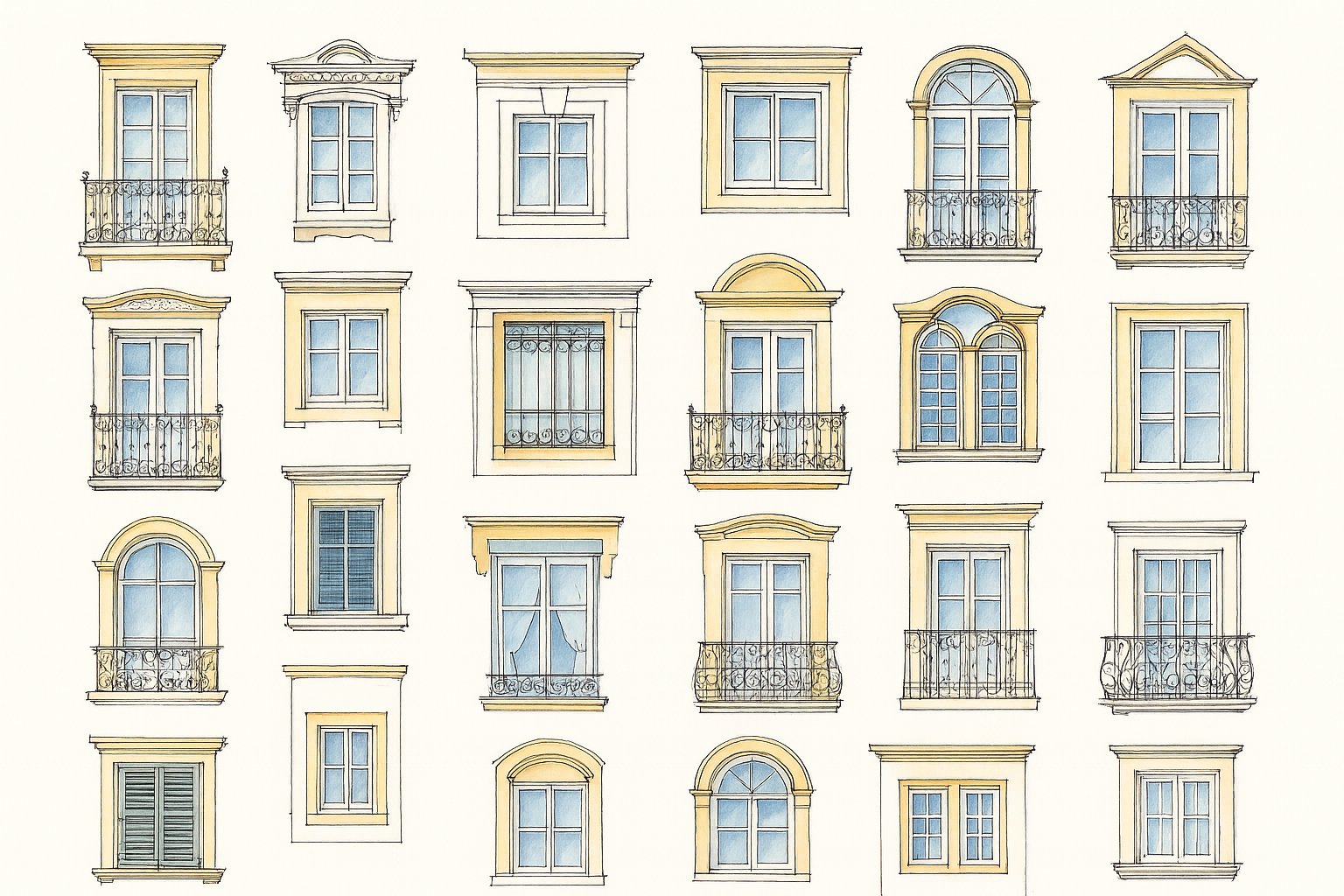
A Guide for Design and Performance
A field guide to architectural window types: design impact, energy performance, and real choices that shape buildings.
What Happens When You Get Windows Wrong
I stopped treating windows like catalog options a long time ago. They decide how a room breathes, how it holds heat, how it ages on the street. I learned this the hard way. On one early project, I signed off on cheap sliders because they shaved ten grand off the budget. By the first winter, the client called me back to feel the draft blowing through the seams.
After enough projects, you don’t pick windows by name. You walk the site, feel the wind, know which way the rain drives. You think about the program, the climate, the maintenance. Then you reach for the type that will hold.
Windows aren’t a finish. They’re one of the places architecture either holds up or collapses. If you don’t learn that in school, you’ll learn it on your first angry phone call from a client.
Windows Shape How a Building Works
Windows do more than fill a wall. They change how a building looks, how much light it gets, how it feels inside, and how much energy it uses. Pick the wrong ones and the house feels off. Pick the right ones and the whole place works better.
What To Think About
Start with climate. Cold places need windows that hold heat in. Hot places need ones that block heat out. Style matters too. A modern home looks wrong with old-fashioned frames. A heritage house feels cheap with oversized glass boxes.
Function is another piece. Some windows should open wide to bring in air. Others can stay fixed if the goal is a clear view or saving energy. And always check cost, strength, and how much work it takes to keep them clean.
The Types You’ll See
There are a lot of choices. Double hung, casement, sliding, fixed. Each has upsides and downsides. Some give airflow. Some frame a view. Some keep energy bills lower.
The key is matching the window to the building, the weather, and the way people will actually use the space. Get that right and the windows stop being just glass. They become part of the design that makes the place feel right.
Residential Window Types
Casement Windows
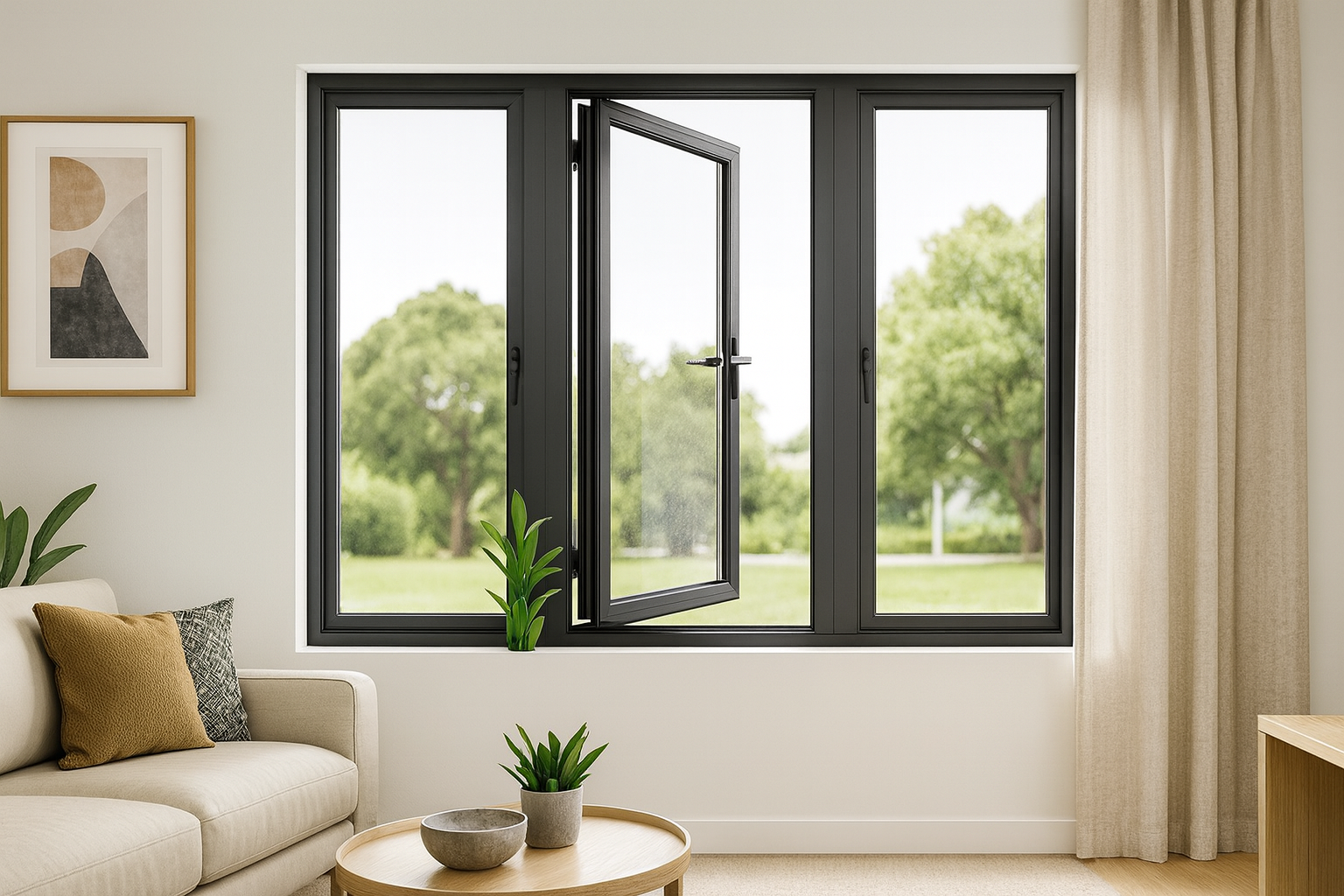
Casement windows open on a side hinge, swinging out like a door. They give excellent ventilation because you can angle the sash to catch a breeze and push air deep into the room. Steel casements sharpen modern facades with thin sightlines, while wood versions sit naturally in traditional kitchens. The main drawback is swing space. You need to plan furniture, walkways, and even landscaping around them.
Sliding Windows
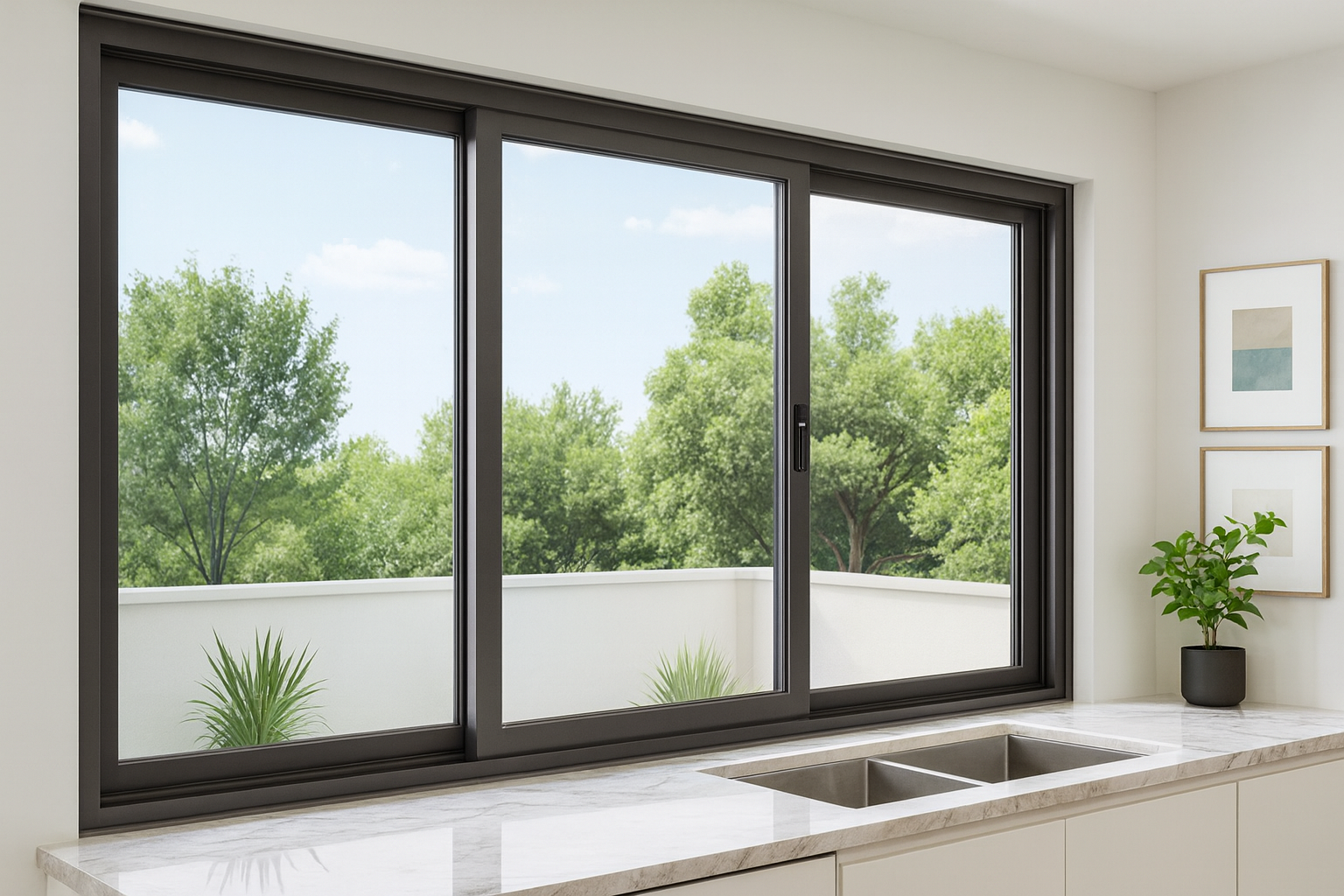
A sliding window moves horizontally instead of swinging. It fits small bedrooms, tight corridors, and multi-unit housing where every inch counts. Ventilation is limited to half the opening, but they last long and are simple to use. Their clean lines also blend well with contemporary exteriors.
Double-Hung Windows
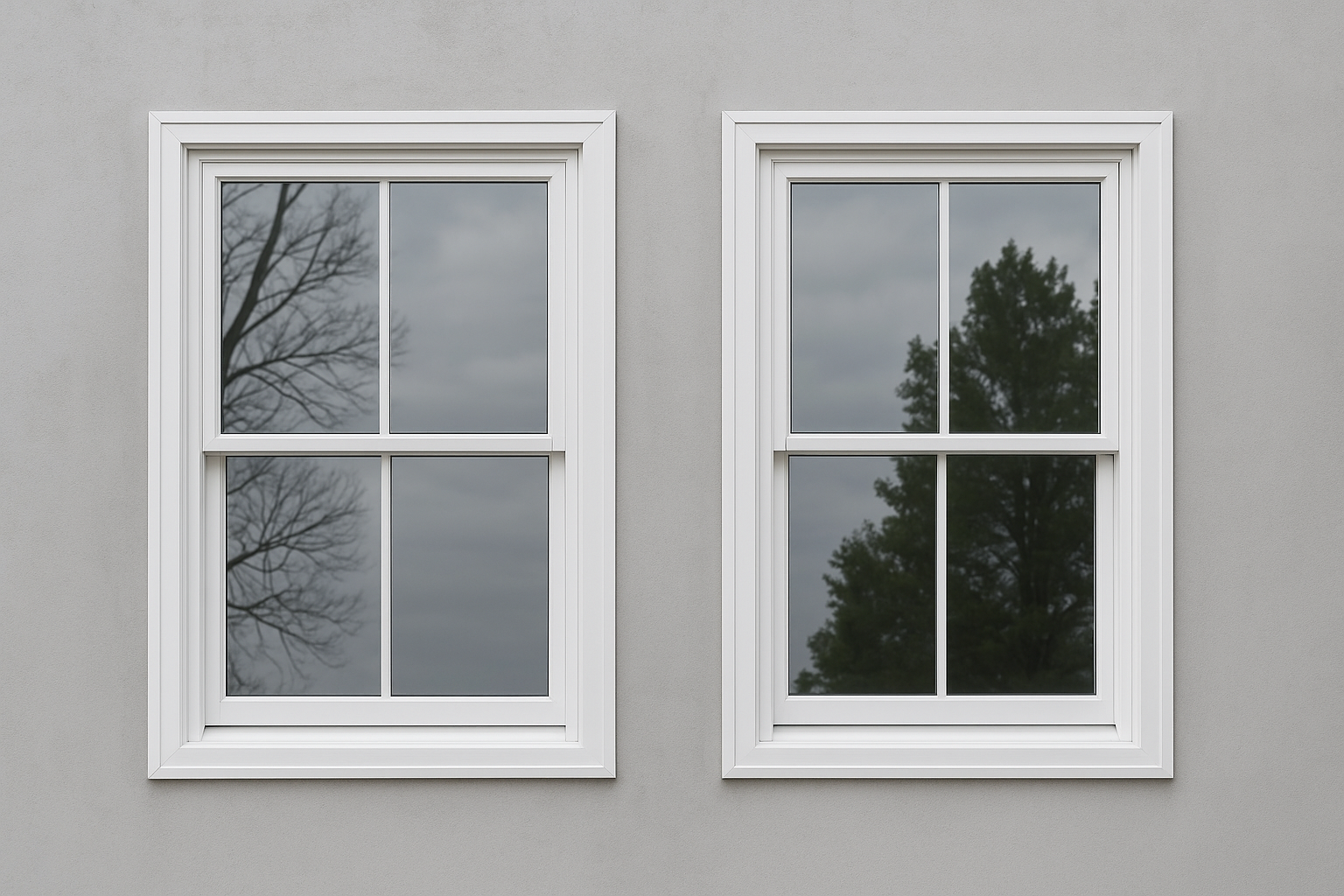
A staple in North American housing. Both sashes move, so you can pull air through the top and bottom at the same time. They carry a classic look in colonial or brick facades, and tilt-in designs make cleaning easier. They need care though. Wood frames swell, balances slip, and poor upkeep means lost seals.
Awning Windows
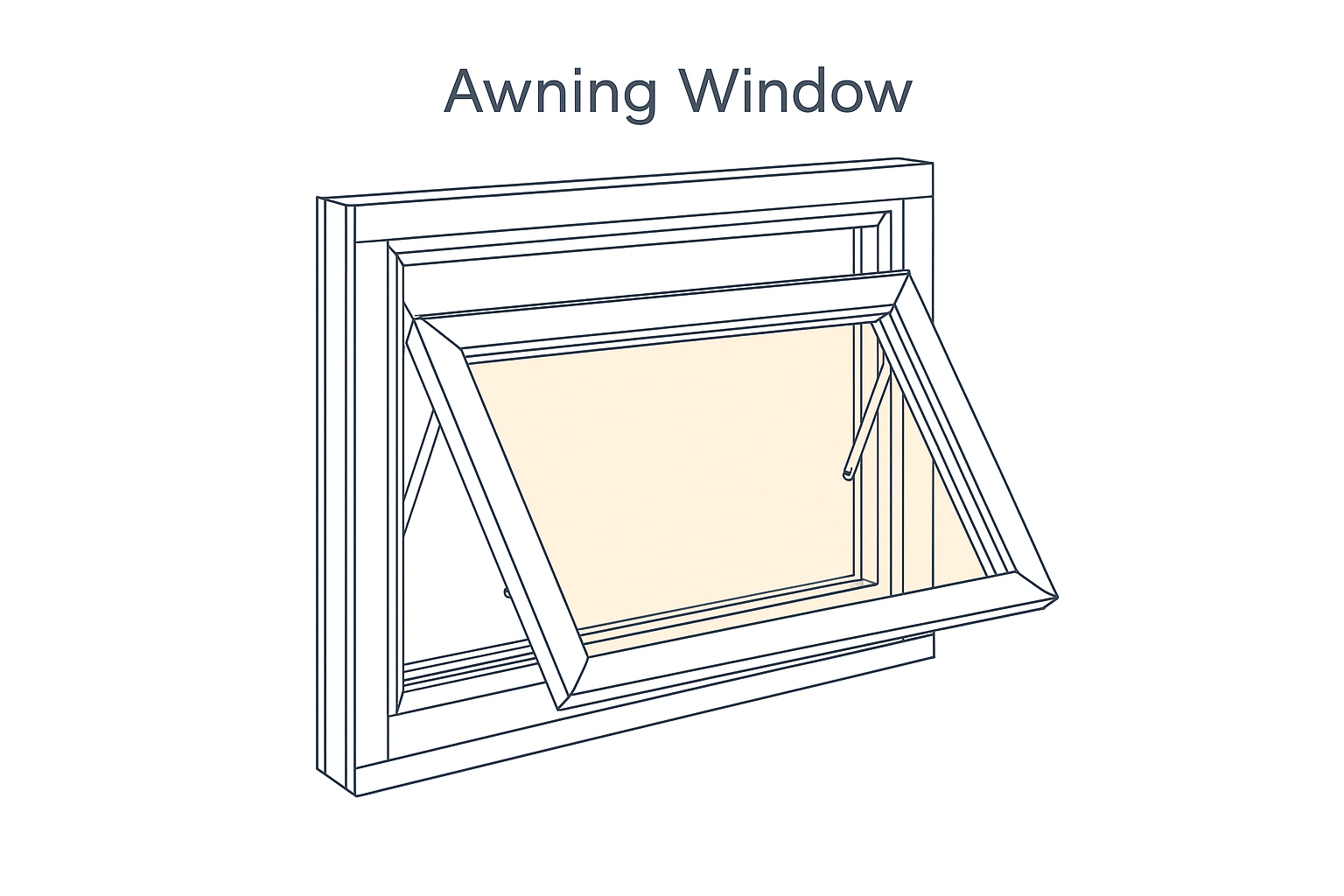
Awning windows hinge at the top and push outward. They shed rain while still drawing air, which makes them reliable for bathrooms, basements, or coastal houses. They are usually smaller, so they rarely act as the main window but work well when combined with fixed panes.
Bay and Bow Windows
These windows project beyond the wall line and give both light and space. Bays are more angular while bows are curved, but both create a ledge or nook that changes how a room feels. They need careful detailing and proper support, yet when done right they turn a plain living room into the center of a house.
Picture Windows
Large fixed panes that frame a view like artwork. They do not open, so other windows nearby must provide ventilation. Placed well, they anchor rooms and bring in huge amounts of daylight. If the glazing is poor or orientation is wrong they can waste energy, but with modern glass they are efficient and striking.
Skylights
Skylights bring light from the roof where walls cannot. In attic conversions or deep floor plans, they instantly change the quality of space. Operable versions add air but must be installed with precision or leaks will follow. Good design places them with structure and circulation in mind rather than scattering them randomly.
Jalousie Windows
Made of rows of glass slats that tilt open. They excel in warm and humid climates by allowing constant airflow, even during light rain. In cold regions they leak energy, so they are mostly tied to tropical or mid-century houses. Where used well, they turn porches and sunrooms into breezy livable areas.
Fixed Windows
Fixed windows do not open. Their job is to bring light or emphasize form. They often appear in stairwells, clerestories, and double-height foyers to shape mood. With no moving parts, they are efficient and can be oversized to dramatic effect.
Arched Windows
Arched windows have a curved top and carry classical weight. They elevate entryways, stair landings, and heritage facades. Out of context they can look forced, but aligned with the architecture they mark permanence. They usually need custom fabrication, which makes them more costly but also more distinct.
Types of Commercial Windows
Commercial windows are designed to meet the specific needs of various business environments, providing durability, functionality, and aesthetic appeal. Drawing from practical experience in the field, I’ve seen how the right commercial windows can significantly impact both the efficiency and appearance of a building. Below, we’ll explore different types of commercial windows, their unique characteristics, and how they can be applied effectively in different settings.
Storefront Windows
Description: Storefront windows are large, fixed windows commonly used in retail and commercial buildings. They’re designed to showcase merchandise and create an inviting exterior for businesses. Through years of hands-on work with construction materials, I’ve seen how storefront windows can transform a retail space, drawing in customers by maximizing visibility.
Variants:
- Storefront Windows for Residential Use: Adapted for homes, offering a modern look with large glass panels.
- Types of Commercial Windows: Includes various designs tailored for specific commercial applications, such as energy-efficient or security-focused windows.
Pros and Cons:
- Pros:
- Maximizes visibility, ideal for retail displays.
- Enhances natural light within commercial spaces.
- Cons:
- Provides no ventilation due to being fixed.
- Can be vulnerable to break-ins if not reinforced.
Common Applications:
- Widely used in retail stores, cafes, and restaurants to attract customers.
- Also used in office buildings to create a bright, open work environment.
Examples:
- Storefront windows are often seen in fashion boutiques, where large glass panels are used to display merchandise and entice passersby.
- They are also common in modern office buildings, providing an unobstructed view of the surroundings.
Hopper Windows
Description: Hopper windows open inward from the top, allowing for controlled ventilation. They are commonly used in commercial basements and bathrooms where space is limited. Having worked with diverse building resources, I’ve found hopper windows to be particularly effective in spaces where ventilation is needed but security remains a priority.
Uses:
- Frequently installed in basements to provide ventilation while maintaining security.
- Also used in commercial bathrooms to allow airflow while preserving privacy.
Pros and Cons:
- Pros:
- Provides good ventilation with added security.
- Compact design is ideal for small spaces.
- Cons:
- Limited to smaller window openings.
- Inward opening can obstruct interior space.
Common Applications:
- Ideal for basements, restrooms, and other areas where security and ventilation are priorities.
- Often used in hospitals and schools for controlled airflow.
Examples:
- Hopper windows are commonly found in school basements, providing ventilation without compromising security.
- In commercial bathrooms, these windows offer privacy while allowing for necessary airflow.
Pivot Windows
Description: Pivot windows rotate on a central axis, allowing the window to be opened in various positions. This unique design offers flexibility in airflow and lighting. From my work in construction material selection, I’ve found pivot windows to be a fantastic choice for modern spaces where both functionality and aesthetics are key.
Variants:
- Horizontal Pivot Window: Rotates horizontally, often used for wider openings.
- Vertical Pivot Window: Rotates vertically, suitable for tall, narrow spaces.
Pros and Cons:
- Pros:
- Allows for creative design with varying angles of opening.
- Easy to clean, as both sides can be accessed from inside.
- Cons:
- Can be more expensive due to complex mechanisms.
- Requires space around the window for rotation.
Common Applications:
- Often used in modern commercial buildings where unique design and flexible ventilation are desired.
- Suitable for spaces like galleries, where varying angles of light can enhance the display.
Examples:
- Pivot windows are often featured in art galleries, where their unique rotation allows for controlled lighting of exhibits.
- In modern office buildings, vertical pivot windows are used to create dynamic architectural features while providing ventilation.
Impact Windows
Description: Impact windows are designed to withstand heavy impacts, making them essential in hurricane-prone areas. These windows provide added security and protection against extreme weather. Having had the opportunity to deal with various materials directly, I’ve seen how crucial impact windows are for ensuring safety in coastal regions.
Uses:
- Commonly used in high-rise buildings, coastal properties, and other areas prone to severe weather conditions.
- Also used in commercial settings that require high levels of security, such as banks and government buildings.
Pros and Cons:
- Pros:
- Provides superior protection against storms and break-ins.
- Can reduce noise pollution due to their heavy-duty construction.
- Cons:
- Typically more expensive than standard windows.
- Can be heavier and more difficult to install.
Common Applications:
- Essential in coastal regions for both residential and commercial buildings.
- Frequently used in high-rise buildings to protect against windborne debris.
Examples:
- Impact windows are standard in coastal hotels, providing safety without compromising the view.
- In high-security commercial buildings, these windows offer an additional layer of protection against potential threats.
Metal Windows
Description: Metal windows, often made of steel or aluminum, are known for their durability and strength. They are frequently used in industrial or commercial settings where longevity and security are priorities. Drawing from practical experience in the field, I’ve seen metal windows become the backbone of many industrial projects due to their unmatched durability.
Variants:
- Types of Steel Windows: Include both galvanized and stainless steel options, offering varying levels of corrosion resistance.
- Types of Steel Window Frames: Available in different finishes to match industrial aesthetics or modern design needs.
- Residential Metal Windows: Adaptations of commercial-grade metal windows for use in homes, often in modern or industrial-style residences.
Pros and Cons:
- Pros:
- Extremely durable and long-lasting.
- Resistant to weathering and wear, ideal for harsh environments.
- Cons:
- Can be prone to rust if not properly treated.
- Less energy-efficient compared to some other materials.
Common Applications:
- Widely used in warehouses, factories, and other industrial settings where durability is key.
- Also popular in modern commercial buildings seeking a sleek, industrial look.
Examples:
- Metal windows are a staple in factories and warehouses, providing strength and durability in challenging environments.
- In modern office complexes, steel-framed windows are used to create a contemporary, minimalist aesthetic.
Related: Hacienda Style Windows
| Window Type | Opening Mechanism | Pros | Cons | Common Applications |
|---|---|---|---|---|
| Storefront | Fixed | Maximizes visibility, enhances natural light | No ventilation, security concerns | Retail stores, office buildings |
| Hopper | Inward from top | Good ventilation, added security | Limited to small openings, inward obstruction | Basements, bathrooms |
| Pivot | Rotates on central axis | Flexible design, easy to clean | Complex mechanisms, space needed for rotation | Galleries, modern offices |
| Impact | Fixed or operable | Superior protection, reduces noise pollution | Expensive, heavier to install | Coastal buildings, high-security areas |
| Metal | Fixed or operable | Durable, weather-resistant | Prone to rust, less energy-efficient | Industrial settings, modern commercial buildings |
Types of Window Glass
Window glass plays a crucial role in the performance, safety, and aesthetics of a building. Different types of glass offer unique benefits, whether it’s for insulation, security, or visual appeal. Below, we'll explore various types of window glass, their characteristics, and their common applications.
Tempered Glass
Description: Tempered glass is heat-treated to increase its strength. When it breaks, it shatters into small, blunt pieces, reducing the risk of injury.
Variants:
- Tempered Glass for Windows: Used in both residential and commercial buildings.
- Tempered Glass Window Replacement: Common in situations where safety is a priority.
- Double-Tempered Glass Window: Used for added strength in large window panels.
Pros and Cons:
- Pros:
- Increased safety due to how it shatters.
- Stronger than standard glass, making it more durable.
- Cons:
- More expensive than regular glass.
- Cannot be cut or modified after tempering.
Common Applications:
- Frequently used in doors, bathrooms, and areas where safety is a concern.
- Also used in high-traffic commercial spaces where breakage risks are higher.
Examples:
- Tempered glass is commonly found in shower doors, where its safety benefits are crucial.
- It's also used in car windows, providing strength and shatter resistance.
Laminated Glass
Description: Laminated glass consists of two layers of glass with a plastic layer in between, enhancing safety and soundproofing.
Variants:
- Laminated Glass Windows for Home: Provides added security and noise reduction.
- Laminated Glass Car Windows: Commonly used in vehicles for safety and UV protection.
Pros and Cons:
- Pros:
- Enhances security as it holds together when shattered.
- Provides sound insulation, making interiors quieter.
- Cons:
- More expensive and heavier than standard glass.
- May discolor over time if exposed to sunlight.
Common Applications:
- Widely used in skylights, car windshields, and areas requiring additional safety and soundproofing.
- Often used in urban environments to reduce noise pollution.
Examples:
- Laminated glass is used in car windshields, where its ability to hold together prevents injury from shattered glass.
- It's also found in soundproof windows in busy city environments.
Double Glazed Glass
Description: Double glazed glass consists of two layers of glass separated by air or gas, providing excellent insulation.
Variants:
- Types of Double Glazing: Includes various thicknesses and gases for different insulation needs.
- Double Glazed Frosted Glass: Combines privacy with insulation.
- Double Glazed Timber Sash Windows: Aesthetic choice for traditional homes.
Pros and Cons:
- Pros:
- Greatly improves energy efficiency.
- Reduces noise and enhances comfort.
- Cons:
- Higher initial cost than single glazing.
- Can be heavier, requiring stronger frames.
Common Applications:
- Common in residential windows to improve insulation and reduce energy costs.
- Also used in offices where temperature control is important.
Examples:
- Double glazed windows are standard in new homes, providing energy savings and comfort.
- They're also used in office buildings to reduce heating and cooling expenses.
Low-E Glass
Description: Low-E (low emissivity) glass is coated to reflect heat while allowing light to pass through, improving energy efficiency.
Uses:
- Frequently used in energy-efficient windows in both residential and commercial buildings.
Variants:
- Andersen Low-E Glass: A popular brand known for its high performance.
- Types of Low-E Glass: Includes various coatings depending on climate needs.
Pros and Cons:
- Pros:
- Reduces energy costs by reflecting heat.
- Allows natural light while keeping interiors cool.
- Cons:
- More expensive than standard glass.
- The coating can slightly alter the appearance of the glass.
Common Applications:
- Ideal for homes and offices aiming for energy efficiency.
- Often used in climates with extreme temperatures to reduce HVAC costs.
Examples:
- Low-E glass is common in modern homes, where energy efficiency is a priority.
- It's also used in commercial buildings with large glass facades to minimize energy consumption.
Frosted & Obscure Glass
Description: Frosted and obscure glass are textured or etched to provide privacy while still allowing light to filter through.
Variants:
- Types of Frosted Glass for Windows: Used in bathrooms and private spaces.
- Obscure Glass Types: Include various textures and levels of opacity.
- Types of Privacy Glass for Bathroom Windows: Specially designed for privacy in wet areas.
Pros and Cons:
- Pros:
- Provides privacy without blocking light.
- Adds a decorative element to windows.
- Cons:
- Can reduce the amount of natural light compared to clear glass.
- More difficult to clean due to the texture.
Common Applications:
- Frequently used in bathrooms, entry doors, and offices where privacy is essential.
- Also used in decorative applications to enhance design.
Examples:
- Frosted glass is popular in bathroom windows, offering privacy while letting in light.
- Obscure glass is often used in office partitions to maintain a bright yet private workspace.
Security Glass
Description: Security glass is reinforced to resist breaking, providing additional security against forced entry.
Variants:
- Types of Security Glass for Windows: Includes laminated and tempered options for different security needs.
- Security Glass Window: Designed specifically for high-security environments.
Pros and Cons:
- Pros:
- Extremely durable and difficult to break.
- Provides peace of mind in high-risk areas.
- Cons:
- More expensive than standard glass.
- Can be heavier and harder to install.
Common Applications:
- Used in banks, government buildings, and other areas requiring high security.
- Also used in storefronts to prevent break-ins.
Examples:
- Security glass is standard in bank windows, where it’s essential to deter theft.
- It’s also used in luxury homes for added protection against intrusions.
| Glass Type | Description | Pros | Cons | Common Applications |
|---|---|---|---|---|
| Tempered Glass | Heat-treated for safety, shatters into small blunt pieces | Increased safety, stronger than standard glass | More expensive, cannot be cut after tempering | Shower doors, car windows |
| Laminated Glass | Two layers of glass with a plastic layer in between | Enhances security, provides sound insulation | Heavier, may discolor over time | Car windshields, soundproof windows |
| Double Glazed Glass | Two layers of glass separated by air or gas for insulation | Greatly improves energy efficiency, reduces noise | Higher initial cost, heavier | Residential windows, office windows |
| Low-E Glass | Coated glass that reflects heat while allowing light to pass through | Reduces energy costs, allows natural light | More expensive, may alter glass appearance | Energy-efficient windows in homes and offices |
| Frosted & Obscure Glass | Textured or etched glass for privacy while allowing light | Provides privacy, adds decorative element | Reduces natural light, harder to clean | Bathrooms, office partitions |
| Security Glass | Reinforced glass designed to resist breaking | Extremely durable, provides high security | More expensive, heavier | Banks, government buildings, high-security areas |
Types of Window Frames
Window frames are more than just structural supports for glass; they play a crucial role in the overall performance, energy efficiency, and aesthetic appeal of a building. The choice of window frame material can dramatically influence the durability, maintenance requirements, and even the environmental footprint of a structure. Below, we'll explore the different types of window frames, each with its unique characteristics, benefits, and applications.
Wooden Frames
Description: Wooden frames have been a cornerstone in window construction for centuries. These frames are made from a variety of wood types, offering a timeless and natural look that adds warmth and charm to any building. Wood is a versatile material that can be shaped, stained, and painted to match a wide range of architectural styles.
Variants:
- Types of Wooden Windows: These include traditional sash windows, casement windows, and more, all constructed using various kinds of wood.
- Types of Wood for Windows: Common choices include oak, pine, and mahogany, each offering different characteristics in terms of durability, color, and texture.
- Traditional Victorian Wood Windows: Often used in heritage properties, these windows reflect the historical architectural styles and are typically crafted from high-quality hardwoods.
Pros and Cons:
- Pros:
- Natural Insulation: Wood has excellent thermal properties, helping to keep interiors warm in winter and cool in summer.
- Customizable: Wooden frames can be easily shaped, carved, and finished to meet specific design requirements.
- Aesthetic Appeal: The natural beauty of wood adds elegance and value to any building, particularly in traditional or luxury homes.
- Cons:
- Maintenance: Wood requires regular maintenance to protect it from rot, warping, and insect damage. This may involve painting, staining, or sealing.
- Cost: High-quality wooden frames can be more expensive than other materials, both in terms of initial cost and long-term upkeep.
Common Applications:
- Wooden frames are ideal for residential buildings, especially in historical or high-end properties where maintaining an authentic appearance is crucial.
- They are also favored in custom-built homes where the aesthetic quality and craftsmanship of the windows are prioritized.
Examples:
- Wooden frames are often found in heritage properties, where their natural look complements the historical architecture.
- In luxury homes, custom wooden windows are chosen for their ability to add a touch of class and sophistication to the overall design.
Aluminium Frames
Description: Aluminium frames are known for their strength, durability, and lightweight nature. They have become increasingly popular in modern architecture, particularly in commercial buildings and contemporary homes, due to their sleek, minimalist appearance and ability to support large glass panes.
Variants:
- Types of Aluminium Windows: This includes casement, sliding, and fixed windows, all constructed with aluminium frames.
- Types of Aluminium Window Frames: These frames come in various finishes, including anodized and powder-coated options, allowing for customization to match different design aesthetics.
- Types of Aluminium Sliding Windows: These are popular in modern homes and office spaces, providing a smooth operation and a space-saving solution.
Pros and Cons:
- Pros:
- Lightweight and Strong: Aluminium frames can support large windows without compromising structural integrity, making them ideal for expansive glass designs.
- Low Maintenance: These frames are highly resistant to corrosion and do not require frequent upkeep, making them a cost-effective choice in the long run.
- Modern Aesthetic: The sleek lines and metallic finish of aluminium frames add a contemporary touch to any building.
- Cons:
- Energy Efficiency: Aluminium is a good conductor of heat, which can lead to higher energy costs if the frames are not thermally broken.
- Cost: While not as expensive as wood, aluminium frames can still be more costly than other materials like uPVC.
Common Applications:
- Aluminium frames are widely used in commercial buildings, where their strength allows for the installation of large windows and curtain walls.
- In residential settings, they are popular in modern and contemporary homes, particularly in areas where large, uninterrupted views are desired.
Examples:
- Aluminium frames are commonly seen in office buildings, where their strength and durability support the expansive glass walls that are characteristic of modern commercial architecture.
- In contemporary homes, aluminium sliding windows are often used in living rooms and kitchens to create a seamless connection between indoor and outdoor spaces.
UPVC Frames
Description: UPVC (unplasticized polyvinyl chloride) frames are a popular choice for residential windows due to their affordability, low maintenance, and excellent insulation properties. Unlike wooden frames, UPVC does not rot, warp, or require regular painting, making it a practical option for homeowners looking for a cost-effective solution.
Variants:
- Types of UPVC Windows: These include casement, tilt-and-turn, and sliding windows, all using UPVC as the primary material.
- UPVC Window Opening Types: Various mechanisms are available, including side-hinged, tilt-and-turn, and sliding options, providing flexibility in design and function.
- UPVC Window Glass Types: UPVC frames can accommodate double or triple glazing, enhancing their insulation properties and energy efficiency.
Pros and Cons:
- Pros:
- Cost-Effective: UPVC frames are generally less expensive than wooden or aluminium frames, making them accessible to a wide range of homeowners.
- Low Maintenance: These frames require minimal upkeep and are resistant to weathering, making them ideal for long-term use.
- Energy Efficient: UPVC's insulating properties help reduce heat loss, contributing to lower energy bills and a more comfortable indoor environment.
- Cons:
- Aesthetic Limitations: UPVC frames are typically available in fewer colors and finishes compared to wood or aluminium, limiting customization options.
- Durability: While durable, UPVC is not as strong as aluminium or wood, which may impact its performance in extreme conditions.
Common Applications:
- UPVC frames are commonly used in residential buildings, particularly in areas where energy efficiency and affordability are key concerns.
- They are also a popular choice for replacement windows, providing an easy and cost-effective upgrade to existing homes.
Examples:
- UPVC frames are often found in suburban homes, where their affordability and low maintenance make them an attractive option for homeowners.
- In apartment buildings, UPVC windows are frequently used to enhance energy efficiency while keeping construction costs manageable.
Steel Frames
Description: Steel frames are renowned for their strength and durability, making them a preferred choice in industrial and commercial settings. These frames offer a robust and secure option for window construction, with the ability to support large glass panes without compromising safety or stability.
Variants:
- Types of Steel Window Frames: These include galvanized steel and stainless steel options, each offering different levels of corrosion resistance and aesthetic appeal.
- Types of Residential Steel Windows: While traditionally used in industrial settings, steel frames are increasingly being adapted for use in modern residential architecture, particularly in homes with an industrial or minimalist design aesthetic.
Pros and Cons:
- Pros:
- Strength and Durability: Steel frames can support very large windows, making them ideal for buildings that require expansive glass surfaces.
- Security: The strength of steel provides an added layer of security, making these frames suitable for high-risk areas.
- Industrial Aesthetic: The sleek, clean lines of steel frames add a modern, industrial touch to any building, enhancing its architectural appeal.
- Cons:
- Prone to Rust: If not properly treated, steel frames can rust over time, particularly in coastal areas where saltwater can accelerate corrosion.
- Weight and Cost: Steel frames are heavier and more expensive than other materials, which can increase installation costs and require additional structural support.
Common Applications:
- Steel frames are commonly used in industrial buildings, warehouses, and factories where durability and security are paramount.
- In residential settings, they are popular in loft conversions and modern homes that embrace an industrial design aesthetic.
Examples:
- Steel frames are a staple in factories and warehouses, providing the necessary strength and durability for large windows in these demanding environments.
- In modern residential architecture, steel-framed windows are often used to create a sleek, minimalist look that complements the overall design of the home.
Window Frame Types Comparison
| Frame Type | Description | Pros | Cons | Common Applications |
|---|---|---|---|---|
| Wooden Frames | Traditional window frames made from various types of wood | Natural insulation, customizable, elegant appearance | Requires maintenance, more expensive | Heritage homes, luxury residences |
| Aluminium Frames | Lightweight, durable frames often used in modern architecture | Strong, low maintenance, modern look | Less energy-efficient, can be expensive | Commercial buildings, modern homes |
| UPVC Frames | Affordable and low-maintenance plastic window frames | Cost-effective, excellent insulation, low maintenance | Limited color options, less durable | Suburban homes, apartments |
| Steel Frames | Sturdy and durable frames, often used in industrial and commercial settings | Extremely strong, durable, industrial aesthetic | Prone to rust, heavier, more expensive | Industrial buildings, modern residential homes |
Types of Window Screens
Window screens serve as a crucial barrier between the interior of a building and the outside world. They not only prevent insects from entering but also offer various other benefits, depending on the type of screen. Below, we'll explore the different types of window screens available, their specific uses, and the advantages they offer.
Standard Mesh Screens
Description: Standard mesh screens are the most common type of window screens, typically made from materials like metal or fiberglass. These screens are designed primarily to keep insects out while allowing air to flow freely into the space.
Uses:
- Standard mesh screens are found in most homes due to their effectiveness and affordability.
- They are used in all kinds of windows, from residential to some light commercial applications.
Pros:
- Inexpensive and easy to install.
- Provides excellent airflow while keeping insects out.
Cons:
- Offers no protection against solar heat or UV rays.
- Does not provide added security against break-ins.
Common Applications:
- Ideal for residential homes, especially in windows that are frequently opened for ventilation.
- Also used in older commercial buildings where cost is a priority.
Examples:
- Most traditional homes feature standard mesh screens on windows and doors to maintain airflow while preventing bugs from entering.
Solar Screens
Description: Solar screens are designed to block out a significant portion of the sun's heat and UV rays, helping to keep interior spaces cooler and protect furnishings from sun damage.
Uses:
- Commonly used in hot climates or in homes designed for energy efficiency.
- Suitable for large windows or sliding doors that receive direct sunlight.
Pros:
- Reduces solar heat gain, lowering cooling costs.
- Provides privacy during daylight hours.
Cons:
- Can reduce visibility, especially from the inside looking out.
- More expensive than standard mesh screens.
Common Applications:
- Ideal for homes in hot climates or where energy efficiency is a key concern.
- Frequently used in sunrooms, patios, and large south-facing windows.
Examples:
- Solar screens are often installed in homes in the southwestern United States, where reducing heat from the sun is critical for maintaining a comfortable indoor temperature.
Security Screens
Description: Security screens are reinforced screens designed to prevent forced entry while still allowing for ventilation and airflow. These screens are made from stronger materials like stainless steel mesh.
Uses:
- High-security homes and commercial properties where security is a top priority.
- Used in ground-floor windows or windows in vulnerable locations.
Pros:
- Provides an added layer of security against break-ins.
- Durable and long-lasting, withstanding both impact and weather.
Cons:
- More expensive than other types of screens.
- Can be heavy and require more robust window frames for installation.
Common Applications:
- Ideal for homes in urban areas where security is a concern.
- Common in commercial buildings that require secure windows, such as banks and government facilities.
Examples:
- Security screens are often used in storefronts and ground-floor offices, where they provide protection without compromising visibility or airflow.
Retractable Screens
Description: Retractable screens are designed to roll up and down as needed, offering flexibility and convenience. These screens are particularly popular for patios and large sliding glass doors.
Uses:
- Common in homes with outdoor spaces, like patios or balconies.
- Used in areas where a screen is not needed year-round but is useful during certain seasons.
Pros:
- Can be retracted when not in use, preserving views and allowing for full window or door use.
- Space-saving and convenient for large openings.
Cons:
- The retracting mechanism can wear over time and may require maintenance.
- Typically more expensive than fixed screens.
Common Applications:
- Perfect for outdoor living areas where screens are only needed part of the time.
- Used in modern homes that prioritize both functionality and aesthetics.
Examples:
- Retractable screens are commonly found in upscale homes with large sliding doors that open to patios, allowing the screens to be used only when necessary.
Window Screens Types Comparison
| Screen Type | Description | Pros | Cons | Common Applications |
|---|---|---|---|---|
| Standard Mesh | Common screens made from metal or fiberglass to keep insects out | Inexpensive, effective at keeping insects out | Does not provide solar protection or added security | Most homes |
| Solar Screens | Specialized screens that reduce solar heat and UV exposure | Reduces heat, energy-efficient | Can reduce visibility, more expensive | Hot climates, energy-efficient homes |
| Security Screens | Reinforced screens to prevent forced entry while maintaining airflow | Enhanced security, durable | More expensive, can be heavy | High-security homes, commercial properties |
| Retractable Screens | Screens that can be rolled up or down as needed | Convenient, space-saving | Mechanism can wear over time, more expensive | Patios, large sliding glass doors |
Types of Window Openings
When choosing windows for your home or building, understanding the different types of window openings is crucial. Each type offers distinct functionality, aesthetics, and benefits, depending on your needs and the architectural style of the property. Below, we'll explore four common types of window openings, their uses, pros and cons, and examples of where they are typically used.
Single Hung Windows
- Description: Single-hung windows feature a bottom sash that is operable while the top sash remains fixed. This design is simple and traditional, commonly found in residential homes.
- Uses: These windows are ideal for areas where ventilation is needed but space is limited, such as bedrooms and bathrooms.
- Pros and Cons:
- Pros: Affordable, easy to operate, and maintain. The fixed top sash provides better insulation.
- Cons: Limited ventilation compared to double-hung windows, and cleaning the exterior of the top sash can be challenging.
- Common Applications: Often used in traditional homes, single-hung windows are popular in spaces where simplicity and cost-effectiveness are key.
- Examples: Single-hung windows are typically found in older homes or in new constructions aiming to replicate a classic look.
Double Hung Windows
- Description: Double-hung windows have two sashes in the frame, both of which can move up and down. This design offers more flexibility in ventilation and cleaning.
- Uses: Ideal for homes in colder climates or where versatile ventilation is desired, such as in bedrooms and living rooms.
- Pros and Cons:
- Pros: Versatile ventilation, easier cleaning due to tilt-in sashes, and a classic design that complements various architectural styles.
- Cons: Slightly more expensive than single-hung windows and requires regular maintenance to ensure smooth operation.
- Common Applications: Widely used in traditional and colonial-style homes, double-hung windows are a staple in many residential designs.
- Examples: Double-hung windows are often seen in older homes with historical charm, as well as in modern builds that incorporate classic elements.
Tilt & Turn Windows
- Description: Tilt & Turn windows open in two ways—tilting from the top for ventilation or swinging inward like a door. This European design is highly functional and modern.
- Uses: Popular in European-style homes and apartments, especially in urban areas where space and air quality are concerns.
- Pros and Cons:
- Pros: Offers flexible ventilation options, easy to clean, and provides a secure opening without fully exposing the interior.
- Cons: More expensive than traditional windows and requires careful installation to ensure proper functionality.
- Common Applications: Often used in apartments and contemporary homes, Tilt & Turn windows are a practical choice for spaces requiring both functionality and aesthetics.
- Examples: These windows are common in modern European homes, providing both ventilation and security with their unique design.
Sliding Windows
- Description: Sliding windows open by gliding horizontally along a track. They are space-saving and easy to operate, making them ideal for tight spaces.
- Uses: Perfect for homes with limited space for outward-opening windows, such as bathrooms, kitchens, and small bedrooms.
- Pros and Cons:
- Pros: Space-efficient, easy to use, and low maintenance with fewer moving parts.
- Cons: Limited ventilation compared to other window types, and the fixed orientation means they cannot be angled to catch breezes.
- Common Applications: Sliding windows are often found in contemporary homes where a clean, streamlined look is desired.
- Examples: Sliding windows are frequently used in modern apartments and homes, particularly in urban areas where space is at a premium.
| Window Type | Description | Pros | Cons | Common Applications |
|---|---|---|---|---|
| Single Hung | Bottom sash is operable, top sash fixed | Affordable, easy to operate, better insulation | Limited ventilation, harder to clean top sash | Bedrooms, bathrooms, traditional homes |
| Double Hung | Both sashes move up and down | Versatile ventilation, classic design, easy cleaning | Requires regular maintenance, more expensive | Living rooms, bedrooms, colonial-style homes |
| Tilt & Turn | Opens inward in two ways (tilting or swinging) | Flexible ventilation, secure, easy to clean | More expensive, requires careful installation | Apartments, contemporary homes, urban areas |
| Sliding | Slides horizontally along a track | Space-efficient, easy to use, low maintenance | Limited ventilation, fixed orientation | Bathrooms, kitchens, small bedrooms, modern homes |
Specialty Windows
Egress Windows
Egress windows are designed specifically to allow occupants to exit in case of an emergency, such as a fire. These windows are large enough to meet building code requirements for emergency exits, ensuring safety in residential and commercial buildings.
- Variants:
- Types of Egress Windows: Includes casement, double-hung, and sliding windows designed to meet egress standards.
- Basement Egress Windows: Specially designed for below-ground installations, often featuring wells and ladders for easy exit.
- Pros and Cons:
- Pros:
- Essential for safety and compliance with building codes.
- Provides additional natural light and ventilation.
- Cons:
- Can be more expensive due to size and installation requirements.
- May require regular maintenance to ensure they function properly during emergencies.
- Pros:
- Common Applications:
- Primarily used in basements, bedrooms, and any living space that requires an emergency exit.
- Frequently installed in new constructions to meet safety standards.
- Examples:
- Egress windows are often found in basement bedrooms, where they provide a necessary escape route while also letting in natural light.
- In older homes undergoing renovations, egress windows are added to bring the building up to code.
Conservation Windows
Conservation windows are designed to meet strict conservation area regulations, preserving the historical and architectural integrity of a building. These windows are typically used in heritage or listed buildings where maintaining the original appearance is crucial.
- Variants:
- Velux Conservation Windows: Designed for roof installations in heritage buildings, maintaining the building's traditional look while providing modern functionality.
- Fakro Conservation Windows: Another popular brand that offers conservation windows with traditional aesthetics and modern performance.
- Pros and Cons:
- Pros:
- Helps preserve the historical character of a building.
- Often made with high-quality materials that ensure longevity.
- Cons:
- Can be costly due to specialized manufacturing.
- Limited in design options due to strict preservation guidelines.
- Pros:
- Common Applications:
- Used in heritage buildings, listed properties, and areas with strict conservation regulations.
- Suitable for residential and commercial properties aiming to maintain a historical appearance.
- Examples:
- Conservation windows are common in historic townhouses where the original window designs must be preserved.
- In heritage sites, these windows are used to replace old, worn-out windows without altering the building’s character.
Impact-Resistant Windows
Impact-resistant windows are engineered to withstand extreme weather conditions, particularly in hurricane-prone areas. These windows are designed with reinforced glass to protect buildings from windborne debris and high winds.
- Uses:
- Primarily installed in coastal and high-rise buildings to protect against hurricanes and severe storms.
- Also used in buildings requiring enhanced security, such as government facilities or high-end residences.
- Pros and Cons:
- Pros:
- Provides superior protection against storms and potential break-ins.
- Reduces noise pollution due to their heavy-duty construction.
- Cons:
- More expensive than standard windows.
- Heavier and more challenging to install, often requiring specialized frames.
- Pros:
- Common Applications:
- Essential in coastal regions and hurricane-prone areas.
- Frequently used in high-security buildings where additional protection is necessary.
- Examples:
- Impact-resistant windows are standard in coastal homes and hotels, providing safety without compromising the view.
- High-rise buildings often feature these windows to protect against windborne debris.
| Window Type | Description | Pros | Cons | Common Applications |
|---|---|---|---|---|
| Egress Windows | Large enough to allow occupants to exit in case of emergency | Essential for safety, provides natural light and ventilation | Expensive, requires regular maintenance | Basements, bedrooms |
| Conservation Windows | Designed to fit within strict conservation area regulations | Preserves historical character, high-quality materials | Costly, limited design options | Heritage buildings, listed properties |
| Impact Resistant Windows | Windows designed to withstand hurricanes and other extreme weather conditions | Superior protection, reduces noise pollution | Expensive, heavier installation | Coastal buildings, high-rise buildings |
Advanced Features in Modern Windows
Smart Windows and Technologies
Smart windows are an innovation in the architectural and construction industries, offering features that go beyond traditional glass panes. These windows incorporate advanced technologies like electrochromic glass, which can change tint with an electrical current, providing privacy and reducing glare without the need for blinds or curtains.
- Electrochromic Glass: This technology allows the glass to switch between clear and opaque states, controlled by an electrical signal. It's particularly useful in office buildings and homes where managing light and privacy is crucial.
- Integrated Sensors: Modern windows can be equipped with sensors that monitor temperature, light, and weather conditions. These sensors can automatically adjust the tint of the glass or open and close windows for optimal comfort and energy efficiency.
- Remote Control Operation: Smart windows can be controlled via smartphone apps or remote controls, allowing users to adjust settings without needing to be physically present. This feature is ideal for smart homes and offices that require flexibility in managing natural light and ventilation.
Pros and Cons
- Pros: Enhances energy efficiency, improves comfort, and offers convenience.
- Cons: Higher initial costs and potential complexity in installation and maintenance.
Common Applications
- Used in high-end residential buildings, modern office spaces, and luxury vehicles.
Examples
- Electrochromic glass windows in conference rooms that automatically adjust to reduce glare during presentations.
- Smart windows in homes that adjust based on weather conditions to maintain a consistent indoor temperature.
Acoustic Insulation Features
Acoustic insulation windows are designed to minimize external noise, making them ideal for urban environments or areas with high noise pollution.
- Soundproofing Capabilities: These windows are constructed with multiple layers of glass or special laminates to block out sound, ensuring a quieter indoor environment.
Pros and Cons
- Pros: Significantly reduces noise pollution, improving indoor comfort.
- Cons: Can be more expensive and heavier than standard windows.
Common Applications
- Ideal for city apartments, office buildings near busy streets, and homes close to airports.
Examples
- Soundproof windows installed in a city apartment to block out traffic noise, providing a peaceful living space.
Enhanced Security Options
Modern windows offer advanced security features that go beyond traditional locking mechanisms, providing added protection for homes and businesses.
- Reinforced Glass: Impact-resistant glass is designed to withstand forced entry attempts, making it a vital feature in high-security environments.
- Advanced Locking Systems: Integrated locking systems enhance security by providing more robust and tamper-proof mechanisms.
Pros and Cons
- Pros: Increases security and peace of mind.
- Cons: More expensive and may require professional installation.
Common Applications
- Used in banks, government buildings, and homes in areas prone to break-ins.
Examples
- Reinforced glass windows in a high-security government building, providing an extra layer of protection against intrusions.
Modern Window Features Comparison
| Feature | Description | Pros | Cons | Common Applications |
|---|---|---|---|---|
| Electrochromic Glass | Glass that changes tint with electrical current | Enhances privacy, reduces glare | Higher cost, complex installation | Office buildings, smart homes |
| Integrated Sensors | Sensors that monitor temperature, light, and weather | Automates comfort and efficiency | Potentially high cost | High-tech homes, modern offices |
| Acoustic Insulation | Windows designed to minimize external noise | Reduces noise pollution | More expensive, heavier | Urban apartments, office buildings |
| Reinforced Glass | Impact-resistant glass for enhanced security | Increases security | Expensive, difficult to install | Banks, high-security homes |
Design Considerations
When it comes to window design, it's essential to consider how your choices will align with the overall architectural style of the building. This decision isn't just about aesthetics; it impacts everything from energy efficiency to the building's overall harmony with its surroundings.
Matching Windows to Architectural Styles
During a recent project, an architect had to redesign a Victorian-style home to incorporate modern energy-efficient windows without compromising its historical integrity. It was crucial to select windows that complemented the home's classic features while meeting contemporary standards. Traditional styles like colonial or Victorian often require windows with divided lights, detailed moldings, or wood frames to maintain authenticity. On the other hand, modern and contemporary homes benefit from sleek, minimalist window designs that emphasize large glass panes and narrow frames, creating a seamless connection between the indoors and outdoors.
Color and Finish Options
Choosing the right color and finish for window frames can dramatically influence the look and feel of a space. Whether opting for bold, contrasting colors or subtle, harmonious tones, the finish type—whether gloss, matte, or textured—adds another layer of customization. For example, in a modern home, opting for a matte black finish on aluminum frames can create a striking contrast against light-colored walls, whereas a traditional home might benefit from a wood finish that adds warmth and richness to the overall aesthetic.
Size and Proportion
Scaling windows appropriately is vital to ensuring that they fit seamlessly within a room's dimensions and the building's overall scale. A common challenge is balancing large windows in smaller rooms without overwhelming the space. During a restoration project, a structural engineer faced the task of enlarging windows in a historic building while maintaining the building's proportions. By carefully adjusting the size and positioning of the windows, the team was able to increase natural light without disrupting the architectural balance.
Related: Design Your Own Windows
| Consideration | Description | Common Applications |
|---|---|---|
| Architectural Style | Matching window designs to traditional, modern, or transitional architectural styles. | Victorian homes, modern buildings, transitional spaces. |
| Color & Finish | Choosing appropriate colors and finishes, such as gloss or matte, to complement the building's aesthetics. | Residential homes, commercial spaces, heritage properties. |
| Size & Proportion | Ensuring window sizes are proportionate to room dimensions and building scale. | Historic restorations, new builds, room renovations. |
Installation and Maintenance
When it comes to window installation and maintenance, the choices you make can significantly impact the longevity, efficiency, and overall performance of your windows. Whether you opt for professional installation or decide to tackle the project yourself, understanding the best practices is crucial for ensuring your windows function effectively for years to come.
Professional Installation vs. DIY
Benefits of Professional Installation:
- Precision and Fit: Professionals ensure that windows are installed with exact measurements, which is essential for preventing drafts and leaks. A proper fit also helps in maintaining the structural integrity of your home.
- Insulation and Energy Efficiency: Expert installers know how to seal windows correctly, which is key to achieving optimal insulation. This reduces energy costs by minimizing heat loss in winter and keeping your home cool in summer.
- Adherence to Building Codes: Professional installers are familiar with local building codes and regulations, ensuring that your window installation meets all necessary legal standards.
DIY Installation Tips:
- Preparation: Before beginning, gather all the necessary tools and materials, and carefully measure your window openings to ensure a precise fit.
- Step-by-Step Guide:
- Remove Old Windows: Start by safely removing the existing windows. This may involve cutting through caulking and carefully prying out the old frames.
- Prepare the Opening: Clean and repair the window opening, making sure it's level and square. Apply waterproof flashing tape to protect against moisture.
- Install the New Window: Place the new window into the opening, securing it with screws or nails according to the manufacturer's instructions. Check for level and plumb adjustments.
- Seal and Insulate: Apply insulation around the window frame to fill any gaps, followed by caulking to seal the edges. This step is critical for preventing air and water infiltration.
- Finishing Touches: Install trim and other finishing details, then test the window to ensure it opens, closes, and locks properly.
Maintenance Requirements
Cleaning and Care:
- Regular Cleaning: Use a soft cloth or sponge with mild soapy water to clean window panes and frames. Avoid abrasive cleaners that can damage finishes.
- Inspect Seals: Periodically check the seals around your windows for cracks or deterioration. Re-caulk if necessary to maintain a tight seal.
Seasonal Maintenance:
- Winter: Before winter, check windows for drafts and apply weatherstripping if needed. Consider installing storm windows for added insulation.
- Spring: Inspect windows for damage from the winter months, and clean tracks and hinges to ensure smooth operation.
Repair and Replacement:
- When to Repair: Small issues like cracked glass or worn-out seals can often be repaired without needing a full replacement. Timely repairs can extend the life of your windows.
- When to Replace: If windows are consistently drafty, difficult to operate, or showing signs of rot, it may be time to consider a full replacement.
| Installation Type | Pros | Cons |
|---|---|---|
| Professional Installation | Precision fit, code compliance, energy efficiency | Higher cost, scheduling required |
| DIY Installation | Cost savings, flexible timing, personal satisfaction | Risk of improper fit, requires tools and skills |
| Regular Cleaning | Keeps windows clear and functional | Requires time and effort |
| Seasonal Maintenance | Prevents damage, ensures energy efficiency | Requires regular inspections and minor repairs |
| Repair vs. Replacement | Cost-effective repairs can extend window life | Delayed replacement can lead to bigger issues |
See also: How to Prepare a Door and Window Schedule for Construction
Cost Considerations
When selecting windows for a project, understanding the various cost factors is crucial to ensuring that you get the best value for your investment. Here’s a breakdown of the key considerations:
Material Costs
The cost of window materials can vary significantly based on the type of material used. Here’s a brief overview of the common materials:
- Wood: Known for its aesthetic appeal and insulation properties, wood is typically more expensive than other materials. However, it requires regular maintenance to prevent rot and warping.
- Vinyl (uPVC): A cost-effective option that offers good insulation and low maintenance. Vinyl is less expensive than wood and aluminum but may not offer the same aesthetic value.
- Aluminum: Lightweight and durable, aluminum windows are more expensive than vinyl but less costly than wood. They are popular in modern architecture but may require thermal breaks to improve energy efficiency.
- Composite: These windows combine different materials, such as wood and vinyl, to offer a balance between durability, aesthetics, and cost. Composites are generally more expensive than vinyl but offer enhanced performance.
Installation Costs
Installation costs can vary based on the complexity of the project and the type of windows being installed:
- Professional Installation: Hiring professionals ensures proper fitting and insulation, which is essential for the window’s performance. However, it comes with a higher price tag.
- DIY Installation: While it may save on labor costs, DIY installation carries risks, especially if the windows are not installed correctly, leading to potential future costs.
Long-Term Savings
Investing in energy-efficient windows can lead to significant long-term savings by reducing heating and cooling costs. Consider the following:
- Energy Efficiency: Windows with higher energy ratings may have a higher upfront cost but will save money over time by lowering energy bills.
- Durability: More expensive materials like wood or composite may offer better longevity, reducing the need for replacements or repairs in the future.
Budgeting Tips
Setting a realistic budget is essential for managing the overall cost of window selection and installation:
- Scope of the Project: Determine the number of windows and types required for your project. This will help you estimate the total cost more accurately.
- Quality vs. Cost: Balance the quality of materials and installation with your budget. Cheaper materials may lower the upfront cost but could result in higher maintenance or replacement costs later on.
Cost Considerations in Window Selection
| Cost Factor | Description | Examples |
|---|---|---|
| Material Costs | Varies depending on the material used (wood, vinyl, aluminum, composite). | Wood is more expensive but offers aesthetic appeal; vinyl is cost-effective with low maintenance. |
| Installation Costs | Costs vary based on whether installation is done professionally or as a DIY project. | Professional installation ensures proper fitting but is more expensive; DIY can save costs but carries risks. |
| Long-Term Savings | Energy-efficient windows may have higher upfront costs but reduce energy bills over time. | Investing in high-energy-rated windows leads to long-term savings on heating and cooling. |
| Budgeting Tips | Set a realistic budget based on the project's scope and prioritize quality within that budget. | Balance between material quality and cost; consider future maintenance and replacement expenses. |
Sourcing and Buying Guide: For Builders and Enthusiasts
Local Sourcing and Product Categories
Sourcing materials locally offers several benefits, including supporting local businesses, reducing transportation costs, and contributing to a lower carbon footprint. When it comes to windows, sourcing both finished products and raw materials like glass, frames, seals, and hardware from local suppliers can ensure quicker delivery times, customization options, and enhanced communication throughout the project.
Country-Specific Recommendations
Sourcing strategies can vary depending on the country. For instance:
- United States & Canada: Look for suppliers that offer Energy Star-certified windows and FSC-certified wood to ensure quality and sustainability.
- UK & Australia: Focus on suppliers known for high-performance glass and sustainably sourced materials to meet local building regulations.
- South Africa & Nigeria: Consider local manufacturers that specialize in climate-specific window solutions, such as high UV resistance and enhanced durability.
- India & Philippines: Prioritize suppliers that offer energy-efficient options to combat the regions' warm climates.
Benefits of Buying Locally
- Supporting Local Businesses: By sourcing locally, you contribute to the local economy and help support small and medium-sized enterprises.
- Cost and Environmental Benefits: Reduced transportation costs and emissions make local sourcing an eco-friendly option.
- Customization and Flexibility: Local suppliers often provide more flexibility in customizing products to meet specific project needs.
Sustainability Considerations
When sourcing materials, sustainability should be a key factor. Opt for:
- Eco-Friendly Material Choices: Consider energy-efficient glass, sustainably sourced wood, and recycled materials.
- Sustainability Certifications: Look for certifications like FSC for wood, Energy Star for windows, and eco-labels for paints and finishes to ensure environmentally responsible choices.
Supplier Selection Tips
When selecting suppliers, consider:
- Quality: Ensure the materials meet your project's quality standards.
- Availability: Choose suppliers that can reliably meet your project's timelines.
- Service: Look for suppliers with strong customer service, including after-sales support.
- Pricing: While cost is important, balancing it with quality and service is key to a successful project.
Real-Life Examples
- Success Story 1: A residential project in the UK successfully sourced custom sash windows from a local manufacturer, resulting in quicker installation and a design that perfectly matched the home's aesthetic.
- Success Story 2: In Nigeria, a commercial building project reduced costs by 15% by sourcing windows and frames from local suppliers who specialized in climate-appropriate materials.
Sourcing and Buying Guide
| Category | Recommendation | Benefits | Examples |
|---|---|---|---|
| Local Sourcing | Support local suppliers for quick delivery and customization | Reduces transportation costs, supports local businesses | Custom sash windows from UK manufacturers |
| Country-Specific | Tailor sourcing strategies based on regional needs | Ensures materials are suited to local climates and regulations | Climate-specific window solutions in Nigeria |
| Sustainability | Choose eco-friendly materials and certified suppliers | Reduces environmental impact, improves energy efficiency | Energy Star-certified windows |
| Supplier Selection | Focus on quality, availability, service, and pricing | Ensures project success with reliable materials and support | Local manufacturers with strong after-sales support |
Wholesale and Bulk Purchasing: For Business Owners
Strategies for Bulk Purchasing
Purchasing in bulk can offer significant cost savings and streamline the supply chain for businesses. It's essential to have a well-planned strategy to maximize these benefits. Bulk buying involves negotiating better prices for larger quantities of glass, frames, sealing materials, and fully assembled windows. This strategy can lead to substantial discounts, making it ideal for businesses looking to minimize costs and increase profit margins.
Unique Considerations for Bulk Purchases
When buying in bulk, businesses must consider the differences between purchasing raw materials and finished products. Raw materials often require additional processing and storage, while finished products might offer quicker deployment but at a higher initial cost. Each option has its trade-offs, and the right choice depends on the specific needs of the business, such as manufacturing capacity, storage facilities, and cash flow.
Importing vs. Local Sourcing
Businesses often face the decision of whether to import materials or source them locally. Importing can provide access to specialized materials that may not be available locally, potentially at a lower cost. However, it also introduces complexities such as customs regulations, shipping delays, and currency fluctuations. On the other hand, local sourcing supports the local economy, reduces transportation costs, and allows for quicker delivery times. The decision should be based on a careful analysis of costs, availability, and the specific requirements of the project.
Top Suppliers and Distributors
Building strong relationships with reliable suppliers and distributors is key to successful bulk purchasing. Businesses should evaluate suppliers based on factors like product quality, availability, customer service, and pricing. It's also beneficial to diversify suppliers to avoid disruptions in the supply chain. Here are some top suppliers and distributors across various countries:
- United States: XYZ Wholesalers, ABC Distributors
- Canada: Canadian Windows Co., Maple Glass Supply
- UK: British Windows Ltd., Thames Valley Distributors
- Australia: Aussie Windows & Frames, Sydney Glass Suppliers
- New Zealand: Kiwi Building Supplies, Auckland Windows
- South Africa: SA Glass & Frames, Cape Town Distributors
- India: Bharat Windows Ltd., Mumbai Glass Suppliers
- Nigeria: Lagos Building Materials, Abuja Glass Suppliers
- Philippines: Manila Windows Co., Cebu Glass Distributors
Sustainability in Bulk Purchasing
With the growing emphasis on sustainability, businesses are increasingly looking for green practices in their bulk purchasing strategies. This includes sourcing materials that are eco-friendly, such as recycled glass, sustainably sourced wood, and energy-efficient frames. Certifications like FSC (Forest Stewardship Council) for wood and Energy Star for windows are important indicators of a supplier's commitment to sustainability. Bulk purchases should align with these green practices to reduce the environmental impact and meet the growing demand for sustainable building solutions.
Tips, Tricks, and Real-Life Success Stories
Here are some actionable tips and real-life examples of successful bulk purchasing:
- Negotiation: Always negotiate with suppliers, especially when buying in large quantities. Volume discounts are common, and you can often secure better terms.
- Logistics: Plan logistics carefully. Bulk purchases require more storage space and careful coordination to avoid delays and damage.
- Case Study: A construction company in the U.S. saved 15% on their project costs by consolidating their bulk purchases of glass and frames through a single supplier, which also streamlined their supply chain.
Bulk Purchasing Comparison
| Consideration | Local Sourcing | Importing |
|---|---|---|
| Cost | Lower transportation costs, potentially higher material costs | Lower material costs, higher transportation and customs fees |
| Availability | Readily available, faster delivery | May require longer lead times |
| Quality | Consistent quality from known suppliers | Varied quality, dependent on supplier |
| Sustainability | Supports local economy, lower carbon footprint | Higher carbon footprint due to transportation |
Future Trends in Window Design
Emerging Technologies
Smart Windows: These windows adapt to changing light conditions and can be controlled via smart devices. This technology allows for greater energy efficiency and user convenience. For instance, smart windows can automatically adjust their tint based on the time of day or weather conditions, reducing the need for manual adjustments and contributing to a building's overall energy efficiency.
Electrochromic Glass: Electrochromic glass changes tint with an electrical current, providing enhanced privacy and energy efficiency. This glass is becoming increasingly popular in both residential and commercial settings, where it allows occupants to control the amount of light and heat entering a space, reducing reliance on blinds or curtains.
Sustainable Materials: The use of recycled and renewable materials in window construction is on the rise. Sustainable materials not only reduce the environmental impact of buildings but also often contribute to better energy efficiency. Innovations in this area include the use of recycled glass, eco-friendly frame materials, and low-impact manufacturing processes.
Design Innovations
Minimalist Frames: Thinner, less obtrusive frames that maximize the glass area are becoming more common. These frames offer a sleek, modern look and are particularly popular in contemporary architectural designs, where the emphasis is on clean lines and large, uninterrupted views.
Custom Shapes: There is a growing trend in bespoke window shapes designed to fit unique architectural needs. Whether it's a large, irregularly shaped window to match a specific design or a series of custom windows that create a particular aesthetic effect, this trend allows for greater creativity and personalization in building design.
| Trend | Description | Benefits | Common Applications |
|---|---|---|---|
| Smart Windows | Windows that adapt to light conditions and can be controlled via smart devices | Energy efficiency, user convenience | Modern homes, commercial buildings |
| Electrochromic Glass | Glass that changes tint with electrical current | Enhanced privacy, energy efficiency | Residential and commercial settings |
| Sustainable Materials | Use of recycled and renewable materials in window construction | Reduced environmental impact, better energy efficiency | Eco-friendly buildings, green architecture |
| Minimalist Frames | Thinner frames that maximize glass area | Sleek, modern look | Contemporary architectural designs |
| Custom Shapes | Bespoke window shapes to fit unique architectural needs | Greater creativity and personalization | Unique architectural designs, custom homes |
Closing Notes: Choosing Windows That Hold Up
After years on sites and in studios, I can tell you this: windows are not details you tack on at the end. They decide how a building feels, breathes, and lasts.
The right window changes how light hits your desk at 8 a.m. and how heat holds in January. It changes whether a room feels alive or sealed shut. That choice is bigger than style. It’s climate, orientation, material, and how you expect the building to be lived in day after day.
If you take one lesson forward, let it be this: match the window to the life inside, not just the drawing outside. Wood will swell and breathe with you. Steel will hold sharp lines but demand respect. uPVC will give you efficiency with less maintenance. Each frame tells you how it wants to age. Listen.
I’ve seen projects fall apart because a flashy window didn’t belong to the place. I’ve also seen ordinary choices, done with care, make a space sing for decades. That’s the real power of knowing your window types.
Pick with patience. Test the light. Touch the frame. And leave behind windows that make the next person who walks in feel the building was designed for them.
FAQ
- What are the most energy-efficient types of windows?
- Double Glazed Windows: Provide excellent insulation by using two layers of glass with an air or gas-filled space in between.
- Low-E Glass Windows: Coated glass that reflects heat while allowing light to pass through, reducing energy consumption.
- Triple Glazed Windows: Even more insulating than double glazing, often used in very cold climates.
- Vinyl or Fiberglass Frames: These materials offer better insulation than aluminum frames.
- How do I choose the right window for my home’s architectural style?
- Traditional Homes: Double-hung or casement windows complement colonial, Victorian, and other classic styles.
- Modern and Contemporary Homes: Sliding or fixed windows with minimalist frames suit sleek, modern designs.
- Transitional Designs: Combine traditional and modern elements with bay or bow windows.
- Historic Properties: Wood frames with period-specific designs, such as sash or arched windows, preserve authenticity.
- Can I mix and match different types of windows in one home?
- Yes: Mixing different types of windows can enhance both the functionality and aesthetic of your home. For example:
- Casement Windows in the kitchen for ventilation.
- Fixed Picture Windows in the living room for an unobstructed view.
- Awning Windows in bathrooms for privacy and ventilation.
- Yes: Mixing different types of windows can enhance both the functionality and aesthetic of your home. For example:
- What are the maintenance requirements for different types of windows?
- Wood Frames: Require regular painting or sealing to protect against moisture and insects.
- Aluminum Frames: Low maintenance, but may need occasional cleaning and checks for oxidation.
- UPVC Frames: Very low maintenance; just occasional cleaning is needed.
- Steel Frames: Require rust prevention treatments, especially in coastal areas.
- Glass: Regular cleaning, especially for large picture or bay windows.
- How do I balance aesthetics with functionality when choosing windows?
- Consider the Room’s Purpose: Choose operable windows like casement or awning for rooms needing ventilation, and fixed windows for areas where views are prioritized.
- Match with Architecture: Select window styles that complement your home’s architectural style.
- Energy Efficiency: Consider double or triple glazing and frame materials that offer good insulation.
- What certifications should I look for when buying sustainable windows?
- Energy Star: Indicates the window meets energy efficiency guidelines set by the EPA.
- FSC Certification: Ensures wood frames are made from sustainably sourced wood.
- LEED Certification: Windows contributing to LEED points for energy efficiency and sustainable materials.
- NFRC Label: Shows the window’s energy performance ratings, helping you compare efficiency.
- What are the benefits of importing materials versus sourcing locally?
- Importing:
- Access to specialized or unique materials not available locally.
- Potential for higher quality or innovative products.
- Sourcing Locally:
- Supports local businesses and economy.
- Reduces transportation costs and carbon footprint.
- Easier to verify the quality and sustainability of materials.
- Importing:
- How can I ensure the longevity of my windows after installation?
- Proper Installation: Ensures that windows are sealed correctly to prevent air and water leaks.
- Regular Maintenance: Clean and inspect windows regularly, address any minor issues before they become major problems.
- Weatherproofing: Apply caulk and weather stripping to maintain energy efficiency.
- Use of High-Quality Materials: Invest in durable materials that resist wear and weather damage.
- How many types of windows are there?
- Numerous: Common types include casement, sliding, double-hung, awning, bay, bow, fixed, skylight, and jalousie windows.
- What type of windows are most popular?
- Double-Hung Windows: Versatile and commonly used in traditional homes.
- Casement Windows: Known for their ease of use and excellent ventilation.
- Sliding Windows: Popular in modern homes for their space-saving design.
- Which type of windows is best for a home?
- Depends on the Home’s Style and Needs:
- Traditional Homes: Double-hung or casement windows.
- Modern Homes: Sliding or fixed windows.
- Energy Efficiency: Consider double or triple glazing with low-E glass.
- Depends on the Home’s Style and Needs:
- What are windows that slide sideways called?
- Sliding Windows: These windows open horizontally by sliding one pane over the other.
- Sliding Windows: These windows open horizontally by sliding one pane over the other.
Sources
1. U.S. Department of Energy (DOE)
- Website: energy.gov
- Resource: The DOE provides extensive resources on energy-efficient windows, including guidelines on choosing the right type of windows to reduce energy consumption in homes and commercial buildings. They also offer information on the latest technologies in window glazing and materials.
2. Energy Star
- Website: energystar.gov
- Resource: Energy Star is a program run by the U.S. Environmental Protection Agency (EPA) and the DOE. It provides certification for energy-efficient windows and doors. Their website offers tools and calculators to help you choose windows that will save energy and money.
3. National Fenestration Rating Council (NFRC)
- Website: nfrc.org
- Resource: NFRC is a non-profit organization that provides energy performance ratings for windows, doors, and skylights. Their ratings help consumers compare the energy efficiency of different products, ensuring informed decisions.
4. Federal Trade Commission (FTC)
- Website: ftc.gov
- Resource: The FTC offers guidance on making informed purchasing decisions for windows, including understanding energy ratings and avoiding deceptive marketing claims related to window efficiency.
5. American Architectural Manufacturers Association (AAMA)
- Website: aamanet.org
- Resource: AAMA provides standards and certification programs for window and door manufacturers, ensuring that products meet performance criteria for structural integrity, energy efficiency, and weather resistance.
6. National Institute of Building Sciences (NIBS)
- Website: nibs.org
- Resource: NIBS is a non-profit organization that brings together government, industry, and academia to advance building science and technology. They offer resources on building design, including window selection guidelines for energy efficiency and resilience.
7. U.S. Green Building Council (USGBC)
- Website: usgbc.org
- Resource: USGBC is a non-profit organization that promotes sustainability in building design, construction, and operation. They are best known for the LEED (Leadership in Energy and Environmental Design) certification, which includes criteria for energy-efficient windows.
8. Canada Mortgage and Housing Corporation (CMHC)
- Website: cmhc-schl.gc.ca
- Resource: CMHC provides information on energy-efficient windows and doors tailored to the Canadian climate. Their resources include tips for choosing the right windows based on climate, building design, and energy efficiency goals.
9. Building Research Establishment (BRE)
- Website: bregroup.com
- Resource: BRE is a UK-based non-profit organization providing research and guidance on building performance and sustainability. They offer insights on window selection and installation practices that contribute to energy efficiency and environmental impact reduction.
10. Passive House Institute (PHI)
- Website: passivehouse.com
- Resource: PHI is a non-profit organization that sets global standards for energy-efficient buildings. Their resources include guidelines on high-performance windows designed to meet Passive House standards, which emphasize energy conservation and indoor comfort.