
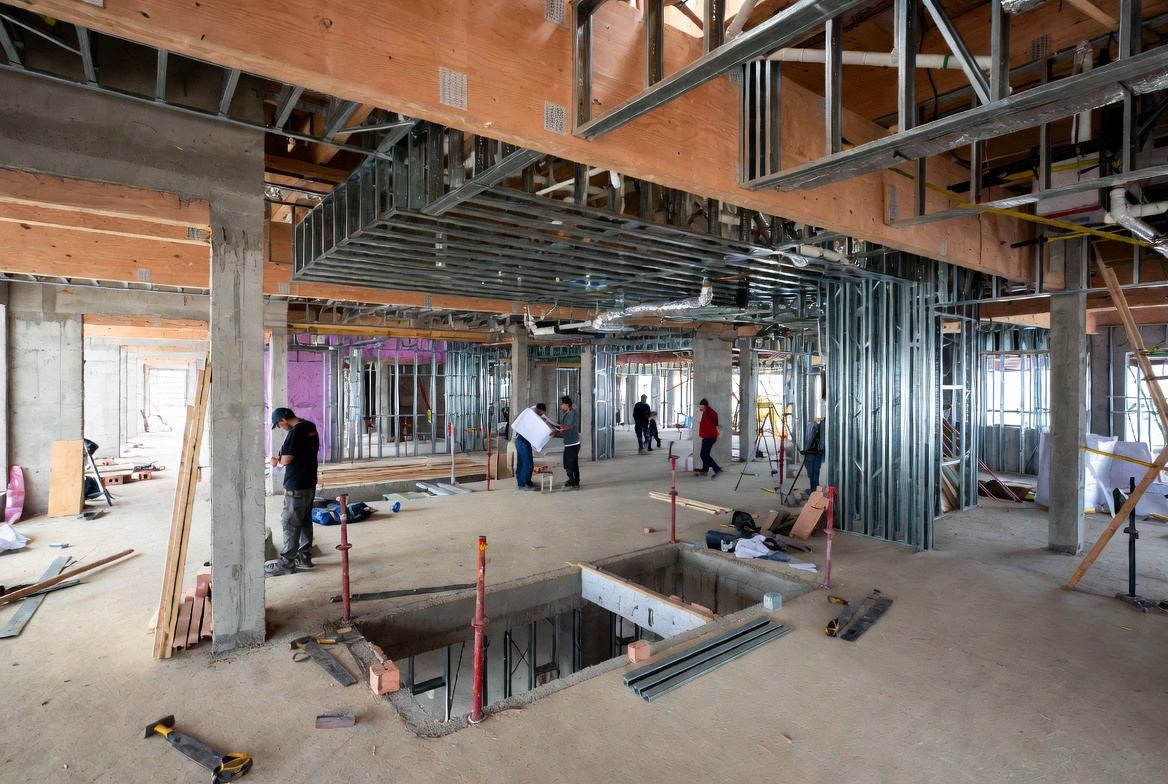
Hospitals do not pause because the renovation starts. Patients stay. Staff keep moving. Air pressure still matters. So does every noisy shutdown, dust breach, blocked corridor, and bad cutover.
That is what makes healthcare construction management different from ordinary commercial work. You are not only building the project. You are protecting an active care environment while the project is happening.
That changes everything. Schedule logic gets tighter. Infection-control planning gets more serious. Shutdowns need real choreography. Communication has to reach clinical users, facilities staff, inspectors, consultants, and trades before the wrong person finds out the hard way.
If you want the wider project-delivery framework first, start with project development, preconstruction planning, and construction project management workflow. This page stays on healthcare work itself: occupied hospitals, outpatient projects, clinical renovations, phased additions, infrastructure upgrades, and the management layer that keeps those jobs from turning into operational chaos.
What This Guide Covers
- what healthcare construction management actually includes
- why occupied healthcare work is harder than ordinary commercial construction
- how infection control, life safety, shutdowns, and phasing drive the job
- where schedules and budgets usually break down
- what to check weekly on active healthcare projects
- when a healthcare job needs a more aggressive management structure
The Mistake People Make First
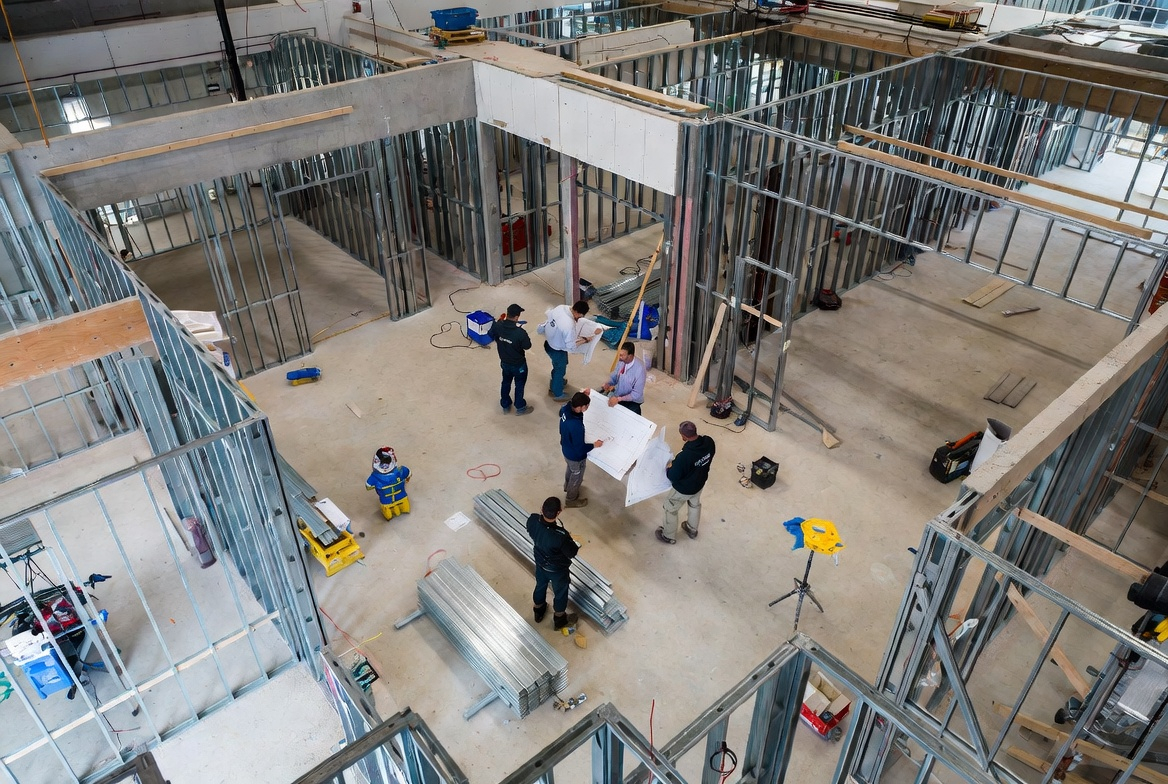
Main floor structural framing in progress, highlighting steel studs and temporary supports for interior walls.
People talk about healthcare construction like it is just commercial construction with stricter paperwork.
Not even close.
A healthcare project is usually an occupied-facility management problem before it is a pure building problem. The walls matter. The structure matters. The systems matter. But the first layer of difficulty is operational: who is nearby, what cannot shut down, which spaces need pressure control, what route patients and staff still need open, and how the work gets isolated without damaging care.
That is why good teams do not start with finishes or even just the floor plan. They start with phasing, risk, shutdown mapping, user coordination, and the early control work that sits between design and field execution. The supporting pages here are planning and scheduling, preconstruction checklist, and project data basics.
What Healthcare Construction Management Covers
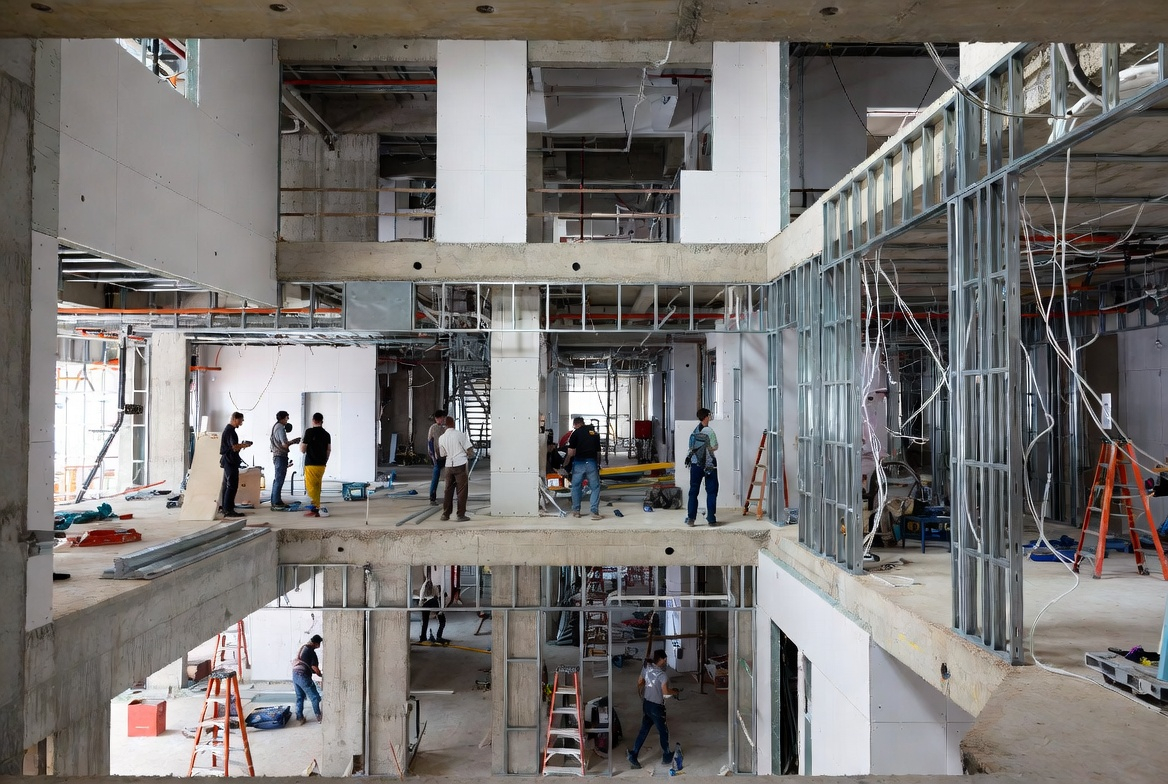
Healthcare construction progress featuring stairwell, structural openings, and MEP layout across floors.
In practice, healthcare construction management is the control layer between design, operations, infection prevention, facilities, trades, regulators, and clinical users.
| Phase | What gets managed | What usually goes wrong if it is weak |
|---|---|---|
| preconstruction | existing conditions, phasing, shutdown strategy, permits, infection-control planning, budget, logistics | scope gaps, bad sequencing, unrealistic pricing, operational conflicts before work starts |
| enabling work | temporary barriers, temporary egress, temporary utilities, swing space, off-hours work plans | staff disruption, blocked paths, delayed mobilization, unsafe interim conditions |
| construction | trade coordination, dust and noise control, inspections, procurement, shutdown execution, quality checks | infection-risk events, failed inspections, rework, patient-area complaints, schedule compression |
| systems and cutovers | medical gas, power, fire alarm, HVAC, controls, low-voltage, testing and turnover | service interruption, partial outages, failed commissioning, delayed occupancy |
| closeout | punch list, training, documentation, turnover, occupancy readiness, deficiency resolution | soft opening delays, missing documents, unresolved life-safety and systems issues |
Keep the wider phase map nearby with building construction phases, construction document set parts, and standards library.
Start With the Existing Hospital, Not the New Work
Upper floor construction showing structural framing and mechanical rough-ins before wall finishes.
Healthcare jobs fail early when the team obsesses over the new scope and underestimates the existing facility.
The real preconstruction work usually starts with questions like these:
- Which departments stay active during the work?
- What cannot go down without a shutdown plan and user approval?
- Which ceilings, shafts, risers, and interstitial paths are already crowded?
- What are the pressure relationships near the work zone?
- Where do staff, patients, vendors, and emergency routes still need to move?
- What has to be built temporarily before demolition can even begin?
That is why healthcare preconstruction is usually heavier than owners expect. Existing-condition validation, shutdown mapping, swing-space planning, barrier staging, and permit sequencing do not feel glamorous. They still decide whether the project starts clean or starts bleeding time immediately.
For the broader planning side, connect this with project development, construction project management, and construction management fundamentals.
Why Infection Control Changes the Management Load
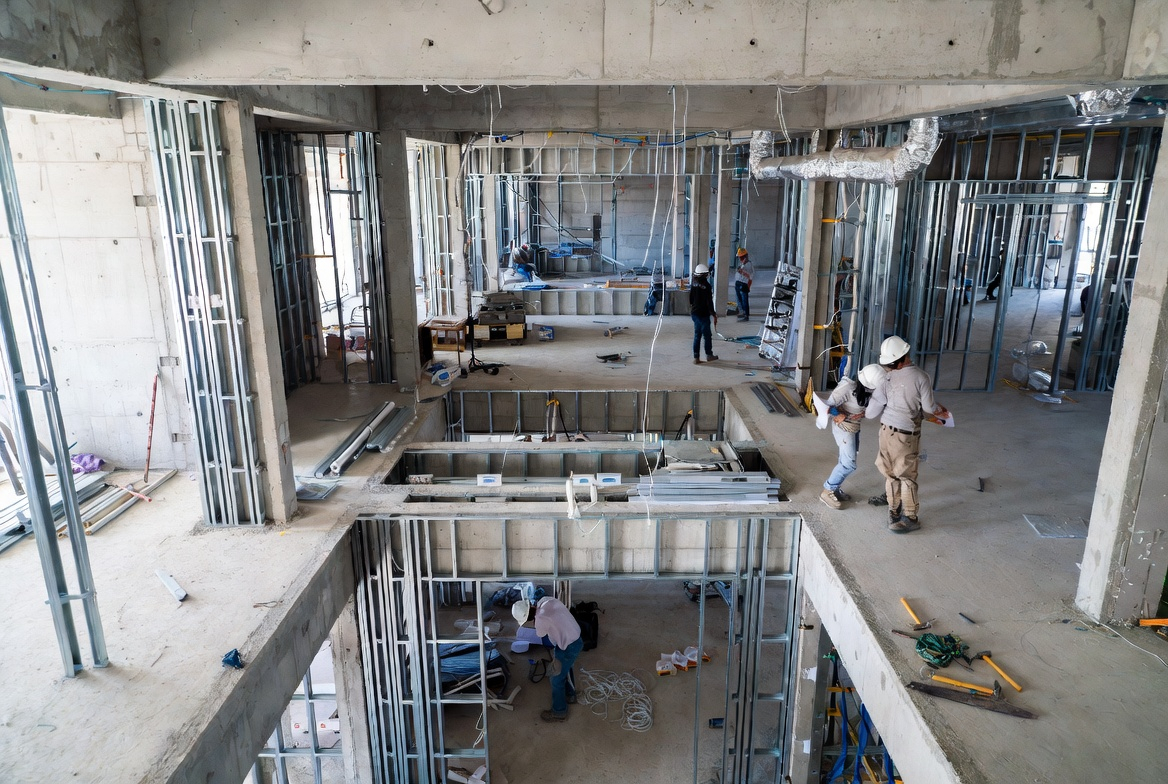
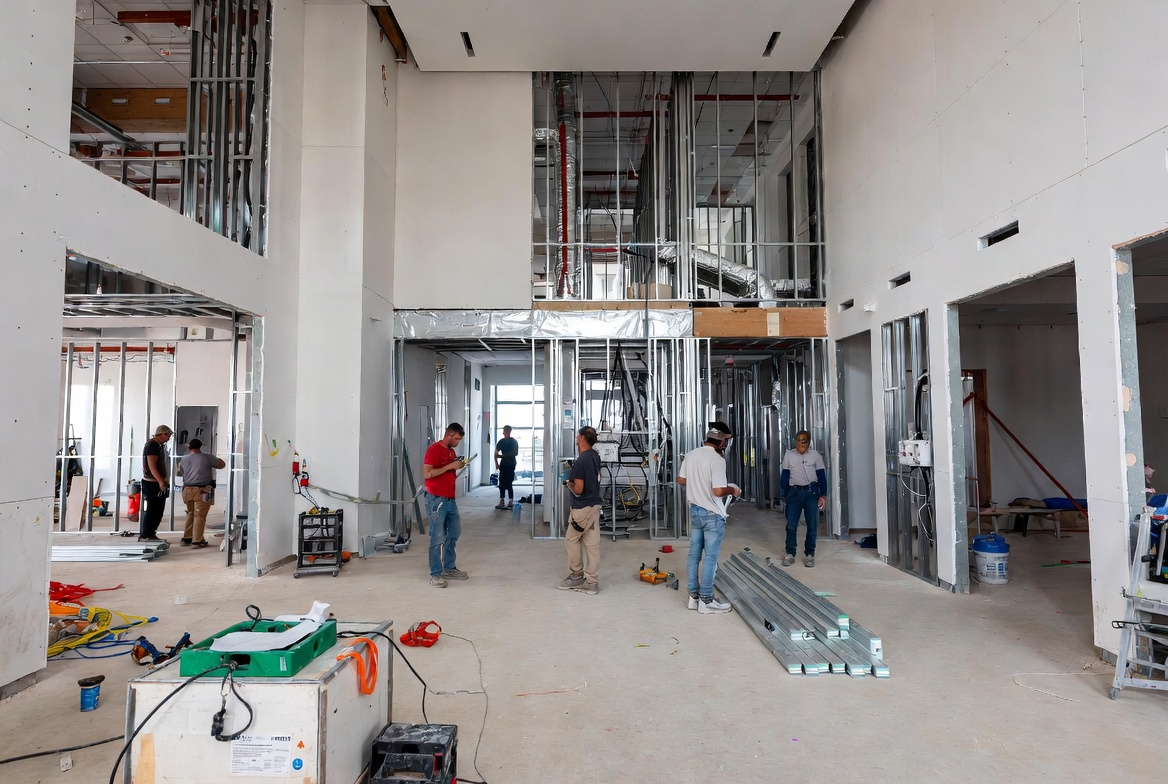
Healthcare facility interior highlighting mechanical infrastructure, ductwork, and steel stud installation.
On a normal building, dust is a nuisance. In a hospital, dust can become a clinical risk.
That one fact changes the management structure. Barrier type, negative-air planning, cleaning routes, debris movement, above-ceiling work, water intrusion response, and contractor behavior all matter more because the work sits near vulnerable patients, controlled environments, or critical support systems.
Good healthcare managers do not treat infection control as a form to sign and forget. They build it into daily operations:
- confirm barrier requirements before demolition starts
- check pressure-control measures and route protection
- coordinate housekeeping and debris removal timing
- watch above-ceiling penetrations and unsealed openings
- tie field changes back to infection-prevention review when needed
This is one reason healthcare work rewards tighter quality systems than ordinary tenant fit-outs. Pair this section with construction quality management, construction inspection process, and building envelope commissioning checks.
Phasing Is Usually the Real Project
On many healthcare jobs, the drawing set is only half the project. The other half is phasing.
The team may be renovating one department while another stays active. Or relocating functions in stages. Or building temporary partitions and rerouted corridors before the first permanent wall comes down. Or finishing one suite early so another service can move out of the next phase area.
That means the manager is not only sequencing trades. The manager is sequencing operations.
Typical phasing pressures include:
- keeping emergency routes open
- maintaining separation between active care and work zones
- protecting noisy work windows around clinical hours
- coordinating infection-control precautions phase by phase
- moving users into turnover spaces before the next demolition step
- timing shutdowns around patient care, not contractor convenience
This is where planning and scheduling stops being a generic CPM exercise and starts becoming real operational strategy.
Shutdowns and Cutovers Are Where Projects Earn or Lose Trust
A healthcare project can survive ugly drywall. It cannot survive a sloppy cutover.
Power, medical gas, HVAC, controls, fire alarm, nurse call, domestic water, low-voltage, and life-safety systems all carry different levels of risk. A bad shutdown plan can create patient-care exposure, life-safety problems, or simply destroy user trust in the project team.
Good shutdown management usually means:
- scope written clearly enough that everyone understands what is affected
- pretesting and verification before the outage window
- rollback planning if the cutover fails
- approved communication to every affected department
- off-hours work where the facility requires it
- documented sign-off before systems go live
The detail people miss is simple: a shutdown is not a line item. It is a mini-project inside the project.
Budget Control Gets Harder in Occupied Clinical Work
Healthcare construction budgets do not drift only because material prices change. They drift because real existing-condition surprises and operational constraints keep forcing the team to buy time, temporary work, resequencing, and extra coordination.
Common pressure points:
- unknown above-ceiling conditions
- temporary infection-control and life-safety measures
- off-hours or weekend work premiums
- more expensive shutdown sequencing than expected
- temporary utilities or swing-space requirements
- owner-user changes after clinical review
- specialty equipment lead times
That is why healthcare projects need disciplined cost tracking tied to phase planning, not just one early estimate and a hopeful spreadsheet. Use cost planning, cost control, and construction finance beside this topic if you are building the management side properly.
Healthcare Trade Coordination Is Less Forgiving
Ordinary construction clashes waste money. Healthcare clashes can also delay occupancy, compromise compliance, or break a phased turnover plan.
Mechanical, electrical, plumbing, fire protection, controls, medical gas, equipment vendors, commissioning agents, and facility staff all need cleaner coordination than the average shell-and-core job. Small misses stack fast:
- equipment rough-ins set to outdated cut sheets
- ceiling congestion that blocks maintenance access
- pressure relationships disrupted by duct revisions
- door, hardware, and life-safety conflicts at inspection
- late owner decisions rippling through power, data, and millwork
Useful companion pages here are windows reference, door and window schedule, blueprints basics, and architectural technology.
Quality Control Has to Happen Before the Ceiling Closes
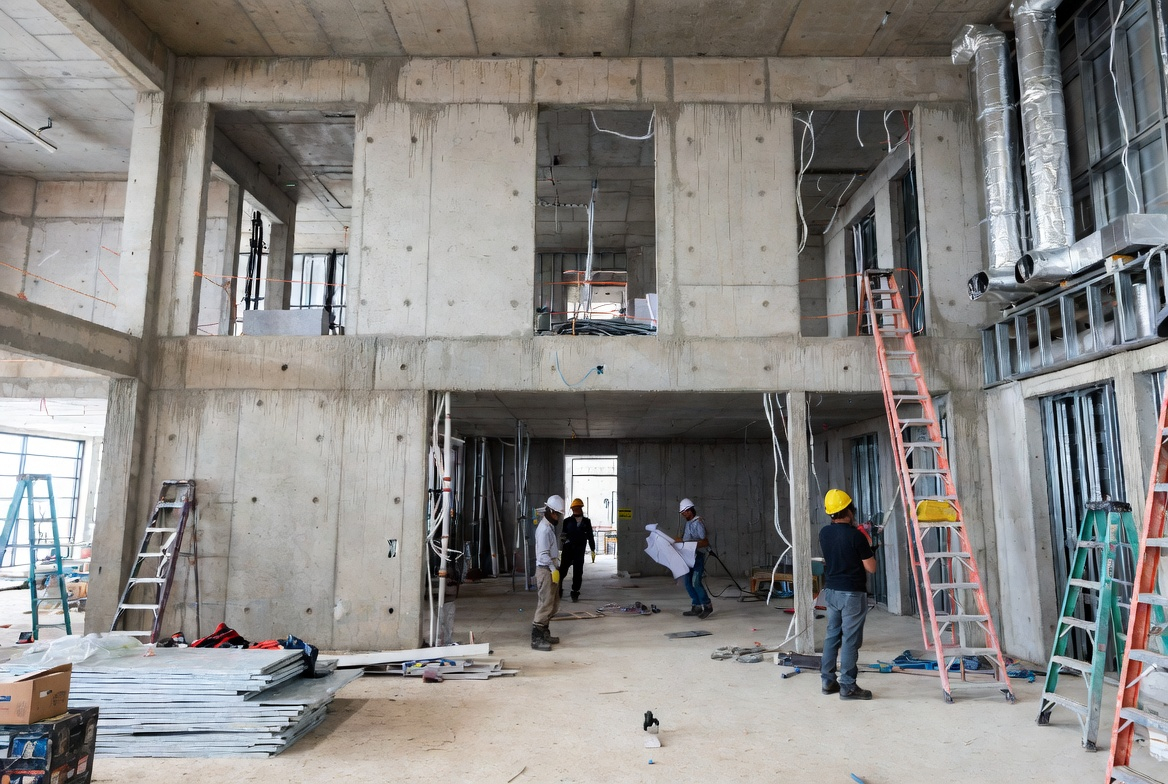
View of framing and ceiling structure for a healthcare facility, showing early envelope and mechanical layout.
Healthcare quality problems get expensive when they hide behind finishes.
That means the manager has to check work at the stage when it is still cheap to fix:
- layout before concrete and framing lock things in
- framing, backing, and clearances before rough-ins crowd the walls
- firestopping and penetrations before ceilings disappear
- air devices, dampers, and controls before balancing starts
- waterproofing and envelope details before surfaces cover them
- equipment support, access, and service clearances before turnover
Healthcare jobs punish late checking because the turnover path is tighter. A failed inspection or failed functional test can hold an entire phase hostage.
User Communication Is Not Soft Work
On healthcare projects, communication is not a courtesy item. It is part of risk control.
Nurses, department heads, facilities staff, infection prevention, safety teams, security, and outside inspectors all need different information at different times. A manager who only talks to the contractor side is flying half blind.
Good healthcare communication usually includes:
- weekly look-ahead updates tied to real phase dates
- shutdown notices that are specific, not vague
- clear logs for owner-user decisions
- escalation paths when field work threatens operations
- documented turnover readiness before spaces are handed over
The expensive version is when the field discovers late that clinical users were never aligned with the plan. The cheap version is when that conversation happens before the crew mobilizes.
Healthcare Construction Manager vs General Commercial PM
The roles overlap, but the job pressure is different.
A healthcare construction manager still tracks cost, schedule, procurement, quality, and safety. The difference is the density of operational risk layered on top of the ordinary construction work.
- Commercial PM logic often focuses on scope, budget, trades, and turnover.
- Healthcare PM logic has to do all of that while also protecting patient-care operations, occupied departments, life-safety conditions, infection-control precautions, and critical system continuity.
That is why some teams do fine on ordinary offices and then struggle hard on hospitals. The work is not just stricter. It is more interconnected.
When Healthcare Construction Management Matters Most
Not every medical project carries the same risk, but the management load jumps quickly when one or more of these conditions show up:
- occupied hospital renovation
- work near critical care or procedural departments
- major infrastructure replacement in active facilities
- phased additions tied to ongoing operations
- MEP-heavy scopes with complex cutovers
- high-acuity environments with tighter infection-risk exposure
- aggressive turnover dates tied to service activation
If the project is a simple off-hours clinic refresh with little systems impact, management can stay lighter. Once outages, pressure relationships, life safety, or phased occupancy enter the picture, the management structure needs to sharpen fast.
Simple Weekly Checklist for Active Healthcare Jobs
- verify the next two-week schedule against actual site conditions
- confirm open shutdowns, cutovers, and permit items
- check barrier integrity, housekeeping, and route protection
- review unresolved owner-user decisions
- verify procurement status for long-lead equipment and finishes
- walk hidden quality items before ceilings and finishes close them
- confirm upcoming inspections and operational sign-offs
- update cost exposure from phasing, temporary work, and changes
- issue one clean status update to the facility team
The Detail People Miss
Most healthcare jobs do not fall apart because the team forgot construction basics.
They fall apart because the team underestimates the active facility.
The project can be designed well, funded well, and staffed well, and still go sideways if the phasing is weak, the shutdown plan is vague, the users are not aligned, or the infection-control precautions are treated like paperwork instead of field control.
That is the real difference. In healthcare work, management is not only there to build. It is there to protect operations while the building changes around them.
FAQ
What is healthcare construction management?
It is the planning and control of healthcare projects with added emphasis on occupied-facility operations, infection control, life safety, phasing, shutdowns, compliance, and clinical-user coordination.
Why is healthcare construction harder than ordinary commercial work?
Because the facility often stays active during construction. Patients, staff, air pressure, egress, emergency systems, and critical utilities still have to work while the project is happening.
What is the biggest risk on healthcare renovation projects?
Usually not one dramatic failure. More often it is poor phasing, weak shutdown planning, incomplete infection-control measures, or late coordination of systems and user decisions.
What should be planned before demolition starts?
Barrier strategy, route protection, temporary life-safety measures, utility impacts, infection-control precautions, debris paths, work-hour restrictions, and every shutdown or outage likely to affect operations.
Why do healthcare projects need more communication?
Because clinical users, facilities teams, infection prevention, safety staff, inspectors, and trades all need different information, and bad timing in one group can disrupt the entire phase plan.
What makes a healthcare cutover difficult?
Critical systems, limited outage windows, operational approvals, testing requirements, and the fact that rollback planning often matters as much as the forward plan.
When does a healthcare project need heavy construction management?
When it is occupied, phased, system-dense, outage-sensitive, high-acuity, or tied to demanding turnover dates.
Final Notes
Healthcare construction management is not mainly about building faster. It is about building safely and cleanly in places that cannot afford sloppy sequencing.
The shell still matters. The systems still matter. The money still matters. But the management layer is what keeps those pieces from crashing into patient care, facility operations, and turnover readiness.
If the project is simple, the management plan can stay lighter. If the work is occupied, phased, infrastructure-heavy, or clinically sensitive, then the management structure has to get serious early or the field will solve it the expensive way later.
Official Sources
- CDC: Environmental infection-control recommendations for construction, renovation, maintenance, demolition, and repair
- CDC: Environmental infection control in health-care facilities
- ASHE: ICRA 2.0 toolkit
- FGI: Guidelines editions for healthcare facility design and construction
- OSHA: Hospital fire hazards during repairs and alterations
- OSHA: Recommended practices for safety and health programs
- CMS: Emergency preparedness interpretive guidance
- The Joint Commission: Interim Life Safety Measures policy expectations
- ASHRAE: Ventilation of health care facilities