
Renewable building materials only matter if they make sense in the house you are working on.
In renovation, that decision is rarely clean. One part of the house is worth saving. Another is leaking heat. Another looks fine until you open it. So the material question is not just what is greener on paper. It is what deserves replacement, what deserves repair, and where a new material will make enough difference to justify the cost.
Some renewable materials do that well. Some are niche. Some get pushed harder than they deserve.
That is the real job here.
You are not choosing materials in a vacuum.
What Counts As A Renewable Building Material
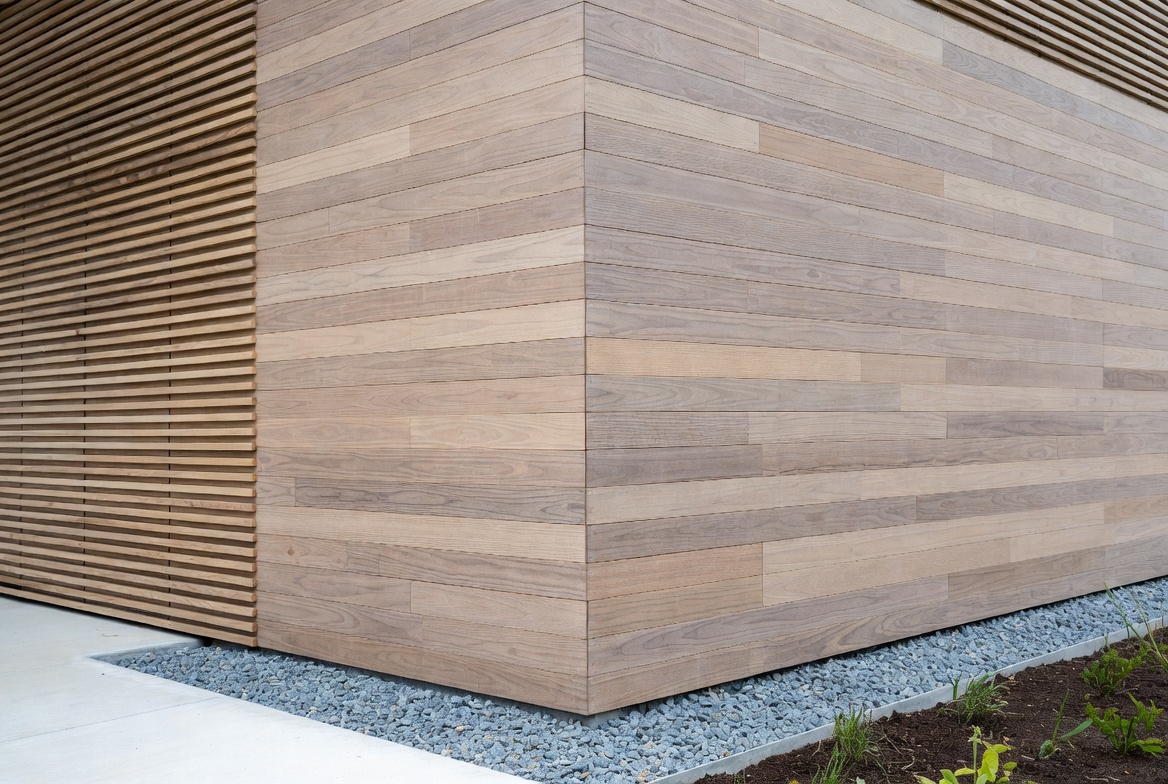
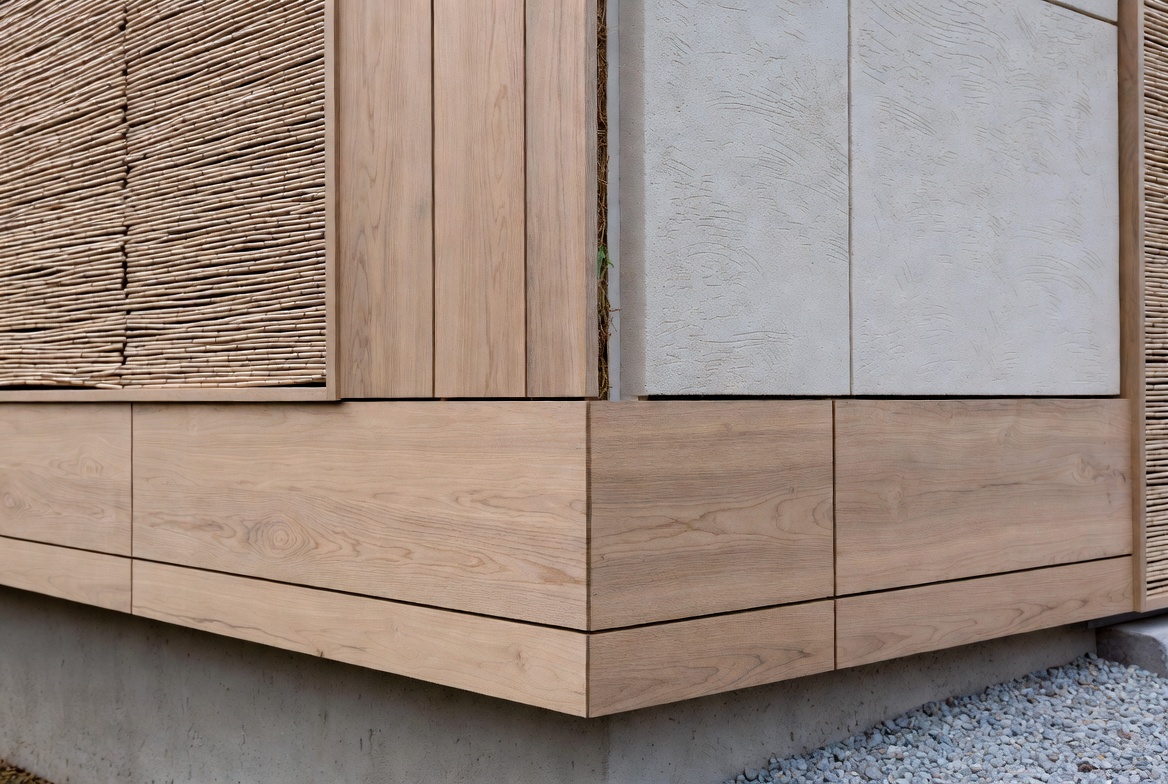
Timber facade corner showing a restrained renewable cladding system with screened ventilation and gravel drainage. Photo: ArchitectureCourses.org.
“Renewable” gets used loosely in this space, and that is part of the problem.
A renewable building material usually means a material that comes from a resource that can regenerate on a human timescale. Wood from well-managed forests can fit. Cork fits. Bamboo fits. Hemp-based products can fit. Cellulose insulation, which is usually made from recycled paper fiber, lands in a related but slightly different category because the feedstock is recycled rather than freshly grown for the job.
That difference matters.
Renewable is not the same thing as recycled. And neither one automatically means low-impact in the real world. The material still has to be harvested, processed, transported, installed, and maintained. It still has to suit the building. It still has to last long enough to justify the replacement work that brought it there.
That is why “renewable” should not be treated like a quality stamp. It is one useful trait. Not the whole decision.
A renewable material earns more respect in renovation when it does four things well:
- it solves a real building problem
- it can be installed without causing a bigger one
- it lasts long enough to justify the scope
- it does not push more important work out of the budget
That last point gets missed constantly.
Keep First, Buy Second
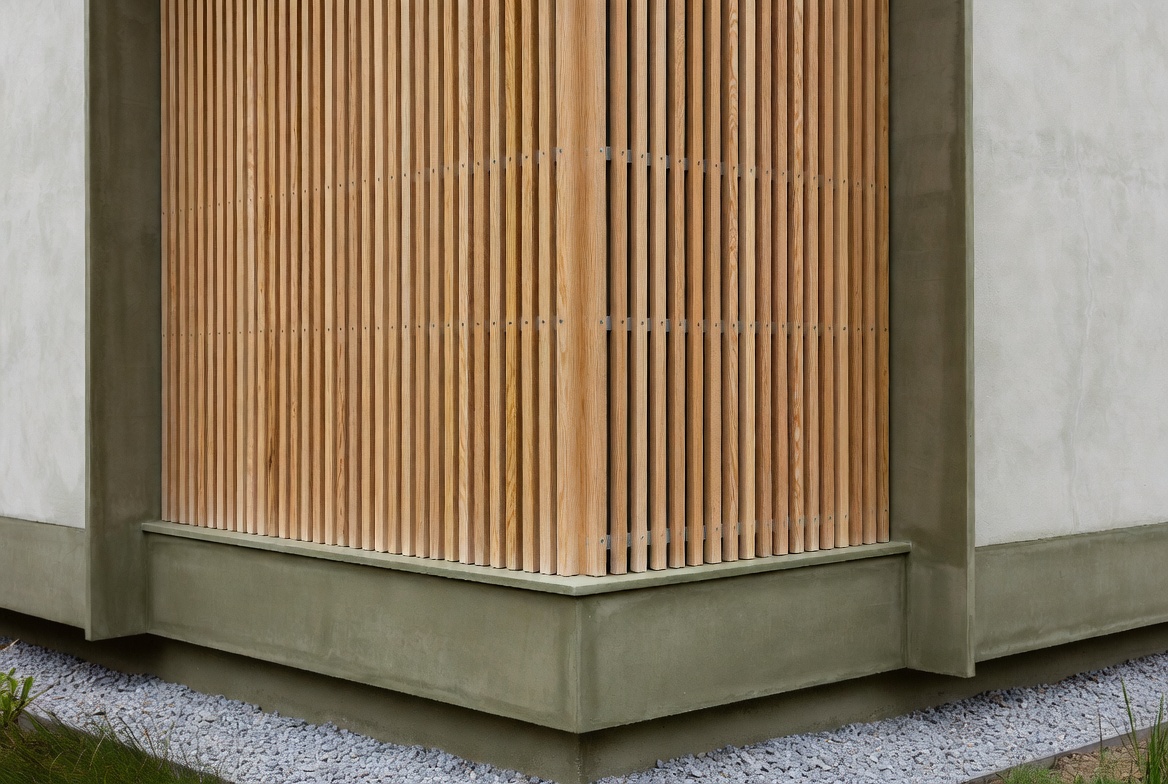
Timber screening and mineral-finish base detail showing a clean renewable-material facade junction. Photo: ArchitectureCourses.org.
This is still the most useful sustainability rule in renovation.
EPA’s current construction-and-demolition guidance puts source reduction, salvage, reuse, and preservation of existing structures ahead of the usual waste-stream logic. That lines up with what good renovation work already knows: if a material is still doing its job, throwing it away and replacing it with something that merely sounds greener is often the weaker move. ([epa.gov](https://www.epa.gov/smm/best-practices-reducing-reusing-and-recycling-c…))
Keep the hardwood if it can be refinished. Keep the trim if it still suits the house. Keep framing that is dry and solid. Keep brick that needs repair, not concealment. Keep wood windows that are still repairable. Keep cabinet boxes if the problem is the door style, not the carcass.
That is not nostalgia. It is material discipline.
Too many “green renovation” projects start by filling a dumpster with decent materials, then congratulating themselves for ordering something newer with a better label. That is not a serious materials strategy.
Related Reading: if the wood side of the job is part of the scope—trim, floors, framing repairs, cabinetry, cladding—start with Sustainable Wood. It is a better follow-up than broad eco-material pages because it gets into service life, use condition, and where wood still makes real sense.
| Do This Instead Of This | Better Move | Common Mistake | Why It Wins |
|---|---|---|---|
| Reuse first | Keep and repair materials with real service life left | Tear out everything for a visual reset | Less waste, less labor, more budget left for real performance work |
| Match material to assembly | Choose products that fit moisture, wear, and access conditions | Choose by eco story alone | Renewable still has to mean durable and buildable |
| Upgrade while access exists | Use open walls, roofs, or siding work to improve assemblies | Open finished work later for small gains | Renovation timing matters as much as product choice |
| Fix the weak shell first | Air-seal and insulate before buying visible “green” finishes | Start with counters, flooring, and statement materials | The enclosure changes comfort and operating cost faster |
Wood Is Still The Most Useful Renewable Material In Renovation
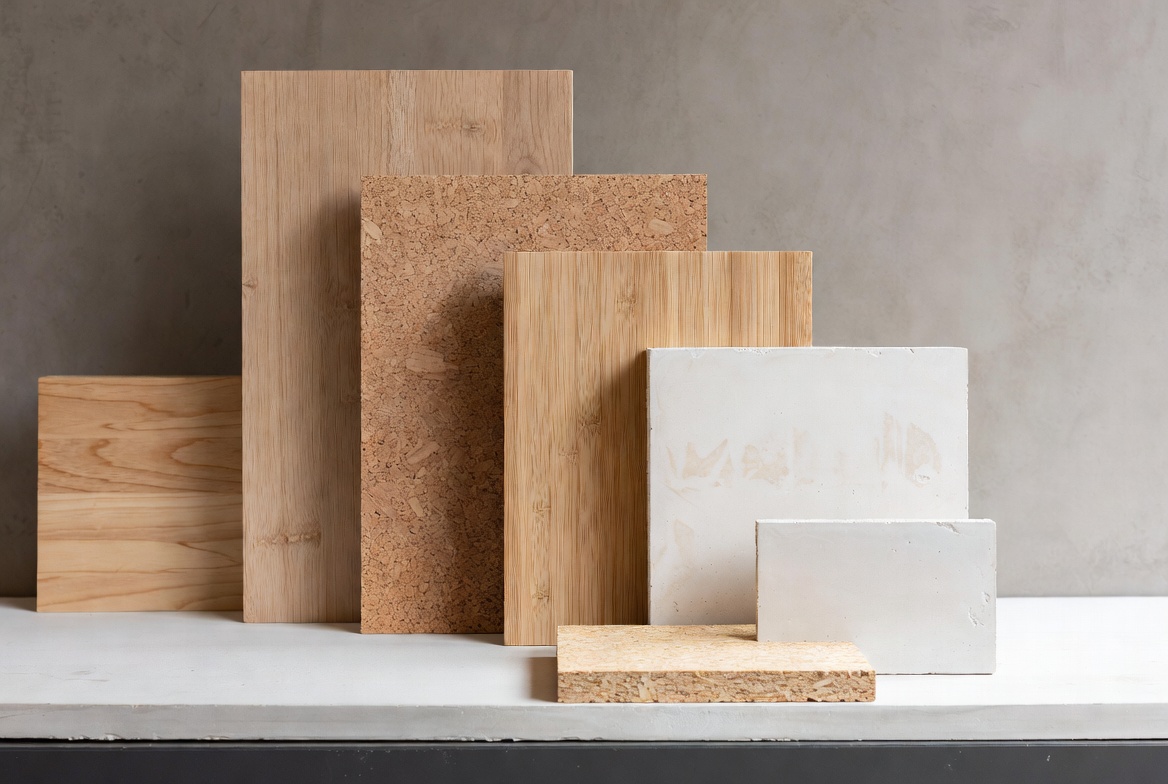
Studio material study showing timber, cork, bamboo, and light mineral-finish samples. Photo: ArchitectureCourses.org.
Not the trendiest one. The most useful one.
Wood earns its place in renovation because it is everywhere already. Floors. Framing. Trim. Doors. Cabinets. Sheathing. Exterior details. Furniture-grade millwork. If you are trying to use renewable building materials in a practical way, wood is usually the first category worth sorting carefully instead of replacing blindly.
That does not mean “wood = sustainable” by default. Exterior exposure, species, finish, detailing, ventilation, and maintenance all matter. Some wood assemblies age beautifully. Some rot because the detail was wrong from day one. Some engineered-wood products are useful and durable. Others are a bad fit for wet or rough conditions.
Still, if a house gives you good original wood materials, they often deserve a second look before replacement. That is especially true with old-growth trim, hardwood floors, interior doors, and some window components. Renovation gets expensive fast when you tear out materials that still outperform their replacements.
Worth Knowing: for a wider look at how this category fits into the larger material conversation, Sustainable Building Materials: What Works and What Fails is the stronger broad reference. It keeps the discussion closer to actual building performance.
Cork Is Good In Small, Specific Ways
Cork gets oversold as a wonder material. It is not. It is still useful.
In renovation, cork makes the most sense where softness underfoot, acoustic performance, moderate thermal comfort, and lower-impact sourcing matter more than brute toughness. Flooring is the obvious example. Wall panels and underlayment can also make sense. Kitchens, offices, light-use rooms, and quiet spaces are where cork tends to do its best work.
What it is not: a universal answer for heavy-wear zones, flood-prone conditions, or sloppy installation.
This is the larger pattern with renewable materials in renovation. The good ones are usually specific. They are not trying to solve every problem in the house.
Bamboo Makes More Sense In Products Than In Ideology
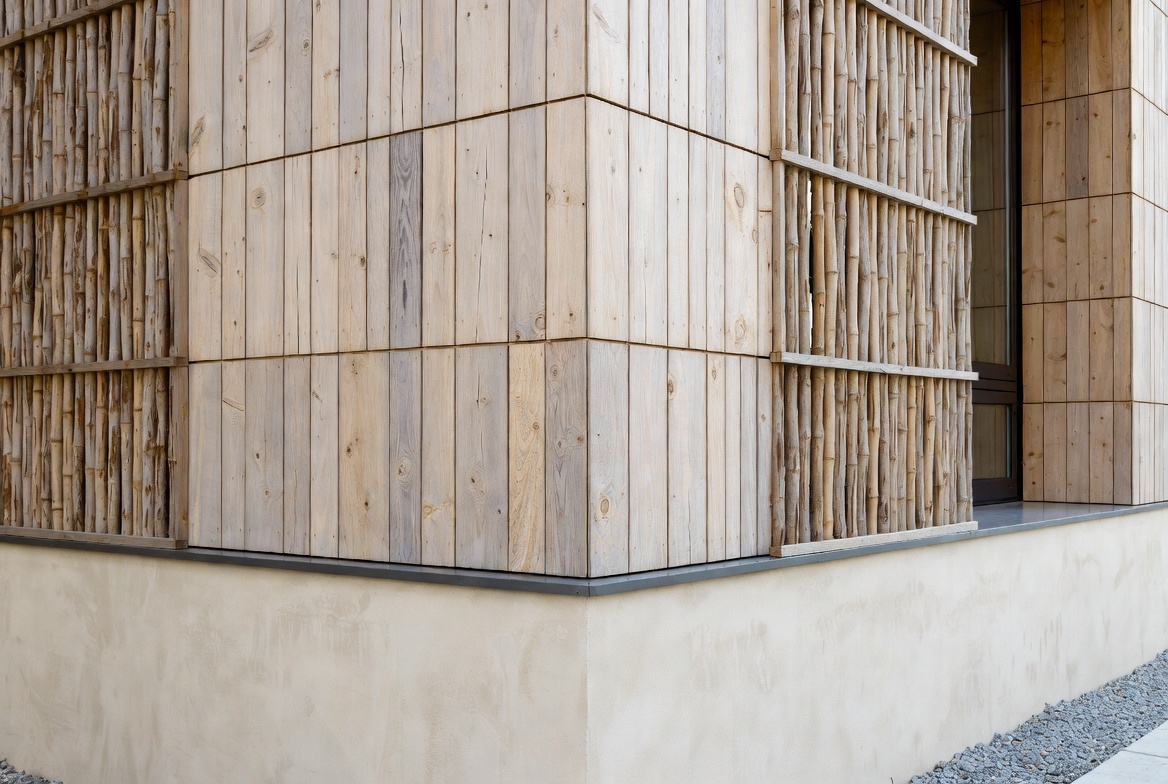
Exterior corner combining timber and bamboo-based screens with restrained mineral-finish surfaces. Photo: ArchitectureCourses.org.
Bamboo is one of those materials that people either romanticize or dismiss too quickly.
Yes, it grows fast. Yes, it can be strong. Yes, it belongs in the renewable-materials conversation. None of that automatically tells you whether it belongs in your renovation.
In real renovation work, bamboo tends to make more sense in finished products than in broad material theory. Flooring. Panels. Cabinet material. Some millwork applications. Sometimes furniture. That is where most homeowners will actually meet it.
The real questions are more ordinary than the marketing language suggests:
- How stable is the product?
- How was it processed?
- How much adhesive is in it?
- What is the wear layer like?
- Can your installer work with it properly?
- Does it suit the room, or are you forcing it because the material story sounds good?
Bamboo can be a smart renewable choice. It can also be a mediocre finished product with a strong sales pitch. Renovation does not care about the pitch. It cares how the floor, panel, or cabinet behaves after the project is closed up and the family is living there.
Cellulose And Natural-Fiber Insulation Usually Matter More Than Fancy Finishes
If you are trying to make a house materially more sustainable, insulation usually beats decorative material swaps for impact.
DOE’s current guidance for existing homes is still straightforward: figure out what insulation is already there, identify where the house is weak, and make sure the home is properly air-sealed before insulating. That order matters. ([energy.gov](https://www.energy.gov/energysaver/adding-insulation-existing-home))
In renovation, that usually means the best material decisions happen in the attic, roofline, rim joist, crawl-space boundary, floor over garage, or basement edge long before they happen at the countertop showroom.
Cellulose stays useful here because it works well in retrofit situations. Dense-pack wall applications can sometimes be added with much less disruption than a full tear-open job. DOE specifically notes dense-pack blow-in insulation as a practical existing-home strategy, and it points out that if wall cavities are open during remodeling, spray foam or wet-spray cellulose becomes more realistic. ([energy.gov](https://www.energy.gov/energysaver/where-insulate-home))
That is renovation logic again: access changes the recommendation.
Natural-fiber options can also fit, but they still need a real job to do. Lower-toxicity handling, renewable inputs, or a broader low-impact material strategy may make them attractive. Fine. They still have to fit the assembly, moisture conditions, budget, and installer base.
Also Useful: if the decision is leaning more natural, go to Natural Insulation Materials: Types, Benefits, and Practical Tips. If you want the more practical cost-and-performance angle, use Sustainable Insulation That Saves Energy and Cuts Costs.
Hemp-Based Materials Need A Real Job To Do
Hemp gets more attention than most renewable materials because it checks a lot of boxes people want checked. Renewable input. Lower-drama handling. Strong environmental story. Often appealing aesthetically too.
Fine. None of that is enough by itself.
In renovation, hemp materials only make sense when the actual assembly justifies them. Hemp insulation may be worth considering in the right wall, roof, or partition. Hemp-based products may also show up in broader wall systems and specialty materials. But the real comparison is not hemp versus some abstract bad actor. It is hemp versus fiberglass, hemp versus mineral wool, hemp versus cellulose, in a specific cavity, at a specific price, with a specific installer.
That is why a broader follow-up helps here. If the project is drifting beyond insulation and into blocks, infill, or wider plant-based systems, use Hemp Building Materials Explained: Uses, Benefits, and Cost Breakdown. It is a better bridge between “should I use hemp here?” and “where do hemp materials actually make sense in building work?”
That is a much better question than treating hemp like an automatic upgrade.
Reclaimed Wood Is Stronger As A Selective Move Than As A Whole-House Theme
Reclaimed wood works best when it is solving a real design or repair problem, not when it is being sprayed all over the project to prove the owner has principles.
Use it where it can do one of three things well:
- replace missing character in an old house without looking fake
- reuse solid material that is still structurally or visually useful
- add warmth where new stock would feel too flat or too generic
What reclaimed wood does not solve by itself is enclosure performance. It can be beautiful. It can be low-waste. It can be a smart reuse move. It still does not replace air sealing, insulation, or moisture correction.
That matters because reclaimed materials are often used in projects that are weak on the hidden work. The wall still leaks, but the cladding accent is reclaimed. The room is still cold, but the new shelf came from an old barn. Nice detail. Wrong priority.
Renewable Does Not Automatically Beat Heavy-Material Decisions
This is where a lot of sustainability writing gets childish.
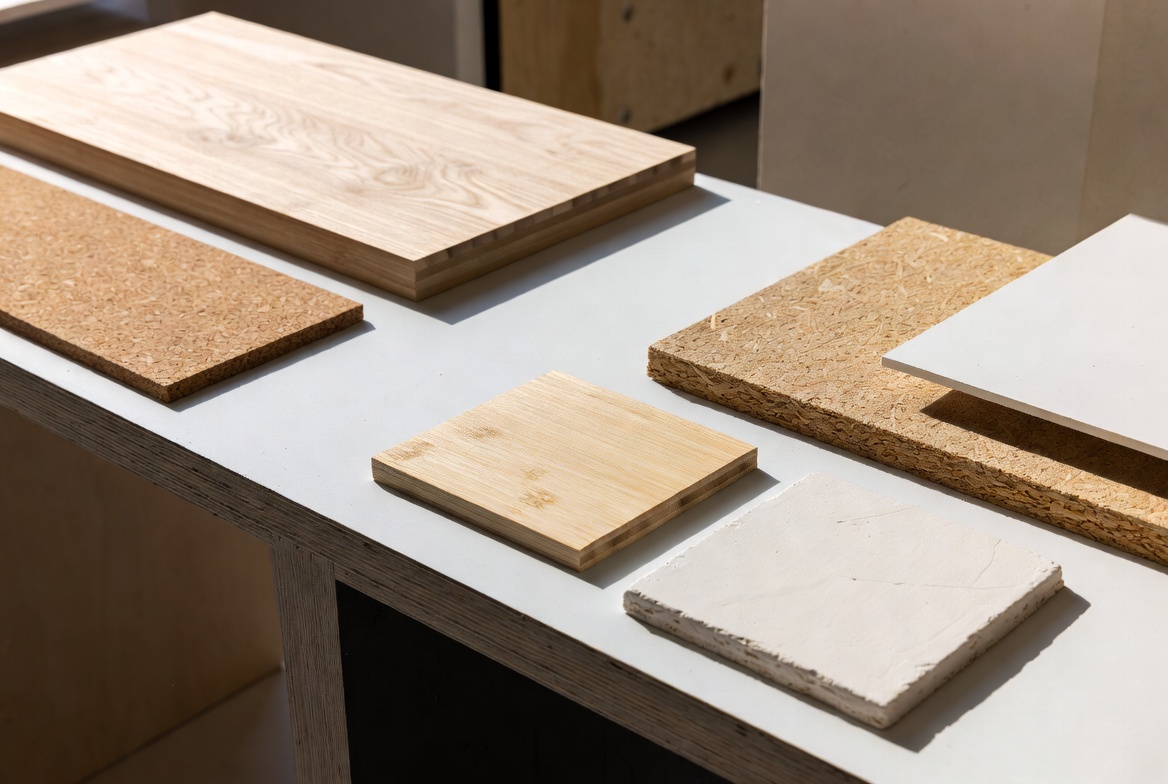
Comparison table showing several renewable and lower-impact material options used in modern construction. Photo: ArchitectureCourses.org.
If your renovation includes slabs, footings, basement work, masonry repair, structural steel, or large glazing packages, the heavy materials may matter more than the renewable finish choices people usually obsess over.
GSA’s current low-embodied-carbon requirements focus on concrete, cement, concrete masonry units, asphalt, steel, and glass. That is a useful correction. If your project is adding a lot of those materials, then yes, the embodied side of the job may be driven more by those decisions than by whether the flooring is cork or bamboo. ([gsa.gov](https://www.gsa.gov/real-estate/for-businesses-seeking-opportunities/ir…))
That does not make renewable materials unimportant. It just puts them in scale.
| Material Decision | When It Deserves Priority | What People Usually Miss |
|---|---|---|
| Renewable finish materials | When the enclosure and major structural scope are already in decent shape | They do not compensate for a bad shell |
| Insulation and enclosure materials | When the house is uncomfortable, leaky, or expensive to run | These often change the building more than visible finishes do |
| Concrete, masonry, steel, and glass decisions | When the project reaches foundations, structure, slabs, or major openings | Heavy materials can outweigh smaller eco gestures fast |
| Reuse of existing materials | Almost always, if the material still has real service life | Preservation is often the strongest sustainability move in the job |
This Part Matters: if the project is moving into slabs, foundations, or heavier structural work, go straight to Sustainable Concrete Alternatives and Alternative Foundation Materials. Those pages fit the heavy end of renovation better than broad eco-material lists do.
Windows And HVAC Still Change The Material Decision
A renewable-material article that ignores windows and HVAC in renovation is not finished.
Why? Because material choice does not happen separately from those systems. If the windows are in rough shape, if the trim-to-wall connections leak, if the attic is weak, if the ductwork is poor, or if the mechanical system is being sized around the old bad shell, then the material strategy is still incomplete.
That is why good renovation work rarely treats materials as a decorative-only category. A better-insulated shell can support a cleaner heat-pump retrofit. Better windows in the right rooms can reduce loads. Better air sealing can make insulation worth more. Better material choices around ducts, penetrations, supports, and transitions can keep a mechanical upgrade from being judged unfairly.
Before You Move On: if the job is already heading into equipment quotes, keep Heat Pump Cost Guide: Prices, Installation, and What Drives Cost nearby. It helps sort out whether the new system is being priced for the house as it is now or the house after the shell improves.
What Usually Is Not Worth Tearing Out
- sound cabinet boxes
- solid hardwood floors with enough life left to refinish
- repairable wood windows
- good trim and doors that still fit the house
- brick and masonry with repairable damage
- framing that is dry and doing its job
What usually is worth replacing sooner:
- materials with ongoing moisture failure
- assemblies that cannot be made durable without patching forever
- windows or doors that are structurally done, not just ugly
- cheap previous-renovation materials that block better enclosure work
- flooring or finishes that demand more maintenance than they are worth
That line is more useful than any universal “best eco material” ranking.
What People Get Wrong
They start with finishes.
That is usually the wrong end of the job.
They assume renewable means better.
Renewable still has to mean durable, buildable, and appropriate for the assembly.
They forget reuse counts.
Keeping a material in service is often more meaningful than replacing it with something trendier.
They ignore heavy materials.
If the project includes concrete, steel, masonry, or major glazing, those decisions can outweigh the smaller “green” gestures fast.
They buy insulation by ideology.
Natural is not automatically right. Retrofit access, moisture, cost, and installer skill still matter.
They treat windows like a separate problem.
In renovation, materials, windows, and HVAC all push on each other.
Quick Checklist
- start with the assemblies that are actually underperforming
- keep materials with real service life left
- use renewable materials where they solve a real building problem
- air-seal before spending heavily on insulation
- use retrofit-friendly insulation strategies where access is limited
- do not let bamboo, hemp, cork, or reclaimed wood become a substitute for enclosure work
- pay attention to heavy materials if the project reaches slabs, structure, or major openings
- treat window and HVAC decisions as part of the material conversation
FAQ
What are renewable building materials?
They are materials derived from resources that can regenerate on a human timescale, such as wood, cork, bamboo, and hemp-based products. In renovation, recycled and reused materials often belong in the same practical conversation even if they are not “renewable” in the strict sense.
What is the best renewable building material for renovation?
Usually wood is the most useful category because it already appears in so many parts of a house and can often be repaired, refinished, or selectively replaced. After that, the best choice depends on the assembly and the job.
Is bamboo the most sustainable building material?
Not automatically. It is fast-growing and can be a smart renewable option, but the finished product, adhesives, durability, installer skill, and room conditions still matter.
Are hemp building materials worth using?
Sometimes, yes. But they still need the right assembly, the right budget, and a contractor who knows what they are doing. They should be judged like any other material, not given a free pass.
Is cork good for renovation?
It can be. Flooring, underlayment, and some wall applications are the usual sweet spots. It is not a universal answer for every room.
What is greener in renovation: new renewable materials or keeping old materials?
A lot of the time, keeping old materials that still have service life left is the stronger move.
What To Read Next
If you want the broad overview first, go to Sustainable House Materials.
If the project is becoming more technical and you need the harder cost-and-trade-off side, use Types of Sustainable Materials: Real Costs and Trade-Offs.
If the renovation is drifting into heavy structural scope, skip the generic material pages and go straight to Sustainable Concrete Alternatives and Alternative Foundation Materials.
The point is not to make every part of the house look greener on paper. It is to make the house waste less, work better, and last longer without blowing the budget on the wrong material first.