


Crawl-space ventilation sounds simple until the crawl space stays damp anyway.
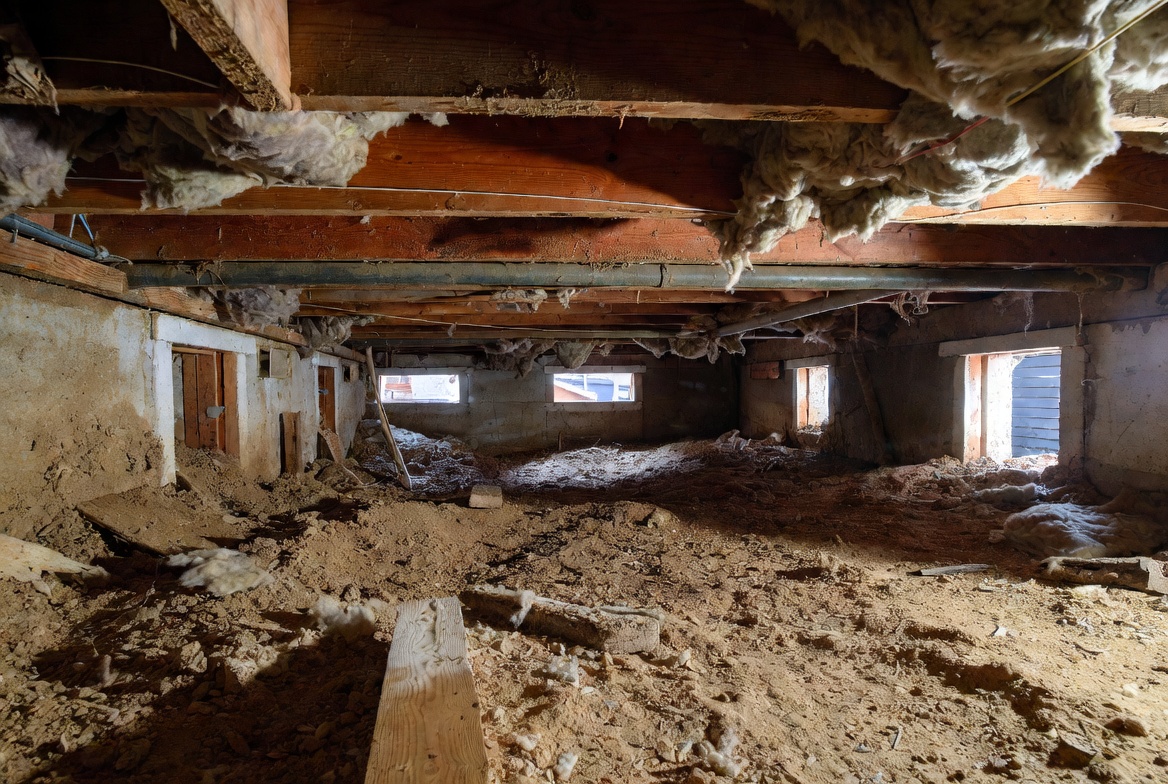
That is where a lot of homeowners get stuck. They hear that crawl spaces need to breathe, so they leave the vents open and expect the space to dry out. Sometimes that works. A lot of the time it does not. In warm humid weather, open vents can pull more moisture in, not less. In a wet crawl space, vents do nothing to stop the water source. In a crawl with bare soil and weak ground cover, they can leave you with the worst of both systems: outside humidity coming in and ground moisture rising from below.
The vent question only makes sense once you know what the crawl space is actually dealing with. Bulk water after rain, damp soil, sweaty ducts, musty air, cold floors, moldy insulation, and stale air do not all point to the same answer.
Image by ArchitectureCourses.org. A vented crawl space can stay serviceable in some houses, but open vents do not fix wet soil, failing insulation, or repeated summer humidity by themselves.
Why This Gets Misread
People usually start asking about ventilation after the crawl space already smells bad, feels damp, or has visible mold, sweating ducts, rust, or sagging insulation. By then, ventilation is being asked to solve a moisture problem that started somewhere else.
I would not make venting the first decision. I would make it a later decision inside a moisture system.
If any of these are wrong, vents alone usually do not save the crawl:
- outside water loading the foundation
- ground moisture rising off exposed or badly covered soil
- humid outdoor air entering for long stretches
- small plumbing or condensate leaks
- a crawl space that is halfway between outdoor space and controlled space
If the crawl clearly gets wet after storms, go first to water in a crawl space after rain or crawl space drainage system. That comes before any vent argument.
When Vents Still Help
Open crawl-space vents are not automatically wrong.
They can still help a fairly dry crawl exchange stale air. They can help some older vented crawls stay closer to how they were originally meant to work. In cooler or drier stretches of the year, they may help shed incidental moisture instead of trapping it.
That matters because not every crawl space needs to be converted into a sealed system tomorrow.
Open vents usually make the most sense when the crawl is already fairly dry, the ground moisture is controlled, outside drainage is decent, and the local weather is not spending months pumping warm wet air under the house.
| Crawl Space Condition | Do Open Vents Usually Help? | Why |
|---|---|---|
| Dry crawl, decent ground cover, cooler dry climate | Sometimes yes | The crawl is not being overloaded with humidity or bulk water |
| Bare soil, damp air, humid summers | Often no | Open vents can pull in more moisture than they remove |
| Standing water or muddy soil after rain | No | Vents do not fix runoff, seepage, or groundwater entry |
| Sealed or encapsulated crawl | No | The crawl is being treated as controlled space, not outdoor space |
| Cold-season pipe-risk concerns | Maybe seasonally | Closing or covering vents may help comfort and freeze protection, but it does not solve moisture by itself |
Summer Is Where the Old Advice Breaks
This is the part that trips people up.
Warm air can hold a lot of moisture. When that warm humid air moves into a crawl space and hits cooler surfaces, the moisture can drop out as condensation. That is why a crawl can seem manageable in winter, then turn nasty in summer with the same vents open the whole time.
People blame the smell, the insulation, the ducts, or the lack of airflow. A lot of the time, the real problem is simpler: the crawl is being reloaded with humid outdoor air every day.
The first surfaces that usually show it are metal ducts, cool plumbing lines, the underside of the subfloor, joists over damp soil, and insulation that was already struggling.
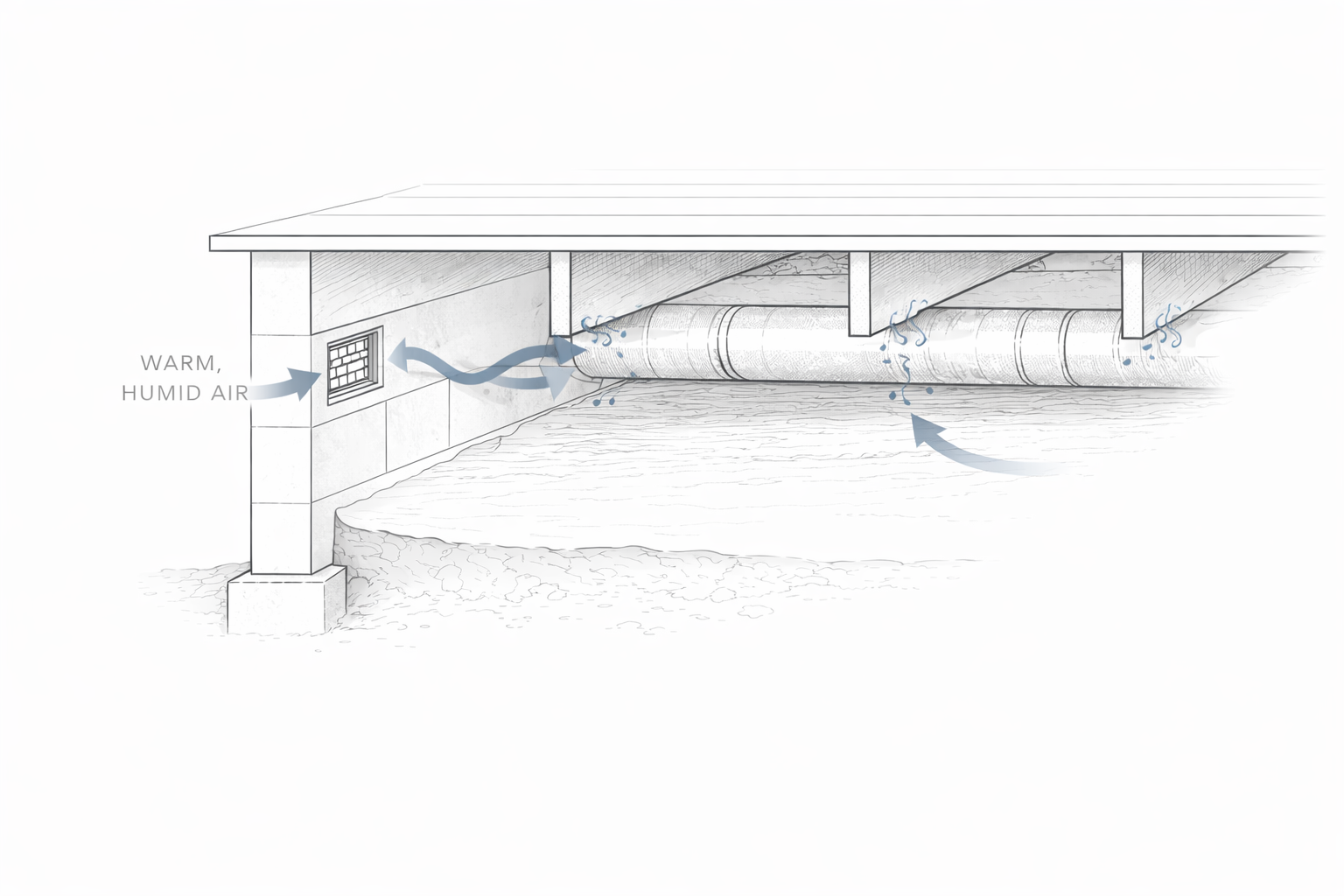
Illustration by ArchitectureCourses.org. Warm humid air can enter crawl-space vents in summer and condense on cooler surfaces such as ducts, joists, and the underside of the subfloor.
If your region gets sticky summers, venting is not automatically drying. Sometimes it is humidifying.
That is why the next useful companion page here is often crawl space humidity, not another vague ventilation explainer.
“Crawl Spaces Need to Breathe” Is Where People Waste Time
This is probably the most common homeowner mistake in the whole vent discussion.
The crawl smells bad. The ducts sweat every summer. The insulation keeps sagging. The vents are open. So the owner assumes the answer must be even more airflow, cleaner vent openings, maybe a fan.
But if the outside air is already wetter than the crawl, more airflow just means more moisture moving through the same bad space.
A crawl space does not need to breathe in some abstract universal way. It needs a moisture strategy that matches the house, the climate, and the condition under the floor.
Vented vs Sealed Is Really a Control Question
Most people frame this as an argument between two systems. Vents versus no vents. Old school versus modern. Cheap versus expensive.
That is not the useful way to think about it.
The useful question is whether the crawl space is being treated like outdoor space or controlled space.
A vented crawl rises and falls with weather, seasonal humidity, wind-driven air, and the condition of the soil below. A sealed crawl is a more controlled little environment. That only works if the sealing is real, the ground is covered properly, and water is not still entering from outside.
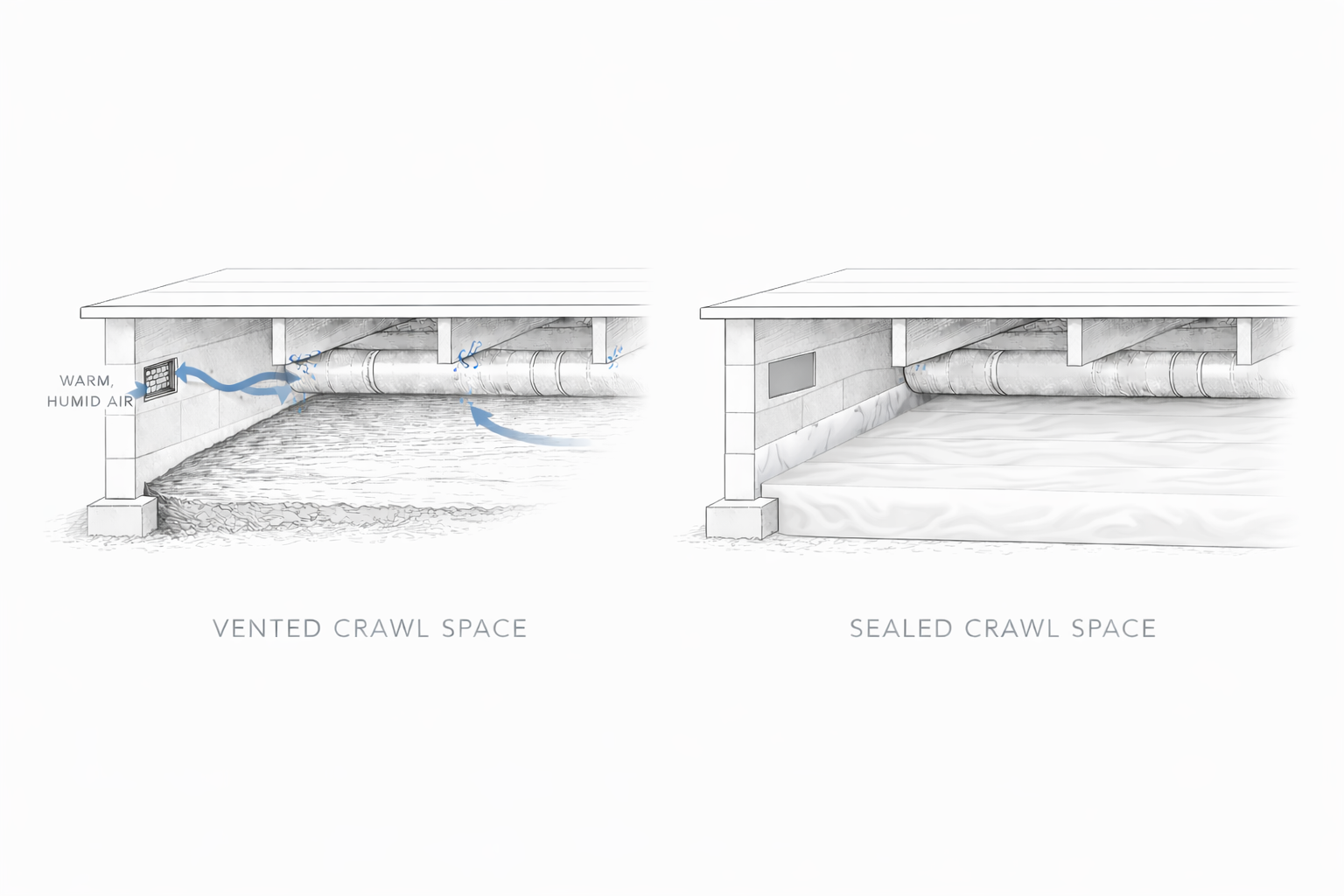
Illustration by ArchitectureCourses.org. Vented vs. sealed crawl space section comparison.
The expensive mistake is closing vents and calling the job done. The other expensive mistake is keeping vents open in a crawl space that already wants to become a controlled space.
What Open Vents Do Not Fix
This matters more than the vent debate itself.
Open vents do not fix bad grading. They do not fix downspouts dumping at the foundation. They do not fix groundwater, torn ground cover, plumbing leaks, or muddy soil. They do not turn a wet crawl into a dry crawl by force of optimism.
If the house still gets runoff concentrated at the perimeter, start with crawl space waterproofing and crawl space drainage system. Ventilation comes after water control, not before.
They also do not make a bare-soil crawl suddenly low-risk. If the soil is exposed, moisture keeps coming off the ground whether the vents are open or not. The real fixes there are better ground coverage, better detailing, or a broader sealed-crawl strategy.
That is where crawl space encapsulation vs vapor barrier only becomes the better next read.
Vent Covers and Seasonal Closures
Vent covers are one of those products people expect to do more than they can.
They help with pests. They can help with wind-driven rain. In some houses they help with cold drafts and comfort. In winter they may help reduce pipe-freeze exposure in certain conditions.
But moisture control still starts with the crawl space itself.
If the soil is wet, if drainage is poor, or if the crawl is already humid, a vent cover does not solve that. It only changes one part of the air path.
| Vent Product or Move | What It Helps With | What It Does Not Solve |
|---|---|---|
| Basic vent screen | Pests, debris entry | humidity, wet soil, bulk water |
| Vent cover | seasonal drafts, some rain entry | crawl-space moisture source |
| Insulated vent cover | comfort, energy loss, cold-air reduction | high humidity or drainage issues |
| Closing vents for the season | can help in cold periods | ongoing dampness if the crawl stays wet underneath |
I would treat vent covers as accessories to a moisture strategy, not the strategy itself.
Fans and Powered Ventilation
Powered crawl-space fans sound like a clean compromise. More airflow, less moisture. Sometimes they help around the edges. Often they just formalize the same mistake faster.
If the outdoor air is drier than the crawl space air, extra ventilation can help. If the outdoor air is hotter and wetter, you can end up feeding the problem with a powered fan instead of a passive vent.
That is the whole issue. The fan may be working perfectly while the idea behind it is wrong.
Fans make more sense in a crawl that is still meant to remain vented, in a climate that is not heavily humid for long stretches, after bulk water is already under control, and after ground moisture has already been reduced. They make much less sense in a wet, muddy, moldy crawl that is already failing in humid weather.
When Sealing the Crawl Is the Better Move
There is a point where the vent discussion becomes a distraction and the real answer is control.
That point usually shows up when the crawl keeps reloading with summer humidity, the house smells musty, the ducts sweat, the insulation keeps failing, and the owner wants the space to behave more predictably than the weather is allowing.
That is where a sealed crawl starts to make more sense than trying to tune a vented crawl forever.
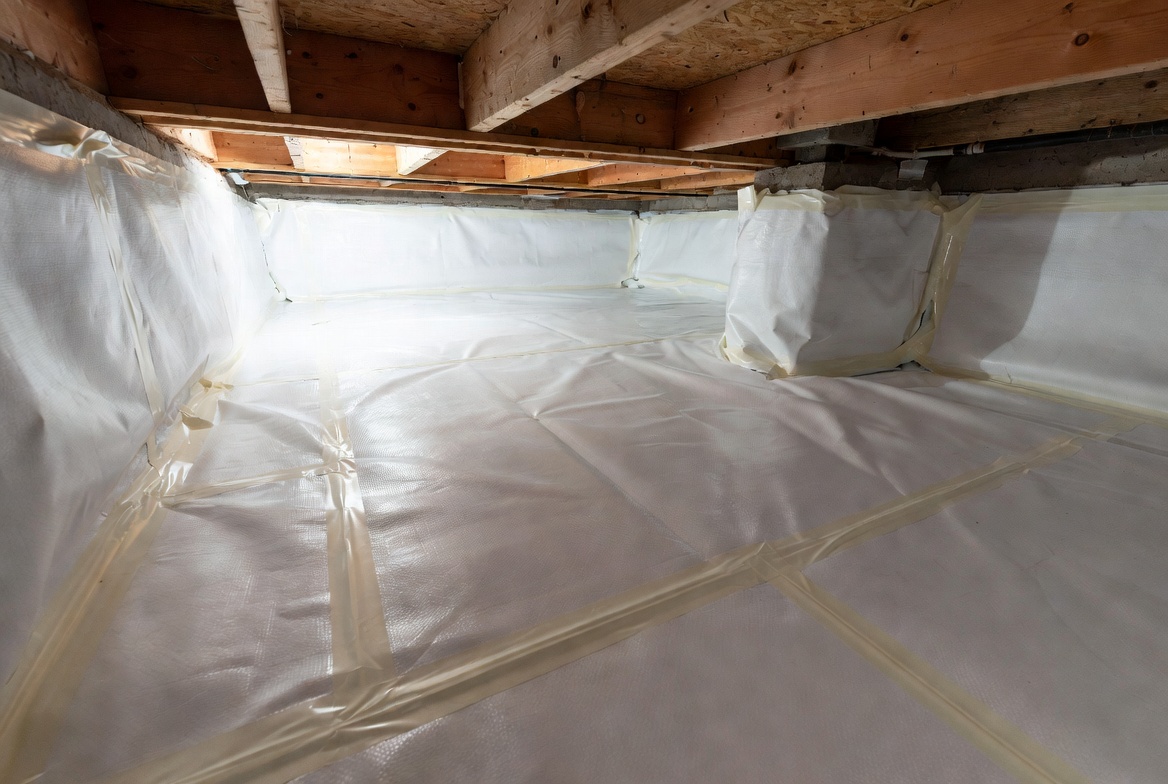
Image by ArchitectureCourses.org. A sealed crawl space depends on real ground coverage and perimeter sealing, not just closing vents and hoping the air behaves differently.
A sealed crawl still needs the basics done in the right order. Water first. Ground vapor next. Then air control. Then, if needed, active humidity control with a dehumidifier or another conditioned-space strategy.
If that is already the path, the next pages are crawl space encapsulation and can you use a dehumidifier in a crawl space without encapsulation.
If You Closed the Vents and It Smells Worse
This happens a lot.
You close the vents, the smell gets stronger, and now the crawl feels more sealed but less healthy. People assume the closure itself caused the problem. Sometimes it did, but usually only because it exposed a moisture source that was already there.
The usual pattern is simple. Closing the vents reduced air movement while wet soil, leaks, or humid materials were still in the crawl. So the moisture stayed put instead of cycling through loosely as before.
I would put the order back in place:
- check for outside water load and drainage issues
- check the ground cover and exposed soil
- check plumbing leaks, condensate, and wet insulation
- decide whether this crawl should remain vented or be upgraded into a more controlled system
That is a diagnosis problem first, not a vent-cover problem.
Climate Changes the Answer
You do not need a perfect climate chart to make better crawl-space decisions, but you do need to stop pretending every region behaves the same way.
In colder dry periods, open vents can help a crawl shed incidental moisture. In mixed climates, the crawl may behave fine part of the year and fail in another part. In warm humid climates, the risk that outside air will bring moisture in is much higher, especially once ducts, cool framing, and shaded damp soil get involved.
The practical point is simple: vent strategy should follow your moisture season, not a generic sentence you heard about crawl spaces needing to breathe.
If your floors are cold in winter, your pipes are vulnerable, and the crawl is otherwise fairly dry, seasonal vent management may be enough. If the crawl smells bad every summer and your ducts sweat every year, that is usually a clue that the old vented logic is fighting the local weather.
A Better Way to Decide
Most people do not need a philosophical answer. They need a sequence.
| If This Is the Main Problem | Start Here | Do Not Start With |
|---|---|---|
| Standing water or muddy soil after rain | runoff and drainage correction | vent covers or fans |
| Humid summer crawl with sweaty ducts | humidity diagnosis and vent strategy rethink | more open venting by default |
| Bare soil and weak ground cover | ground vapor control | assuming airflow alone will dry it |
| Musty air entering the house | find moisture source and decide whether the crawl needs more control | odor cover-ups or gadget-first fixes |
| Cold drafty floors in a mostly dry crawl | seasonal vent strategy and insulation review | jumping straight to full system conversion |
The point is not that every crawl needs sealing. The point is that every crawl needs the right question first.
How This Connects to Dehumidifiers
A lot of vent questions are really dehumidifier questions in disguise.
If the crawl is already trending toward a controlled environment, a dehumidifier may make sense. If it is still a wet, open, vented crawl with exposed soil and water problems, a dehumidifier gets asked to carry too much by itself.
The smarter path is usually to stop water entry, reduce ground moisture, decide whether the crawl is staying vented or moving toward sealed control, and only then decide whether active humidity control is worth the cost.
If you are already at that equipment stage, use what size crawl-space dehumidifier do you need.
Where To Go Next
If the crawl still gets wet after rain, go next to water in a crawl space after rain.
If the bigger problem is perimeter water, seepage, or drainage scope, go to crawl space waterproofing and crawl space drainage system.
If the crawl stays damp and musty even when it is not obviously wet, go to crawl space humidity.
If you are deciding between a basic liner and a more controlled sealed crawl, use crawl space encapsulation vs vapor barrier only.
If the crawl is already moving toward a sealed system and you are deciding whether active drying is still needed, use can you use a dehumidifier in a crawl space without encapsulation.
FAQ
Do crawl-space vents actually help?
Sometimes. In a reasonably dry crawl and a climate that is not heavily humid for long stretches, they can help with air exchange. They do not fix wet soil or outside water problems.
Why do crawl-space vents make things worse in summer?
Because warm humid outdoor air can enter the crawl and condense on cooler surfaces such as ducts, joists, and the underside of the floor. In that situation, more venting can mean more moisture.
Should I close crawl-space vents in winter?
Sometimes, especially in colder climates where comfort and pipe protection matter. But if the crawl has wet soil, poor drainage, or trapped humidity, closing vents can make the space stay damp longer. Treat it as a seasonal move, not a cure.
Are vent covers worth it?
They can help with pests, drafts, and some rain entry. They are not a moisture fix by themselves.
Do I need fans in my crawl-space vents?
Only if the crawl is still meant to remain vented and the local conditions support that approach. Fans can move the wrong air faster if the crawl is already failing in humid weather.
When should I stop trying to improve a vented crawl and just seal it?
Usually when the crawl keeps reloading with humidity, the house smells musty, ducts sweat, insulation keeps failing, and you already know the space needs more control than outside air is giving you.
Can I leave the vents open and still use a dehumidifier?
You can, but it often turns into an inefficient setup if the crawl is still open to humid outdoor air. Equipment works better when the crawl is controlled enough for the drying to matter.
What is the biggest mistake people make with crawl-space ventilation?
Using vent strategy as the first fix instead of checking water, ground moisture, and crawl-space condition first.