


A 1960s ranch usually has one good thing you should not wreck.
The low roofline.
The house may still sit well on the lot. The brick may be fine. The windows may be in the right places. The plan may only need better openings, not a full rebuild.
The weak parts are easier to spot from the street. A flat entry. A garage that takes over the front. Dark middle rooms. Old shrubs. Small trim. A kitchen cut off from the rooms people use most.
Fix those things without fighting the house.
Open walls carefully. Keep the long shape. Make the entry clearer. Bring light into the middle rooms. Calm down the garage. Do not bury the ranch under farmhouse trim, fake craftsman posts, or a heavy new front.
The after photo should still look like the same house, just cleaned up and working better.
For the whole-house version of these decisions, start with 1960s house renovation.
What the before-and-after should actually prove
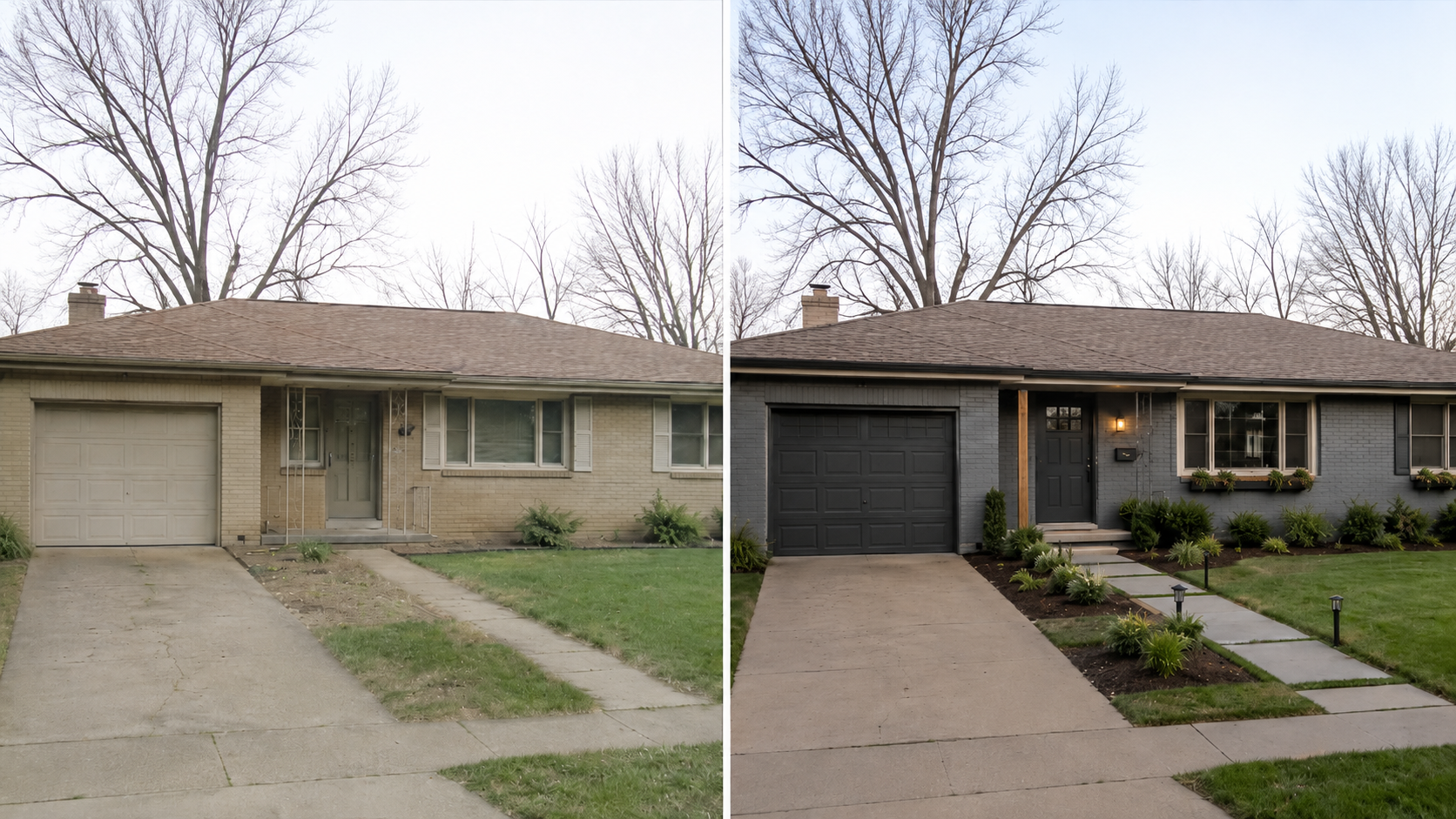
The best before-and-after photos do not show the biggest change. They show the right one.
The before photo in almost every 1960s ranch remodel has the same problems: a weak entry, tired trim, dark brick or siding, a garage that owns the front, flat landscaping, and windows that either look too small or sit poorly in the wall. The after photo should fix those things. It should not introduce new ones.
The failure version of the after photo is easy to recognize. The house looks newer for about five minutes. Then you notice the porch columns are too thick for the roofline. The shutters are decorative but the windows open the wrong way. The stone is a three-foot band that stops at an arbitrary point on the wall. The trim is suddenly craftsman on a house with none of that history.
That version costs more and looks worse longer.
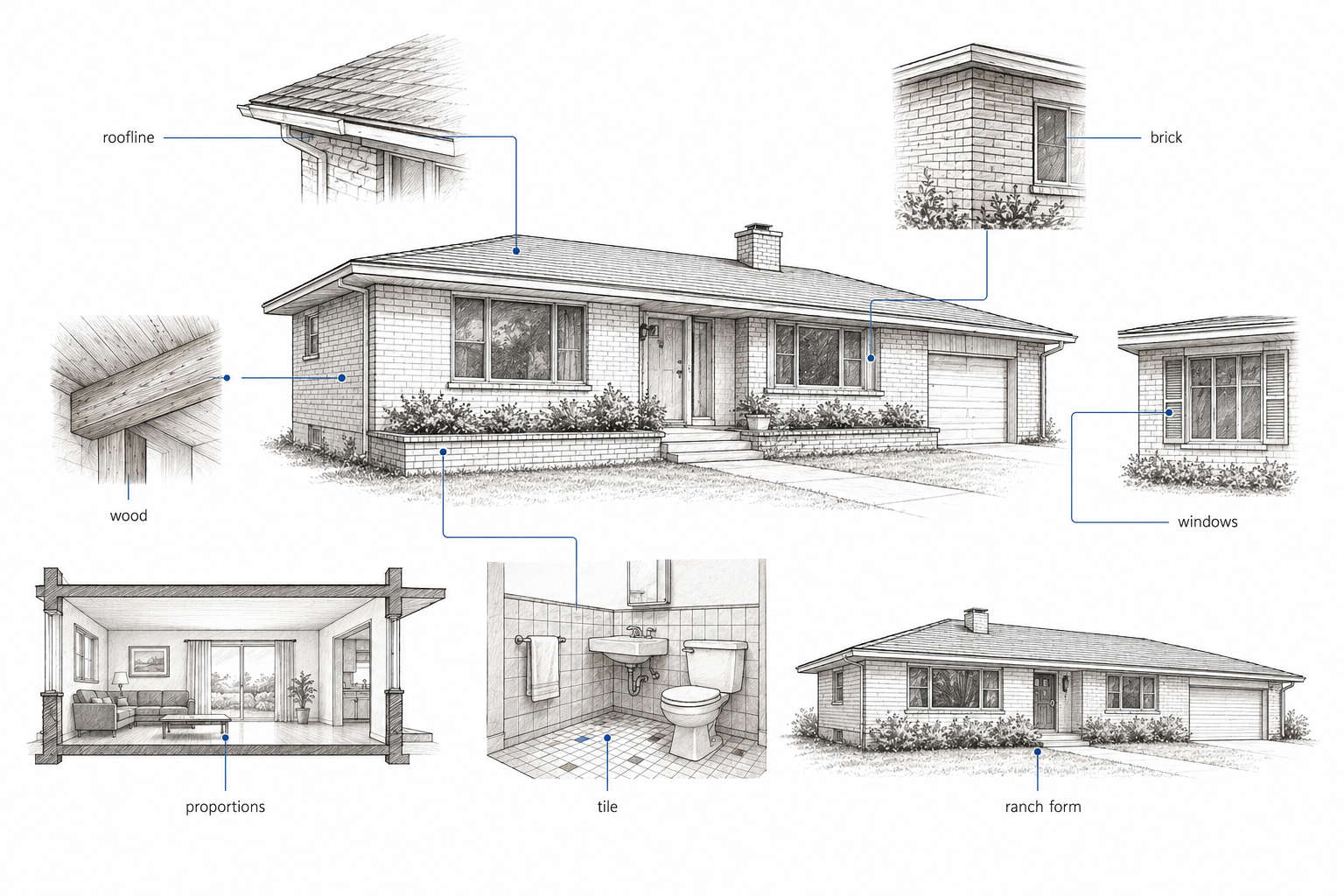
The ranch has one real asset on the exterior: the low horizontal line. Every good decision protects it. Every bad one fights it.
Start with the shape, not the paint color
Paint color is the last decision, not the first. Most people start there because it feels manageable. It is also the decision that matters least until the bigger ones are made.
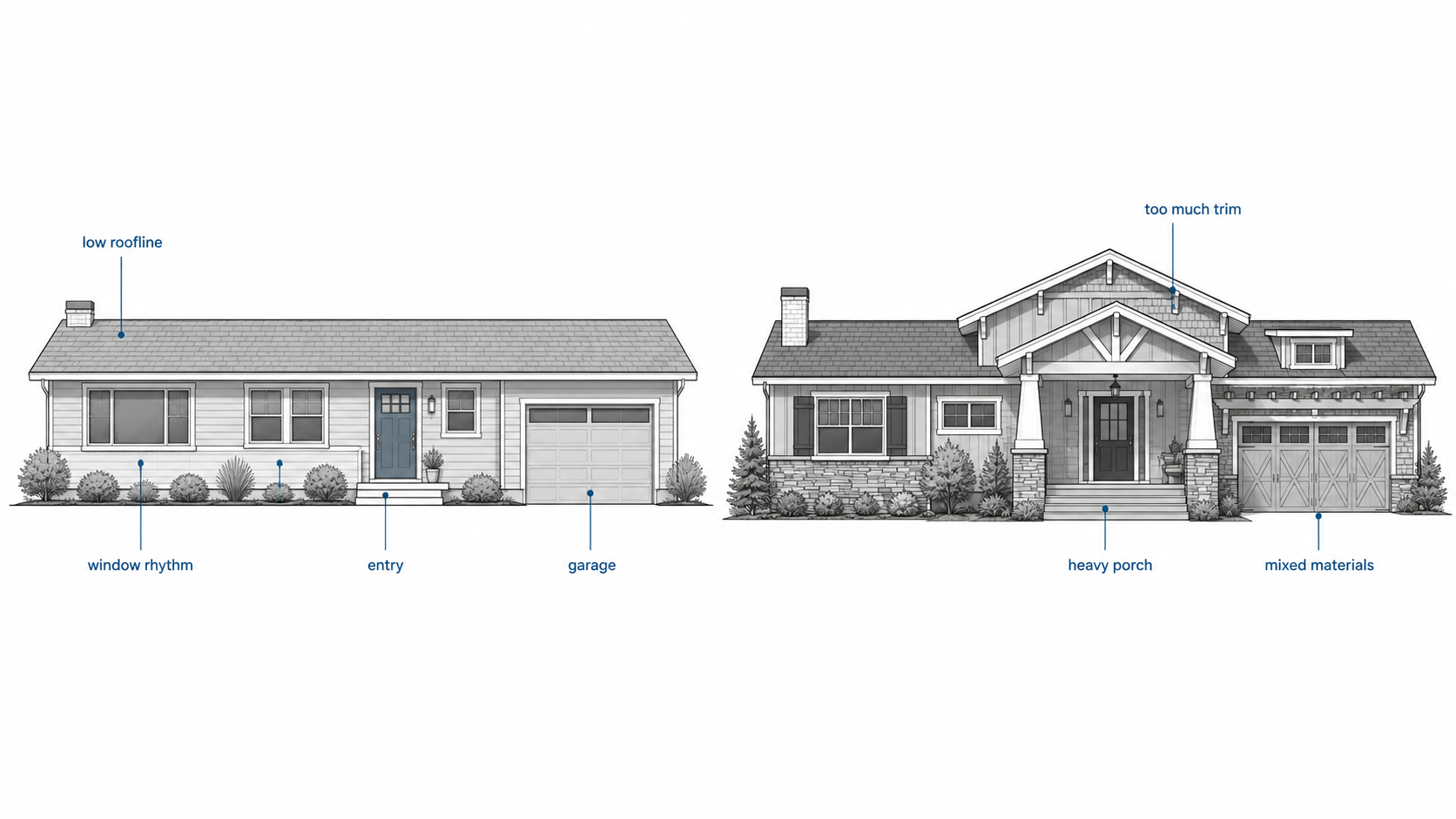
Look at the roofline first. Then the window rhythm. Then the garage. Then the entry. Then the walkway, lighting, planting, and materials. That order matters because each one constrains the next. A porch that fights the roofline cannot be fixed with paint. A garage door that dominates the front will still dominate after the trim is repainted.
Most 1960s ranch houses have a simple front elevation. That is not a weakness. The trouble starts when the remodel tries to add interest by piling things onto a house that was designed to be quiet.
| Existing problem | Better fix | What to avoid |
|---|---|---|
| Weak front entry | Better door, light, walk, modest cover, clearer focus | Oversized porch that makes the house top-heavy |
| Garage dominates the front | Balance the entry and landscape instead of hiding the garage | Fake trim or random materials on the garage face |
| Old windows look tired | Keep rhythm and proportions while improving performance | Shrinking glass or mixing too many window styles |
| Brick or siding feels dated | Clean, repair, simplify, or repaint only when the material supports it | Covering sound materials with weak veneers |
| Flat curb appeal | Walkway, planting, lighting, trim repair, entry focus | Decorative clutter that fights the horizontal shape |
Exterior fixes that help instead of fight the house
The exterior is where most 1960s ranch remodels either hold together or fall apart. The version that works is usually restrained. The roofline stays calm. The windows still make sense in the wall. The entry gets clearer. The garage stops feeling like the only thing your eye goes to. The materials get simpler, not busier.
The version that fails tries too hard. Thick porch posts. Fake craftsman trim. Oversized shutters. Random stone panels. Too many paint colors. A new front feature that weighs more visually than everything else combined. The ranch loses its long quiet shape and starts looking like a one-story house wearing someone else's clothes.
If the exterior is the main project, use what to fix on a ranch house exterior before choosing finishes. If the brick is the issue, brick ranch house updates covers that decision specifically.
The entry and garage need to be solved together
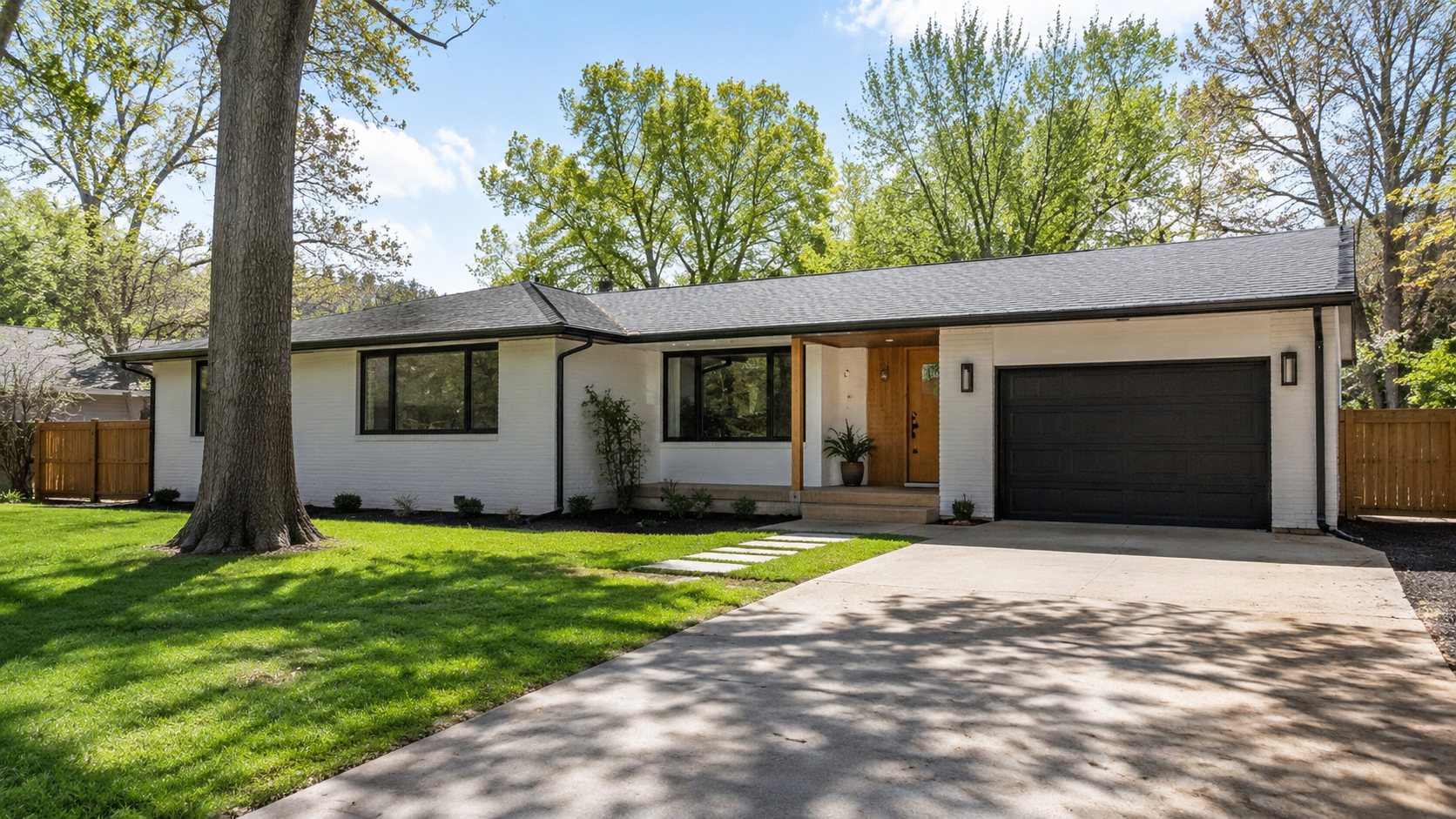
On many 1960s ranch houses, the garage is not just attached. It is loud. The garage door may take up the biggest flat surface on the front. The entry may sit back, look too small, or disappear beside a driveway. That makes the house feel off even when the siding, roof, and windows are in decent shape.
The fix is not hiding the garage. The garage is there. Pretending otherwise usually makes it worse. What the front elevation needs is competition. The entry has to become interesting enough that the garage stops being the first and only thing your eye finds.
A better front door, clearer walkway, modest entry cover, good exterior light, repaired trim, and planting that leads toward the door can change the front elevation without major construction. The garage becomes part of the composition instead of the whole composition.
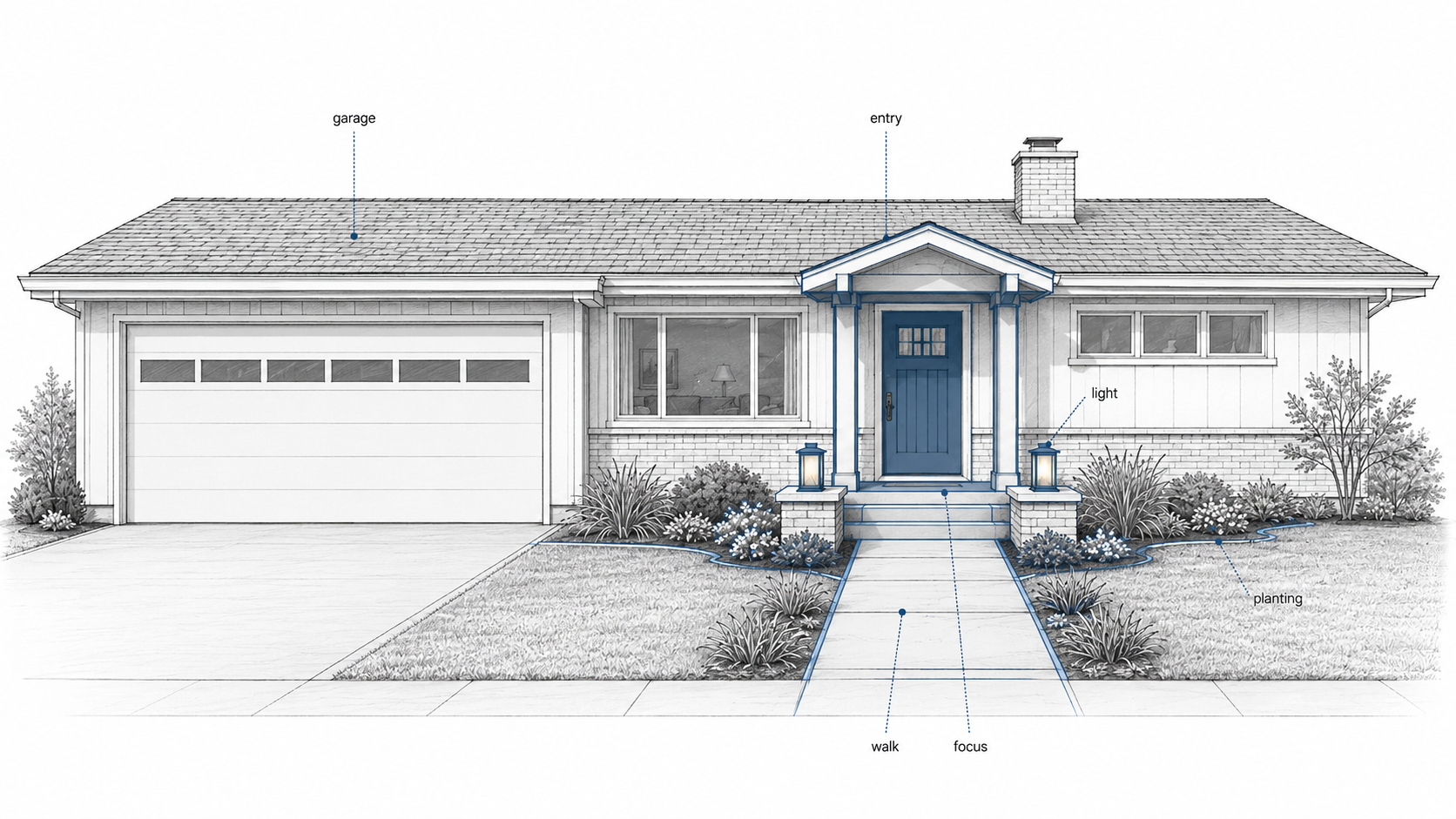
That is usually cheaper and more honest than adding a fake porch the house never asked for.
Windows can make or break the remodel
Ranch windows are easy to damage with good intentions.
A big front window may feel dated. Old aluminum units may leak air. Bedroom windows may look tired. Replacing them can make sense. But the window rhythm is part of what makes a ranch look like a ranch. Change it carelessly and the house stops reading correctly from the street.
If the remodel shrinks the glass, converts every opening into a different style, or piles heavy trim around simple windows, the house can lose its best exterior feature. The front may look patched. The rooms inside may get darker. The horizontal line weakens.
Better windows should improve comfort, water management, and energy performance without wrecking the proportions. The rough opening, flashing, siding or brick repair, trim depth, and interior casing all matter. A cheap window swap done carelessly creates leaks, drafts, ugly trim, or siding scars that are visible for years.
Dark middle rooms are a layout problem, not a decor problem
Many 1960s ranch houses feel darkest in the middle. The front room has a window. The back may have a slider or kitchen window. The middle holds the hallway, dining area, or the living room zone where light gets stuck before it reaches the center of the plan.
Paint can help. Better lighting can help. But if the plan itself blocks borrowed light, the room may still feel heavy after everything is new.
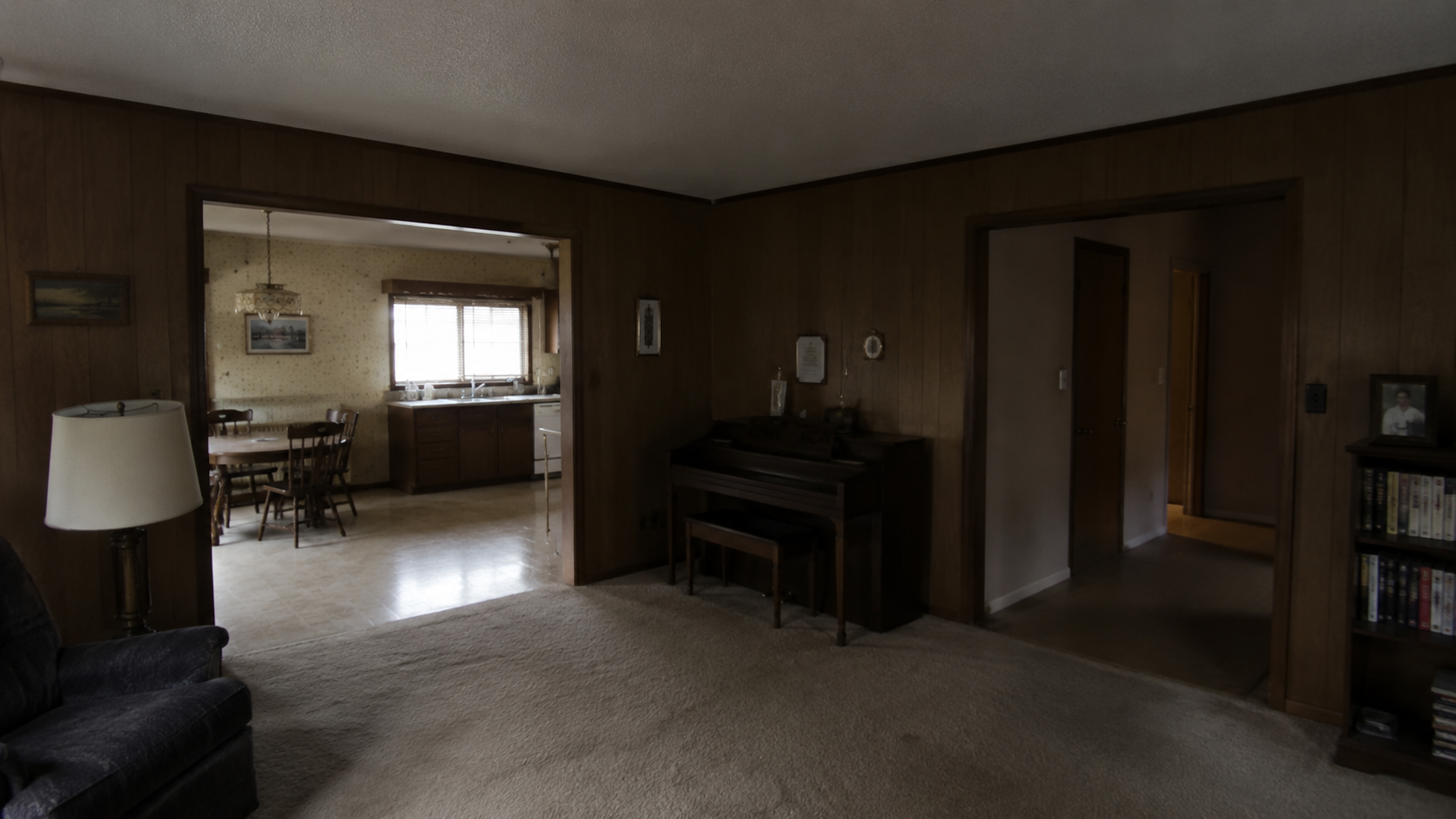
The wrong answer is opening every wall. Most ranch houses need targeted openings. A wider passage, a cased opening, a better kitchen connection, an interior glass door, or a stronger link to backyard glazing may solve more than a full gut. When every wall comes down, storage disappears, furniture placement gets worse, sound travels everywhere, and the kitchen starts running the whole house.
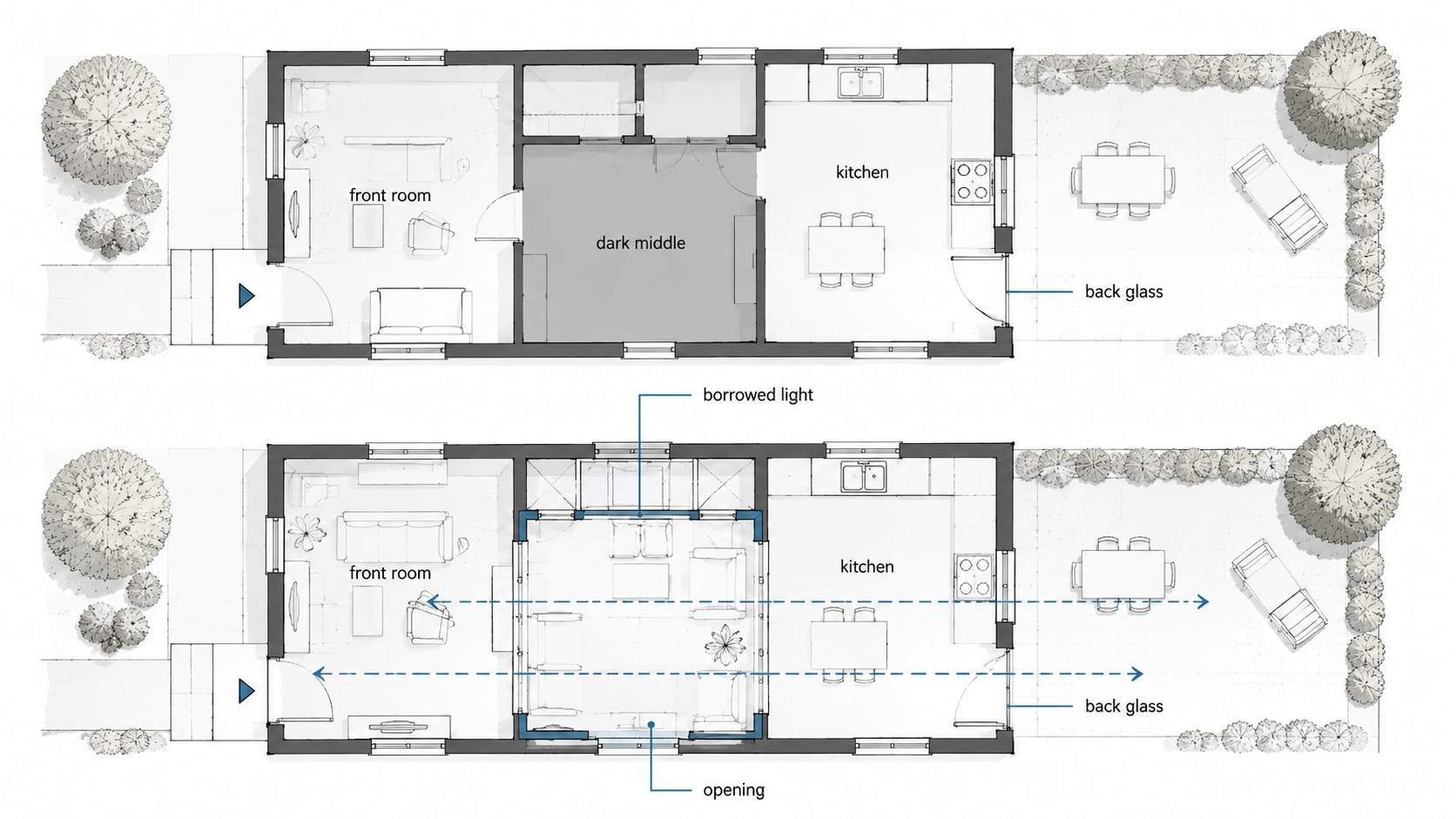
For a deeper layout fix, use how to brighten a dark ranch house before demolition starts.
The kitchen connection usually decides the interior
The kitchen is where the ranch remodel starts to spread.
A 1960s ranch kitchen may be small, boxed in, dark, or cut off from the dining and living areas. That does not automatically mean the entire middle of the house should come out. It means you need to figure out what the kitchen actually needs from the room next to it.
More light? A better dining connection? A wider passage? A view to the backyard? More counter space? A path for people to move without cutting through the work zone? Once you answer that, the wall decision gets clearer.
A controlled opening can make the kitchen feel connected while keeping storage, seating, and room identity. A full removal can make the kitchen brighter and also louder, messier, and harder to furnish around. Both outcomes are real. The question is which one fits how the house actually gets used.
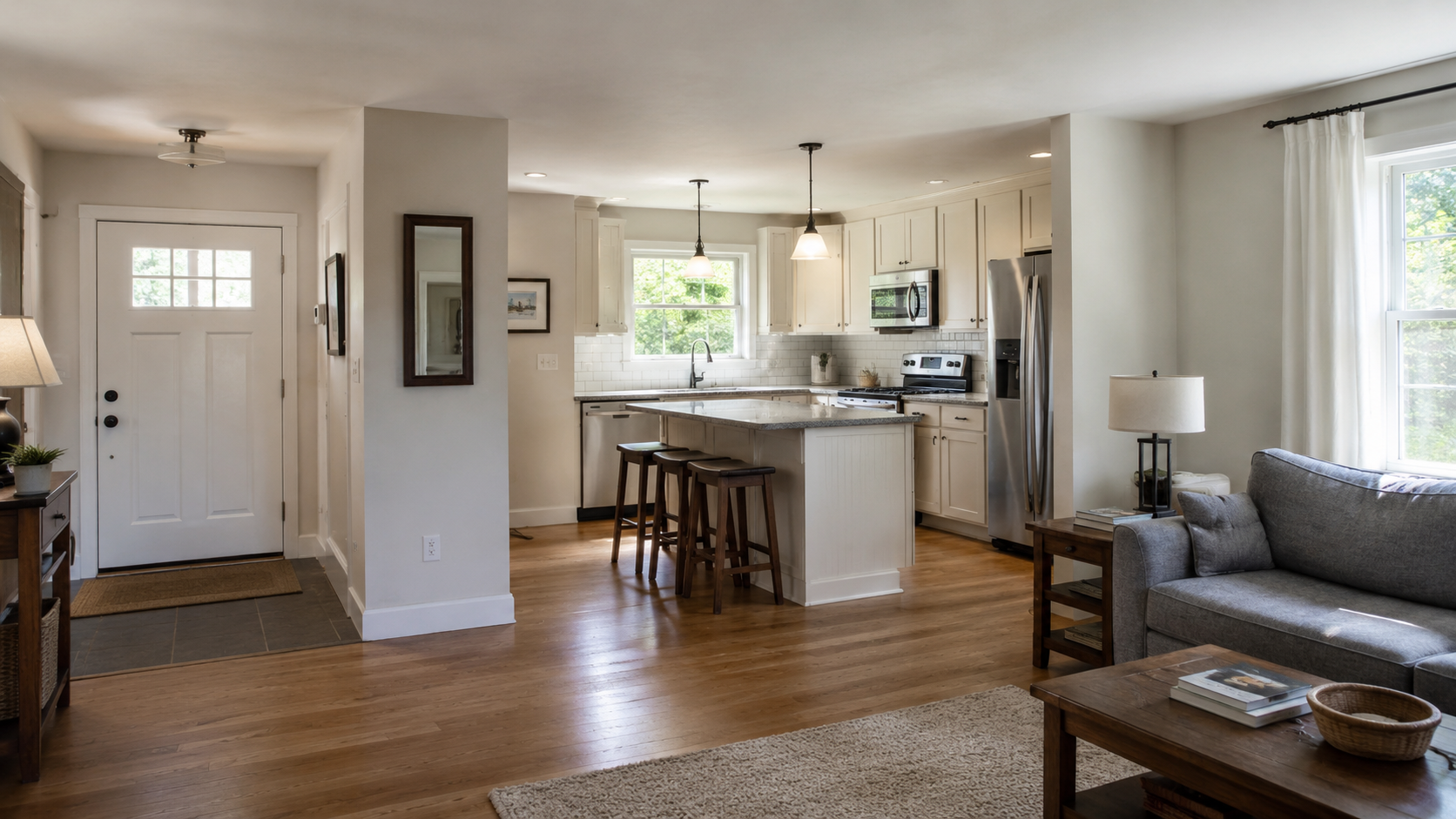
For the kitchen itself, use 1960s kitchen remodel. For ranch-specific kitchen layout problems, use ranch house kitchen layout problems.
Before you remove a wall
Wall removal is where ranch remodels start sounding easier than they are.
A wall may carry load. It may also hide wiring, ducts, returns, plumbing, or old patches from the last time someone worked on the house. Even when it is not structural, removing it still leaves scars. The floor has to be patched. The ceiling has to be repaired. Lighting may need to move. The old wall line may show in flooring, texture, and trim for years.
The room may also lose something it was quietly providing. A short wall may hold a sofa, a TV, a buffet, a pantry cabinet, a thermostat, a return grille, or a switch bank. Once the wall is gone, the plan can look open and live worse at the same time.
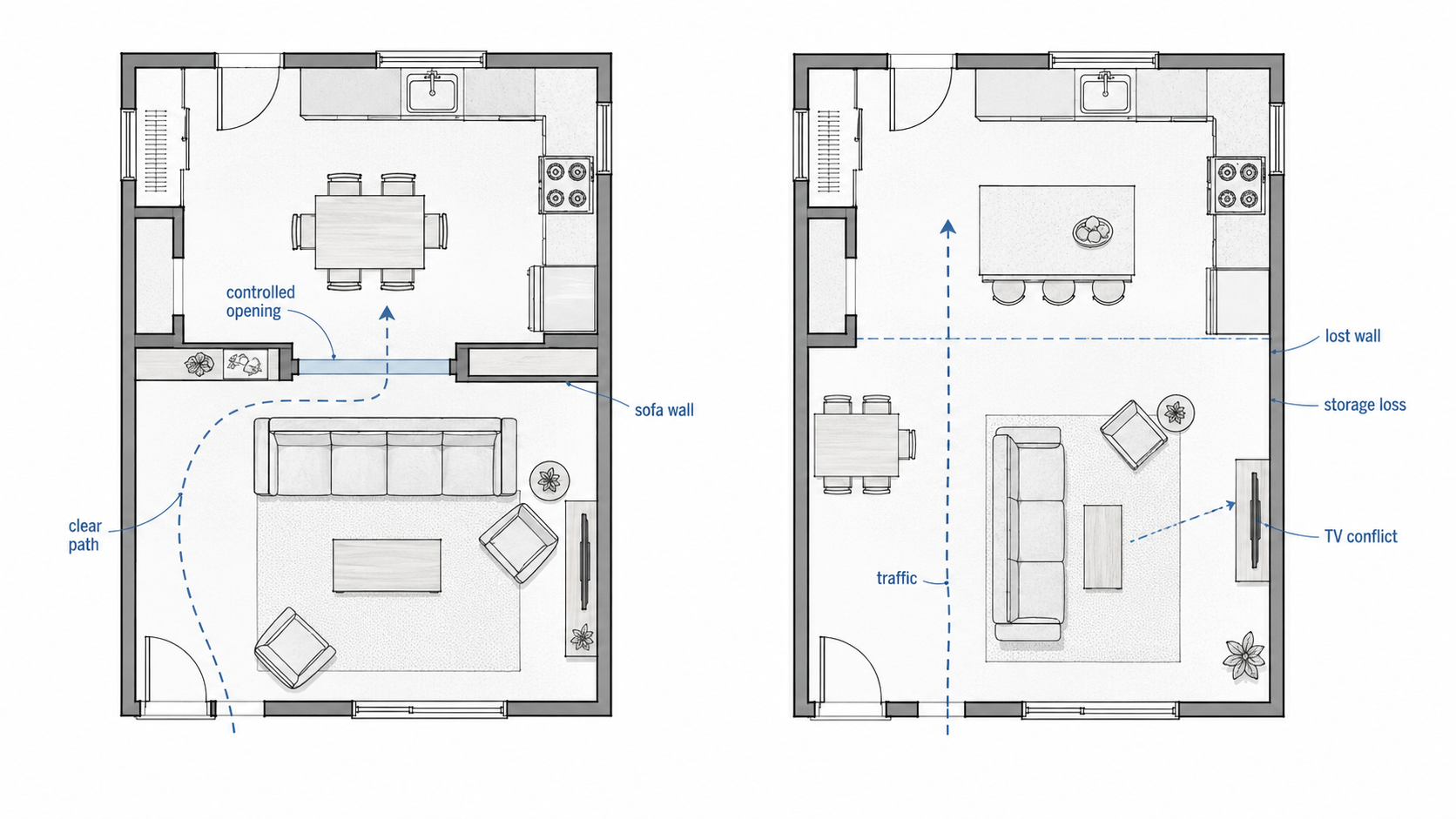
That is why the best ranch remodels check the furniture plan, traffic path, kitchen layout, and lighting plan before the wall comes out. Structure is only one part of the decision.
For deeper wall-removal planning, use open floor plan ranch house.
Bathrooms need function more than drama
Most 1960s ranch bathrooms are small. That does not make them bad. It means every inch matters and there is nowhere for a mistake to hide.
A vanity that is too deep crowds the door. A tub wall can hide plumbing trouble behind it. A soft subfloor can turn a straightforward tile update into repair work. Weak ventilation damages new paint and trim before the remodel feels old. These are not exotic problems. They show up in almost every 1960s ranch bathroom the moment someone looks carefully.
The bathroom should not steal the budget with finishes if the rest of the house still has dark rooms, bad lighting, weak exterior repair, or old systems that need attention. Fix moisture, plumbing access, fan performance, toilet clearance, vanity depth, storage, and lighting first. Then choose tile.
For the bathroom page, use 1960s bathroom remodel. If the issue is layout specifically, use ranch house bathroom remodel ideas.
Do not spend the budget backward
A 1960s ranch can absorb money quickly because the visible work is tempting. New paint. New front door. New kitchen. New bath. New floors. New lighting. New windows. The list feels clean and manageable until the old house starts adding its own list.
Electrical capacity. Aluminum branch wiring in some houses. Lead-safe work in pre-1978 painted surfaces. Suspect flooring or adhesive under the new stuff. Weak ventilation. Old plumbing. Roof edge damage. Water management around the foundation. Bad attic insulation. Window flashing that was never done right. Soft subfloor. Hidden rot at doors or sliders.
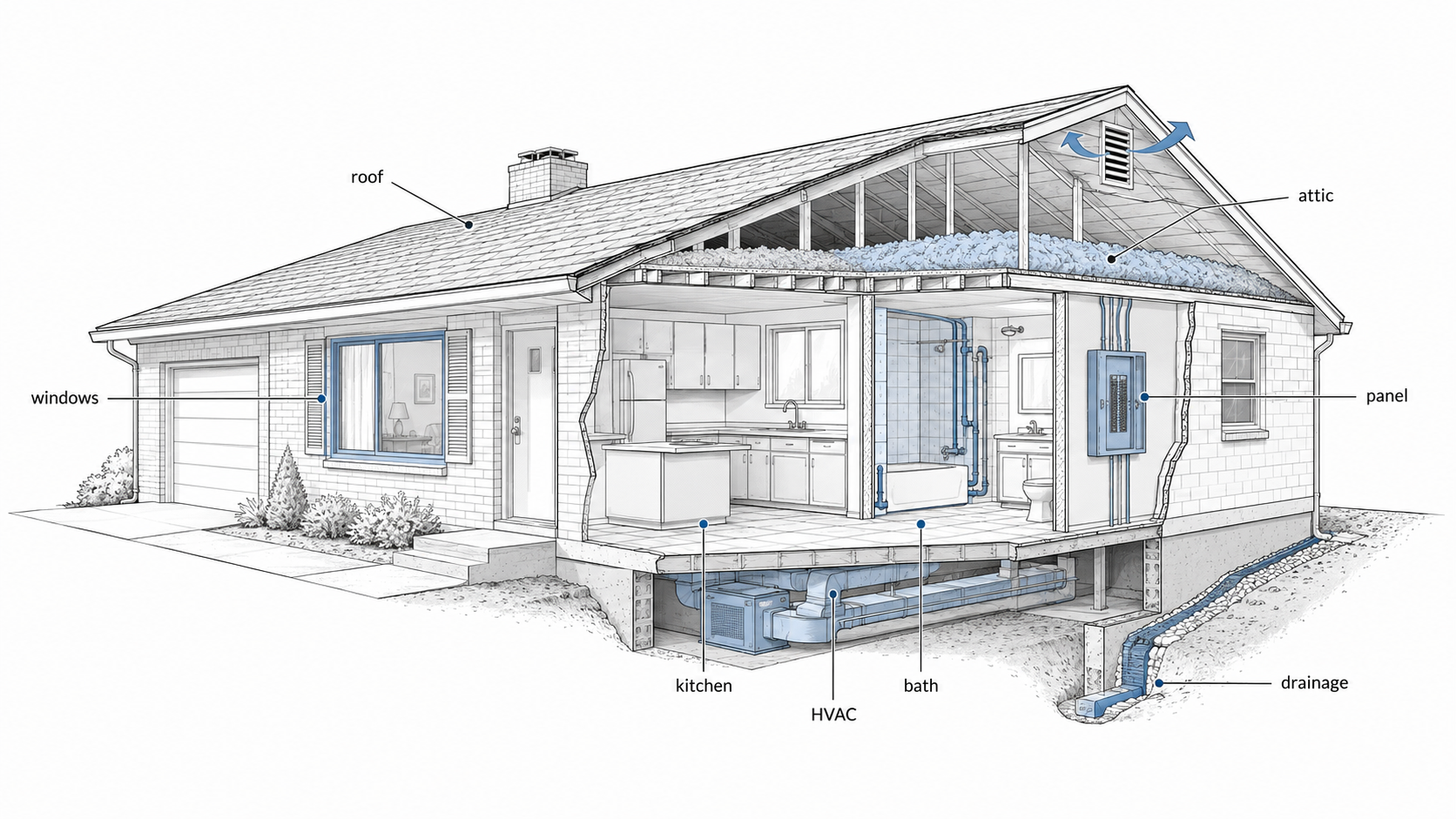
None of that appears in the after photo, but it decides whether the remodel holds up. The house may be simple, but simple houses still fail when water, wiring, structure, or ventilation is ignored.
For the whole-house inspection order, use 1960s house renovation before treating the ranch remodel as only a style project.
What to leave alone
This is the section most remodel guides skip. Restraint is not exciting to write about, but it is usually the move that saves the project.
Leave the low roofline alone unless there is a real structural or water problem. The horizontal line is what makes a ranch look settled and deliberate. Anything added above it — a second-story bump, a raised gable, a heavy porch — reads as an apology for the original house.
Leave sound brick alone unless the color or condition genuinely hurts the house. Painted brick can look clean, but it changes maintenance and moisture behavior permanently. The decision depends on brick condition, climate, exposure, and how the wall drains. It is not reversible.
Leave the simple massing alone. A ranch does not need fake complexity to look better. Complexity added to a house that was designed to be quiet usually just looks complicated.
Leave some separation inside the house if it helps daily life. Not every wall is a problem. Some walls hold storage, furniture, privacy, and quiet. A house where every room flows into every other room is not automatically better than one where some rooms are allowed to be rooms.
Leave original features that still work: broad windows, backyard glass, built-ins, brick fireplaces, simple trim, low ceiling lines, and the easy single-level flow that made the ranch useful in the first place.
The right order
Photograph the house before changing anything. Get the front elevation, garage, entry, roofline, windows, brick or siding, side yard, backyard doors, kitchen wall, hallway, bathroom, and dark middle rooms. You will want those photos when a decision comes back up later.
Check the exterior before choosing colors. Roof edges, gutters, drainage, siding condition, brick condition, trim rot, window flashing, and doors. Find the real problems first.
Check old materials before demolition. A 1960s ranch may have pre-1978 paint, old flooring, suspect adhesive, ceiling texture, or other materials that should be tested or handled carefully before disturbance. This is not optional.
Decide the exterior shape before the finishes. Entry, garage, windows, roofline, and walkway matter more than the paint chip.
Draw the interior traffic path. Mark the kitchen, dining, living room, hallway, bedrooms, bathrooms, garage entry, and backyard connection. Walk it before any wall comes out.
Choose wall openings after the furniture, storage, lighting, and structure have been checked. In that order.
Price the hidden work before the pretty work. Wiring, plumbing, ventilation, window repair, floor patching, and water damage change the budget fast and show up late if you are not looking for them.
FAQ
Is a 1960s ranch house worth remodeling?
Yes, if the house still has a good roofline, usable plan, decent window rhythm, and sound structure. Many 1960s ranch houses remodel well because the simple shape is easy to work with. The risk is over-updating the exterior or opening the interior without a plan.
What is the best exterior update for a 1960s ranch?
Strengthen the entry and clean up the front elevation first. A better door, lighting, walkway, trim repair, simple planting, and a garage that stops dominating the front can improve curb appeal without touching the ranch shape.
Should I paint the brick on a 1960s ranch?
Not automatically. Sound brick may be worth keeping. Painted brick changes maintenance and moisture behavior and the decision cannot be undone cleanly. It depends on brick condition, climate, drainage, exposure, and the paint system.
Should I open the kitchen wall in a 1960s ranch?
Maybe. A controlled opening can improve light and connection. Removing too much wall can hurt storage, furniture placement, sound control, and room identity. Check structure, wiring, ducts, flooring, ceiling repair, and the furniture plan before demolition.
How do you make a 1960s ranch look better without ruining it?
Keep the low roofline. Simplify the materials. Improve the entry. Protect window proportions. Add better lighting. Fix the dark middle rooms with targeted openings. Avoid style overlays that belong to a different house.
What should I remodel first in a 1960s ranch?
Start with exterior water control, old-material safety, wiring, plumbing, ventilation, windows, and roof or drainage problems. Then kitchens, bathrooms, walls, floors, lighting, and finishes.
What makes a 1960s ranch remodel expensive?
The cost usually jumps when the project touches wall removal, structural beams, window replacement, floor patching, kitchen relocation, bathroom plumbing, electrical upgrades, ventilation, old materials, or exterior water damage. Any one of those can double the scope of something that looked simple at the start.
Read This Next
For the whole-house version of the same problem, start with 1960s house renovation.
If the kitchen wall is the main issue, use 1960s kitchen remodel before ordering cabinets or removing walls.
If the exterior is the main concern, read what to fix on a ranch house exterior before adding porch details, paint, or new materials.