


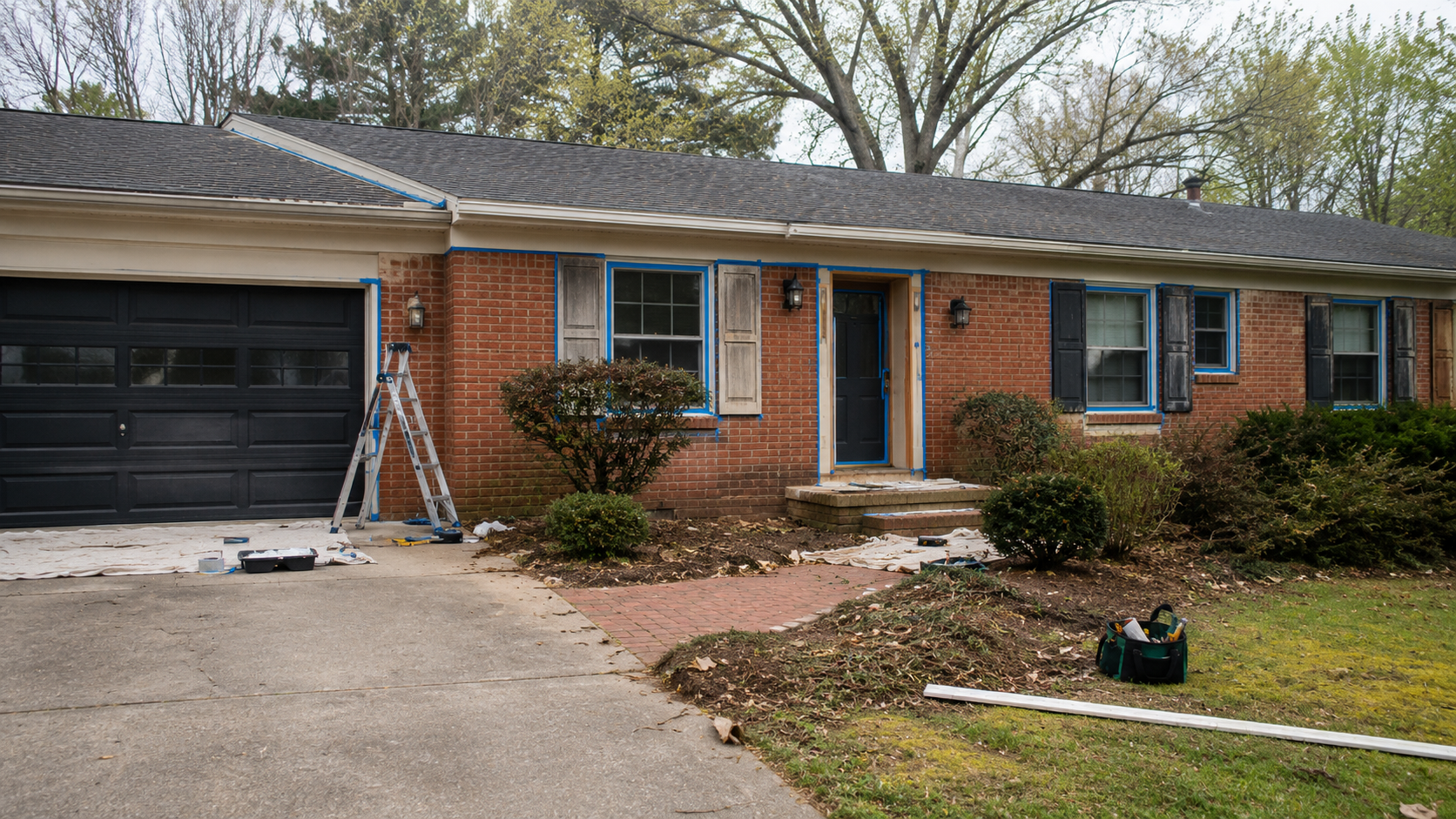
Image by ArchitectureCourses.org. This brick ranch update shows how trim, shutters, garage color, entry focus, and overgrown planting can change the house before the brick is painted.
A brick ranch can look tired without needing to be painted.
That is where the expensive mistake starts.
The brick gets blamed first because it is the biggest surface on the house. It is old, dark, orange, red, brown, mottled, or just too familiar. So the first idea is paint. White paint. Black windows. New shutters. Maybe a front porch. Maybe stone veneer at the base.
Sometimes paint works.
Often the brick was not the problem. The trim was weak. The windows were mismatched. The garage door was too loud. The shrubs were swallowing the sill line. The gutters were stained. The entry disappeared. Painting the brick only made every other bad decision easier to see.
Do Not Start With Paint
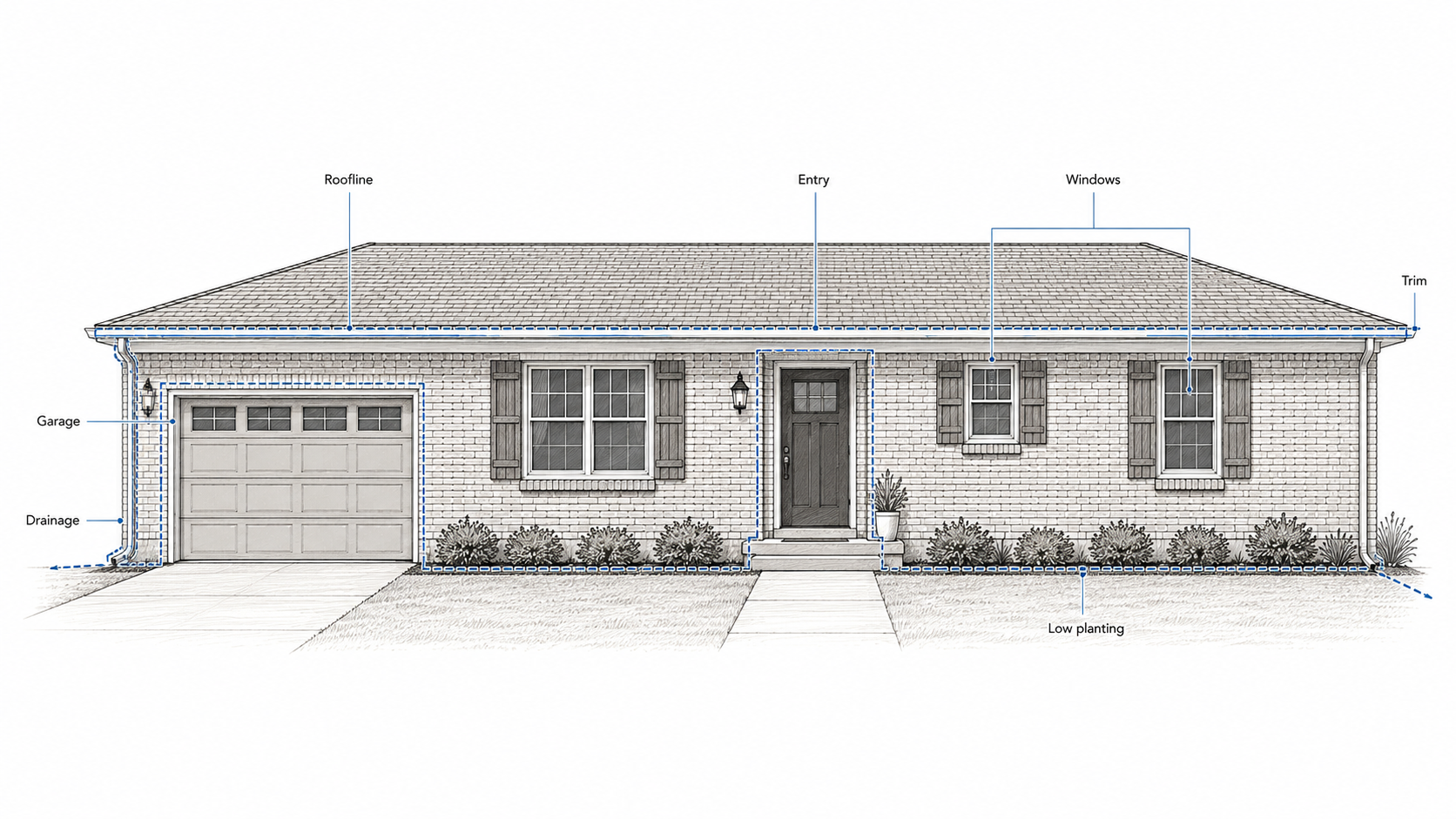
Illustration by ArchitectureCourses.org. The brick is not always the first problem; roofline, windows, entry, garage, trim, drainage, and planting often need editing before paint.
Start by asking what the brick is doing for the house.
Good brick gives a ranch weight, texture, weather resistance, and a calm wall field. It can make a low house feel settled. It can also hide small exterior problems because the material already has visual depth.
Once it is painted, that changes. The wall becomes flatter. Mortar joints read differently. Maintenance changes. Peeling, staining, trapped moisture, and future repainting become part of the house. Paint can be the right move on some brick, but it should not be the first move just because the house feels dated.
I would check the roofline, window alignment, trim color, garage door, front entry, gutters, drainage, and landscaping before deciding the brick has to change.
Editing Beats Covering
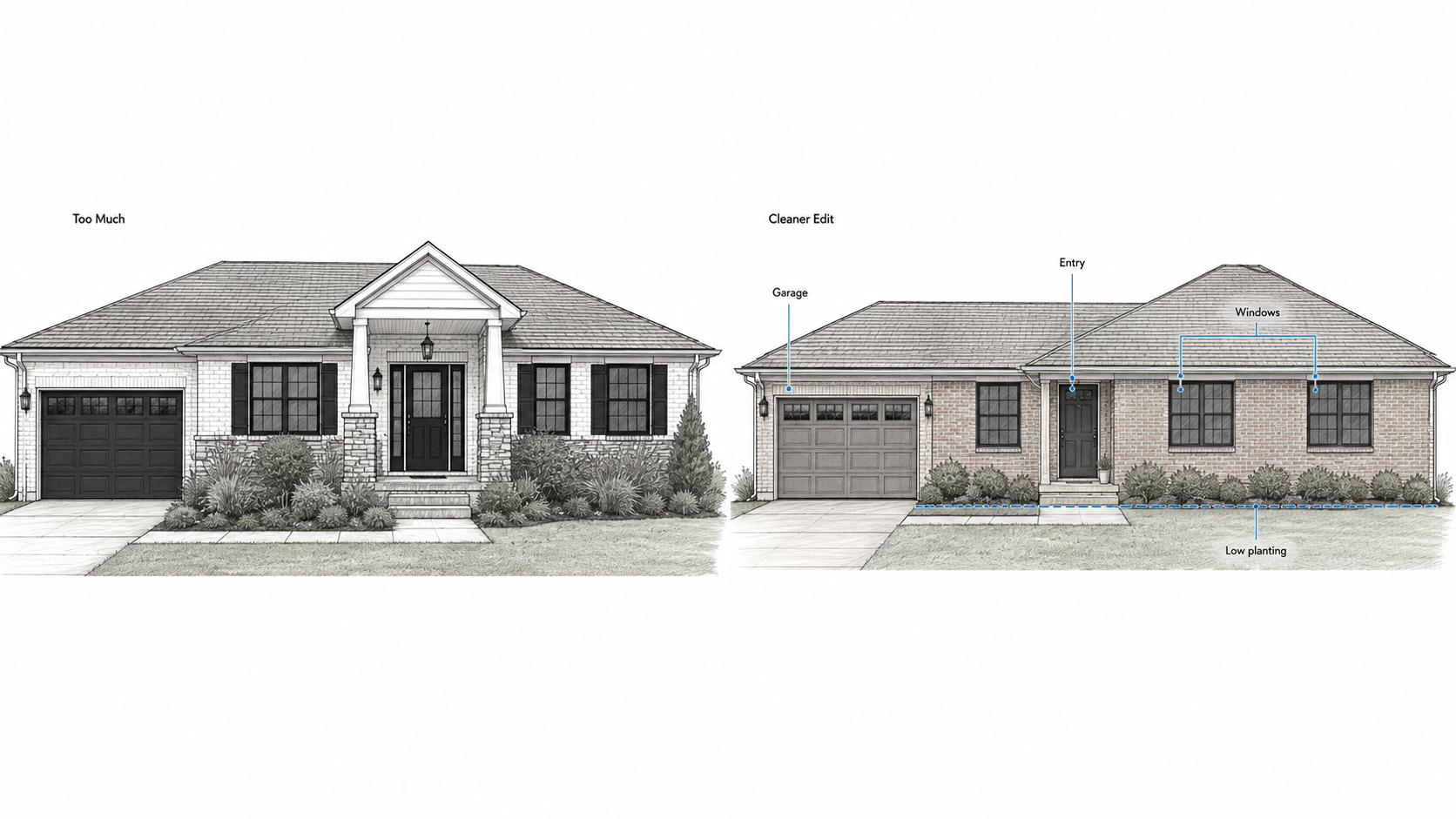
Illustration by ArchitectureCourses.org. A brick ranch often improves when bad add-ons are removed and the entry, windows, garage, and planting are edited before the brick is painted.
A lot of brick ranches need editing.
Remove the fake shutters that do not fit the window. Cut back shrubs that cover the lower brick and make the house look squat. Quiet the garage door. Replace rotten trim. Clean up the entry light. Fix stained gutters and downspouts. Rework the walkway if the front door feels hidden.
Those moves can change the house before paint touches the brick.
The reason is simple: brick ranch houses usually fail as a composition before they fail as a material. The brick may be fine. The parts around it may be the mess.
| Before Painting Brick | Check This First | What Goes Wrong If You Skip It |
|---|---|---|
| Brick color feels dated | Trim, garage door, shutters, gutters, landscaping | Paint covers good brick while the bad proportions stay |
| Front looks heavy | Entry visibility, shrub height, garage dominance | The house still feels heavy after paint |
| Windows look wrong | Head lines, sill lines, trim width, opening size | Paint makes mismatched openings more obvious |
| Brick looks stained | Gutters, downspouts, splashback, grading | New finish stains again because water still hits the wall |
| House needs curb appeal | Door, light, path, steps, planting edge | Money goes into coating instead of the entry problem |
Paint, Limewash, or Leave It Alone
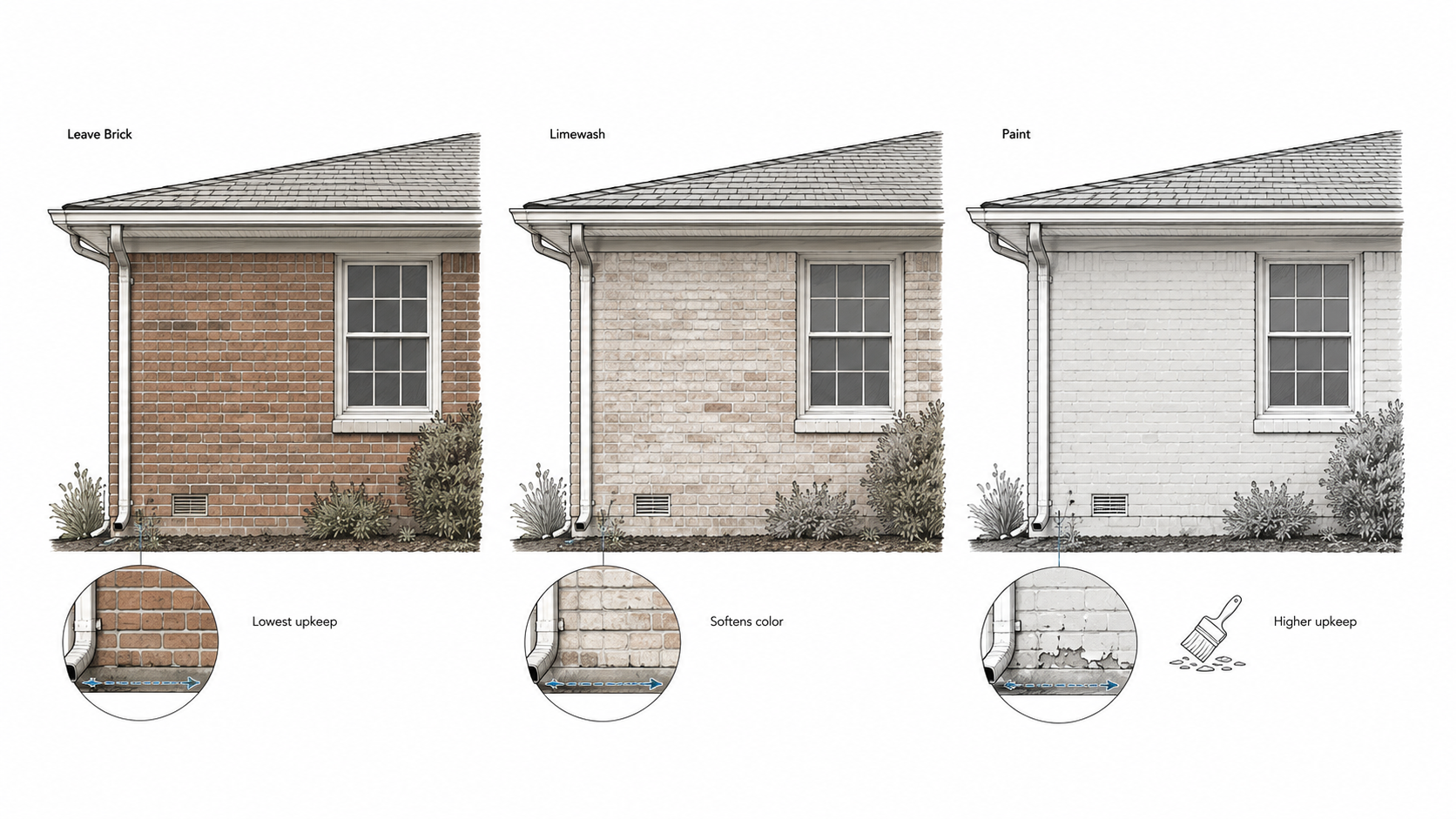
Illustration by ArchitectureCourses.org. Brick, limewash, and paint change more than color; they also change texture, upkeep, moisture behavior, and how the wall ages.
Leaving brick exposed is usually the lowest-maintenance path when the brick is sound and the surrounding details are the real problem.
Limewash can soften brick without flattening it as much as paint. It may keep more texture and can feel less harsh on older ranches. But it still changes the wall. It still needs prep. It still changes how stains, weathering, and future touch-ups read.
Paint gives the most dramatic change. It also creates the biggest long-term maintenance commitment. The wall becomes a coated surface. That coating now has to handle sun, rain, freeze-thaw cycles, sprinkler spray, dirty runoff, and whatever moisture is already moving through the brick.
That is the trade. Leave brick if the brick is doing its job. Use a wash if the color needs softening and the wall is sound. Paint only when the full exterior plan and wall condition can carry the decision.
Paint Is a One-Way Decision for a Long Time
Painting brick is not like changing a door color.
Once brick is painted, the house has a coating system. That coating has to deal with sun, freeze-thaw cycles, rain, sprinklers, dirty runoff, trapped moisture, and surface prep that may or may not have been done well. Bad paint can peel. Trapped moisture can push coating loose. Dark paint can heat up the wall. White paint can show every stain below a gutter, sill, or roof edge.
A painted brick ranch can look sharp when the brick is sound, the prep is right, the color is restrained, and the rest of the exterior is controlled. It can look cheap fast when paint is used to hide unresolved problems.
The hard part is that paint photographs well on day one. The real test is year three.
The Long-Term Cost of Painted Brick
Painting brick is not a one-time spend.
A painted brick ranch will need repainting. The timeline depends on climate, sun exposure, prep quality, and product choice, but 7 to 12 years is a realistic cycle in most US climates. Cold and wet regions push that shorter. Harsh sun does the same. A south-facing wall with poor drainage below it may start showing problems faster than that.
A full exterior repaint on a typical ranch — pressure washing, masonry prep, caulk replacement, primer, two coats — runs roughly $3,000 to $8,000 depending on size, condition, and local labor. That number climbs when mortar joints need repointing, when previous paint is peeling, when window trim has rotted, or when the original prep was thin and the new coat is fighting the old one.
Compare that against what fixing the actual problems costs. Trim replacement and repainting: $800 to $2,500. Garage door swap: $900 to $2,000 installed. Entry update with steps, light, and door surround: $1,500 to $4,000 depending on scope. Landscaping edit: a few hundred dollars and a weekend. Those are mostly one-time improvements. Repainting the brick is a recurring one.
Over twenty years, a painted brick ranch on a normal repaint cycle may carry $8,000 to $20,000 in coating maintenance depending on size and conditions. That is not an argument against painting — it is the number that should be in the decision before paint is chosen because trim, entry, and garage color were easier to explain.
Limewash and Whitewash Are Not Magic Fixes
Limewash gets used because it feels softer than paint.
That can be true. A breathable mineral finish may suit some brick better than a heavy film-forming paint, and it can let the wall keep more texture. But limewash still changes the house. It still needs prep. It still changes how the wall sheds water and how stains read. It still creates maintenance decisions later.
The mistake is treating limewash as a safe middle ground without checking the brick, mortar, moisture, and exposure. A wall with drainage problems, bad gutters, sprinkler staining, or soft mortar needs diagnosis first. A pretty finish does not fix bulk water.
If the brick is good but visually loud, a restrained wash may make sense. If the brick is failing, staining, or wet, the finish is the wrong first problem.
Moisture Problems Come Before Color
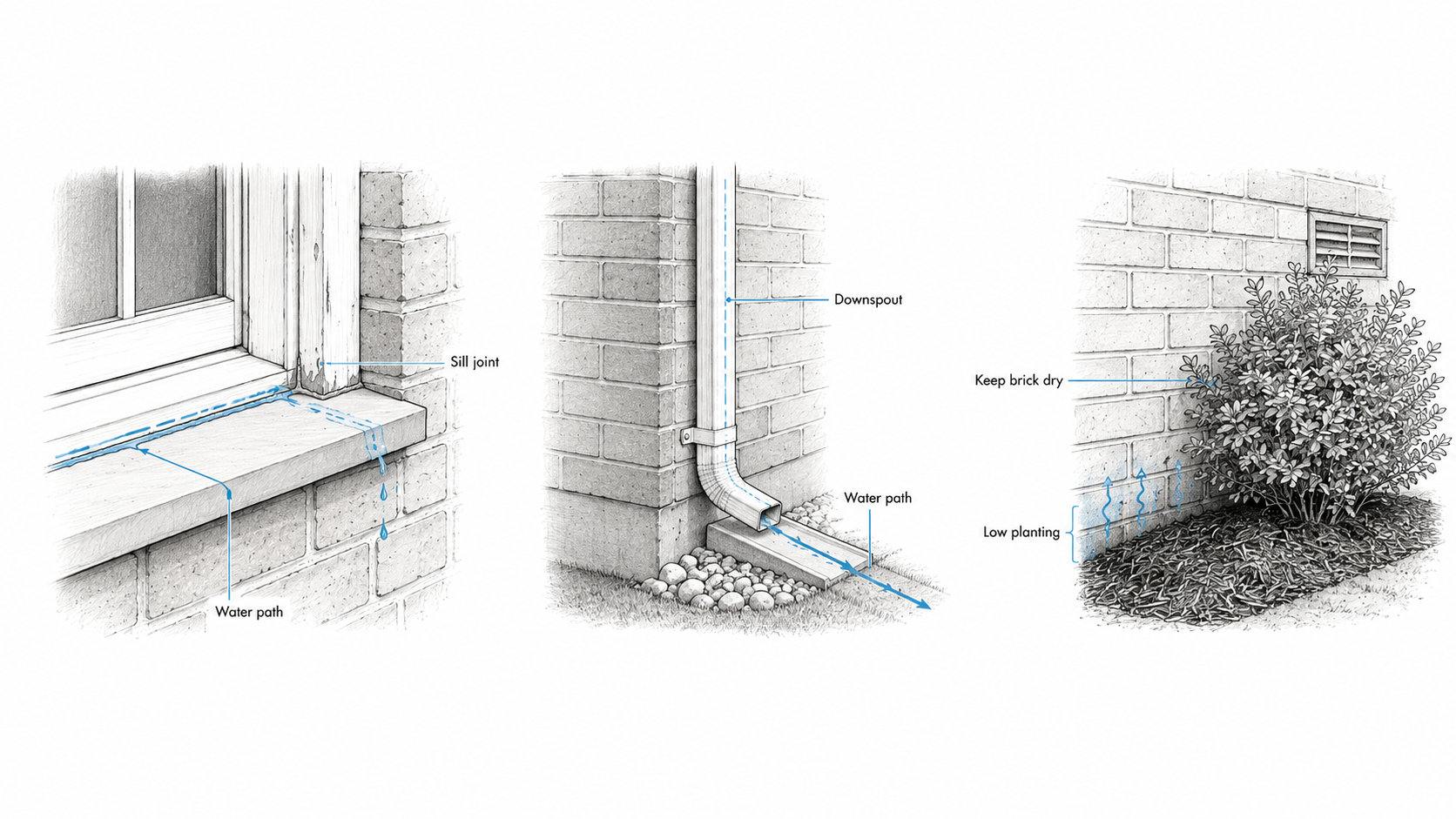
Illustration by ArchitectureCourses.org. Paint or limewash should wait until sill joints, downspouts, splashback, and planting height are checked.
Brick is durable, but it is not immune to bad water control.
Before painting, washing, or covering brick, check the source of staining. Look at gutters, downspouts, splashback from hard surfaces, grading, hose bib leaks, sprinkler spray, missing kick-out flashing, and roof runoff. If water is still hitting the wall badly, a new finish becomes the new surface that fails.
Paint over damp or poorly draining brick and the problem may come back as peeling, bubbling, staining, or trapped moisture. Cover the base with landscaping or mulch and the lower wall can stay wet. Let shrubs press against the brick and the wall loses airflow.
Fix the water first. Then decide whether the brick needs a finish.
Black Trim Can Outline Every Mistake
Black windows and black trim can work on a brick ranch.
They can also make the house look harder, busier, and less forgiving.
The problem is contrast. A dark frame around a clean, well-proportioned opening can sharpen the house. A dark frame around mismatched windows calls attention to every mismatch. One high window, one low window, one undersized bedroom window, one replacement slider in an old picture-window opening — black trim does not hide those problems. It draws a line around them.
This matters more on brick because openings are harder to change cleanly. A bad window decision in siding may be easier to patch. A bad window decision in brick leaves masonry cuts, trim work, awkward infill, or a permanent scar in the wall field.
For the window side of this issue, see ranch house window replacement.
Shutters Are Usually the First Thing to Question
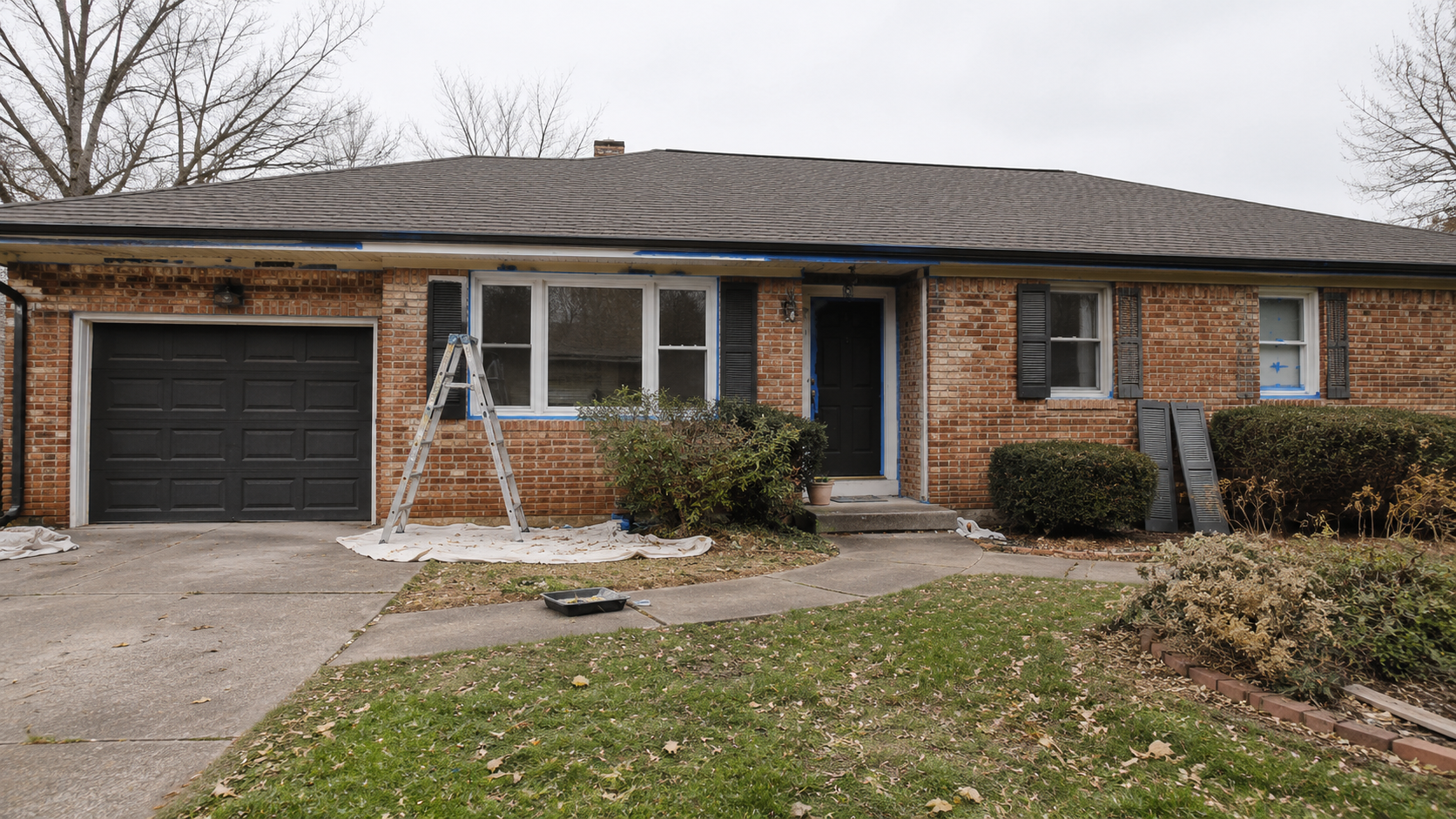
Image by ArchitectureCourses.org. Removed shutters and taped trim make the update feel like editing the exterior, not covering the brick.
Bad shutters make brick ranches look faker than old brick does.
The common problem is size. The shutters are too narrow to look like they could cover the window. They sit beside a large picture window where shutters never made sense. They get painted black because the house needs contrast, but now every opening has a decorative outline that does no work.
Remove one pair and look at the house before replacing them.
Some brick ranches look cleaner without shutters. Others need a different trim strategy, not a new shutter color. If a shutter cannot look plausible beside the window, it is decoration arguing with the wall.
Trim and Window Details Decide Whether It Looks Cheap
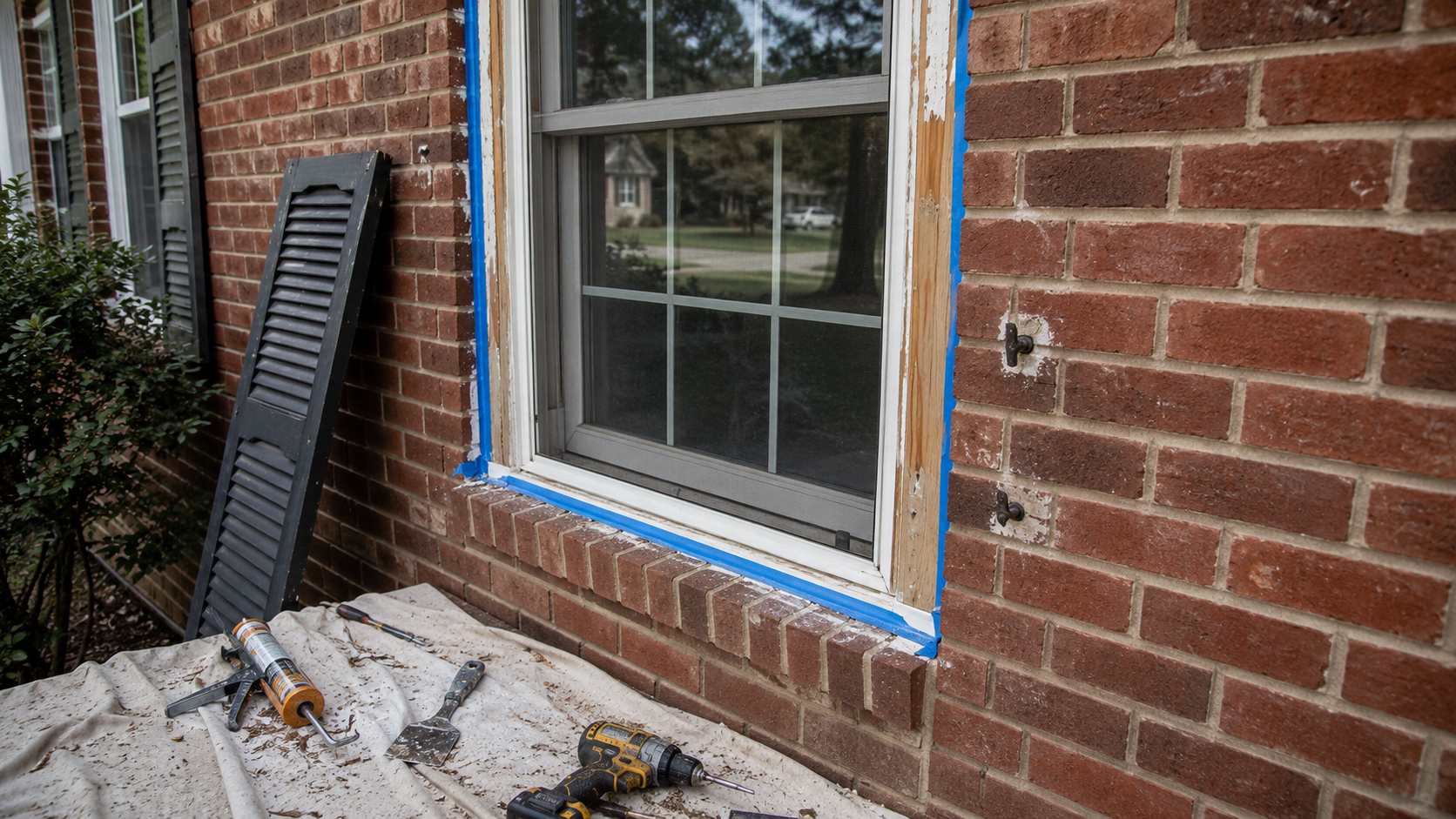
Image by ArchitectureCourses.org. Small trim, caulk, sill, and shutter details often decide whether a brick ranch update looks clean or cheap.
The trim around brick has very little patience for sloppy work.
Caulk lines get thick. Old shutter holes get ignored. Sills collect water. Replacement windows sit proud of the brick in a way that looks patched. Trim gets painted a bright white that makes every uneven joint louder. None of those problems is dramatic by itself. Together, they make the update feel cheap even when the materials were not.
This is where a restrained brick ranch update either holds or falls apart. The brick can stay. The trim can be simple. But the joints have to be clean, the sill needs to shed water, and the window has to look like it belongs in the opening.
The Garage Door May Be Louder Than the Brick
Brick gets blamed because it is old. The garage may be doing more damage.
A bright white garage door on a low brick ranch can become the largest and loudest object on the front. Decorative carriage hardware can make it even louder. Black paint can also be too much if the door becomes a heavy rectangle at the end of the facade.
Usually the safer move is to quiet the garage door so it sits with the brick instead of competing with it. That may mean a warmer neutral, a body-color approach, simpler panels, or less contrast.
If the garage is the first thing the eye sees, painting the brick will not fix the hierarchy.
The Entry Needs Clarity, Not a Fake New House
Brick ranch entries are often too quiet.
That does not mean the house needs a huge porch, tall gable, or farmhouse portico. Brick already gives the wall weight. Add an oversized entry roof and the front can get heavy fast.
A small canopy, better light, cleaned-up stoop, repaired steps, clearer path, and stronger door surround may be enough. The entry should help people find the door without making the low roofline feel weak beside a new front piece.
If a porch is being considered, read ranch house front porch ideas before adding mass to a brick front.
Stone Veneer Usually Makes the Problem Worse
A brick ranch rarely needs more masonry decoration.
Stone veneer gets added to make the house feel updated or expensive. Often it creates a second heavy material that fights the brick. A stone wainscot under brick can look especially confused: heavy material below heavy material, with no clear reason for the change.
There are cases where a stone base or entry surround works, but the material change has to explain something. A real grade change. A foundation expression. A porch base that belongs to the structure. If the stone is only there because the brick feels old, it is usually the wrong fix.
Money spent on fake weight is often better spent on drainage, trim, windows, the entry, and the garage door.
What the Brick Estimate Leaves Out
This is where a simple update starts changing shape.
A brick-painting estimate may include washing, masking, primer, and paint. It may not include mortar repair, failed caulk, old shutter-hole patching, rotten trim, bad downspouts, splashback, gutter staining, soft wood at the sill, or the reason one wall keeps getting wet. Those are not small details. They are the conditions that decide whether the finish holds.
Window and trim work can hide the same problem. A quote may cover the new trim color, not the masonry scars left by removed shutters. It may cover a replacement window, not the awkward brick opening around it. It may cover “prep,” but not the repair that prep exposes.
Ask what is included before the coating, trim, or window work starts. If moisture diagnosis, mortar repair, caulk replacement, shutter-hole repair, drainage, and trim rot are excluded, the low price may only cover the visible layer.
The Problem With Painting Brick Before You Sell
Fresh painted brick photographs well.
That does not mean it calms every buyer.
A buyer or inspector may ask what the coating is hiding: repaired cracks, moisture staining, soft mortar, mismatched brick, or old leaks below gutters and windows. Even when nothing is being hidden, a new coating creates a future maintenance question. When was it painted? What product was used? Was the brick dry? Were mortar joints repaired first? Is the warranty transferable? Who handles peeling around sills and downspouts?
If the plan is to sell soon, painting good brick only for a listing photo deserves a second look. Fixing trim, entry, garage color, landscaping, and drainage may improve the house without creating a coating question for the next owner.
What to Paint, Replace, and Leave Alone
| Move | Use It When | Watch For |
|---|---|---|
| Leave brick exposed | The brick is sound and the problem is trim, windows, entry, or landscaping | Do not ignore stained mortar, bad gutters, or cracked joints |
| Paint brick | The brick is sound, dry, properly prepped, and the full exterior is controlled | Peeling, trapped moisture, future repainting, stain visibility |
| Limewash | The brick needs softening but texture should remain visible | Uneven weathering, prep needs, wrong use over moisture problems |
| Replace shutters | The old shutters are plausible but damaged or badly colored | Installing fake-looking shutters beside windows they could never cover |
| Remove shutters | The windows look cleaner without decorative side pieces | Leaving the facade too blank without fixing trim or entry |
| Change garage door | The garage dominates the brick front | Choosing too much contrast and making it louder |
When Painting Brick Makes Sense
Painting brick can make sense.
The brick may be badly mismatched from past repairs. It may be stained beyond reasonable cleaning. The mortar may be repaired and stable, but the wall still looks patchy. The full exterior plan may depend on a quieter wall field, and the owner may accept the long-term maintenance.
In that case, paint should be part of a controlled exterior plan. Window trim, garage color, entry treatment, roof color, gutters, and landscaping all need to be chosen together. Painted brick with random black windows, a loud garage door, and oversized porch posts is still a confused exterior.
Paint is not the problem. Paint without discipline is the problem.
When Good Brick Should Stay Brick
Good brick is hard to get back once it is covered.
If the brick is sound, dry, and consistent enough to keep, I would hesitate before painting it. The better move may be to clean the mortar joints, repair damaged trim, remove fake shutters, quiet the garage, improve the entry, and cut back landscaping.
That kind of update may feel less dramatic during planning. It also tends to age better because it works with the house instead of flattening its strongest material.
Brick Ranch Updates Need a Whole-Front Plan
Do not make the brick decision by itself.
Mark the roofline, gutters, window heads, sill lines, garage door, entry, walkway, foundation planting, and downspouts. Then decide what is really hurting the house. If three small problems are making the brick look bad, fix those before coating the wall.
For the broader exterior sequence, see what to fix on a ranch house exterior, and what to leave alone.
Read Next
What to fix on a ranch house exterior, and what to leave alone. Start here if the brick is only one part of a larger front-elevation problem.
Ranch house window replacement. Useful before adding black windows, resizing openings, or changing trim around brick.
Ranch house front porch ideas. Important before adding porch mass, columns, or a new roof against a low brick ranch.
How to brighten a dark ranch house without opening every wall. Helpful if the brick update is part of a bigger daylight and rear-opening plan.