
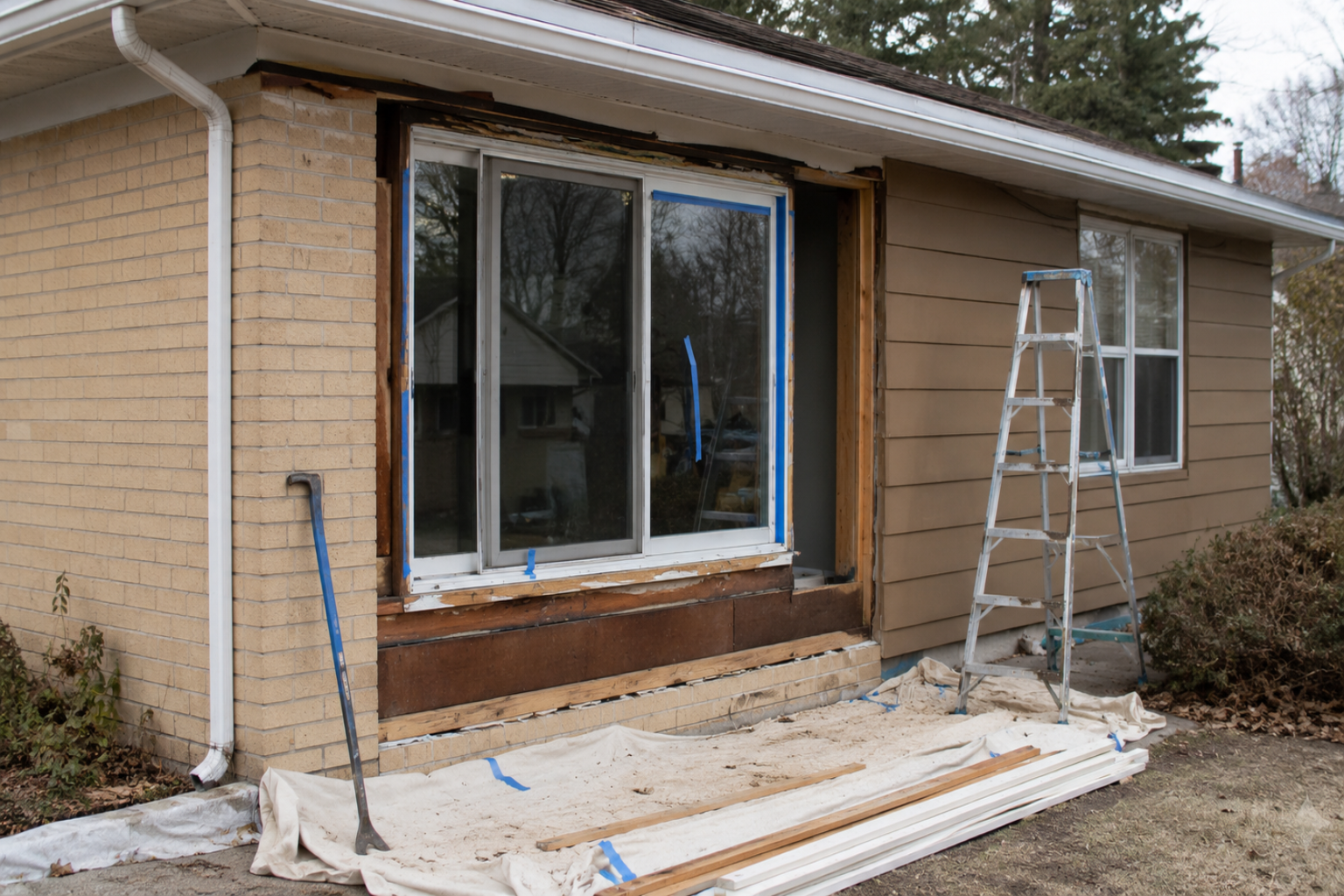

Ranch window replacements often go wrong because each window is chosen on its own. One sits higher, another gets smaller, and the front of the house stops lining up.
Check the whole wall before ordering. Each window also has to keep water out, fit the room, and meet bedroom egress rules.
Repair, Replacement, and Resizing Are Different Jobs
A lot of window projects go sideways because three different jobs get spoken about as if they are the same thing: repair fixes a failure, replacement changes the unit, and resizing changes the wall.
Those are not small differences. A repair might mean fixing trim, flashing, caulk failure, rot at the sill, or an air leak around the casing. A replacement might keep the opening exactly where it is but swap the unit. Resizing means cutting into the wall, changing structure, patching siding or brick, handling water differently, and checking whether the room still works from inside.
I would separate those before asking for prices. If the contractor, supplier, or homeowner cannot say which job is happening, the estimate is already too vague.
Do Not Replace One Window Without Looking at the Others
A single bad window replacement can make a ranch exterior feel off.
The house may still be sound. The new window may even be expensive. But if the head line changed, the sill dropped, the trim got thicker, or the grid pattern no longer matches the other openings, the eye catches it from the street.
I would start with the elevation, not the brand. Which windows line up? Which ones already look wrong? Which rooms need more daylight? Which openings are part of the original front rhythm and should probably be left alone?
Window replacement gets expensive when the house is handled in little pieces over several years. One window fails and gets replaced, then another, then a third. By the end, the house has three eras of products on the same wall and nobody understands why the front looks less calm than before.
Window Alignment Is Where Most Replacements Go Wrong
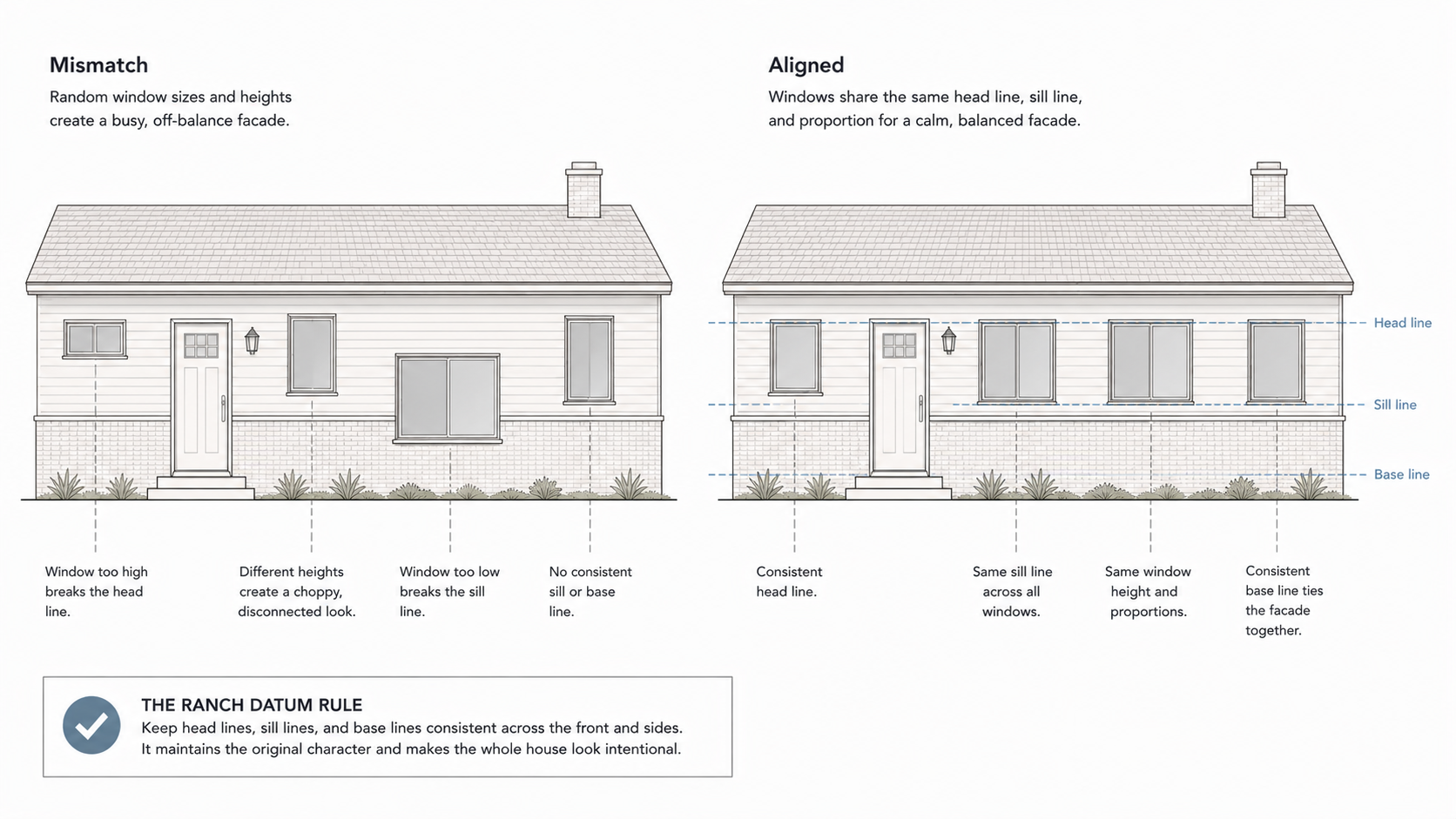
Ranch houses are long. That makes alignment harder to hide.
A two-story house can absorb more vertical variation because the elevation already has stacked parts. A ranch front does not have much vertical depth. The roofline runs low. The wall stretches sideways. The windows become the rhythm.
When one window moves up, one drops down, and one gets replaced with a different proportion, the facade starts to look chopped apart. The failure is not always obvious in the catalog. It shows up once the unit is installed and the trim line breaks.
Before ordering, check the head line, sill line, trim width, muntin pattern, and how the window relates to brick, siding, or a base band. The goal is not perfect symmetry; it is windows that look like they belong to the same house.
Bigger Windows Need More Than Bigger Glass
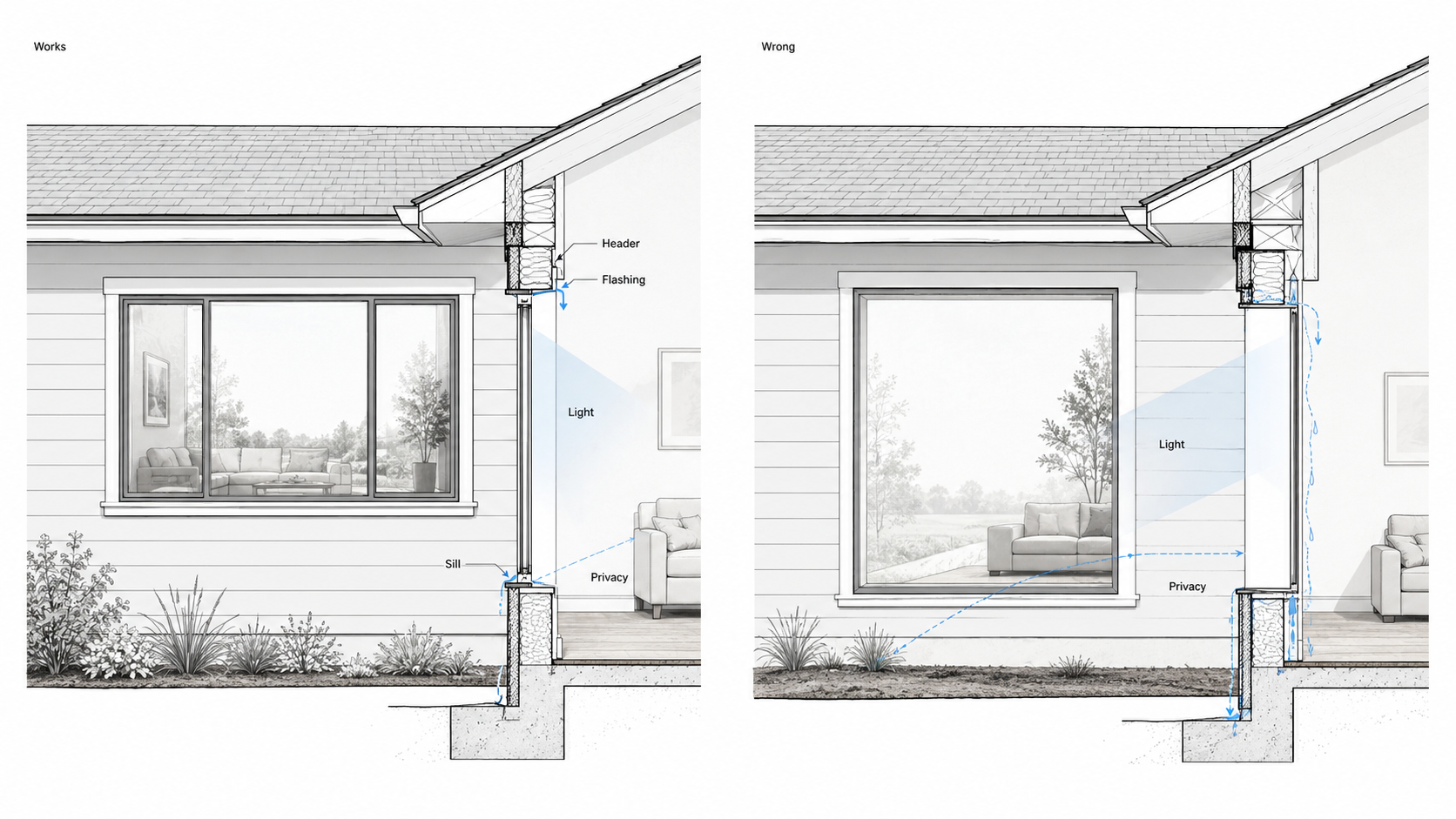
Adding a bigger window is one of the most tempting ranch remodel moves.
Sometimes it is the right move. Many older ranch houses are dark in the middle and stingy at the rear wall. A bigger kitchen, dining, or living room window can improve daylight, yard connection, and how the room feels all day. But a bigger opening is a wall decision, not a finish decision.
A larger window may need a new header. That changes load transfer above the opening. The exterior siding or brick may need to be cut and repaired cleanly. The sill has to drain. Flashing has to tie into the water-resistive barrier, not sit behind trim and hope. Inside, the new glass may create privacy problems, glare, furniture problems, or a room that overheats in the afternoon.
The cheap version is “make it bigger”; the better version asks what the wall, water, room, and street will do afterward.
The Trim Comes Off Before the Truth Shows Up
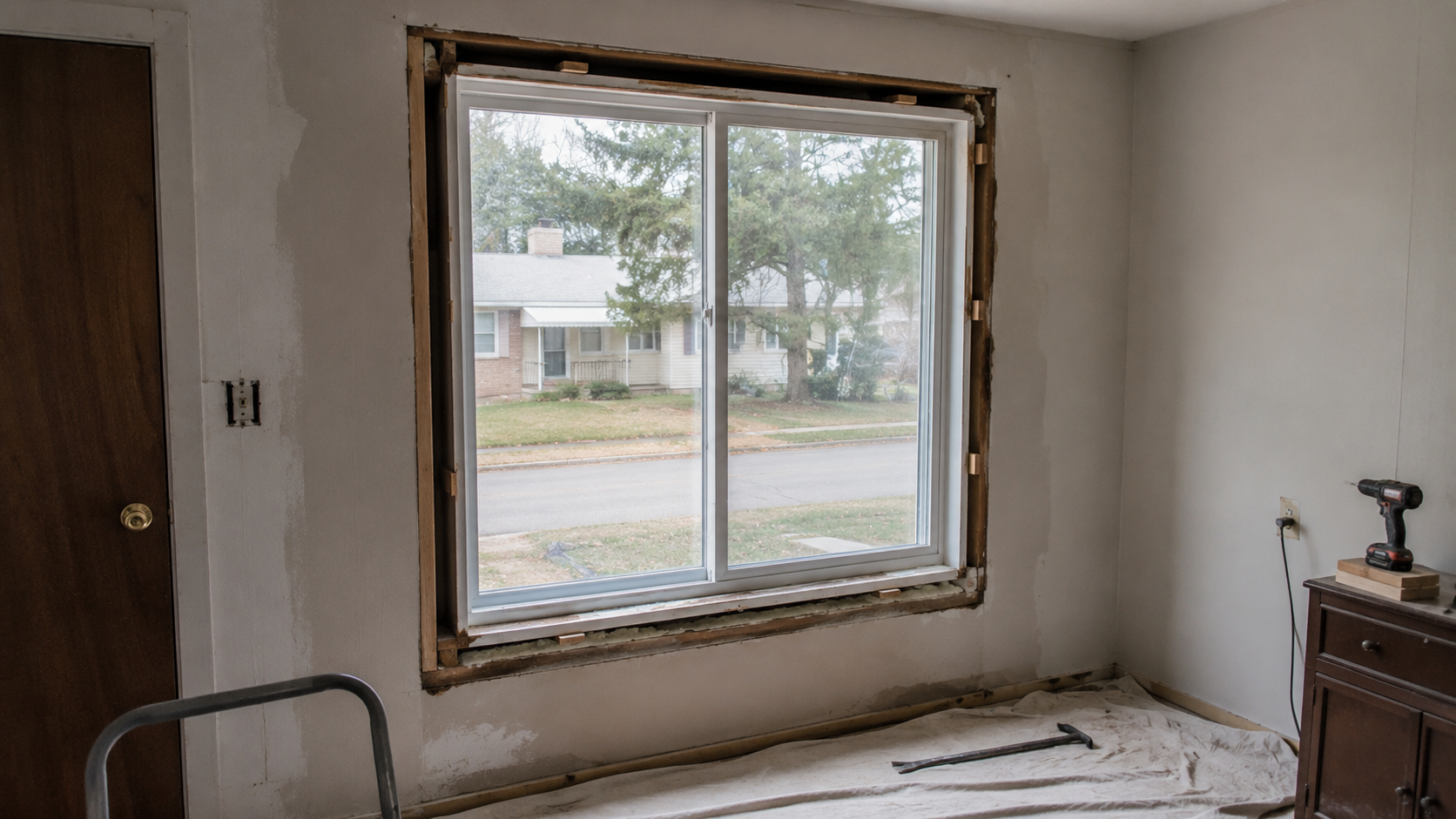
From the outside, a replacement window can look like a clean product swap.
Inside, the trim tells a different story. The rough opening may be out of square. The sill may show old water staining. The wall may have an air gap that was hidden for decades. Shims may be missing or crushed. Old plaster, paneling, or drywall may break farther than expected once the casing comes off.
That is where a simple window job turns into wall repair.
This does not mean every window replacement has to become a major renovation; it means the estimate should leave room for what the opening reveals. If a contractor prices only the unit and labor, then finds rot, bad framing, or failed flashing, the “cheap” window was never the full cost.
Leaks and Drafts Are Not Window Style Problems
A leaking ranch window is easy to misread.
The owner sees water at the sill and blames the window. Sometimes the unit itself has failed. Just as often the exterior trim is leaking, the flashing was never integrated, the siding or brick above the opening is sending water behind the trim, or high indoor humidity is condensing on cold glass and getting misread as a leak. Those are different failures with different repairs.
A replacement unit can solve a failed unit. It cannot solve roof runoff, bad flashing, missing sill pan logic, wet wall cavities, or indoor humidity by itself. If the diagnosis is wrong, the new window may look better for one season and then leak, stain, or grow mold at the same edge.
| Symptom | Check First | What Goes Wrong If You Guess |
|---|---|---|
| Water at sill | Exterior flashing, sill slope, trim joints, wall above | Repeat leak, rot, stained drywall |
| Cold draft | Air-sealing gap, shims, casing, wall insulation | Air leakage, condensation, wasted energy |
| Fogged glass | Insulated glass seal failure | Clouded view, poor performance, replacement cost |
| Peeling paint below window | Leak path or condensation source | Mold, soft trim, hidden wall damage |
| Sticking sash | Frame movement, bad install, settlement | Poor operation, air leaks, premature failure |
Bedroom Windows Carry Egress Consequences
Do not shrink bedroom windows casually.
A smaller unit may look cleaner from outside or cost less. It may also create a code and safety problem if the bedroom needs an emergency escape and rescue opening. That affects whether a person can get out, whether emergency access is possible, and whether the room still functions legally as a bedroom.
The International Residential Code sets the targets in section R310, and they are specific: a net clear opening of at least 5.7 square feet (5.0 square feet for grade-floor openings), a minimum clear height of 24 inches, a minimum clear width of 20 inches, and a sill no more than 44 inches above the floor. A window can meet the width and height minimums and still fail the net-clear-opening area, so check the manufacturer's published clear-opening numbers, not the glass size. Local amendments can tighten any of this.
One story does not mean the window no longer matters. If a room is being marketed, rented, finished, or reclassified as a bedroom, confirm the egress requirements before ordering the window. Guessing here can mean failed inspection, rework, and a finished room that cannot be counted the way the owner expected.
Privacy Can Get Worse When Light Gets Better
More glass is not automatically better.
A larger front window may brighten the room and make the facade look cleaner, but it may also expose the sofa, bed, bathroom, or hallway to the street. A bigger rear window may improve the yard connection, but it can glare into a kitchen, overheat a west-facing room, or make furniture placement harder.
This is why window size should be checked from both sides of the wall. Stand outside and look at the facade. Then stand inside and ask what the window does to the room. Does it bring light where the room needs it? Does it preserve wall space? Does it create a view, or only a bigger bright rectangle?
A window that looks good on the elevation can still make the room harder to live in.
Front Windows and Rear Windows Do Different Jobs
A ranch front usually needs order; the rear usually needs life. That is the split many remodels miss.
On the front elevation, window changes have to respect the long public face of the house. Alignment, trim, and proportion matter because the whole street reads the facade at once. At the rear, the priority may shift toward daylight, yard connection, and better flow from kitchen, dining, or living spaces.
Do not use the same rule everywhere. Keep the front calmer. Let the rear work harder if the plan needs more light.
For the interior side of this problem, see how to brighten a dark ranch house without opening every wall.
What the Estimate Should Say
A vague estimate moves the risk of hidden wall repairs to the homeowner.
A window estimate has to say more than how many units are being installed. It should state what happens if trim comes off and the opening is rotten, who repairs siding, brick, drywall, casing, sill damage, and interior paint, whether air sealing is included, and how flashing gets tied into the existing wall system — and by whom.
Vague estimates are how window projects become finger-pointing projects. The unit manufacturer may blame installation. The installer may blame old siding. The siding repair may be excluded. The homeowner thinks “window replacement” meant the whole opening would perform. The contract may say something much smaller.
Before signing, ask what is included if the opening has rot, bad framing, missing insulation, failed flashing, or water damage. Ask what happens if a bedroom window needs egress compliance. Ask whether permits or inspections apply. The answer may change the price. Better to find that out before the wall is open.
What to Replace, Resize, and Leave Alone
| Window Move | Use It When | Watch For |
|---|---|---|
| Same-size replacement | The original opening works and the unit has failed | Match head line, sill line, trim width, and style |
| Larger rear window | The room needs daylight or yard connection | Header, flashing, glare, privacy, furniture layout |
| Smaller front window | Rarely; only when proportion and room use still work | Egress, facade balance, lost daylight |
| Picture window replacement | The old unit leaks, fogs, or performs poorly | Do not lose the original ranch proportion |
| New bedroom window | A bedroom needs safety, light, or code compliance | Egress size, sill height, operation, inspection |
Where the Money Goes Wrong
Window budgets go wrong when the unit price becomes the whole conversation.
The window itself matters, but the surrounding work decides whether the replacement performs. Flashing, air sealing, trim repair, wall repair, sill condition, rot repair, and siding or brick patching can all cost money. Ignore those and the project looks cheaper than it is.
The other expensive habit is replacing windows in a scattered sequence with no plan for the front elevation. One room gets a slider. Another gets double-hungs. The picture window becomes a different proportion. Five years later the owner wants the house to look more intentional, and now the cheapest window work has to be corrected with more window work.
A matched plan usually costs less than fixing a mixed-up facade later. The honest problem is that most owners cannot fund the matched plan in one season. If the windows have to go in one at a time, at least order every unit against a single written elevation plan, so year three matches year one. That is a compromise, not a solution, and there is no version of this that gets the full-plan result on a piecemeal budget.
Black Windows Can Make a Ranch Worse
Black windows are not the problem; automatic black windows are.
On some ranch houses, a darker frame can sharpen the openings and make the facade feel more current. On others, black frames turn every window into a separate dark rectangle and break the calm horizontal reading. If the trim, roofline, siding, brick, and garage door are not being handled with the same discipline, black windows can make the house look busier, not cleaner.
This is especially risky on lighter brick ranches and small ranch fronts with several mismatched window sizes. The black frame does not hide the mismatch; it outlines it.
For the broader exterior logic, see what to fix on a ranch house exterior, and what to leave alone.
Kitchen and Living Room Windows Usually Matter Most
Not every window has the same impact.
Kitchen, dining, and living room windows usually do the most work in a ranch remodel because they affect daylight, yard connection, and the main public rooms. A better rear kitchen window can change how the room feels more than a new front bedroom window. A properly sized living room window can keep the ranch character while improving comfort.
But bigger is still not the default answer. A kitchen window has to work with cabinets, backsplash height, sink position, exterior trim, and the wall above it. A living room window has to work with furniture, privacy, glare, and the front elevation.
If the kitchen is being remodeled at the same time, coordinate the window before cabinets lock the wall in place. See ranch house kitchen layout problems and better fixes before treating the window as a separate purchase.
What to Leave Alone
Leave a ranch window alone when it still does its job and helps the house read correctly.
That may mean keeping an original picture-window rhythm. It may mean replacing the unit but keeping the opening size. It may mean leaving a small front bedroom window alone because enlarging it would break the facade and create privacy problems. It may mean putting the money into air sealing, flashing, or a rear opening instead of chasing a front elevation change that does not solve much.
The best window decision is not always the most visible one.
Plan the Window Work Before Ordering Units
Before ordering, mark every window on the front and rear elevations. Note which ones leak, fog, draft, stick, feel too small, affect egress, or hurt the facade. Then sort each opening into one of the three jobs — repair, replacement, or resizing — and price them as what they are.
When those three get treated as the same project, money disappears fast.
Read Next
What to fix on a ranch house exterior, and what to leave alone. Use this before changing front windows, trim, siding, or garage balance.
How to brighten a dark ranch house without opening every wall. Helpful if the window work is a daylight problem in disguise.
Ranch house kitchen layout problems and better fixes. Important when kitchen windows, cabinets, and rear openings are being planned together.
Open floor plan ranch house. Useful if window changes are tied to wall openings, light, and flow.