
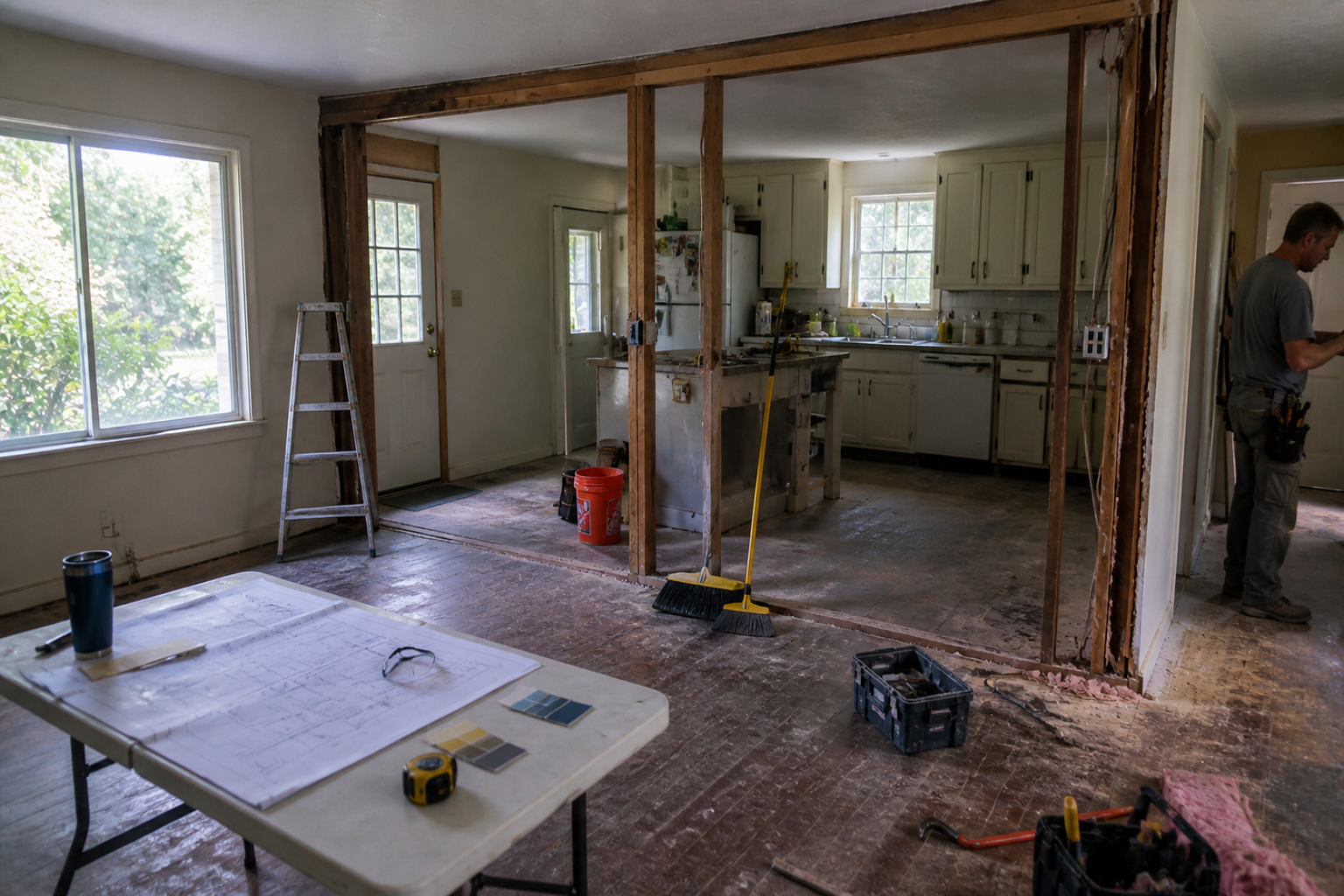

Most ranch houses are not too small.
They just feel small because the middle is dark.
People try to fix it by opening everything. That usually makes it worse.
The fix is not “more open.” It is better light paths and better layout decisions.
Why Ranch Houses Go Dark
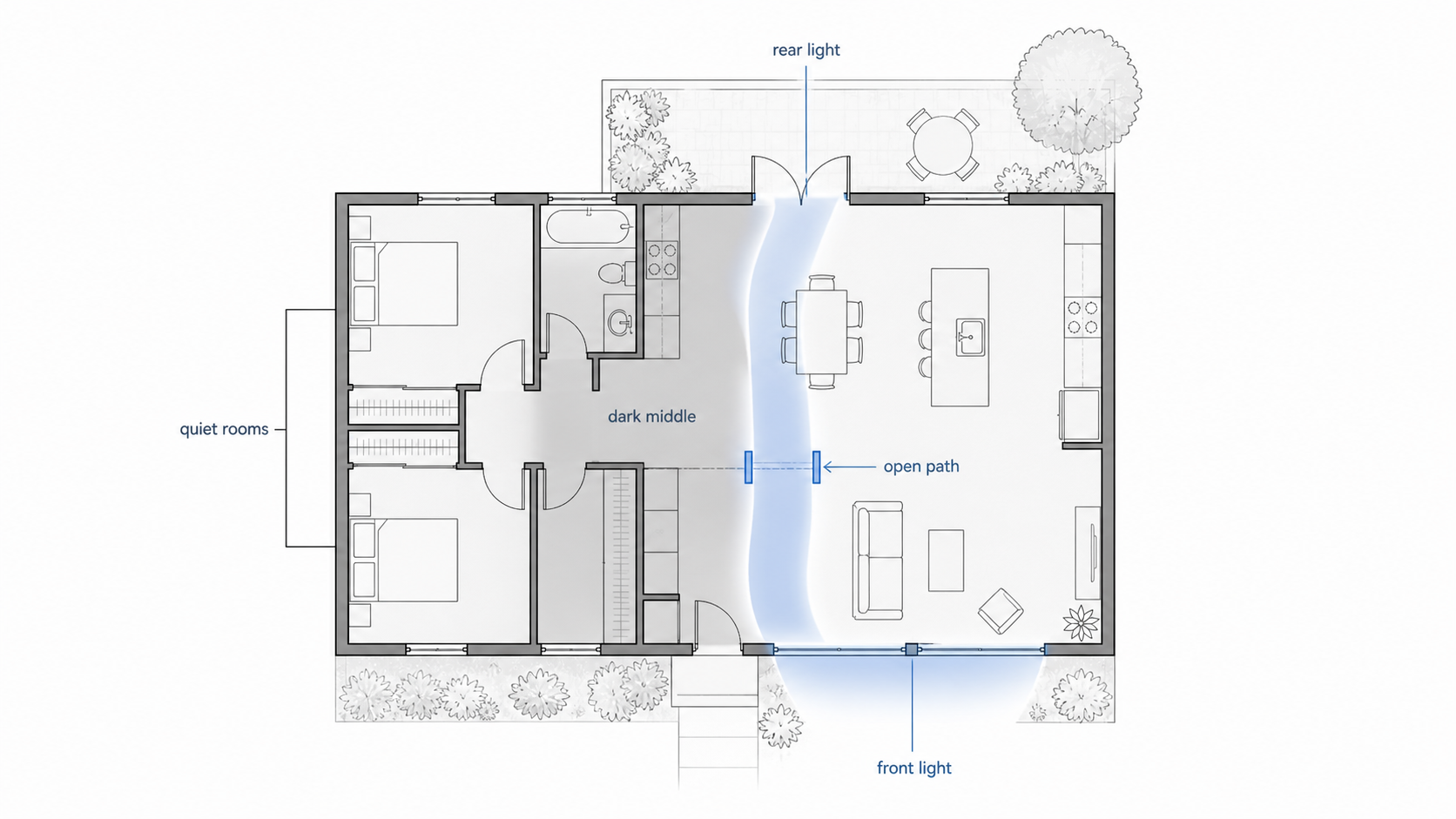
Illustration by ArchitectureCourses.org. A typical ranch gets light from the front and back, leaving the middle dim unless the layout allows light to travel through.
Most ranch plans pull light from two edges: the front yard and the backyard.
The problem sits in the middle. Long hallways, small kitchens, and interior walls stop that light before it reaches the center of the house.
This is why:
- the living room feels fine
- but the kitchen always feels flat
- and the hallway feels like a tunnel
Paint does not fix this. Neither do brighter bulbs. It is a layout issue first.
The One Fix That Actually Works
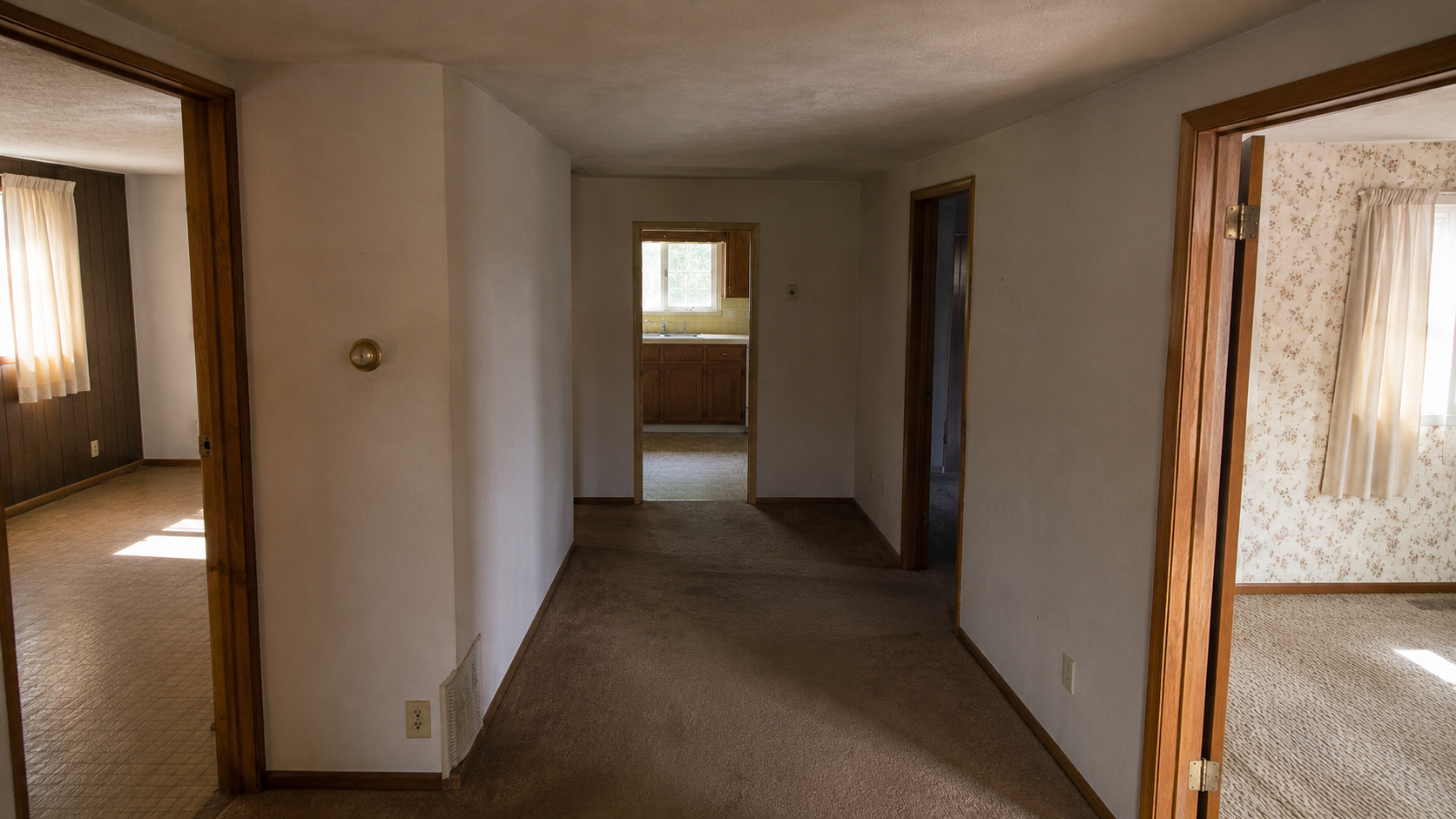
Image by ArchitectureCourses.org. Many older ranch houses feel smaller than they are because the middle of the plan is dark, chopped up, and disconnected from the brighter rooms at the edges.
If you only make one change, fix the connection between:
- kitchen
- main living space
- backyard
This is not about style. It is about how the house works.
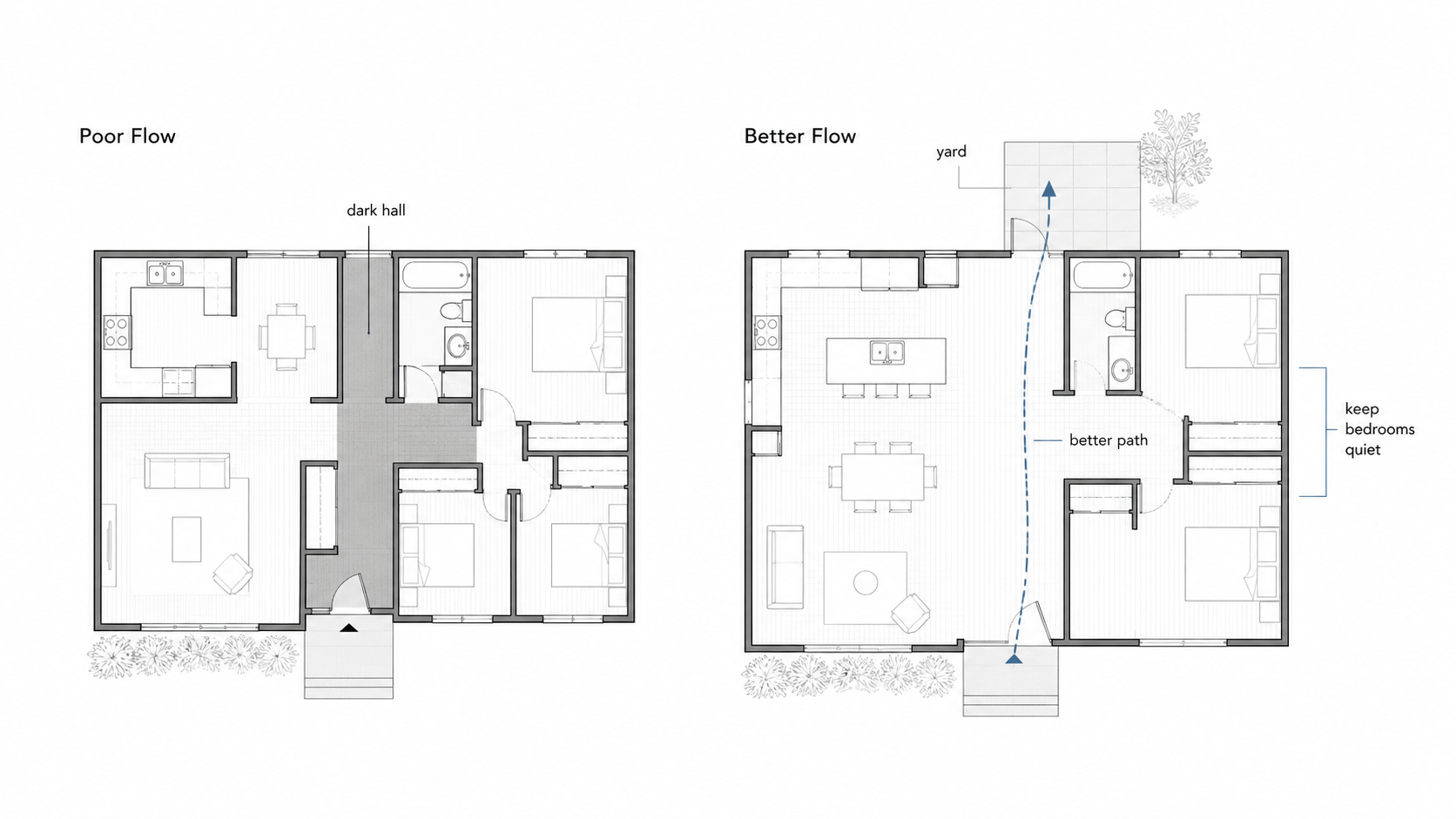
Illustration by ArchitectureCourses.org. A better ranch layout connects kitchen, dining, and living areas toward the yard so light and movement work together instead of stopping at each room.
When this connection improves:
- light travels deeper into the plan
- the house feels wider without adding space
- movement becomes simpler and more natural
If this stays broken, even a full remodel will still feel off.
Stop Opening Every Wall
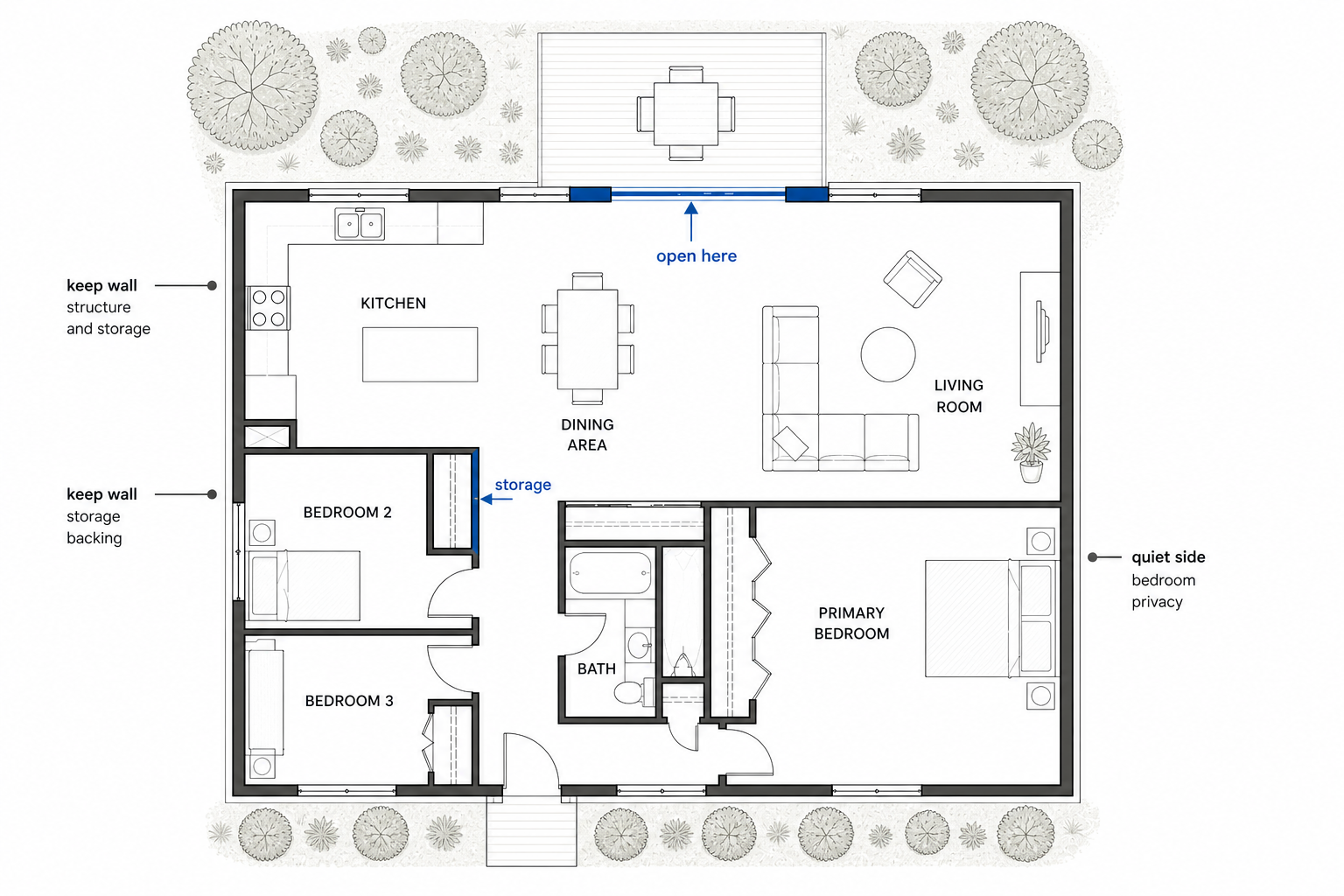
Illustration by ArchitectureCourses.org. Removing one wall can improve light and flow, but keeping key walls protects storage, structure, and privacy.
This is where most ranch remodels go wrong.
People remove everything and end up with:
- no storage
- no furniture logic
- too much noise between spaces
- bedrooms that feel exposed
Some walls are doing real work:
- holding closets and cabinets
- defining where furniture can go
- separating quiet rooms from active spaces
- carrying loads above
The better move is controlled:
- open one wall that improves light
- keep the walls that give the house structure and use
Before removing anything structural, check load-bearing vs non-load-bearing walls.
Add Light Without Breaking the House
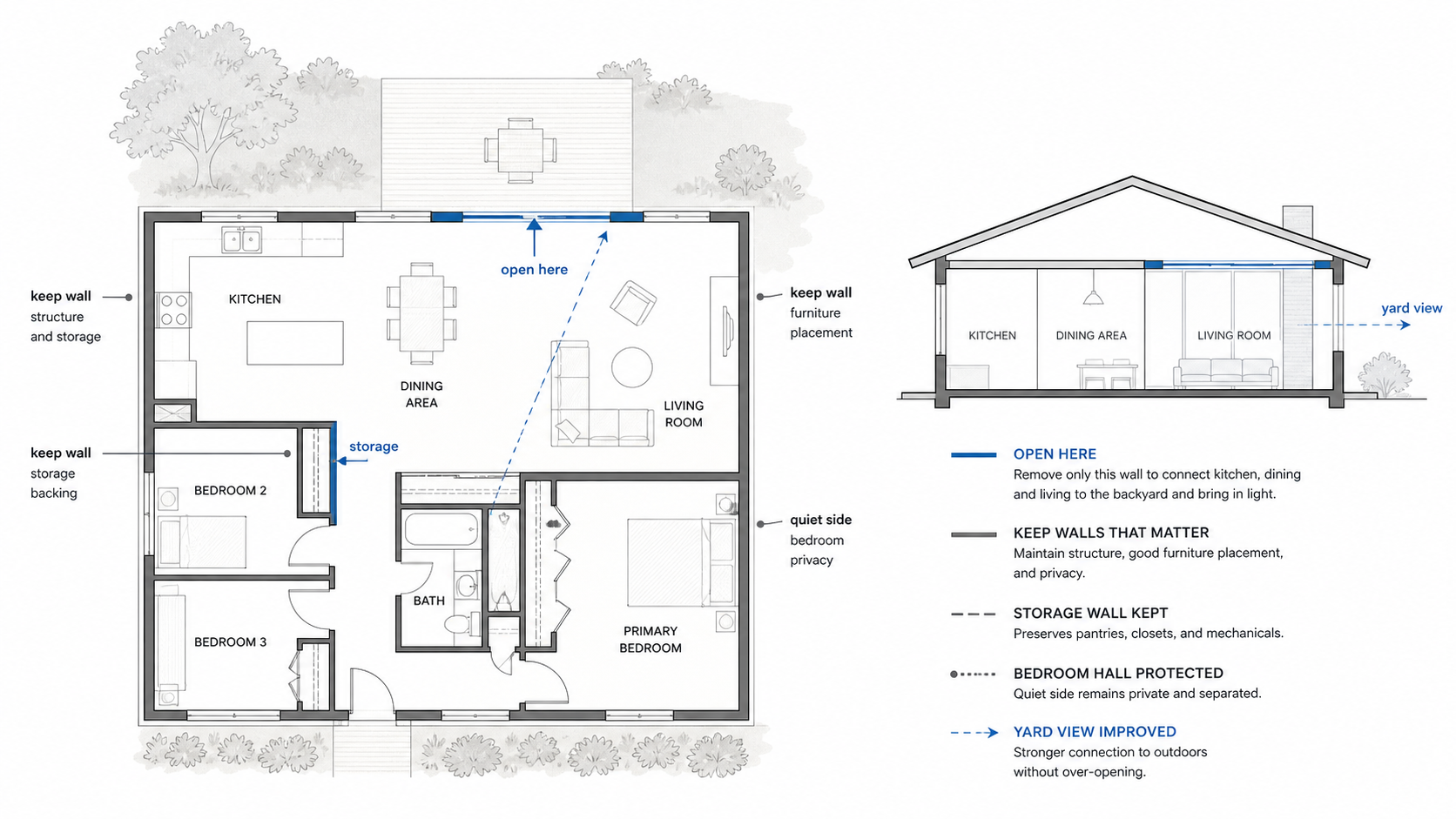
Illustration by ArchitectureCourses.org. A small opening placed well can pull light through the plan without turning the entire house into one open room.
You do not need a full open plan to fix a dark ranch.
These moves usually work better:
- a wider opening between kitchen and living
- a larger rear door or window
- lining up openings so light can pass through
- removing only the section of wall that blocks the path
Then layer light properly:
- ceiling lighting for overall brightness
- under-cabinet lighting in kitchens
- wall lighting to soften dark edges
This is where many remodels improve more from lighting strategy than demolition.
Windows, Ceilings, and Small Moves That Matter
You do not always need structural changes.
These smaller moves often do more than expected:
- replace small rear windows with larger openings
- lower window sills slightly to bring in more light
- remove heavy soffits in kitchens
- carry flooring continuously to reflect light
- use lighter wall tones only where needed
If ceilings are low, do not try to fake height with random beams or drops. Keep them clean. A quiet ceiling reflects light better than a busy one.
When You Actually Need an Addition
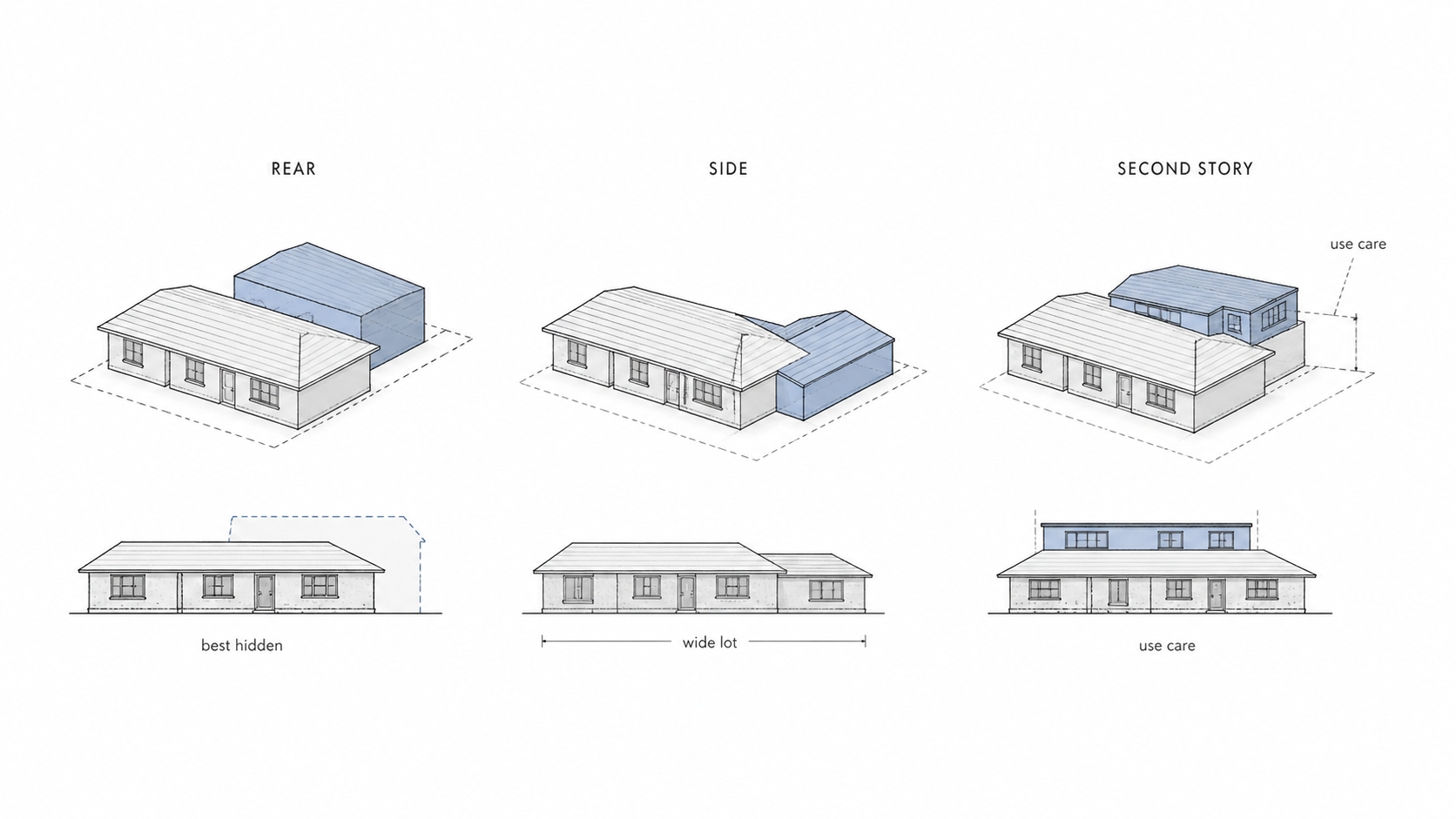
Illustration by ArchitectureCourses.org. Rear and side additions usually improve space and light without damaging the original low ranch form.
Sometimes the layout is too tight to fix with openings alone.
That is when an addition makes sense.
| Option | When it works | Main risk |
|---|---|---|
| Rear addition | Need more living space and light | middle can get darker if done wrong |
| Side addition | Wide lot, flexible layout | house can feel stretched |
| Second story | tight lot, no room to expand | house becomes heavy and loses character |
If you go this route, see modern addition to a ranch house.
Common Mistakes That Keep the House Dark
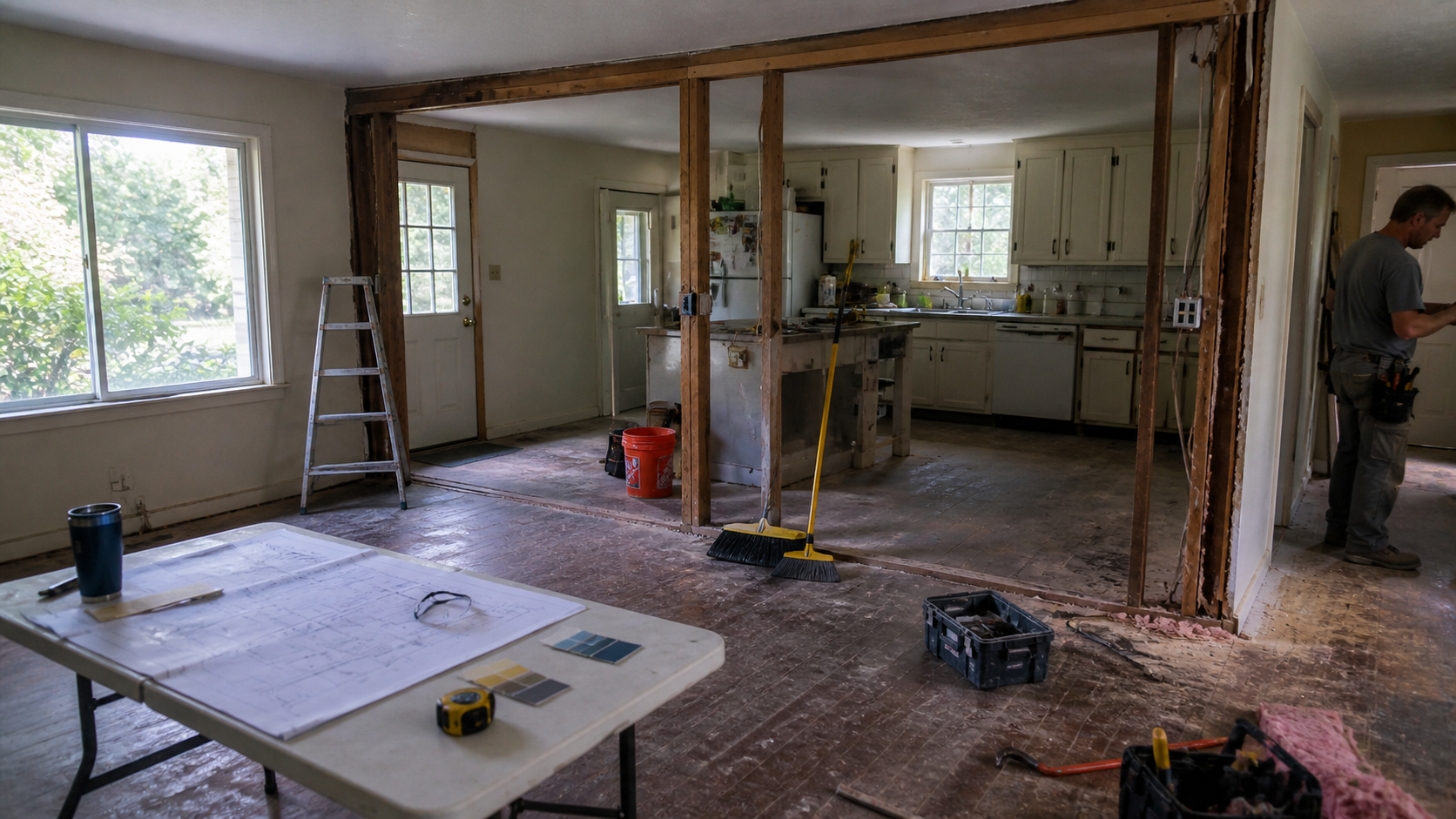
These are the ones that show up again and again:
- opening everything instead of fixing the layout
- leaving the kitchen disconnected
- adding space without improving flow
- focusing on finishes instead of light
- blocking the yard connection
- keeping small, poorly placed windows
From your existing remodel logic:
If the project tries to make the house look expensive before it makes it work better, it usually fails.
Quick Checklist Before You Change Anything
- Does light reach the middle of the house?
- Is the kitchen connected to the main space?
- Can light move from front to back?
- Did you keep useful walls?
- Did you improve movement, not just looks?
What’s Next
If you are planning a full remodel, go deeper here:
- 1950s ranch home remodel guide
- modern addition to a ranch house
- home exterior design
- asbestos in 1950s houses
The best ranch remodels do not try to make the house louder.
They fix the dark middle, improve the layout, and make the house easier to live in.