
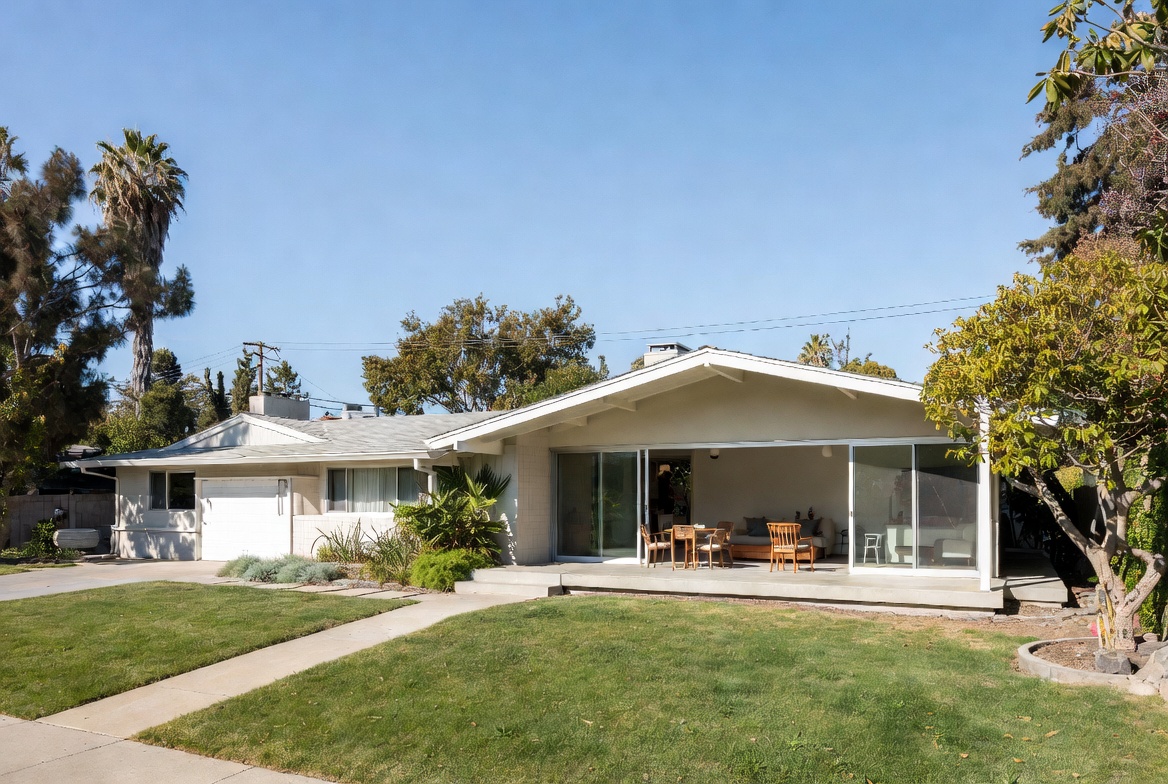
Ranch houses can take an addition well. They can also look ruined by one.
The reason is simple. Most ranch houses rely on proportion more than detail. They are low, long, and quiet. Once the addition gets too tall, too busy, or too eager to prove itself, the whole house starts to feel stitched together.
A good modern addition does not need to copy the old house board for board. It does need to understand what made the original house work. Usually that means keeping the main shape readable, putting new square footage where the house can absorb it, and fixing the weak parts of the plan instead of only adding more area.
Start at the Back If You Can
For most ranch houses, the rear is still the cleanest place to add space.
It lets the front keep its original scale. It also avoids the most common mistake in these projects, which is putting too much visual weight on the street side and turning a calm one-story house into something top-heavy.
A rear addition is especially strong when the kitchen, dining, or main living zone already wants a better connection to the yard. That is where a more modern language usually makes the most sense too. Larger openings, cleaner trim, quieter cladding shifts, and a simpler roof can work there without making the old house look fake or confused.
If that rear edge is supposed to do more than just hold a bigger room, it helps to think about outdoor connection early. Designing indoor-outdoor living spaces is useful here for the basic relationship between interior layout, glazing, and the yard.
The Moves That Usually Work
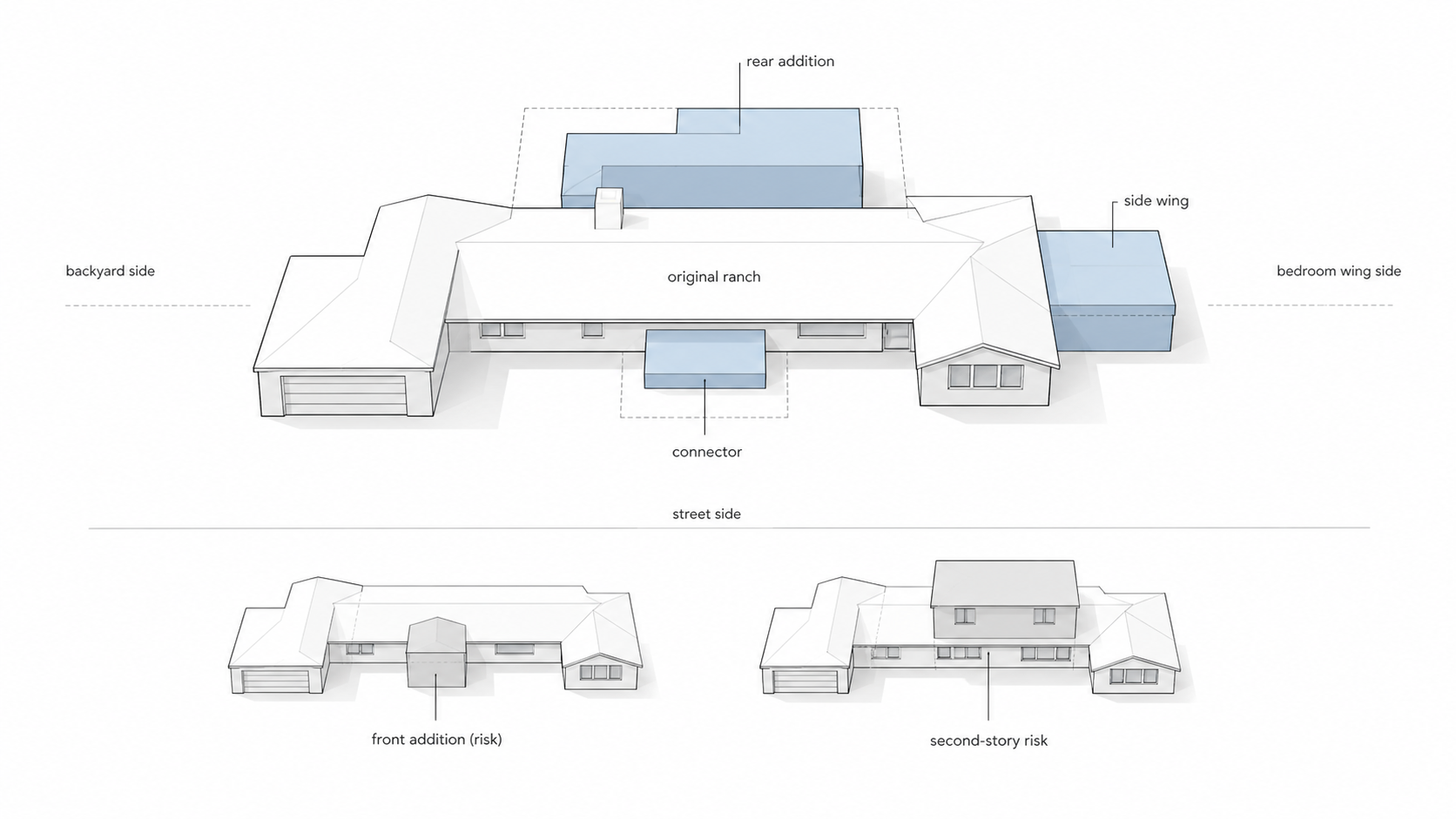
Illustration by ArchitectureCourses.org. Rear, side, and connector additions usually protect the long, low ranch form better than front additions or partial second stories.
| Addition move | Best when | Why it works on a ranch | Main risk |
|---|---|---|---|
| Rear addition | You need more living space without changing the street view too much | Keeps the original front mass simple and lets the house stay low and long | The middle of the plan can get darker if glazing and circulation are handled badly |
| Side wing addition | The lot is wide and setbacks allow it | Fits the ranch profile and can create a clean L-shaped plan | Can make the house feel stretched and flat if the wing has no hierarchy |
| Connector or hyphen volume | You want a clear old-versus-new break | Makes the addition look intentional instead of pretending it was always there | Looks fussy if the connector is too skinny or over-detailed |
| Front-entry and porch rebuild | The house already feels weak from the street | Improves arrival without turning the whole project into a front-heavy bulk problem | Easy to overbuild and lose the quiet scale of the original house |
| Partial second story | The site is tight and one-story expansion will not solve the program | Adds space without sprawling across the lot | This is where ranch projects start looking top-heavy |
Side Additions Can Work Better Than People Expect
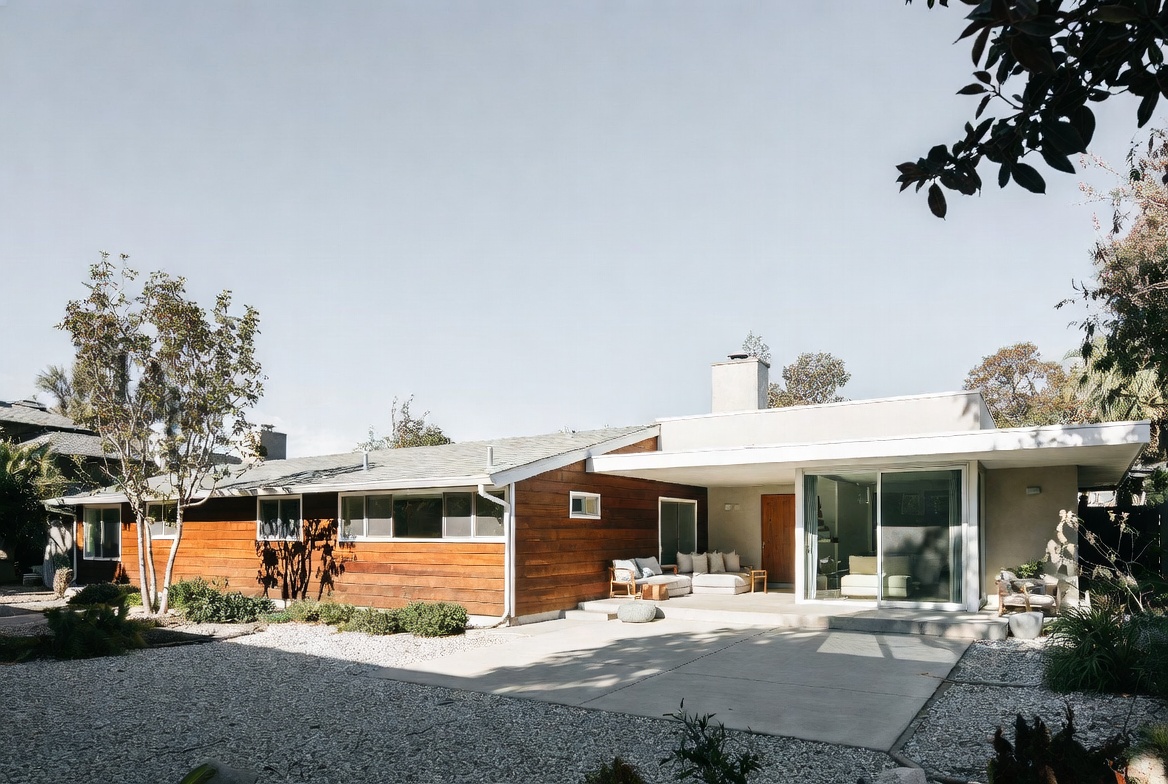
Image by ArchitectureCourses.org. A ranch addition can read newer, but it still needs to stay low enough and calm enough for the original house to remain the main reading.
Not every ranch should grow backward.
On a wide lot, a side addition can be the better move, especially if one end of the house already feels unresolved or if the garage side is doing very little for the plan. This is where some of the better ranch addition ideas come from. A side wing can create an L-shape, define an outdoor space, and give the house a clearer edge.
But it has to read as secondary. That is the part people miss. The original bar of the ranch still needs to feel like the main piece. If the side wing is too tall, too long, or too decorated, it stops being an addition and starts looking like the house lost an argument with itself.
Pick the Cut Line Before You Pick the Style
This is where a lot of ranch additions go wrong.
People spend weeks looking at siding, windows, and roof shapes before they decide which part of the original house they are willing to cut open. That decision matters more. The connection point between the old house and the new work will decide how the plan feels every day. It also decides how much of the original house gets damaged, rebuilt, or compromised in the process.
I would decide that first.
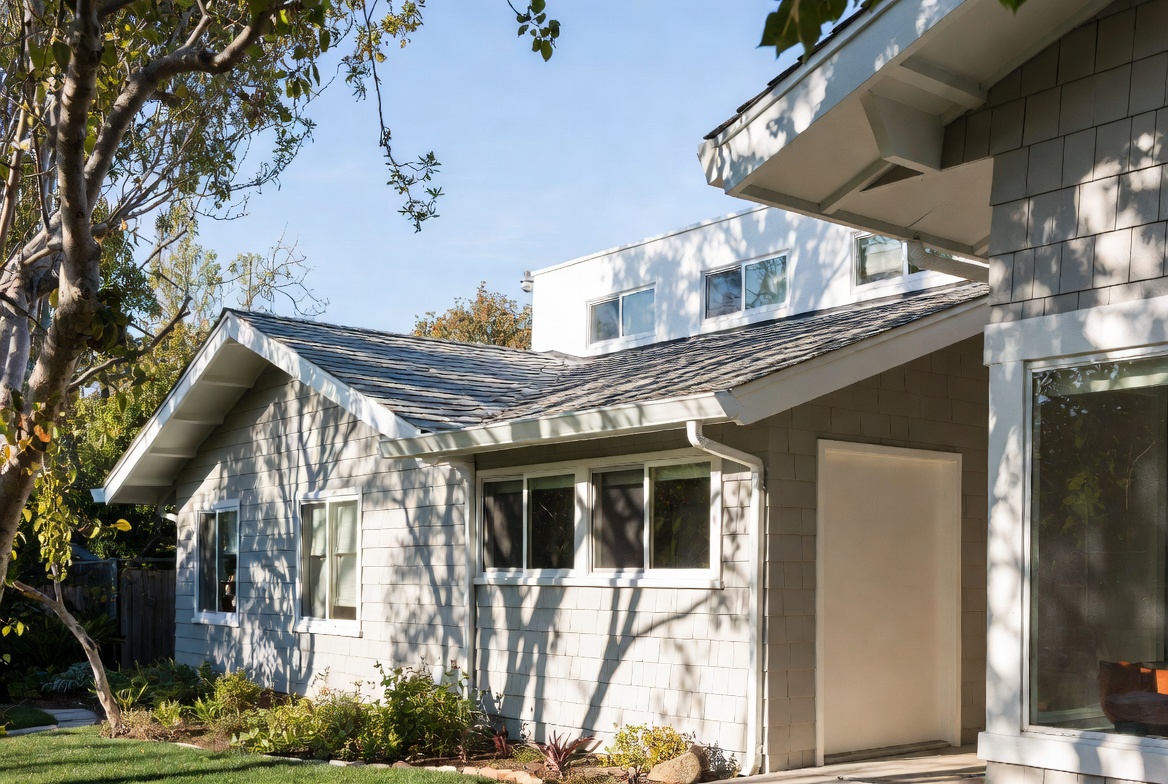
Image by ArchitectureCourses.org. On ranch additions, the transition between the old roof and the new volume usually matters more than decorative moves. A clean junction keeps the addition from looking pasted on.
If the addition ties into the kitchen and living area cleanly, that usually works. If it forces circulation through a narrow hall, cuts across the best room in the house, or turns a simple structure into a messy steel-and-header exercise, the concept is already weaker than it looks on paper.
A ranch addition should not just add area. It should land on a part of the house that already wants help.
| Where the addition lands | Usually works best when | Main advantage | Main risk |
|---|---|---|---|
| Rear | The goal is bigger living space, a better kitchen, or a new primary suite | Keeps the street view calmer | The middle of the house can get darker |
| Garage side | The garage side is weak and the lot is wide enough | Can solve layout and curb appeal at the same time | Easy to over-stretch the house |
| Bedroom wing side | You need another bedroom zone or a better suite layout | Keeps public and private space more organized | Can make the sleeping wing feel too long and dead |
| Front | The entry is genuinely poor and the house has no clear arrival | Can fix a weak facade | This is where ranch proportions get wrecked fastest |
| Partial second story | The lot is tight and building out will not solve the program | Adds area without more footprint | Often makes the house look heavy and wrong |
If the addition requires tearing through the center of the best room, relocating every utility, or forcing circulation through a narrow hall that already struggles, the cut line is probably wrong. That does not mean the idea is impossible. It means the connection point is working against the house.
Do Not Match It Too Hard
A fake match is usually worse than a calm contrast.
The roof pitch, eave depth, window alignment, and overall scale need to relate. That part is real. But the materials do not need to be copied exactly, and in many cases they should not be. Ranch houses can take a modern addition very well when the new work is clearly newer but still disciplined.
That is where a quieter old-and-new strategy helps. Blending old and new architecture is a better model than trying to make the addition pretend it was always there.
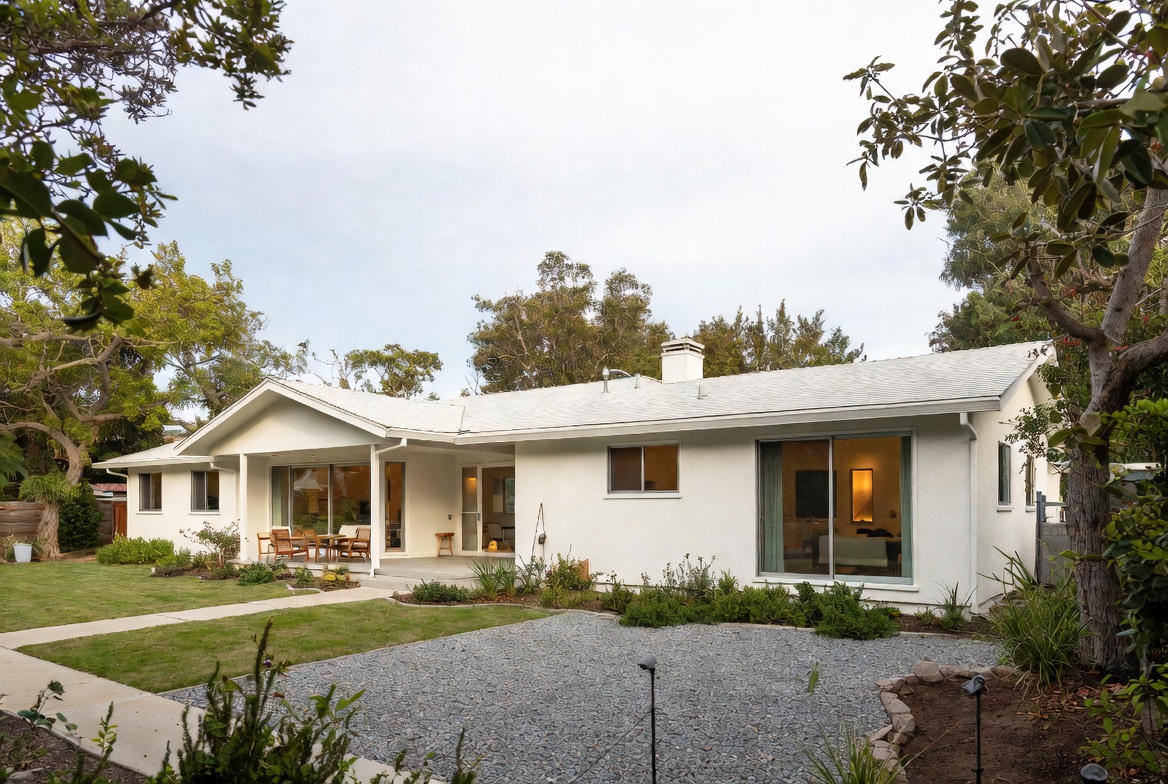
Image by ArchitectureCourses.org. Some of the best ranch additions do not dominate the house. They just add better space, better light, and a cleaner plan.
Brick to smooth siding. Painted siding to quiet wood accents. A cleaner window system at the addition. Less trim, not more. Those moves can work.
What does not work is panic design. Black windows, white painted brick, fake timber, stone veneer, a new porch, three roof jumps, and a decorative gable all in one project. That is not a modern ranch addition. That is a pile of decisions that were never brought back under control.
Rooflines First
If a ranch addition looks wrong from the street, the roof is usually the reason.
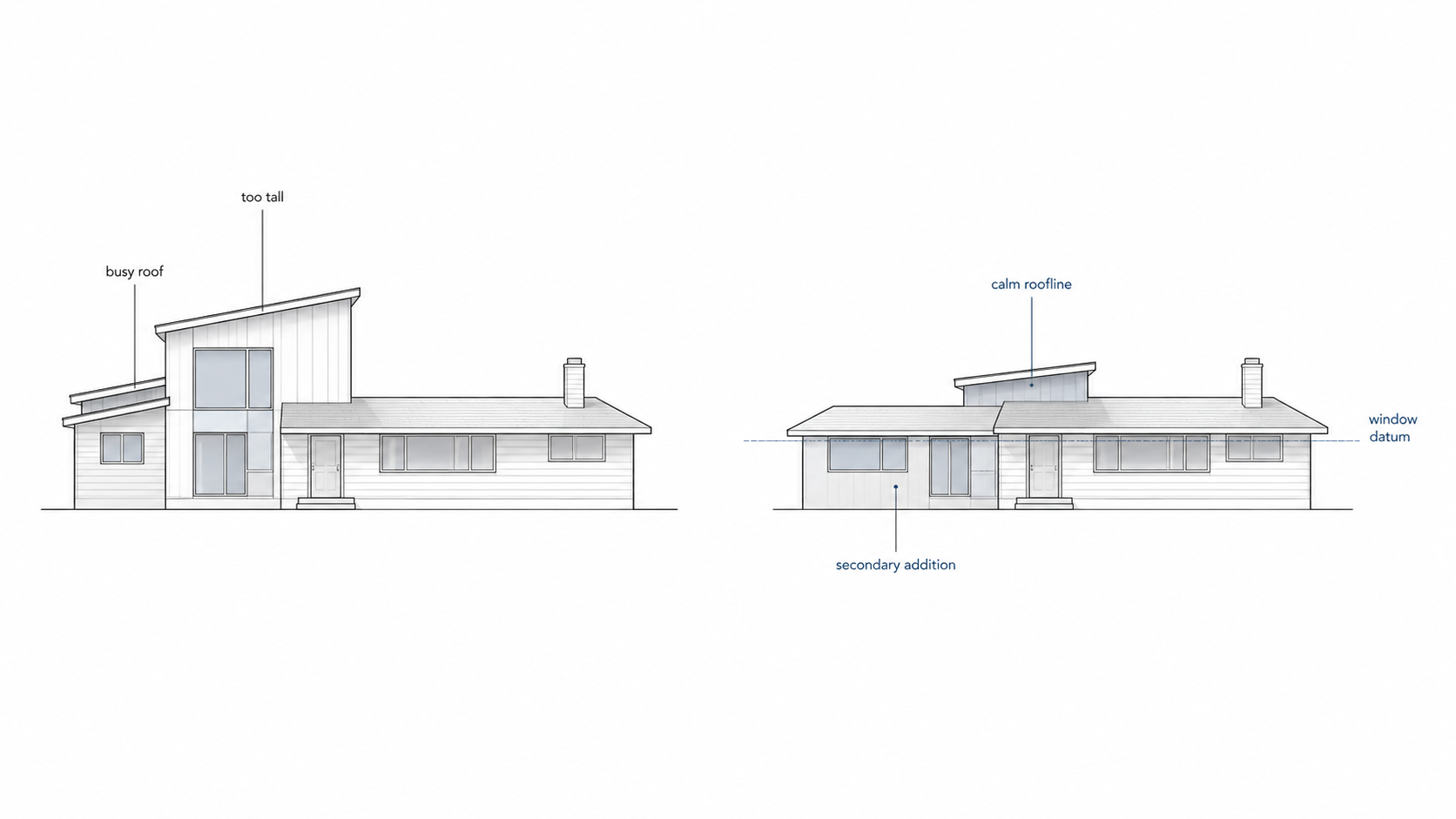
Illustration by ArchitectureCourses.org. A modern ranch addition does not have to copy the old house, but it should respect the original scale, roof discipline, and window datum.
Most ranch houses start with one quiet roof idea. A long low gable. A hip. Sometimes a simple cross-gable near the garage. The minute the addition introduces too many little roof events, the house gets busy in the wrong way.
The fix is usually restraint. Keep one dominant roof idea. Let the addition sit lower, farther back, or more quietly than the original house. Do not try to make the addition look important by making the roof louder.
Windows Can Save the Whole Thing
People talk about cladding first. I would look at the windows.
Window head heights, sill logic, and opening proportions do more to tie an old ranch to a new addition than expensive finishes do. If the original house has low horizontal windows and the addition suddenly stacks tall vertical glass with no relationship to anything around it, the project will feel split in half no matter how nice the materials are.
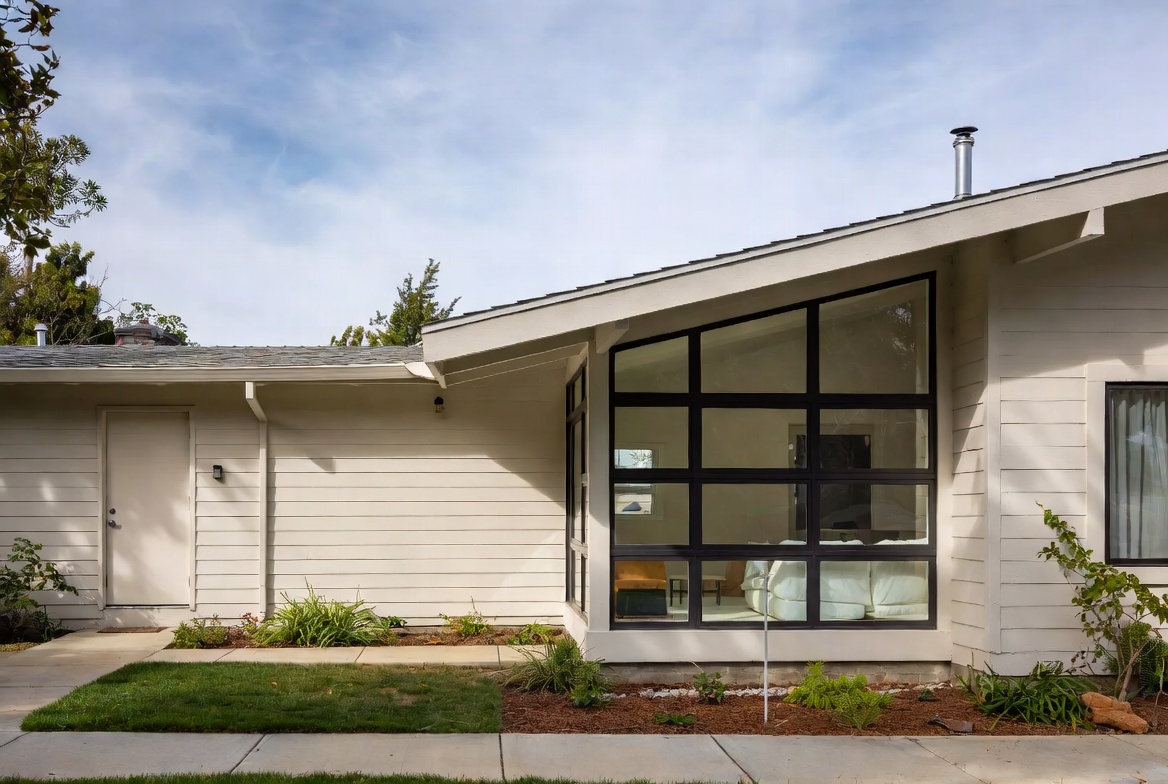
Image by ArchitectureCourses.org. Larger openings can modernize a ranch, but they work best when the roof height and overall mass stay restrained.
The answer is not copying the old windows exactly. It is making the new ones behave. Keep the datum lines under control. Let the largest glass live toward the yard. Stay more restrained on the street side.
If you are reworking openings at the same time, windows in construction is the better companion page. It keeps the discussion grounded in real openings, frames, and wall conditions instead of facade mood.
One good modern window type repeated well is better than three clever ones fighting each other.
Fix the Old Half Too
This is where good additions separate from expensive ones.
Many projects put all the design energy into the new square footage and almost none into the original house. Then the addition looks clean, but the old section still has a weak entry, tired windows, bad proportions at the garage, or leftover decorative pieces that no longer make sense beside the new work.
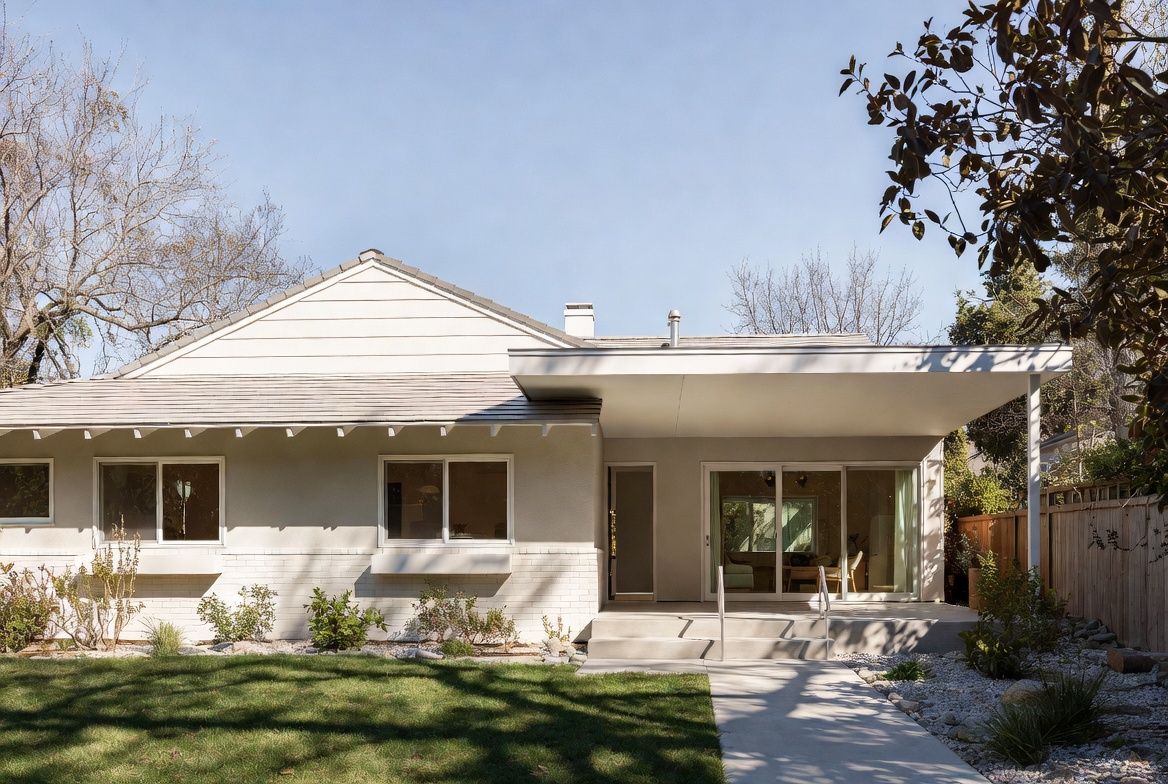
Image by ArchitectureCourses.org. A small entry move can sharpen a ranch façade without turning the whole house into something heavier than it needs to be.
A modern addition to a ranch house usually needs at least a light cleanup of the original front. Not a full makeover. Just enough so the old and new parts feel like they belong to the same project.
Sometimes that means a better entry. Sometimes it means simplifying trim. Sometimes it means replacing only the windows that are doing the most visual damage. A small amount of work in the old half often does more than another fifty square feet in the new one.
Keep the Contrast Quiet
One reason a ranch can take a modern addition well is that the original house is often simple enough to support a cleaner contrast. Brick with smooth fiber cement. Painted siding with natural wood at the connector. Masonry base with quieter vertical siding above. Those can work.
The problem starts when contrast turns into trend collecting. Wood-look metal, stone veneer, black windows, bright white brick paint, oversized beams, and a new porch all in one move is not control. It is panic.
Pick one main contrast move. Two at most. Then let the massing do the rest.
Make the Old Layout Worth the Expense
Some additions make the house bigger without making it better.
That is common in ranch projects because the original plan may already have issues: tight kitchens, weak transitions from living to dining, narrow halls, low storage, and bedrooms that are isolated from the part of the house that just got improved.
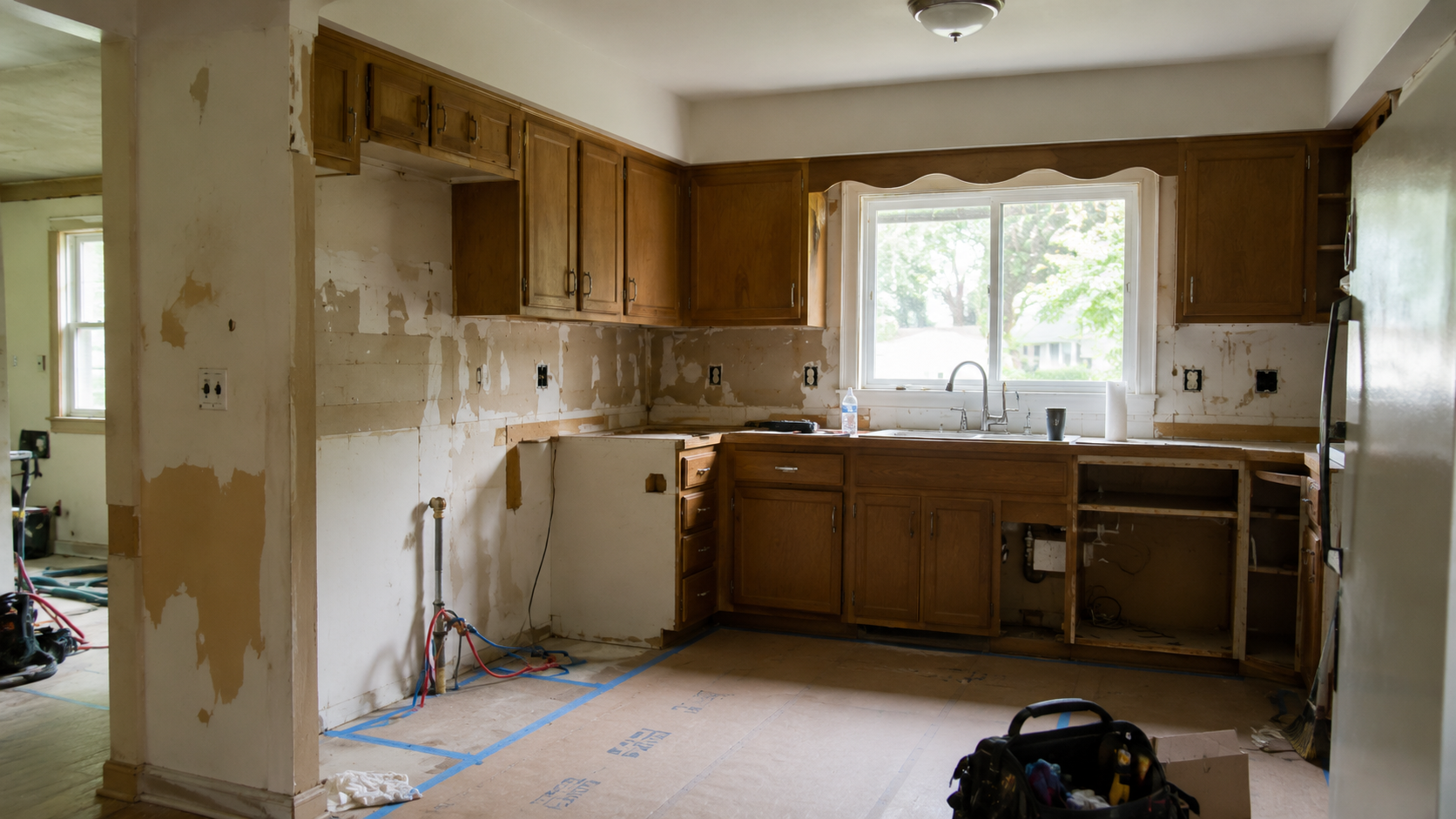
Before settling on a concept, ask what the new square footage is supposed to fix.
- If the kitchen is the problem, the addition should change how the kitchen relates to the rest of the house.
- If privacy is the problem, the addition should create a better separation between public and private rooms.
- If the backyard never got used, the addition should improve the indoor-outdoor connection instead of turning the rear wall into a blank furniture run.
- If the original house feels dark, the new layout should bring in light rather than make the middle of the plan deeper and dimmer.
This is where many addition plans for ranch homes get weaker than they should. The exterior sketch gets all the attention, but daily movement through the house barely changes.
If the old plan already has a dark center, read how to brighten a dark ranch house without opening every wall before making the footprint deeper.
Where the Money Usually Gets Wasted
Not in the part people expect.
It is usually not the siding choice or the window brand that hurts the project most. It is square footage added in the wrong place, structure made harder than it needed to be, and old layout problems left untouched.
Some additions cost a lot and still leave the kitchen awkward, the hall dark, and the living room disconnected from the backyard. That is bad money. The house is bigger, but the daily friction is still there.
If the plan is not improving circulation, privacy, daylight, or room relationships, the addition is already underperforming. For the budget side, see cost to remodel a ranch house.
Second Stories Are Harder to Get Right
They can work. They just ask more from the house.
A partial upper level often makes sense when the lot is tight or setbacks are killing the one-story options. But this is where the original ranch character disappears fast. If the new upper level sits heavy on the front wall, runs full width, or starts adding multiple projecting pieces, the house stops reading like a ranch at all.
The better version usually pulls back from the front edge, stays narrower than the full footprint below, and keeps the roof handling quiet. The goal is not to pretend the upper level is not there. The goal is to keep it from crushing the one-story base.
Raised Ranches Need a Paired Move
A raised ranch usually does not improve from an addition alone.
The problem is not just that the house is taller. It is that the entry, garage, and lower level are already fighting for control of the front. Add a new room to one side without fixing that composition and the house often gets worse, not better.
The better approach is a paired move. The addition should solve one interior problem and one facade problem at the same time. That usually means one of these:
- add space on the garage side while rebuilding the entry so the front stops feeling lopsided
- use a rear or side addition, then clean up the lower level and stair landing so the front reads more deliberately
- pull the new mass back and let a porch, canopy, or connector handle the transition instead of pushing a full box toward the street
What usually fails is the one-sided bump-out. A room gets added where it is convenient, but the split entry still feels pinched, the lower facade still looks too tall, and the front of the house ends up carrying more visual weight without any better order.
Raised ranches also need more discipline with materials than people expect. If the upper level, lower level, and new addition all change finishes in different ways, the house breaks into pieces. Keep the palette tighter. Let the addition help reorganize the front rather than compete with it.
On these houses, the addition is only half the job. The other half is making the front finally look like it knows where the door is.
Three Questions That Matter More Than Style
What part of the old house is failing?
If you cannot answer that clearly, the addition is still too abstract.
Where can the new work connect without damaging the best room in the house?
That answer should drive the scheme more than the exterior image does.
What will the original house still need after the addition is done?
If the answer is a better entry, cleaner windows, and a less awkward facade, build that into the project now.
Before You Push the Design Any Further
Check the boring parts.
Load paths. Existing roof structure. Hidden mechanical lines. Old wiring. Plumbing in the wrong wall. On older ranch houses, the drawing that looks simple on paper often stops being simple the minute one wall opens up.
If the concept depends on removing or widening a wall, check how to tell if a wall is load-bearing in a single-story house before the scheme hardens. And if you are cutting in larger openings, window header framing is the useful follow-up.
What Works
A modern ranch addition works when it is calm.
The old house still reads clearly. The new work lands in the right place. The roof stays disciplined. The windows behave. The plan inside gets better. And the original half is not left behind looking like it belongs to another job.