


Fixing Low Ceilings in a Ranch House Without Major Reconstruction
Many ranch houses do not feel small because of square footage.
They feel small because the ceilings sit low, the middle of the plan is dark, and the rooms do not connect well.
People often try to fix this with fake beams, oversized fixtures, full demolition, or expensive ceiling changes.
Most of the time, that is not the first move.
A ranch house feels better when light travels properly, the ceiling plane stays clean, and the layout stops fighting itself.
Why Low Ranch Ceilings Feel Worse Than They Are
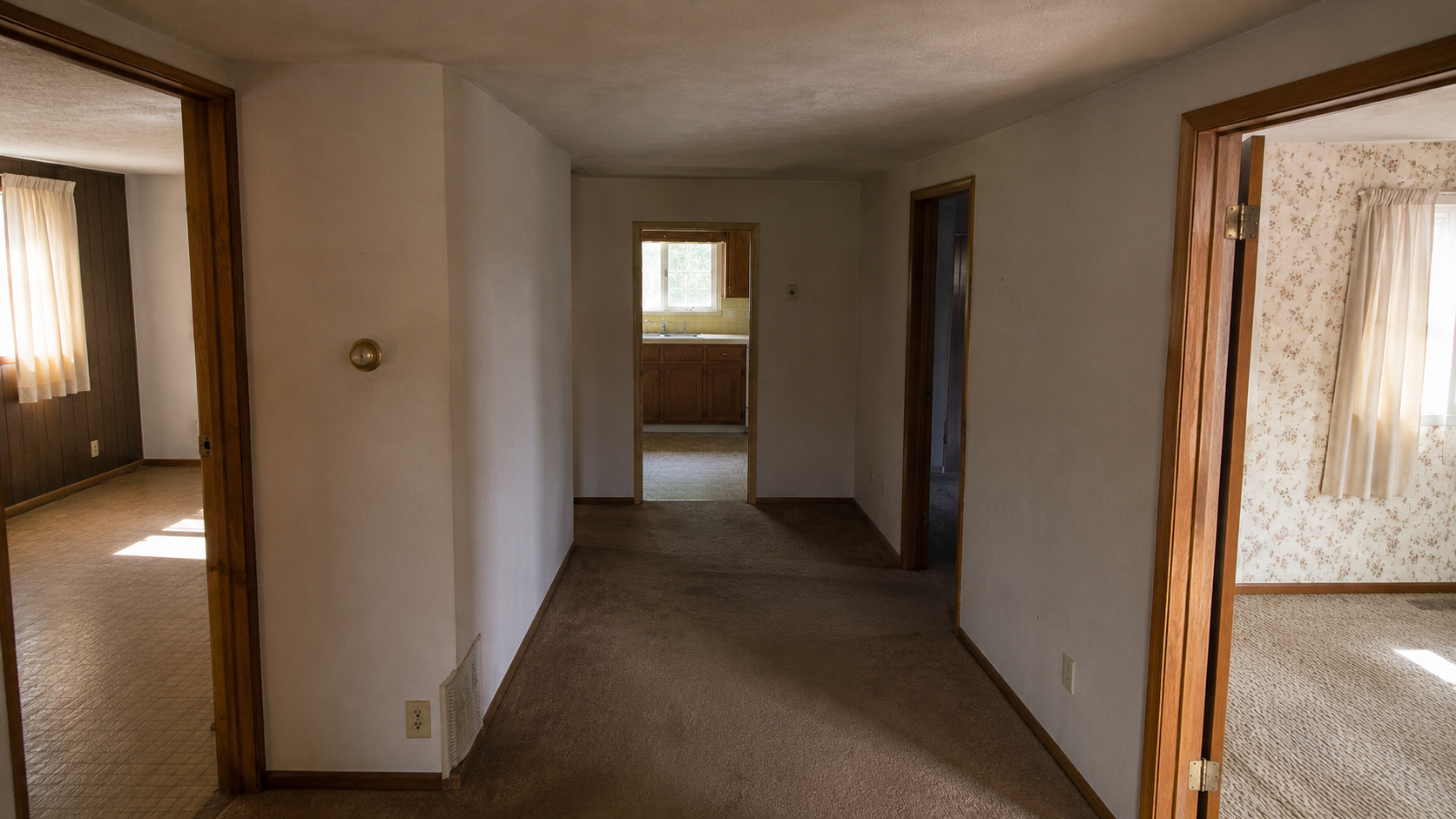
Image by ArchitectureCourses.org. Many older ranch houses feel smaller than they are because the middle of the plan is dark, chopped up, and disconnected from the brighter rooms at the edges.
Many mid-century ranch houses were built with lower ceilings, smaller windows, heavy soffits, closed kitchens, and long interior halls.
The ceiling itself is only part of the problem.
Usually the bigger issue is the combination:
- poor light flow
- broken sightlines
- visual clutter near the ceiling
- dark finishes in the wrong places
- boxed-in kitchens and halls
That mix makes the house feel compressed even when the rooms are fairly wide.
Start by Cleaning the Ceiling Plane
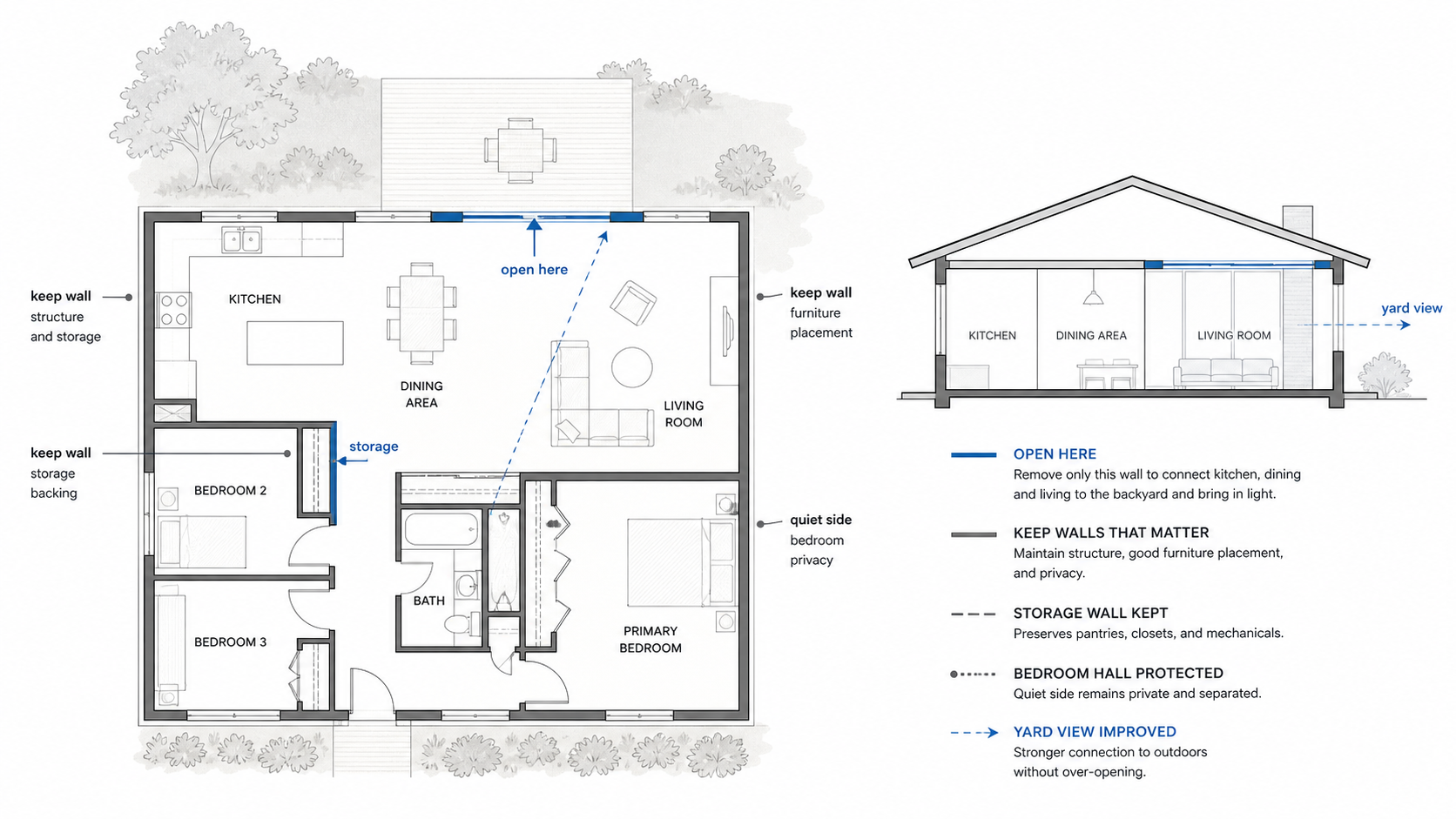
Illustration by ArchitectureCourses.org. A cleaner ceiling line and better light path usually improve a ranch house more than dramatic reconstruction.
One of the fastest ways to improve a low ranch ceiling is reducing visual interruption.
That means removing or simplifying:
- heavy kitchen soffits
- unnecessary ceiling drops
- awkward fake beams
- oversized ceiling fixtures
- busy trim at the top of walls
A cleaner ceiling reflects light better and makes the room feel calmer.
Busy ceilings make low rooms feel even lower. This is why decorative beams often hurt older ranch interiors unless the structure and proportions already support them.
Light Matters More Than Height
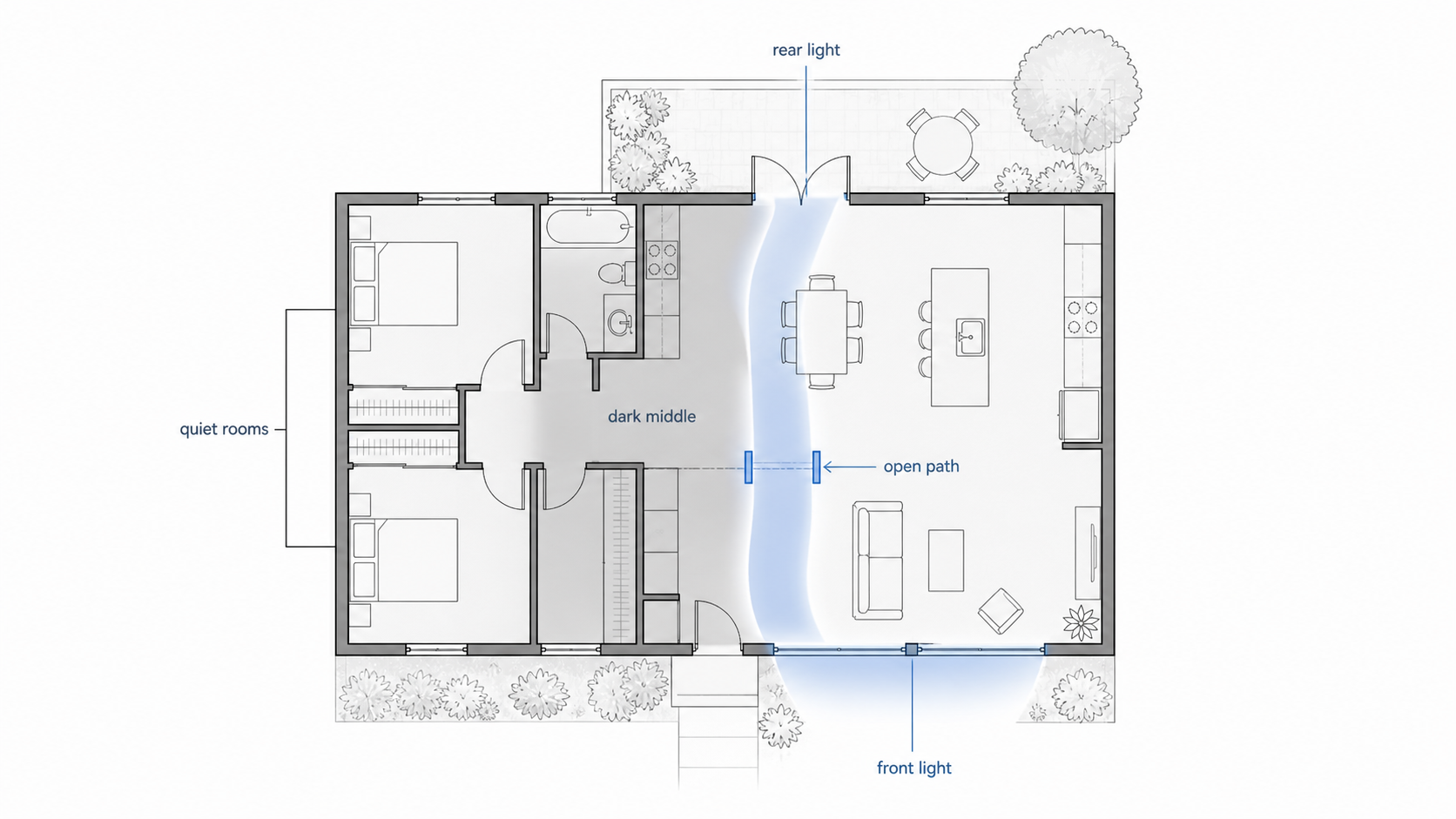
Illustration by ArchitectureCourses.org. A ranch plan feels better when light can move past the front room and reach the middle of the house without opening every wall.
A low ceiling with good daylight often feels better than a taller ceiling with poor light.
That is why many ranch remodels improve dramatically from:
- better rear openings
- larger windows in the living core
- better kitchen connections
- lighter ceiling surfaces
- cleaner sightlines toward the yard
For the larger light-flow problem, see how to brighten a dark ranch house without opening every wall.
Lighting Mistakes That Make Low Ceilings Worse
Low ceilings are unforgiving. The wrong lighting can make the whole room feel pressed down.
Avoid relying on one large fixture in the center of the room. It usually creates glare, dark corners, and a heavy visual object right where the ceiling already feels low.
Better options include:
- low-profile ceiling fixtures
- wall lights where they fit
- lamps that brighten corners
- under-cabinet lighting in kitchens
- small recessed lights only where the ceiling can handle them cleanly
Do not turn the ceiling into a grid of lights just because the room is dark. Fix the light path first, then add lighting where the room still needs help.
Do Not Open Every Wall
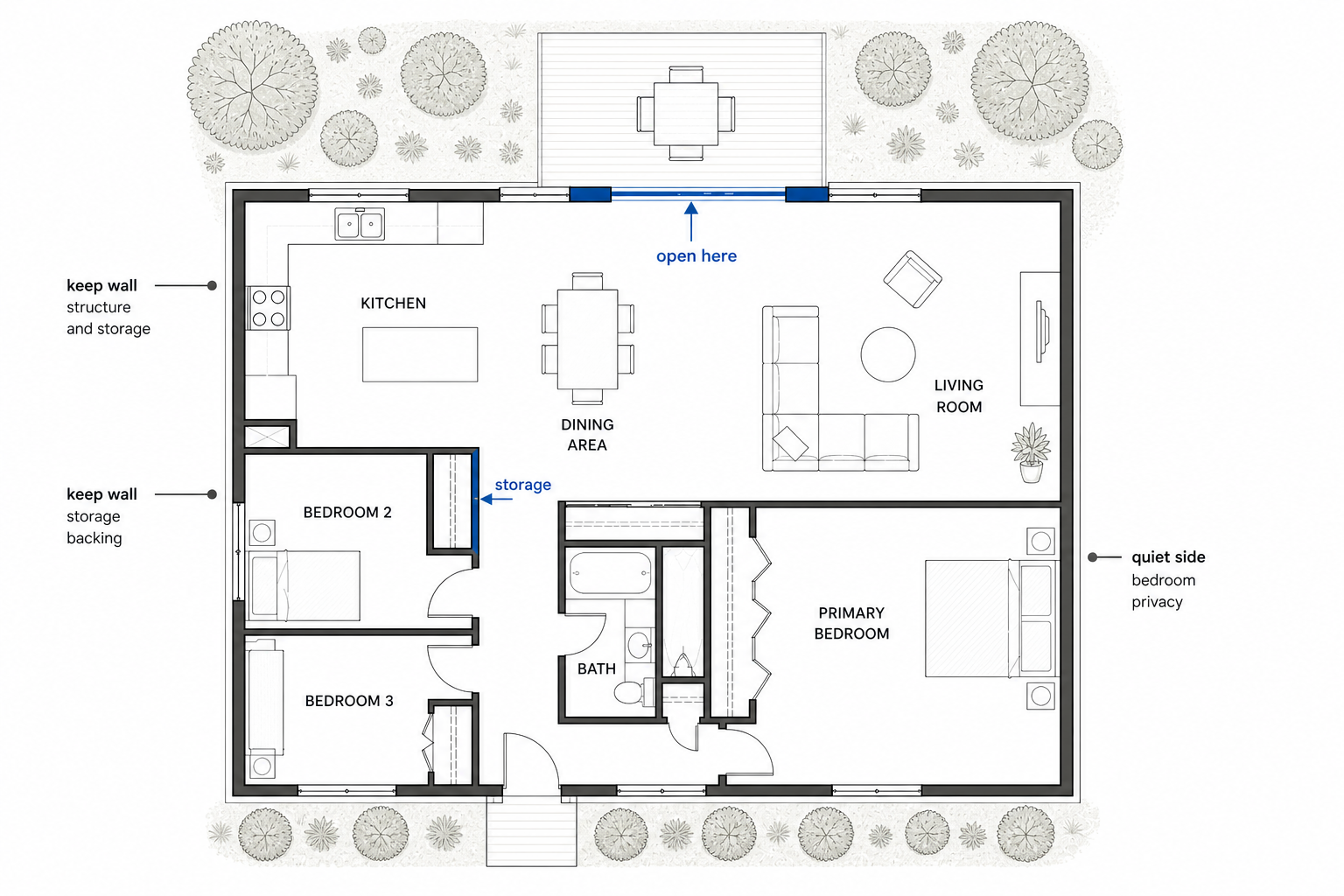
Illustration by ArchitectureCourses.org. A small ranch remodel works better when one useful opening improves light and yard connection while storage walls and bedroom privacy stay protected.
People often think openness automatically fixes low ceilings.
Sometimes it does the opposite.
When every wall disappears:
- the ceiling becomes one long flat plane
- the room loses scale control
- noise spreads everywhere
- storage disappears
- furniture has nowhere solid to land
A better strategy is opening one useful connection between the kitchen, dining area, and living room while keeping enough wall structure for storage, furniture, and privacy.
For layout strategy, see open floor plan ranch house.
Plan Before You Remove Anything

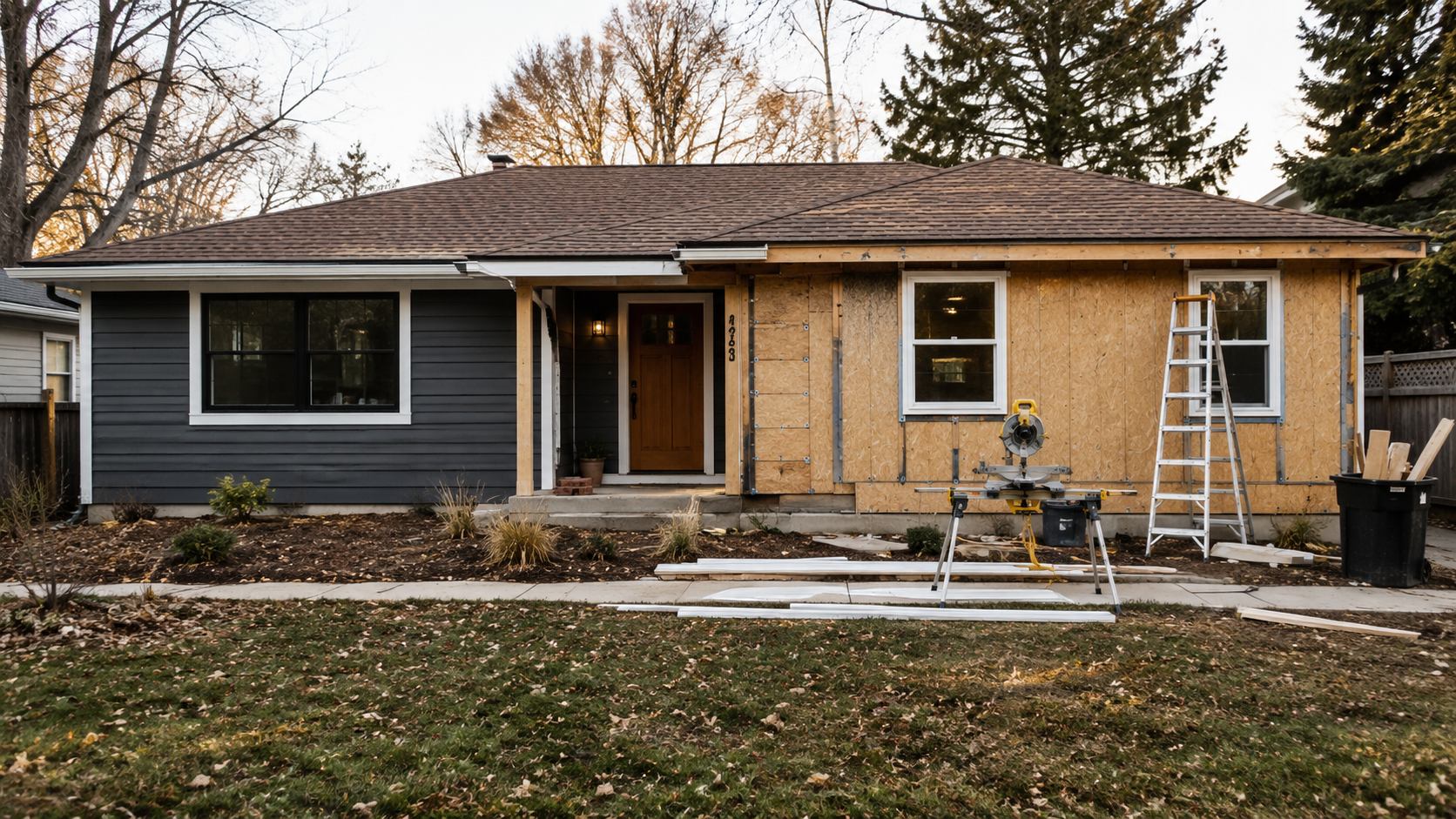
Image by ArchitectureCourses.org. Ranch renovation planning works best when layout, structure, light, and material choices are studied together before demolition starts.
A low-ceiling ranch remodel can go wrong fast when demolition starts before the plan is clear.
Before opening walls or changing ceilings, decide what problem you are solving:
- Is the room too dark?
- Is the ceiling visually heavy?
- Is the kitchen blocking light?
- Is the hallway making the house feel narrow?
- Is the room actually too low, or just cluttered?
Those are different problems. They need different fixes.
Fixes That Help Most Low Ranch Ceilings
| Fix | Cost Level | When It Works Best |
|---|---|---|
| Remove kitchen soffits | Low to medium | Kitchen feels heavy or cabinets stop too low |
| Clean up ceiling fixtures | Low | Rooms feel cluttered or visually crowded |
| Add layered lighting | Low to medium | Ceiling is low but layout is mostly workable |
| Improve rear openings | Medium to high | Living area feels dark and disconnected from yard |
| Open kitchen to dining/living | Medium to high | The middle of the plan blocks light and movement |
| Raise or vault ceiling | High | Structure allows it and the room is worth the expense |
Most ranch houses should start with the lower and middle-cost fixes before jumping to major ceiling reconstruction.
Windows Help More Than Vaulted Ceilings
Vaulting a ceiling sounds attractive, but it is often expensive and structurally messy in ranch houses.
Many ranch roofs were not designed for dramatic ceiling changes. The roof framing, insulation, ducts, wiring, and ventilation may all be affected.
A simpler window strategy often improves the room more:
- larger rear openings
- better window alignment
- lower window sills where appropriate
- continuous sightlines to the yard
- fewer visual breaks between rooms
This improves perceived space without rebuilding the roof structure.
When Raising the Ceiling Actually Makes Sense
Raising or vaulting a ceiling can work, but it should not be treated like a simple cosmetic upgrade.
Before you consider it, check:
- roof framing type
- rafter or truss layout
- insulation space
- ventilation path
- electrical and HVAC runs
- whether the room is important enough to justify the cost
A true ceiling raise may make sense when the roof structure allows it cleanly, the room already has strong daylight, and the project already includes major structural work.
It usually makes less sense in small bedrooms, tight kitchens, and dark middle rooms. Those spaces often improve more from light and layout changes than from major framing work.
Where Ranch Ceiling Remodels Usually Go Wrong
| Common Mistake | What Happens |
|---|---|
| Fake decorative beams | Ceiling feels lower and busier |
| Too much demolition | Layout loses control |
| Oversized light fixtures | Rooms feel compressed |
| Dark ceiling colors | Ceiling visually drops |
| Ignoring light flow | House still feels dark and cramped |
| Vaulting the wrong room | Money goes into structure without fixing daily use |
Best Improvements for the Money
- remove heavy soffits
- improve rear openings
- add layered lighting
- clean the ceiling plane
- improve kitchen connection
- carry flooring continuously
- improve yard visibility
These changes usually improve the feeling of the house more than expensive “statement” features.
What Usually Wastes Money
- fake rustic beams
- random ceiling trays
- oversized chandeliers
- opening every wall
- raising ceilings without fixing the layout
- vaulting a room that still has poor daylight
Some ranch remodels spend heavily and still feel low, dark, and awkward because the real layout problem never changed.
Quick Reality Check Before Remodeling
- Is the ceiling truly too low, or just visually heavy?
- Does light reach the middle of the house?
- Would better openings help more than demolition?
- Are soffits and ceiling clutter making the room worse?
- Will structural ceiling changes actually improve daily use?
- Can you improve the room first with lighting, windows, and layout?