
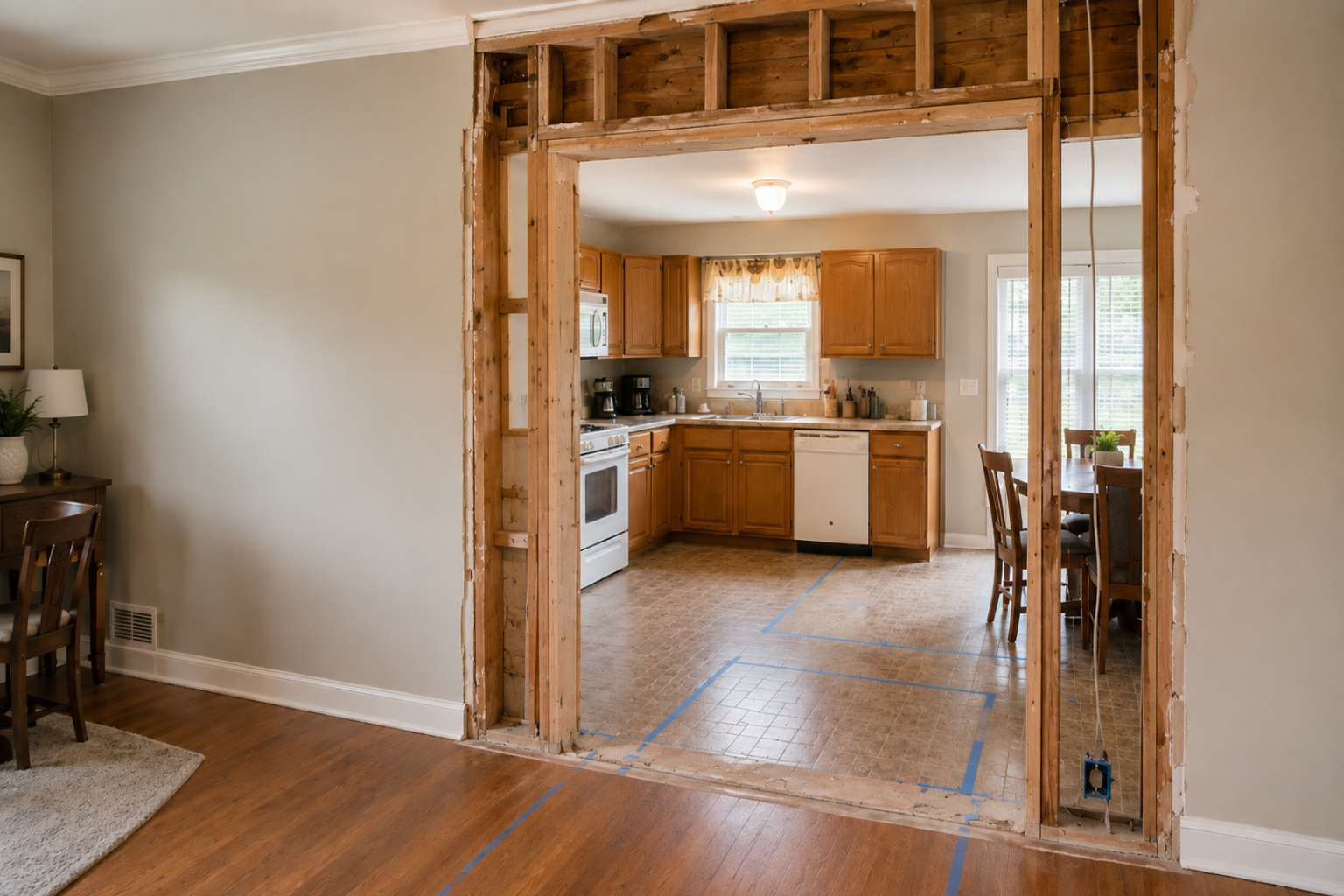
Single-story remodel. You want to open the kitchen to the living room. The wall looks “thin,” the ceiling looks flat, and someone tells you, “It’s only one story, it’s probably fine.”
That’s how ceilings crack and doors start rubbing a week later. The load doesn’t care how many floors you have. In a one-story house, the roof still has to land somewhere.
The goal on this page is simple: confirm the load path with the least mess possible, then decide if you need an engineer before you touch framing.
The Big Misread
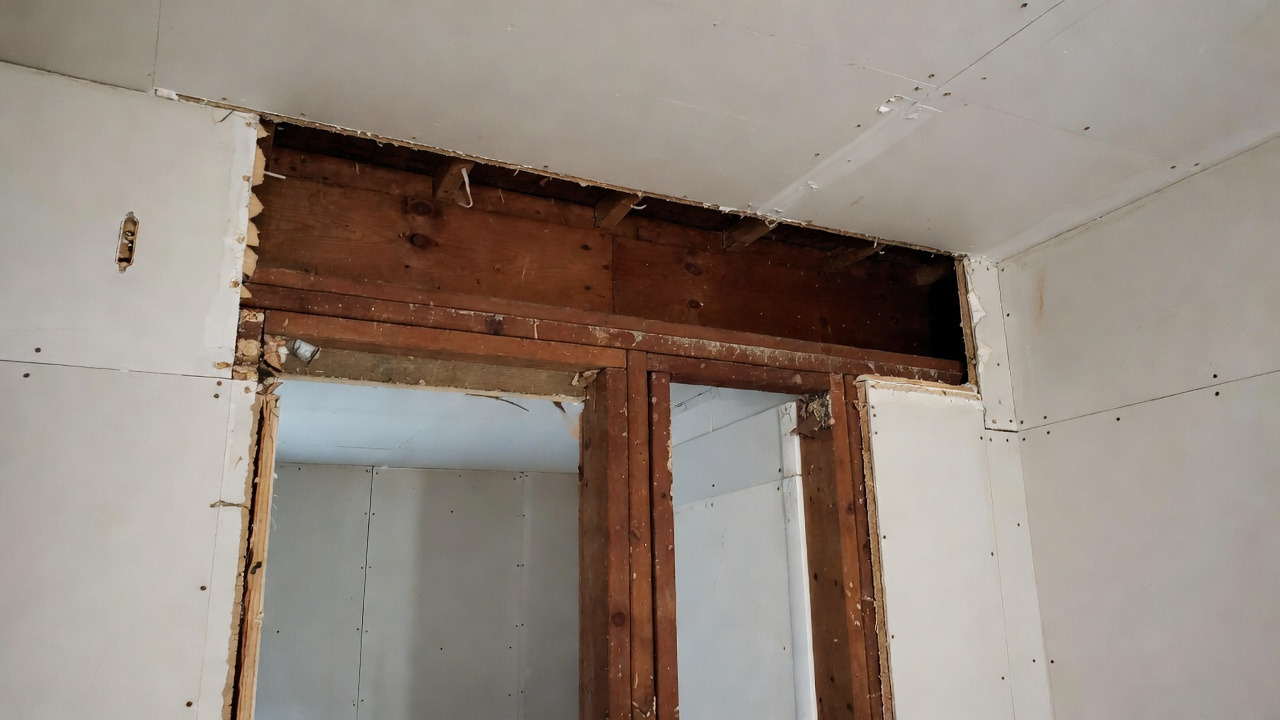
Opening the wall above a doorway can reveal framing conditions, but it does not confirm the full load path by itself. Image by ArchitectureCourses.org.
The most common bad assumption is: “Single story = interior walls are non-bearing.”
A lot of interior walls in ranch homes are just partitions. But plenty of single-story houses use an interior bearing line, a center beam, or a girder truss to break spans. Same house, same neighborhood, totally different load path.
Your job is to find proof, not vibes. If you want the broader vocabulary, keep this nearby: load-bearing vs. non-load-bearing walls.
What “Load-Bearing” Means in One Story
In a single-story house, the wall is “load-bearing” if it carries roof load and transfers it down to something that can take it: a beam, posts, a foundation wall, a slab thickened edge, or a footing.
Two realities that confuse people:
- A wall can be non-bearing for vertical loads and still matter for lateral bracing, plumbing stacks, HVAC chases, or fire blocking. “Non-bearing” is not the same thing as “delete it.”
- A wall can carry very little load most days and then see serious load during snow, wind, or a big roof-span condition. Failures often show up after the first heavy weather event, not the day you demo.
Pick Your Proof Clue
Don’t try to collect every clue in the house. Pick one proof path you can actually confirm, then run it to ground. These three cover most single-story situations.
Proof A: Ceiling Joists Splice or Lap Over the Wall
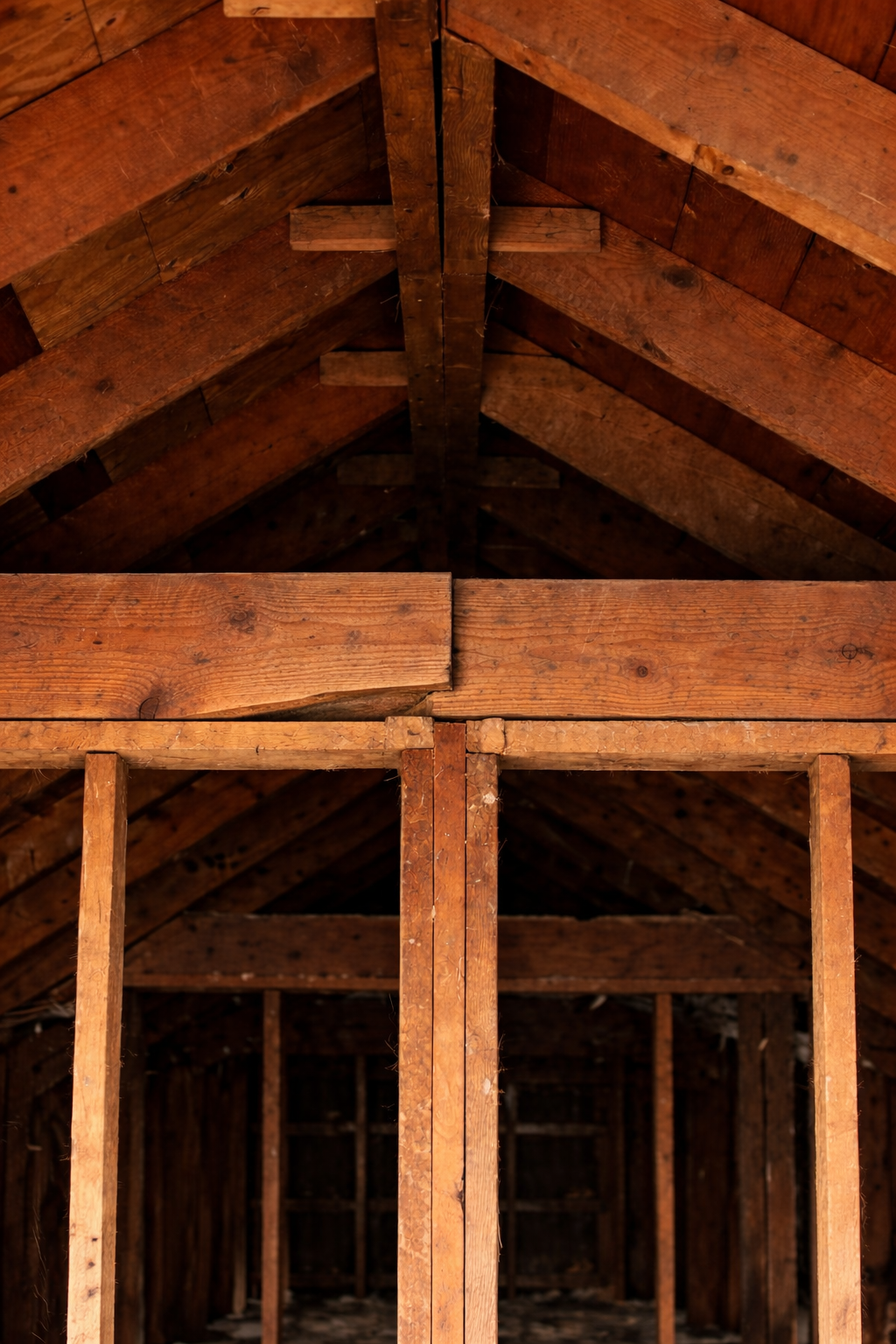
In older attics, ceiling joists that lap directly over a wall line can be a strong sign that the wall below is acting as a bearing line.
This is the cleanest attic proof in older framing: ceiling joists splice or lap right over the wall line. That wall is being used as a bearing line to break the span.
- What you need to see: a clear lap/splice directly above the wall, not just “near it.”
- What fakes people out: catwalk planks, random blocking, or insulation hiding the joist line.
- How failure shows up: ceiling cracks at corners, slight sag, doors that start rubbing. Sometimes same day. Often after the first seasonal swing.
Proof B: Joist or Rafter Ends Bearing on the Wall
If roof members terminate on that wall line (or hang from a header/beam that lands on it), that’s a bearing condition. Simple.
- What you need to see: ends sitting on the wall plate, or a beam/header transferring load to that wall.
- What fakes people out: members that look “close” but actually bear on an adjacent beam, a dropped girder, or a truss bearing point you didn’t recognize.
- Where it bites: long openings (kitchen/living) where a “small” bearing wall was doing a lot of work.
Proof C: Beam or Post Line Below
This is the crawlspace/basement proof. If there’s a main beam/girder and a line of posts directly under the wall line, that wall is usually part of the load path.
- What you need to see: beam/post line that matches the wall location above (within reason; framing isn’t laser-straight).
- What fakes people out: random lally columns added later, or a beam that supports something else but happens to run nearby.
- Timing reality: if you demo first and “discover structure later,” you’ve already created movement you can’t un-do.
If none of these can be confirmed cleanly (finished ceilings, no attic access, truss complexity), that’s not failure. It’s a stop point. A small inspection opening in the right location or a short engineer visit beats guessing.
Fast Checks in the Right Order
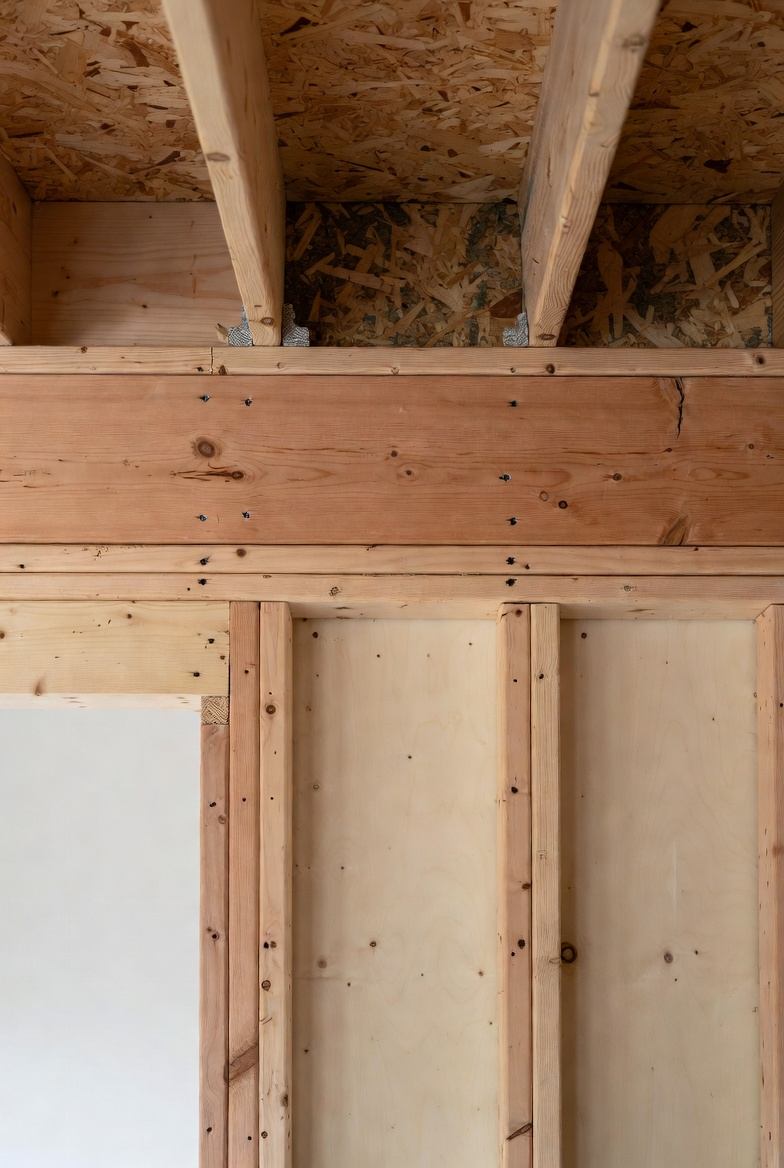
The order matters. Start low, then go high. It prevents the classic mistake of over-reading one attic clue and missing the beam line underneath.
Step 1: Look Below the Wall Line
Crawlspace or basement first. This is where Proof C often shows up in minutes.
- Look for: a girder/beam running under the house, a line of posts/piers, or a thickened foundation wall right under your wall location.
- Quick check: measure from a fixed reference (foundation wall, chimney, or a plumbing stack) to the target wall upstairs, then compare below.
- Slab-on-grade note: it’s harder to “see” structure below. You may need attic proof (A or B) or plans.
If you don’t have a crawlspace/basement, you can still work the problem. Just don’t pretend it’s the same level of certainty.
Step 2: Read the Attic Like a Load Map
In a single-story house, the attic is often the best evidence because you’re looking at the roof load path directly. This is where Proof A and Proof B show up.
- Ceiling joists perpendicular to the wall: often bearing, especially if they terminate on that wall line.
- Ceiling joists parallel to the wall: often non-bearing, but not guaranteed (a beam can run parallel; trusses can have concentrated bearing points).
- Splices/laps over the wall: treat as structural until proven otherwise.
- Ridge support: if you see posts/braces supporting a ridge beam and that support drops onto your wall line, you’re in bearing territory.
If your house uses trusses, do not assume “interior walls are always non-bearing.” Many are. Some aren’t. More on that below.
Step 3: Check Roof “Special Loads”
Single-story roofs create concentrated loads at a few predictable spots: hips, valleys, long ridges, and big openings (like wide living rooms or vaulted areas).
- Hips and valleys: look for heavier members (multi-ply) and where they land.
- Vaults/cathedrals: load paths often change because ceiling joists aren’t tying things the same way.
- Garage spans: houses often “cheat” spans with beams or bearing lines near garages and great rooms.
Step 4: Don’t Over-Trust Headers
A header over a door or window means the opening is framed to carry something. It does not automatically mean the whole wall is load-bearing.
What matters is where loads are landing and how the header is supported (jack studs, posts, bearing points). If you’re rusty on wall anatomy, this is a clean refresher: king studs and jack studs.
Step 5: Use Plans If You Have Them
Permit sets and original drawings often show beams, posts, and roof framing direction. If you don’t have them, your local building department may have archived permit drawings. Availability varies by jurisdiction.
Trusses vs. Stick-Framed Roofs
This is where “rules” change in newer single-story homes. A lot of wrong demo decisions start here.
| Roof System | Typical One-Story Pattern | What It Means for Interior Walls | Common Failure |
|---|---|---|---|
| Truss Roof | Factory trusses spanning exterior walls; web members create internal triangles. | Many interior walls are partitions, but some roofs have concentrated bearing points (girder trusses, drop beams, special supports). | They remove an interior wall assuming “trusses span everything,” then discover a girder/bearing point later. Cracks often show up after weather load or seasonal movement. |
| Stick-Framed Roof | Rafters and ceiling joists framed on site; loads may drop onto interior beams/walls to break spans. | Interior bearing lines are more common, especially in wider houses, older framing, or where the ridge is structurally supported. | They rely on one clue (like joists “seem parallel”) and miss a beam line, post stack, or ridge support landing on the wall. |
If you want the deeper roof vocabulary, this pairs well with: roof trusses basics and rafters vs. trusses in plain language.
Non-U.S. note: framing conventions are broadly similar, but truss layouts, code language, and inspection expectations vary by jurisdiction. If you’re outside the U.S., treat the final decision as “varies locally” and verify with your authority having jurisdiction.
Clue vs. Proof
A lot of online advice is a list of “signs.” Signs are fine. The trap is treating signs as proof.
| Clue | What It Suggests | When It’s Wrong |
|---|---|---|
| Wall is near the center | Could be a bearing line to break roof span. | Open spans with a beam elsewhere; center wall may be just a partition. |
| Ceiling joists are perpendicular | Often bearing. | Joists may bear on a beam near the wall, not on the wall. |
| Ceiling joists are parallel | Often non-bearing. | Parallel beams and truss bearing points still exist; you can miss Proof C. |
| Thicker wall / double studs | Might be structural or a utility chase. | Plumbing/HVAC chases and old remodels can mimic “structural” thickness. |
| Big header in the wall | The opening carries load. | Doesn’t prove the entire wall line is bearing. |
The clean move is still the same: find Proof A, B, or C.
Stop Points That Deserve a Pro
These are the moments where “just open it up” becomes expensive.
- Vaulted or cathedral ceilings: roof load paths can shift and ridge support may be structural.
- Trusses with weird geometry: multiple plies, girder trusses, or obvious “special” supports landing near your wall line.
- Big open spans: kitchens/great rooms where the wall is the only thing breaking the span.
- Movement already visible: ceiling cracks, floor bounce, doors that changed alignment, trim gaps opening.
- Old remodel evidence: patched framing, sistered members, beams that look added later, or posts that don’t match original layout.
If you hit one of these, the smartest next step is usually confirmation from someone who can size the replacement beam and specify bearing/post conditions.
The Detail People Miss
If you’re using the attic as your main proof source, don’t stop at “joist direction.” The high-confidence tell in many one-story houses is where the span is broken.
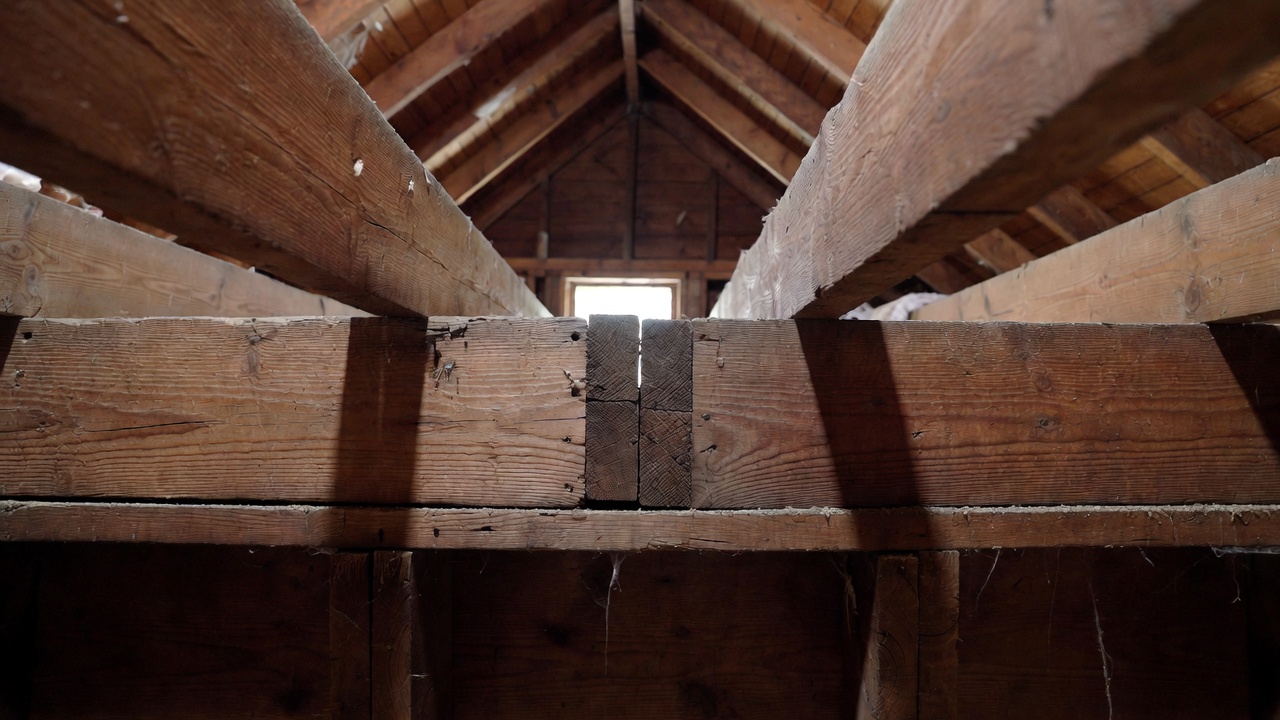
- What people do wrong: they see joists running one direction and assume the wall below is safe, without checking for a lap/splice or a ridge/post landing.
- The correct move: uncover a short run (a few feet) of framing over the wall line and confirm whether members splice over that line (Proof A) or terminate/bear on it (Proof B).
- What it prevents: removing a mid-span support and creating sag/cracks that often show up fast or after the first weather load.
- Limits: truss roofs and vaulted areas can bypass these “simple” tells. If framing looks non-standard, treat it as a stop point.
If You Plan to Remove the Wall
In most U.S. jurisdictions, altering a load-bearing wall is a permit/inspection situation. Even when it isn’t strictly required, it’s still a liability decision. The sequence that avoids regret usually looks like this:
- Confirm the load path (Proof A/B/C).
- Confirm whether the wall is also part of the lateral system (varies by house and region).
- Get a beam/header design if required (engineer or qualified designer where allowed).
- Install temporary support before demo.
- Demo wall, install beam and posts/bearing as specified.
- Inspection (if applicable), then close up.
If you want the “minimal mess” version of checks (before opening anything), this pairs well with: load-bearing checks without removing drywall.
If you end up needing attic verification, keep this as the deeper sibling page: how to check load-bearing walls from the attic.
If you actually have a second floor, don’t force this one-story logic onto that problem. Use the two-story workflow instead: load-bearing walls in a two-story house.
FAQ
Are Exterior Walls Always Load-Bearing in a Single-Story House?
In typical U.S. wood-framed construction, exterior walls are often load-bearing and are commonly part of the lateral system. Treat them as structural until you verify otherwise.
If the Ceiling Joists Run Parallel to the Wall, Is It Safe?
Often, but not guaranteed. A beam can run parallel and still drop onto posts, and truss bearing points don’t always follow the simple “parallel/perpendicular” rule. Confirm Proof A, B, or C.
Do Trusses Mean Interior Walls Are Never Load-Bearing?
No. Many interior walls are partitions, but truss systems can create concentrated bearing points (girder trusses, special supports). If you can’t identify what you’re looking at, treat it as “needs verification.”
Can I Confirm Load-Bearing Without an Attic or Crawlspace?
You can gather clues, but “confirm” is harder. That’s where plans, a small inspection opening in a smart spot, or a pro visit becomes the cleanest move.
What’s the First Sign I Got It Wrong?
New cracks at ceiling/wall corners, doors that start rubbing, floor bounce, or trim gaps opening. Sometimes immediate. Often after weather load or seasonal movement.
Do I Need a Permit to Remove a Load-Bearing Wall?
Often yes for structural changes, but it varies by jurisdiction. Call your local building department before demo. It’s cheaper than redoing work after a failed inspection.
Next Step
Don’t start with drywall. Start with the load path. Below first, attic second, then plans. If the proof isn’t clean, pause. That pause is cheaper than hiding movement later.