


Ranch House Renovation Costs That Surprise Homeowners
Ranch houses are usually simpler to remodel than taller homes.
That does not mean they are cheap.
The expensive part is usually not the finishes. It is changing the layout, structure, roofline, windows, plumbing, or circulation without making the house worse.
A good ranch remodel improves:
- light
- movement
- yard connection
- storage
- daily use
A bad one spends a fortune and still feels awkward.
Average Ranch House Remodel Costs
These ranges vary by region, labor market, house condition, and how much structural work is involved. Use them as planning ranges, not contractor quotes.
| Project Type | Typical Cost Range |
|---|---|
| Cosmetic refresh | $20,000–$60,000 |
| Kitchen remodel | $25,000–$80,000+ |
| Open floor plan changes | $15,000–$70,000+ |
| Whole-house remodel | $80,000–$250,000+ |
| Rear addition | $120,000–$350,000+ |
| Second-story addition | $180,000–$500,000+ |
The huge jump usually happens once structure, additions, or major plumbing relocation enters the project.
What Changes the Price the Most
The cost of a ranch remodel changes fast because one decision often pulls several trades into the job.
| Cost Driver | Why It Raises the Budget |
|---|---|
| Wall removal | May require beams, engineering, temporary support, and ceiling repair |
| Moving plumbing | Can affect floors, walls, drains, vents, and slab work |
| Large windows or doors | May require new headers, flashing, exterior repairs, and structural changes |
| Additions | Add foundation, roofing, HVAC, exterior walls, and tie-in details |
| Old-house hazards | Asbestos, old wiring, poor insulation, and damaged framing can change the scope |
That is why two ranch houses with the same square footage can have completely different remodel costs.
The Biggest Cost Is Usually the Layout
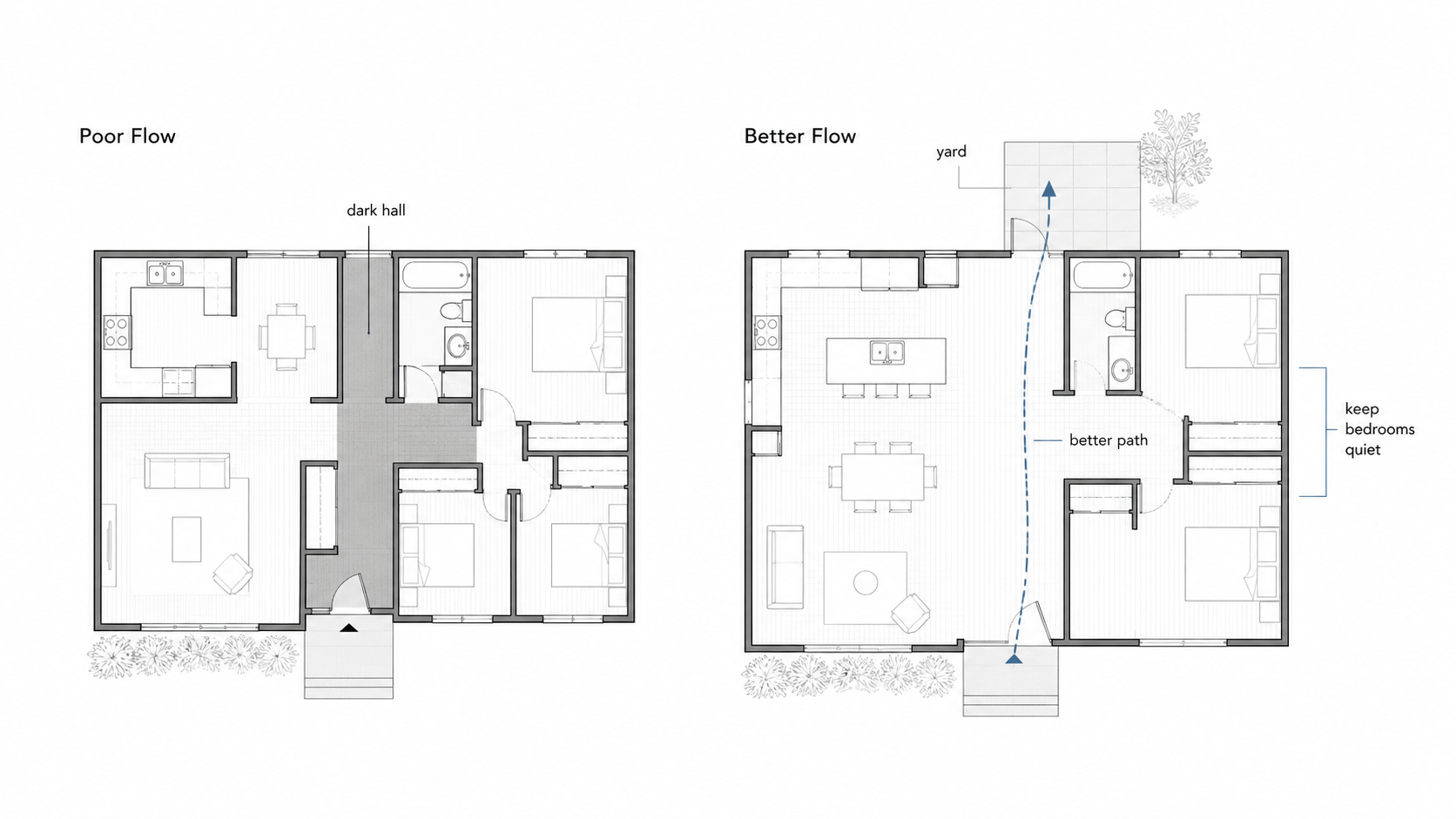
Illustration by ArchitectureCourses.org. A better ranch layout improves light, movement, and yard connection instead of simply removing walls.
People often assume finishes are the expensive part.
Usually they are not.
The money disappears when you start changing:
- wall locations
- ceiling structure
- plumbing paths
- kitchen layouts
- window openings
- roof framing
Opening one wall may be manageable.
Opening multiple structural walls, moving HVAC, relocating plumbing, and rebuilding ceilings at the same time can explode the budget fast.
Before opening the plan, read open floor plan ranch house.
Kitchen Remodel Costs Rise Fast in Ranch Houses
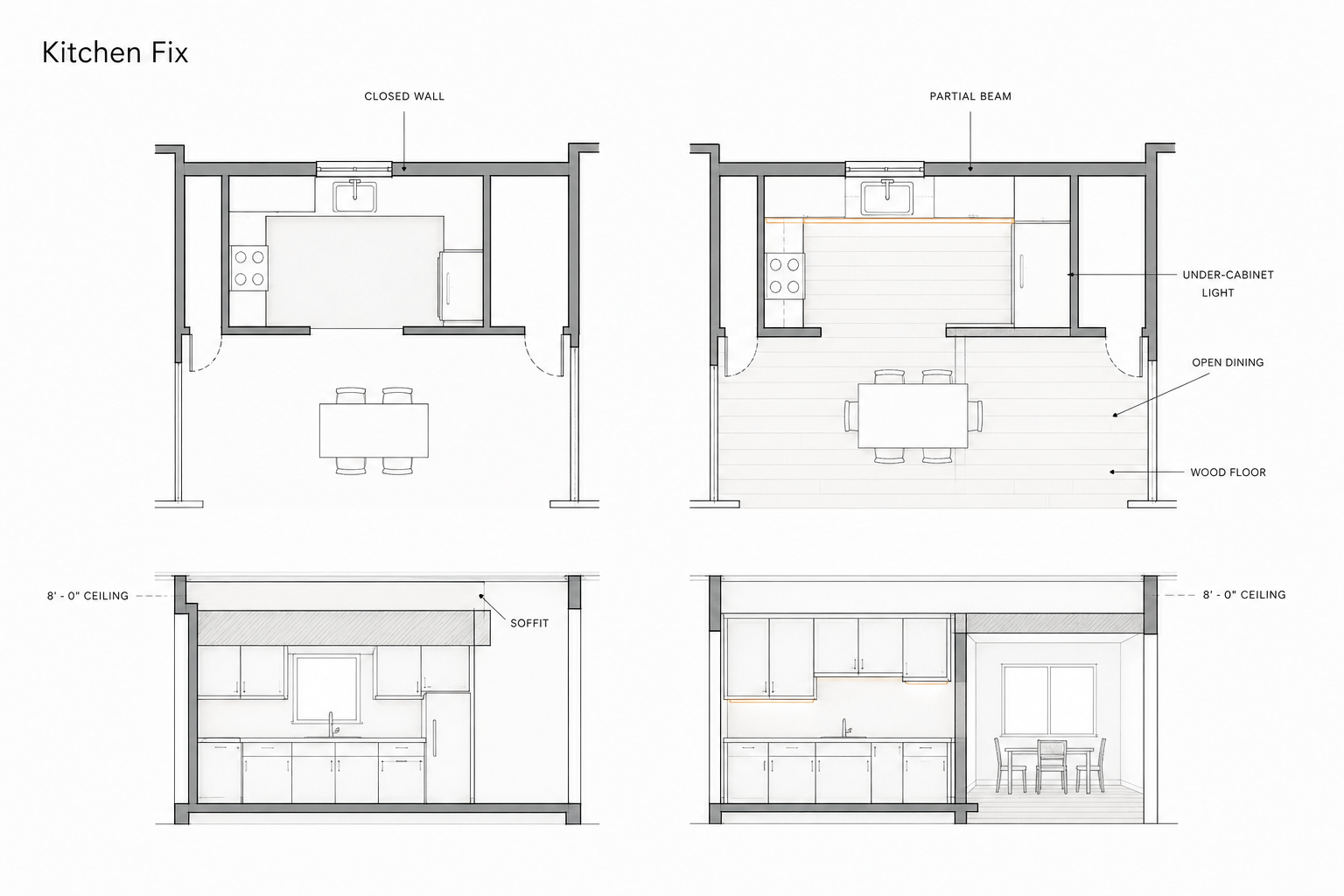
Illustration by ArchitectureCourses.org. Many ranch kitchens improve more from layout, lighting, and better openings than from expensive finishes alone.
Older ranch kitchens are often:
- small
- boxed in
- underlit
- poorly connected to dining or living areas
Costs rise when you:
- move plumbing
- remove structural walls
- add large rear openings
- rebuild electrical systems
- replace old subfloors or damaged framing
A smarter remodel often keeps plumbing close to its original location and spends money on:
- better openings
- lighting layers
- cabinet layout
- window upgrades
That usually improves the house more than luxury finishes alone.
Wall Removal Costs Depend on Structure
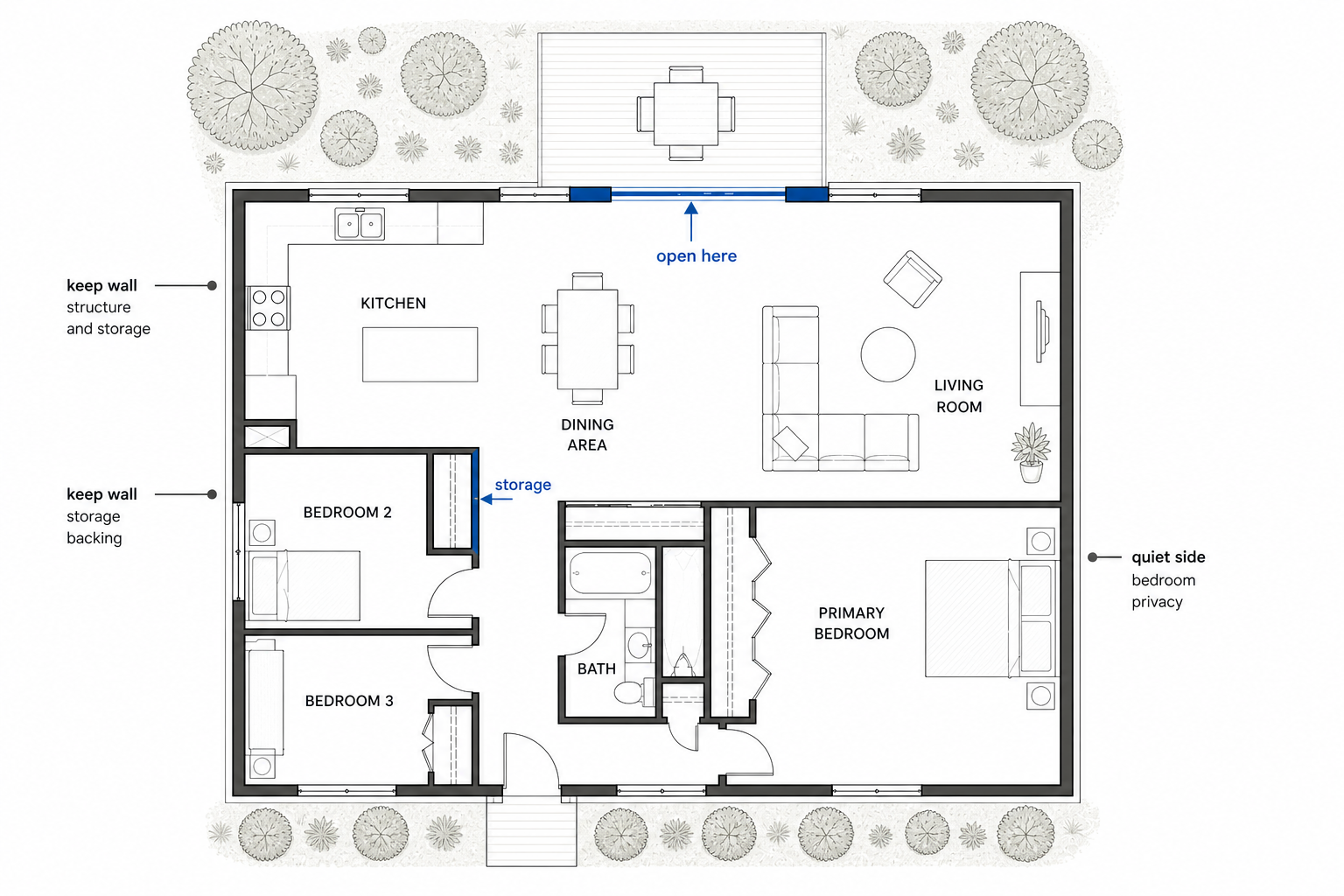
Illustration by ArchitectureCourses.org. Selective wall removal works better when one opening improves light and movement while other walls continue handling storage, privacy, and structure.
Removing a non-load-bearing wall may cost a few thousand dollars.
A structural opening with:
- beam work
- engineering
- temporary support
- ceiling rebuild
- electrical relocation
can cost dramatically more.
| Wall Type | Typical Cost Range |
|---|---|
| Simple non-load-bearing wall | $2,000–$8,000 |
| Load-bearing opening | $8,000–$35,000+ |
| Large beam opening | $20,000–$60,000+ |
Before removing anything, review load-bearing vs non-load-bearing walls.
Additions Are Where Budgets Change Completely
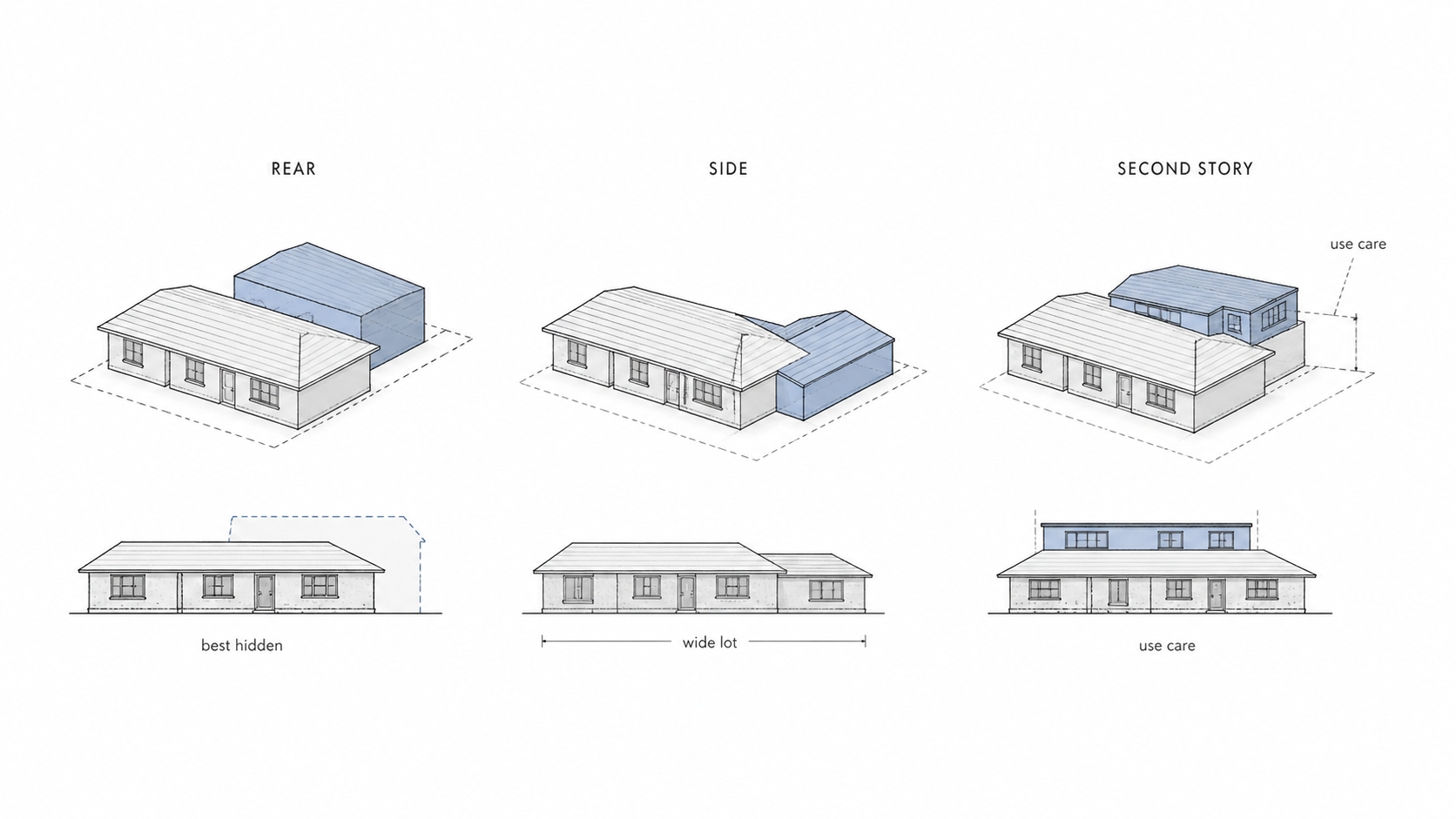
Illustration by ArchitectureCourses.org. Rear and side additions usually protect the original ranch form better than oversized second-story additions.
Small ranch additions can work very well.
But additions are not just “extra square footage.” They affect:
- foundation work
- roof structure
- drainage
- HVAC sizing
- window rhythm
- the entire shape of the house
Rear additions are usually the safest move because they improve the living core without changing the front elevation too aggressively.
Second-story additions are often the most expensive and most visually risky.
For layout and massing strategy, see modern addition to a ranch house.
Low, Medium, and High Budget Examples
A ranch remodel budget makes more sense when you separate the work by scope, not just by square footage.
| Budget Level | What It Usually Covers | What It Usually Does Not Cover |
|---|---|---|
| Lower budget | Paint, lighting, flooring, cabinet refresh, minor repairs, small opening changes | Major structure, additions, full kitchen relocation |
| Middle budget | Kitchen remodel, selective wall opening, window upgrades, better lighting, some exterior cleanup | Large addition, full roof changes, second story |
| High budget | Whole-house remodel, major wall removal, large openings, rear addition, upgraded systems | Usually only limited by site, structure, and local labor costs |
The middle budget is often the best place to be. That is where you can fix light, flow, kitchen layout, and yard connection without turning the project into a full rebuild.
Windows and Doors Can Quietly Eat the Budget
Many ranch houses improve dramatically from better openings and better daylight.
But once you enlarge openings, costs increase fast:
- headers may change
- exterior finishes need repair
- flashing details become critical
- flooring transitions may need replacement
Large sliding or multi-panel doors also affect structure more than many homeowners expect.
This is one reason selective openings usually work better than turning every wall into glass.
If the main problem is a dark middle, start with how to brighten a dark ranch house before assuming you need a large addition.
Old Ranch Houses Often Hide Expensive Problems
Many mid-century ranch houses contain:
- old wiring
- undersized electrical panels
- aging plumbing
- asbestos materials
- settlement issues
- poor insulation
These issues may not appear in listing photos, but they can reshape the remodel budget quickly.
Before demolition, review asbestos in 1950s houses.
Where You Should Spend More
- layout improvement
- light and window placement
- good openings
- structure done correctly
- kitchen function
- yard connection
These are the places where money usually changes the house in a lasting way.
Where People Overspend
- oversized islands
- too much demolition
- luxury finishes before fixing layout
- fake “modern farmhouse” details
- opening every wall
- second stories that overpower the house
Some remodels spend heavily and still keep the dark middle, awkward movement, and weak yard connection.
That is usually a planning problem, not a money problem.
Cheap Remodel vs Smart Remodel
| Cheap Remodel | Smart Remodel |
|---|---|
| new finishes only | better layout first |
| random wall removal | targeted openings |
| decor before lighting | light path first |
| huge demolition | controlled structural changes |
| style trends | daily usability |
Quick Cost Reality Check
- Structure changes cost more than paint.
- Plumbing moves cost more than cabinets.
- Large openings cost more than people expect.
- Additions change the entire budget category.
- Good planning saves more money than cheap finishes.