


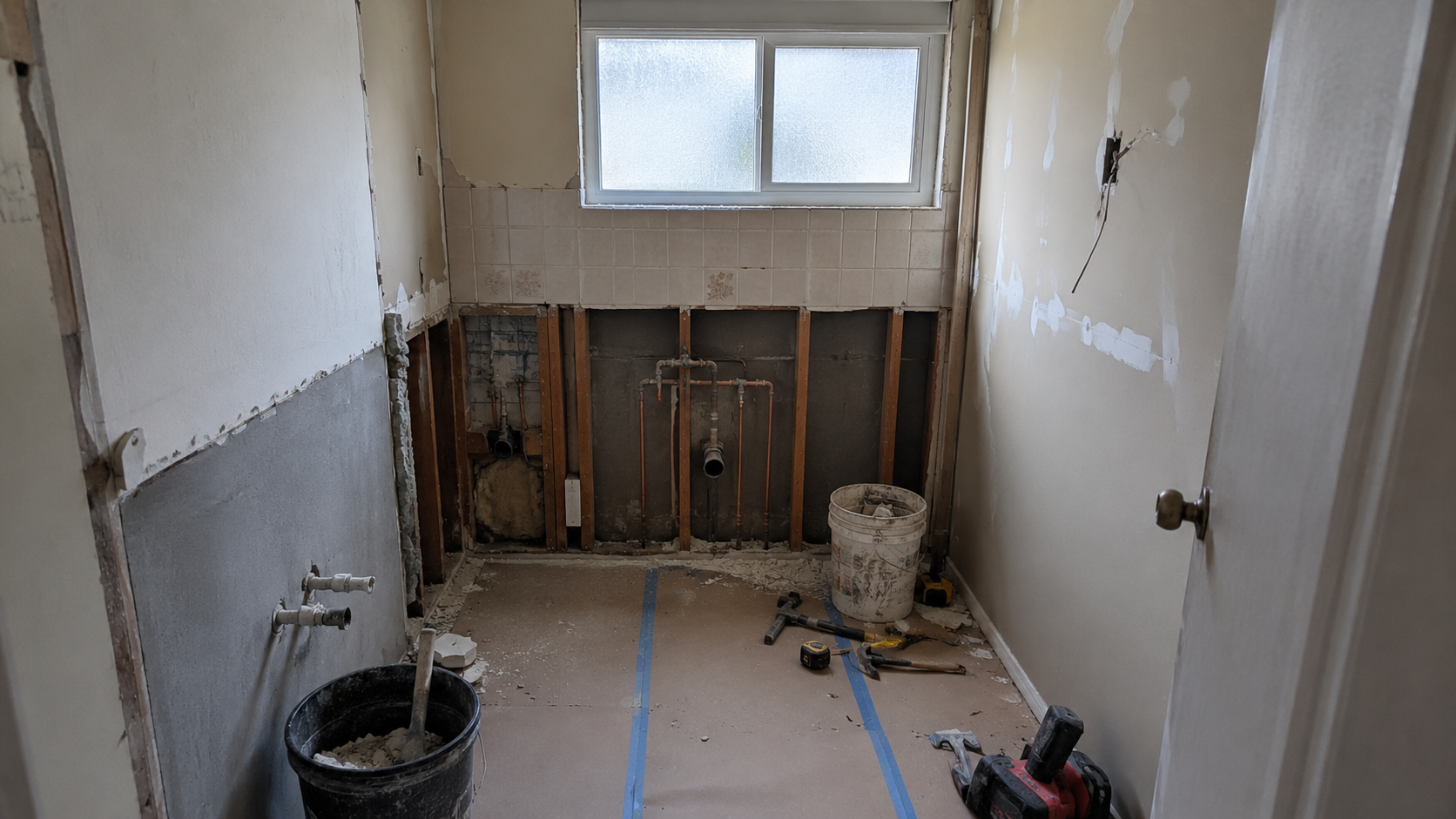
Image by ArchitectureCourses.org. A ranch bathroom remodel usually starts to make sense after the walls open and the old plumbing, framing, tile, and ventilation conditions are visible.
A small ranch bathroom can look like the easy room.
That is the trap.
The room is small, so the project feels contained. New tile, new vanity, new light, new mirror. Done.
Then the wall opens.
Old plumbing. Soft subfloor around the toilet. No blocking where the new glass door is supposed to mount. A fan that barely moves air. Tile over tile. A tub squeezed into a room that never had enough clearance. The bathroom was never only a finish problem. It was a small room hiding leaks, moisture damage, blocked access, and expensive decisions.
The Wall Tells the Truth
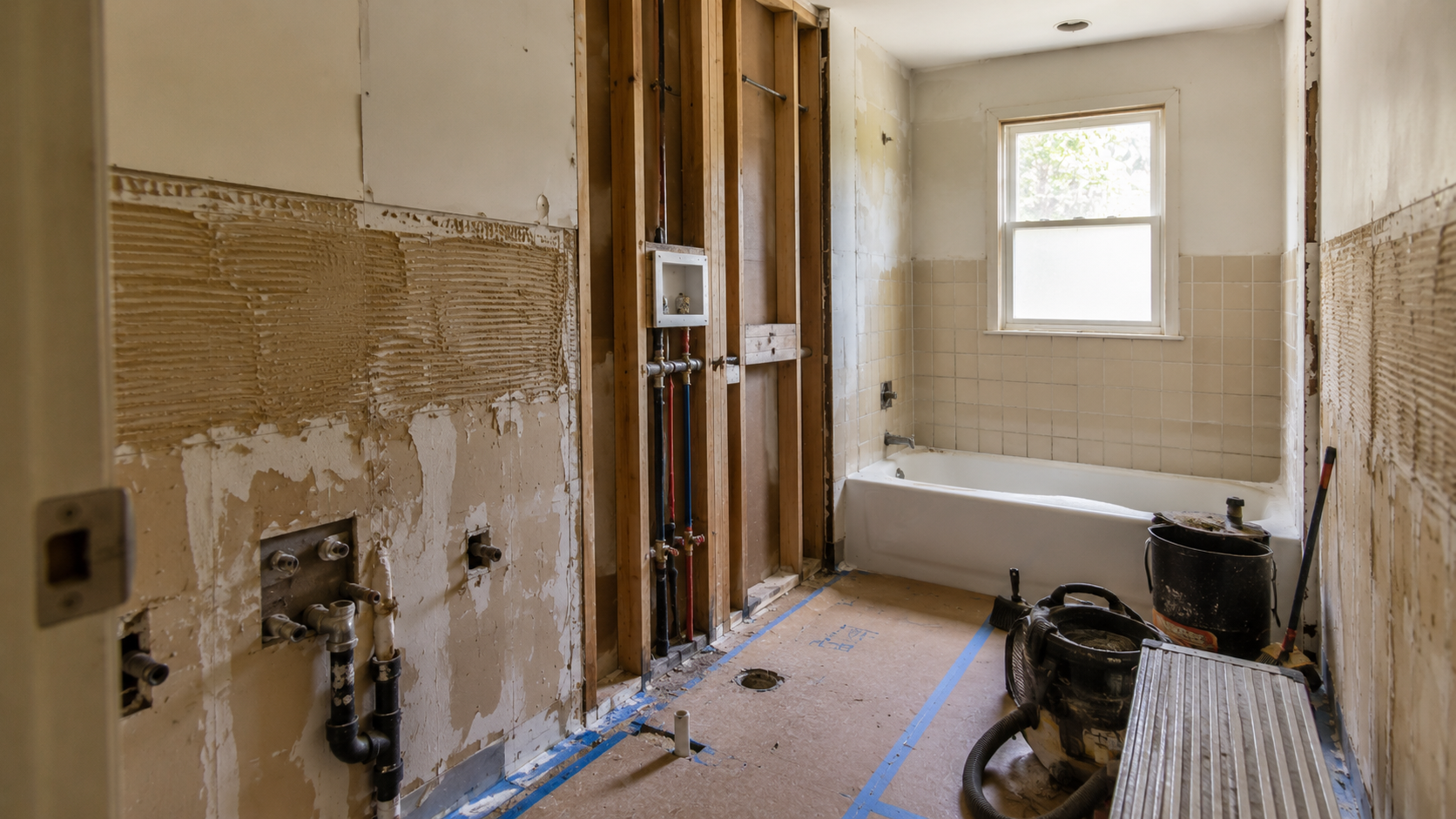
Image by ArchitectureCourses.org. A small ranch bathroom remodel often means exposing old tile, checking rough plumbing, protecting the floor, and fixing wall conditions before new finishes go in.
Older ranch bathrooms hide problems better than kitchens. A kitchen at least shows its awkwardness. Bad counters, poor light, cabinets that choke the room. A bathroom hides almost everything behind tile, mirrors, tub panels, paint, and caulk.
That is why the first serious decision happens after demolition, not during tile shopping.
Once the room is opened, I would check the boring things first: subfloor around the toilet and tub, old supply lines, drain position, wall framing, fan route, electrical boxes, and whether the new fixture plan still makes sense in the room that exists. A pretty bath drawn over soft floor framing is not a design. It is a leak waiting to become rot, cracked tile, and wasted money.
Find the Failure Before Pricing the Fix
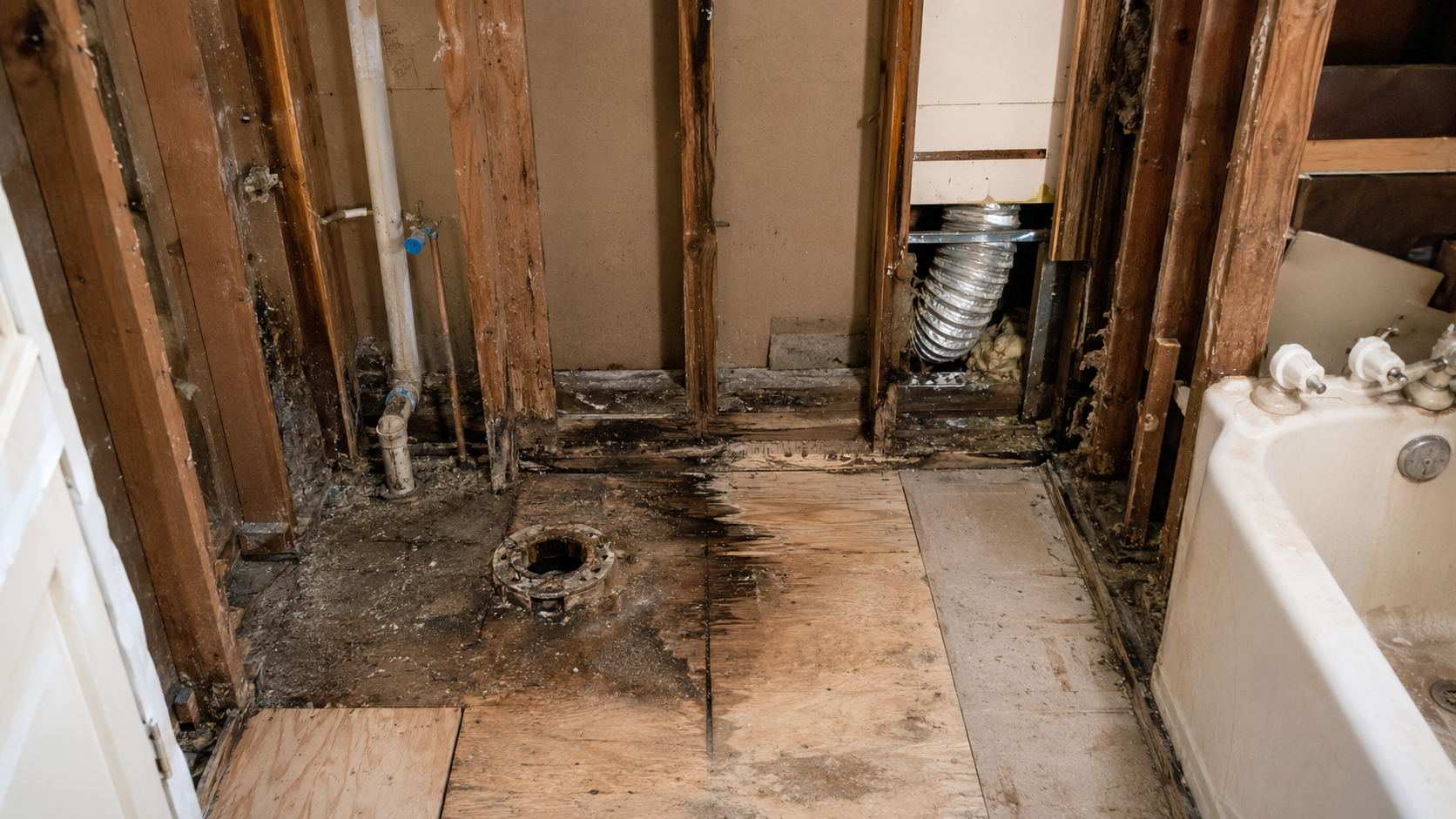
Image by ArchitectureCourses.org. Once the bathroom is opened, leaks around the toilet, tub edge, and old plumbing can turn a simple finish update into subfloor repair and rough-in work.
Do not price the finish package before you know what failed.
A stained ceiling below the bathroom may be a tub overflow leak, a toilet wax ring failure, a cracked supply line, or water escaping a shower edge. Peeling paint may be poor ventilation, but it may also be trapped moisture behind old wall finishes. A loose tile floor may be a bad tile job, a wet subfloor, or movement in the floor framing.
Those are different failures. They do not get the same repair.
The order matters. Find the water source. Check the floor. Open enough wall to see the plumbing and backing. Confirm where the fan vents. Then choose the repair. If the diagnosis is skipped, the remodel can hide the failure for a while, and then the same leak or condensation problem comes back through new finishes.
| Symptom | Check First | Failure If You Guess Wrong |
|---|---|---|
| Soft floor near toilet | Wax ring, flange height, subfloor condition | Rot, cracked tile, loose toilet, repeat leak |
| Peeling paint | Fan size, duct route, exterior termination | Mold, condensation, failed paint |
| Loose wall tile | Backing, waterproofing, old moisture damage | Trapped water, wall rot, tile failure |
| Bad smell near vanity | Trap, venting, drain connection, hidden leak | Sewer gas, moisture damage, failed inspection |
| Dim shower | Safe light location and rated fixture | Poor visibility, unsafe use, code trouble |
Keep the Layout Until It Indicts Itself
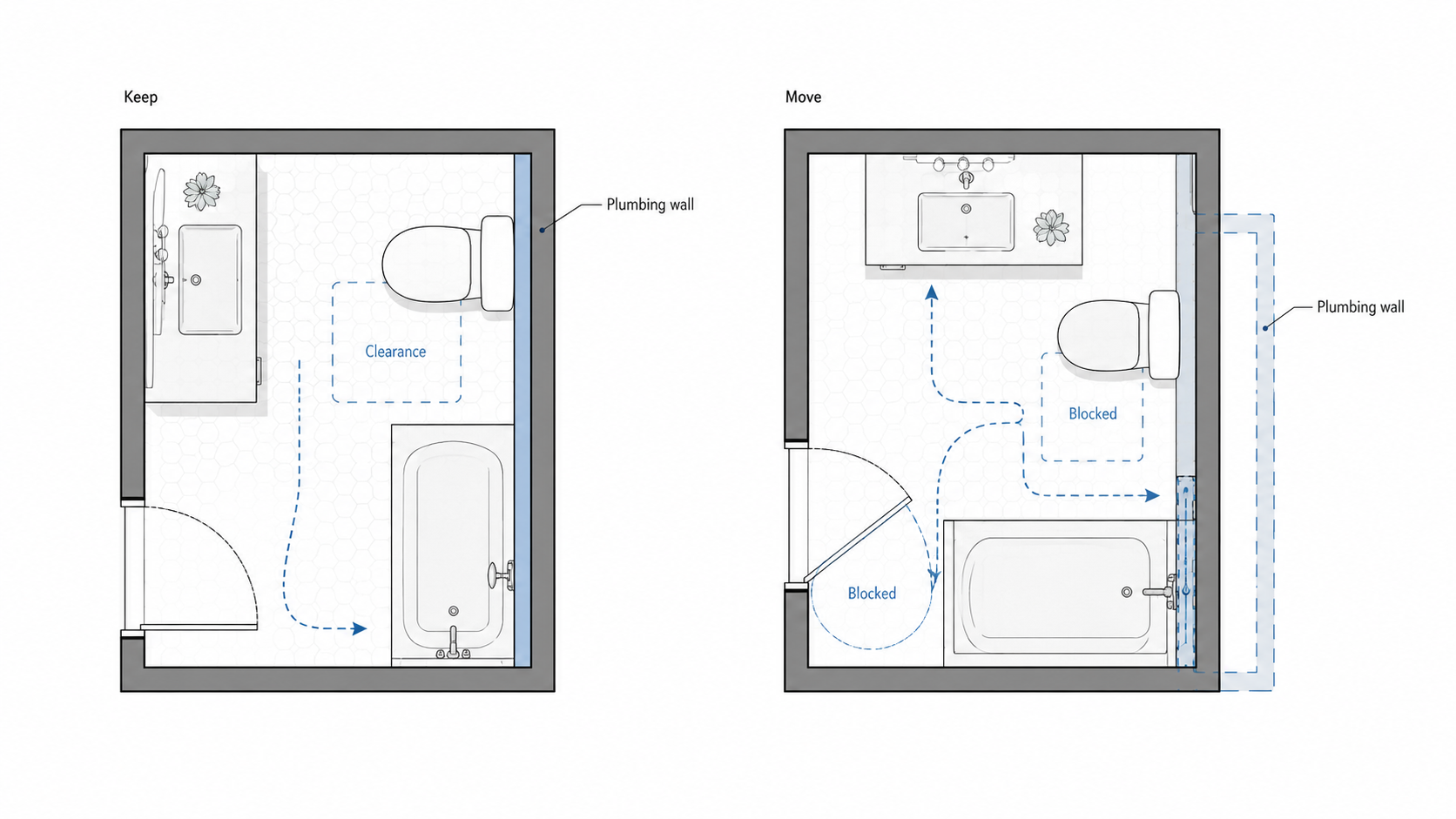
Illustration by ArchitectureCourses.org. A small ranch bathroom often works better when the plumbing wall stays put and the remodel fixes clearance, storage, lighting, and access instead of moving every fixture.
Small ranch bathrooms are not always badly planned.
Some are just tired. That distinction saves money.
Moving a toilet a few inches can turn into floor cuts, drain work, vent changes, framing repair, and inspection headaches. Moving the vanity may look minor in a drawing, then the wall opens and the old plumbing wall is carrying more work than expected. The room is small, so every fixture shift feels larger than it sounds.
Change the layout when the old one creates a physical problem: the door hits the vanity, the toilet clearance is poor, the tub blocks the only usable storage wall, the shower is unsafe, or a fixture blocks service access. Do not move plumbing because the plan feels old. Old is not the same as wrong.
The better move is usually to make the existing layout work harder. Use a smaller vanity if the door swing is bad. Add recessed storage before stealing clearance from the room. Improve lighting before assuming the room needs to be re-planned. If the toilet, tub, and vanity already sit on a compact wet wall, that wall may be saving the budget.
The Finished Bathroom Can Still Be Wrong
This is where bad bathroom remodels get expensive and still feel cheap.
The tile is clean. The vanity photographs well. The black hardware matches. Then the door hits the bath mat every morning, the mirror light throws shadows under the eyes, the fan sounds tired and leaves the room damp, the shower niche is in the wrong place, and there is nowhere to put a towel without reaching across the room.
That bathroom is finished. It is not fixed.
A ranch bathroom needs sequence: rough-in first, moisture control second, layout and clearance third, lighting and storage before decoration. Tile comes late. Hardware comes later. If the room cannot handle water, air, storage, and movement, the finish package is just makeup on a bad plan.
Rough-In Work Decides Whether the Remodel Holds
The unglamorous checks decide whether the room survives daily use.
The subfloor around the toilet and tub deserves attention before tile. Old leaks collect there. If the floor is soft, new tile may crack, the toilet may rock, and the flange may keep leaking into the same damaged area.
The walls need backing where weight will land. Vanities, grab bars, towel bars, glass panels, and shower doors cannot depend on wishful drywall. Add blocking while the wall is open. Doing it later means opening finished work or accepting weak fixtures.
The electrical layout also needs to be solved before the room gets closed. Mirror light, fan switch, GFCI outlet, shower-rated light, and vanity location all fight for a small amount of wall space. If that is not planned early, the finished wall ends up crowded, patched, or underlit.
Tile Is a Water Assembly
Tile gets the attention because it is visible. It should not lead the project.
Before choosing tile, decide the waterproofing method, wall board, floor prep, shower slope, curb or threshold, niche position, drain location, and edge trim. Those decisions control whether water stays where it belongs or gets trapped behind the finished surface. Expensive tile over weak prep only makes the failure more insulting.
Small ranch bathrooms usually age better with one calm wall tile, one floor tile, and clean edges. Accent strips, mixed patterns, busy niches, and high-contrast grout can work, but the room has to carry them. Most small bathrooms cannot carry five ideas at once.
The Tub Question Belongs to the House
A walk-in shower may be the better daily choice.
Removing the only tub may still be a mistake.
In a one-bath ranch, the tub has value beyond style. Children, pets, resale flexibility, soaking, cleaning, and basic household use all matter. In a two-bath ranch, converting one tub to a shower is easier to justify. In an aging-in-place remodel, a safer shower may matter more than keeping a tub nobody uses.
The better question is simple: what does this house still need this bathroom to do?
| Choice | Use It When | Watch For |
|---|---|---|
| Keep the tub | It is the only bathroom or family flexibility matters | The room may still need better lighting, storage, and ventilation |
| Tub-to-shower conversion | There is another tub or accessibility matters more | Waterproofing, slope, and glass placement need real planning |
| Walk-in shower | Daily use and safety drive the remodel | A cramped shower is not an upgrade because it has new tile |
The Fan Is Boring. Buy the Good One.
A lot of old ranch bathrooms were never ventilated well enough.
Some fans are too weak. Some are too loud, so nobody uses them. Some vent into the attic, which only moves the moisture problem into a darker place. A window does not solve this in winter, during rain, or when nobody opens it.
Moisture attacks the room quietly: paint first, then trim, then wallboard, then tile edges, then framing if the problem keeps going. A bathroom can look newly remodeled and still begin failing because damp air has nowhere to go.
Use a properly sized fan. Vent it outdoors. Make sure the door undercut or transfer air lets the fan pull from the room. This is not the exciting line item. It is one of the items that decides whether the bathroom still looks good five years later.
What Fails After the Bathroom Looks Finished
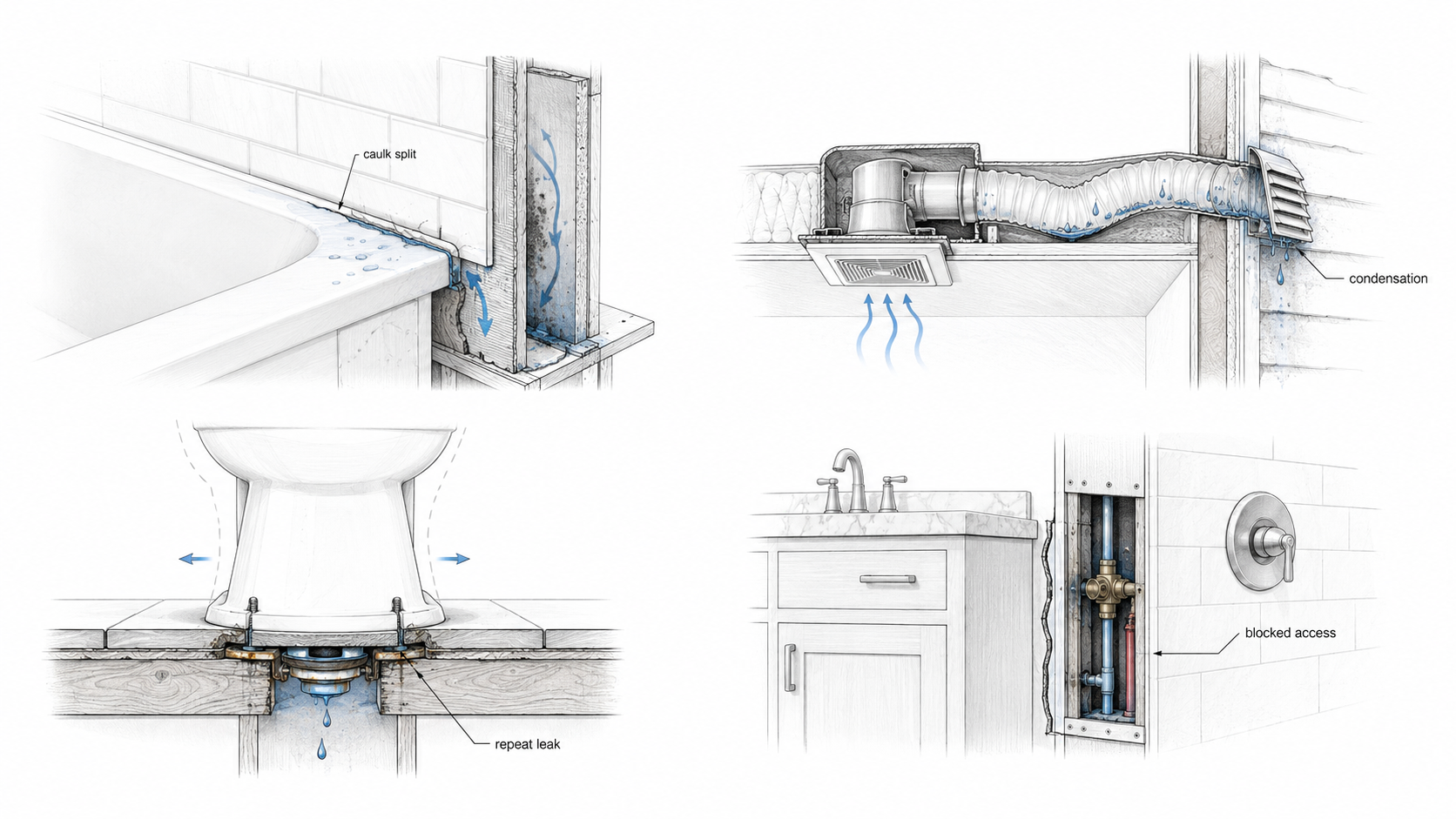
Illustration by ArchitectureCourses.org. The failures that show up after a bathroom remodel often start at small details: caulk joints, fan ducting, toilet flanges, and plumbing access.
Year one is not the real test.
The real test starts after daily showers, winter humidity, cleaning products, door swings, towels, kids, guests, and normal use have had time to work on the room.
Caulk lines around tubs and shower edges are usually the first small warning. If they were used to cover movement, poor backing, bad edge planning, or a weak joint, they split, stain, or peel. Grout tells the same story. Cracked grout at corners and movement points is not just a cosmetic issue. It can let water reach places the tile was supposed to protect.
Fan motors also show the truth. A cheap or undersized fan may sound rough, move little air, and leave condensation on mirrors and paint. That moisture does not stay polite. It feeds mildew, softens paint, stains trim, and can push damp air into the attic if the ducting was handled badly.
Then come the service problems. A shower valve with no access. A vanity installed tight against a wall where a supply line later needs work. A toilet flange sitting wrong over patched flooring. These are the failures that make a finished bathroom expensive again. The room looked done, but it was never built for repair.
Low Ceilings Make Bad Lighting Worse
One ceiling light is rarely enough.
Old ranch bathrooms often have flat, yellow, badly placed light. The mirror gets shadows. The shower is dim. The ceiling feels lower than it is. Then the remodel tries to fix the room with brighter finishes, which helps less than expected because the light is still wrong.
Mirror lighting matters most. A quiet fan light or ceiling light can support it. Shower-rated lighting may be needed if the bathing area feels dark. Skip the dramatic hanging fixture unless the room has the ceiling height and clearance to carry it.
This is the same low-ceiling problem that shows up across older ranch houses. If the whole house feels compressed, read how to make a low ceiling ranch house feel taller.
Storage Cannot Be Imaginary
Small bathrooms punish fantasy.
A floating vanity may look clean and still fail if there is nowhere for towels, toilet paper, medicine, cleaning supplies, hair tools, and the things used every morning. A huge vanity can create storage and ruin the clearance. Both mistakes show up in small ranch bathrooms because the room is too tight to absorb bad sizing.
The better answer is usually less dramatic: a vanity that fits the aisle, a recessed medicine cabinet, towel hooks where people can reach them, shallow wall storage if the wall allows it, and one planned landing spot near the sink.
Do not design the bathroom as if nobody owns anything.
Bathrooms Near Kitchens Need Coordination
Ranch houses often keep plumbing compact. Kitchen, hall bath, laundry, and utility spaces may sit closer together than they appear in the finished plan.
That can help the budget when the wet walls stay put. It becomes a problem when a kitchen remodel, wall opening, or hallway change steals space or service access from the bathroom. The bathroom is small enough already. It should not become the room that absorbs every compromise because the kitchen got all the attention.
If both rooms are being touched, coordinate plumbing walls, ventilation routes, lighting, flooring transitions, and storage early. For the kitchen side of the same problem, see ranch house kitchen layout problems and better fixes.
Where the Money Goes Wrong
| Money Goes Here | Usually Better Spent On |
|---|---|
| High-end tile everywhere | Waterproofing, fan, floor prep, and lighting |
| Moving every fixture | Keeping the wet wall and fixing rough-in conditions |
| Huge vanity | Right-sized vanity plus planned wall storage |
| Decorative niche | Clean tile edges and better wall prep |
| Trend hardware package | Better mirror light, fan, and paint prep |
The right column is less glamorous. It is also where the room stops failing.
A cheaper finish-first remodel may look complete in year one and cost more by year three if the fan is weak, the shower edge leaks, the toilet flange moves, or the subfloor was never repaired. The first invoice is not the full cost if the room has to be opened again.
One Strong Move
A small ranch bathroom can take character. It cannot take every idea.
Bold floor tile, dark paint, brass fixtures, black plumbing trim, fluted glass, wall paneling, an arched mirror, and a statement light in one tiny room is not personality. It is accumulation. Pick one strong move. Maybe the floor. Maybe the vanity. Maybe the wall color. Then let the rest of the room do its job quietly.
Plan Before the Wall Opens
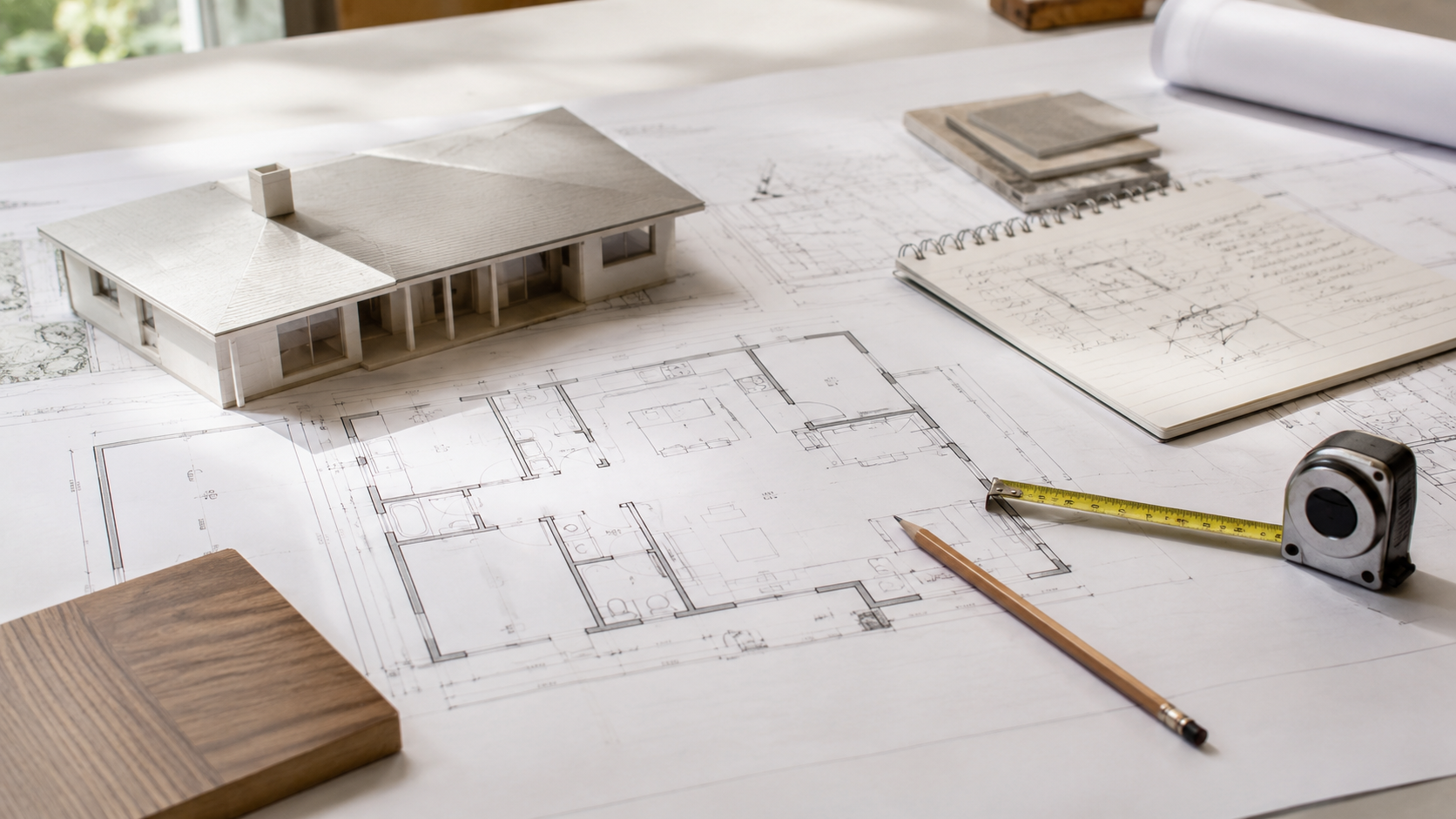
Image by ArchitectureCourses.org. Ranch renovation planning works best when layout, structure, light, and material choices are studied together before demolition starts.
Before demolition, decide what this bathroom needs to become. A better family bath. A safer shower. A cleaner powder room. A primary bath that finally has storage. Each answer changes the layout and budget.
If the bathroom is part of a larger remodel, use cost to remodel a ranch house before letting a small room quietly drag the whole budget sideways.
Read Next
Cost to remodel a ranch house. Useful if the bathroom is part of a larger renovation.
Ranch house kitchen layout problems and better fixes. Many ranch bathroom and kitchen decisions share plumbing walls, lighting problems, and old-house constraints.
How to make a low ceiling ranch house feel taller. Helpful when the bathroom feels cramped because the whole house has low, heavy ceilings.
Open floor plan ranch house. Useful if the bathroom remodel is tied to larger wall-removal work.