
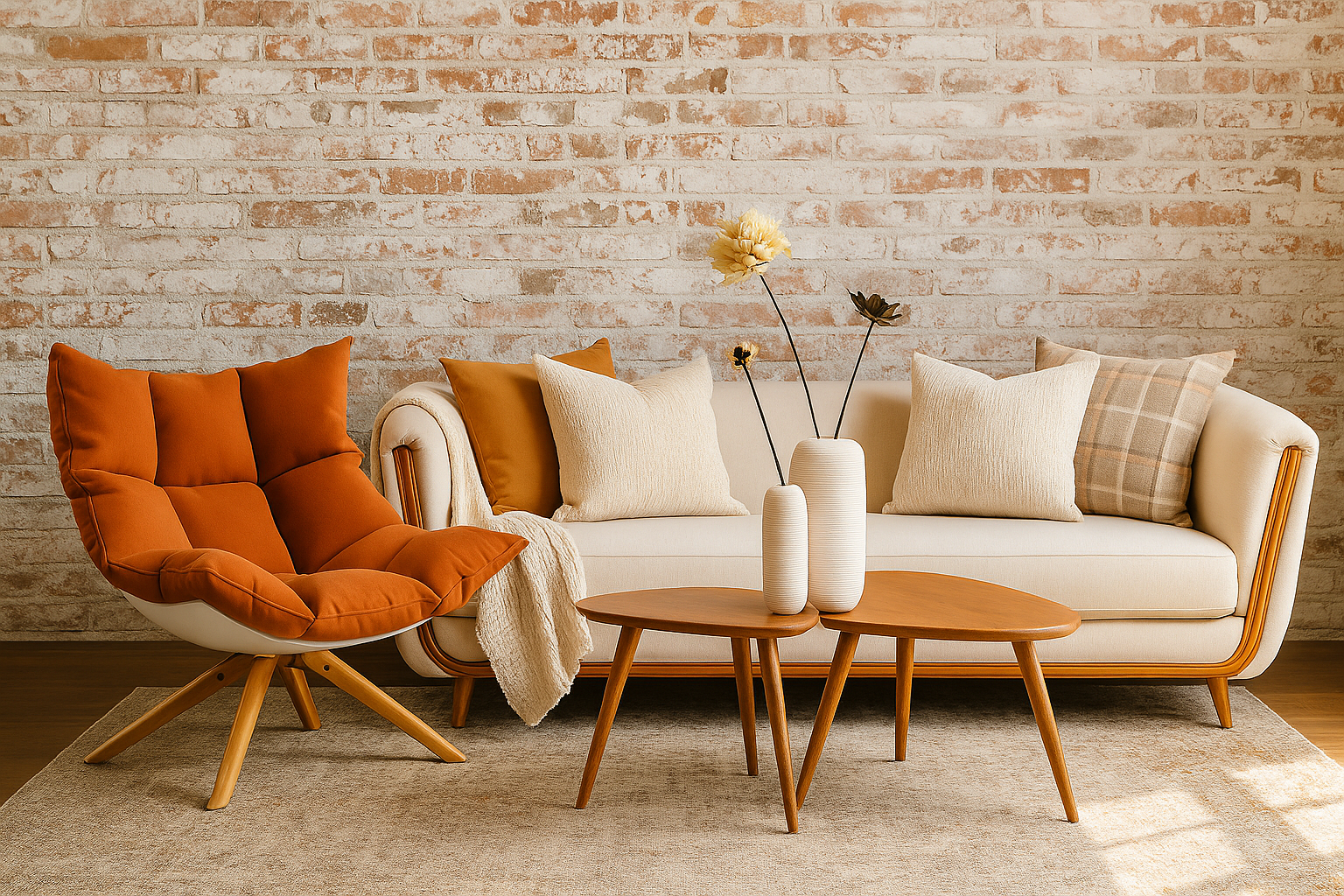
How to Bring Fall Texture and Light into Your Home
Autumn is the season that forgives our hurry. Light drops earlier, edges soften, and even the most modern rooms want a little wool and wood. This is about tuning the house the way you’d tune an instrument: color, texture, light, and a few confident moves that make cool evenings feel like an invitation instead of a warning.
I’ll walk you room by room, the way I work with clients: front door first, then through the living spaces, kitchen and dining, bedroom and bath, and finally the small corners that either hum or go dead in fall. I’ll give you the exact materials and moves I reach for.
The Ultimate Guide to Autumn House Decor in 2025
Autumn house decor is about light, texture, and materials that age well. Learn how to use natural color and warmth without clutter.
Start at the Door: Warmth in One Step
Open your front door and listen to what the house says back. In autumn, it should say “you’re home” before your shoes even cross the threshold. That starts with temperature and texture underfoot. If the entry tile is cold, lay down a low-pile runner that doesn’t fight the door swing. Printed vintage patterns hide the season’s dirt better than solids; they also look right with wet coats and muddy boots in a way a fluffy shag never will. Keep the palette simple: a base of warm neutrals (caramel, tobacco, oatmeal) with one decisive accent that threads into the rooms beyond—maybe a muted persimmon stripe or a moss note that repeats on a vase by the mirror.
Speaking of mirrors: a tall, arched profile earns its keep in fall. It lifts a short day, bounces what little light you have, and makes the entry feel taller without adding visual noise. Mount it if you have kids or dogs barreling through; lean it if you want a softer, studio-like read. Keep the landing zone honest: a slim console for keys, a small lamp for dusk, a tray for mail so it doesn’t colonize your kitchen. If you’re coming from a summer of open, airy minimalism, and you’re unsure how to thicken the scene without making a mess, skim our straightforward refresher on how to decorate your home; it’s the “why” behind the simple entry choices, and it will help your eye stay consistent as we move room to room.
RECOMMENDED TOOL
Bosch GLM 20 Laser Measure — One-button accuracy so rugs, mirrors, and consoles fit the first time. Get it on Amazon »
If your style leans traditional but you don’t want to feel theme-park colonial, the fix is simple: fewer “signifiers,” richer materials. A small, heavy bowl of bronze or patinated brass on the console reads more grown-up than a “gather” sign ever will. You’ll find more ways to blend heritage with fresh choices in our short piece on making traditional decor feel new again. Read that, then remove one decorative item from your entry. Space, not stuff, is what makes the air feel warm.
The Living Room: Heat Without the Thermostat
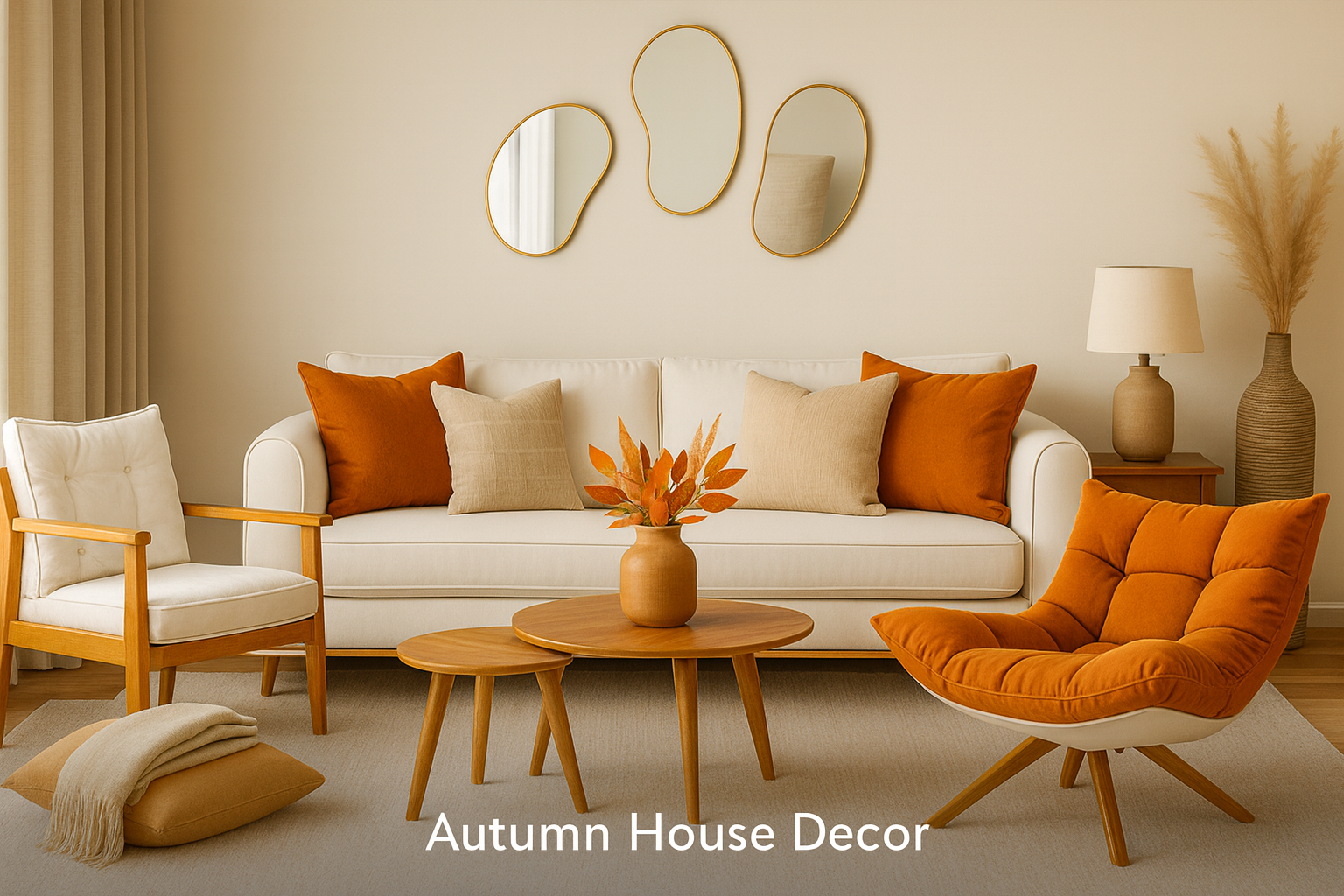
Autumn living rooms are built on three elements: scale, softness, and glow. If the rug is too small, the room will stay jittery no matter how many throws you buy. Minimum for most sofas is 8×10 so front legs can sit on the field; bigger if you have a sectional. Printed “vintage” rugs wear best during rainy months and allow door clearance in older homes where thresholds are tight. Once the floor is anchored, layer softness where people actually touch the room: elbows, ankles, and the back of your neck. That means a dense knit throw with some weight (not the light acrylic that crackles), a lumbar pillow that breaks up a row of squares, and a single tactile contrast—bouclé or suede—against the sofa’s base fabric. You don’t need a mountain of cushions; you need the right two or three that suggest warmth without smothering the frame.
Light is the other half. Evenings get long. If overhead cans are your only source, you’ll see every surface but you won’t feel any of them. I like a tall arc floor lamp to drape light into the seating zone and two table lamps to pull the periphery forward. Keep bulbs warm—2700K or 3000K—because autumn color and cool light argue. When I want modern-elegant without a big spend, I reach for an arc style that can sit behind the sofa and throw three small pools of light. Pair that with one dimmer on the wall and you’ll never see the room flat again.
If you’re cross-shopping aesthetics—traditional bones with modern energy—this quick primer on getting the balance right in a modern-traditional living room will spare you the “pretty but stiff” trap. Read it, then make one edit: swap shiny chrome for aged brass, or vice versa. Mixed metals can hum together in autumn if you let one lead and one support.
FIELD PICK
Loloi II Layla Printed Rug — Low profile, vintage look, slides under doors and shrugs off leaf season. Shop on Amazon »
RECOMMENDED TOOL
Trinity Arc Floor Lamp — Three adjustable heads = layered evening light without rewiring. See the listing »
Color? I keep living rooms grounded: tobacco, chestnut, dried leaf, walnut for the big stuff. Then I let one accent do the season’s storytelling: rust velvet, oxblood leather, or a quiet pine green. If you want to go deeper on quiet color control, our piece on minimalist living room decor is not about owning less; it’s about making fewer, smarter moves so the room breathes even when you add seasonal layers. In practice, that might mean a single rust pillow per seat, not a pile; or a wool throw with a herringbone that nods to the season without shouting “fall.”
MUST READ
Styled — Emily Henderson — Turns paralysis into action with clear rules of thumb for surfaces and seating. Buy on Amazon »
Kitchen: Autumn Without the Clutter
Kitchens tend to swallow seasonal decor because they’re already visual: handles, appliances, tile grids. So instead of layering objects, change the read of what’s already there. Switch tea towels to a heavier weave—linen or cotton-linen blend in ochre or clay—so they hang with weight. Trade a summer chopping board for a deeper walnut slab that can live out on the counter and double as a warm backdrop for a bowl of pears. If you have open shelves, edit down to two heights: stacks that look like workhorses (everyday bowls) and one sculptural moment (a handled pot, a stoneware pitcher) to break the line. The goal is to read “quiet abundance,” not “farm stand exploded.”
Lighting does a lot here and it doesn’t have to be hardwired. A simple plug-in pendant over a breakfast nook puts the season on a dimmer—soft pools for early mornings, bright washes for late cooking. If your kitchen skews modern and you’re anxious about warmth, it’s not color you’re missing; it’s grain. Bring in wood with visible life—oak with a wire-brush, walnut with oil, even a bamboo tray with a matte finish. Small dose, strong shift.
RECOMMENDED TOOL
Plug-In Pendant — Renter-friendly overhead light to warm a nook fast. Check price »
For layout refreshers that cut through guesswork (table clearances, island stool spacing), borrow two pages from our plain-English beginners’ guide to decorating and keep them in the junk drawer. You’ll use them more than you think when the holidays pull chairs and leaves into play.
Dining: Make the Table Earn Its Keep
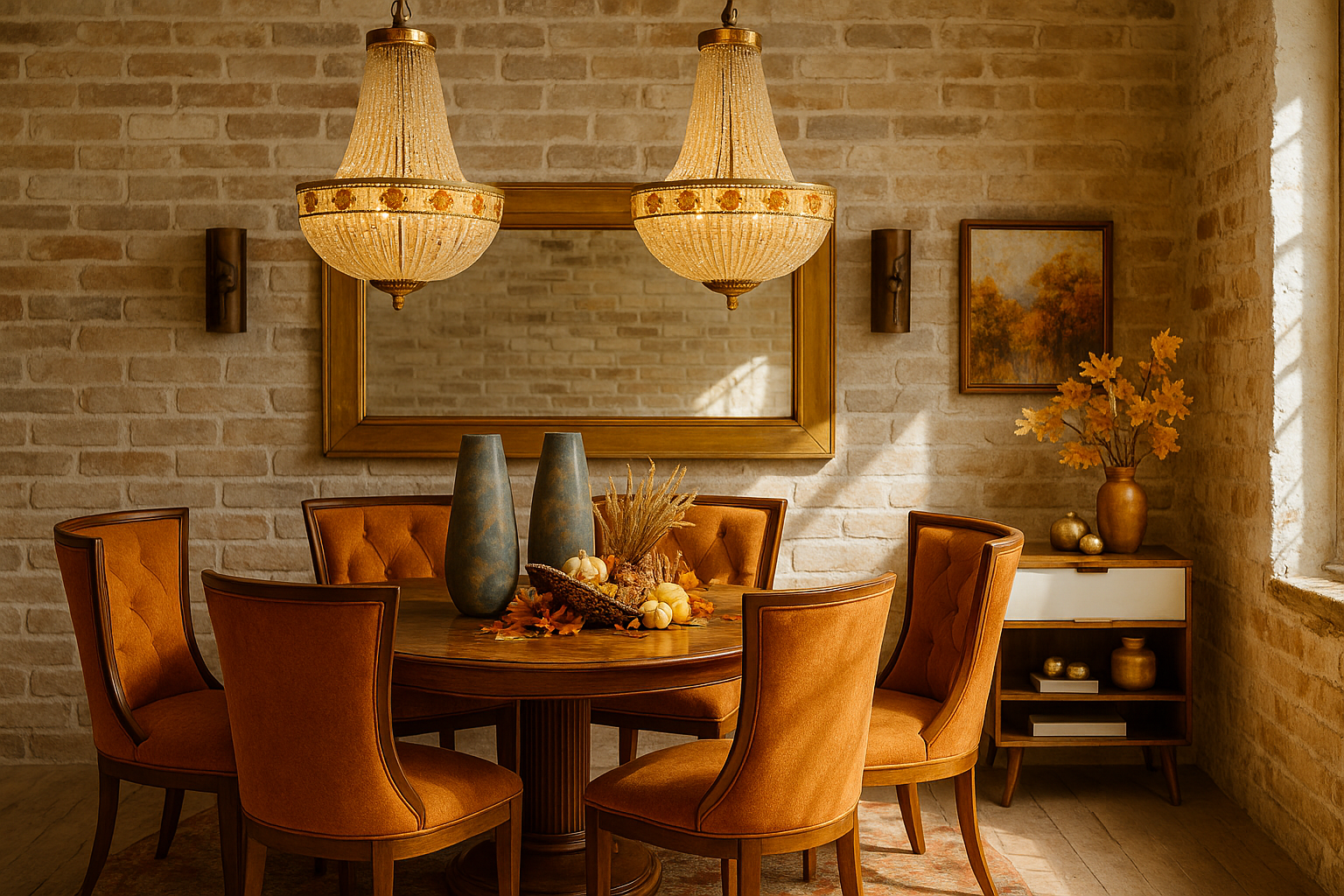
Autumn is unfair to dining tables—they become billboards for centerpieces that get slid aside the minute plates land. I prefer a leaner approach that can stay put through weeknights: a shallow tray with weighty glass (amber, smoke, or clear) and one living element that doesn’t make a mess—branches with small leaves, a pot of thyme you’ll actually cut, or a single stem of mums in a stoneware bottle. The rest is about edge and glow. If your table is rectangular, try a runner made from natural linen that isn’t perfect; the slight rumple sets the right mood. For round tables, skip the runner and let the tray center the circle.
Chairs matter more than most people want to admit. Too slick and the room feels like an office. Too rustic and you’re LARPing the farm. Look for a modern silhouette in a warm finish, or traditional bentwood in a darker stain, then add cushions only if the seats truly need them. Coaster logic: leather or cork beats marble or mirrored glass in fall; you want a soft thud, not a clink.
FIELD PICK
Arched Full-Length Mirror — Not for the dining room, but for the wall across from it; it multiplies candlelight and makes late dinners look cinematic. View on Amazon »
If you like your rooms to lean classic as the days darken, take five quiet minutes with our notes on classical architecture’s bones. You’ll stop fighting symmetry for a few months and remember how good a balanced table setting feels under long evenings. Then, right when you set the last glass, undercut the formality with stoneware that shows the maker’s hand. Imperfect edges keep the mood human.
Bedroom: Quiet Weight, Not Visual Noise
Autumn in the bedroom is about weight in the right places: feet, shoulders, air. Put a washable rug under the bed big enough to greet bare feet on both sides and the foot; it’s the fastest way to turn morning into an act of kindness. If you’re starting from scratch, a soft vintage print calms a bright room, while a pale neutral field gives darker walls a place to breathe. On the bed, layer a linen duvet that can pick up and release heat, then fold a wool or heavy cotton blanket at the end for the nights that bite. Pillows get simple: two euro shams to build the headboard’s height, your sleeping pillows, then one lumbar to finish. Anything more and the bed looks like a display, not a tool.
Lighting here should never make you wince. Put matching lamps on both nightstands so the rhythm stays calm. If you want to do one thing that changes the whole room, add a full-height mirror opposite a window. Not for selfies—though you’ll get those—but for the way it brightens short days without needing brighter bulbs. If you’re moodboarding a cleaner, less-busy scheme before buying anything, skim our note on minimalist home design and steal two rules: stronger texture, fewer patterns.
FIELD PICK
Velvet Pillow Covers (Set) — Cheap seasonal color swap; size up inserts for a fuller edge. Amazon link »
Color stays low-contrast in bedrooms in fall. Think oat, fawn, lichen, smoke, with one deeper thread—oxblood, ink, or pine—running through a throw or the spine of the books on a nightstand. If you need structure for the whole refresh, our calm “Bedroom Calm” playbook inside the decorate-your-home primer gives you the five moves that solve 80% of the problems, including lamp height and rug placement that won’t trip you in the dark.
MUST READ
The Interior Design Handbook — Frida Ramstedt — Clear diagrams on scale and proportion so the room feels right even when the curtains are drawn at 5pm. Buy now »
Bath: Spa Without the Spa Talk
Bathrooms do a lot with very little in autumn. Swap fluffy white towels for something with a deeper tone—cinnamon, slate, olive—and a heavier loop. Add a small lamp or candle-safe lantern if you have a safe corner; you’re after glow, not scent overload. (If you must go scented, keep it simple: cedar, fig, or plain beeswax.) A small rug with a pattern beats a plush bath mat now; it dries faster and looks like part of the house, not gym gear. If your mirror is harsh, frame it out or replace it with something with softness on the edge—a thin bronze, a slim oak—to keep mornings kind. Texture is your friend here: ribbed towels, rough stone soap dish, a ceramic cup that looks thrown by a person, not stamped by a machine.
One professional trick for autumn baths: hide the plastic. Decant what you use daily into glass or opaque pump bottles; it quiets the visual field and lets warm materials do the talking. For readers who love history, a fast look at rustic homes will remind you that honest materials—wood, stone, iron—are timeless, and that’s the whole point of fall decor: timeless made cozy.
Small Corners: Where Fall Either Sings or Dies
Every home has a couple of spots that decide whether the whole place feels seasonal or scattered: the end of the sofa facing the window, the spot under the stairs, the kitchen corner with the plant that tries its best. In autumn those corners need three things: a reason to stop, a soft thing, and a little light. That could be as simple as a chair angled to catch last light, a throw that actually invites sitting, and a tiny lamp that glows like a candle. If a plant has to be fake because the corner is dark, admit it and buy a good one that reads matte, not glossy. If the corner faces the entry, consider adding a hanging piece with a little patina—woven, carved, or hammered—so you get a slow read as you pass and not another bright rectangle.
For a fast, honest upgrade to these in-between spaces, borrow from the “Entryway Five” I use in client kits (mirror, slim console, baskets, small lamp, tray) and adapt it to scale. If you want to lock in your taste before buying, skim our short refresher on finding your decor style. It’s not a quiz; it’s a way to save money by cutting what you don’t love before it arrives in a box.
FIELD PICK
Seagrass Baskets (Set) — Hide the season’s clutter without killing the mood. See on Amazon »
RECOMMENDED TOOL
Arched Gallery Frame Set — Instant “collected” wall in the spots that always feel in-between. Shop now »
Materials that Read Like Autumn (Without the Clichés)
Two ideas guide autumn materials for me. First, matte over gloss. It lets light soak instead of bounce, which calms a room when the outside world is putting on a show. Second, grain over pattern. Wood that reveals its lines, stone with a soft honed surface, textiles with a visible weave—these do the season’s work in a way that lasts past Halloween. If your house skews shiny and modern and you want it to feel warmer without changing the bones, add a single object with visible hand: a turned wood bowl, a woven stool that can camp next to the hearth, a clay lamp with a linen shade that glows even when turned off. The trick is to let one element do a lot of talking instead of ten whispering nonsense.
If you’re navigating between styles—say you love the mild glamour of vintage metalwork but you also want natural quiet—this read on making Art Deco work at home will show you how to pull in one or two luxe notes (ribbed glass, a channel stitch) without slipping into theme. Autumn can handle a little sheen; it just needs ground to stand on.
Color: A Low-Drama Palette That Still Feels Like Fall
Forget the idea that autumn demands orange. It asks for warmth, which is different. Build a base that could live all year—oat, fawn, camel, stone, smoke—then choose one or two threads that read seasonal without shouting. My short list: rust (the grown-up cousin of orange), oxblood (plays beautifully with walnut), pine (brings the outdoors in without a leaf in sight), and old gold (through brass or velvet, not shiny foil). Once you pick your thread, run it through three different materials in the same room—a pillow, a book spine, a vase glaze—so it feels woven, not stamped. If you need confidence on scale and proportion before you lock paint or drape orders, keep The Interior Design Handbook within reach. It’s a sanity check when a sample looks perfect at noon and off at five.
MUST READ
Farrow & Ball: How to Decorate — What sheen does to color in real rooms, not swatches. Amazon »
Textiles: What to Swap, What to Keep
The best autumn rooms don’t add more; they swap smarter. Keep your summer linen curtains if they’re a good neutral—they make candlelight look like honey. Swap thin cotton throws for weighty knits and add one wool piece you’ll actually use. If your sofa fabric is cool to the touch, compensate with a cushion cover that has pile: velvet, mohair, or a soft cord. Don’t go wild with patterns; use one with a clear scale (a wide herringbone, a big plaid) and support it with solids. For color, treat textiles like seasoning: add, taste, step back. If you’re tempted to buy the stack of themed pillows because the store tells you it’s fall, you’re already spending too much. Buy the cover, not the insert. Size the insert up two inches so the corners are generous and the edges don’t cave when you sit.
FIELD PICK
Cable Knit Throw — Depth without fuss; the instant “fall” move on a neutral sofa. Find it on Amazon »
Light as a Material
In autumn you sculpt with light as much as with things. Overheads for chores, lamps for people, candles for mood—that’s the trio. Where rooms feel cold, it’s usually a color temperature issue, not a decor issue. Try 2700K first. If the room still fights you, add a shade that filters instead of focuses—linen or paper over glass. Where you don’t have an outlet, a rechargeable lamp changes the rules and can tuck onto a shelf, a mantel, or the middle of a dining table for a dinner that doesn’t feel interrogated. Mirrors extend what you already own—angle them to catch a lamp, not a face. If you need a quick layout reminder—lamp heights, distances—bookmark a couple of diagrams in our starter guide and stop guessing in the aisle.
Work Nooks and Reading Chairs
Fall is when the house asks for a spot to read. You don’t need a library; you need one chair that actually supports your back, a small table for a mug, and a light that makes print look like print. Leather does well here; it ages, it warms under touch, and it can handle a sweater snag. If your taste runs mid-century and you’re worried about looking like a set, let the wood carry the story and keep the textiles quiet. Our quick tour of mid-century home design shows how to mix the era’s bones with softer seasonal layers without losing the clean line you bought the chair for in the first place.
FIELD PICK
Top-Grain Leather Lounge Chair — The patina does the autumn heavy lifting for you. Check Amazon »
Porch, Steps, and the First Ten Feet Outside
If you decorate nothing else, do the first ten feet outside. It sets the tone and pays you back every time you return after dark. One rule: choose either height or abundance, not both. If your steps are generous, keep the pumpkin story disciplined—three sizes, one color family, done. If you lack steps, go vertical with a simple lantern lineup and a single planter with something that likes the season—mums are obvious, but a pot of rosemary or small olives reads fresher and smells better when you brush past. A wreath can help if it looks like it could have grown somewhere and not like it escaped a bin. When in doubt, keep the door simple and let warm light from inside do the talking. If you want a quick grounding on heritage cues that still work, the short guide to traditional home styles is a good reminder that proportion and symmetry carry further than props.
Buy Less, Finish Faster
The fastest way to finish rooms for fall is to stop buying experiments and commit to a few proven pieces. Think in moves, not objects: a big rug that defines the zone; an arc floor lamp that turns evening into a scene; a mirror that makes light bounce; a set of pillow covers that can change color without changing the room; a gallery frame kit that makes that blank wall look intentional in an hour. If you’re teaching yourself by doing, line up one “how” book and one “show” book: The Interior Design Handbook for rules and Live Beautiful for examples you can copy at home without shame. That pair pays for itself the first time you don’t buy the wrong-size rug.
MUST READ
Live Beautiful — Athena Calderone — Editorial rooms, doable moves; learn to see before you buy. Buy on Amazon »
FIELD PICK
Arched Gallery Frame Set — Makes walls read “finished” by dinner. Amazon link »
Edits That Cost Nothing (and Look Like Money)
Before you buy anything, do the free work. Clear the coffee table to one tray. Pull furniture six inches off the wall so baseboards catch light. Swap two art pieces so the room’s color thread reads left to right. Group books by tone, not topic, in fall; it calms the room and lets the few bright spines sing. Replace two bright white lampshades with linen. Hide remotes in a basket and your chargers in the console drawer with a single multi-port brick. If you must display a seasonal object, make it useful: a stack of wool blankets in a low basket, a wood bowl for keys in the entry, a stone match striker by the candles. Autumn rewards restraint. It notices when rooms feel generous with space.
Bring It Home
Autumn decor that lasts is not a theme; it’s a mood built from good bones, kind light, and honest materials. If you want to go deeper into the seasonal idea after you’ve done the work, circle back to our simple overview of autumn house decor for a wide-angle view, then pick one room from this walkthrough and finish it today. Start at the door. Let warmth greet you. Carry that thread through the living room with a rug that fits, lamps that glow instead of glare, and a couple of textiles that make the sofa feel like a seat, not a prop. Let the kitchen be quiet and useful, the dining table lean and ready, the bedroom thick where it needs to be and thin where it should breathe. Keep the bath calm. Invite one corner to become your chair for a season. That is enough. That always was.
Autumn Light, For Real: Make the Room Glow Without Theme Decor
Here’s the single idea that makes your autumn work feel grown-up and different: design for how the light actually behaves. In fall the sun drops lower and skims across your floors and walls. That long, raking angle exaggerates texture, cools undertones in some paints, and turns shiny surfaces harsh. If you shape the room for that light—rather than for a color swatch—you get quiet warmth all day and that late, honeyed glow just before dinner. This section is the missing piece most “fall decor” lists skip.
Start with a quick read of your home’s daylight. Stand in the entry at 8 a.m., 1 p.m., and again around golden hour. Notice which planes catch light and which fall flat. South and west rooms usually bathe in warm, low-angle sun; north rooms need help, and east rooms feel bright early but go gray by late afternoon. The point isn’t to memorize compass rules—it’s to see which surfaces carry the light so you can feed them with texture and let them bounce the right way.
Now think materials, not themes. Autumn light loves open-grain woods, matte mineral paint, and unpolished metals. Oak, ash, and walnut take that raking sun and show grain without glare. Limewash and dead-flat paints soften edges at dusk instead of turning blotchy. Aged brass and warm bronze knock down reflections; mirror-polish chrome reads blue and cold by October. If you’re working inside a more traditional envelope, you can still keep it fresh—layer the glow over a restrained base. If you want a quick primer on getting that balance right, skim our take on refreshing classic rooms and then come back to the light decisions here.
Bulbs are next, and this is where 90% of rooms fail. Daylight gets cooler in fall; if you light the room with cool bulbs, you double the chill. Shift to warm-white LEDs (2700K–3000K) and keep the CRI high so colors don’t die at dusk. The trick pros use is simple: let the lamp hit a wall or ceiling first and bounce. That bounce mimics late sun better than a bare bulb ever will. If you work in a clean-lined home where less is more, you’ll like how this reads—quiet light, no visual clutter. We’ve got a straight-ahead walkthrough of restraint here if you need it: a calmer living room, explained simply.
Paint undertones behave like people under different lighting—some get warm and charming, some go cold. A gray with green in it can look wise in July and sickly in October. Before you repaint, change the sheen. Eggshell or matte will absorb just enough of that low-angle glare to keep a wall feeling even. Only if the color still goes sour at night should you push hue. Two smart pivots that work: step one value warmer (not darker) or slide toward an earth base—greige with a brown spine, muted ochre, clay red. They behave well with shorter days.
Textile texture is where you earn the feeling without buying a “fall look.” Think tooth, not fuzz. Heavy knits, boiled wool, linen with a real weave: they catch light in small ridges and go golden at 4 p.m. Faux fur can be fine in photos but goes gray in real life when autumn daylight cools. If you crave plush, use it as a small accent, not the whole story. Keep leather honest—top-grain in a mid-brown will patina under fall sun; plastic “leather” just goes shiny.
Metal matters more than you think. Anything mirror-bright will reflect the coolest part of the sky straight into your face. Aged brass, oil-rubbed bronze, pewter, even blackened steel feel better. You can mix metals, but make sure they share a finish logic—either all brushed/aged or all quietly matte. Let one small polished piece survive (a picture frame, a tiny catchall) so the room still has a spark.
Glass and mirrors need aim, not abundance. Place a mirror where it can steal a low sunbeam and send it sideways across a wall, not opposite a window where it blows out. If you’re staging a long room, an arched full-length mirror near the darkest third is a cheat code: it lifts height and steals late light without screaming for attention.
Window dressing is the throttle. Sheers in fall should be cream-leaning, not paper white, so the light passing through warms a touch. Lined drapes deaden afternoon sparkle; unlined or interlined with a very light, natural fiber keeps the flicker of leaves alive on your walls. If privacy forces heavier fabric, open the header—use rings or wider pleats—so more sky shows between panels.
Floors do their own light work. A printed vintage-look rug (thin pile) reads calmer under raking sun because the pattern diffuses glare; heavy shag turns patchy and feels tired two weeks in. If the room looks chopped up, you probably undersized the rug. Size up so front legs land on the field; the light reads as one plane and the room settles down.
Finally, give your room a dusk plan. When the sky cools, switch from ceiling-only to a triangle of lamps: one near seating height, one bouncing off a wall, one grazing a textured surface (plaster, brick, book spines). That triangle is why the same sofa looks expensive in one home and flat in another.
RECOMMENDED TOOL
Trinity Arc Floor Lamp
Three small pools of light from a single footprint; perfect for your dusk triangle.
Add the arc without rewiring »
FIELD PICK
Arched Full-Length Mirror
Places a quiet highlight where afternoons die off; angles toward a window, not people.
See the arched option »
Two tiny field notes that save repaint budgets: first, a bounce test. At dusk, aim a warm lamp into a white card and hold it near a wall; if the wall suddenly feels alive, light—not paint—was the problem. Second, a sheen swap sample. Roll a two-foot band of your current color in a lower sheen and check it at 4 p.m. for three days. Most of the time, that’s the win.
A Two-Minute Autumn Light Audit (Do This Before You Buy Anything)
Stand in the entry and look toward your living room. If the darkest spot is the middle of the wall opposite the windows, you’re dealing with flat bounce. Move a floor lamp there and point it at the wall, not at the couch. If the darkest spot is the ceiling edge, you need a pendant or a taller arc lamp to lift the corner—don’t add five table lamps that all fight at eye level. If your art dies at night, it’s not the art; it’s the gloss of the glass. Pop in a mat with a deeper reveal or use non-glare acrylic, and then give that wall a grazing lamp from 18–24 inches away so the paper texture throws a whisper of shadow. That’s the museum trick, and it costs less than a theme bin of pumpkins.
If the room still feels off, take one photo in the morning, one at golden hour, one after dark, all from the same spot. Look only at shape and light: does anything glow that shouldn’t (chrome legs, a slick side table)? Hit it with a runner, a small linen cloth, or swap the piece out. Does anything that should glow disappear (bookcase, plaster fireplace)? Aim a lamp so it grazes the surface. You’re editing reflection more than you’re decorating.
RECOMMENDED TOOL
Gallery Wall Kit
If your room needs a soft, lit surface, a simple grid is the easiest reflector.
Build a calm grid »
FAQ
Why does my room feel colder even when the thermostat says 22°C?
Because the light got cooler, not the air. Shorter days mean more blue in the daylight. Blue cancels warm paint faster than you think. Fix the bulbs before you buy more blankets.
Do I need to repaint for fall?
Not usually. Try two moves first: swap to 2700–3000K bulbs and lower the wall sheen. Matte or eggshell soaks up raking light and keeps color even. If it still feels icy, tilt your hue one notch warmer, not darker.
Is wood actually warmer or does it just look that way?
Both. Open grain breaks up reflection and warms the way light reads. Even a slim oak edge on a shelf can make the wall it meets feel alive at 4 p.m.
Can I fake natural light?
You can mimic it with direction and bounce. Aim a warm lamp into a white wall or ceiling and let that reflected light fill the room. Photographers do this all the time to fake sunset inside.
My north room eats color. What works there in autumn?
Texture first, then color. Limewash or clay paint on one wall, a thin vintage-look rug on the floor, linen shades, oak or ash details. Keep metals brushed. Choose colors with brown or red in the base; avoid cool grays.
What one upgrade matters most in small rooms?
Rug size. An undersized rug chops the light plane in half. Size up so front legs land on the field. Suddenly the late sun reads as one calm sheet, and the room feels intentional.
Why do my photos look worse than the room?
Phone cameras punish mixed color temperatures. If possible, shoot at one light temperature: daylight only or lamps only. For lamps, turn off overheads, bounce one warm light off a wall, and let shadows stay soft.
What do the pros avoid every fall?
Theme piles, high-gloss everything, blue-white bulbs, and synthetic fuzz that photographs steel-gray. They keep a little sparkle—a frame edge, a tray—but let most surfaces stay soft.
Finish With Light, Not Stuff
When you design for autumn light, you buy less and feel more. The room stops chasing “fall” as a theme and starts behaving like a place that gets better at 4:30 p.m.—quiet, warm, and clear. If you only make three moves, make these: give the room a dusk triangle of lamps, swap one shiny surface for a matte one where the sun hits hardest, and size the rug so the floor reads as one field. Everything else is grace notes.
If you want a refresher on keeping tradition fresh while you tune the light, we break that down here: classic rooms that don’t feel heavy. If your space leans pared-back and you want the light to do the talking, this quick guide to restraint helps: a simpler living room, explained.