
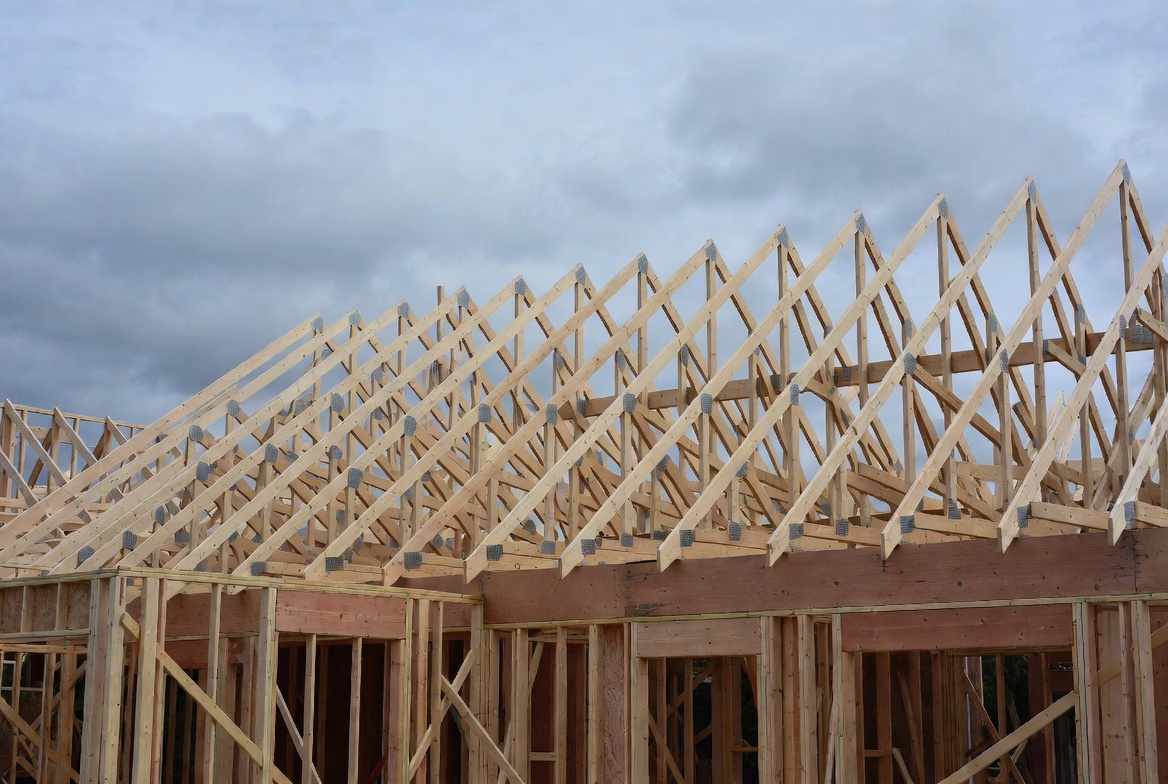
Image by ArchitectureCourses.org. Prefabricated Fink-style roof trusses set over a wood-framed house shell before roof sheathing.
A Fink truss is one of the standard roof truss layouts used in house framing. You can spot it by the W-shaped web pattern inside the truss.
It became common because it handles typical pitched-roof loads efficiently without making the framing system complicated or material-heavy. That is why it shows up so often on houses, garages, sheds, and similar buildings. What matters is not just the shape. It is how the chords and webs carry load, where the truss bears, and what starts going wrong when someone cuts, braces, or modifies it badly.
If you want the broader roof-truss picture first, use Roof Trusses, Types of Trusses, and Truss Design 101. If you are already focused on this one truss family, stay here.
What a Fink Truss Is
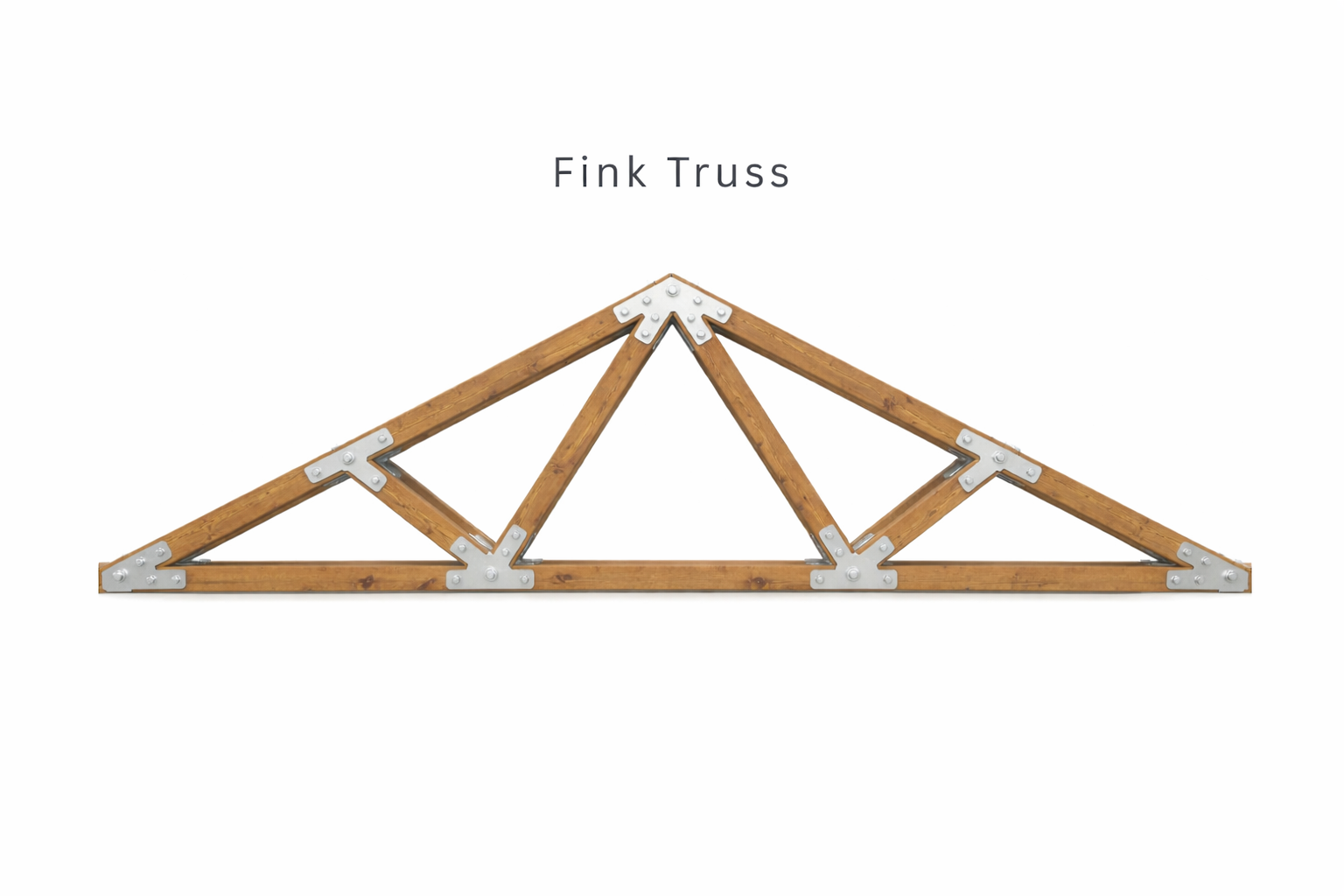
Illustration by ArchitectureCourses.org. Fink truss shown as a standalone roof truss form.
A Fink truss is a pitched roof truss with a clear internal web pattern that breaks roof loads into smaller triangular paths. In ordinary house framing, it is one of the most common prefabricated truss layouts because it balances strength, speed, and material efficiency well.
The big reason it stays popular is simple: it does a lot of ordinary roof work without making the roof system overly complicated.
| Part | What it does | Why it matters |
|---|---|---|
| Top chords | Form the roof slope and carry compression | They define the roof shape and take the roof load first |
| Bottom chord | Ties the truss together and resists tension | Helps stop the roof from spreading outward |
| Web members | Move forces between the chords | Create the internal Fink pattern and shorten load paths |
| Heel joints | Meet the wall line at the bearing ends | Affect bearing, insulation depth, and roof edge details |
| Connector plates | Tie members together at joints | Critical in prefabricated truss performance |
Parts of a Fink Truss

Illustration by ArchitectureCourses.org. Labeled parts of a timber Fink truss, including the top chord, bottom chord, web member, apex joint, gusset plate, and heel joint.
A Fink truss looks simple until you need to read one quickly on site. Then the parts matter.
- Top chords form the sloped roof line and carry compression from the roof load.
- Bottom chord forms the lower tie member and resists the outward pull of the roof.
- Web members split forces between the chords and create the familiar internal geometry.
- Apex joint sits at the peak where the upper members meet.
- Heel joints sit near the wall line where roof geometry meets bearing.
- Metal connector plates hold prefabricated members together at the nodes.
If you want the dedicated member-by-member breakdown, go next to Fink Truss Parts.
How Fink Trusses Handle Roof Loads
The top chords take roof load first. The bottom chord works in tension to hold the truss together. The web members divide and redirect forces so no single part has to do all the work alone.
That is the real value of the layout. The truss is not strong because it looks geometric. It is strong because the geometry gives the load more than one short, efficient path back to the wall supports.
- Top chords take compression from roofing, snow, and maintenance loads.
- Bottom chord resists tension and stabilizes the whole form.
- Web members spread forces between the upper and lower members.
- Bearing points at the walls finish the load path.
This is also why field modifications are dangerous. If you cut or drill the wrong member, you are not just damaging one piece of wood. You are breaking part of the load path.
Why Builders Keep Using Fink Trusses
Fink trusses keep showing up because they hit a practical middle ground. They are more efficient than many simple roof-framing approaches, but still familiar enough to fabricate, deliver, and install fast on ordinary residential work.
- Good material efficiency: they get a lot of span out of a repeatable layout.
- Fast installation: prefabricated trusses speed up roof framing.
- Clear roof framing logic: crews know how they work and how they are set.
- Good fit for common pitched roofs: especially on houses, garages, sheds, and similar buildings.
That does not make them automatic. The roof shape, span, loading, attic expectations, and site conditions still need to match what the truss was designed to do.
Where Fink Trusses Work Best
| Use case | Why Fink works | Where it starts to struggle |
|---|---|---|
| Standard house roofs | Efficient, familiar, cost-effective | Limited attic openness because of internal webs |
| Garages and sheds | Clean span with simple roof geometry | Less flexible if storage or headroom becomes important |
| Small barns and outbuildings | Good value for repeated roof bays | Material and moisture exposure matter more |
| Light commercial roofs | Useful when budget and speed both matter | Larger spans may push the design toward other truss types |
For a broader roof-truss design page, see Residential Roof Trusses Design.
When a Fink Truss Stops Being the Right Choice
This is where a lot of confusion starts. A Fink truss is good at ordinary pitched-roof work. That does not mean it is the right answer once the roof gets bigger, the loads get heavier, or the owner wants something more open below.
| Project condition | What it usually means |
|---|---|
| Longer roof span | You may need a stronger truss layout, not just bigger members |
| Heavier roof covering or stronger snow load | The standard Fink may need redesign or a different truss type |
| Attic room or storage as a real goal | A standard Fink often works against you |
| Vaulted ceiling or more interior openness | Another truss type may fit better |
A Fink truss is a good standard roof truss. It is not a universal roof truss.
Fink vs Double Fink
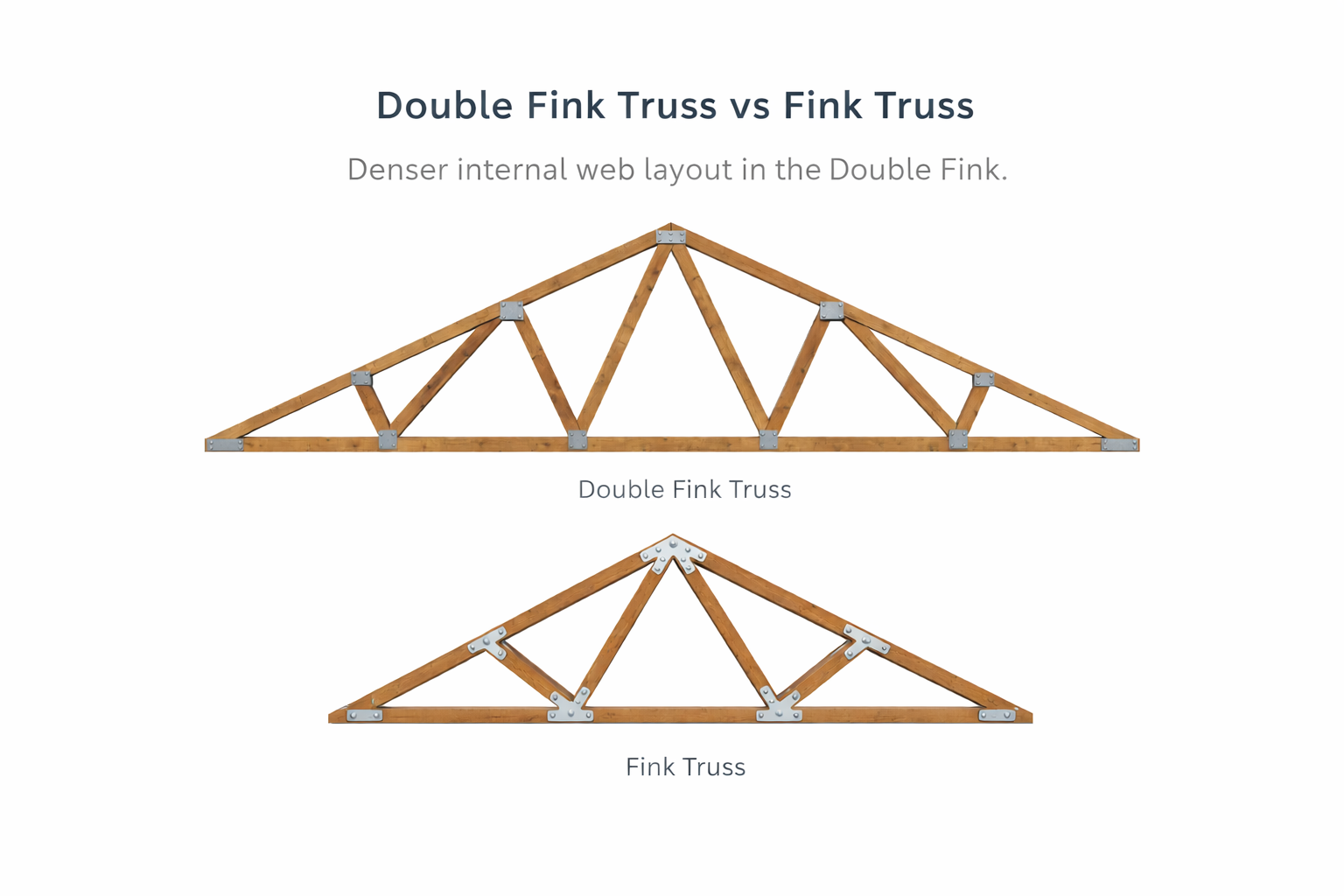
Illustration by ArchitectureCourses.org. Double Fink and Fink trusses compared by overall form and internal web pattern.
A double Fink truss is not just another name for a Fink truss. It adds more internal webbing so the roof system can handle longer spans and heavier demands more efficiently.
| Type | Best when | Main drawback |
|---|---|---|
| Fink truss | You need an efficient standard roof truss for ordinary spans | Less useful once span or load starts climbing |
| Double Fink Truss | You need more span and more web capacity | More material, more fabrication, and more coordination |
If the roof still fits the ordinary residential range, the standard Fink is often the cleaner and cheaper answer. Once the roof starts asking for more, the double Fink becomes easier to justify.
Timber or Steel?
Most residential Fink trusses are timber. Steel versions exist, but they show up more often in larger or more specialized work where span, environment, or durability start changing the decision.
| Material | Best fit | Main advantage | Main trade-off |
|---|---|---|---|
| Timber | Houses, garages, sheds, small barns | Common, workable, economical | More sensitive to moisture, pests, and movement |
| Steel | Industrial or more demanding spans | Higher capacity and long service life | Higher cost and more specialized detailing |
If you want the material-specific versions, go next to Timber Trusses Explained and Steel Truss Design.
Cost Factors
Fink trusses are popular partly because they keep ordinary roof framing efficient. That does not mean they are always cheap in every condition.
- Span: longer spans push up material and engineering demand.
- Pitch: steeper roofs change geometry, handling, and sometimes installation time.
- Material: timber is often cheaper up front than steel in residential work.
- Delivery and crane time: prefabrication saves labor, but shipping and lifting still cost money.
- Roofing weight: heavier finishes can change the truss design quickly.
In many ordinary houses, prefabricated Fink trusses still end up cheaper than building the whole roof stick by stick. The savings come from repetition, faster setup, and less site labor.
What to Check Before Ordering or Setting Trusses
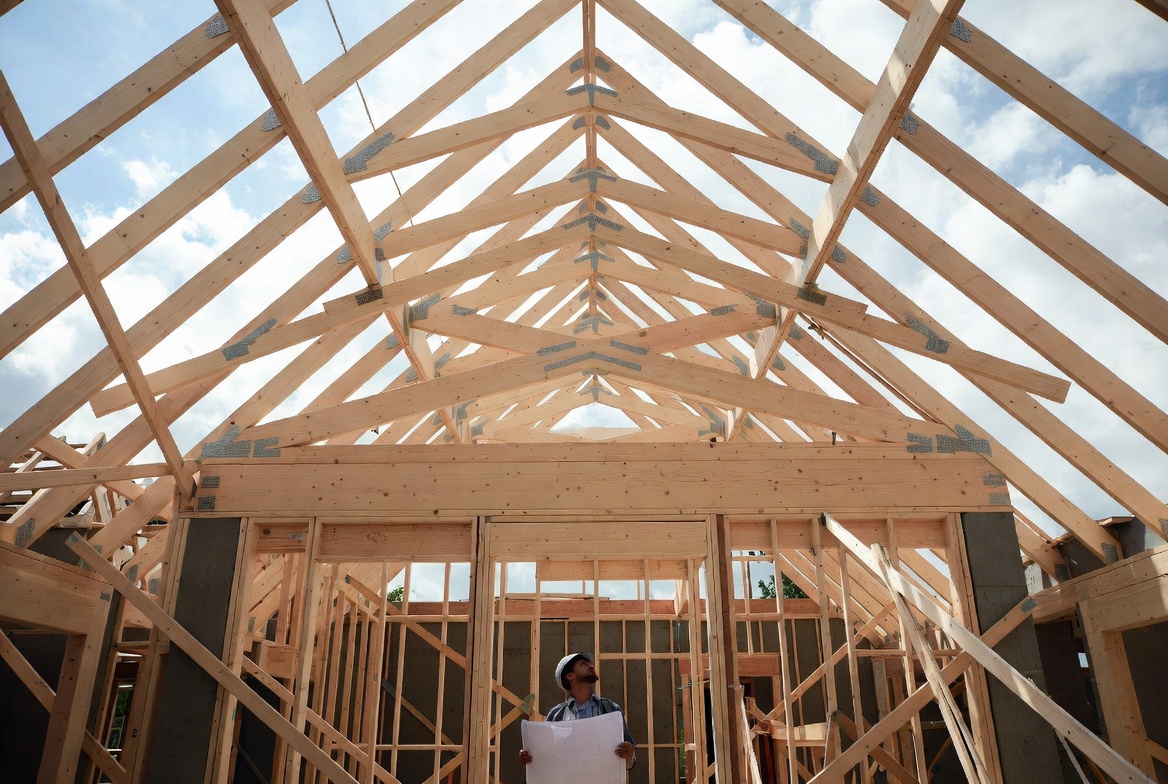
Image by ArchitectureCourses.org. Repeated wood roof trusses span the structure and show how the framing system works in the field.
Most truss mistakes start before installation, not during it.
- Confirm the exact span and roof pitch.
- Confirm the roof loads, including snow, wind exposure, roofing weight, and rooftop equipment if relevant.
- Check bearing points and wall layout. The truss design needs clear support at the correct locations.
- Decide early whether the owner expects storage or attic room.
- Coordinate ducts, vents, and other services. Truss webs are not places to improvise later.
- Have the bracing plan ready before the trusses arrive.
If prefabrication and delivery are part of the question, see Prefabricated Timber Trusses.
Installation and Bracing
Fink trusses are fast to set, but they are not self-correcting. Alignment, temporary restraint, and permanent bracing still matter.
- Brace the first trusses properly and do not assume the line will hold itself.
- Keep spacing consistent across the roof layout.
- Check plumb and alignment with real tools, not by eye.
- Do not cut members for ducts, wiring, or access without proper engineering.
- Protect timber trusses from unnecessary moisture before installation.
If this is the part you need next, use Truss Bracing and Roof Support Systems, Types of Truss Bracing, Permanent Truss Bracing Requirements, Roof Bracing, and Truss Lateral Bracing.
Where Problems Usually Start
- Using a Fink truss where the roof really needed another truss layout.
- Changing roofing weight after design without rechecking the truss package.
- Cutting, drilling, or notching members casually in the field.
- Ignoring permanent bracing requirements.
- Letting timber trusses sit wet, twist, or get damaged before installation.
- Assuming a familiar truss shape means the layout below does not matter.
A Fink truss works well when the roof shape, span, load, and bearing all line up with what it was designed to do. When those basics get ignored, problems show up fast.
Maintenance and Long-Term Checks
Fink trusses do not need constant attention, but they should not be forgotten either. The easiest checks are visual.
- Look for cracked or split timber members.
- Check connector plates for corrosion or movement.
- Watch for leaks or chronic condensation in the roof space.
- Look for pest damage in timber trusses.
- Do not alter the truss later without proper review.
Most roofs never fail because the truss shape was wrong on paper. They fail because water, bad alterations, or ignored damage kept working for years without anyone dealing with it.
What Stays Useful
Fink trusses keep showing up for a reason. They give builders a repeatable roof system that spans well, installs fast, and handles a lot of ordinary residential roof work without turning the framing into something more complicated than it needs to be.
That does not make them automatic. The bearing points still matter. The bracing still matters. The layout still matters. A Fink truss works well when the roof shape, span, loading, and site conditions all line up with what the truss was designed to do.
Get those basics right and the system stays simple in the best way: clean load path, cleaner installation, fewer surprises later.
FAQ
What is a Fink truss used for?
Mostly pitched roof framing in houses, garages, sheds, barns, and other light-building roofs where efficiency and speed both matter.
Can Fink trusses support solar panels?
They can, but the truss package needs to be designed for the added load. Do not assume the existing truss has spare capacity.
Are Fink trusses good for steep roofs?
Yes, they can work with a range of roof pitches, but steeper pitches can change the geometry, bracing needs, and the overall roof-framing strategy.
How long do Fink trusses last?
That depends on material, moisture control, installation quality, and whether the roof stays dry. Well-built timber trusses can last for decades.
Can I customize a Fink truss?
Yes, but once you move away from the standard layout, the design, fabrication, and cost usually change with it.
Can I cut a Fink truss later for storage or a duct run?
Not casually. Cutting truss members without engineering review can damage the load path and weaken the whole roof system.