
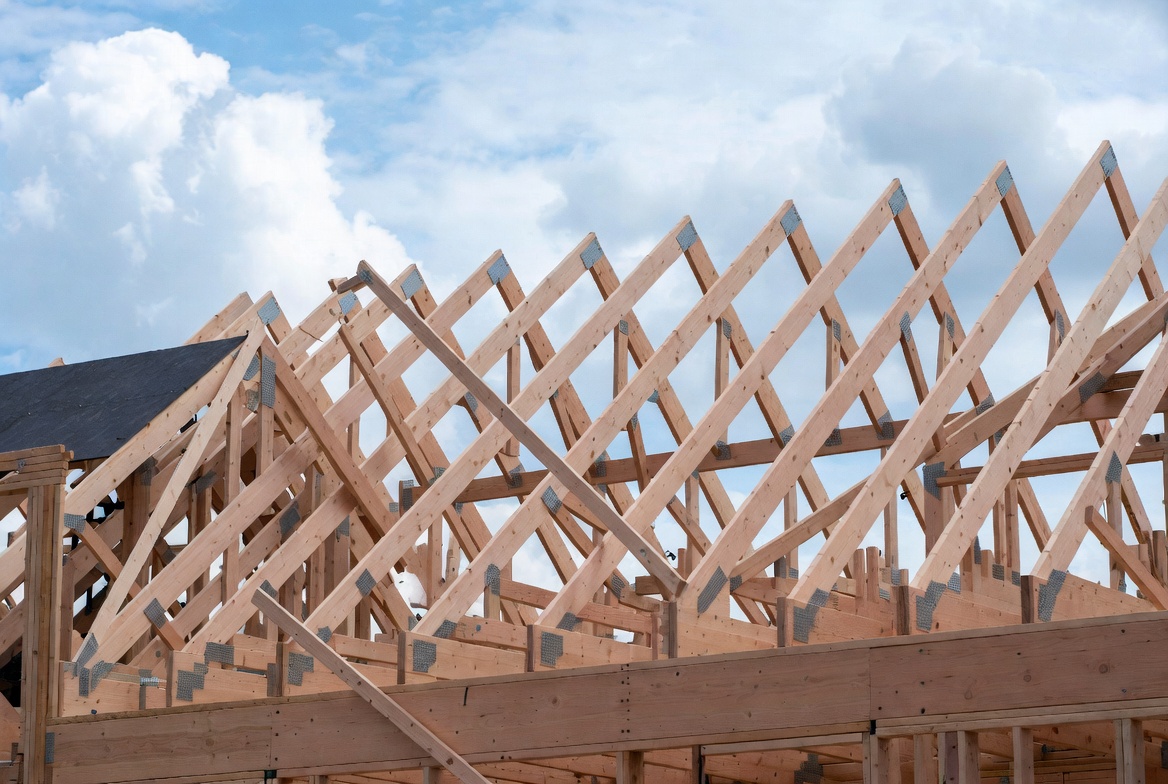
Roof trusses carry load well, but they depend on proper bracing and support to stay stable.
A roof can look straight and still be weak if the brace lines drift, the web bracing stops too soon, or support pieces get moved in the field to clear another trade. That is why it helps to separate bracing from support. They work together, but they are not the same thing and they do not solve the same problems.
Start with what each bracing type does, where roof support fits into the system, how different truss layouts change the job, and where mistakes usually start. If you need the wider base first, start with Roof Trusses.
Where Truss Bracing Starts

A house under construction emphasizing the roof's structural design and progress.
Truss bracing keeps the roof frame aligned, restrained, and stable while the structure takes dead load, live load, wind, and sometimes snow drift or uplift. Without it, members can roll, buckle, or shift long before the roof looks like it is in trouble.
That matters because most truss problems do not begin with dramatic collapse. They begin with movement. A web bows. A top chord rolls. A brace line ends where it should have kept going. One field change looks small. Then the load starts moving through the roof in a way the truss package never intended.
One more thing: if your question is narrower than this page and you are mainly trying to understand restraint lines and compression members, go straight to Truss Lateral Bracing and Truss Lateral Bracing Span.
Each Bracing Type Does a Different Job
This is where weak articles get loose. They treat every brace as if it does the same work. It does not.
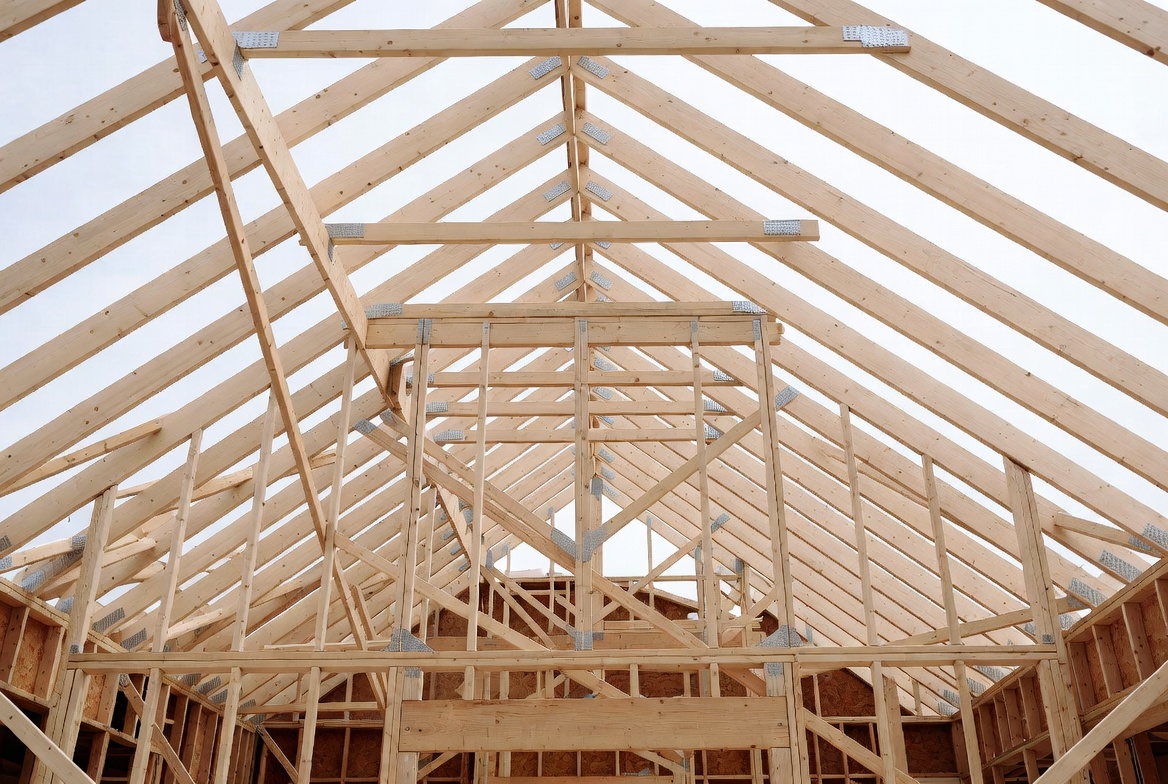
Image by ArchitectureCourses.org. More complex truss profiles change load paths and usually need more careful restraint and support.
| Bracing Type | What It Does | Where It Matters Most | What Goes Wrong If It Is Missing |
|---|---|---|---|
| Diagonal bracing | Stabilizes the truss line and ties restraint lines back into a working system. | Long truss runs, wind-sensitive roofs, erection stability. | Brace lines can still shift sideways even if they look complete. |
| Lateral bracing | Restrains compression members so they do not kick sideways or roll. | Top chords, bottom chords, and selected web members. | Compression members can buckle before they reach design strength. |
| Temporary bracing | Keeps trusses standing and aligned during installation. | Erection phase before sheathing and permanent restraint are complete. | Trusses can rack, fall like dominoes, or drift out of line early. |
| Permanent bracing | Remains in the finished structure and works with the roof assembly over time. | Completed roof systems under wind, snow, and service loads. | The roof may look finished but still lack long-term stability. |
| Web bracing | Restrains internal web members that carry compression. | Long-span trusses, heavily loaded trusses, complex geometries. | Web members bend or twist where crews least expect it. |
| Gable end bracing | Stiffens the exposed end of the roof system. | Wind-prone sites, gable-heavy roofs, wide building ends. | The end wall and truss edge become much more vulnerable in wind. |
Diagonal Bracing
Diagonal bracing is what stops a brace line from acting like a loose hinge. A lateral brace by itself is not enough if the whole line can still slide. That is why diagonal bracing matters more than many crews think, especially on longer roofs.
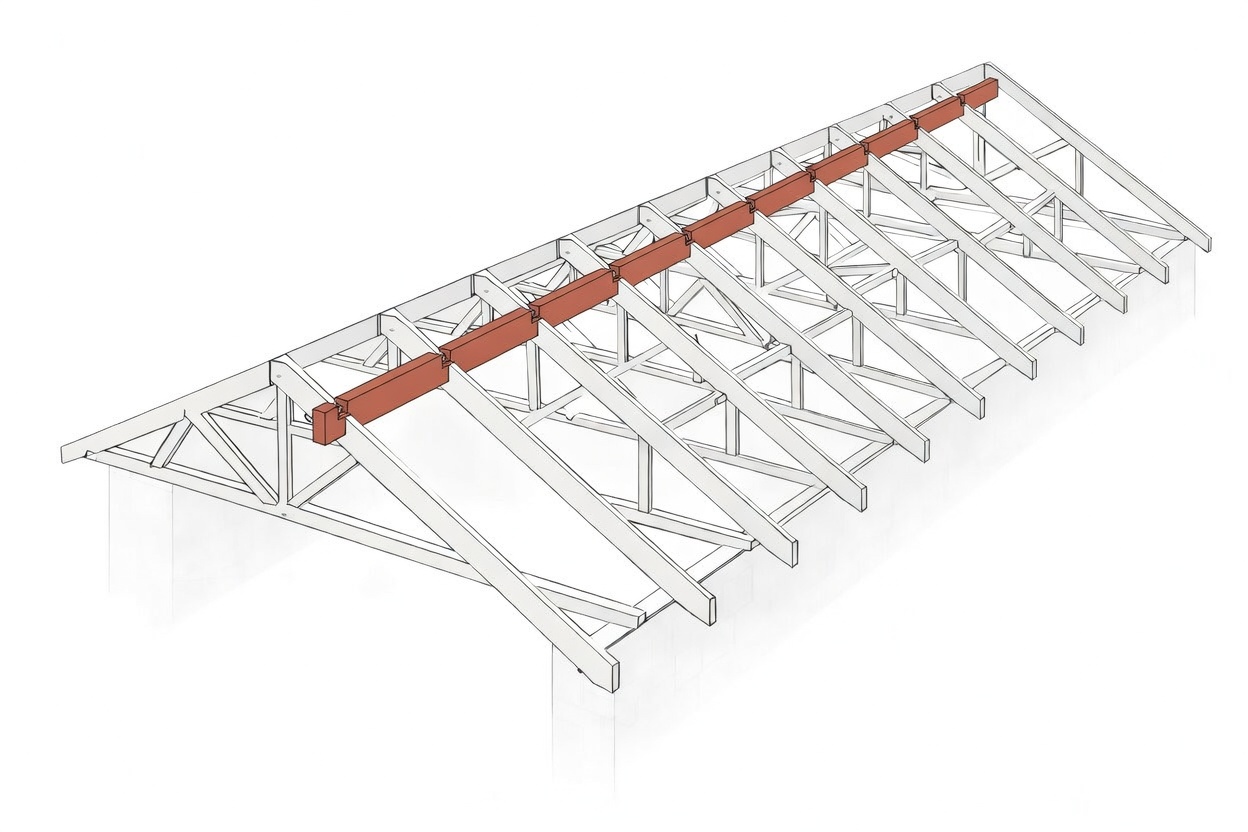
A diagonal brace runs across the top chords of roof trusses to help stabilize the truss line and prevent lateral movement during framing. Illustration by ArchitectureCourses.org.
This part matters: if you want the narrower version of that discussion, use Diagonal Truss Bracing. That page is the better place for brace direction, tie-back logic, and where diagonal lines usually start and stop.
Lateral Bracing
Lateral bracing restrains members that want to move sideways under compression. This is where people start asking for one universal spacing number. That is the wrong question. The right question is which member needs restraint, where, and under what loading.
That answer changes with truss type, unsupported length, roof loading, and the rest of the building system. A short residential roof and a long, open building bay are not playing the same game. Related Reading: Truss Lateral Bracing Span goes deeper into spacing logic and why memory-based rules keep failing.
Temporary Bracing
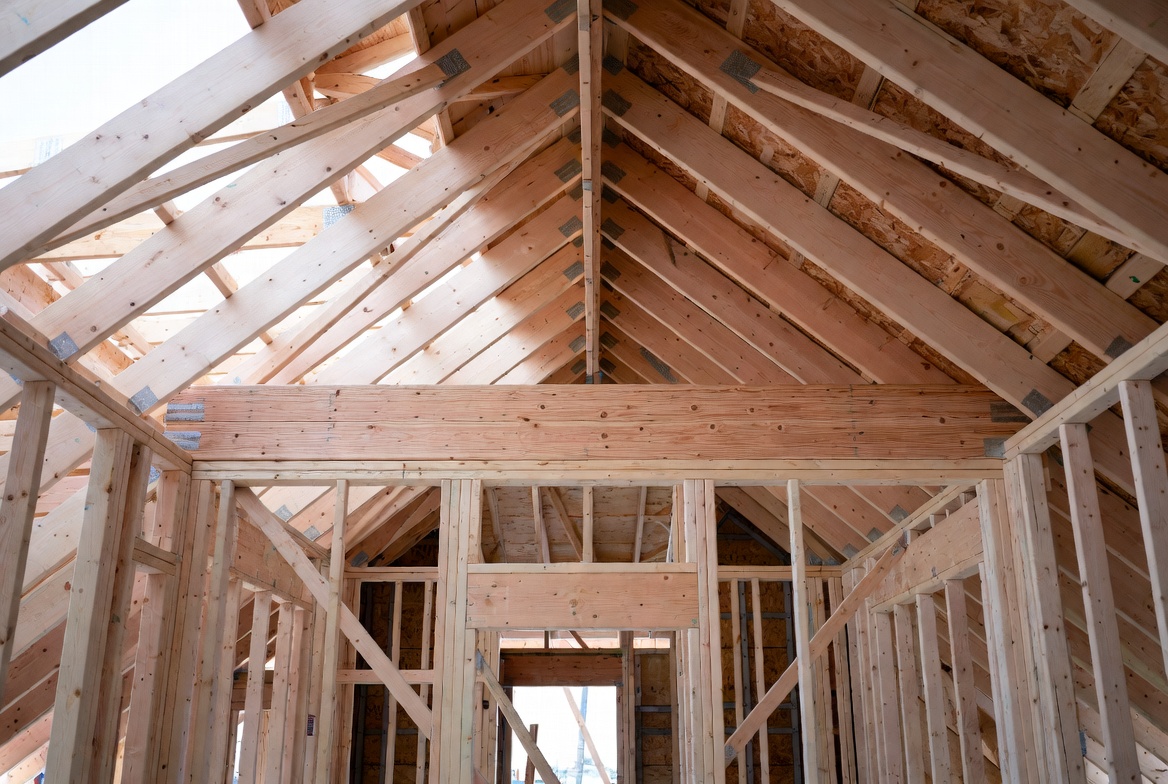
Image by ArchitectureCourses.org. Temporary bracing keeps trusses standing, aligned, and safe before the roof deck locks the system together.
Temporary bracing only exists for part of the job, but it is where plenty of jobs first get into trouble. Before sheathing goes on, trusses are far more flexible than they look. A fast crew can get a roof in the air quickly. A smart crew makes sure it stays there in the right shape.
Permanent Bracing
Permanent bracing is the part that stays and keeps working after the house is closed in. It does not get treated like leftover jobsite lumber. It is part of the structural design. Before You Move On: Permanent Truss Bracing Requirements is the better page if your question is specifically about what must stay in the finished roof.
Web and Gable End Bracing
Web bracing and gable end bracing sound secondary until they fail. Web members are easy to underestimate because they look thin and repetitive. Gable ends are easy to underestimate because the roof looks “done” once the field trusses are set. Both mistakes cost money later.
Roof Support Is Bigger Than One Brace Line
A roof support system is not just the truss web and the braces nailed between members. It is the full load path from the roof surface down into the walls and whatever is carrying those walls below.
That means roof support can include the trusses themselves, roof sheathing, permanent brace lines, gable bracing, ridge support in some roofs, bearing points, connectors, and the handoff into the wall system. Treating bracing like a self-contained add-on is how people miss the real weak point.
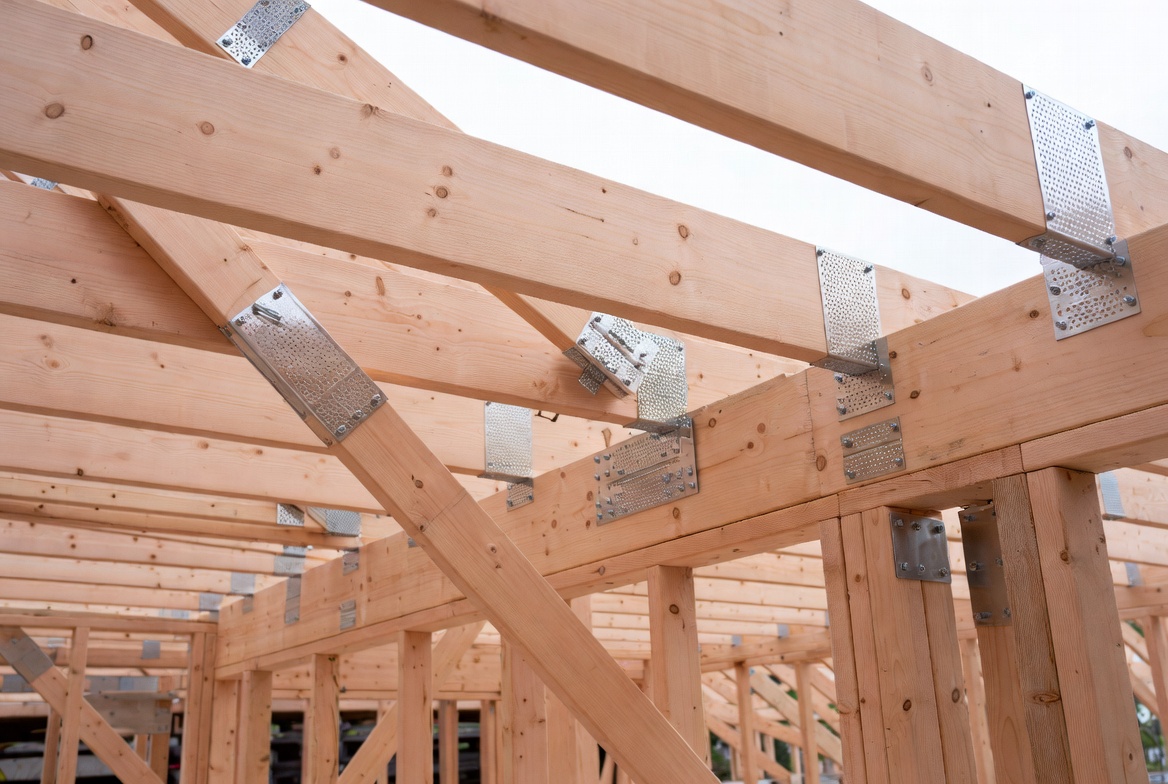
Image by ArchitectureCourses.org. Bracing only works when the connectors, fasteners, and truss joints are installed correctly.
| Support Piece | What It Really Does | Common Wrong Assumption |
|---|---|---|
| Truss members | Carry the designed roof loads through the truss geometry. | If the truss looks heavy enough, it must be fine without much bracing. |
| Roof sheathing | Can stiffen the roof plane when properly attached and designed to do so. | Sheathing automatically replaces other bracing requirements. |
| Brace lines | Restrain and stabilize members and the truss run. | Short, broken, or offset brace lines still do the same job. |
| Bearings and supports | Take roof loads down into the structure below. | As long as the truss lands somewhere on a wall, the support is fine. |
| Roof-to-wall connections | Transfer forces from the roof into the walls without letting the system separate. | Clips and straps are minor hardware details. |
Also Useful: if your question is shifting from brace layout into how roof forces get handed off below, read Roof-to-Wall Connections: Straps, Clips, Load Path. That is where a lot of “roof support” problems turn out to be connection problems instead.
Where the Drawing and the Field Split Apart
This is the section most generic articles skip, and it is where a lot of roof trouble begins.
On paper, the brace line runs clean from one end of the roof to the other. On site, that line runs into an attic access, a dropped ceiling, a chase, a louver opening, mechanical work, or a framing change somebody made because it looked harmless. Then the crew does what crews do under pressure: they make it fit.
That is the moment the job changes. A brace line that gets broken, offset, shortened, or moved without a revised load path is not “almost the same.” It is a different structural condition.
This is why some roofs look neat and still move later. Drywall cracks show up. The roof sounds busy in wind. A gable end feels loose. The failure does not announce itself all at once. It leaks out through symptoms.
The better move is dull and simple. Mark the conflict. Stop the field improvisation. Get the truss package back out. If needed, get the engineer or truss supplier involved before the roof gets skinned over and the bad decision disappears behind finished work.
How Installation Goes Sideways
Most crews do not ruin a bracing job because they do not care. They ruin it because the job gets fast, repetitive, and crowded.
What a Clean Sequence Looks Like
Set and align the first trusses carefully.
If the first line is off, everything after it gets built on a lie.
Install temporary bracing early.
Do not wait until the roof feels wobbly. By then you are already behind the problem.
Keep brace lines straight.
A brace that wanders, stops, or jogs around obstacles without design review is not a small cosmetic issue.
Install the permanent restraints where the truss package calls for them.
This is not the place for generic jobsite habits.
Tie restraint lines back with diagonal bracing.
This is the piece that gets skipped when crews think one line of lumber is enough.
Finish the roof without knocking the system apart.
Mechanical work, attic access, and late framing changes are where clean layouts get quietly damaged.
Where It Usually Goes Wrong
- Temporary bracing is treated like a nuisance and installed late.
- One brace line gets interrupted and nobody thinks it matters.
- A crew assumes the roof deck will fix weak restraint.
- Web bracing is treated like “extra” instead of design work.
- Field conflicts get solved with cuts and offsets instead of revised details.
Worth Knowing: the broader page on Roof Bracing is a good follow-on if your question is starting to move beyond trusses into rafters, roof planes, and whole-roof stability.
Different Truss Types Change the Bracing Job
Not every truss asks for the same restraint pattern. That is why broad advice gets shaky fast.
Scissor Trusses
Scissor trusses change the interior ceiling line and the force path with it. They can work well. They just do not want lazy assumptions. The sloped bottom chord changes how the truss behaves, and the bracing has to respect that. This Part Matters: Scissor Trusses is the better page if the roof shape itself is driving your question.
Gable End Trusses
Gable ends are more exposed. They need more care than many crews give them, especially in wind. A roof can feel repetitive across the field and still need extra attention at the ends. If that is your weak spot, use Gable End Trusses.
Long-Span and Open Roofs
As spans get longer, bracing stops being a side detail and starts becoming part of the main structural conversation. Open interiors, garages, halls, barns, riding spaces, and wide commercial roofs are all less forgiving. The roof may still look repetitive from below. The bracing demand is not.
| Condition | What Usually Changes | What Crews Often Underestimate |
|---|---|---|
| Short-span house roof | Bracing may be simpler, but still has to match the truss package. | People still guess instead of reading the layout. |
| Long-span roof | More restraint lines and stronger tie-back logic are common. | How quickly small alignment errors spread across the run. |
| High-wind site | Connections and exposed ends matter more. | Wind does not care that the framing “looked finished.” |
| Heavy snow region | Compression demands rise and weak members show it faster. | Loads are not evenly kind just because the roof is residential. |
What Works Better Here
| Do This | Instead of This | Why |
|---|---|---|
| Follow the truss package and brace notes. | Use a number somebody remembers from another job. | Bracing is design-specific, not a folk rule. |
| Keep brace lines straight and continuous. | Break and restart them wherever the site gets awkward. | Continuity is part of what makes the line work. |
| Stop when a mechanical or framing conflict appears. | Cut or shift bracing in the field and hope it is close enough. | This is where roofs quietly get weaker. |
| Treat web bracing like design work. | Assume only the obvious top-level braces matter. | Hidden members still buckle when restraint is missing. |
| Check the handoff into walls and supports. | Talk about “roof support” as if it ends at the truss. | The load still has to go somewhere below. |
What People Get Wrong
They confuse stiffness with strength.
A roof can feel solid during a quick walk-through and still have weak restraint in the wrong place.
They assume repetition means simplicity.
A row of identical trusses looks easy. The load path is still exacting.
They treat sheathing like a cure-all.
Sheathing helps. It does not erase missing restraint lines or bad field changes.
They focus on the truss and forget the support system.
Bracing, bearings, sheathing, end conditions, and roof-to-wall connections all work together or fail together.
They wait too long to ask for clarification.
Most bad bracing decisions happen because nobody wanted to stop the job for twenty minutes.
What To Read Next
Start here: Roof Trusses if you need the broader truss types, layout logic, and where different roof systems change the framing strategy.
This part matters: Types of Truss Bracing if you want the cleaner breakdown of diagonal, lateral, permanent, and temporary restraint without the extra roof-support discussion.
Also useful: Permanent Truss Bracing Requirements if your job is already framed and the real question is what has to stay in the finished roof.
Read this next: Roof-to-Wall Connections if you are tracing how roof forces leave the truss line and get handed off below.
FAQ
What does truss bracing do?
It restrains members that want to move, stabilizes the truss line, and helps the roof system carry load the way it was designed to.
Is roof sheathing enough by itself?
Not automatically. Sheathing can help stiffen the roof plane, but it does not replace every restraint line or every permanent bracing requirement.
What is the difference between temporary and permanent truss bracing?
Temporary bracing keeps trusses stable during erection. Permanent bracing stays in the finished roof and keeps working over the life of the building.
Why do long-span trusses need more attention?
They are more sensitive to movement, alignment drift, and compression problems. Small mistakes spread farther and show up faster.
Can crews move braces to clear ductwork or attic access?
Not safely without review. A moved brace may no longer do the job the design expected it to do.
What counts as roof support besides the truss itself?
Brace lines, bearings, sheathing, end bracing, ridge support in some roofs, connectors, and the handoff into the wall system all count.
What is the most common mistake?
Treating bracing like generic filler instead of part of the structural design.
Official Resources
- OSHA for jobsite safety and temporary stability concerns during erection.
- International Code Council for code references tied to structural work and inspections.
- APA – The Engineered Wood Association for wood structural panel resources and roof sheathing guidance.
- American Wood Council for wood construction standards and design references.