
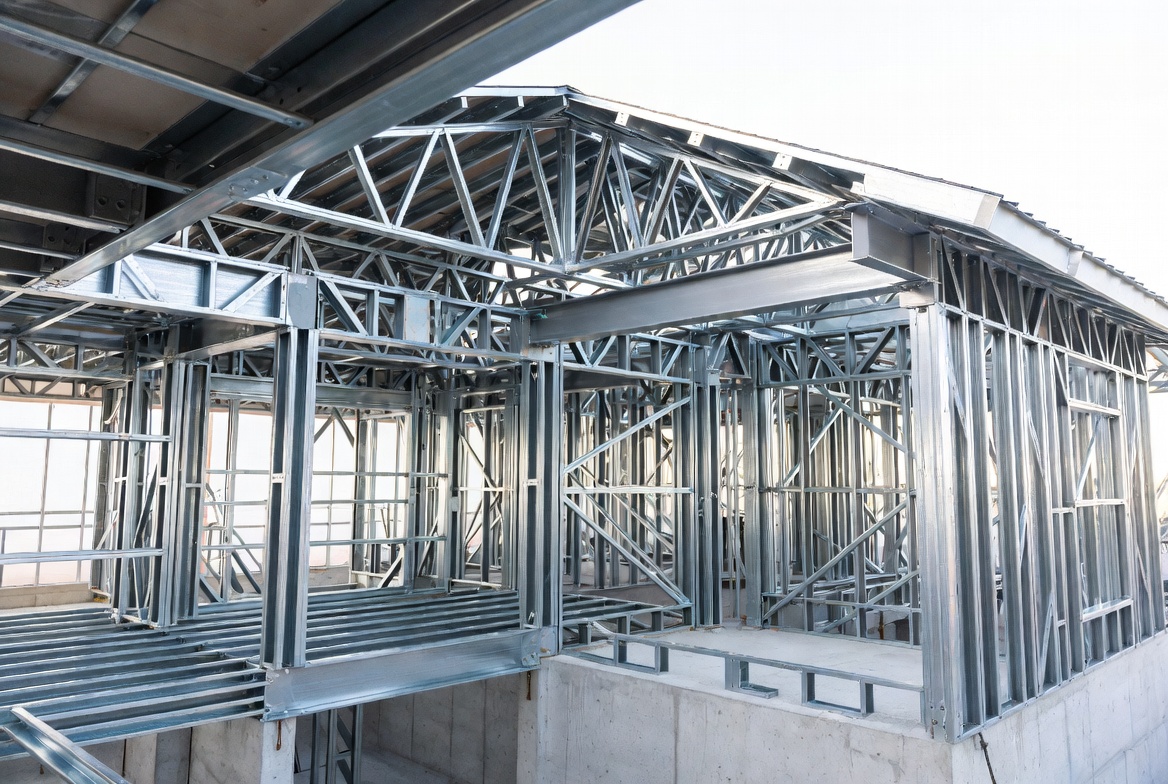
Image by ArchitectureCourses.org. Steel truss systems are used when the roof has to span farther, carry more load, or keep the space below open.
Steel trusses make sense when the roof has to span farther, carry more load, or keep the space below open.
That is why they show up in warehouses, schools, factories, sports buildings, aircraft hangars, and some houses. The real question is not just what a steel truss looks like. It is how the load moves, which truss type fits the job, and what starts causing trouble when the design, bracing, or connections are wrong.
Start with the basics: where steel trusses fit, which types matter most, what changes with span and loading, what to watch at the joints, and where jobs usually go wrong on site.
See also: Truss Design 101
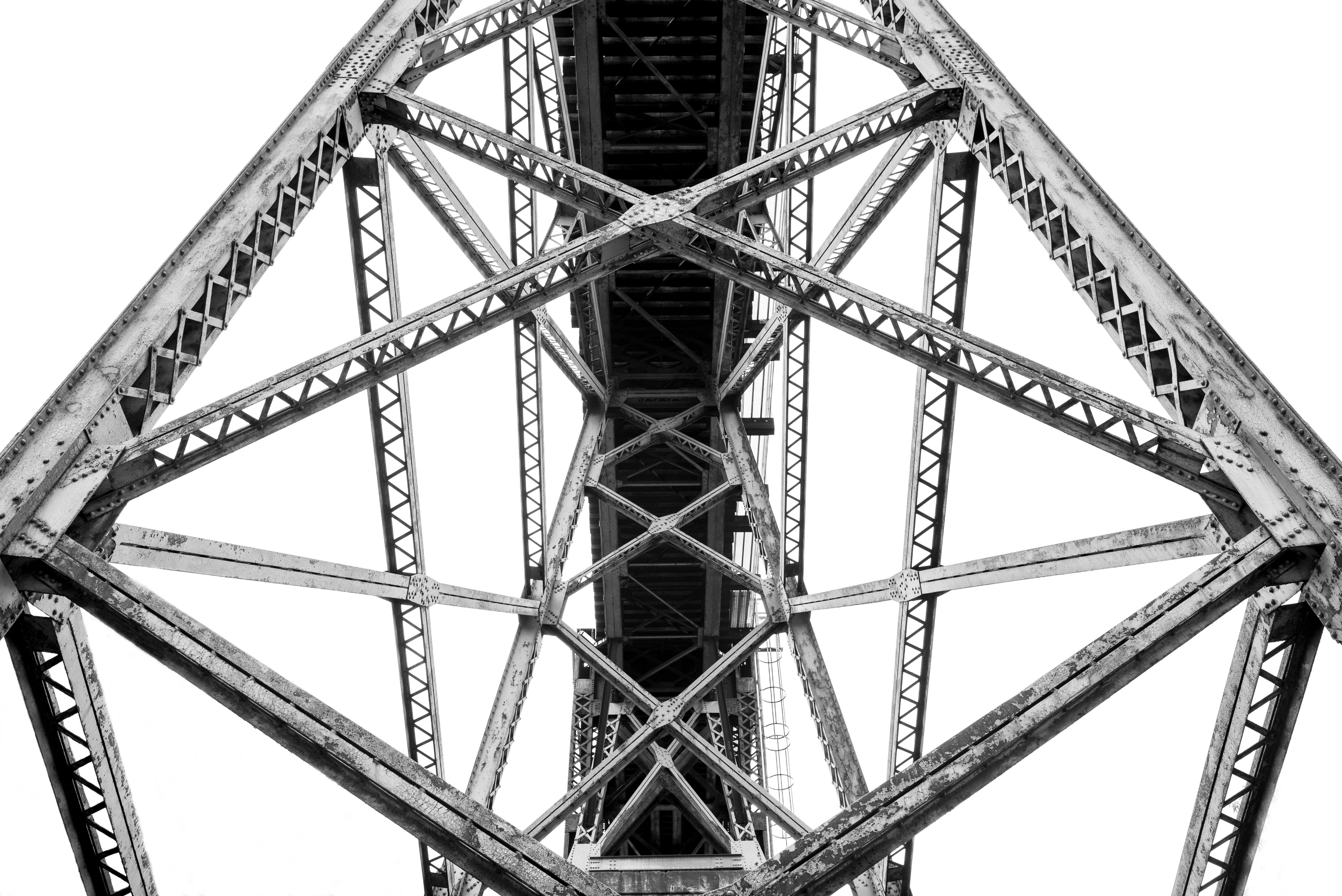
Steel trusses earn their place when long spans, clean layouts, and fewer interior supports matter.
Where Steel Trusses Fit
Steel trusses are used because they can carry more over longer distance without getting bulky the way simpler framing can.
| Building Type | Why Steel Trusses Fit | What They Help Avoid |
|---|---|---|
| Warehouses and factories | Long spans and open floor area | Interior columns that break the layout |
| Schools, gyms, arenas | Large roofs over open rooms | Heavy beam-and-column grids |
| Aircraft hangars and service buildings | Very wide clear spans | Supports in the wrong place |
| Commercial roofs | Better control of load, equipment, and roof depth | Overbuilt conventional framing |
| Modern houses and custom homes | Open interiors, wide spans, strong roof expression | Extra bearing walls through the plan |
Steel is not the answer for every roof. A standard wood truss still makes more sense on a lot of houses. But once the span gets wider, the loading gets tougher, or the room below wants to stay open, steel starts becoming the cleaner answer.
For the broader family page, go to Roof Trusses. For the wider structural background, use Structural and Architectural Design.
Types of Steel Trusses

Illustration by ArchitectureCourses.org. Steel trusses work because they transfer loads efficiently through the top chords, bottom chord, and web members. This diagram compares seven common truss types used in roof and light structural framing.
| Steel Truss Type | Best Fit | Why It Gets Used | Where It Starts Going Wrong |
|---|---|---|---|
| Flat truss | Warehouses, industrial roofs, low-profile commercial buildings | Simple layout and wide open space below | Drainage and roof build-up get treated too casually |
| Scissor truss | Vaulted halls, gyms, churches, open-plan houses | Creates ceiling volume without extra framing layers | Insulation and service space tighten up fast |
| Tubular steel truss | Arenas, hangars, long-span feature roofs | High strength with lower visual bulk | Connection detailing gets more demanding |
| Cantilever truss | Overhangs, canopies, stadium edges, bridge work | Projects beyond support without columns below | Backspan and support forces get underestimated |
| Bowstring truss | Large halls, hangars, long-span specialty roofs | Wide clear spans and strong roof profile | Support and geometry must stay disciplined |
| Pratt truss | Long-span roofs, bridges, heavier vertical loading | Clear force pattern and proven efficiency | Can be overkill where a simpler roof truss works |
| Howe truss | Heavier load conditions and some longer spans | Strong force path under demanding loading | Not always the lightest or simplest choice |
| Warren truss | Bridges, roofs, evenly distributed loads | Simple repeating geometry and good material use | Less forgiving under strong point-load conditions |
| North light truss | Workshops and industrial buildings | Brings daylight deep into the building | Rooflight detailing and envelope control get harder |
| King and queen post steel trusses | Small spans, shelters, light utility roofs | Simple geometry and easy fabrication | They run out of reach fast on bigger jobs |
Flat trusses
Flat trusses are common on warehouses and industrial roofs where the plan wants clean open space and the roof wants to stay low. The mistake is pretending flat means level. It still needs fall, drainage, and honest coordination with deck, insulation, and roofing.
Scissor trusses
Scissor trusses are used when the room below wants more volume. They work well in gyms, halls, churches, and some custom homes. They give space back to the ceiling, but they also tighten the roof zone for insulation, bracing, and services. If the vaulted side is the main issue, go to Scissor Trusses.
Tubular steel trusses
Tubular trusses are used where span, reduced visual bulk, and cleaner lines matter together. They are strong and efficient, but the connections need more care than people think. The member may look clean and light. The node usually decides whether the job is good.
Pratt, Howe, and Warren trusses
These names show up because they explain force paths clearly. Pratt and Howe patterns are common in bridge and heavier-span discussion. Warren trusses are valued for simple repeating geometry and good material use. In roof work, these families help frame the logic even when the final system is adapted for a specific project.
Bowstring, cantilever, and north light trusses
These belong where the roof or span is doing something more specific. Bowstring trusses are about open span and roof profile. Cantilever trusses are about extension beyond support. North light trusses are about daylighting. None of them are “better” in the abstract. They solve different problems.
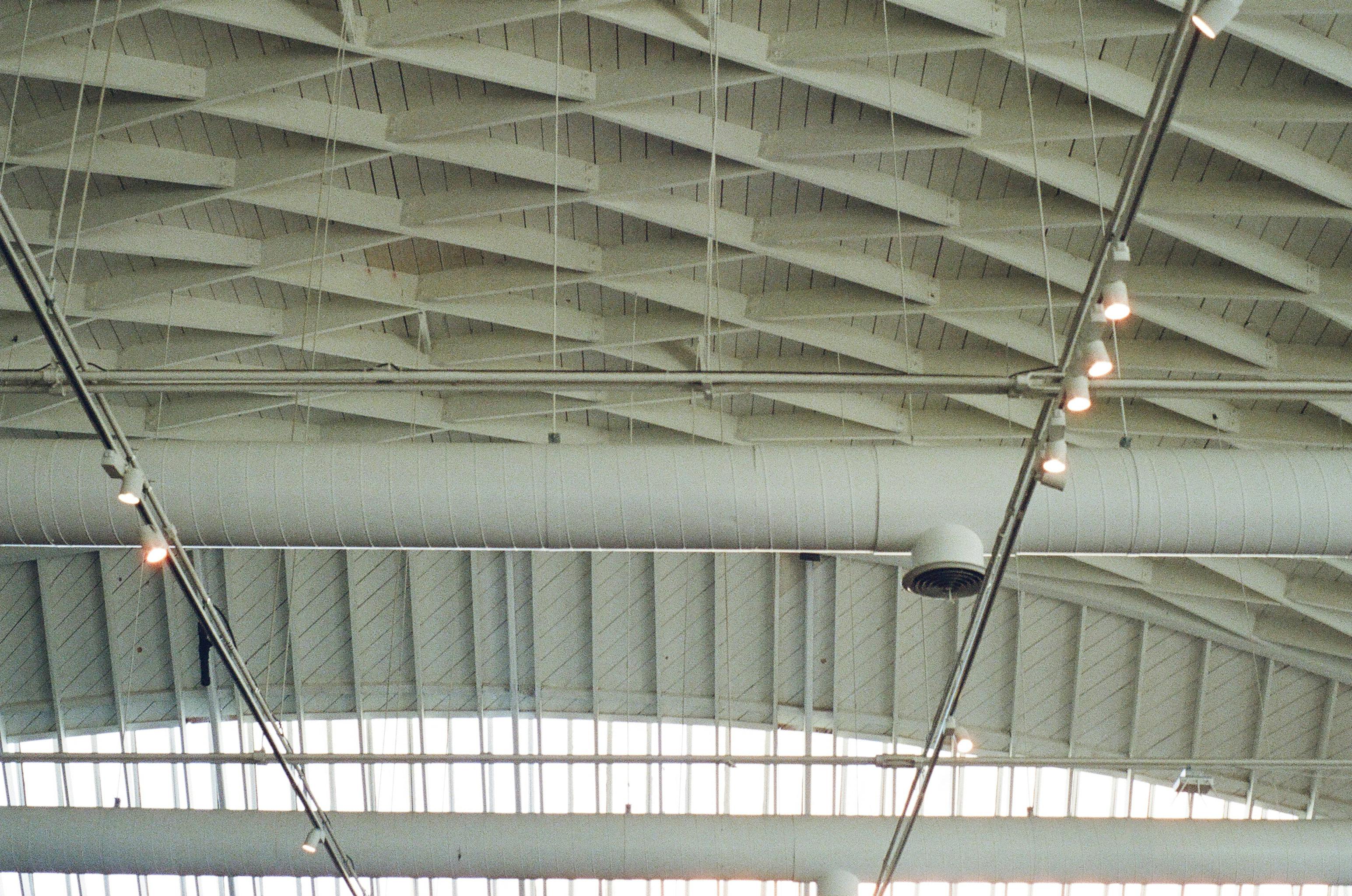
Illustration by ArchitectureCourses.org. Steel truss families solve different span, load, and roof-shape problems.
Related: Fink Trusses and King Post Trusses
What Changes with Span and Load
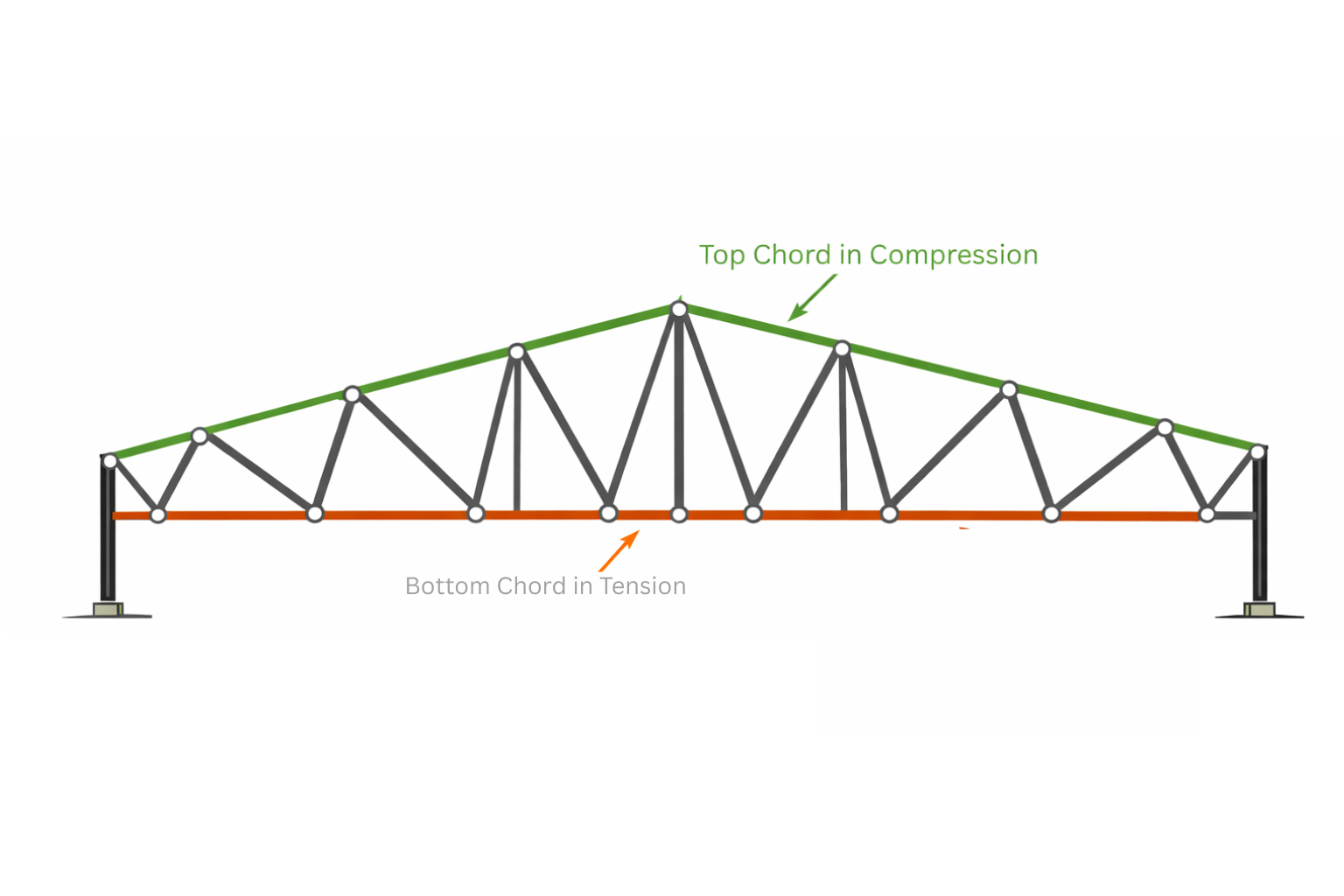
Illustration by ArchitectureCourses.org. Pitched steel roof truss diagram showing top chord compression and bottom chord tension.
The truss type is only part of the decision. Span and load decide what the truss has to do.
Longer span changes the whole system
A truss that works at one span may stop being efficient at a wider one. Depth changes. Member forces change. Bracing demands change. Support reactions get bigger. Connection forces do not stay small just because the drawing still looks tidy.
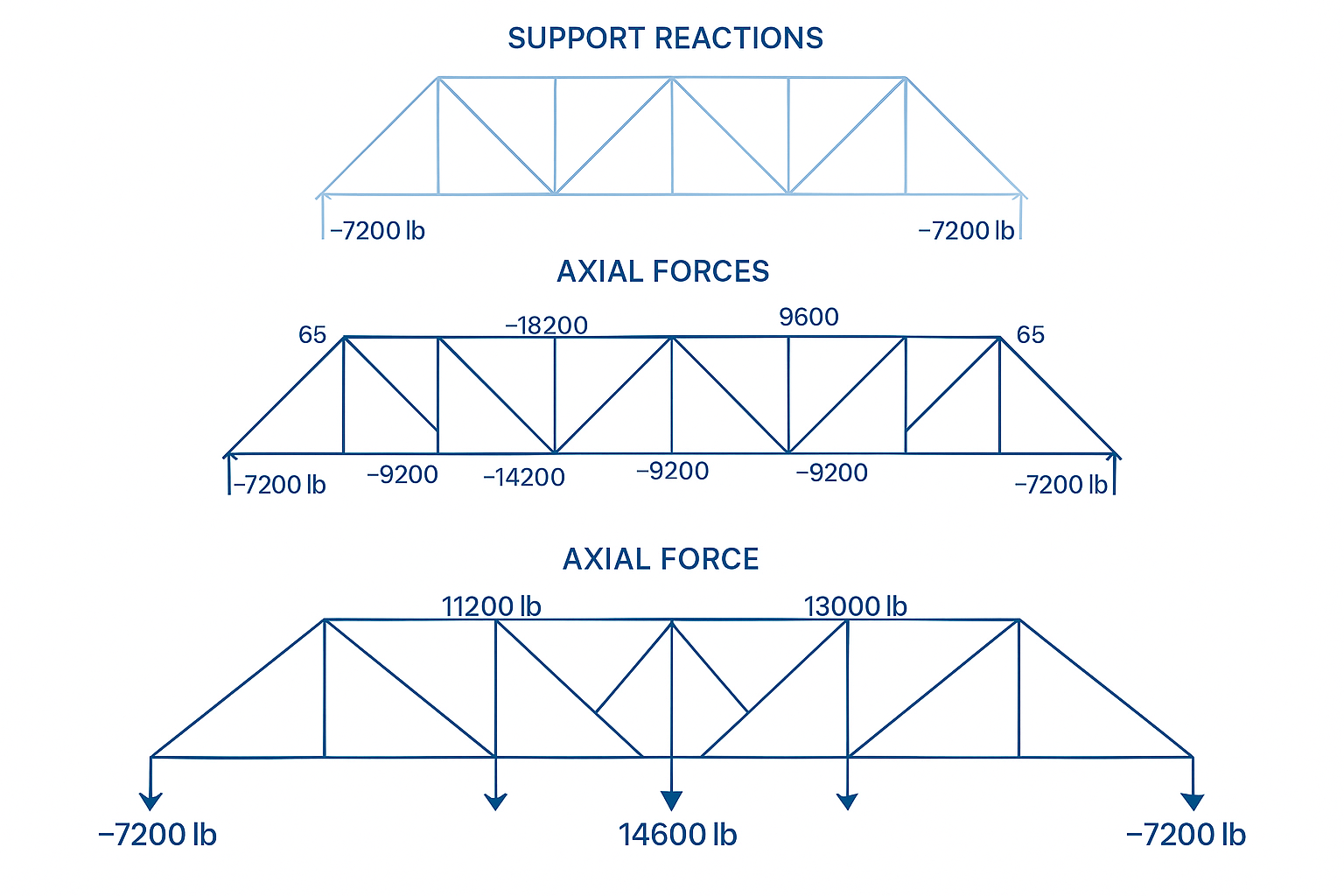
Dead load and live load both matter
Dead load includes the steel itself, roof deck, roofing, insulation, ceiling layers, and permanent equipment. Live and environmental loads include snow, wind, maintenance access, and uplift. The problem is not forgetting that loads exist. The problem is underestimating how much they change the truss.
Roof pitch changes more than appearance
Pitch changes drainage, geometry, roof volume, and how the chords and web members are working. A low roof keeps the profile down but increases envelope and drainage discipline. A steeper roof sheds weather better but changes the form and the truss depth.
| Design Input | Why It Matters | Where People Slip |
|---|---|---|
| Span | Controls member size, depth, and truss type | Trying to stretch a light truss too far |
| Dead load | Permanent roof and equipment weight never goes away | Underestimating roof build-up and later additions |
| Live and environmental load | Snow, wind, uplift, maintenance, and temporary loads change the design | Using generic assumptions instead of site-specific ones |
| Pitch and geometry | Affect drainage, truss depth, and roof behavior | Choosing shape for looks only |
| Support conditions | Loads have to land where the structure below can take them | Assuming the bearing works itself out later |
Steel Truss Design Elements
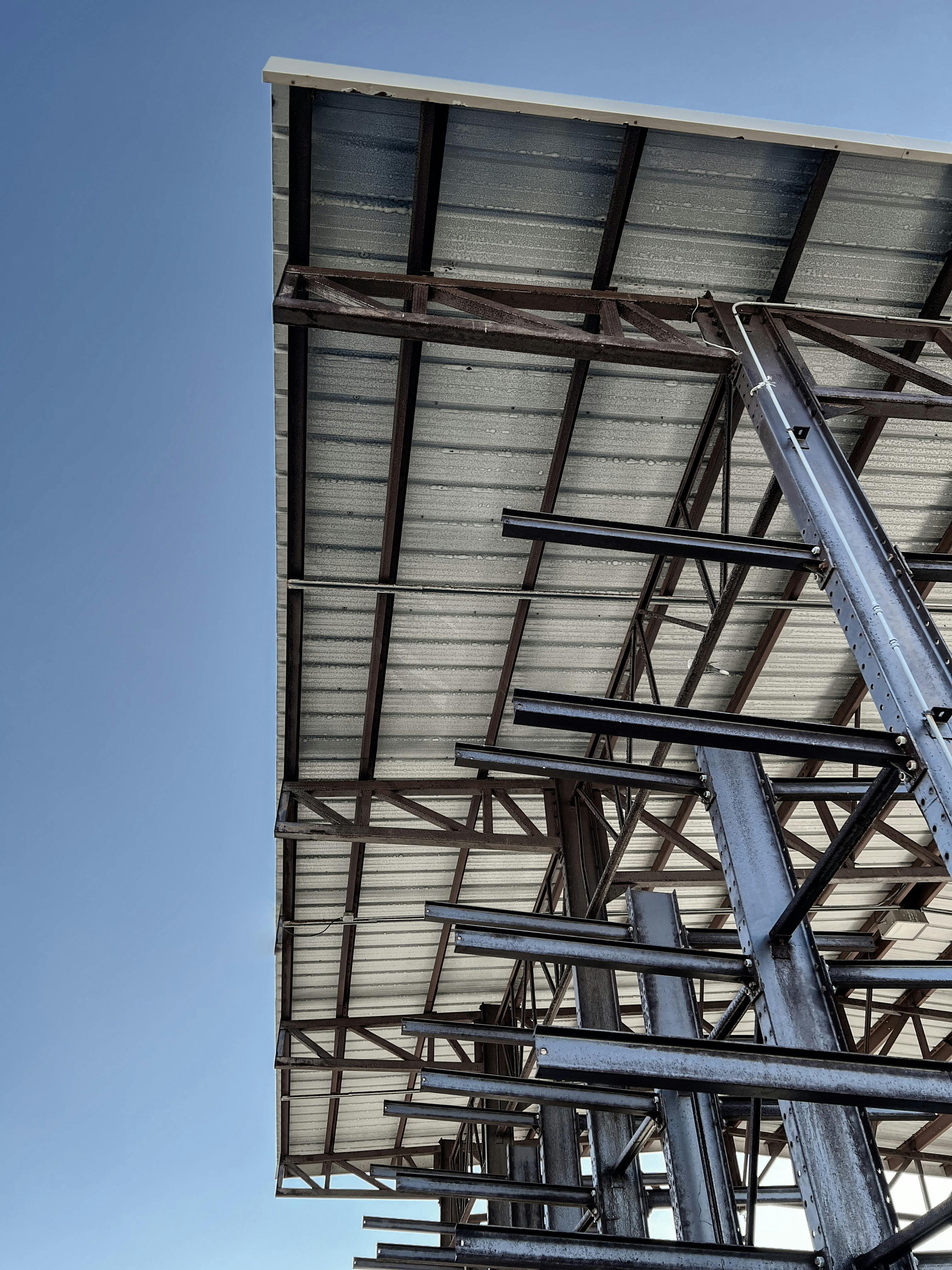
Illustration by ArchitectureCourses.org. The top chord, bottom chord, and web members each carry different parts of the structural job.
Every steel truss is doing the same basic thing through a few key parts.
Top chord
The top chord carries roof loads and is often in compression. That makes it vulnerable to buckling if it is under-braced, too light, or asked to carry more than the design expected.
Bottom chord
The bottom chord often holds the truss together in tension. In many roof systems, it also helps shape the ceiling and defines what can happen below the truss.
Web members
These are the inside members that move forces between the chords. Some carry compression, some carry tension, and their exact job shifts with the truss pattern and load case.
Geometry
Triangle logic is the reason the truss works. Once member angles, panel layout, or support geometry get sloppy, the whole system becomes harder to analyze, harder to fabricate, and harder to install well.
A neat-looking truss is not enough. The load path still has to stay clear.
Connections Carry the Load
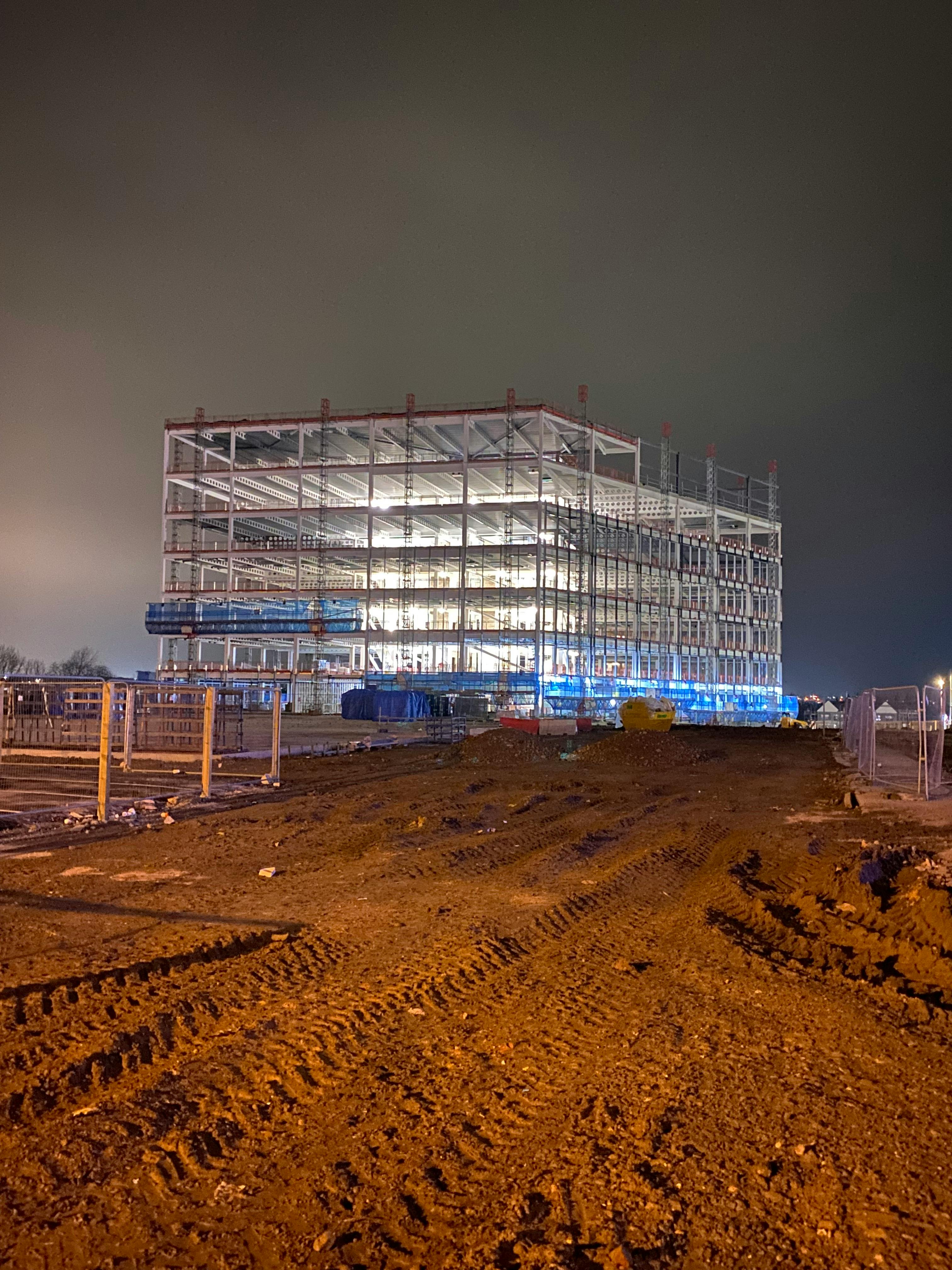
Illustration by ArchitectureCourses.org. Steel truss joints and gusset connections do the heavy work of transferring force between members.
Most truss trouble does not start because steel stopped being strong. It starts because the joint was weak, undersized, badly fabricated, or badly installed.
Gusset plates
Gusset plates hold multiple members together and spread force through the joint. On heavier or longer-span trusses, they are not a decorative detail. They are part of the structural logic.
Bolted joints
Bolted joints are common where prefabrication, field assembly, and future disassembly matter. They can work very well, but only if the bolt layout, hole alignment, and tightening are treated seriously.
Welded joints
Welded joints are common where permanence, cleaner appearance, and rigidity matter more. They can be strong and compact, but bad welding or bad inspection can ruin the whole connection.
Pinned and flexible connections
Some larger or more dynamic systems need a connection that allows controlled movement instead of fighting it. That matters in some bridges, cantilevers, and long-span work where thermal and structural movement are part of normal behavior.
| Connection Type | Best Fit | Main Upside | Main Risk |
|---|---|---|---|
| Gusset plate connections | Multi-member joints in longer-span trusses | Good force distribution | Undersized or badly detailed plates crack first |
| Bolted joints | Prefab systems and field assembly | Easier erection and later changes | Slip, bad alignment, poor tightening |
| Welded joints | Permanent, high-load, cleaner-finish work | Strong and compact | Poor welding is hard to forgive later |
| Pinned or flexible joints | Dynamic or movement-sensitive systems | Better movement control | Wrong application creates instability instead of relief |
Materials Used in Steel Truss Construction
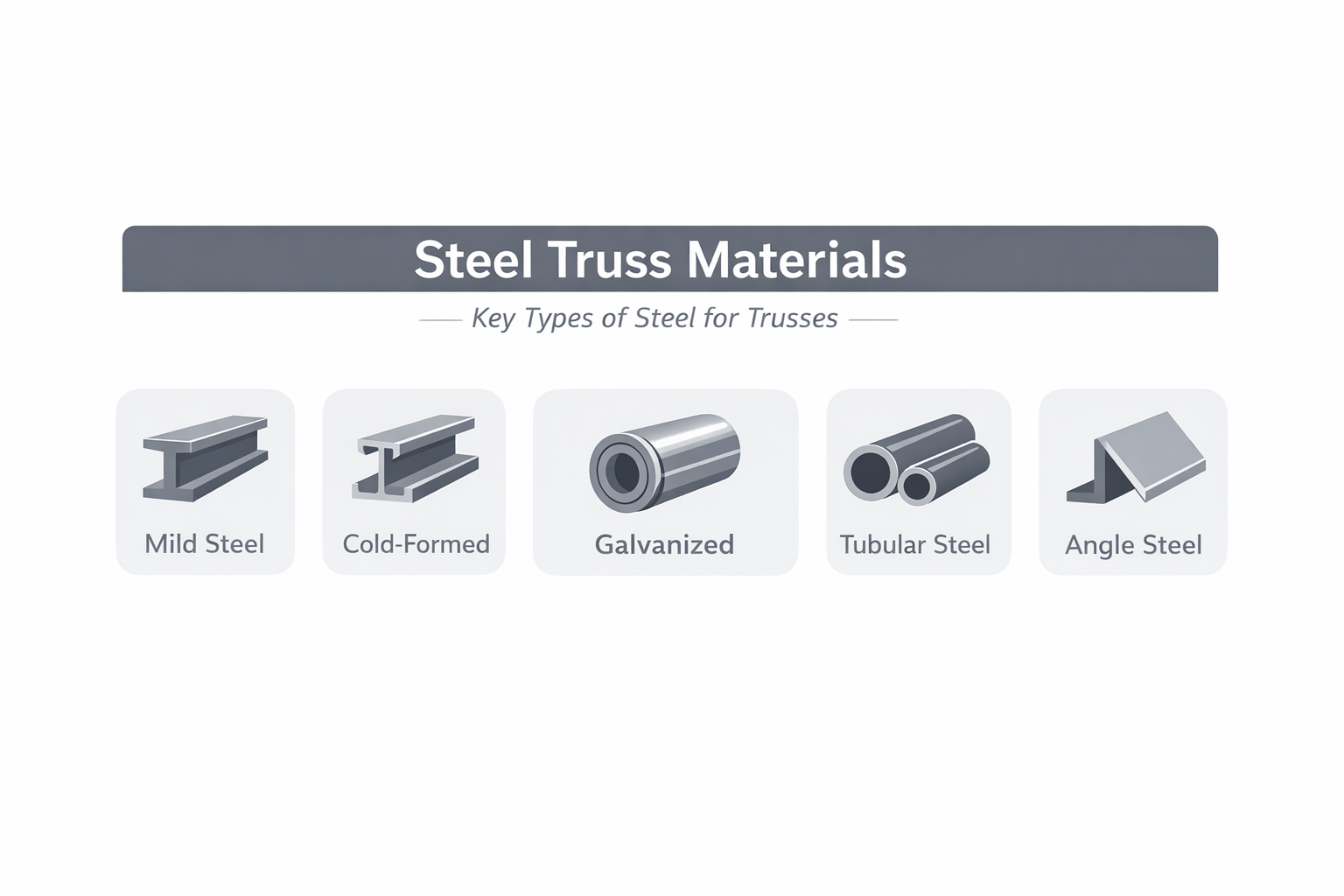
Illustration by ArchitectureCourses.org. Common steel section types used for truss members and connections. Different section forms suit different truss jobs, from utility roofs to long-span framed structures. Section choice affects fabrication, corrosion resistance, span, and cost.
Steel trusses are not all made from one identical material family.
Mild steel
Mild steel is common because it is reliable, weldable, and cost-effective for a large range of roof truss work.
Cold-formed steel
Cold-formed steel is common in lighter prefabricated systems, especially where speed and lower weight matter. It works well when the spans and loads suit it, but it still needs proper bracing and handling.
Galvanized steel
Galvanized steel matters in corrosive or humid environments, especially where the truss is more exposed to moisture risk.
Tubular sections
Tubular steel sections are used where strength and cleaner visual profile matter together. They can reduce visual bulk, but the nodes and welds get more demanding.
Material choice is not just about strength. It is also about exposure, fabrication method, maintenance, and the way the truss is supposed to look inside the building.
What to Watch During Installation
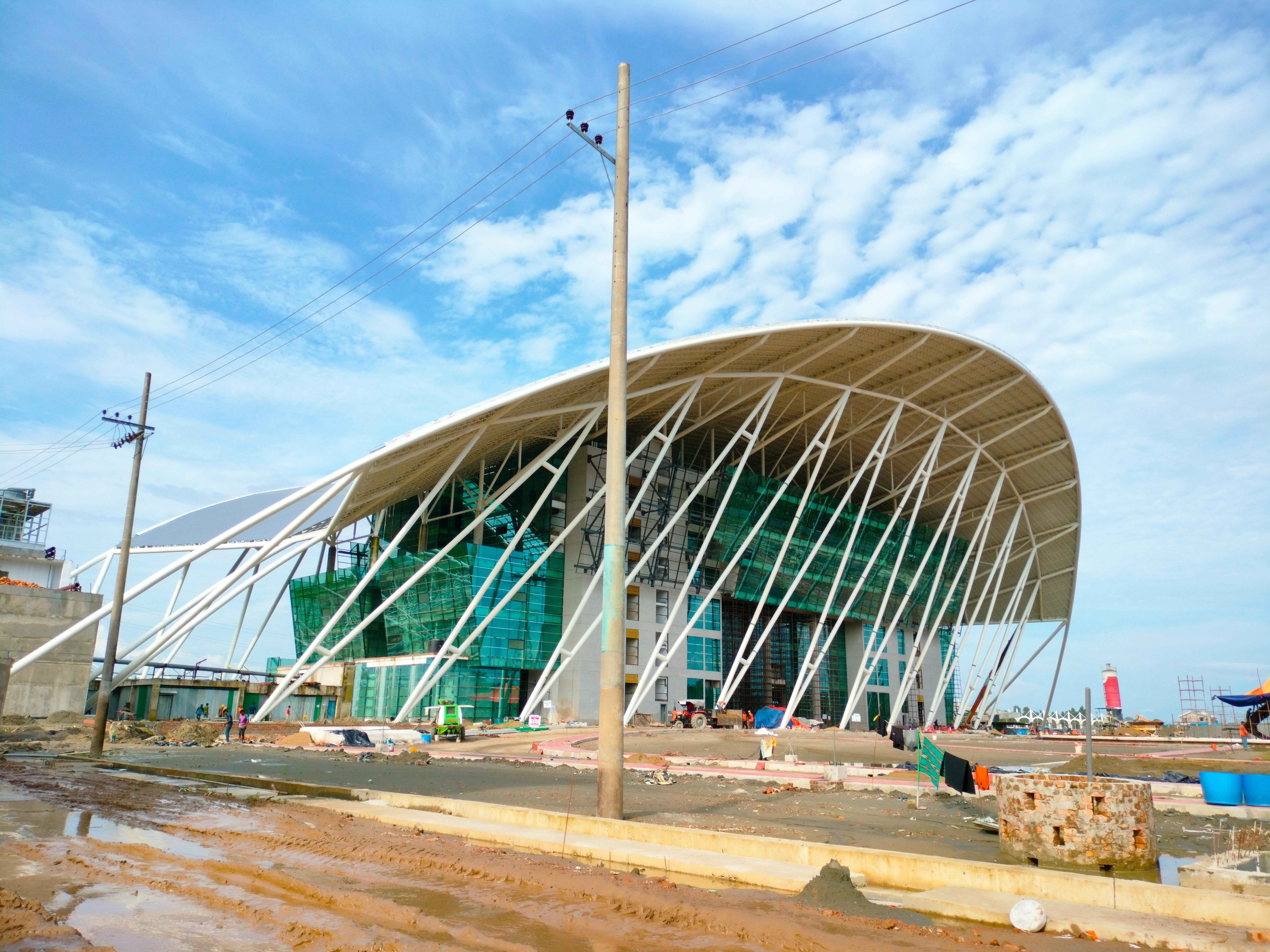
Illustration by ArchitectureCourses.org. Loads, uplift, bracing, and local code conditions all have to be settled before erection starts.
A well-designed steel truss can still become a bad roof if erection goes sloppy.
- Inspect on delivery. Bent members, bad welds, coating damage, and transport damage should not be ignored.
- Brace early. Temporary restraint during erection matters just as much as permanent bracing later.
- Set in the right sequence. The erection plan should not be improvised after the first crane lift.
- Check supports and bearing. A perfect truss still fails if it lands on bad support conditions.
- Keep connections disciplined. Bolt tightening, weld quality, and fit-up should be checked before the structure starts carrying more load.
- Do not accept casual field modification. A quick site fix at the wrong member or joint can change the whole load path.
The unstable phase before the roof diaphragm is complete is where many truss jobs become dangerous. That part needs discipline, not confidence.
Where Steel Truss Jobs Go Wrong
Most failures do not start with exotic theory. They start with ordinary mistakes.
- Loads were underestimated. Snow, wind, uplift, rooftop equipment, or later additions were treated too lightly.
- The wrong truss family was chosen. A light roof truss got asked to solve a long-span or specialty problem it was never meant for.
- Connections were weak. Plates, welds, bolts, or support details did not match the forces they were carrying.
- Bracing was treated like cleanup. This is where many otherwise decent trusses get into trouble.
- Corrosion risk was ignored. Moisture, industrial exposure, or poor coating protection were treated too casually.
- Site changes were made without review. One cut, one relocation, or one added load can change everything.

Illustration by ArchitectureCourses.org. Member force and deflection logic matter, but weak assumptions and weak joints cause more field trouble than math symbols do.
The hard truth is simple: steel trusses are forgiving in some ways, but not forgiving when the wrong forces or the wrong details get ignored.
Do This Instead of This
| Do This | Instead of This | Why |
|---|---|---|
| Match the truss family to the span and roof job | Pick a truss because the shape looks familiar | Geometry only helps when it fits the load and support |
| Check site-specific loading early | Use generic assumptions from another project | Snow, wind, and uplift change the answer fast |
| Treat joints as structural work | Spend all the time on member selection and rush the connections | Weak joints waste good members |
| Brace during erection and after | Wait until the roof feels stable | The unstable phase is where jobs fail |
| Use corrosion protection where the environment demands it | Assume all steel behaves the same in every condition | Moisture and exposure change service life fast |
FAQ
What is the best type of steel truss for residential use?
It depends on the roof and the room below. Scissor trusses are common when ceiling volume matters. Simpler forms make more sense on standard roofs. The better question is what span, ceiling shape, and support condition the roof is solving.
Why choose steel instead of wood?
Steel starts making more sense when the span gets wider, the loads get heavier, the space below needs to stay open, or the roof needs more precision and durability.
What is the biggest mistake in steel truss design?
Treating the members as the whole job and overlooking the loads, the joints, or the bracing.
Are tubular steel trusses stronger than standard steel trusses?
Not in some blanket way. They can be very efficient and visually cleaner, but the connection design and fabrication quality become more demanding.
Can steel trusses be customized?
Yes. That is one of their strengths. But customization still has to follow span, load, support, and fabrication logic.
How often should steel trusses be inspected?
Periodic inspection matters, especially after severe weather, roof changes, new equipment, corrosion exposure, or visible movement at joints and supports.
Are steel trusses suitable for houses?
Yes, especially in custom houses or wide-span plans. They are not the default for every house, but they are a strong option when the plan wants fewer supports and more open space.
Do steel trusses save money?
Sometimes. They can save money when long span, speed, reduced supports, or future flexibility matter. They can also cost more upfront if the building did not need steel in the first place.
Read This Next
If the next step is the broad roof-truss side, go to Roof Trusses. If you want the full design side, use Truss Design 101. If the job is moving into timber rather than steel, read Timber Trusses Explained. And if the roof is being designed around vaulted space, use Scissor Trusses.