
Building Green the Right Way: Proven Methods, Real Costs, Fewer Regrets
A Field Guide for Designers and Builders
Most of what gets sold as “green” is noise. What matters is tight envelopes, real carbon data on materials, smart water and site planning, and making sure design and construction actually line up.
Skip the miracle products. If the basics aren’t right, the building will bleed energy, lock in bad materials, and cost more to fix later. The fancy tech can come after you’ve sealed the shell, set up proper sequencing, and checked quality control.
Sustainable Construction Techniques: From Low-Carbon Materials to Net-Zero Sites
The failures repeat. Solar panels slapped on before the insulation is done. Concrete ordered without checking embodied carbon. Water and waste pushed off until the end. Looks great on paper, performs poorly in life.
The Sustainable Construction Playbook: Envelope, Embodied Carbon, Water, and Waste
A practical guide to sustainable construction. What experts recommend, what builders regret, costs and trade-offs, and a step-by-step plan you can use on your next project.
Straight from site: what actually works
Start with the envelope and airtightness
Air sealing, insulation continuity, and thermal bridge control are the foundation of efficient buildings. Passive House standards emphasize super-insulated, airtight shells with heat-recovery ventilation. Those reduce energy demand and stabilize comfort.
On site, that means setting airtightness targets early, verifying with blower-door testing, and designing slab-wall-roof transitions for continuity. Ventilation must be balanced with heat recovery to prevent moisture and stale air problems.
Tackle embodied carbon with data
Operational energy is only half the story. Embodied carbon in materials matters on day one. Tools like EC3 allow designers and builders to compare Environmental Product Declarations (EPDs) for concrete, steel, insulation, and finishes. With verified data, you can specify lower-carbon mixes and suppliers.
Examples include Portland-limestone cement mixes that reduce binder CO₂, or LC3 (limestone calcined clay cement) that can cut cement emissions by about forty percent where available.
Consider mass timber where it fits
Mass timber and CLT can reduce embodied carbon compared with conventional frames when responsibly sourced and assessed over the full life cycle. Prefabrication can shorten schedules. But it comes with trade-offs: insurance, fire and acoustic design, and moisture protection during installation all require planning.
Use off-site fabrication to cut waste
Off-site and modular methods reduce construction waste and improve quality control compared with stick-built work. They can also reduce schedule risk. Bathrooms, MEP racks, and repetitive components are common candidates. Success depends on early design freezes and tight coordination.
Treat water and site as performance systems
Green infrastructure is not just landscaping. Bioswales, permeable pavements, rainwater harvesting, green roofs, and urban trees reduce stormwater loads, provide cooling, and improve comfort. Inside, WaterSense fixtures deliver measurable savings at scale.
Cut construction and demolition waste
C&D debris is one of the largest waste streams in North America and Europe. Jobsite sorting, reuse, and take-back programs matter. Design for deconstruction pushes projects from recycling into circularity. Contractor waste management plans and reporting are key.
How to Build Sustainably: Materials, Systems, and Workflows That Hold Up
Real experiences from the field
Envelope upgrades: where comfort actually comes from
A builder in Minnesota sealed and insulated a 1970s split-level. The job cost $28,000 in spray foam, rigid exterior insulation, and air-sealing labor. The blower-door test went from 9.5 ACH50 down to 1.2 ACH50. The family said the biggest change wasn’t the bills, it was comfort. No more cold bedrooms in winter, no more overheating in the upstairs rooms in summer. Their gas bill dropped by 60 percent.
Contrast that with another homeowner who added solar panels first without sealing. They spent $20,000 on PV, saw a dent in bills, but still complained about drafts and inconsistent temps. They admitted later they should have flipped the order.
Low-carbon concrete: the hidden big move
A mid-rise developer in Toronto compared bids for their parking structure. Standard OPC concrete came in at $110 per cubic yard. A Portland-limestone cement (PLC) mix came in at $112. Almost no price difference. But the PLC mix cut the binder-related CO₂ by about 10 percent. Over thousands of cubic yards, that added up to the equivalent of taking dozens of cars off the road each year.
Another case in Switzerland used LC3 cement. Costs were slightly higher upfront (+5–8 percent) because suppliers had less market volume, but lifecycle CO₂ dropped by nearly 40 percent.
Lesson: the market sets the price close if you specify with performance criteria and EPDs. If you don’t, contractors default to the cheapest high-carbon mix.
Mass timber: speed and carbon, with caveats
A four-story office in Oregon went mass timber. The structure went up in 8 weeks, compared to the projected 14–16 weeks for steel. That shaved rental loss for the developer by nearly two months — a huge financial win.
But the trade-offs were real:
-
Insurance premiums came in 15 percent higher than if they had gone with steel.
-
Moisture management required a full temporary roof during install, costing $60,000.
The embodied-carbon win was clear. Compared to a similar steel frame, the timber structure cut about 25 percent off the building’s upfront carbon. But the team said they would not attempt it without very early coordination with fire engineers, acoustic consultants, and insurers.
Green roofs and permeable paving: beauty, fees, and headaches
In Chicago, a mid-rise with a 5,000-square-foot green roof paid $180,000 upfront (about $36/sq ft). The payoff came in lower stormwater fees and cooler summer temperatures on the top floor. Ten years later, the owner said it still performed — because they had a maintenance contract from day one.
Another building skipped the contract. Within three years, weeds and drainage problems killed performance. What was meant to be a sustainability feature turned into a costly replanting project.
Permeable paving tells the same story. A school in Texas installed 20,000 square feet. Cost was about $7 per square foot. Great first year, until janitorial staff accidentally sealed joints with sand. The system clogged. They had to pay for a complete surface cleaning. Lesson: these systems need education and maintenance, not just install.
Heat pumps: comfort with sticker shock
In Boston, a family swapped their gas furnace for a cold-climate heat pump. Total installed cost: $24,000, including electrical upgrades. Their bills went down 35 percent and they reported steady comfort — no more dry air or big temperature swings.
But a contractor in Ohio shared a failed case: a client undersized the heat pump to save money. It struggled in sub-zero weather, and they had to add electric resistance backup. Bills spiked. The client ended up spending $5,000 more on fixes than if they had sized it properly the first time.
Waste diversion: when contracts force discipline
On a Seattle project, the GC was contractually required to sort and report waste. Diversion rate hit 82 percent, and resale of metals covered part of the cost.
Another job across town had no contract requirement. Same type of building, but dumpsters filled with mixed waste. Diversion dropped to 20 percent. The difference wasn’t motivation — it was contracts and verification.
See also: 7 Types of Sustainability in Architecture Design
Mistakes that sink sustainable builds
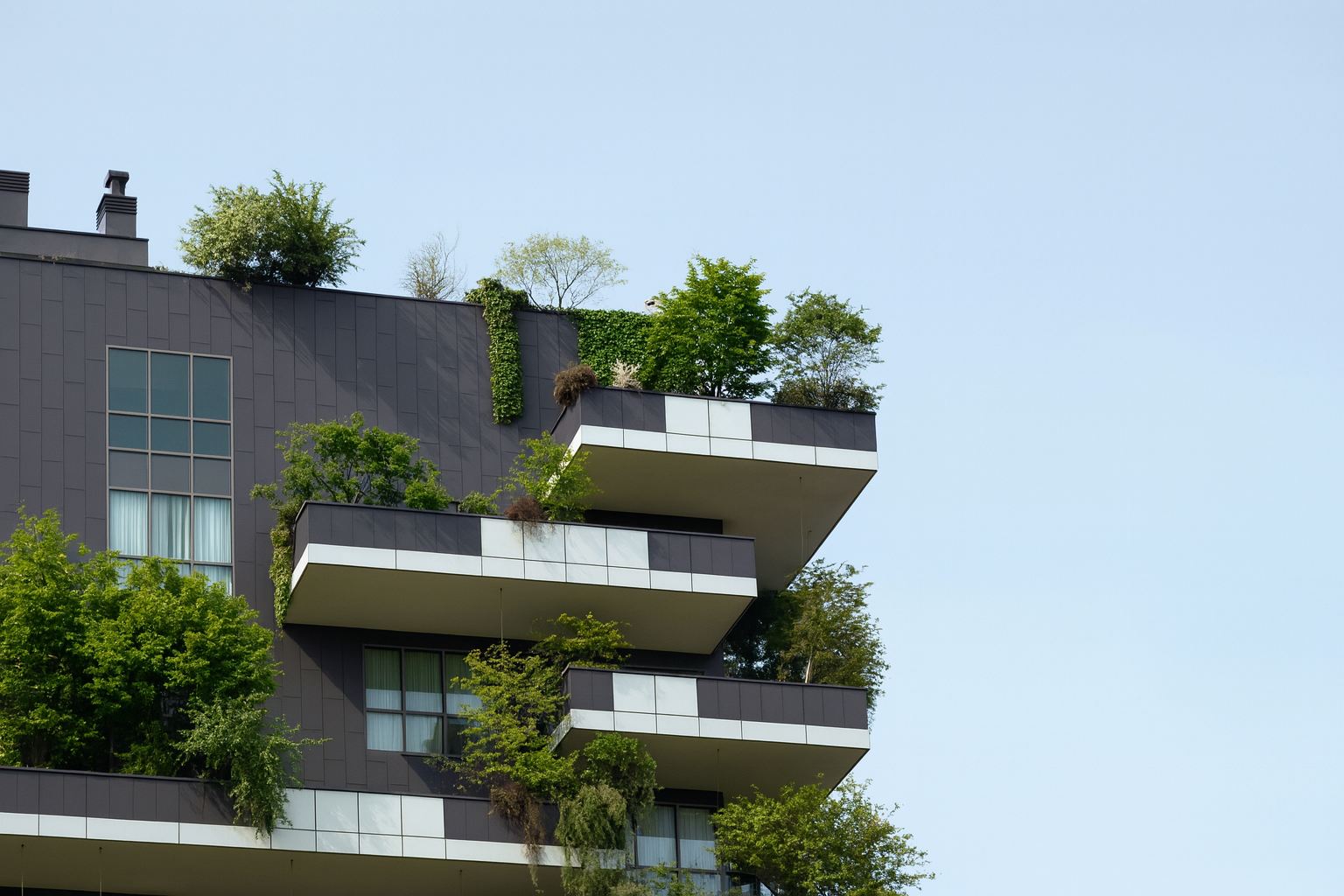
I have seen more projects go sideways on the basics than on the high-tech systems. You can throw all the solar and sensors you want at a building, but if the fundamentals are wrong, the rest just hides the problem for a year or two until the complaints start rolling in.
Chasing solar before fixing the shell
Too many teams get dazzled by panels. They cover a leaky roof with photovoltaics and call it sustainable. The load is still sky-high, so the panels just mask the waste. On one school project, the district bragged about a huge array. Six months later, teachers still had to run space heaters because the envelope leaked like a sieve. Panels should be the last step, not the first. Fix the walls and windows first.
Locking in high-carbon concrete or steel without checking EPDs
Material decisions get made early and quietly. If you don’t check Environmental Product Declarations (EPDs) on concrete mixes or steel sourcing, you lock in thousands of tons of embodied carbon before design development is even finished. I once sat in on a mid-rise bid where the “value engineering” option meant swapping in a cheaper concrete mix. It saved $200,000 upfront but baked an extra 20 years of carbon into the structure. No one caught it because the team was busy fussing with facade fins.
Treating stormwater and heat island as landscaping instead of infrastructure
Green roofs and planters are not decoration. If you don’t size them right, they are just expensive flower beds. The Javits Center only turned the corner when its roof was rebuilt to hold serious soil depth, manage runoff, and cool the building. Now it doubles as habitat. I have seen the opposite too: token planters that dry up in summer and do nothing for drainage. Stormwater management needs the same engineering rigor as structural loads.
Buying products without a sequence plan
Sustainability gear shows up on site all the time—LEDs, low-flow fixtures, even heat pumps—without anyone planning how or when they get installed. I once walked a job where smart thermostats were stacked in boxes in a damp basement for months. By the time they went in, half were dead. A sustainable product is only sustainable if it is procured, stored, and sequenced properly.
Airtight homes with no ventilation strategy
Air sealing is vital, but if you forget fresh air, you build a sick house. I have walked Passive House retrofits that hit the blower-door numbers but left tenants dizzy from poor ventilation. One resident told me they felt “sealed into a plastic bag.” Good design is not about absolute airtightness. It is about airtightness balanced with continuous, filtered ventilation.
Skipping waste plans and reporting
Demolition is where so much gets lost. Without a clear waste plan, tons of salvageable brick, steel, or wood go straight to landfill. I once watched dumpsters full of old-growth beams get hauled off because no one wrote a deconstruction scope. Reporting matters too. If you do not track diversion rates, you cannot prove the project did what the glossy render promised. Clients are starting to ask for those numbers. If you don’t have them, trust erodes fast.
What it took on real projects
Envelope package
Targets were set at 1.0 to 1.5 ACH50 for standard buildings and 0.6 for Passive House. Getting there required airtight detailing, exterior insulation wrapped continuously, and thermal bridge audits. The biggest cost was not the materials but the coordination and quality control time. Crews spent hours with smoke pens and cameras checking every seam.
Low carbon structure
Concrete was specified with PLC or LC3 mixes and supplementary blends of slag or fly ash to cut cement. Steel came from electric arc furnaces with verified environmental product declarations. Timber was used in select cases, but only after fire safety, acoustics, and weathering strategies were locked in. Each decision had to be tested and defended in bidding.
Water and site systems
Green roofs were designed with proper depth and drainage. Permeable paving and rainwater harvesting tanks were added to manage runoff. Inside, fixtures carried WaterSense ratings. Maintenance planning was critical. On one project a rainwater system failed in year two because no one budgeted for filter replacements.
Off site and prefab
Bathrooms, risers, and MEP racks were prefabricated to cut waste and speed up installation. This worked only when the team froze designs early and delivered precise shop drawings months ahead. Clients who resisted that discipline paid for it later with higher waste costs.
Verification
Energy models were run throughout design instead of once at the end. Blower door tests were scheduled both mid construction and post fit out. Embodied carbon was tracked with EC3 from schematic through submittals. Waste diversion reports were collected every month. These checks were not decoration. They shaped decisions in real time.
Related: Sustainable Design Strategies in Architecture: A Practical Guide
Pro tips from the field
-
Set whole-life carbon targets in the owner’s requirements.
-
Put maximum GWP limits for concrete in the spec.
-
Run a thermal bridge workshop before CDs.
-
Plan for at least two blower-door tests.
-
Treat green infrastructure as a system with budgets for maintenance.
-
Standardize WaterSense fixtures.
-
Use prefabrication for repeatable elements if schedule is risky.
How to apply this on your next project
-
Scope and targets – Write down airtightness, energy, carbon, and stormwater goals at the start.
-
Envelope first – Decide assemblies for continuity. Draw red lines at all transitions.
-
Embodied carbon plan – Require EPDs and compare in EC3. Set max GWP limits in the spec.
-
Structure selection – Compare steel, concrete, timber with LCAs.
-
Water and site – Pick from green roofs, permeable paving, rainwater harvesting.
-
MEP strategy – Right-size heat pumps, confirm ventilation with heat recovery.
-
Off-site where it helps – Freeze design earlier and coordinate.
-
Measurement – Track energy, carbon, and waste monthly. Commission ventilation.
Real costs and trade-offs
Envelope upgrades
The material cost for extra insulation, tapes, or better windows is usually not the budget killer. Coordination is. Getting trades to maintain airtightness through slab edges, window installs, and roof transitions takes time and supervision. The payoff is steady indoor temperatures and the ability to downsize HVAC equipment, which can save thousands in upfront mechanical costs. A blower-door test often proves the value in real numbers—owners notice comfort and noise reduction immediately.
Low-carbon concrete
In many markets, mixes with Portland-limestone cement (PLC) or supplementary cementitious materials (fly ash, slag) are price-neutral compared to traditional OPC concrete. The challenge is availability and contractor buy-in. LC3 (limestone calcined clay cement) can cut emissions by 40 percent, but it is only supplied in a handful of regions. The trade-off: schedule risk if supply is uncertain. Best approach is to specify performance criteria and maximum CO₂ thresholds in the spec, then let suppliers compete.
Mass timber
Cross-laminated timber (CLT) and other mass timber products can cut erection time in half compared to concrete. Less labor, cleaner sites, quieter installs. But the hidden costs show up in insurance premiums, acoustic detailing, and the need for strict moisture protection during install. Without a sequencing plan for weather, panels can warp or mold. Net trade-off: big schedule win, possible added soft costs.
Green roofs and permeable paving
A vegetated roof or porous pavement adds a clear premium to first costs. But in cities that levy stormwater fees, they can pay back in under a decade. Comfort gains are real—green roofs cut roof surface temps by 30–40°C in summer—but only if maintenance is baked into the budget. A neglected green roof quickly becomes a dead patch that no one wants to pay to restore.
Heat pumps
Upfront cost is the biggest shock, especially if electrical service upgrades are needed. But when sized correctly and paired with a tight envelope, heat pumps slash operating bills and improve comfort. The real regret stories come from undersized or non–cold-climate models in northern regions. Owners in cold climates consistently praise the comfort when they pick the right unit.
Waste diversion
Dumpster rental and hauling fees are a hidden sinkhole if debris isn’t sorted. Projects that write sorting, weighing, and reporting into the contractor’s contract routinely divert 70–80 percent of waste from landfill. Projects that don’t? You see mixed trash, inflated fees, and nothing to show for it. The trade-off is simple: a few hours of setup and reporting saves thousands in landfill costs and keeps the sustainability claims honest.
What people wish they knew earlier
-
Air sealing has to come before piling on insulation.
-
Ventilation is mandatory once a house is tight.
-
Deep retrofits cost more than glossy case studies suggest unless the scope is locked early.
-
EPDs and EC3 are the only way to prove embodied carbon claims.
-
Green roofs die fast without a maintenance contract.
Checklist for owners and GCs
Envelope
-
Set airtightness targets and require blower-door tests
-
Detail slab, wall, roof transitions clearly
-
Budget for insulation continuity, not just thickness
Embodied Carbon
-
Require EPDs from suppliers
-
Compare in EC3 or similar tool
-
Set maximum GWP per material class in the spec
Structure
-
Compare LCAs for steel, concrete, timber
-
Plan early for fire, acoustic, and insurance in timber
-
Optimize spans and tonnage to cut steel weight
Water & Site
-
Decide on bioswales, permeable paving, green roofs, rainwater harvesting
-
Plan access and maintenance budget
-
Use WaterSense fixtures inside
MEP
-
Right-size heat pumps, confirm cold-climate performance
-
Pair airtight homes with balanced ventilation
-
Verify electrical service capacity
Prefab/Off-site
-
Freeze design early
-
Use for bathrooms, MEP racks, or modular elements
-
Set shop drawing review into the critical path
Verification
-
Energy model during design, not after
-
Two blower-door tests, not one
-
Monthly reporting on carbon, waste, and water
Final word
Sustainable construction is not solved by a single product. It is a sequence. Nail the envelope, cut embodied carbon with verified data, design water and site systems as infrastructure, and require measurement at every step. Do that and you get lower carbon on day one, lower energy every year, resilient sites, and buildings that feel better to occupy.
Related
- Sustainable Design Strategies in Architecture: A Practical Guide
- Local Law 97 NYC: What Architects and Building Owners Need to Know
- 7 Types of Sustainability in Architecture Design
- Sustainable Architecture 101: The Basics You Need
- Sustainability in Architecture Design: What’s Changing in 2025?
- NYC Green Architecture: What Architects Are Building for 2030
- Building a Truly Green NYC Apartment: What It Takes in 2025
- Ecofriendly Roofing Guide: Costs, Mistakes, and Real Options That Work
- Biophilic Office Design: Creating Healthier, Happier Workspaces
- Eco-Friendly House Without the Green Guilt
FAG
1. What’s the first step in sustainable construction?
Seal and insulate the envelope. Nothing else pays back if the shell leaks.
2. Does sustainable always mean more expensive?
Upfront, sometimes. Over the life of the building, well-sequenced upgrades usually save money.
3. What’s the most common waste of money in “green” projects?
Jumping straight to solar panels without fixing envelope or HVAC first.
4. How do I know if a material is low carbon?
Ask for the EPD. If a supplier won’t provide one, assume the product is not optimized.
5. Is mass timber always lower carbon than concrete?
Not always. It depends on sourcing, fire design, and life-cycle analysis.
6. How do I stop moisture problems in airtight homes?
Pair air sealing with balanced mechanical ventilation and heat recovery.
7. Do green roofs really work?
Yes, but only if maintenance is budgeted and done. Otherwise, they fail.
8. What’s the biggest mistake in insulation installs?
Skipping air sealing. Insulation without airtightness leaks performance.
9. Should I choose heat pumps over gas boilers?
If grid electricity is clean or heading that way, yes. Cold-climate models perform well if sized right.
10. Are prefab and modular methods really sustainable?
They cut waste and speed installs if the design is frozen early. Last-minute changes kill the benefit.
11. How do I reduce embodied carbon in concrete?
Specify PLC or LC3, ask for SCM blends, and cap the cement content in the spec.
12. Can old buildings be retrofitted sustainably?
Yes, but deep retrofits cost more than expected. Scope discipline is critical.
13. What role does site design play?
Stormwater, shading, and trees are performance systems. Treat them as infrastructure, not landscaping.
14. How do I manage construction waste?
Write waste tracking into contracts. Require weighing, sorting, and monthly reports.
15. Are sustainable certifications like LEED worth it?
They help with marketability and discipline, but the performance depends on execution, not the plaque.
16. What’s the payback time for envelope upgrades?
Often immediate in comfort and 5–10 years in energy bills.
17. Can I build sustainable without high-tech systems?
Yes. A tight, insulated, well-oriented envelope beats gadgets every time.
18. What water-saving systems make the most impact?
Rainwater harvesting, permeable pavements, and WaterSense fixtures.
19. Do sustainable buildings always feel better to live in?
When done right: yes. Owners report steadier temps, quieter rooms, and cleaner air.
20. What’s the risk of chasing new products?
High. Early tech often has cost or durability issues. Stick with tested materials first.
21. How do I convince clients sustainable methods are worth it?
Show them lifecycle costs, comfort gains, and resale data.
22. Is off-site fabrication more expensive?
Not always. It cuts site labor and waste, but requires early design freeze.
23. Can sustainable homes survive power outages better?
Yes. Tighter shells and passive strategies keep homes habitable longer.
24. What’s the role of local codes?
They can limit or accelerate sustainable methods. Some cities incentivize green roofs, others don’t.
25. Do contractors resist sustainable specs?
Sometimes. Resistance drops when specs are clear and EPD-based.
26. How do I know if my project is on track?
Measure. Blower-door tests, EC3 dashboards, and waste reports. Don’t rely on marketing claims.
27. What’s the ROI on solar if I already have a tight envelope?
Typically 8–15 years, faster if incentives exist.
28. Are sustainable retrofits disruptive to occupants?
Yes. Deep retrofits often require temporary relocation. Plan for it.
29. What role do windows play?
Triple glazing boosts comfort and efficiency but adds cost. Payback varies by climate.
30. How can I avoid regret in green projects?
Sequence correctly: envelope, ventilation, materials, then renewables.
31. Do insurance companies recognize mass timber?
Policies are catching up, but some still impose higher premiums.
32. Is demolition waste really that big a problem?
Yes. In the U.S., construction and demolition debris is the largest waste stream.
33. Can sustainable design improve property value?
Yes. Homes with energy and performance credentials consistently sell higher.
34. What’s the single best pro tip?
Do blower-door testing twice: once mid-construction, once at handover. It saves projects from hidden failures.
References
-
Passive House Institute (PHI) – Envelope and airtightness
-
Energy Star – Envelope and insulation guidance
-
U.S. DOE Building America – Envelope and systems integration
-
World Green Building Council – Upfront carbon strategies
-
Carbon Leadership Forum – Embodied carbon and material guidance
-
EC3 (BuildingTransparency.org) – EPD comparisons and procurement
-
RICS Whole Life Carbon assessment – Lifecycle accounting framework
-
RICS Whole Life Carbon assessment framework. Water Resources
-
U.S. EPA – Green infrastructure, WaterSense, and C&D waste data
-
PCA (Portland Cement Association) – PLC mixes
-
LC3 Project – Low-carbon cement data
-
WoodWorks and FPInnovations – Mass timber best practices
-
NREL and DOE – Heat pump performance and cold-climate data
-
WorldGBC guidance on upfront carbon. US EPA
-
EPA guidance on green infrastructure and C&D waste. US EPA