
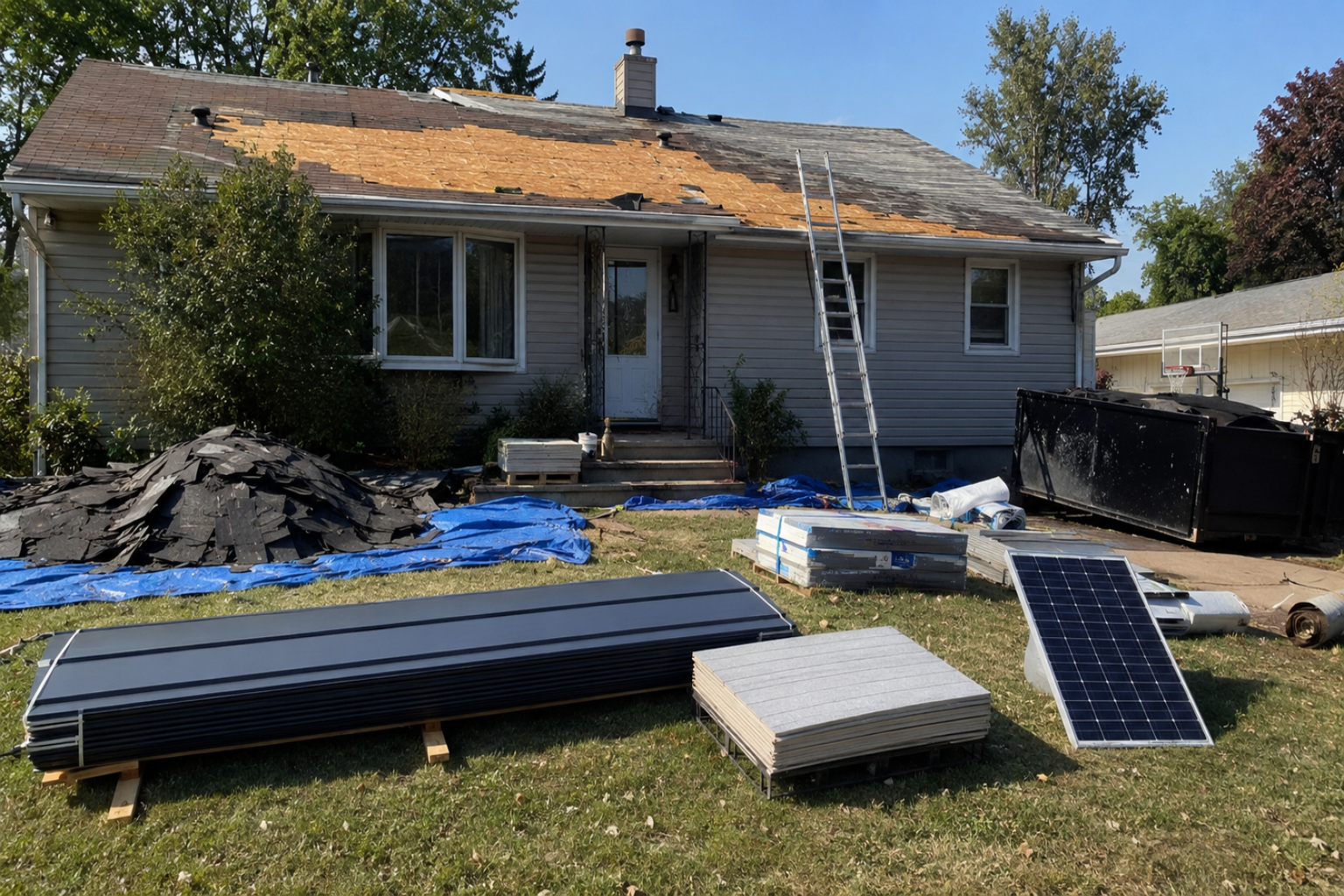
Ecofriendly roofing fails when the roof is chosen from a brochure instead of the house.
A roof can be recycled, reflective, solar-ready, planted, metal, clay, slate, or “green” and still be the wrong roof. If it leaks early, overloads the structure, traps heat, blocks future repairs, or needs maintenance the owner will not do, it is not sustainable. It is just another future tear-off.
Start with the roof you already have. Check the sheathing, slope, drainage, climate, solar plans, budget, and maintenance. Then choose the roof system.
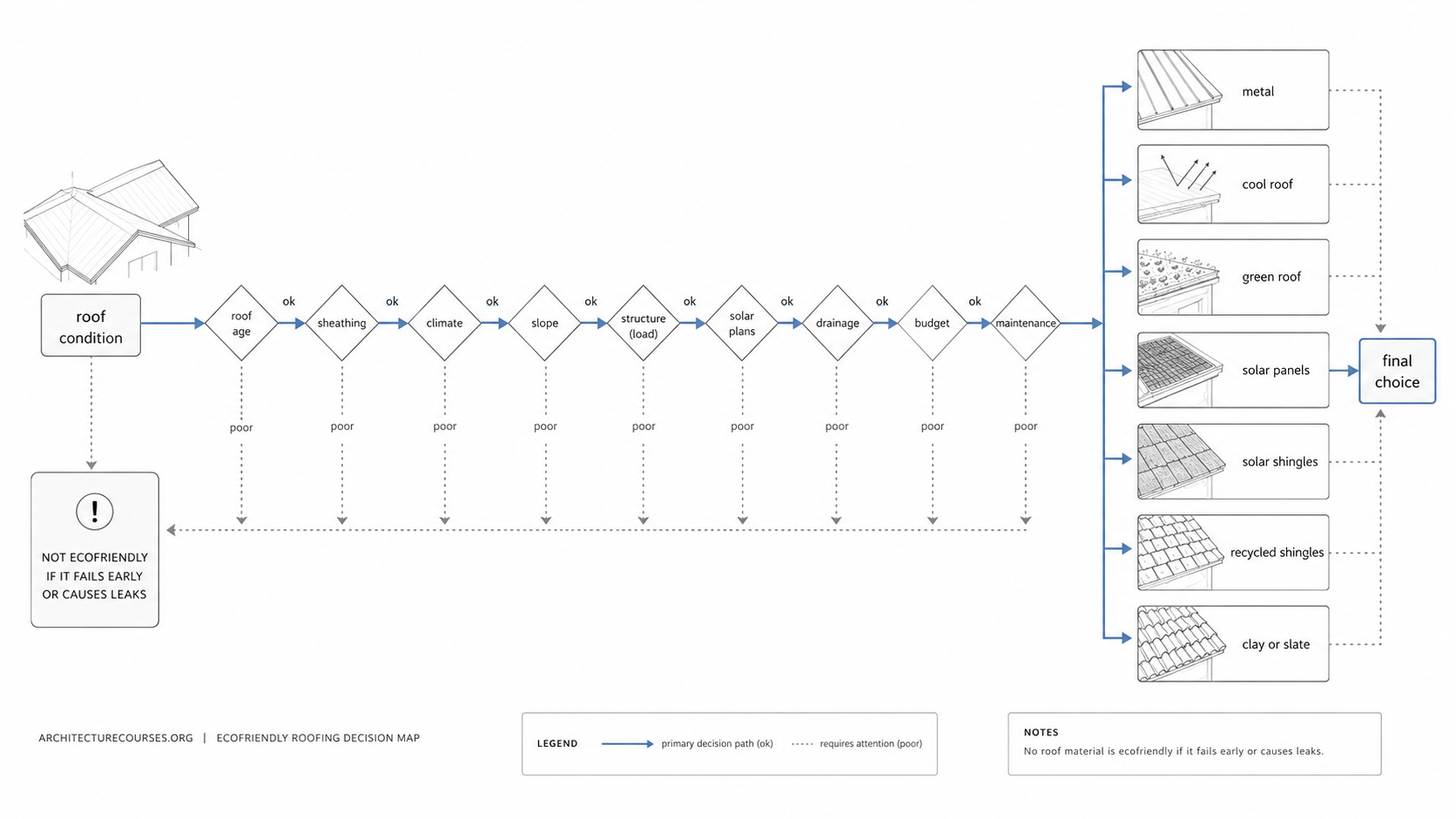
Start With The Roof You Already Have
Do not start with solar shingles, green roofs, or cool roof coatings. Start with the deck.
The most ecofriendly roof is often the one that avoids early replacement. A roof that lasts 40 years is usually less wasteful than a roof that needs major repair after 12. A roof that keeps water out is more sustainable than one that looks responsible and rots the sheathing.
Check these first:
- roof age;
- sheathing condition;
- slope;
- attic ventilation;
- flashing;
- drainage;
- roof penetrations;
- snow, wind, hail, wildfire, or salt exposure;
- whether solar may be added later.
If the roof deck is soft, stained, sagging, delaminated, or full of old leak damage, fix that before choosing any green roof surface. For deeper repair work, see replacing roof sheathing before pricing a new eco roof.
What Makes Roofing Ecofriendly
Ecofriendly roofing is not one material.
It is a roof that reduces waste, heat gain, energy use, stormwater problems, or replacement cycles without shortening the life of the building.
A roof may be ecofriendly because it:
- lasts longer than a standard roof;
- reduces cooling demand in a hot climate;
- supports solar panels without early reroofing;
- uses recycled or recyclable material;
- manages stormwater;
- reduces heat island effect;
- lowers replacement waste over 30 to 60 years.
But every claim needs a condition attached.
Cool roofs help most where cooling demand is high. Green roofs make more sense where stormwater, heat island, habitat, roof-life, or public-space benefits justify the engineering and maintenance. Solar makes sense on a sound roof with good sun, clear utility rules, and enough roof life left.
For the wider material path, connect this topic to sustainable materials and green building practices. Roofing is one part of the building, not the whole sustainability plan.
Best Ecofriendly Roofing Options Compared
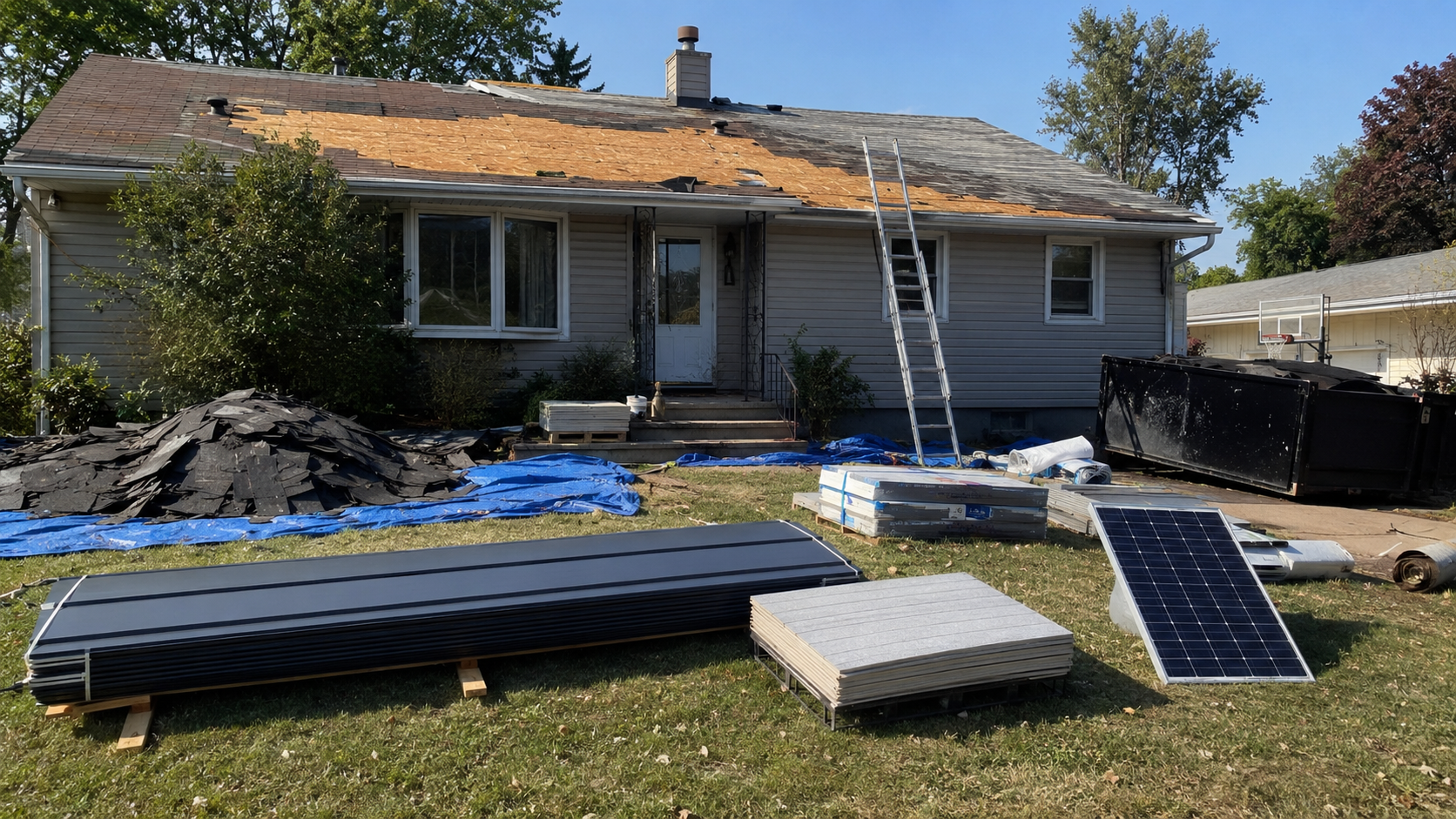
The best roof depends on the job.
A desert house, a cold-climate bungalow, a flat commercial roof, a wildfire-zone cabin, and a shaded suburban house should not get the same answer.
| Roof option | Where it fits | Where it fails | Best reason to use it |
|---|---|---|---|
| Standing seam metal | Long-term homes, solar-ready roofs, wildfire-prone areas, rain and snow climates. | Poor detailing, cheap coatings, salt exposure without the right metal, bad installer. | Long service life and strong solar compatibility. |
| Cool roof shingles or membrane | Hot, sunny climates and air-conditioned buildings. | Cold climates, dirty roofs, shaded roofs, weak insulation logic. | Lower roof temperature and reduced cooling load. |
| Green roof | Urban flat roofs, stormwater control, heat island reduction, civic or commercial projects. | Weak structure, poor waterproofing, bad drainage, no maintenance budget. | Stormwater, heat, habitat, and roof-protection benefits. |
| Solar panels over roofing | Sound roofs with good sun and enough roof life left. | Old shingles, weak sheathing, heavy shade, poor access, bad utility rules. | Energy production without turning the roof covering into a specialty product. |
| Solar shingles | New roof projects where appearance matters and budget is high. | Retrofits with tight budgets, complex roofs, shade, or owners who want best output per dollar. | Integrated look when roofing and solar are replaced together. |
| Clay, concrete, or slate tile | Durable roof designs with structure sized for the load. | Weak framing, freeze-thaw mistakes, poor underlayment, careless foot traffic. | Long service life when the assembly is designed correctly. |
| Recycled or composite shingles | Projects needing lighter weight and recycled content. | Unknown suppliers, weak warranties, poor local availability. | Lower waste and easier installation than heavy roof types. |
For a broader material comparison, see roofing materials from metal sheets to shingles. Use this page for the eco roofing decision, then use the material guide for a wider roof-material list.
Metal Roofing Is Often The Practical Eco Choice
Metal roofing is not perfect.
It costs more upfront. It can dent. It can be noisy if the assembly below it is poor. It needs good flashing, good fastener details, and the right coating for the climate.
Still, it is one of the stronger ecofriendly roofing options for a house the owner plans to keep.
The reason is service life. A well-installed metal roof can outlast several rounds of asphalt shingles. It also works well with rooftop solar because panels can often be mounted cleanly on standing seams, depending on the roof system and local requirements.
Metal also has one advantage at the end of life: it is recyclable. That does not erase the impact of mining, coating, shipping, or installation. It just gives the roof a better material-recovery path than many short-life roof coverings.
Use metal when the owner cares about long service life, fire resistance, solar readiness, snow shedding, and fewer tear-off cycles. Skip it when the budget cannot support proper detailing. Cheap metal installed badly is not an upgrade.
Cool Roofs Work Best Where Heat Is The Problem
A cool roof reflects more sunlight and absorbs less heat than a conventional roof.
In a hot sunny climate, that can be useful. It can lower roof temperature, reduce attic heat, help comfort, and reduce air-conditioning demand.
But a cool roof is not magic paint.
A reflective surface can get dirty. Some coatings need renewal. A cool coating on a cracked or ponding roof can hide the real problem for one season and then fail. In cold climates, the benefit is different because the building may need more winter heat than summer cooling.
Use cool roofing when:
- the climate has strong cooling demand;
- the roof gets direct sun;
- the roof assembly below is sound;
- the roof can be cleaned or maintained;
- the product has tested solar reflectance and thermal emittance data.
Do not use a reflective coating to “save” a failing roof. If the roof is leaking, ponding, split at seams, or near the end of its life, the sustainable move is repair or replacement, not a silver finish.
Solar Panels Need A Roof That Will Outlast The Payback
Solar can be a good roof-related upgrade, but panels are not the roof.
They sit on the roof. That roof still has to keep water out.
The biggest mistake is installing solar over a tired shingle roof. If the shingles need replacement five years later, the panels have to be removed and reinstalled. That adds cost, scheduling problems, warranty questions, and leak risk.
Before solar, check:
- roof age;
- shingle condition;
- sheathing strength;
- rafter or truss condition;
- roof orientation;
- shade from trees, chimneys, dormers, and nearby buildings;
- electrical service;
- utility rules;
- whether incentives depend on ownership or installation date.
If the roof is older or already showing wear, price reroofing and solar together. A solar-ready roof is not just a sunny roof. It is a roof with enough remaining life to carry the system without forcing an early tear-off.
For the money side, send readers to solar incentives. For the energy planning side, use renewable energy and renewable energy home design.
Solar Shingles Are Roofing And Power System In One
Solar shingles look cleaner than rack-mounted panels. That is their appeal.
The tradeoff is cost, availability, installer skill, electrical coordination, service, and output per dollar.
They make the most sense when the roof is already being replaced and the owner is willing to pay for the integrated look.
They make less sense on odd-shaped roofs, shaded roofs, tight budgets, hard-access roofs, or projects where the owner wants the easiest system to service later.
Ask these questions before choosing solar shingles:
- who handles the roof warranty?
- who handles the electrical warranty?
- how is a damaged shingle replaced?
- what happens if the solar product is discontinued?
- how much output is expected compared with standard panels?
- does the installer have local experience with this exact system?
If those answers are vague, use conventional roofing plus panels. Simple is often easier to repair.
Green Roofs Need Structure, Waterproofing, And Maintenance
A green roof is not soil dumped on a roof.
It is a roofing system with plants on top.
The plants are the visible part. The important parts are below: structure, waterproofing, root barrier, drainage, filter fabric, growing medium, overflow, edge details, and safe access for maintenance.
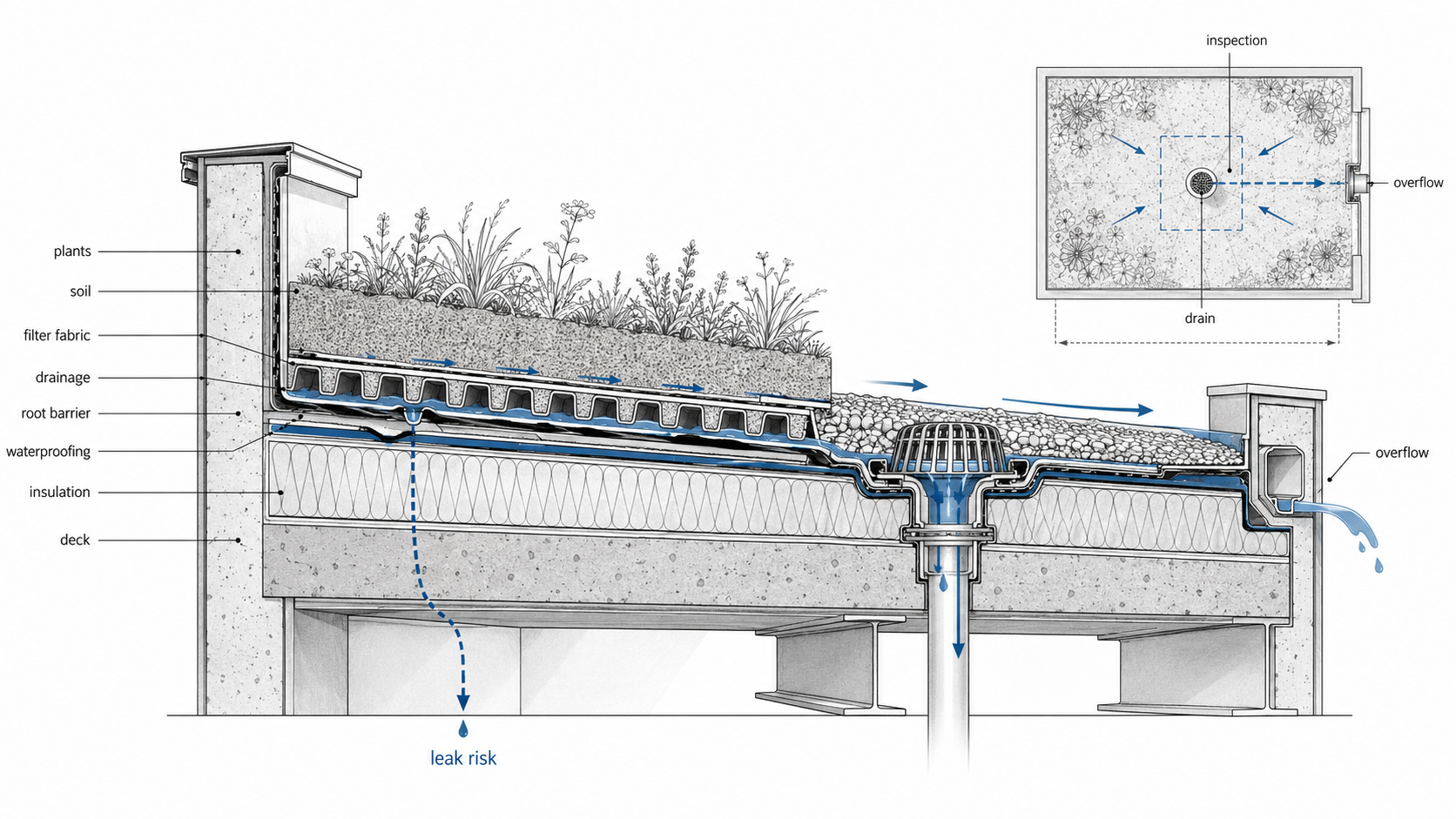
Green roofs can help with heat, stormwater, habitat, noise, and roof-membrane protection. They also add weight. Water adds more weight. Snow can add more again. A roof designed for shingles is not automatically ready for a planted assembly.
There are two basic types:
- Extensive green roofs: shallower, lighter, simpler planting, lower maintenance.
- Intensive green roofs: deeper soil, heavier planting, more access, more maintenance, higher structural demand.
Green roof failure usually starts in one of four places: weak structure, poor waterproofing, bad drainage, or no maintenance plan.
If the owner cannot pay for inspection, irrigation where needed, weed control, drain checks, overflow checks, plant replacement, and membrane monitoring, the roof should stay simpler.
Recycled Shingles And Roof Tiles Need Warranty Discipline
Recycled roofing can be a good option, but the label does not tell the whole story.
A recycled-content shingle or tile still needs weather resistance, fire rating, wind rating, impact rating, UV stability, and local installer familiarity. A product that is hard to source or hard to replace can become a problem after one storm.
Before choosing recycled shingles, recycled rubber, plastic composite, or synthetic slate, ask:
- how long has this exact product been sold?
- is it approved for local wind, fire, and climate exposure?
- can matching pieces be bought later?
- does the warranty cover material only or labor too?
- has a local roofer installed it before?
- what happens at end of life?
Recycled content is good. Proven performance is better.
Flat Roofs Need Different Eco Choices Than Sloped Roofs
Low-slope and flat roofs are their own category.
They need drainage first.
A reflective membrane can make sense. A green roof can make sense. Solar can make sense. But none of those fixes ponding water, poor slope, clogged drains, bad parapet flashing, or weak membrane seams.
For flat roofs, check:
- drainage slope;
- scuppers and overflow;
- membrane age;
- insulation condition;
- ponding water;
- parapet flashing;
- rooftop equipment;
- maintenance access.
If the roof is flat or low-slope, send readers to flat roofing materials before they choose coatings, green roof trays, or solar racks.
Cost Only Makes Sense Over The Service Life
Upfront price is only one part of roofing cost.
A cheap roof that gets replaced twice can cost more than a better roof installed once. A roof that blocks solar later can raise future costs. A green roof without maintenance can leak and ruin the deck below. A cool roof coating on a bad membrane can delay replacement for a year and still fail.
| Choice | Upfront cost | Long-term cost issue | What to price before signing |
|---|---|---|---|
| Asphalt shingles | Lowest in many markets. | Shorter service life and more tear-off waste. | Better underlayment, ventilation, disposal, solar timing. |
| Metal roofing | Higher. | Lower replacement frequency if installed well. | Coating, fasteners, flashing, snow guards, solar clamps. |
| Cool roof | Low to moderate premium. | Cleaning, reflectance loss, coating renewal. | Climate benefit, product rating, roof condition. |
| Green roof | High. | Maintenance, irrigation, drainage, access, structure. | Engineer, waterproofing, overflow, planting plan. |
| Solar panels over roof | Separate solar cost. | Panel removal if roof fails early. | Roof life, electrical work, utility rules, incentives. |
| Solar shingles | High. | Replacement parts, installer availability, output per dollar. | Roof warranty, electrical warranty, service process. |
Cost ranges change by market, roof size, slope, access, disposal, code, insurance, and contractor workload. Treat any online number as a planning range until a roofer has seen the roof.
Where Eco Roofs Fail After Installation
The worst failures show up later.
The roof looked good at completion. The photos looked clean. The product sounded responsible. Then the owner found the problem.
- Solar racks were installed over shingles with five years of life left.
- A cool coating was put over a roof that needed replacement.
- A green roof had no safe maintenance path.
- A recycled shingle product could not be matched after storm damage.
- A metal roof was detailed badly around chimneys, valleys, and walls.
- A flat roof still held water after the “eco” upgrade.
This is the section homeowners need before they buy. Ecofriendly roofing should reduce future problems, not hide them under a nicer word.
Best Roof Choice By Situation
Use the roof condition first, then the climate.
| Situation | Better option | Be careful with |
|---|---|---|
| Hot sunny climate | Cool roof, light metal, tile, solar-ready roof. | Dark shingles and coatings on failing roofs. |
| Cold climate | Durable roof, strong air sealing, insulation, snow-aware detailing. | Assuming a cool roof saves money without checking heating impact. |
| Roof will get solar | New or long-life roof, standing seam metal, strong sheathing. | Old shingles under new panels. |
| Urban flat roof | Reflective membrane, green roof, solar, or combined system if structure allows. | Ponding water and weak overflow details. |
| Wildfire-prone area | Noncombustible roof material, ember-resistant details, clean gutters. | Wood shakes and debris-filled valleys. |
| Budget roof replacement | Better asphalt, good ventilation, good flashing, future solar planning. | Buying the cheapest shingle and replacing too soon. |
Questions To Ask The Roofer
Do not ask only, “Is this ecofriendly?”
Ask sharper questions:
- How many years of service life should I expect in this climate?
- What fails first on this roof material?
- What maintenance does the warranty require?
- Is my sheathing sound enough for this system?
- Does this roof work with future solar panels?
- Will this affect attic ventilation?
- What flashing details are included?
- How are valleys, chimneys, skylights, and wall intersections handled?
- What happens if the product needs repair in 10 years?
- Is the old roof being recycled, reused, or dumped?
If the answer is mostly sales language, keep looking.
What To Do Before Choosing Ecofriendly Roofing
Use this order:
- Inspect the roof deck and attic.
- Fix leaks, rot, soft sheathing, and bad flashing.
- Confirm roof slope and drainage.
- Match the roof material to climate.
- Decide whether solar is coming now or later.
- Check insulation and ventilation before assuming energy savings.
- Price the full assembly, not just the roof surface.
- Compare 30-year or 50-year replacement cycles.
- Read the warranty maintenance requirements.
- Keep access for future inspection and repair.
This is also where roofing systems and exterior roof sheathing help. The eco choice sits on top of the roof assembly. It does not replace it.
FAQ
What is the most ecofriendly roofing material?
There is no single winner. Metal, cool roofing, solar-ready roofing, clay, slate, green roofs, and recycled shingles can all be good choices when they fit the climate, slope, structure, and maintenance plan. The most ecofriendly roofing material is the one that lasts and does not create leaks or early replacement waste.
Is metal roofing ecofriendly?
It can be. Metal roofing has a long service life, can work well with solar panels, and is recyclable at end of life. It still needs proper detailing, the right coating, and a good installer.
Are cool roofs worth it?
Cool roofs are strongest in hot, sunny climates with high cooling demand. In cold or mixed climates, the benefit depends on insulation, snow cover, heating demand, and the specific roof product.
Do green roofs leak?
A green roof should not leak if the waterproofing, root barrier, drainage, overflow, and maintenance are done correctly. Most trouble comes from weak waterproofing, bad drainage, poor access, or a roof structure that was not designed for the added load.
Should I replace my roof before solar panels?
If the roof is old, damaged, or near the end of its life, yes. Installing solar over a roof that will need replacement soon can force panel removal and reinstallation later.
Are solar shingles better than solar panels?
Solar shingles can look cleaner, but they are usually a more complex roof-and-electrical decision. Standard panels are easier to compare, service, replace, and size for output in many projects.
Are recycled shingles good?
Some are. Check warranty, fire rating, wind rating, impact resistance, local installer experience, and whether replacement pieces will be available later.
Can I put a green roof on a regular house?
Sometimes, but not without checking structure, waterproofing, drainage, access, and local code. Even a shallow extensive green roof adds load, especially when wet.
Read This Next
Start with replacing roof sheathing if the roof deck may be weak. Use roofing materials from metal sheets to shingles for a wider material comparison. For flat roofs, read flat roofing materials. If solar is part of the plan, read solar incentives and renewable energy home design. For the broader green-building path, use green building practices.
Sources and reference links
- U.S. Department of Energy: Cool Roofs
- U.S. Environmental Protection Agency: Using Cool Roofs to Reduce Heat Islands
- ENERGY STAR: Cool Roofs
- Cool Roof Rating Council: For Home and Building Owners
- U.S. Environmental Protection Agency: Using Green Roofs to Reduce Heat Islands
- U.S. Environmental Protection Agency: Reduce Heat Islands
- ENERGY STAR: Rooftop Solar
- U.S. Department of Energy: Homeowner’s Guide to Going Solar
- City of Toronto: Considerations for Solar Photovoltaic Installations