

The New Rules of Sustainable Architecture 2025
Buildings are almost 40 percent of global carbon emissions. That number is not abstract. It shows up in energy bills, overheating apartments, and codes that now fine owners for waste.
2025 is the year where sustainability stops being an “option.” Architects are locking in tighter envelopes, all-electric systems, and smarter materials because the rules and the climate leave no choice.
The shift is simple: design less that fails early, build more that lasts.
Sustainability in Architecture: Key Strategies for 2025 & Beyond
2025 Innovations in Sustainable Architecture

AI and Smarter Design
AI is now a drafting partner. It predicts energy use, tests shading, and points out where insulation fails before drawings even lock. Cities use it to map zero-carbon districts. Some are already cutting projected emissions in half before ground is broken.
Materials That Fix Themselves
Concrete isn’t the only option anymore. Mycelium bricks grow like mushrooms and stay light but tough. Hempcrete locks in carbon while insulating. Self-healing concrete closes its own cracks. Algae panels turn sunlight and CO₂ into biofuel. These are not lab toys. They’re hitting real projects now because they cut waste and extend building life.
From Net-Zero to Net-Positive
The bar moved. Net-zero means a building makes as much energy as it uses. Net-positive means it gives energy back to the grid. Water systems follow the same logic—buildings that harvest more than they consume. Norway’s Powerhouse Brattørkaia already produces twice the power it needs with solar, shading, and heat recovery.
Buildings That Adapt
Static walls are over. Modular parts clip in, move, and get reused. Facades shift with sun and wind. Some towers grow food inside with vertical farms. This is about avoiding demolition. Let buildings evolve instead of tearing them down. That saves money, carbon, and time.
The Next Wave of Sustainable Architecture in 2025

Photo: Aerial shot of eco-conscious buildings by the ocean in 2025.
Sustainability in architecture has shifted from “energy-efficient boxes” to full systems thinking. Cities now demand resilience, circular materials, and adaptive buildings that change with climate. It isn’t just policy. It’s happening in real projects right now.
Here are three field-level examples in 2025—and what you can borrow from them.
Norway’s Recyclable Government Building
What’s happening
Norway’s Ministry of Environment is opening a government office designed to be fully dismantled. Every beam, panel, and frame is labeled for reuse. No demolition waste. No landfill pile.
Why it matters
• Zero waste construction. Materials come back into circulation.
• Modular by intent. Pieces are designed to unbolt, not be smashed apart.
• If governments prove it works, developers will follow.
What you can use
Design with the afterlife in mind. Ask if the steel, glass, or wood you specify can be recovered. Use modular assemblies that evolve instead of locking into demolition.
Field takeaway
This project isn’t just an office. It’s a manual for how future cities could be built and rebuilt.
Barcelona’s AI-Driven Living Blocks
What’s happening
Barcelona is piloting city blocks that run on AI. Facades shift for sun or shade. Rainwater is captured, filtered, and fed back into the block. Power flows between apartments so nothing is wasted.
Why it matters
• Smart facades adjust seasonally, cutting loads.
• Water becomes a closed loop.
• Energy isn’t siloed per unit. It’s shared block-wide.
What you can use
Add shading that moves, whether it’s louvers, smart glass, or just trees. Use AI or simple sensors to cut lighting and HVAC waste. Push your city or building board for microgrids that let neighbors share power instead of wasting it.
Field takeaway
The future isn’t just about single green buildings. It’s about blocks that work together like organisms.
Canada’s Net-Positive Citizen Village
What’s happening
In British Columbia, frustrated residents skipped developers and built their own off-grid village. Solar, wind, and geothermal power their homes. Rainwater and local agriculture close the loop. They don’t just meet their needs—they export surplus.
Why it matters
• Built bottom-up by ordinary citizens.
• Energy and water independence.
• Regenerative by design—it gives more than it takes.
What you can use
Join or launch a cooperative housing project. Start with one element at home—solar panels, rainwater harvesting, or a shared community garden. Push zoning boards to allow more citizen-led eco-builds.
What to Remember
This shows sustainability isn’t locked to governments or corporations. Citizens can design the future themselves.
Sustainability in 2025 is a shift in how we think about building lifespans, neighborhoods, and cities. From recyclable government offices to AI-managed blocks to villages built by citizens, the proof is already here.
The real question is: when will you bring these moves into your own work?
Practical Ways to Build More Sustainable Architecture
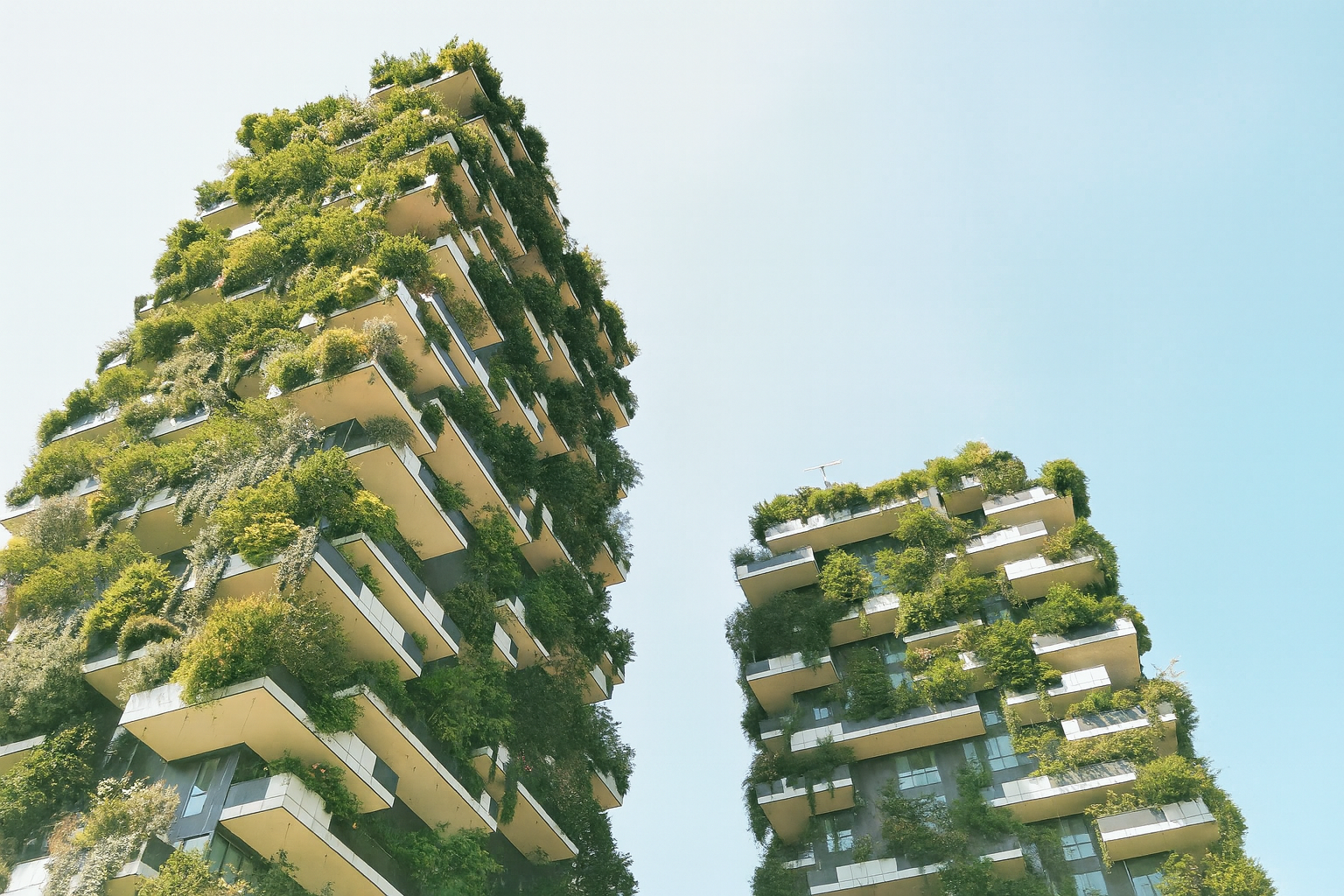
Energy efficient design
Start with the building’s orientation. Passive solar layouts cut heating demand before you even pick a system. Pair that with high performance insulation so heat is not slipping through the envelope. When the shell works, smaller HVAC systems follow. The newest AI driven heating and cooling setups adjust on the fly, saving energy without users even noticing.
Sustainable materials
Concrete is one of the world’s biggest carbon culprits, so low carbon mixes and alternatives are gaining ground. Cross laminated timber (CLT) is showing up in mid rise projects because it is renewable, light, and fast to assemble. Recycled steel and glass keep new extraction down while still offering strength and clarity. If you want a fuller look at how materials and systems work together, see our breakdown on types of sustainability in architecture. It covers energy, materials, and more practical angles.
Water conservation and recycling
Rainwater systems are no longer experimental. They are standard on schools, offices, and even multifamily housing. Greywater recycling gives landscaping a second use for what would otherwise be waste. At the urban scale, permeable paving helps cut flooding and reduces strain on storm sewers.
Challenges & Opportunities You Need to Know
Green Architecture in 2025: The Real Challenges and Open Doors
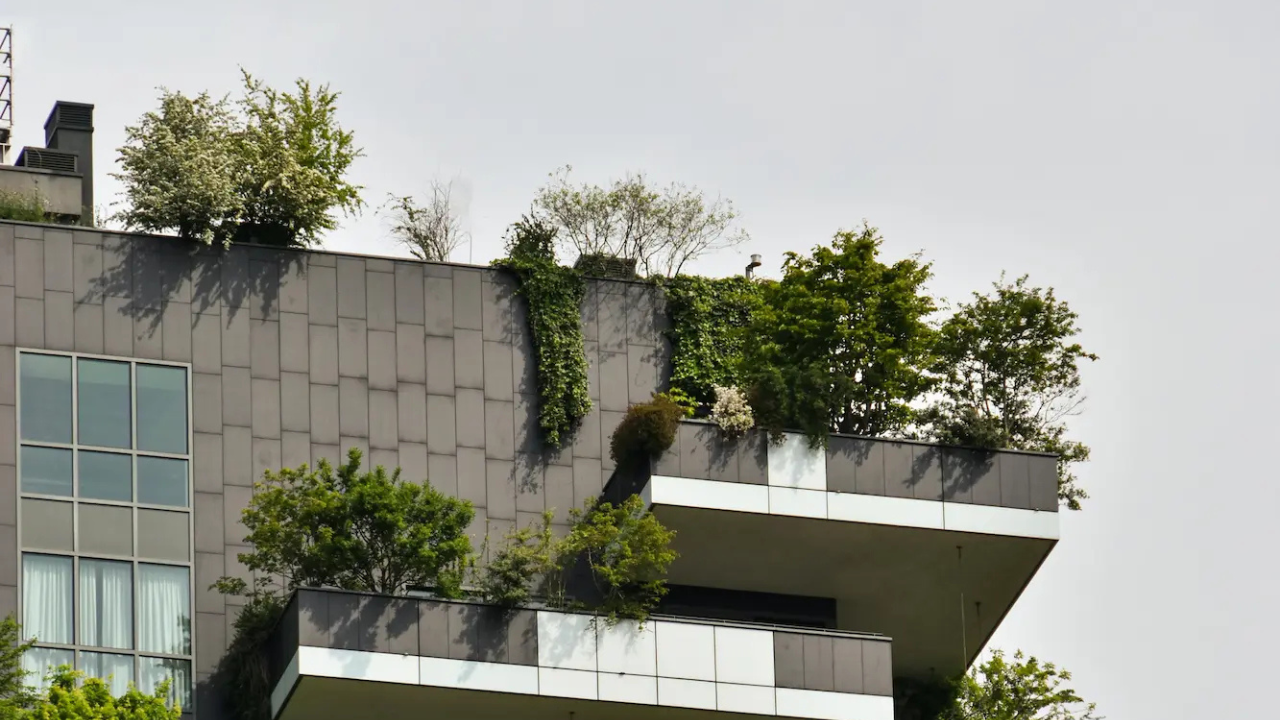
Sustainable design is now mainstream, but it is not smooth sailing. Costs, materials, and regulations create friction. At the same time, governments and markets are creating openings too big to ignore. This is what the street-level view of 2025 looks like.
Policies and Incentives Are Changing the Rules
Governments are no longer asking politely. They are mandating net zero, banning dirty materials, and handing out subsidies for green retrofits. The EU requires all new buildings to be zero emission by 2030. Cities like Oslo and Vancouver are cutting off high carbon concrete and steel.
Opportunity
Get ahead of policy. Design to stricter standards before they are enforced. That gives you an edge with clients and approval boards.
How to work it
Apply for rebates and subsidies early. They offset green premiums more than most developers realize. Track zoning shifts—energy rules are starting to shape site massing, not just HVAC choices.
Why Green Buildings Pay Back
Efficiency is not just a climate move. It pays off. Daylight-optimized offices see higher productivity. Energy-efficient homes pull higher rent and resale. The Edge in Amsterdam proves the point: operating costs dropped 70 percent, and demand for leases spiked.
Opportunity
Developers can market eco-certification as a premium. Homeowners see faster payback through energy bills and resale bumps.
How to work it
Push passive strategies first—orientation, shading, insulation. They cost little and cut load before you add systems. Market the property as cheaper to run, not just greener.
The Cost Problem Up Front
A green building still costs more on day one. Estimates run 10 to 20 percent higher depending on systems and materials. Passive House homes often sit 15 percent higher, though they recover that in less than a decade.
Opportunity
The premium is falling. Incentives and mass production are narrowing the gap.
How to work it
Design smart envelopes and ventilation first. Those moves reduce the need for expensive systems later. Apply for green loans and grants—many cover 30 to 50 percent of solar, insulation, or efficient HVAC.
The Material Bottleneck
Supply is the biggest brake. Mass timber, hempcrete, and low carbon concrete are not yet widely available. Codes lag too. CLT is proven but still blocked in some cities. That drives costs up and slows adoption.
Opportunity
This gap will close by 2030. Firms that experiment now will be ready when supply normalizes.
How to work it
Blend materials—pair timber with steel where rules are strict. Source local wherever possible. Push authorities for approvals and subsidies. Demand creates scale, and scale drops price.
Green architecture in 2025 is both harder and easier. Harder because supply chains and upfront budgets bite. Easier because laws, incentives, and market demand push it forward. Firms that design envelopes first, source smart, and treat incentives as part of the pro forma will stay ahead.
limate Responsive Architecture: Designing for a Changing World
Where most designs fail
Green roofs on glass boxes are not strategy. If you ignore orientation, you invite glare and heat. Put a tower in a floodplain and water wins every time.
What held up in practice
Projects that performed well started with the shell. High albedo roofs, exterior shading, heavy walls in hot zones. In flood regions, raised foundations added 15 to 20 percent to cost, but those buildings stayed dry when neighbors were ripping drywall. Self healing concrete was 20 to 30 percent more expensive, yet it kept slabs intact after storms.
How to approach it
Draw sections early. Sketch where sun cuts, where wind pushes, where rain sits. Lock the envelope before chasing glass or interiors. That move decides survival.
Smart Power, Not Just Smart Buildings
The mistake
Net zero trophies with no storage look good on paper but still black out when the grid stumbles. Solar without batteries bleeds value.
What worked in real projects
Districts that thrived used smart meters, shared loads, and mixed programs. Offices by day, apartments by night, retail in between. That diversity smoothed demand. Premiums were about 8 to 12 percent above baseline, but payback was under a decade in high-cost cities.
Design note
Even if the client refuses batteries today, leave room for them. Carve conduits, roof clearances, and mechanical space. Retrofitting later is brutal.
Certifications Without Sticker Chasing
The trap
Teams drowning in LEED paperwork while forgetting daylight quality. Passive House specs cut until nothing was left.
Better use of systems
Pick one framework and align the project to it. LEED when you need a common language with trades. WELL when the focus is air, light, and people. Passive House when tenant bills are the biggest pain. A single target drives better outcomes than three logos.
Advice
Do not pitch multiple certifications just to impress. Show how the chosen framework ties directly to cost, schedule, and performance.
Printing Buildings Where It Makes Sense
Overhyped promise
“Print a house in a day.” In reality, plumbing, wiring, and codes still slow the process.
What I’ve seen in the field
Earth-based mixes cut transport costs and shells went up in days. Labor dropped by half on some sites. But services still needed standard trades. Hybrid systems worked best: printed shells combined with timber or steel for spans.
Where it fits
Think of printing for fast shells, prototypes, or disaster relief. It is not yet the backbone of housing, but it can speed up the parts that make sense.
Circular Construction
What usually goes wrong
Designs glued and welded into permanence. Demolition is baked in.
Smarter practice
Treat beams, panels, and fixtures as assets. Modular partitions instead of drywall. Reversible fasteners. Digital material tracking. Costs rise 2 to 5 percent, but reclaimed steel and timber cut bills by 10 to 20 percent.
Proof from real work
The Circl building in Amsterdam was designed so every part can be taken apart and reused. That mindset is spreading because it saves money and materials.
This is no longer branding. Codes, penalties, and tenants push it. Cities are already enforcing energy budgets and carbon caps. Owners care about fines and operating bills. The firms that master these methods are the ones winning repeat work. Those who ignore it are being left behind.
Best-Selling Books on Sustainable Architecture (2025)
These are the top-rated and best-selling books on Amazon right now for sustainable architecture and green building design.
For Beginners: Learning the Basics
Sustainable Architecture: Principles, Paradigms, and Case Studies 8th Edition by James Steele
A clear introduction to sustainable construction. Covers energy-efficient planning, material choices, and climate-responsive strategies with real case studies.
The New Carbon Architecture: Building to Cool the Climate by Bruce King
Explains carbon-negative design. Details CLT, hempcrete, and other bio-based materials. A practical book for architects and students.
Green Building Illustrated by Francis D.K. Ching
Classic Ching diagrams showing sustainable design principles. Covers passive solar, water use, and envelope strategies in a way that is easy to follow.
Energy Efficiency and Net-Zero Design
Designing Climate Solutions: A Policy Guide for Low-Carbon Energy by Hal Harvey
Explains how buildings can achieve net-zero energy. Covers solar, wind, and geothermal systems. Useful for designers and planners.
The Passivhaus Handbook by Janet Cotterell
A practical guide to ultra-low energy homes. Includes airtight detailing, superinsulation, ventilation systems, and case studies.
Net Zero Energy Design: A Guide for Commercial Architecture by Thomas Hootman
Focuses on net-zero energy strategies for offices, schools, and public spaces. Explains how to integrate renewables and reduce loads.
Materials and Circular Economy
Material Revolution 2 by Sascha Peters
A survey of new sustainable materials. Covers biodegradable, recycled, and self-healing options with applications for design practice.
Sustainable Building Essentials (11-book series)
Explores durability, reuse, and adaptive design. Challenges conventional green labels and focuses on true circular strategies.
Systemic Circular Economy Solutions for Fiber Reinforced Composites by Marcello Colledani
Explains modular reuse, closed-loop construction, and digital material tracking. A technical but forward-looking reference.
Urban Sustainability and Smart Cities
Walkable City by Jeff Speck
A case for pedestrian-first urban design. Shows how walkability reduces emissions and improves city life.
Smart Cities by Anthony Townsend
Covers how AI, data, and smart grids are reshaping urban sustainability. Includes examples of technology-driven buildings.
Biophilic Cities by Timothy Beatley
Explains how green roofs, vertical forests, and natural systems improve urban life. Includes global case studies.
FAQ
What is sustainable architecture?
It means designing buildings that reduce energy use, waste, and environmental impact while improving comfort and efficiency.
Is green architecture more expensive?
Yes, construction can cost more upfront. But energy and maintenance savings usually pay back the difference within a decade.
What’s the most sustainable material?
There is no single answer. CLT, recycled steel, and hempcrete are among the best current options.
How does AI help in sustainable design?
AI tools optimize layouts, energy loads, and material choices before construction, lowering the building’s carbon footprint early on.
What’s the difference between net-zero and net-positive buildings?
Net-zero produces as much energy as it consumes. Net-positive produces more than it needs and can supply others.
Resources
World Green Building Council – Global sustainability policies.
International Living Future Institute – Oversees the Living Building Challenge.
U.S. Department of Energy – Building Technologies Office – Research and standards on efficiency.
European Commission Sustainable Building Initiative – EU green building regulations.