
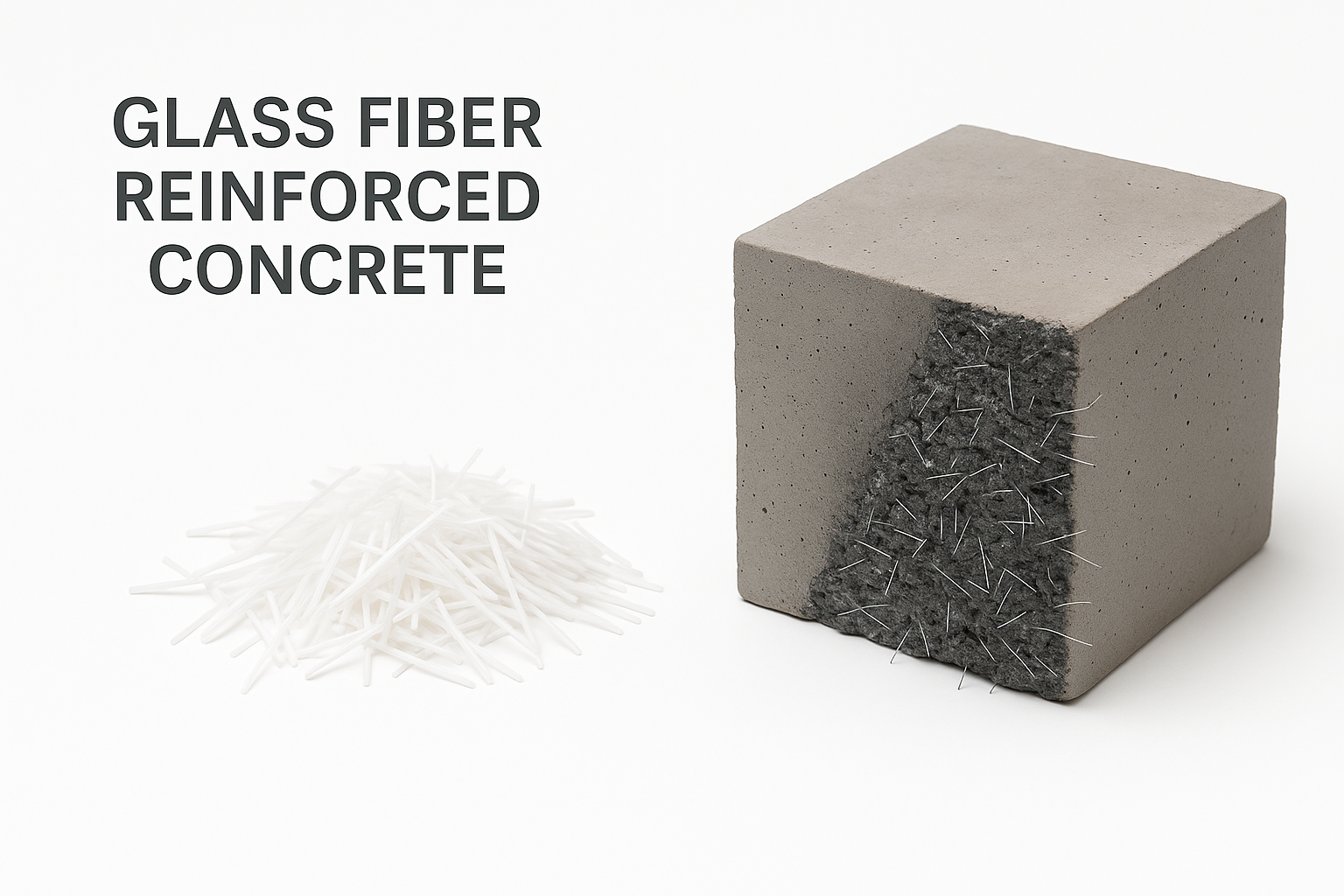
The Full Guide for Architects and Builders
So what’s this new thing called Glass Fiber Reinforced Concrete? Think of stone-like panels that are lighter, thinner, and reinforced with glass fibers instead of rebar. Builders and architects who’ve worked with it know the appeal. GFRC, or GRC depending on who you ask, has changed how we handle cladding, panels, and molded details. It’s showing up more on job sites now with faster installs, fewer structural headaches, and cleaner corners. This guide covers what’s worked, what’s failed, and how we spec it today.
The Basics of Glass Fiber Reinforced Concrete
A Short History
GFRC isn’t new. It first showed up in the UK during the late 1960s and early 70s when engineers began testing alkali-resistant glass fibers as a substitute for steel mesh. By the 1980s, GRCA (Glassfibre Reinforced Concrete Association) had codified standards, and the material spread into Europe and North America for façade work. Today, you’ll see Stromberg, Clark Pacific, and Formglas supplying large civic projects, while smaller shops use bag mixes for furniture and interiors. That half-century of track record is what makes GFRC feel proven, not experimental.
The Core Mix
Glass fiber reinforced concrete (GFRC) is a cement-based composite made with cement paste, fine aggregate, water, admixtures, and alkali-resistant (AR) glass fibers. These fibers are the backbone of the system. Each one is tiny, but together they absorb tensile stress and stop cracks from spreading.
Why Glass Fibers Matter
Concrete alone is strong in compression but fails in tension. Normally, steel rebar or mesh takes care of that. In GFRC, millions of glass fibers bridge micro-cracks as they form. Because the fibers are chemically stable in cement (the AR coating prevents them from dissolving in the high pH environment), the reinforcement lasts decades without degradation.
Thin Panels Without Steel
Traditional precast panels need a steel cage and at least 3–4 inches of thickness. GFRC panels can be 12–20 millimeters (½–¾ inch) and still perform under wind and impact loads. That thinness means lighter weight and easier handling.
How It Cuts Weight
It’s not “lightweight concrete” with air bubbles. The weight reduction comes from geometry: you can cast much thinner shells without losing strength. A wall panel that might weigh 400 pounds in precast can weigh 100 pounds in GFRC.
Flexibility in Form
Because strength is spread through the fibers, GFRC handles curves, textures, and sharp details better than plain concrete. Architects use it for sculptural cladding, cornices, screens, and even furniture pieces where crisp edges matter.
Real Performance in the Field
GFRC stands up to freeze-thaw cycles, fire exposure, and impact better than stucco or EIFS. Panels last decades when detailing, curing, and anchoring are correct. The material doesn’t rot, warp, or burn, making it a reliable exterior skin.
Where GFRC Works Best
Cladding and Facades
GFRC panels dominate in architectural cladding. You get stone-like durability at a fraction of the weight. That means fewer anchors, lighter backup framing, and faster installation. On mid-rise and high-rise jobs, weight savings directly cut costs on crane time and structural loads.
Screens and Decorative Elements
Cornices, window surrounds, lattice screens, and feature walls are easier to cast in GFRC than in traditional precast. The material can pick up fine surface detail from molds—textures, ribs, even hand-carved patterns. Because panels are light, installers can place large decorative pieces without custom rigging.
Interiors and Furniture
Designers use GFRC for counters, tables, benches, and feature walls. Its thinness makes it competitive with stone slabs, but easier to shape. With proper sealing, it holds up in kitchens, bathrooms, and public spaces.
Infrastructure and Public Projects
Some transit stations and civic plazas use GFRC where durability and impact resistance matter. Panels withstand pedestrian wear and graffiti cleaning better than stucco or plaster.
Marine and Harsh Environments
GFRC resists salt spray and freeze-thaw cycles when mixes are correct and surfaces are sealed. It’s used in coastal facades and even piers where traditional concrete spalls quickly.
Retrofit and Restoration
GFRC’s light weight makes it a go-to for historic building restoration. Crews can replace ornate stone pieces with GFRC replicas that don’t overload old structures. It keeps the original look while reducing maintenance risk.
What GFRC Gets Right

Weight Advantage
A standard precast panel at 2–3 inches thick can feel like a small wall. A GFRC panel of the same size is often less than half the weight. That changes the math on cranes, anchors, and even how many people you need on site to move pieces.
Durability and Crack Resistance
Those alkali-resistant glass fibers bridge microcracks before they spread. Instead of spider webbing across the face, the crack arrests itself. On cladding projects, that buys you years of service life without patching.
Design Freedom
Because you’re not tied to rebar cages, you can cast folds, deep returns, and thin edges that would be impossible with traditional precast. That’s why so much contemporary façade work leans on GFRC—it lets architects sketch sharper profiles without giving engineers ulcers.
Sustainability Factor
By cutting material mass, you cut cement volume. Less cement means lower embodied carbon, fewer trucks, and smaller foundations. In big civic jobs, this is often the hidden line item that sells GFRC to clients.
Where GFRC Fights Back
Cost Pressure
While the panels use less cement, they demand polymers, AR glass fibers, and skilled labor. The first few jobs will feel pricier until a team gets efficient.
Maintenance Risks
Yes, GFRC is strong, but if water penetrates and freeze-thaw kicks in, edges can spall. Sealants and coatings are not optional—they’re part of the system.
Precision vs Simplicity
Spray-up requires trained crews. Get the fiber content wrong and your panel loses flexural strength. Premix is easier, but panels come out weaker. It’s a tradeoff every contractor has to weigh.
Perception Problem
Clients sometimes hear “fiberglass” and assume it’s fragile, like insulation. It takes mockups and site tests to show that GFRC isn’t brittle glass—it’s a reinforced matrix that actually performs better in thin sections than plain precast.
How GFRC Mixes Are Really Made
Glass fiber reinforced concrete looks clean on paper: cement, sand, water, polymer, and alkali-resistant glass fibers. But anyone who’s tried it knows the ratios and the process decide whether your panels hold or crumble. You can’t just toss fibers into Portland cement and expect miracles.
GFRC Mix Design Methods and How Crews Actually Do It
Base Mix Proportions
A working panel mix usually comes out close to:
-
1 part white Portland cement (preferred for color control)
-
1 part fine silica sand (200–300 mesh)
-
0.35–0.40 part water
-
0.04 part acrylic polymer (or styrene-butadiene, liquid form)
-
4–6% alkali-resistant glass fibers by weight of cement
The polymer is the glue that makes the fibers behave. Skip or skimp and you’ll get weak, brittle panels. Crews also stick to white cement for visible work. Gray can be fine on hidden surfaces, but finish consistency matters when you’re covering 20 stories.
Spray-Up Method
This is the original GFRC technique and still the benchmark for big façade panels. A spray gun shoots cement slurry and chopped AR glass fibers directly into molds. Workers compact layers with rollers until thickness hits ½–¾ inch.
-
Strength advantage: High fiber load (up to 6%) gives panels strong flexural capacity.
-
Thickness control: Consistent layers, less risk of thin spots.
-
Crew dependency: The gun has to run smooth, and operators need skill. Uneven passes or clumped spray kill panel performance.
On one project, a gun jam mid-spray ruined an entire mold. That panel never left the yard.
Premix Method
Here, fibers are blended into the slurry first and then poured or sprayed into molds. It’s easier to batch and doesn’t require as much equipment. Fiber content maxes at about 3%.
-
Strength tradeoff: Not as strong as spray-up, but fine for furniture, sinks, and smaller panels.
-
Ease of use: Good for custom or short runs where the cost of a spray rig isn’t justified.
-
Finish quirks: Fibers can streak through the surface if mixing is sloppy.
We’ve seen this used well on GFRC countertops. On one run, the crew forgot to weigh pigments consistently and ended up with two shades of “sandstone” across one façade. A mistake that cost weeks.
Hybrid Mixes
Most serious GFRC fabricators use a hybrid method. They spray or pour a face coat (slurry with no fibers) against the mold, then back it with a fiber-rich layer. This way, the exposed face looks clean, without stray fibers, while the back carries the structural load.
This technique also helps seal out water. Panels with exposed fibers at the face tend to wick moisture, which shows up as staining or freeze-thaw spalling later.
Curing Practices
GFRC hates drying too fast. Panels need sealed or moist curing for at least seven days to hit their flexural strength. Crews tent panels in plastic for the first 24 hours, then let them air cure. Over-watering leaches lime and softens the face.
Sealants are not optional. We’ve watched crews skip this step to “save time,” only to have panels hairline before winter ended. The repair budget was bigger than the cost of doing it right.
Crew Lessons That Stick
-
Fiber clumps if batches sit. Keep mix small and moving.
-
Corners are fragile unless molds are well-built and release agents are applied evenly.
-
Spray guns clog fast. Clean them between passes or risk junk panels.
-
Don’t under-dose polymer. Every time a contractor has tried to cut costs here, panels cracked before leaving the yard.
Cost in Practice
A cubic yard of GFRC costs 2–3 times more than plain concrete, thanks to polymers and AR glass fibers. But weight savings often balance the budget: lighter framing, smaller cranes, and fewer structural demands.
-
Façade jobs: Higher material cost, lower installation and structure cost. Lifecycle cost usually wins because repainting and patch cycles stretch out.
-
Furniture/interiors: Cost is driven by finishes and custom molds, not structure. Clients pay for thin profiles and sharp detail.
Field Pick
Concrete Microstructure, Properties, and Materials
I recommend this because it explains how mixes behave when you swap steel for glass fibers. It’s the book you grab when a contractor questions why polymer or curing rules matter.
https://amzn.to/3Ims5AQ
FIELD PICK: Concrete Microstructure, Properties, and Materials – I recommend this because it explains how mix behavior and durability change when you replace steel with glass fibers.
Installation and Attachment
How panels arrive
GFRC is almost always fabricated off-site. Panels come crated, strapped, and padded. The moment they hit the site, the risk shifts to handling. A chipped corner usually means sloppy rigging, not bad manufacturing. Crews need forklifts, spreader bars, and clear staging areas if you don’t want a repair bill before day one.
Connection hardware
The muscle comes from cast-in plates or anchors—usually stainless or hot-dip galvanized steel. These get bolted or welded back to secondary framing. The lighter weight of GFRC means the frames don’t need to be as beefy as with precast, but tolerances are tight. If connections don’t line up, installers end up forcing panels, which kills alignment.
Joint and sealant work
Panels themselves rarely fail. The weak link is always at the joints. Sealant choice and backer rods decide whether water gets behind the façade. Miss this detail and freeze-thaw will eat the edges. Good installers know to mask, gun, and tool joints cleanly, because messy sealant jobs age badly and cost more to fix than to do right the first time.
Why installation matters
The beauty of GFRC is its thin, strong shell. That also means you don’t get the forgiving thickness of heavy precast. A misaligned anchor or a lazy caulk job shows up fast in the form of leaks, cracks, or rattling panels. Treat installation as part of the system, not an afterthought.
MUST READ: Building Materials in Civil Engineering – Solid reference when arguing with contractors about fire resistance, density, and finishes on GFRC panels.
Pros and Cons on Real Jobs
What pays off
The weight drop is real. On a mid-rise job we swapped out precast for GFRC panels and shaved thousands off crane time and secondary steel. Crews moved two panels at a time without specialized rigging. That’s the kind of saving clients actually notice.
The detail is another win. Molds pick up crisp profiles—folds, reveals, deep returns—that precast would have demanded thicker sections for. Because reinforcement is glass fiber dispersed in the mix, you don’t have rust staining or cage congestion. Finishes run wide: stone look, smooth, textured, even colored integral mixes if the supplier knows their chemistry.
Where it bites back
Square-foot cost still runs higher than stucco or EIFS. The material efficiency doesn’t erase skilled labor and fiber/polymer inputs. First-time crews usually burn margin with handling mistakes—chip a corner or crack an edge and you’re doing patch repairs before turnover.
Quality control is not optional. Spray-up mixes need trained techs to hold fiber ratios. If batches drift, you see it in flexural strength and even in surface tone. Owners care when half the façade looks a shade off.
Bottom line
On projects where weight, profile freedom, or long-term durability matter, GFRC justifies itself. On budget-driven jobs chasing low upfront cost, it can be a tough sell. What wins clients is showing them the installed mockup—not the spec sheet.
FIELD PICK: Structures: Or Why Things Don’t Fall Down
— I recommend this because it’s the clearest way to remind teams why cracks, spans, and loads still rule even with “new” materials.
Costs and What to Expect
GFRC panels sit in a middle ground: more expensive than plain precast, cheaper than carved stone. Where clients get nervous is the line-item jump over stucco or EIFS, but the lifecycle math usually flips the story.
What drives cost
Fibers and polymers: AR glass fibers and acrylic polymers add $90–120 per cubic meter.
Custom molds: Deep returns, ribs, or intricate surface textures are the biggest cost driver. A flat panel is straightforward; ornate cornices or folds rack up hours.
Skilled labor: Spray-up requires trained crews. If you’re bringing in newbies, expect learning-curve losses.
What offsets cost
Lighter structure: Less secondary steel, smaller anchors, leaner backup walls.
Fewer repairs: Patch cycles drop, coatings last longer, repainting intervals stretch out.
Quicker install: Two crew members can maneuver what would’ve taken a crane and rigging team.
Case note from a civic job
On a downtown library project, the GFRC cladding package came in $800k higher than EIFS at bid stage. The city nearly pulled the plug. But when crane hours, repaint cycles, and secondary steel savings were modeled, the lifecycle math reversed. Over 30 years, total cost was projected $300k lower with GFRC. That’s usually how it plays out—line items sting, but the building budget as a whole softens.
Real cost numbers
On most North American façade jobs, flat GFRC cladding panels run about $35–55 per square foot installed. That sits higher than EIFS ($20–30/sf) but well below quarried stone ($70–120/sf). Where clients balk is the upfront line item, but the lifecycle picture changes it: repaint cycles can stretch 20+ years, patching is rare, and weight savings shave thousands off crane and steel costs. In restorations, GFRC often replaces stone for less than half the installed price while keeping the profile and finish.
MUST READ: Carbon Capture and Storage
— I recommend this for broader context. GFRC itself doesn’t sequester CO₂, but knowing where it fits into sustainability debates is essential when pitching to owners.
Manufacturers and Suppliers Worth Knowing
The GFRC market is still specialized. A few names come up often in specs and shop drawings:
-
Stromberg GFRC — known for custom molds and architectural details on large civic projects.
-
Buddy Rhodes — small-batch GFRC bag mixes, countertop blends, and training for fabricators.
-
AAS Architectural GFRC — big façade and cladding systems, common on commercial towers.
-
GRCA (UK) — not a supplier but the standards body; their guidelines shape most international specs.
For architects, knowing these players matters when you’re value-engineering or fielding client questions. A vague “local precast” line item won’t cut it when GFRC is involved.
FIELD PICK: 3D Concrete Printing Technology
— I recommend this for seeing where GFRC overlaps with digital fabrication and prefab workflows.
Lessons From the Field
Mistakes that cost us
-
Poor edge protection: Panels chipped in transit before they touched the site. Lesson: crate like stone, not like drywall.
-
Color drift: Water ratios and pigment dosing have to be nailed down. One sloppy batch and you’ve got a patchwork façade.
-
Overpromising: GFRC is strong for its thickness, not for replacing structural beams. Clients hear “reinforced” and imagine miracles. Don’t let them.
Moves that saved us
-
Anchored mockups: We cast full-size mockups with anchors and joints. Solved detailing fights before the crane ever showed up.
-
Face + back coat method: Spraying a fiber-rich back coat behind a clean face coat made finishes crisper and panels stronger.
-
Fabricator in the loop: Bringing the GFRC shop in during DD saved us redraws. They flagged return depths and joint spacing that weren’t realistic.
FIELD PICK: Modern Concrete Construction Manual
— I recommend this because it ties details directly to construction practice. Perfect when training junior staff on GFRC drawings.
Unexpected Uses of GFRC
GFRC isn’t just for façades. We’ve seen it creep into furniture, interior design, and even acoustic control.
-
Furniture slabs: Tables and benches that look like stone but move like plywood.
-
Interior features: Reception desks, counters, and lobby walls where thinness and crisp edges matter.
-
Public art: Sculptures and park installations shaped with molds too complex for precast.
-
Acoustics: One job used perforated GFRC panels as baffles in a concert hall. Nobody planned for it, but the mockup proved it could carry both the weight and the sound absorption.
Those curveballs are what keep GFRC interesting. It starts as cladding, then suddenly you’re looking at it in a park sculpture or an acoustic ceiling. That “where did that come from?” moment is usually when clients stop thinking of GFRC as niche and start asking what else it can do.
Wrap-up
GFRC won’t win every bid. But when weight, detail, or durability are non-negotiable, it’s the material you stop arguing with and just spec.
Related Reads
- Concrete in Architecture: Innovations, Applications, and Visionary Designs
- The Complete List of Building Materials: Key Types and Their Applications
- Sustainable Concrete Alternatives | Smarter Choices for Cost, Carbon, and Strength
- Geopolymer Concrete vs Cement: Which Is Better?
- AshCrete: A Real Alternative to Traditional Concrete
- Biodegradable Cement Future: Can It Replace Portland?
- Ferrock Concrete: Stronger Than Portland and Built to Store Carbon
- Aerated Autoclaved Concrete (AAC Blocks): What Builders Need to Know
- Limestone Calcined Clay Cement (LC3) Explained in Plain Terms
- Self-Healing Cement: The Future of Resilient Construction
- How to Create Self-Healing Concrete
- Brutalist Architecture: From Yesterday’s Concrete to Today’s Innovation
- Technological Advancements in Architectural Design: What’s Changing Now