
Concrete in Architecture
Concrete still shapes architecture because it solves a hard building problem well. It can carry heavy loads, span long distances, take many forms, and stay practical at large scale.
The Romans used it to move water across empires. Today it holds up towers, bridges, slabs, walls, and stadiums. The material changed. The basic reason it keeps showing up did not.
Concrete also punishes careless work. Bad mix design, weak aggregate, rushed curing, and poor weather planning show up later as cracks, weak surfaces, delays, and expensive rework.
Concrete is often the structure, the surface, and the finished look all at once.
How Concrete Became the Backbone of Iconic Architecture
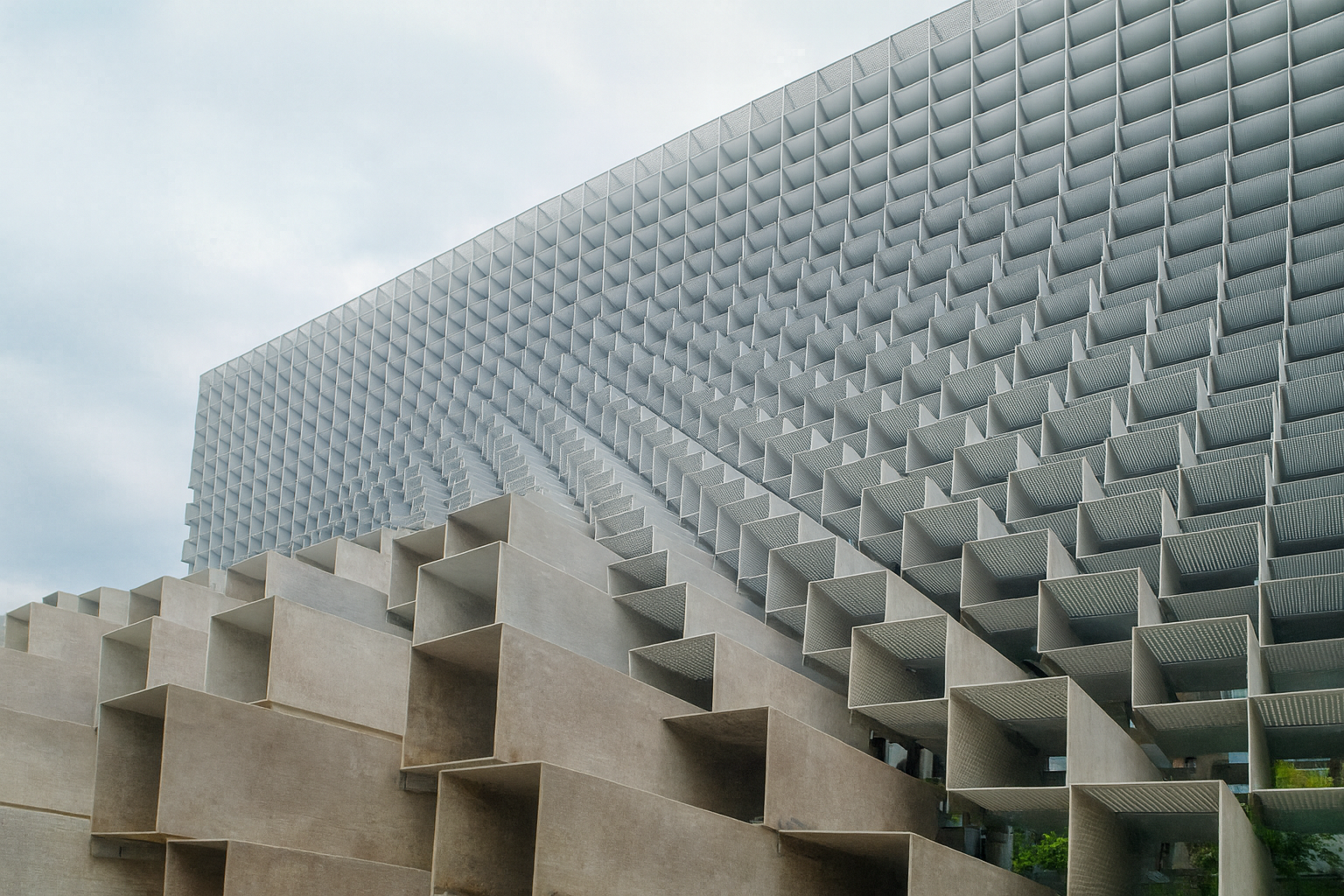
Concrete goes back to the Romans. They mixed volcanic ash, lime, and seawater to pour the Pantheon dome and the Colosseum walls. The chemistry worked so well that those structures are still standing two thousand years later.
After Rome collapsed, the recipe faded. For centuries builders leaned on stone and brick. Concrete only came roaring back in the 1800s with the Industrial Revolution. That’s when reinforced concrete was born: steel for tension, concrete for compression. The combination changed everything. Taller spans, thinner walls, more daring forms. The modern city starts there.
Why Concrete Still Drives Modern Design
By the 20th century concrete wasn’t just structure, it was style. Brutalism turned raw concrete into a design language: sharp edges, heavy masses, no apologies. Le Corbusier and Louis Kahn pushed it further, proving concrete could carry honesty and clarity as well as load. It became both the backbone and the face of modern architecture.
FIELD PICK: Structures: Or Why Things Don’t Fall Down – Still the most readable guide on why concrete stands when other materials fail. Good for young architects who need to grasp load paths.
Concrete in architecture: what actually holds up

If you build long enough, you learn the same lesson three ways: the mix you choose, the way you form it, and how you cure it will either make your week or wreck your schedule. Concrete is the structure, the finish, and half the story your building tells.
Why we still lean on concrete
Strength that buys you sleep
Concrete handles compression like nothing else. Cores and shear walls take the wind and keep the plan open. I’ve watched a mid-rise ride out a brutal winter without a hairline while the steel frame next door got wrapped in fireproofing blankets and excuses.
Form without apology
You can pour curves, folds, ribs, and thin shells if your formwork crew is disciplined. Get lazy on edges or reuse tired molds and you’ll stare at those scars for decades. Good formwork is design, not a “means and methods” footnote.
Thermal mass that actually pays
Use mass, orientation, and insulation together and you’ll shave real numbers off HVAC. We’ve seen 15–20% drops with exposed slabs and smart glazing. Bare concrete alone won’t do it. Pair it with envelope logic or don’t bother.
Fire rating baked in
Cores, stairs, and shafts in concrete clear approvals without drama. It buys time, and time saves lives. That’s why the tallest, heaviest, most public buildings keep choosing it for the parts that matter.
Quiet where it counts
Concrete kills noise. In housing, tenants thank you for silence more than finishes. In performance spaces, it carries only what you want. Density is a design tool—use it.
MUST READ: Modern Concrete Construction Manual – The DETAIL series book firms still pull from when sketching concrete forms into reality.
Where concrete shows up on real jobs
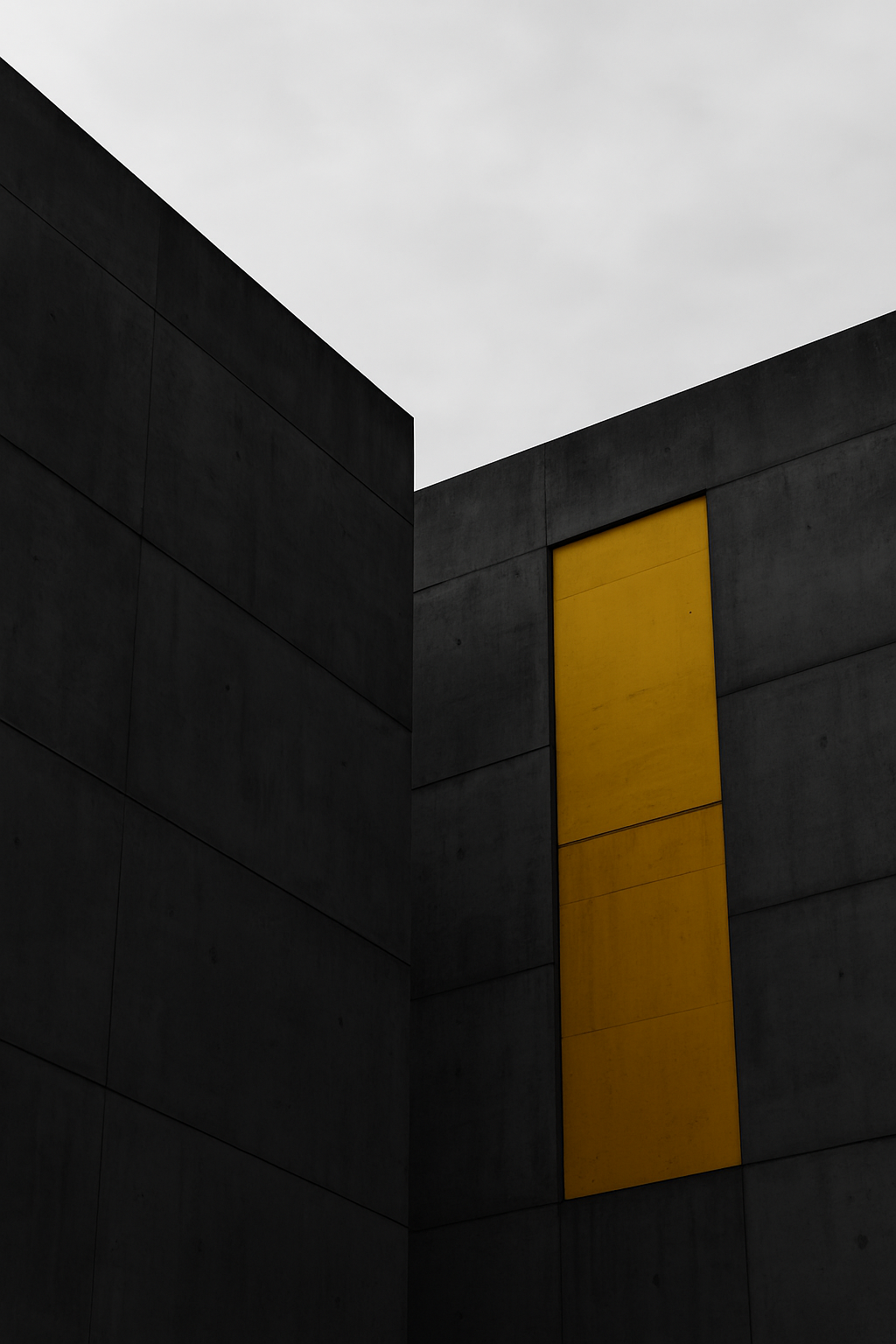
Foundations and walls
The mix is your insurance policy. Get the water–cement ratio wrong or ignore the soil report and you’ll be patching while the schedule burns. Get it right and you won’t think about settlement again.
Columns and beams
Reinforced spans buy you daylight and clean plans. We’ve replaced walls with two lines of columns and unlocked whole floorplates. The trick is coordination, not heroics.
Façades
Exposed concrete can be honest and brutal—or calm and surgical. If you want texture, cast it, don’t fake it. We’ve used ribbed form liners for plaza paving so it looks sharp and adds traction instead of becoming an ice rink the first winter.
Interiors
Polished slabs still beat most “luxury” finishes for durability and price. Counters, benches, and stair treads in concrete anchor a space without shouting. Seal them properly and they age well; skip that step and you’ll chase stains forever.
Infrastructure
Pre-stressed and post-tensioned members give you span without dead weight. On a bridge job, smart tensioning saved crane hours and a chunk of budget. The math is old; the value is still fresh.
Art and installations
You can cast a pavilion, a wall that bends like fabric, or a sculpture tough enough for a park. If you can draw the formwork, you can usually pour the idea.
What goes right (and how you keep it that way)
Mix discipline
Specify the performance you need (strength, slump, exposure class), not a random wish list. Keep water on a leash. Field crews love to “help” finishability with a splash from the hose—train that out of them.
Formwork respect
Tight joints, square corners, clean release. If the carpentry is sloppy, the concrete will read it line by line. Spend the money on good forms once; you’ll save it in patches and pride.
Placement and vibration
Consolidate just enough. Over-vibrate and you get paste-rich faces and bugholes that belong in case studies, not on your project. Under-vibrate and you trap honeycombs. Pick your poison or run the needle properly.
Curing like you mean it
Blankets, membranes, or curing compounds—choose based on climate and finish, then follow through. I’ve seen whole podiums crack because the blankets stayed in a trailer “for tomorrow.” Tomorrow doesn’t fix a bad cure.
Joints that don’t embarrass you
Control joints where the building wants to move. Expansion joints where it has to. Hide them in shadow lines or celebrate them—just don’t pretend you can pour a football field without a plan for shrinkage.
Where concrete bites back
-
Cold joints from rushed lifts: You’ll see the seam forever. Plan pour breaks and stick to them.
-
Rebar congestion: If the bars won’t clear, the concrete won’t either. Redesign, don’t pray.
-
Wrong admixture cocktail: Superplasticizer and accelerator aren’t a personality test. Know what you’re dosing and why.
-
Finish fetish: The glossier you go, the more every flaw will glare back at you. Sometimes a tight trowel and a matte sealer are the smartest “design choice.”
Making it look good on purpose
Color and texture that last

Use integral color with test panels, not hope. If you’re after board-formed texture, use real boards or high-quality liners and keep the pattern consistent. Change the board, change the shadow—clients notice.
Edges and arrises
Chamfers where damage is likely, crisp arrises where hands and eyes linger. Protect corners during every move. Chips are forever.
Sealers and breathable coats
Match the sealer to the environment. Kitchens, plazas, galleries—they don’t want the same chemistry. Breathable beats plasticky most of the time; read the data sheet and mock it up.
Field notes that saved us
-
Mockups with the real crew: Not a showroom pour—your actual team, your actual tools. Problems surface when the clock is running.
-
One source of truth: Mix design, pour schedule, joint layout, curing plan—on one page, on site, everyone signs it.
-
Weather plans: Heat domes and cold snaps don’t read specs. Have a Plan B written before the truck rolls.
-
Walk the forms: Every pour. Every time. Ten minutes then saves days later.
When concrete shouldn’t be the hero
-
If the program demands daily reconfiguration and feather-weight partitions, don’t pour your way into a corner.
-
If the budget can’t support careful formwork and curing, don’t pretend exposed concrete will look “intentionally rough.” It will just look cheap.
-
If your client wants silence and the schedule wants speed, consider hybrid assemblies. Concrete doesn’t have to carry every line of the spec.
The short playbook for teams
Before design freeze
-
Decide where concrete is structure, where it’s finish, and where it’s both.
-
Put joints in the drawing set, not in someone’s head.
-
Pick a curing strategy and write it like a life-safety note.
Pre-pour
-
Confirm rebar clearance, embed locations, and form cleanliness.
-
Review the admixture list with the batch plant—no surprises.
-
Walk the crew through lift heights, vibration plan, and pour breaks.
During the pour
-
One person calls the pace. One watches vibration. One watches edges.
-
Keep water off the slab unless the spec says otherwise.
-
Photograph everything—coverage, consolidation, and any changes.
Cure and handoff
-
Protect from sun, wind, or frost exactly as planned.
-
Don’t rush saw-cut timing. Don’t wait too long either.
-
Seal only after moisture levels and cure windows say it’s time.
Notable Architects and Their Innovative Use of Concrete
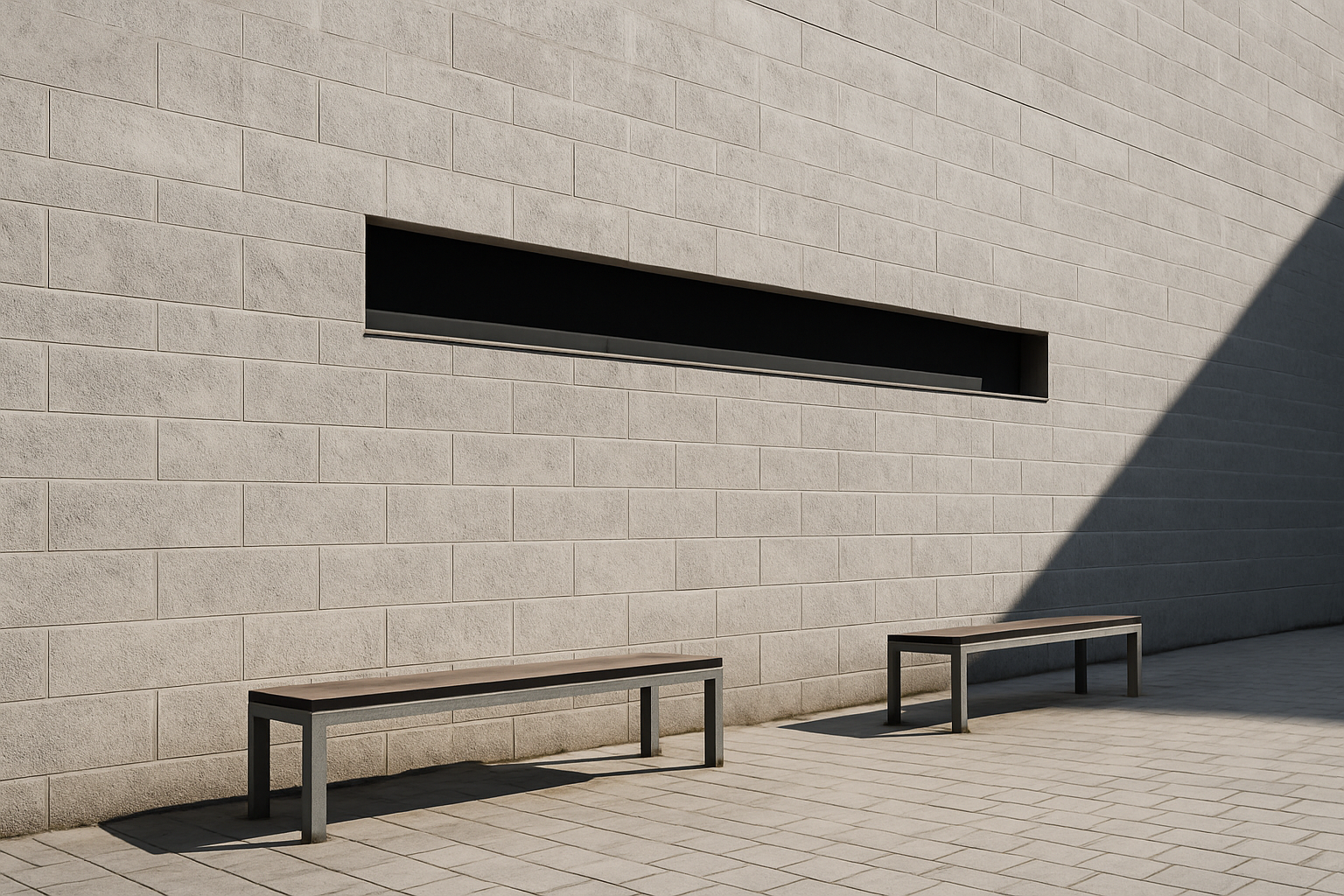
Concrete, in the right hands, becomes surface, space, even identity. These architects pushed it further than most of us ever will—and left lessons worth stealing.
Le Corbusier – Mass housing that carried detail
At Unité d’Habitation in Marseille (1952), Corb proved concrete could carry a city block. He stacked housing, shops, and circulation into a single frame. The bold move wasn’t the bulk—it was the way he let raw concrete show, without paint or plaster hiding it.
What we should learn:
Concrete doesn’t need a finish layer if the formwork and pour are disciplined. Leave it honest and it ages with character.
Louis Kahn – Structure as silence
At the Salk Institute (1965, La Jolla), Kahn’s exposed concrete walls set a backdrop for wood, sky, and light. The courtyard framed in bare concrete is still one of the quietest architectural spaces ever built.
What we should learn:
Concrete can carry more than loads—it can carry atmosphere. If the detailing is rigorous, silence and weight come through in the surface itself.
Tadao Ando – Perfection through restraint
Ando made flawless formwork an art. In projects like the Church on the Water and his urban housing, his concrete reads more like stone slabs cut by hand than a poured mix. Smooth, seamless walls reflect light instead of swallowing it.
What we should learn:
Formwork is everything. If you want concrete to read as refined, the molds, tie holes, and joints have to be treated like joinery. A single seam tells the truth of your craft.
Zaha Hadid – Concrete bent into motion
For the MAXXI Museum in Rome (2010), Hadid forced concrete into sweeping curves that guide movement. Where most architects stop at slabs and walls, she used the material to bend space.
What we should learn:
Don’t stop at straight lines. With the right reinforcement and mix design, concrete can move like fabric. Complex geometry is possible if you treat it as plastic mass, not rigid block.
Oscar Niemeyer – Concrete as sculpture at city scale
In Brasília, Niemeyer used concrete to shape the civic identity of an entire capital. The strength allowed him to lift sweeping roofs and cantilevers that still read light, not heavy.
What we should learn:
Concrete can define a skyline. When you trust its spans and curves, it stops being background structure and becomes public symbol.
Innovative Uses of Concrete in Modern Architecture
Precast panels that move fast
On a mid-rise office job, we swapped in precast façade panels fabricated two hours away. Trucks rolled in, cranes lifted, and by week’s end a bare steel frame turned into a skinned building. That’s the power of precast: time saved, tolerances tight, and weather risk reduced. The catch is coordination—connections must be exact, or you’ll be grinding steel on site.
Thin shells that bend logic
Félix Candela’s sweeping shells still make jaws drop. He showed you could span wide courtyards with concrete so thin it looked like paper. I’ve seen the same principle scaled down in canopies and transit stops—lightweight, curved slabs that use less material yet stand strong. Shells are unforgiving though. Formwork discipline is everything. Miss the geometry and the shell buckles before it shines.
Concrete that heals itself
The idea sounds like science fiction until you see it tested. Self-healing concrete carries dormant bacteria in the mix. When water seeps into a crack, the bacteria wake up and deposit limestone, sealing the gap. I’ve watched test beams run through freeze-thaw cycles without widening cracks. For bridges and parking decks, that’s a maintenance revolution. Still early days, but the promise is real.
Sustainability under pressure
Concrete is under fire for its carbon load, and for good reason. Cement alone drives nearly 8% of global emissions. But the fixes are coming. We’ve poured mixes with recycled aggregate that cut waste in half. I’ve tracked pilot plants pulling CO₂ straight into cement kilns. It isn’t perfect yet, but each cycle makes the mix cleaner without losing performance. On civic projects, that line in the spec—“low-carbon concrete”—now wins you points with boards and funders.
Quirky Uses of Concrete You Didn’t Know About
- Concrete Canoes: Believe it or not, engineers have been making canoes out of concrete for decades, with competitions held worldwide to see which team can make the best buoyant concrete vessel. This is a testament to the versatility of the material!
- Concrete Music Speakers: Concrete's density makes it a great material for speaker enclosures, offering superior sound quality. You can find custom-made concrete speakers that blend industrial design with high-performance acoustics.
- 3D-Printed Concrete: With the rise of 3D printing technology, concrete is being used to print entire homes. This innovation reduces labor costs, speeds up construction, and allows for customizable, intricate designs that would be impossible with traditional methods.
- Concrete Furniture: Architects and designers are increasingly experimenting with concrete for indoor furniture, creating tables, chairs, and even lighting fixtures that add a minimalist, industrial touch to modern interiors.
Sustainability without slogans
Concrete has a carbon cost. You can’t hide it. But you can cut it without turning the project into a science fair. The best approaches are simple: swap part of the cement for smarter binders, design leaner members instead of oversizing, and prove thermal comfort with real models instead of hunches. Most of all, aim for durability. A mix that holds up for 80 years beats a “green” recipe that needs repair in ten.
- Supplementary binders: Fly ash, slag, and calcined clays all cut Portland content. On a Toronto housing job, slag cement gave us slower curing but far lower heat gain—perfect for summer pours.
- Right-sized members: I’ve seen engineers oversize beams just to calm nerves. Every extra cubic meter is carbon wasted. Run the numbers, stand behind them, and save tons of cement.
- Thermal mass with proof: At a school retrofit we paired exposed slabs with modeled glazing. HVAC loads dropped 18%. Guesswork would never have justified it.
- Durability first: Salt-spray garages in coastal cities taught me this: a tough, dense mix that resists chlorides is greener than a recycled gimmick that spalls in five winters.
Concrete in sustainable architecture
When handled right, concrete is not just a problem—it can be a tool for efficiency.
Thermal mass for comfort. Exposed concrete floors stabilize temperatures. In one passive house project we tracked, concrete slabs kept daily swings within two degrees, cutting HVAC runtime by nearly a fifth.
Green roofs and heavy loads. Concrete cores and slabs make intensive green roofs possible. In dense downtown jobs, these roofs reduced runoff and cooled the microclimate. Timber couldn’t have carried the soil and water load.
Recycled concrete back into the cycle. On a German highway rebuild, old pavement was crushed and fed back into new mixes. That cut quarry demand by almost a third. Sustainable concrete alternatives are not theory—they’re already on site where policy and contractors align.
Sustainable and eco-friendly materials
Regular Portland cement will not vanish. It’s too proven, too versatile. But under the right conditions, alternatives are making a dent. Some are already in daily use, others are still edging out of the lab.
Geopolymer mixes are one route. They replace Portland with industrial byproducts and hold up in chemical plants and marine jobs. You can see the breakdown here: Geopolymer Concrete vs Cement. Ash-based mixes are another. AshCrete has shown promise in mid-rise slabs where supply chains for fly ash are steady.
Then there are more experimental plays. Ferrock, made from steel dust, actually absorbs CO₂ while curing. Biodegradable cement is being tested for temporary works that should decay safely after use. AAC blocks—lightweight, insulating, factory-made—are already common in housing across India and Europe.
Some innovations push resilience instead of carbon. Limestone Calcined Clay Cement (LC3) is in large pilot housing projects in Cuba and India, cutting clinker demand nearly in half. And research into self-healing concrete—with capsules or bacteria that repair cracks—has already moved from lab samples into bridge pilot projects. There’s even guidance on how to create self-healing concrete for trial batches.
None of these replace Portland everywhere. But each one teaches us where the footprint can actually shift: less clinker, smarter curing, longer lifespans. That’s the ground architects and builders are working on now.
Mistakes to Avoid With Concrete
Bad Curing Kills Projects
I’ve watched beautiful pours ruined because a GC wanted the slab dry fast for trades. Concrete doesn’t care about your schedule. Skip curing blankets, let wind hit fresh pours, or let summer sun bake it, and you’ll be chasing shrinkage cracks for the rest of the project.
Wrong Mix for the Climate
On a mountain lodge job, someone ordered a standard mix instead of an air-entrained one. First winter, the freeze-thaw cycles tore the edges off the steps. Air entrainment isn’t optional in cold climates—it’s survival. Same for sulfate-resistant mixes in aggressive soils.
Overreliance on Additives
High-range water reducers and fly ash are great tools. But I’ve seen young engineers treat them like magic dust to fix bad batching. Concrete still needs proper aggregate gradation and water-cement ratios. You can’t “chemical your way out” of sloppy proportioning.
Formwork Discipline Lapses
Formwork defines the look. Badly braced forms bulge, cheap release agents stain, and leaks leave honeycombing. We once spent weeks patching a civic center wall that should have been a clean Ando-style finish—because the contractor reused warped plywood.
Ignoring Joints
Concrete moves. Pretend it doesn’t and you’ll get random cracks across your polished lobby floor. On one retail job, expansion joints were skipped for “aesthetic reasons.” Within months, the terrazzo topping cracked in every direction. Control joints may be ugly, but they’re cheaper than litigation.
FIELD PICK: ACI Manual of Concrete Practice – This is the codebook inspectors quote. Having it on your desk keeps arguments grounded in standards, not opinions.
How Concrete Plays With Other Materials
Concrete and Wood
Pairing concrete with wood works best when you want warmth against mass. Exposed concrete walls with timber ceilings create balance: cold strength below, softer texture above. But they expand differently. I once saw a timber screen fixed too rigidly against a concrete core; seasonal shifts tore it loose. The trick is letting wood breathe while concrete holds steady.
The use of both materials together can be seen in projects like Louis Kahn's Salk Institute, where the raw strength of concrete is softened by the inclusion of wood, creating spaces that feel both grounded and welcoming.
Concrete and Glass
Concrete frames love glass. Heavy slabs anchor transparent façades. Think of Mies van der Rohe’s Farnsworth House where the concrete plinth sets off a floating glass box. The danger is thermal bridging. Without careful detailing, condensation streaks appear where concrete and glass meet. Insulated breaks and high-performance glazing solve it.
Concrete and Metals
Steel and concrete are partners by design. Reinforced concrete relies on steel bars to take tension. Composite decks mix concrete topping slabs with steel frames. On site, rust is the enemy. I have chipped spalls off a beam because rebar cover was too thin. Proper detailing saves decades. With aluminum or copper cladding, concrete provides stability while metals deliver finish. Expansion joints matter, or you get buckling sheets.
Concrete and Clay
Clay bricks stacked against concrete frames have built cities. Masonry infill provides insulation while concrete carries loads. Trouble comes when the bond is assumed but not designed: differential movement cracks plaster lines in weeks. I once worked on a school where the block infill pulled away from concrete columns because ties were skipped. Cheap mistake, costly repair.
Concrete and Stone
Concrete underpins stone. You pour the footing, then set granite or limestone on top. The beauty is permanence. The downside is weight. Stone cladding over concrete needs anchors, and those anchors can fail if water sneaks in. Good detailing keeps the marriage strong. Look at civic plazas with concrete sub-bases and stone pavers—they last because the two share load well.
Concrete and Brick
Brick veneers over concrete block or poured walls are common. The brick gives character, the concrete carries strength. I have seen it fail where flashing was ignored: water seeped behind the brick and froze against the slab. Done right, brick-and-concrete houses stand for generations.
Concrete and Composites
Engineered woods, carbon fiber, fiberglass—all can reinforce or finish concrete. Carbon fiber strips glued to beams have saved aging parking decks from collapse. Fiberglass panels cast with concrete lighten weight and add finish. Composites bond well if the adhesives are right, but sunlight and water test those bonds over time.
Concrete and Plastics
PVC pipes run through slabs everywhere. Plastic works with concrete as long as the pour doesn’t crush or warp it. I once watched poorly braced conduits float up mid-pour, leaving a nightmare of blocked sleeves. Plastics do their job if you respect their weakness against heat and pressure.
Concrete and Sustainable Materials
Concrete and Straw Bale
Concrete and straw do not play nice unless separated. Straw bales insulate and breathe. Concrete traps moisture. When the two meet directly, mold wins. The only successful projects I have seen keep a concrete base lifted above grade, then stack straw bale walls on top with a clear break. Each material does its job, but not in the same plane.
Concrete and Bamboo
This one is tricky. Bamboo shines in flooring and finishes but hates being trapped against damp concrete. I saw a residential job in Asia where bamboo flooring over a slab rotted within two years because the vapor barrier was skipped. Raised subfloors or proper membranes let bamboo and concrete coexist. Structurally, they do not pair well—bamboo scaffolding goes up beside concrete towers, not inside them.
Takeaway
Concrete never works alone. It sits with wood, glass, steel, or stone and either elevates or sabotages the result. The detail decides the story. Get the joints, barriers, and bonds right and you get buildings that balance mass, light, and warmth. Get them wrong and you spend the life of the project patching cracks, chasing leaks, and explaining failures.
Bottom line
Concrete rewards discipline. Respect the mix, honor the formwork, cure like you care, and it will carry your building—with presence. Cut corners and you’ll spend the project arguing with a material that does not argue back. It just records what you did.
field pick
The New Carbon Architecture — Straight talk on where concrete is headed and which low-carbon strategies survive contact with real projects.
Get it on Amazon
FAQ
Common questions I get on site
“Can we add water to help finish?”
Short answer: almost never. Extra water raises the water-cement ratio, which drops strength and durability and raises shrinkage and dusting risk. If finishing is getting away from you, use an evaporation retarder, mist/fog the surface air (not the slab), adjust set-retarder/finishing-aid, or dose a plasticizer per mix design. Only add water if the mix design explicitly allows a small top-up and you recheck slump/air per spec.
“Will the cracks disappear with sealer?”
No. Sealers protect; they don’t erase. Hairline shrinkage cracks may be less visible after a penetrating sealer, but they’re still there. Prevention is joints, mix control, reinforcement/fibers, and proper curing. Repairs = routed-and-sealed joints for non-structural cracks, or epoxy injection if you need structural continuity.
“Can we pour the whole bay in one go?”
Only if the pour rate, crew size, pump capacity, finishing sequence, and joint layout all line up. Otherwise you trade placement control for cold joints and surface defects. When in doubt, plan pour strips and pre-agree construction joints and rebar laps.
“Is integral color worth it?”
Yes—if you control batching and finishing. Do mockups, lock cement source and pigment dose, keep water content tight, and expect to seal and maintain. Missteps show: over-troweling “burns” color; inconsistent water or curing gives panel-to-panel variation.
Concrete & sustainability FAQ
Why is concrete considered “sustainable”?
It’s not inherently sustainable. It has very high embodied carbon because of portland cement. It can contribute to lower operational energy when thermal mass is useful (big day–night temperature swing or good passive gains). The sustainability play is: use less of it, use cement-reduced mixes (SCMs like slag/fly ash/lc³), optimize structure (spans, voided slabs, PT), design for long life and easy repair, and plan for recycling (usually as aggregate—not back into cement). Thermal mass without the right climate or shading is just extra carbon.
Can concrete be both structural and aesthetic?
Absolutely. Exposed slabs, polished floors, board-formed or textured façades—yes. Just budget for mockups, curing, protection, and a realistic maintenance plan (cleaners, reseal intervals). Aesthetic concrete is honest and unforgiving.
How does self-healing concrete work?
Two main paths: autogenous healing (unhydrated cement reacts when water enters hairline cracks) and engineered systems (encapsulated bacteria or crystalline admixtures that precipitate calcium carbonate). It can seal small cracks and slow leakage, extending life. Today it’s niche and costlier; great for water-retaining or hard-to-access elements, less compelling for general slabs.
What’s the difference between plain and reinforced concrete?
Plain concrete is strong in compression, weak in tension. Reinforced concrete adds steel (or sometimes GFRP/stainless) to take tension and control crack widths. Sustainability angle: protect the rebar (cover, low permeability, good curing) because corrosion is the durability killer. In harsh environments, consider stainless or GFRP to extend service life.
What’s the future of concrete in architecture?
Lower-carbon and longer-lasting mixes: LC³ (limestone–calcined clay cement), higher-SCM blends, CO₂ mineralization/cure in certain products, alkali-activated binders in select uses, better mix optimization via EPDs, and smarter detailing for disassembly/repair. Add digital QA (sensors for maturity, moisture) and more “structure-first” carbon caps in specs. Net: use concrete where it outperforms alternatives, use less of it, and make what you do use last.
FIELD PICK
MUST READ: The New Carbon Architecture – A practical look at concrete’s future, from carbon-storing mixes to policy shifts every architect will face.
FIELD PICK: Why Buildings Fall Down – Case studies where noise, vibration, and stress tested real structures. Reads blunt, the way architects learn best.
MUST READ: Building Materials in Civil Engineering – Covers why concrete’s density and chemistry make it inherently fire-resistant.
FIELD PICK: Life Cycle Assessment Handbook – The reference for modeling how thermal mass, energy savings, and durability play out over decades.
Related
Material-Specific Alternatives
- Geopolymer Concrete vs Cement: Which Is Better?
- AshCrete: A Real Alternative to Traditional Concrete
- Biodegradable Cement Future: Can It Replace Portland?
- Ferrock Concrete: Stronger Than Portland and Built to Store Carbon
- Aerated Autoclaved Concrete (AAC Blocks): What Builders Need to Know
- Limestone Calcined Clay Cement (LC3) Explained in Plain Terms
- Self-Healing Cement: The Future of Resilient Construction
- How to Create Self-Healing Concrete
Glossary: Concrete Terms
MATERIALS & MIXES
-
Concrete: Mix of water, cement, sand, and aggregates. Basis for most structures.
-
Cement: The binder that hardens and sets, used in concrete and mortar.
-
Portland Cement: Standard cement type, backbone of most mixes.
-
White Cement: For decorative or high-finish concrete.
-
Refractory Cement: Heat-resistant, used in furnaces and chimneys.
-
Ready Mix Concrete: Factory-mixed, delivered to site for immediate use.
-
Precast Concrete: Elements cast off-site, delivered ready to install.
-
Glass Reinforced Concrete (GFRC): Mixed with glass fibers for facades and details.
-
Cellular Lightweight Concrete: Air-filled, lighter weight, good for insulation.
-
Fiber Reinforced Concrete: Uses fibers to resist cracking.
-
Steel Fiber Reinforced Concrete: Fiber concrete with added tensile strength.
-
Hydraulic Cement: Hardens underwater or in wet conditions, used in repairs.
-
Mortar Mix: Cement, sand, and water to bond bricks, blocks, or stone.
-
Micro Cement: Thin decorative coating for sleek modern finishes.
BLOCKS & ELEMENTS
-
Cinder Block: Light block with cinders, non-load-bearing walls.
-
Concrete Block: Heavier, structural, used in foundations.
-
Concrete Block Walls: Structural walls built from blocks.
-
Concrete Slab: Flat poured surface, common in foundations.
-
Concrete Slab Foundation: A house or building foundation poured as one slab.
-
Concrete Steps: Precast or poured stairs.
-
Precast Concrete Walls/Steps: Factory-made, installed on-site.
-
Concrete House: Full structural system built with concrete.
-
Concrete Retaining Wall: Holds soil or water, common in landscaping.
SURFACES & FINISHES
-
Polished Concrete Floors: Ground and polished to a reflective finish.
-
Stained Concrete Floors: Chemically stained for permanent color.
-
Concrete Stain / Acid Stain: Coloring methods that penetrate concrete.
-
Stamped Concrete: Patterns pressed into wet concrete to mimic stone/brick.
-
Exposed Aggregate Concrete: Surface treatment showing embedded stone.
-
Concrete Sealing: Protective coat to block moisture and damage.
-
Concrete Driveway: Durable surface for vehicles.
-
Concrete Patio: Outdoor slab space, often decorative.
-
Concrete Edging: Borders for gardens, paths, or driveways.
METHODS & POURING
-
Concrete Pouring: Placing wet concrete into forms.
-
Self-Leveling Concrete: Flows evenly without manual leveling.
-
Screed: A top layer that levels the surface.
-
Postcrete: Fast-setting mix for fence posts.
-
Concrete Pumping: Moving concrete with a pump for hard-to-reach areas.
-
Sonotube: Round cardboard form for columns or piers.
-
Shotcrete: Sprayed concrete, used in pools, tunnels, slopes.
-
Formwork: Temporary molds that hold wet concrete.
REPAIR & MAINTENANCE
-
Concrete Resurfacing: Fresh layer applied over old concrete.
-
Concrete Crack Repair: Methods to seal cracks.
-
Concrete Patch: Spot-repair mix.
-
Concrete Jacking / Leveling: Lifting sunken slabs.
-
Concrete Epoxy: Adhesive for repairs and bonding.
COSTS & PRICING
-
Concrete Driveway Cost: Total cost of materials, labor, finish.
-
Concrete Patio Cost: Expense of building a patio slab.
-
Concrete Slab Cost: Foundation or floor slab pricing.
-
Concrete Block Price: Unit cost of concrete blocks.
Sources
- "Innovations in Concrete Technology," The Journal of Sustainable Building Design.
- "Concrete Therapy: Paul Rudolph’s Architecture of Mental Health" Harvard Design Magazine.