

Why Glass Defines Modern Architecture
Glass is everywhere now. Towers are wrapped in it. Museums lean on it to feel open. Houses are built almost entirely from it. Philip Johnson’s Glass House made the point back in 1949. Apple’s cube in New York pushed it further. People still line up just to take pictures of that façade.
I’ve seen glass go both ways. A museum lobby we glazed with floor-to-ceiling Starphire panels still looks sharp a decade later. On the other hand, one office tower I pass often has mismatched spandrels. The reflection shifts from one floor to the next and makes the building look striped. Owners paid a premium for glass and still ended up embarrassed.
The lesson is simple. The glass itself rarely fails first. It’s the frame, the system, or the detailing.
Glass in Architecture: Systems, Buildings, and Field Lessons
Types of Architectural Glass
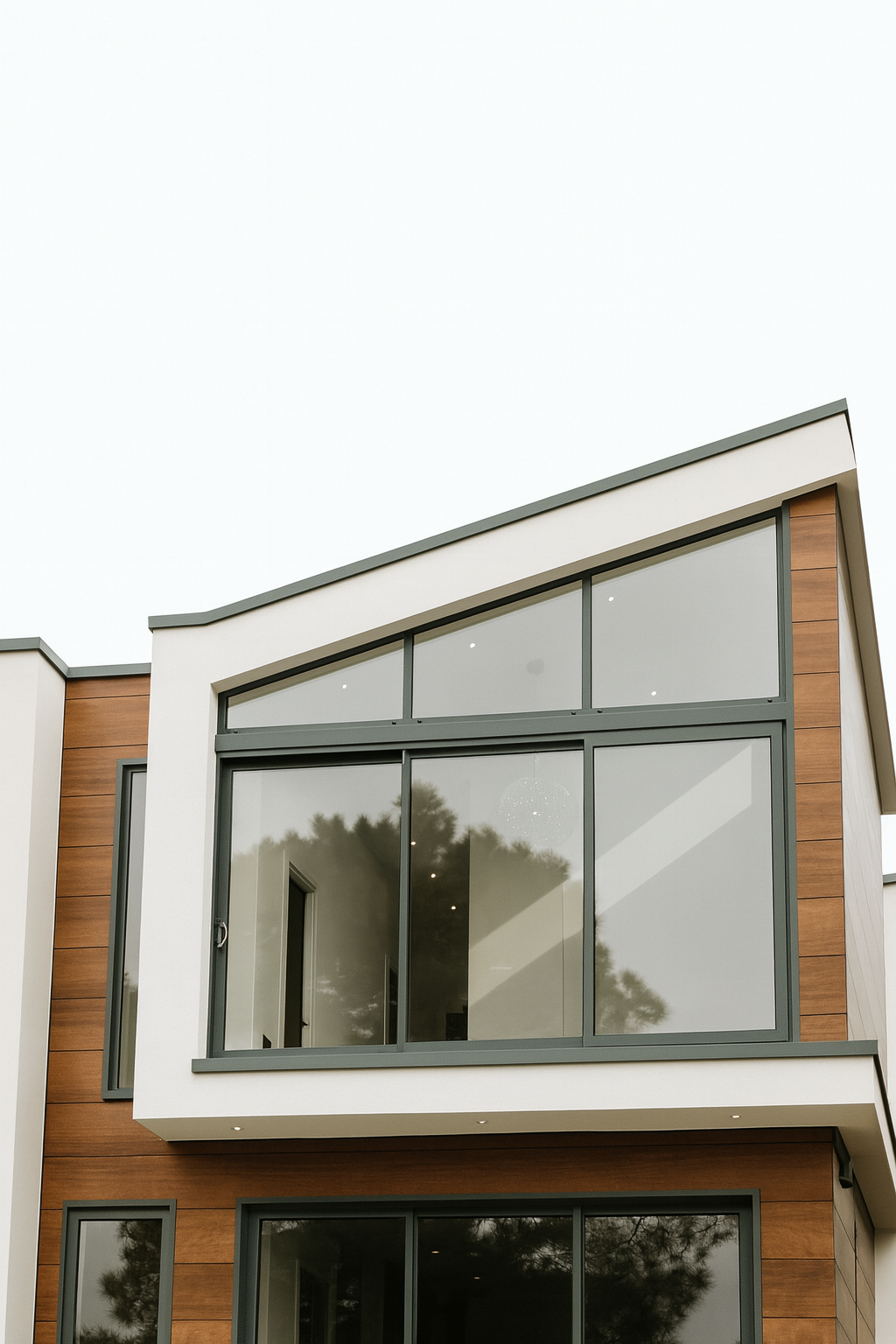
Architects throw around names like laminated, tempered, low-E, and fritted as if they’re interchangeable. They’re not. Each type solves a different problem, and choosing wrong is how you end up with failures, callbacks, or angry clients.
Tempered glass. Heat-treated to be four times stronger than float glass. Shatters into small beads instead of shards. You need it for safety glazing—doors, sidelights, railings. Downside? Once it’s tempered, you can’t cut or drill it. Screw up a hole location, and that panel is garbage. I’ve seen budgets eat five-figure losses because shop drawings weren’t checked before tempering.
Laminated glass. Think of a glass sandwich: two sheets bonded with an interlayer (PVB or SGP). Even when it cracks, it stays in place. Critical for overhead glazing, skylights, or anywhere falling shards would kill someone. Laminated is also where you play with color, graphics, and acoustics. Costs more than tempered but buys peace of mind.
FIELD PICK
Facade Construction Manual (DETAIL Construction Manuals, 3rd Edition) – Thomas Herzog, Roland Krippner, Werner Lang
Why it’s worth it: Covers facades as more than skin. It breaks down structure, energy, and public impact with both fundamentals and detailed case studies. The latest edition adds built examples with drawings and tested systems you can compare. A compact but technical reference that actually helps when you’re detailing real envelopes.
Insulating glass (IGUs). Two or three panes sealed with air or gas in between. Improves thermal performance but depends on sealants. Bad seals = fogging. No repair, only replacement. Any project with IGUs should budget for replacements down the line, even with the best specs.
Low-E coatings. Microscopic metal oxide layers that cut heat gain while letting in light. Invisible when specified right, ugly when mismatched. I saw one office building where half the panes had the wrong coating orientation—the façade looked blotchy forever.
Fritted and patterned glass. Ceramic dots, lines, or custom artwork baked into the surface. Cuts glare, deters bird strikes, and can look striking. Needs careful placement—on one project, frit density was too high and the interior felt like a cave.
Wired glass. Old school, once used for fire resistance. Brittle and dangerous. Now mostly outlawed in codes except for very specific rated assemblies. If you see it specified, double-check.
What I’ve learned here: order samples, mock them up, and get the light right. Glass changes completely depending on sun angle, coatings, and background. Catalog pictures lie.
See also: The Complete List of Building Materials: Key Types and Their Applications
Architectural Glass and Metal

Glass never stands alone. Metal carries it. Mullions, anchors, gaskets. If those fail, the glass fails.
Curtain walls run most mid-rise and high-rise façades. Stick-built or unitized, doesn’t matter—the mullions and anchors are what hold the IGUs in place. Storefront systems are lighter. Fine for retail fronts and low spans, but once you get above 12 to 14 feet, they deflect and leak. I’ve seen owners try to stretch storefront framing on cheap bids. The glass bows in the first winter storm.
Big players like Empire Architectural Metal & Glass in New York or Viracon under Apogee don’t just cut glass. They engineer the whole façade. Shops, frames, coatings, install. Jobs that brought them in early went smooth. Jobs that waited until submittals were a mess of RFIs, redesigns, and change orders.
Guardrails and balcony glass are another trap. Everyone thinks they can buy local clamps and improvise. Then inspections kill the job. CR Laurence (CRL) kits are tested as a set—base shoes, anchors, clamps. Swap one piece, and you’re outside the test. I watched one GC try it. Inspector failed the whole run. Two hundred feet of railing ripped out and replaced at their expense.

Field voice:
“Don’t cheap out on tested kits. Swap one anchor and you’re done. That’s how jobs bleed money.”
What I’ve learned here:
-
Bring the façade contractor in at design, not after bid.
-
Storefronts have a limit. Don’t push them past retail scale.
-
CRL rails only work as kits. Don’t mix and match.
MUST READ
Detail in Contemporary Glass Architecture – Virginia McLeod (2011)
Why it’s worth it: Fifty projects, all glass-heavy, with full drawings, sections, and details. Not just glossy photos. You get construction sheets, elevations, and CAD files (EPS + DWG) on the CD so you can study and reuse. Each case runs four pages with photos, plans, and consultants listed. Great for anyone actually trying to spec glass, not just admire it.
Concrete and Glass in Architecture

Concrete and glass are the default pairing in contemporary buildings. Concrete carries the spans, resists fire, and sets the frame. Glass fills it in, opens it up, and sells the light. One without the other rarely defines a skyline.
Where it works best
Think of Mies van der Rohe’s Seagram Building, or countless office towers since. The concrete or steel frame does the heavy lifting, while the curtain wall of glass makes it readable. Museums push the pairing further — concrete shells for galleries, glass boxes for lobbies. The contrast between heavy and transparent has become its own design language.
Field lessons
I’ve seen jobs where the concrete frame wasn’t coordinated with glass module widths. Mullions hit random slab edges, forcing costly detailing. On another, exposed concrete columns were left unfinished next to low-iron glazing, and every formwork ripple showed. Concrete and glass demand coordination from schematic phase, not after the pour.
What to watch
-
Thermal bridging where concrete slabs run past the façade line. If not insulated, condensation shows up against the glass.
-
Movement joints. Concrete shrinks and creeps. Glass systems need room to adjust or seals will shear.
-
Finish contrast. Exposed concrete works with glass only if the surface quality is tight. Anything sloppy reads worse next to clear glazing.
Why it matters
Most sustainable glass strategies depend on concrete frames. Thermal mass moderates temperature swings, while the glass controls daylight. When detailed right, the mix reduces HVAC load and extends building life. When rushed, it leaks, cracks, and costs owners in constant patchwork repairs.
Low-Iron, Spandrel, and Insulating Glass

Regular float glass carries that green edge tint. Fine for budget jobs, but once you put it next to low-iron glass, it looks cheap. Vitro Starphire is the baseline for museums, galleries, retail. I’ve watched curators stare at the difference. Once you see it, you don’t go back.
Spandrel glass hides slabs, ducts, and mechanical zones. Enamel coat, frit, laminated—pick your flavor. The killer mistake is mismatch. Vision glass from one supplier, spandrel from another. I’ve stood across the street from a brand-new office tower that looked like a barcode. Reflection shift floor by floor. The owner spent millions recladding just to fix it.
Insulating glass units (IGUs) are two or three panes sealed with spacers and gas. They’re only as good as the sealant. Once seals go, the unit fogs. No repair, only replacement. I reviewed a campus building where a quarter of the IGUs failed inside ten years. Spacer and secondary sealant weren’t compatible. The bill topped a million.
Pro move: build a performance mock-up, freeze-thaw cycles included. It’s boring, but it shows you if seals last decades or collapse inside ten.
Lessons from the field:
-
Low-iron sells itself.
-
Match vision and spandrel glass from the same shop.
-
Mock-ups catch failures before they hit production.
FIELD PICK
Glass Houses – Phaidon Editors, intro by Andrew Heid
Why it’s worth it: Fifty glass homes, from Johnson’s Glass House to Koenig’s Case Study #22 and today’s daring new builds. Strong visuals, global scope, and a good reference if you’re working on residential glass projects.
Channel Glass

Channel glass runs tall, diffuses daylight, and keeps views blurred. U-shaped cast panels slot into frames, one after another. The look is clean and soft, without the clutter of mullions.
Where it works: stair towers, gyms, galleries, schools. Places that want daylight but not transparency.
Performance is solid. Double channel setups hit strong acoustic and thermal ratings. Schools like them because they’re quiet and efficient.
Field cases.
Boston gym, two-story walls in Bendheim’s Lamberts channel glass. Crews needed a day to figure out gaskets, then it went fast. Looked sharp.
Another project used Pilkington Profilit out of Europe. Customs held it for weeks. Nearly sank the schedule. The fix would’ve been simple: confirm lead times back in schematic design.
Mistakes I keep seeing:
-
Treating channel glass like curtain wall. It isn’t. Drainage details matter.
-
Forgetting thermal breaks.
-
Picking colors off a catalog. Light shifts change everything. Always mock-up first.
Trade-offs: costs more per square foot than basic glazing. But spans bigger runs with less framing, so installs faster. Balances out depending on the project.
Glass Blocks and Bricks

Glass blocks had their heyday mid-century. They’re back, but in tighter, cleaner ways. Think stair cores, lobby walls, bathroom dividers. The look is solid, heavy, but it still lets light bleed through.
I’ve seen them work best in civic projects and schools. One community center went with recycled-content blocks. Cheap, fast to set, and nearly indestructible. Downside: detailing. If you don’t spec the right sealants and expansion joints, cracks show up fast.
Bricks are another option. Cast thinner, stacked in metal frames. They give more design freedom but need careful alignment. A library project I walked had misaligned blocks and the whole façade looked sloppy. Once it’s set in mortar, there’s no fixing it.
Field voice:
“Glass blocks are unforgiving. If the first course is off, the whole wall shows it.”
What matters here:
-
Always mock up a panel before committing.
-
Watch sealants. Movement joints aren’t optional.
-
Don’t expect perfect clarity. They’re for light diffusion, not transparency.
Colored and Dichroic Glass
Color is tricky. Done right, it transforms a façade. Done wrong, it looks like a shopping mall from the 1980s.
Colored glass comes fritted, laminated, or coated. I’ve worked on a school where laminated colored panels marked each wing. It looked sharp for the first five years. Then the lamination edges started bubbling. Warranty covered replacement, but the disruption was worse than the cost.
Dichroic glass flips color with the light angle. That’s why it’s popular in museums and public art. Bruno Taut’s Glass Pavilion in 1914 was the first bold move in this direction. Today, I’ve seen it used in lobbies where sunlight throws wild reflections inside. Looks stunning, but it scratches easily and fingerprints show everywhere.
Lessons from the field:
-
Stick with frit or ceramic-fired coatings for durability.
-
Mock up dichroic glass in real light, not just studio samples.
-
Ask suppliers about UV stability. Cheap laminates yellow fast.
Sustainable Glass Options
Glass gets marketed as “green” a lot, but the truth is it’s energy-intensive to make. The sustainability game is about coatings, assemblies, and recycling more than the base material.
Recycled content. Most float glass already carries 15–30% cullet (scrap glass). Some suppliers push that higher. Doesn’t change performance, but cuts raw material use and energy.
High-performance IGUs. Triple glazing, warm-edge spacers, argon or krypton fills. All improve thermal performance and slash energy bills. The trade-off is cost and weight. Triple IGUs are heavy. That means beefier frames and more structural load.
Dynamic glass. Electrochromic panels that tint on demand. SageGlass and View are the big names. I’ve been on a project with them—it worked, but controls lagged and some panes never matched in color. Looked patchy. Clients loved the energy savings but hated the uneven tint.
Solar glass. Photovoltaic cells laminated inside. Beautiful idea. In practice, output per square foot is low compared to rooftop PV. Best used for symbolic or showcase buildings, not as your main energy source.
Bird-safe glass. Frit patterns, UV coatings, or etching that birds can see. Many cities (Toronto, NYC, San Francisco) now mandate this for façades over certain sizes. Adds minor cost but avoids lawsuits and dead wildlife outside your lobby.
Life-cycle and EPDs. The real sustainable move is to spec glass with Environmental Product Declarations. That’s where embodied carbon and recyclability data are clear. In my experience, suppliers with EPDs tend to run tighter fabrication too.
Lesson: “green glass” is not about one miracle product. It’s about smarter assemblies and early detailing. Choose the right IGUs, design for daylight, and keep frames tight. That’s what actually saves energy.
Decorative and Specialty Glass

Beyond color, architects keep pushing glass into texture and pattern. Cast glass, etched, sandblasted, laminated with fabric or mesh. Every option changes how daylight hits the space.
One office lobby I worked on used laminated glass with copper mesh inside. In daylight it looked warm, almost glowing. At night, backlighting turned it into a grid. Clients loved it. The snag? Replacement. When one panel cracked, the supplier quoted a 16-week lead time. The owner now keeps two spares in storage.
Channel-patterned glass has also seen a comeback. Simple lines, frosted or clear. Cheap, effective, and less prone to scratches than etched surfaces.
Field voice:
“Fancy glass looks good until somebody has to replace it. Always ask if they can ship you a spare panel in six months.”
Core tips here:
-
Design for replacement. Exotic glass takes months to source.
-
Protect decorative surfaces during install. One scratch and the panel is wasted.
-
Don’t rely on catalogs. Light, background, and reflection all change the effect.
Glass–Metal Hybrids
Glass doesn’t float on its own. When it blends with metal, you either get elegance or a nightmare.
Think glass fins held by stainless steel brackets. Or glass floors backed with aluminum grids. These hybrids make great photos, but they demand precise detailing.
I was on a corporate lobby job where the architect wanted a “floating” glass stair. The supplier pushed a kit with laminated treads and steel stringers. Looked great on drawings. In the field, one tread chipped during install. That tread alone cost $18k to replace and delayed handover by three weeks.
Same story with canopies. Glass bolted through with spider fittings looks light. But every bolt is a leak waiting to happen. One retail project in Toronto had to retrofit drip edges after water stained the stone below.
Field voice:
“Spider fittings are leak magnets. If you spec them, detail the drainage or you’ll be back for repairs.”
What works:
-
Laminated glass with proven hardware.
-
Prefabricated hybrid systems from tested suppliers.
-
Simple spans, not heroic ones.
What fails:
-
Over-ambitious spans without redundancy.
-
Bolted fittings with no drainage.
-
One-off designs with no tested backup.
Glass in Interior Design
Glass isn’t just for façades. Inside, it shapes light, privacy, and how space feels. Done well, it makes a cramped office look twice as open. Done badly, it leaves workers blinded by glare or exposed like fish in a bowl.
Partitions. Floor-to-ceiling glass walls are everywhere in modern offices. The trick is acoustic control. Plain tempered glass transmits sound like a drum. If you don’t spec laminated with acoustic interlayers, boardrooms leak every conversation. I’ve walked through “confidential” meetings that sounded like open mics.
Stair rails and balustrades. Clear laminated glass gives a floating effect. But don’t skip the handrail—code usually requires one, and inspectors fail jobs where the “all-glass” look ignored it. One boutique project in Montreal had to add stainless rails after handover. Client wasn’t happy.
Floors and bridges. Structural glass floors wow people. They also scratch, fog from the underside, and terrify anyone scared of heights. They need anti-slip coatings and regular maintenance. I’ve seen owners regret them after one winter of salt and grit scratching the panels.
Interior finishes. Back-painted glass, mirrors, and decorative laminates are popular in lobbies, kitchens, and bathrooms. The failure I’ve seen most is poor edge sealing—moisture gets in and the paint delaminates. Looks awful, costs thousands to replace.
Colored and frosted glass. Easy way to add privacy and design pop. But keep in mind light angles. A frosted panel in daylight looks great. At night, with lights behind it, silhouettes show through. Bad surprise for bathrooms or private rooms.
Field note from a colleague:
“Clients always say they want glass everywhere. Then the first week, half of them ask for blinds.”
The takeaway here is balance. Glass inside is powerful, but it needs detailing for acoustics, privacy, and durability. Otherwise, it’s just headaches disguised as design.
Where Glass Jobs Go Wrong
Glass fails less often because of the pane and more because of everything around it.
Common misses I’ve seen:
-
Wrong system for scale. Storefront framing pushed into curtain wall territory. It bows, leaks, and gets flagged.
-
Supplier mismatch. Vision glass from one shop, spandrels from another. Colors never align. Owners see the stripes forever.
-
Late contractor buy-in. Glazing subs called after bid instead of design. Leads to redesigns, delays, and ballooned costs.
-
Underestimating lead times. Imported glass delayed in customs. Schedules blown up.
-
Ignoring maintenance. Laminates peel, coatings scratch, seals fog. Nobody budgets for it until the bill shows up.
Field voice:
“Glass never forgets a mistake. You mess up alignment or supplier choice, and the building wears that scar for decades.”
What It Took
Glass projects are money and time sponges if you don’t lock details early.
Cost. Low-iron glass adds about 15–20% to material cost. Channel glass systems can be double standard glazing per square foot, but save on framing labor. Hybrid treads or floors run into five figures per piece.
Time. Lead times stretch. Standard IGUs take 8–12 weeks. Imported decorative glass can drag out to 20+. Add shipping risk on top. Early procurement is the only fix.
Tools. The essentials: calibrated suction cups, laser alignment rigs, certified anchors, and mock-up chambers. Crews that skip mock-ups usually pay for it later with replacements.
Field voice:
“We spent $1.2M replacing fogged IGUs. All because the spec didn’t demand mock-up testing. That mistake could’ve been caught for ten grand upfront.”
Pro Tips From the Field
-
Mock-ups are cheap insurance. Ten grand on a test wall saves you a million later. Always demand a chamber test with freeze–thaw and water spray.
-
Pick one supplier. Vision glass and spandrels must match. If the GC says they’ll shop around, stop them. The mismatch will haunt the façade forever.
-
Respect limits. Storefronts are for ground floors. Curtain walls are for towers. Push one system past its scale, and it fails.
-
Guardrails = kits only. CRL or equivalent. Don’t let anyone “Frankenstein” parts from different shops. Inspectors kill that on sight.
-
Budget for replacement. IGUs don’t last forever. Plan for 20–25 years. Owners who pretend otherwise end up angry at you, not the manufacturer.
Field voice:
“Everyone loves shiny glass. Nobody wants to pay for the fogged unit swap twenty years later. But that’s the real life cycle.”
How to Apply This in Real Projects
For architects:
Lock your glazing contractor in at design development. Don’t wait until CDs. That’s when you find out if your dream wall actually spans without bowing.
For engineers:
Write the production method into the spec. Don’t just say “steel.” Say “EAF steel with 80% recycled content.” Don’t just say “IGU.” Demand silicone secondary seals rated for 25 years.
For contractors:
Push back when owners want to stretch storefront framing to save budget. You’ll be the one back in a storm, tarping over leaks.
For owners:
Glass sells, but it ages. Budget now for maintenance, sealant replacement, and eventual IGU swaps. Don’t think of it as a one-time cost.
Fire and Safety Glass in Architecture
Fire inspectors don’t care how clean the glass looks. If it isn’t rated, it comes out. I’ve watched doors and sidelites get ripped out of a school because someone thought tempered was good enough. Tempered only makes it safer when it breaks. It doesn’t hold back smoke or heat.
The real fire-rated stuff is heavy and expensive. Ceramic, wired, or layered assemblies that buy you 20, 45, 60, or 90 minutes depending on what the code calls for. It has to be paired with rated frames. Miss that detail and the inspector will red-tag it. I’ve seen brand new aluminum frames scrapped because they weren’t part of the tested set.
Laminated glass has its own headaches. Works great for floors, rails, and skylights because it holds together when it cracks. But I’ve walked projects three years in where the interlayers bubbled and turned milky. Wrong spec. Standard PVB can’t take UV. You need ionoplast or similar. If the spec didn’t call it, you’re back re-ordering.
Wired glass still shows up in old buildings. Cheap and ugly. And dangerous if not in a proper rated system. Some schools still have it in stair cores from the 70s. It’ll stop flames for a while, but if it shatters, those wires cut.
Costs aren’t small. Ceramic fire glass can be five, even ten times tempered. Owners complain every time until you show them what replacement costs after inspection failure look like. One hospital job I was on lost six figures swapping out untested vision panels. The GC still brings that up.
Field note: “Tempered is fine for the mall railing. Put it in a rated stair and you’re toast.”
Notable Architects and Glass Icons
Philip Johnson’s Glass House (1949)
Still the poster child for transparency. A steel frame wrapped in glass, no walls inside, just curtains. Looks simple until you live in it. Summer sun cooks the place. Winter heat bleeds out. Johnson proved glass could be architecture, but also proved its limits.
Mies van der Rohe’s Farnsworth House (1951)
A box in the landscape. Raised above the ground on steel stilts with glass walls running edge to edge. Beautiful, yes. But Mies and the client fought over comfort. Solar gain, condensation, privacy — the same problems every architect still wrestles with when glass becomes the whole envelope.
I.M. Pei’s Louvre Pyramid (1989)
Paris hated it at first. Now it’s the museum’s logo. The trick was custom structural glass and cable work to get that pure pyramid without heavy mullions. Every big museum job since has copied some part of it.
Bruno Taut’s Glass Pavilion (1914)
A century old and still radical. Built for the Cologne Werkbund Exhibition. Colored glass, prismatic glass, dome skylight — it was more manifesto than building. Taut said glass would change society. The pavilion leaked and was demolished, but the idea survived.
Apple’s Fifth Avenue Cube (2006)
Technology store as glass temple. Giant laminated panels held by spider fittings. The first version needed dozens of joints. Later renovations cut it down to just 15 seamless panes. That cube became as photographed as the phones inside. Every Apple flagship since has been some version of glass-as-brand.
Lina Bo Bardi’s Glass Floor (1989)
Her São Paulo museum designs always challenged norms. In the Casa de Vidro she opened walls. Later, in SESC Pompéia, she used glass walkways and panels in industrial frames. The glass floor in particular terrified visitors — it forced people to feel structure, not just look at it.
Closing It Out
Glass isn’t going away. It defines too many skylines and too many client briefs. But the shine hides the risk. The real work is not picking the prettiest panel in the showroom. It’s knowing the systems, the suppliers, and the limits.
I’ve seen Starphire panels hold sharp and clean after ten years. I’ve seen spandrel mismatches make a tower look like a barcode. I’ve seen railing systems ripped out because someone swapped one anchor. The material itself isn’t the problem. The details are.
Glass works when you treat it with respect. Bring in the right contractor early. Run the mock-ups. Don’t gamble with mismatched suppliers. Get those steps right, and glass will do what it does best: carry light, carry identity, and carry a building’s image for decades.
FAQ
What is the real difference between curtain wall and storefront?
Curtain wall is engineered for taller spans and higher loads. Storefront is a lighter ground-floor system. Push storefront past about 12–14 feet and you get bowing, leaks, and failed inspections.
When should I spec low-iron glass?
Any time clarity sells the space: museums, galleries, flagship retail, premium lobbies. Regular float’s green edge reads cheap next to low-iron.
How do I avoid striped façades from spandrel mismatch?
Use the same supplier for vision and spandrel glass. Match coatings, reflectance, and samples under real light. Don’t mix vendors to “save” money — you’ll pay it back in recladding.
Why do IGUs fog and can you fix them?
Sealant failure or spacer incompatibility. Once an IGU fogs, you replace it. No meaningful repair. Always run a performance mock-up with freeze–thaw before production.
Is channel glass worth the premium?
Yes when you want daylight without views, tall clean walls, and solid acoustics. Plan drainage, thermal breaks, and lead times. Mock up color in real light.
What counts as “sustainable glass”?
High-performance IGUs with proper low-E, warm-edge spacers, and good seals. Reasonable recycled content, bird-safe patterns where required, and regionally sourced glass to cut transport carbon. Dynamic glass helps on solar control but adds cost and controls complexity.
What should I watch on glass guardrails?
Use tested kits (CRL or equivalent). Don’t mix parts. Verify anchors, shoes, and glazing sizes against the tested assembly. Inspectors look for this.
How do I make interior glass rooms private and quiet?
Use laminated glass with acoustic interlayers, plan for seals at head/jamb/sill, and watch for night silhouettes on frosted panels. Many “glass offices” fail on acoustics more than anything.
Are glass floors and bridges practical?
They wow clients, but scratch and show dirt fast. Require anti-slip coatings and maintenance plans. Budget for replacements.
What’s the cheapest way to make a glass façade look premium?
Low-iron on key elevations, matched spandrel, disciplined frames, and a mock-up that nails coatings and reflectance before you order the job.
Must Read
- Detail in Contemporary Glass Architecture – Virginia McLeod
Why it’s worth it: Shows 50 glass projects with drawings, details, and field-level clarity. Useful when you need both the aesthetic and the technical side. - Facade Construction Manual – Thomas Herzog, Roland Krippner, Werner Lang
Why it’s worth it: Strong reference for anyone working on building envelopes. Mix of fundamentals, tested case studies, and technical drawings you can actually use.
References & Citations
- Philip Johnson’s Glass House – Official Site
- Apple Fifth Avenue – Store Cube Overview
- Vitro Starphire Ultra-Clear Glass – Product Page
- Viracon – Architectural Glass Fabricator
- CR Laurence (CRL) – Glass Railings and Hardware
- Bendheim – Lamberts Channel Glass Systems
- Pilkington Profilit – Channel Glass
- SageGlass – Electrochromic Dynamic Glass
- View – Smart Glass Façade Systems
- Louvre Pyramid – Background and Design
- Bruno Taut – Glass Pavilion (archival reference)
- Low-E Coatings Explained – Technical Overview
- IGU Performance & Energy – Natural Resources Canada
- Bird-Friendly Building Design – American Bird Conservancy