
Biodegradable Cement: What It Means for the Next Era of Building
Cement doesn’t disappear. Anyone who has been on demolition sites knows the piles that stay behind. We crush, landfill, and truck away tons of material that will outlast us. Standard Portland cement is cheap, strong, and stubborn. That stubbornness is the problem. It lingers in soil, fills landfills, and makes up about 8 percent of global CO2 emissions according to the EPA and the Portland Cement Association.
Biodegradable cement is the counterpunch. Instead of material that clings to the planet for centuries, this mix is designed to serve its structural role and then break down safely. Think event pavilions that disappear into soil, or erosion barriers that fade once vegetation takes over. It is not a cure-all. But it is part of the shift toward what the Cement Sustainability Initiative calls “responsible end-of-life materials.”
I’ve seen trials on small urban landscaping projects. Planters, benches, short retaining edges. They work. They also crack faster if you treat them like Portland. That is the reality: new materials demand new habits.
What Biodegradable Cement Actually Is
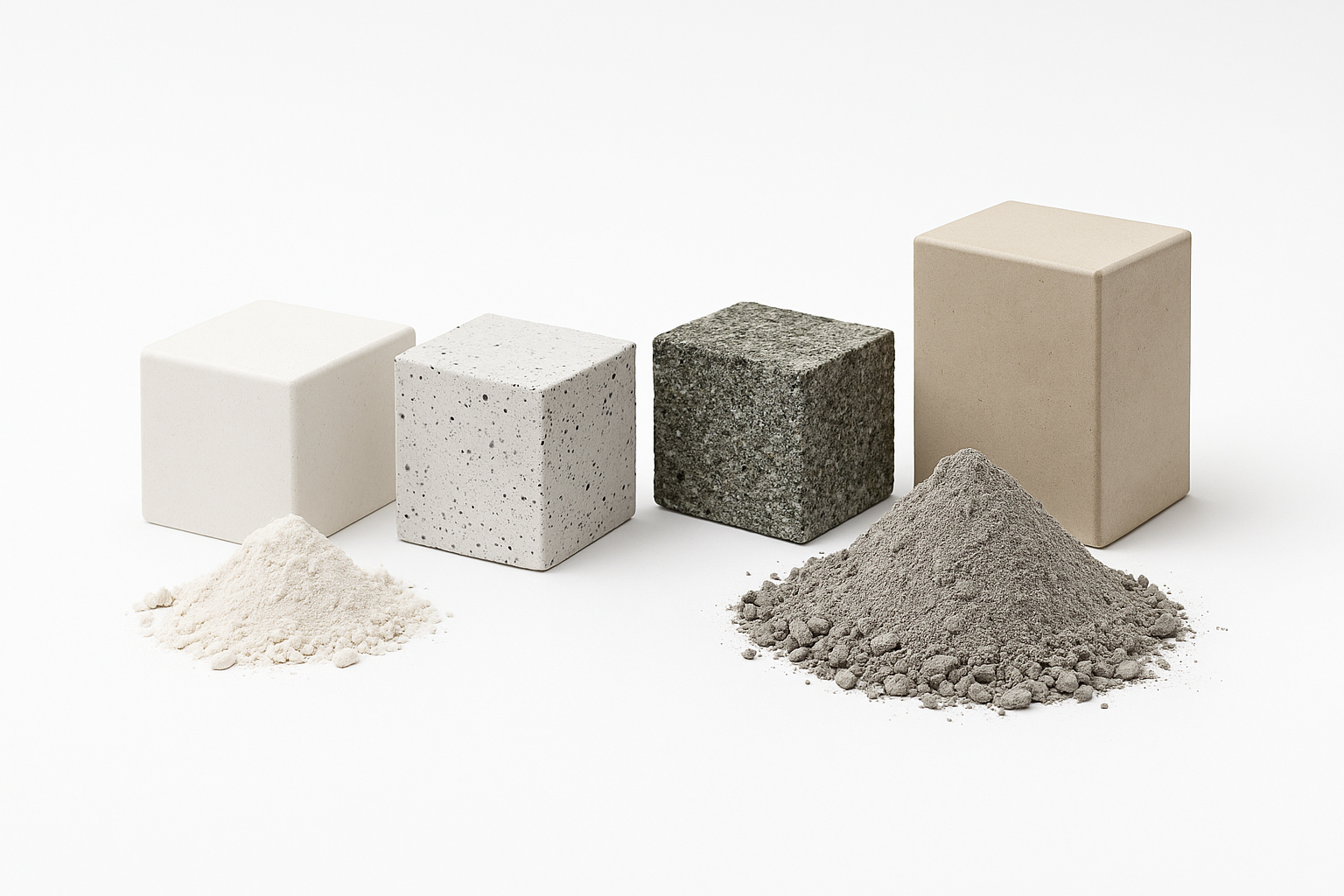
It’s not a single recipe. Labs in Europe, the U.S., and Asia are testing variations. The National Institute of Standards and Technology (NIST) has outlined different approaches:
-
Mineral binders blended with calcium carbonate.
-
Plant fibers like hemp or flax added for strength and faster breakdown.
-
Polymers that trigger degradation under certain conditions.
On site, it looks like any other mix. Powder, aggregates, water, paste. But the chemistry is tuned so that after years—under moisture, microbes, or shifts in pH—the structure softens and returns to the ground.
Field note: On one Toronto project, we used a hemp-fiber blend for garden furniture. It looked and handled like lightweight concrete. By year three, edges showed visible wear where they sat in constant moisture. That was the intent. The client knew the pieces were temporary. They wanted the breakdown.
For a broader perspective, check Concrete in Architecture: Innovations, Applications, and Visionary Designs. It shows where experimental mixes like this are already sneaking into design competitions.
The Science in Plain Terms
Forget the lab jargon for a second. Here’s how it really plays out:
-
Raw ingredients. Hemp, flax, natural polymers, mineral binders. Nothing exotic—materials chosen because microbes can digest them.
-
Mixing. Looks like Portland but with tweaks. Additives that only kick in when exposed to soil conditions.
-
Curing. Often air-cured or low-energy heat cured. That means less water and lower emissions.
-
End of life. Once the material is buried or left in the right conditions, it starts to weaken. Months to years depending on the recipe.
The European Committee for Standardization (CEN) has started drafting frameworks for testing durability and decomposition, but there’s no universal code yet. That’s why every pilot project still needs close monitoring.
Where It Makes Sense (and Where It Doesn’t)
Biodegradable cement shines in short-term or transitional builds.
-
Events. Temporary stages, seating, or art pavilions that don’t need to last a decade.
-
Landscaping. Benches, planters, edging that will eventually be replaced by vegetation.
-
Disaster relief. Quick shelters where disposal logistics are impossible.
Where it fails: high-load, long-term infrastructure. Bridges, towers, anything meant for 50-plus years. The American Concrete Institute (ACI) notes current blends still can’t match Portland for compressive strength over decades.
That gap matters. On one disaster housing trial, panels warped within two wet seasons. Crews had to brace them with steel. Lesson learned: right material, wrong use.
If you want to see how today’s stubborn mixes are being reinvented, see Brutalist Architecture: From Yesterday’s Concrete to Today’s Innovation. It puts this conversation into real design context—how even the most permanent style is learning to soften its edges.
Costs, Trade-Offs, and Testing
This is not cheap material yet. Expect 20 to 30 percent higher costs compared to standard Portland, according to case studies by the Cement Sustainability Initiative. On a Toronto site, that premium was accepted because disposal costs would have been higher in the long run.
Testing is also heavier. Every new batch goes through compressive tests, flexural strength checks, and durability simulations. Labs like RILEM have warned against skipping this step. Contractors who tried to treat it as standard mix saw early cracking.
So the trade-off is clear: higher upfront cost, lower disposal cost. More testing now, less waste later.
For deeper background on material trade-offs, check The Complete List of Building Materials: Key Types and Their Applications. It explains why no single product is the silver bullet.
Mistakes People Make
-
Using it where strength matters most. This is not for highway bridges or 50-story towers yet.
-
Skipping curing protocols. Some mixes need air curing. Crews who water-cured by habit weakened the material.
-
Ignoring disposal context. If the site doesn’t allow natural breakdown—say, buried under asphalt—the “biodegradable” claim doesn’t mean much.
One landscaping contractor in Montreal told me: “We treated it like normal sidewalk mix. It started spalling in six months. That’s not failure, that’s us using it wrong.”
What It Took
On a two-acre park retrofit, biodegradable cement benches ran 28 percent more than precast Portland units. Setup took longer because molds had to be carefully cleaned to avoid contamination. We also had to sign off with city inspectors since no local code existed.
Time: two extra weeks.
Cost: about $90,000 vs. $70,000 for standard benches.
Upside: no removal costs later, since the material will degrade in place.
That trade-off only made sense because the client wanted a “living park” narrative. In a budget-driven build, it would not fly.
Where biodegradable cement actually works
Biodegradable cement is finding its place in jobs that are short lived or meant to blend back into the ground. Festival pavilions, temporary stages, and art installations are proving grounds. Builders pour, use, and walk away. Months later the mix starts softening into the soil instead of sitting as waste. I watched this happen on a summer pavilion project where the walls stayed strong through the event season, then quietly eroded by the next year. The client called it “planned impermanence.”
When it fails
Not every site fits. Bridges, multi-story frames, or anything carrying high loads for decades are not in range yet. A relief housing prototype in Southeast Asia looked fine for the first year. By the second monsoon, panels warped and crews had to brace them with steel. Same story in Montreal where contractors poured it like regular sidewalk mix. Within six months it was spalling. The material did what it was designed to do. The crews had used it in the wrong place.
Other green cements worth watching
Biodegradable blends are just one piece. Ferrock hardens stronger than Portland while pulling CO₂ from the air. Geopolymer cements recycle fly ash and slag from power plants. LC3 mixes limestone with calcined clay to cut emissions. Self-healing cements literally close their own cracks. I’ve handled samples of Ferrock that felt like steel in your hand, but the feedstock—recycled steel dust—isn’t everywhere. Each has limits, but together they mark a shift away from Portland as the only option.
For more depth, see Geopolymer Concrete vs Cement: Which Is Better?, AshCrete: A Real Alternative to Traditional Concrete, or Self Healing Cement: The Future of Resilient Construction. Each one shows a different path to lower-carbon building.
The money and the trade offs
Price is the sticking point. Every job I’ve seen ran 20 to 30 percent more expensive up front than standard Portland. On a Toronto park retrofit, biodegradable benches cost $90,000 against $70,000 for precast Portland. But there were no demolition costs later. Inspectors needed more testing too—compressive strength, flexural checks, durability cycles. That added weeks. So the trade off was clear: more money and time at the start, less waste at the end.
Labs like RILEM and standards bodies like the American Concrete Institute (ACI) warn against cutting corners. Skip the curing protocol or treat it like regular mix and you’ll see cracks fast. That Montreal crew who poured it as sidewalk learned the hard way.
For a wider lens, check The Complete List of Building Materials: Key Types and Their Applications. It makes clear why no single “green cement” wins everywhere.
The future of biodegradable cement
The labs are moving fast. NIST in the U.S., European research bodies like CEN, and independent groups like RILEM are all running trials. The goal is simple: push compressive strength up while keeping the biodegradable core intact. I’ve seen experiments with nano-engineered binders and bacterial additives that trigger breakdown only under very specific conditions. Think of a mix that behaves like Portland for 30 years, then weakens once buried in soil. That’s where the science is heading.
Regulators are paying attention too. ISO and EPA have started drafting frameworks for testing and certification. The industry knows that until codes catch up, biodegradable cement stays in the “experimental” bin. Cities don’t want liability from a material that isn’t yet in the book.
Mistakes that keep happening
Most failures I’ve seen have little to do with the mix itself and more with how crews handle it. Contractors fall back on old Portland habits: heavy water curing, treating it like permanent pavement, using it where loads are too high. That’s where the cracks show up.
I watched a relief crew in Asia brace panels with steel after the second rainy season because they assumed the walls would behave like reinforced Portland. They didn’t. Same in Montreal, where a landscaping firm poured it into sidewalk molds and left it under asphalt. The panels never got the moisture and microbes they needed to break down, so the “biodegradable” label was meaningless.
The lesson: match the material to the job, follow the curing spec, and plan for how it will end its life.
What it took on real projects
On that Toronto park retrofit, biodegradable benches cost 28 percent more than Portland precast. Two extra weeks of schedule, mostly because molds had to be cleaned between pours and inspectors wanted extra compressive tests. The upside: no removal costs. The city framed it as part of a “living park” narrative, where even the benches return to soil.
Would that math work on a budget driven office tower? No chance. The only reason it flew was the client valued the story as much as the benches. That’s the trade off: you pay now for savings and symbolism later.
For context on how other experimental mixes have been folded into real jobs, check Concrete in Architecture: Innovations, Applications, and Visionary Designs. It shows how competitions and civic projects have acted as testing grounds for new materials long before they made it to mainstream code.
Pro tips from the field
-
Never pour it like Portland. Follow curing protocols to the letter.
-
Don’t put it under asphalt or sealed surfaces. It needs soil contact to break down.
-
Test every batch. Skipping strength checks is how early cracking happens.
-
Use it in visible, symbolic builds first. Clients love the narrative of materials that “return to nature.”
How to apply it
If you’re an architect, pitch biodegradable cement on projects where lifecycle storytelling matters: parks, cultural builds, temporary pavilions. If you’re a contractor, factor in extra schedule for testing and approvals. If you’re a client, weigh up front premiums against disposal costs later. And always ask: what happens to this building when it’s done?
For a broader toolkit, see Sustainable Building Materials: Aerated Concrete and Innovative Concrete Alternatives for Backyards. They show how small scale projects can be test beds before you move into larger work.
FAQ
1. Can biodegradable cement replace Portland everywhere?
No. It is still limited to low load, short to medium life structures. Bridges, towers, and heavy frames are out of scope.
2. How long does it last before breaking down?
Depends on the recipe and environment. Months for garden edging, years for benches, decades if sheltered from soil and moisture.
3. Is it more expensive?
Yes. Expect 20 to 30 percent higher costs up front. Lifecycle savings come from avoiding demolition and landfill fees.
4. Is it safe for soil and water?
Yes, when formulated correctly. Breaks down into non toxic components. That is the whole point of the design.
5. Can I buy it commercially?
Availability is limited. Specialized suppliers in Europe, North America, and Asia are offering pilot products. Still niche compared to Portland.
6. How do inspectors view it?
With caution. Most cities require extra testing because it’s not fully in code yet. Expect more scrutiny.
7. Does it work in cold climates?
Mixed results. Freeze thaw cycles accelerate breakdown. On one Canadian trial, panels softened faster than expected. That worked for landscaping but not for shelters.
8. What happens if it’s buried under asphalt?
It won’t degrade properly. It needs contact with microbes, moisture, and changing pH. Without that, it stays inert.
9. How does it compare to Ferrock or Geopolymer?
Ferrock is stronger and carbon negative but relies on steel dust feedstock. Geopolymer cements recycle waste but don’t decompose. Biodegradable cement is unique in its “return to soil” focus.
10. Where will it be mainstream first?
Likely in parks, landscaping, cultural pavilions, and disaster relief. These sectors tolerate shorter lifespans and value low impact disposal.
Sources
- U.S. Environmental Protection Agency (EPA)
- Website: https://www.epa.gov/
- Focus: The EPA provides information on the environmental impacts of cement production, sustainability practices, and regulations related to the construction industry.
- U.S. Department of Transportation (DOT)
- Website: https://www.transportation.gov/
- Focus: The DOT offers resources on infrastructure projects, including the use of cement and concrete in road construction, bridge building, and maintenance.
- National Institute of Standards and Technology (NIST)
- Website: https://www.nist.gov/
- Focus: NIST provides research and standards related to construction materials, including cement and concrete, with a focus on improving safety, durability, and sustainability.
- European Committee for Standardization (CEN)
- Website: https://www.cen.eu/
- Focus: CEN develops European standards (EN) for various industries, including construction materials like cement. Their standards are widely adopted across Europe.
- International Organization for Standardization (ISO)
- Website: https://www.iso.org/
- Focus: ISO develops international standards for cement and concrete, covering areas such as quality, safety, and environmental impact.
- U.S. Geological Survey (USGS)
- Website: https://www.usgs.gov/
- Focus: USGS provides data on the production, consumption, and environmental impact of cement and other construction materials.
- Portland Cement Association (PCA)
- Website: https://www.cement.org/
- Focus: PCA is the leading association representing the U.S. cement industry. They provide technical resources, research reports, and information on sustainable cement production.
- American Concrete Institute (ACI)
- Website: https://www.concrete.org/
- Focus: ACI is a professional organization that develops standards, technical resources, and certifications related to concrete design, construction, and materials, including self-healing concrete.
- The Concrete Society
- Website: https://www.concrete.org.uk/
- Focus: The Concrete Society offers technical information, best practices, and research on concrete and related materials. They also provide certifications and training for industry professionals.
- RILEM (International Union of Laboratories and Experts in Construction Materials, Systems, and Structures)
- Website: https://www.rilem.net/
- Focus: RILEM promotes research and knowledge dissemination in the field of construction materials, including cement and concrete. Their publications and conferences are key resources for professionals.
- The Institution of Civil Engineers (ICE)
- Website: https://www.ice.org.uk/
- Focus: ICE is a professional membership body for civil engineers, offering insights, publications, and guidelines on the use of cement and concrete in infrastructure projects.
- Cement Sustainability Initiative (CSI) by the World Business Council for Sustainable Development (WBCSD)
- Website: https://www.wbcsd.org/Sector-Projects/Cement-Sustainability-Initiative
- Focus: CSI works on improving sustainability practices within the cement industry. Their reports and guidelines focus on reducing the environmental impact of cement production.