

Introduction to Architecture Theory
How Architects Think Before They Build
Most people think theory is only for architects with too much time or for those who get lost in abstract ideas. The truth is simple. Theory is where real design starts. Not with sketches. Not with software. It starts with questions.
What should this building say?
How should it feel when someone walks in?
Who is it for?
What does it mean to stand inside it?
Theory is not a lecture. It is what happens before the first cut line or grid. It’s the part that shapes every decision that follows. Before the first wall stands or foundation sets, there is always a thought behind it — even if the architect never calls it theory.
Every building you’ve admired started here. Before the drawings. Before the materials. Before the budget. It started with a line of thinking.
Architecture Theory: A Simple Guide to the Ideas Behind Design
What Is Architecture Theory and Why Does It Still Matter?
What You’ll Learn:
-
How architects use theory to shape ideas and make design choices
-
The major themes that have guided architecture through history
-
How theory ties into politics, culture, technology, and daily life
-
Why even today’s most modern buildings are rooted in older ideas
-
How theory turns buildings into more than just structures
You'll explore how architects use ideas to frame problems, test boundaries, and respond to the world around them.
Across time and place, theory has shifted with culture, technology, and power—but it’s always been part of how architecture moves forward.
Must Read:
- Modern Architecture: A Critical History (World of Art) – by Kenneth Frampton
- Architecture of Regionalism in the Age of Globalization: Peaks and Valleys in the Flat World by Liane Lefaivre
The Thinking Behind Buildings: A Look at Architecture Theory
Architecture Theory Explained: From Ancient Principles to Modern Practice
Architecture theory helps explain how and why buildings are designed the way they are. This guide breaks it down in simple terms with real examples.
Where Architecture Came From and Why It Still Matters

The History That Shaped Architecture. A Looking Back at the Big Moments in Architectural Design.
How Architecture Has Changed Over Time
What We Built and Why: A Practical History of Architecture
1. Ancient Architecture
Ancient builders worked with basic tools but created highly organized, large-scale projects. They developed early systems for measurement, planning, and material use. Cities were laid out with purpose—space served authority, trade, and social order.
Focus on:
-
Geometry and scale
-
Urban planning and layout
-
Material innovation (stone, mud brick, early concrete)
-
Civic and state use of space
Why it matters:
They shaped how we think about order, structure, and control of space.
Examples:
-
Persepolis (Iran): Planned for processions and control, built on stone terraces
-
Ziggurat of Ur (Iraq): Engineered for visibility and layered form
-
Mohenjo-Daro (Pakistan): Early grid system, drainage, and granaries
-
Chand Baori (India): Stepwell built for function and climate, with complex geomet
2. Medieval Architecture
Builders dealt with defense, limited materials, and regional influence. They focused on durability, layered structures, and passive systems like airflow and thermal mass.
Focus on:
-
Masonry, layering, and arches
-
Climate-responsive design
-
Fortified civic buildings
-
Craft-based construction systems
Why it matters:
Introduced structural problem-solving that shaped later engineering and passive design strategies.
Examples:
-
Mont Saint-Michel (France): Fortified layout merged with terrain
-
Alhambra courtyards (Spain): Controlled light, air, and space with geometry
-
Windcatchers (Iran): Used airflow to cool buildings naturally
-
Caernarfon Castle (Wales): Planned for defense and symbolism
-
Bibi-Khanym Mosque (Uzbekistan): Experimented with scale and materials
Notable figure:
-
Al-Jazari (12th century): Designed moving elements, mechanical systems, and water-lifting devices—early building services thinking
3. Renaissance Architecture
Architects used drawings, proportions, and rules to shape rational buildings. Plans became formalized. Space was calculated, not improvised.

Focus on:
-
Human-scale proportions
-
Symmetry and classical orders
-
Formal plans and clean facades
-
Use of perspective in layout
Why it matters:
Architecture shifted from builder-led to architect-led. Theory, drawing, and standard rules began shaping space.
Examples:
-
Palazzo Rucellai (Italy): Clear facade layers, classical rhythm
-
Villa Rotonda (Italy): Symmetrical plan with a central dome
-
Palazzo Farnese (Italy): Balanced mass and detail for civic presence
-
Ali Qapu (Iran): Merged function and spectacle in elevated terraces
-
Laurentian Library (Italy): Michelangelo’s study in spatial control
Recommended Readings:
- Introduction to History of Architecture: Where Every Architect Should Start!
- Kevin Lynch's 5 Elements of a City | Guide to Urban Design
- Modern Architecture
- The Eyes of the Skin: Architecture and the Senses by Juhani Pallasmaa
Core Ideas That Shape Every Building

What Architects Think About Before They Build
These are the five most important ideas in architectural theory. They shape how buildings are designed, why they feel the way they do, and how they work in real life.
Core Concepts and Principles
1. Why Form Follows Function
Design That Works for Its Purpose
What it means:
Form is how something looks. Function is what it does. In good architecture, the shape of a building comes from its job—not just style.
Why it matters:
Buildings that follow function tend to last longer and serve people better. This idea became central to modern architecture in the 20th century and still drives design today.
Examples to know:
-
Bauhaus School (Germany): Clean lines, no decoration—just function.
-
Farnsworth House (USA): Designed by Mies van der Rohe to blend simplicity and use.
-
Industrial buildings and factories: Where function naturally shapes form.
2. From Empty Space to Meaningful Place
How Buildings Make Us Feel Something
What it means:
Space is the physical area. Place is how we connect to it emotionally. Good architecture turns space into something memorable.
Why it matters:
A well-designed space can feel calm, exciting, warm, or powerful. That emotional connection is what makes buildings matter to people.
Examples to know:
-
Japanese teahouses: Small, intimate, and deeply rooted in ritual.
-
Casa Gilardi (Mexico): Luis Barragán’s use of light, color, and shadow to create atmosphere.
-
Public squares and courtyards: When designed well, they build community and comfort.
3. Getting Scale and Proportion Right
Why Size and Balance Matter
What it means:
Scale is how big something feels next to people or its surroundings. Proportion is how parts of a building relate to each other.
Why it matters:
If a building is too massive or out of balance, it can feel off. Good scale and proportion make architecture feel natural—even when it’s bold.
Examples to know:
-
Villa Rotonda (Italy): Perfect symmetry based on human proportions.
-
Barcelona Pavilion (Spain): Mies van der Rohe balancing openness and enclosure.
-
Burj Khalifa (UAE): Tallest building in the world, but with elegant form and proportion.
4. Aesthetics and Architectural Style
How Buildings Express Identity
What it means:
Aesthetics is about beauty. Style is how that beauty is expressed through shapes, materials, and patterns.
Why it matters:
Every time and culture has its own idea of beauty. Architecture reflects that—and it influences how we feel in a space.
Examples to know:
-
Sydney Opera House (Australia): Sculptural roof design that became a symbol
-
Frank Gehry’s work: Curved forms that challenge traditional symmetry
-
International Style buildings: Clean, glass-heavy, and stripped of decoration
5. Designing with the Planet in Mind

Sustainability in Modern Architecture
What it means:
Sustainable design reduces environmental harm. It uses materials and systems that save energy, reuse resources, and support long-term living.
Why it matters:
Buildings are major sources of energy use and carbon emissions. Sustainable design helps cities grow without destroying the environment.
Examples to know:
-
Bullitt Center (Seattle): Generates its own power, captures water, and wastes almost nothing.
-
Masdar City (UAE): Designed from the ground up to be low-energy and climate-aware.
-
Timber buildings like Mjøstårnet (Norway): Built tall using renewable wood, not steel.
Must Read:
Architecture of Regionalism in the Age of Globalization: Peaks and Valleys in the Flat World 1st Edition by Liane Lefaivre
Why Do Architects Study Theory? Here’s What to Know
How Architecture Reflects the Way We Think, Build, and Live
A clear introduction to architecture theory—what it is, why it matters, and how it influences everything from space to structure.
Recommended Readings: Complexity and Contradiction in Architecture by Robert Venturi
Theories That Actually Changed Architecture

Influential Theories and Theorists
What to Study, Why It Mattered, and Who Got It Right
1. Vitruvius – Structure, Use, and Meaning
Key Idea: Good architecture must be solid, useful, and beautiful.
Vitruvius, a Roman engineer, wrote De Architectura in the 1st century BCE. He outlined three core principles:
-
Firmitas (strength)
-
Utilitas (use)
-
Venustas (beauty)
These principles shaped how later architects thought about buildings—not just as objects, but as systems that serve human needs.
Why it mattered:
He was the first to connect architecture with philosophy, engineering, and human proportion.
What to focus on:
-
How his ideas reappeared in Renaissance thinking
-
Influence on symmetry, order, and modular design
-
How his “ideal man” diagram inspired design based on the human body
Legacy in projects:
-
Leon Battista Alberti’s writings were direct responses to Vitruvius
-
Palladio’s villas mirror Vitruvian proportion
-
Still cited today in sustainable and human-centered design
2. Le Corbusier – The Five Points of Modernism
Key Idea: A building is a machine for living.
In 1927, Le Corbusier introduced five principles that changed how buildings were made:
-
Pilotis (columns)
-
Free floor plan
-
Horizontal windows
-
Free facade
-
Roof garden
Why it mattered:
He separated structure from skin, allowing for flexible interiors and lighter exteriors—new freedoms for designers.
What to focus on:
-
The link between industrial materials and design freedom
-
His push for urban planning as social reform
-
The shift from decoration to function-driven form
Legacy in projects:
-
Villa Savoye (France): Pure application of his five points
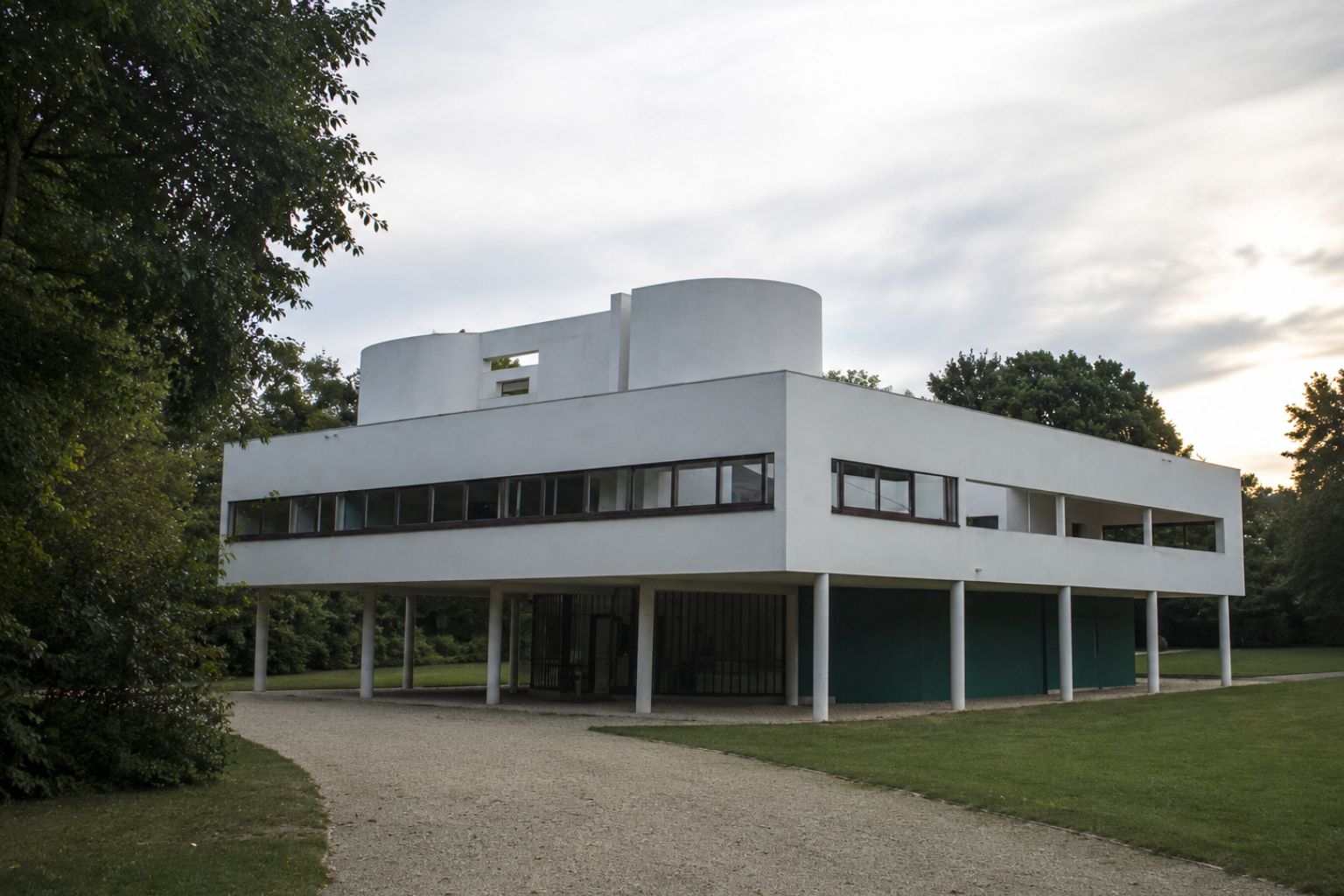
Image: Classic modernist house Villa Savoye in France, designed by Le Corbusier, showcasing his Five Points of Architecture — pilotis, free plan, ribbon windows, free façade, and roof garden.
-
Unité d'Habitation (Marseille): A vertical city prototype
-
Core influence on the International Style
3. Frank Lloyd Wright – Organic Architecture
Key Idea: Design should grow from its surroundings.
Wright believed architecture should respond to nature and people. He used local materials, horizontal lines, and open interiors.
Why it mattered:
He challenged the grid and created buildings that felt lived in, not just looked at.
What to focus on:
-
Integration of landscape, structure, and materials
-
Early ideas of sustainability and passive design
-
Spatial flow—how people move and feel in buildings
Legacy in projects:
-
Fallingwater (USA): Built over a stream, blended into a forest
-
Robie House: Open-plan living, long eaves, and brick rooted in site
-
Precursor to today’s biophilic and site-sensitive design
4. Robert Venturi – Complexity and Contradiction
Key Idea: Real life is messy—architecture should reflect that.
Venturi rejected the clean minimalism of modernism. In Complexity and Contradiction in Architecture (1966), he argued that architecture should reflect contradiction, layering, and history.
Why it mattered:
He broke the dominance of modernism and reintroduced meaning, play, and cultural references.
What to focus on:
-
Use of symbolism, irony, and historical quotes in design
-
Architecture as communication, not just form
-
First steps toward postmodernism
Legacy in projects:
-
Vanna Venturi House: Breaks traditional house rules intentionally
-
Helped shape the entire postmodern movement
-
Foundation for architects like Michael Graves and Charles Moore
5. Contemporary Theorists – Rethinking Systems, Not Just Shapes
Key Idea: Architecture now responds to systems—climate, data, health, equity.
Today’s theorists are shifting focus from form to impact. They ask:
-
How do buildings affect the planet?
-
How do they reflect social systems?
-
Can design improve quality of life?
Why it matters:
Architecture today must respond to climate, technology, and people’s needs in real time. Theory is less about style—more about systems thinking.
What to focus on:
-
Parametric design: Using algorithms to shape responsive forms
-
Biophilic design: Embedding natural elements for health
-
Social equity: Who buildings serve, and how
Names to know:
-
Kengo Kuma: Transparency and local materials
-
Jeanne Gang: Blending ecology and form
-
Alejandro Aravena: Low-cost housing shaped by community use
-
Bjarke Ingels: Playful, green, and system-based design
Legacy in projects:
-
Bosco Verticale (Italy): High-rise forests
-
The High Line (NYC): Adaptive reuse as civic space
-
The Edge (Amsterdam): A data-driven, sustainable office environment
Understand the key ideas behind architecture and how theory connects design, history, and culture in ways that still impact buildings today.
Architecture theory isn’t separate from the built world—it’s what gives it meaning. This guide breaks it down simply, so you can understand how the thinking behind buildings is just as important as the buildings themselves.
Recommended Readings: Towards a New Architecture by Le Corbusier
See Also: Critical Regionalism – Kenneth Frampton
Frampton’s idea of Critical Regionalism calls for architecture that blends modern techniques with local culture, climate, and materials—resisting global sameness without falling into nostalgic imitation.
And: Kevin Lynch's 5 Elements of a City | Guide to Urban Design
Modern Theories That Shaped Architecture Today
Different Ways Architects Think About Design
How New Ideas Changed the Way We Build
From Postmodern to Eco-Friendly: Key Design Theories Explained

Ideas That Shaped How We Build Today
Modern architectural theory isn’t one single idea—it’s a mix of specialized approaches that respond to society, technology, the environment, and the human body. Here's what to focus on, why it matters, and who changed the game.
What Architects Focus on Now—and Why It Matters
Design Shifts That Changed Architecture Forever
1. From the Renaissance to Modern Theory
How Classical Ideas Evolved Into Modern Practice
This period covers over 500 years of architectural thought. It started with a revival of ancient principles and moved through modernism, functionalism, and early sustainability.
What to focus on:
-
Human-scale proportions
-
Classical symmetry evolving into modern rationalism
-
The shift from handcrafted to industrialized buildings
Key contributors and examples:
-
Vitruvius: Gave us the trio—structure, use, beauty
-
Andrea Palladio: Turned Vitruvius into built geometry (e.g. Villa Rotonda)
-
Le Corbusier: Modernist who pushed for efficient, healthy housing (e.g. Villa Savoye)
-
Frank Lloyd Wright: Created buildings that felt natural and connected to the earth (Fallingwater)
The Ideas Behind Today’s Boldest Buildings
2. Theory Since 1968
When Architecture Got Political, Personal, and Experimental
Post-1968 architecture reacted to modernism’s rigid rules. The focus shifted to meaning, identity, history, and activism in design.
Key directions and what to study:
-
Postmodernism: Mixed old and new styles with humor and symbolism
-
Example: Vanna Venturi House – A “wrong” house that broke all modernist rules
-
-
Deconstructivism: Fragmented forms, layered meanings
-
Example: Wexner Center (Peter Eisenman) – Unfinished walls, exposed structure, intentional confusion
-
-
Sustainability: Buildings designed to lower harm
-
Example: Bullitt Center (Seattle) – Net-positive energy and full transparency in performance
-
Why it matters:
This era challenged what architecture is for. It stopped being just about shape and started asking how buildings affect people, places, and politics.
3. Environmental & Posthuman Theory
Designing for Ecosystems, Not Just Humans
These theories ask: What happens when architecture centers the planet, not just people? They go beyond “green” design and into ideas of ecology, systems, and the future of life.
Core concepts:
-
Ecological design: Letting nature guide the structure
-
Example: Eastgate Centre (Zimbabwe) – Ventilation based on termite mounds
-
-
Posthuman design: Accepting that buildings will adapt to non-human needs—AI, animals, climate
-
Example: The Line (Saudi Arabia): A vertical city designed for zero carbon and AI-managed systems
-
Why it matters:
This shifts the goal from “saving energy” to reshaping how buildings live, breathe, and coexist with other systems.
Specialized Theories in Architecture
4. Autopoiesis in Architecture
Can Buildings Self-Evolve?
Autopoiesis is a theory from biology applied to architecture—it means self-producing systems. This idea explores how architecture can evolve without needing total control from humans.
Key ideas:
-
Buildings adapt based on context, user feedback, and environment
-
Architects act more like facilitators than form-makers
-
Systems evolve—not just floor plans
Example to explore:
-
Parametric Design (Zaha Hadid’s work): Forms respond to data, rules, and algorithms
Why it matters:
This theory challenges the “top-down” model of architecture and opens the door to buildings that adjust and evolve on their own.
5. Big Bang Architecture
The Boldest, Strangest, and Most Disruptive Ideas
These theories aren’t subtle. They aim to break patterns, reframe culture, and force people to see space in new ways.
Core ideas:
-
Shock value as a design tool
-
Buildings as symbols of power or protest
-
Rejection of comfort and normalcy
Examples:
-
Guggenheim Bilbao (Frank Gehry): Turned a small city into a global destination
-
CCTV Tower (OMA/Rem Koolhaas): An impossible loop rethinking what a skyscraper is
-
Tate Modern (Herzog & de Meuron): Adaptive reuse turned industrial into cultural
Why it matters:
These projects push theory forward by showing what’s possible—not just what’s practical.
6. Urban Design Theory
How Cities Are Planned, Not Just Buildings
Urban design theory looks at streets, public space, and human behavior in cities. It's about how people live together and move through shared environments.
Key thinkers:
-
Christopher Alexander: A Pattern Language – 253 design patterns that make places feel human
-
Bill Hillier: Space Syntax – Shows how street layouts affect movement and social behavior
-
Jane Jacobs: Focused on organic city growth and street-level vibrancy
Examples to study:
-
Barcelona’s Superblocks: Rethinks urban mobility and air quality
-
High Line (NYC): Turns abandoned rail into public park
-
Brasília (Brazil): Planned from scratch—but critiqued for ignoring lived experience
Why it matters:
Urban theory affects everything from zoning to well-being to carbon output. It’s where architecture meets daily life at scale.
Recommended Readings: The Ten Books on Architecture by Vitruvius
How Today’s Architects Apply Theory in Real Life

Modern Projects, Real Impact, Clear Lessons
These abstract ideas are active forces shaping the cities we live in. This section shows how architectural thinking plays out through technology, culture, sustainability, and future design.
1. Urban Architecture and City Planning
Designing Cities That Work for People
Architecture plays a key role in shaping how cities function. Urban planning links transportation, green space, density, and access—while architecture makes those systems livable and human.
What to focus on:
-
Walkability
-
Public transportation
-
Mixed-use neighborhoods
-
Climate-responsive planning
Examples:
-
Copenhagen, Denmark: Prioritizes bikes, clean energy, and social housing
-
Curitiba, Brazil: Introduced Bus Rapid Transit and park systems that manage floods
2. Architecture and Technology
Building Smarter, Faster, and Cleaner
New tools are changing how buildings are designed and made. Technology enables better energy performance, digital fabrication, and user-responsive buildings.
What to focus on:
-
Smart sensors and automation
-
Modular and off-site construction
-
AI-assisted design and energy modeling
Examples:
-
The Edge (Amsterdam): Tracks temperature, light, and occupancy in real time
-
Dubai 3D-Printed Office: Built in under three weeks with minimal waste
3. Culture, Identity, and Social Use
Design That Speaks to a Community
Architecture shapes identity and reflects the people who use it. Projects that center cultural meaning and social needs create lasting public value.
What to focus on:
-
Representation and symbolism in design
-
Projects shaped by local users
-
Affordable, inclusive architecture
Examples:
-
National Museum of African American History (USA): Layered, symbolic design by David Adjaye
-
Favela Painting (Brazil): Locals transformed informal housing with murals, reclaiming space visually and socially
4. Sustainable and Climate-Aware Design
Reducing Impact and Working With Nature
Sustainability is now a baseline, not a bonus. Architects are designing systems that reduce energy use, restore ecosystems, and work with natural cycles.
What to focus on:
-
Energy-efficient building envelopes
-
Passive cooling and daylighting
-
Reused, recycled, and local materials
Examples:
-
The Edge (again): Solar panels, rainwater capture, low-energy lighting
-
Bosco Verticale (Milan): Vertical forest towers with over 20,000 plants
5. What's Next: Future Directions in Design
Trends That Will Shape the Next Decade
Architects are looking beyond just aesthetics. They're focusing on resilience, flexibility, and how buildings influence health and behavior.
What to focus on:
-
Nature in design (biophilic architecture)
-
Adaptive reuse of existing buildings
-
Resilient structures for extreme weather
Examples:
-
Amazon Spheres (Seattle): Greenhouse-like offices with 40,000+ plants
-
Tate Modern (London): A power station reimagined as a museum
-
FLOAT House (New Orleans): A home designed to rise during floods
In Focus: The Role of Architectural Theory in Contemporary Practice
Architectural theory serves as a critical tool for practitioners, offering insights that enhance design quality and relevance.
By engaging with theoretical frameworks, architects can address complex challenges, from urban density to climate change, ensuring that their work is both innovative and grounded in thoughtful analysis.
What Makes a Theory Worth Studying?
Not all theories age well. Focus on ones that:
-
Changed how buildings are designed
-
Influenced codes, standards, or urban policy
-
Solved a design challenge with a clear framework
-
Offered tools that help translate ideas into actual form
Thinkers like Le Corbusier, Jane Jacobs, or Christopher Alexander didn’t just write—they built or inspired systems that still shape cities and homes today.
FAQ
-
What is architecture theory?
It explores the ideas and principles behind architectural design, focusing on concepts like form, function, and cultural context. -
Why is architecture theory important?
It provides a framework for understanding architectural decisions and their impact on society and the environment. -
How does architecture theory influence modern design?
It informs contemporary practices by integrating historical insights with current technological and social considerations. -
What are some key architectural theories?
Examples include Functionalism, Structuralism, and Deconstructivism, each offering unique perspectives on design. -
Who are prominent architectural theorists?
Figures like Vitruvius, Le Corbusier, and Rem Koolhaas have significantly shaped architectural thought. -
How can I apply architectural theory to practice?
By analyzing design choices through theoretical lenses, architects can create more meaningful and contextually appropriate structures. -
What is the relationship between architecture theory and urban planning?
Both fields intersect in creating functional and aesthetically pleasing environments, with theory guiding planning decisions. -
How does sustainability relate to architectural theory?
Theories now often incorporate ecological considerations, promoting designs that minimize environmental impact. -
What role does culture play in architectural theory?
Cultural context influences design principles, ensuring that structures resonate with local traditions and values. -
How has technology impacted architectural theory?
Advancements have expanded theoretical discussions to include digital fabrication, smart materials, and responsive environments.
Related
Architecture Theory & History
-
Critical Regionalism in Architecture | Definition, Key Features, and Examples
Explore how architecture can reflect local culture, climate, and identity. -
Theoretical Frameworks in Design: From Concept to Construction
Understand how design theories guide the full journey from idea to building. -
The Four Essential Design Frameworks: Descriptive, Explanatory, Predictive, Prescriptive
A quick breakdown of four thinking tools architects use to design smarter. -
Architectural History and Theory
A broad overview of key ideas and moments that shaped architectural thinking.
Architecture, Design Theory & Human-Centered Thinking
-
Human Values and Environmental Studies
Looks at how ethics, sustainability, and environment intersect in design. -
Human-Centered Design and Architecture
Explores design that prioritizes people’s needs, comfort, and experience. -
The Role of Humans in the AI Era: Architecture and Design Perspective
Reflects on how human creativity and judgment remain essential in a tech-driven design world. -
Parametric Brick Facade: A Collaboration Between Human Hands and AI Minds
A real-world example of blending human skill with AI to create expressive architecture.
Color & Interior Design
-
Color Theory
The basics of how color works and how designers use it effectively. -
Color Theory and Application in Interior Design
Learn how color choices shape mood and function in interior spaces. -
Color Harmony Theory: A Practical Guide
A hands-on guide to creating pleasing color combinations in design work.
Best-Selling Architectural Theory Books
These titles consistently top lists for architecture students and professionals. All are available on Amazon:
-
Form, Space, and Order – Francis D.K. Ching
✔ Great for visual learners
✔ Used in architecture schools globally -
A Pattern Language – Christopher Alexander
✔ Practical patterns, highly usable for real design problems -
The Poetics of Space – Gaston Bachelard
✔ A deeper, more reflective book about how we emotionally experience space -
Complexity and Contradiction in Architecture – Robert Venturi
✔ Postmodern architecture's core reading—still relevant
Must Read:
Architecture of Regionalism in the Age of Globalization: Peaks and Valleys in the Flat World by Liane Lefaivre
See Also: Critical Regionalism – Kenneth Frampton
Frampton’s idea of Critical Regionalism calls for architecture that blends modern techniques with local culture, climate, and materials—resisting global sameness without falling into nostalgic imitation.
Affiliate Notice While there's no additional cost to you, we do earn a commission through affiliate links if you choose to purchase something after following our recommendation. This commission helps us continue creating valuable content for you.
Institutional Resources on Architectural Theory
1. U.S. General Services Administration (GSA) – Guiding Principles for Federal Architecture
These principles ensure that public buildings represent the interests and aspirations of the American people. They continue to steer the Public Buildings Service in its work. U.S. General Services Administration
2. U.S. Department of Defense – DoDAF Architecture Framework Version 2.02
The Department of Defense Architecture Framework (DoDAF) provides a comprehensive approach for developing architectures to support the Department of Defense. It is the official and current version for the Department of Defense Architecture Framework.
3. U.S. Office of Personnel Management (OPM) – Architecture Series 0808
This resource outlines the qualification standards for federal architecture positions, including educational requirements and competencies.
4. U.S. Bureau of Labor Statistics (BLS) – Architects: Occupational Outlook Handbook
Provides detailed information on the role of architects, including educational requirements, job outlook, and work environment.
5. National Center for Education Statistics (NCES) – CIP Code 04.0801
Defines the academic program for architecture, including instruction in architectural theory, history, and criticism.