
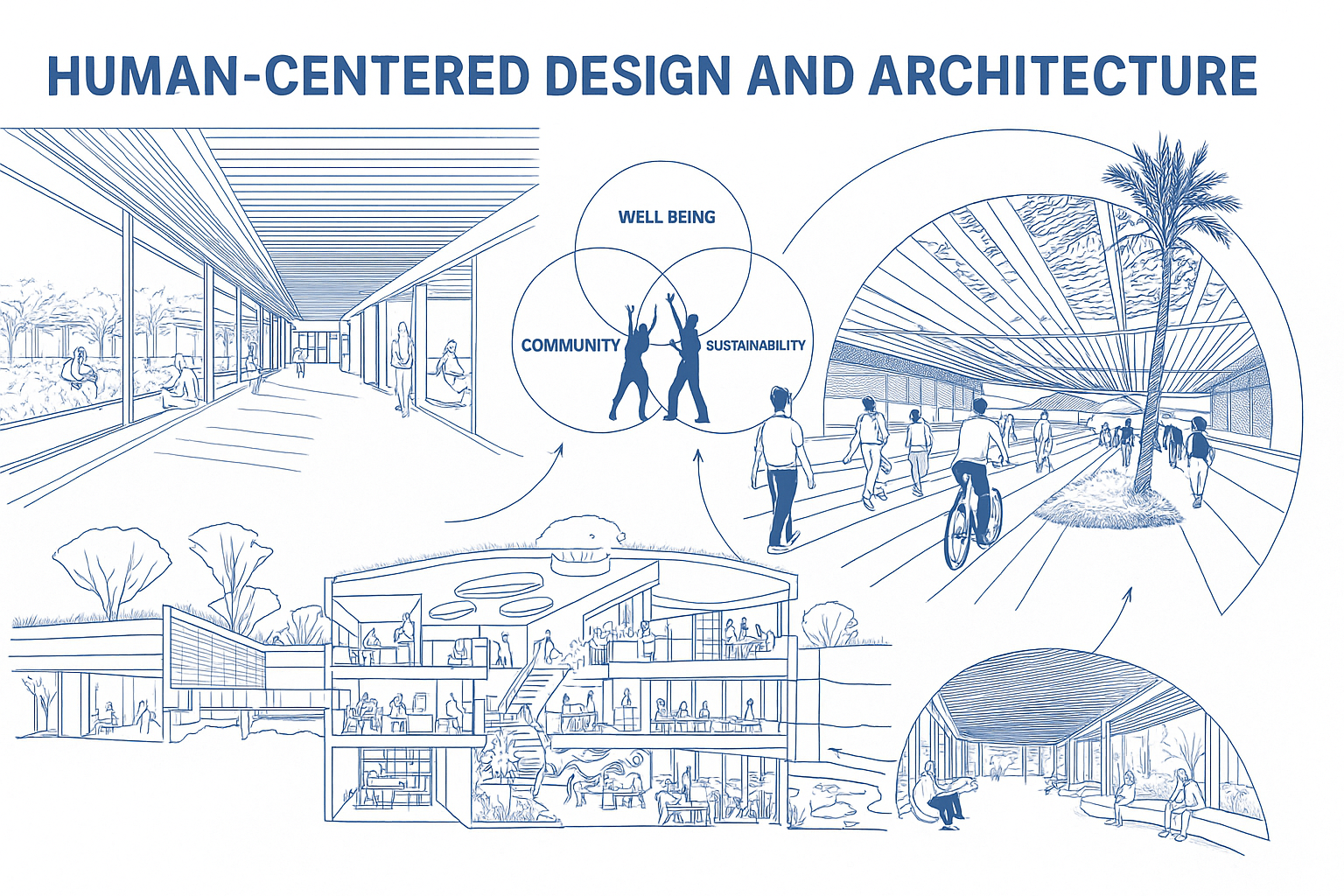
Human-Centered Design and Architecture: Enhancing the Spaces We Live In
Human-centered design (HCD) isn’t just a buzzword—it’s a powerful way to rethink architecture around the people who actually use the spaces. This guide provides real-world strategies to create environments that enhance well-being, productivity, and connection.
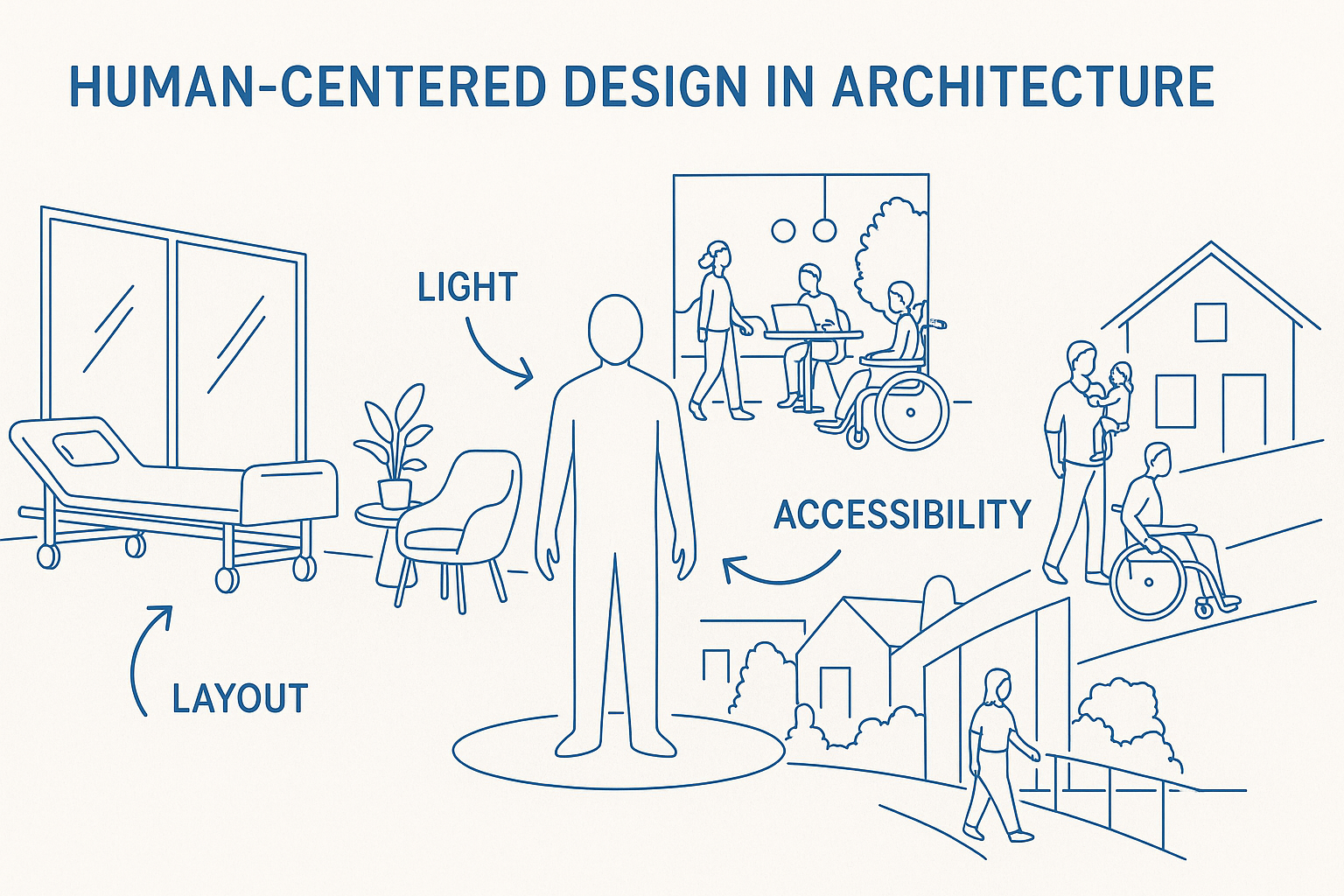
IMAGE: Illustrating human-centered architecture through adaptable lab layouts, inclusive entrances, and interaction-focused communal spaces.
Let’s study the essence of HCD with clear examples, practical strategies, and insights that you can immediately put to use.
Summary
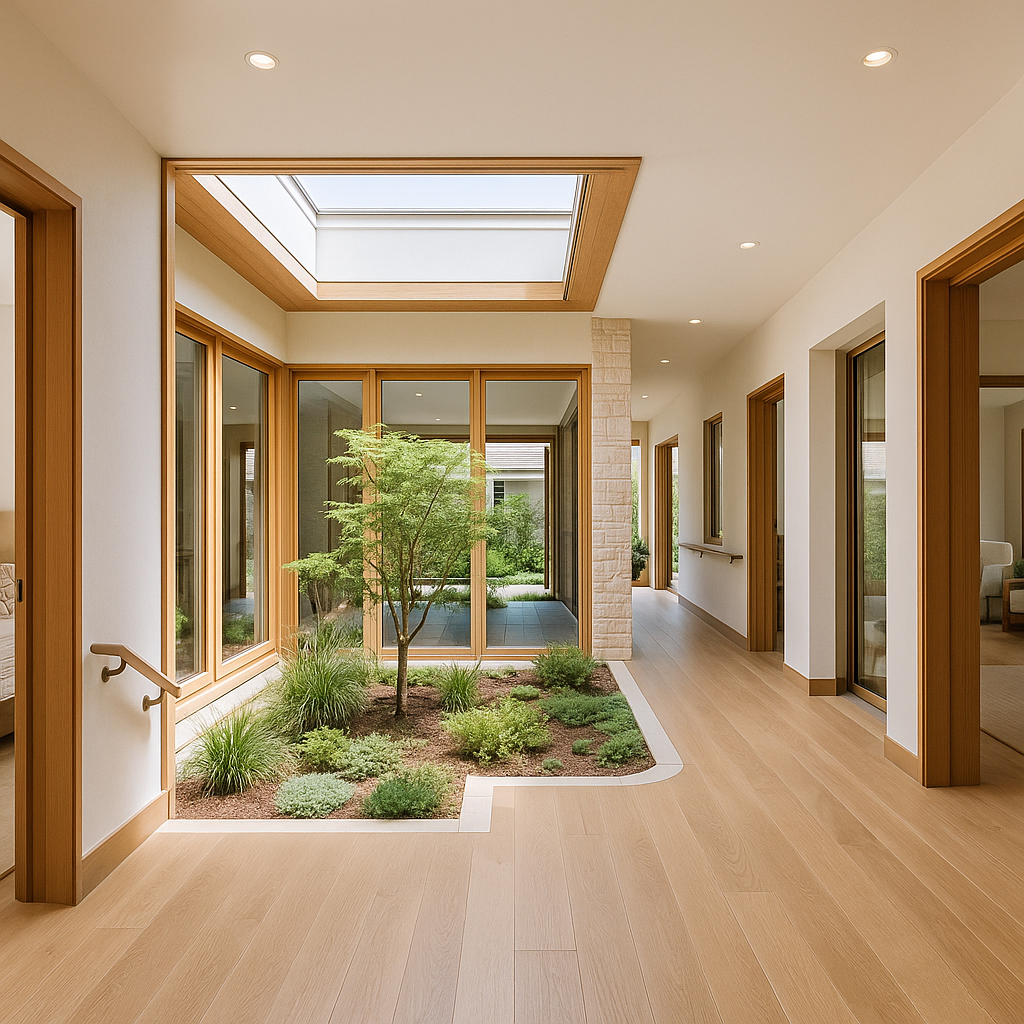
IMAGE: A spacious, light-filled multi-generational home featuring wide doorways, ramps, natural wood finishes, and a tranquil shared courtyard.
Designing with people at the center turns ordinary spaces into places that inspire, comfort, and support. Human-centered design is about understanding the users’ needs, the environment, and the purpose behind every decision.
Approach each project with curiosity, focus on how people interact with the space, and adapt as you learn.
The result?
Spaces that truly feel alive—functional, welcoming, and attuned to the lives they hold. It’s not just good design; it’s design that makes a difference.
MUST READ
- "The Design of Everyday Things" by Don Norman
What Is Human-Centered Design in Architecture?
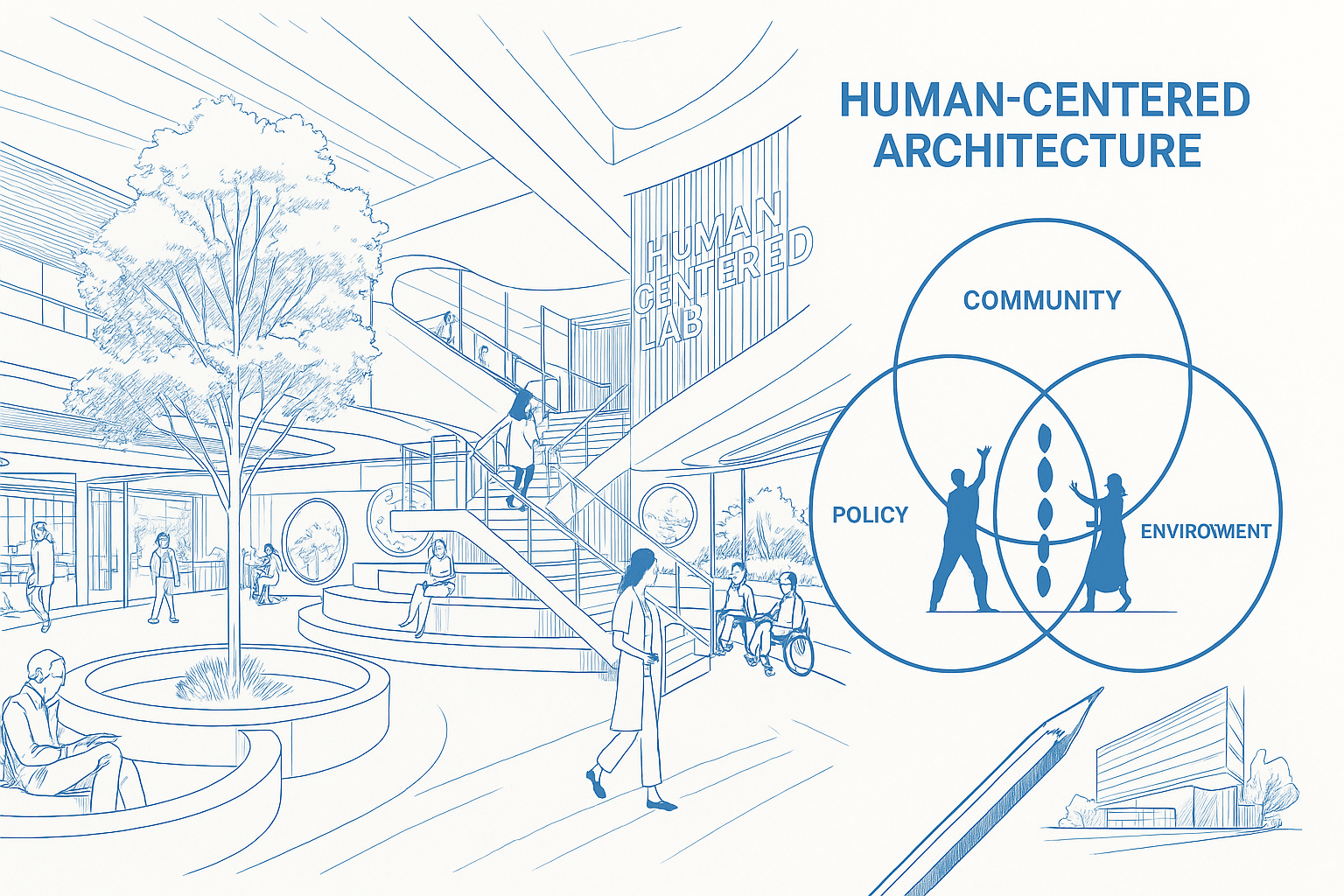
Human-centered design (HCD) focuses on designing spaces with people at the heart of every decision.
It’s not about blindly chasing trends or creating grandiose structures to impress; it’s about crafting environments that enhance how we live, work, and interact daily.
It means listening to people, understanding their needs, and shaping spaces that genuinely make life better.
In architecture, HCD involves understanding:
- How spaces are used throughout the day: From morning routines to late-night work sessions, how a space adapts to changing needs.
- What makes spaces comfortable and efficient: The little details, like acoustics, lighting, and layouts that make a room feel just right.
- How design impacts mental health, productivity, and social connections: Creating spaces that energize, calm, or foster collaboration based on purpose.
A Practical Look: Why It Matters
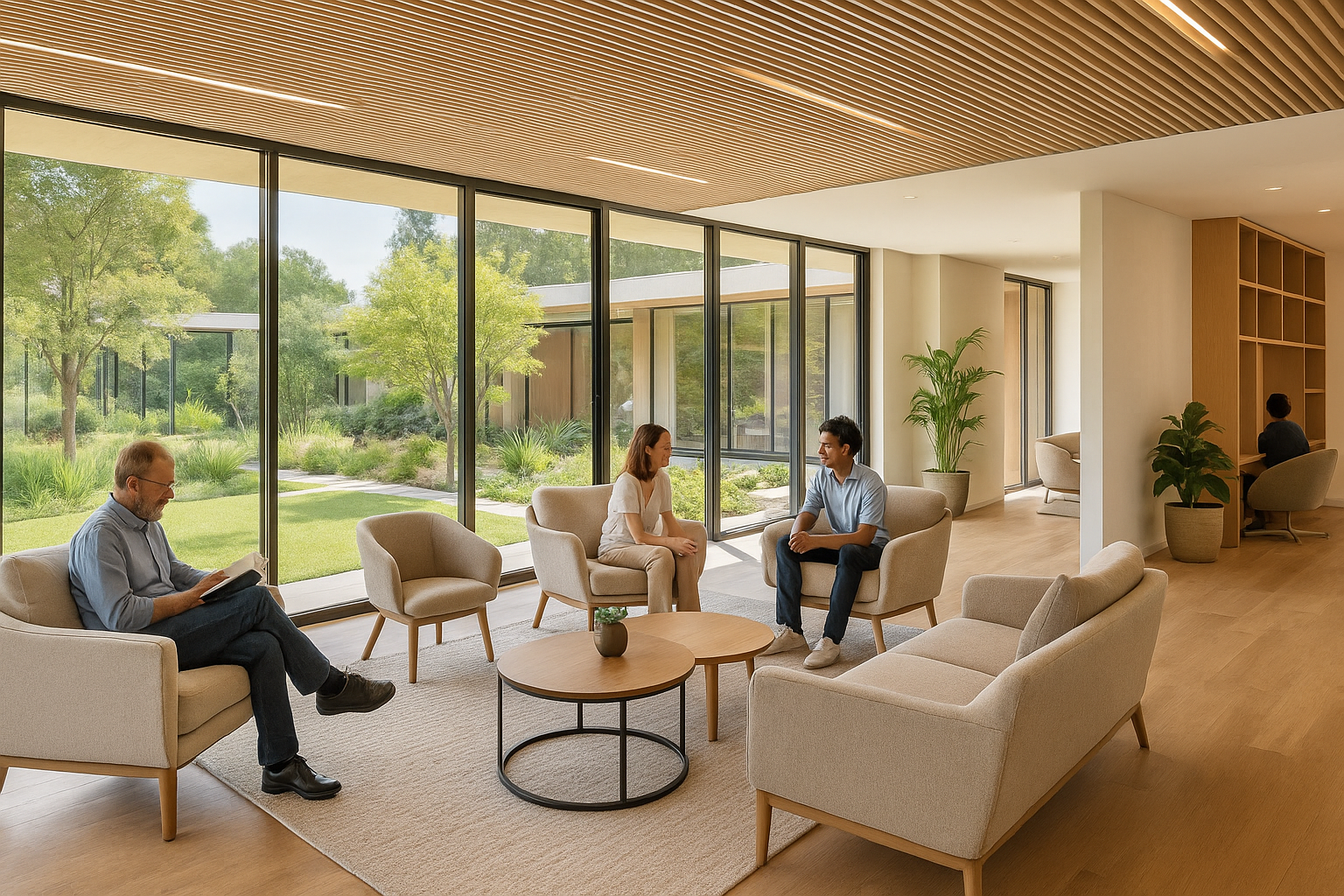
IMAGE: A thoughtfully designed communal living area with floor-to-ceiling windows, ergonomic seating, and access to a lush outdoor garden, promoting comfort and social connection.
Think about this: Have you ever walked into a room and immediately felt at ease? Or perhaps into another that made you feel tense for no clear reason?
That’s human-centered design (or the lack of it) at work.
It’s about crafting environments that intuitively meet your physical and emotional needs.
A Personal Take
While designing a coworking space, I found that traditional open-plan offices often left people overwhelmed and distracted.
The feedback was clear: some users wanted quiet spaces to focus, while others thrived in open, collaborative environments.
To solve this, we introduced:
- Semi-enclosed "focus pods" for those needing privacy.
- Open lounges with shared desks for collaborative teams.
- Acoustic-friendly materials to reduce noise pollution.
The result? A balanced workspace that catered to introverts, extroverts, and everyone in between, boosting both productivity and satisfaction.
Good Reading
- "Universal Methods of Design" by Bella Martin and Bruce Hanington
How Human-Centered Design Improves Well-Being
Good design significantly boosts physical and mental health:
- Boosts productivity: through well-lit, comfortable spaces.
- Reduces stress: using calm, nature-inspired interiors.
- Encourages connection: via welcoming communal areas.
Real-World Example: Oodi Library in Helsinki, Finland, was designed as an inclusive community hub. It incorporates soft natural lighting, dedicated quiet areas for focused activities, and nature-inspired furniture. Users report increased focus, relaxation, and happiness, making it a beloved public space.
Simple Solutions: Human-Centered Design in the Real World
How Human-Centered Design Solves Everyday Problems
Human-Centered Design at Work: Practical Case Studies
Real-Life Examples of Human-Centered Design Done Right
Human-centered design puts people first. It creates spaces that truly meet real-world needs, ensuring comfort, functionality, and a positive emotional impact. Here’s how this works in practice, with inspiring examples:
Design That Puts People First: Real Stories
1. Hospitals That Help You Heal
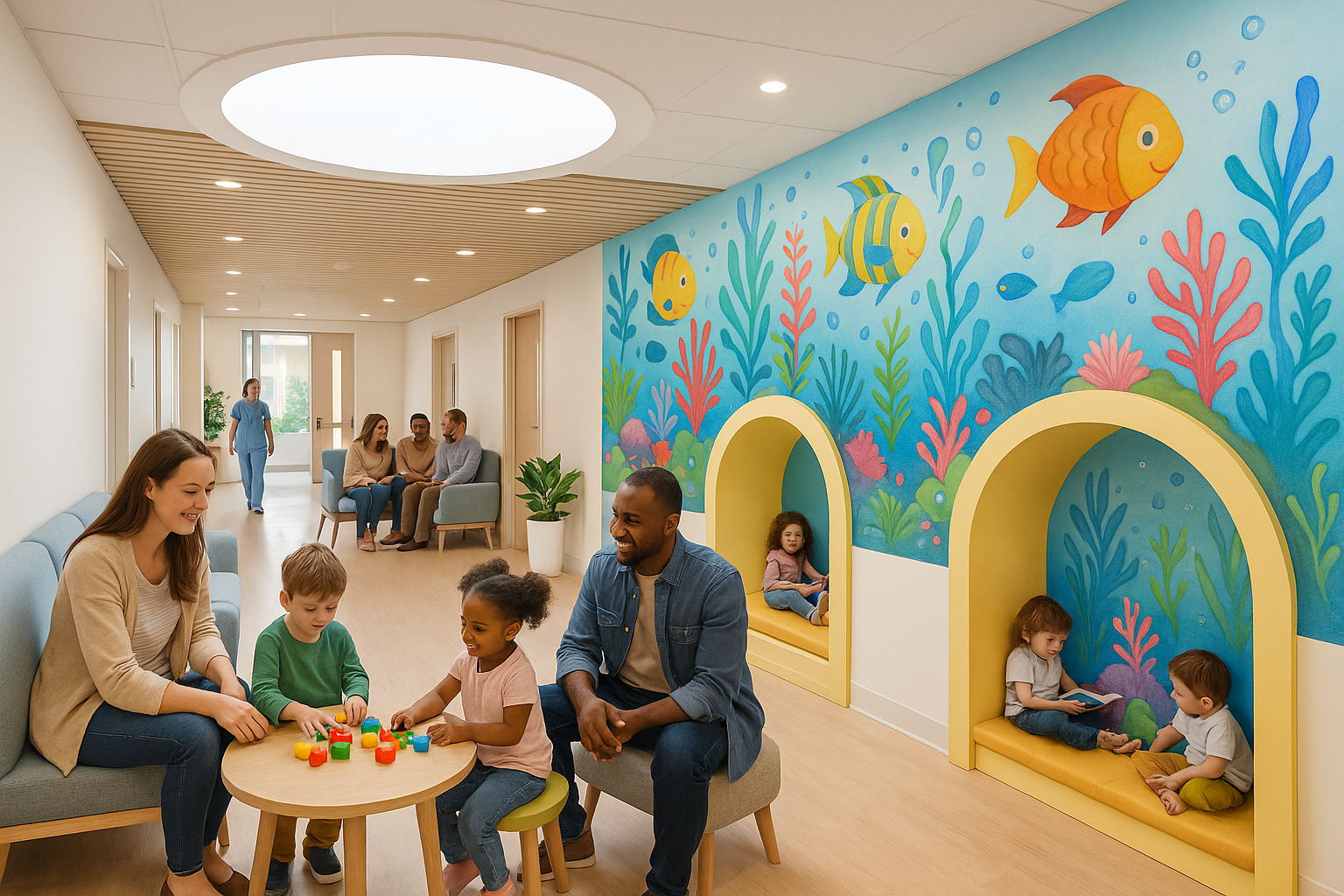
IMAGE: Human-centered pediatric hospital interior featuring vibrant underwater-themed murals, cozy child play nooks, soft seating, and warm daylight.
Forget cold and intimidating hospitals. Think about Maggie’s Centres in the UK—they’ve completely changed healthcare environments by focusing on emotional comfort.
Real Example: Maggie’s Centre in Leeds uses soft textures, gentle lighting, cozy furniture, greenery, and artwork. The space feels more like a welcoming home than a medical facility.
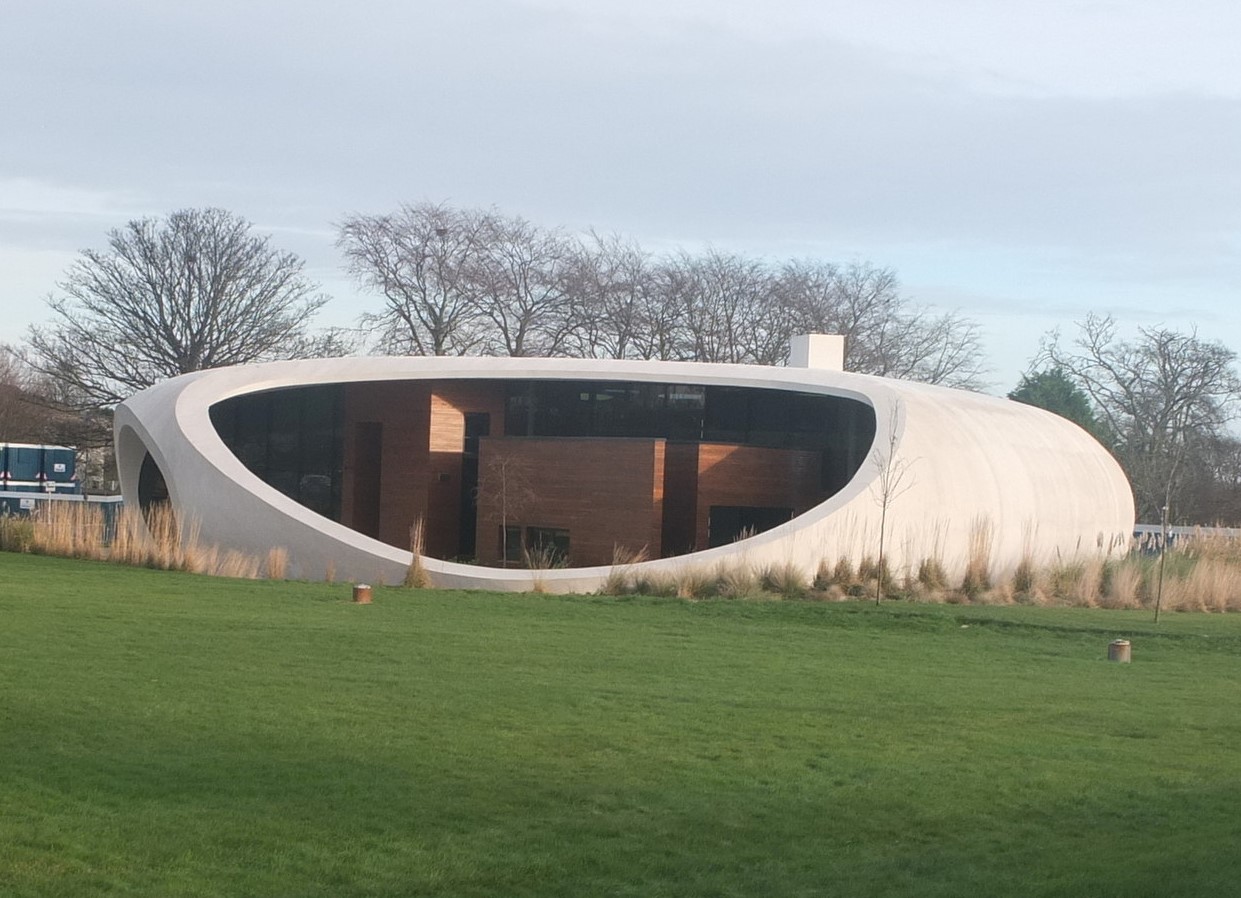
IMAGE: Human-centered design case study featuring Maggie’s Centre at Aberdeen Royal Infirmary, showing how natural materials and gentle forms support patient well-being.
→ Practical Tip: Use natural materials like wood and calming colors to create a comforting, stress-free environment.
2. Schools That Inspire Learning
Rigid, traditional classrooms don't always inspire. Schools like Ørestad Gymnasium in Copenhagen offer flexible, open designs that encourage creativity and collaboration.
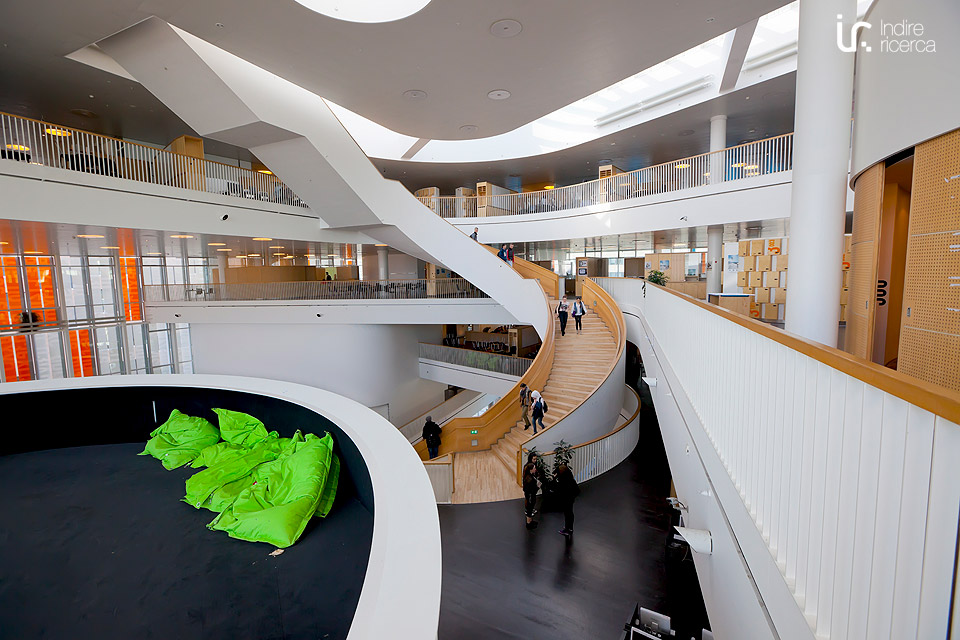
IMAGE: Ørestad Gymnasium in Copenhagen shows how open, flexible school design fosters creativity, with a central staircase that doubles as a collaborative space.
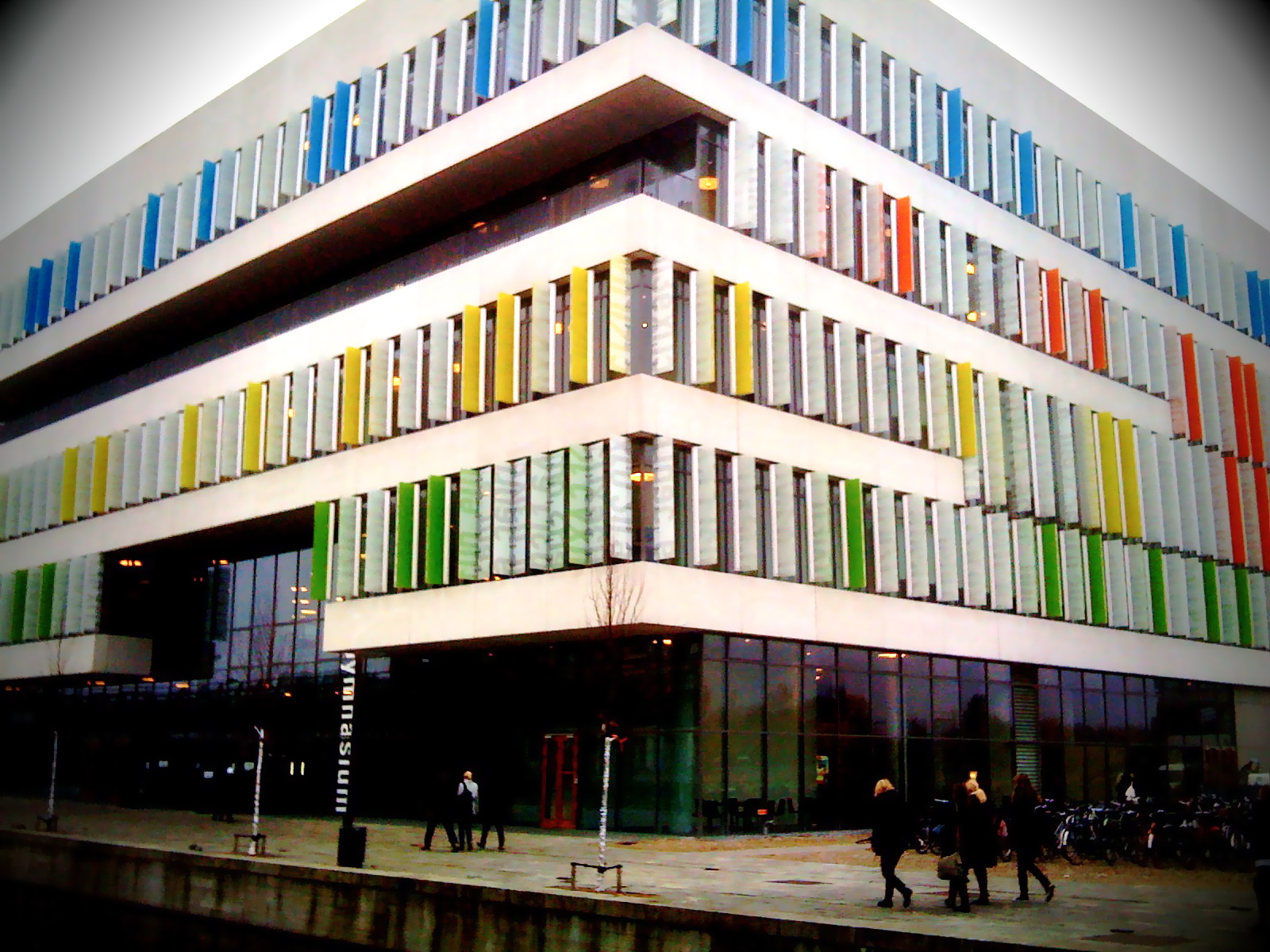
IMAGE: Ørestad Gymnasium's exterior showcasing its striking glass architecture, bold geometry, and modern educational design in Copenhagen.
Real Example: Ørestad Gymnasium’s large central staircase also functions as a communal gathering area. This design naturally promotes interaction among students.
→ Practical Tip: Design classrooms that can easily shift between group activities, quiet study, and casual socializing.
3. Homes That Fit Real Families
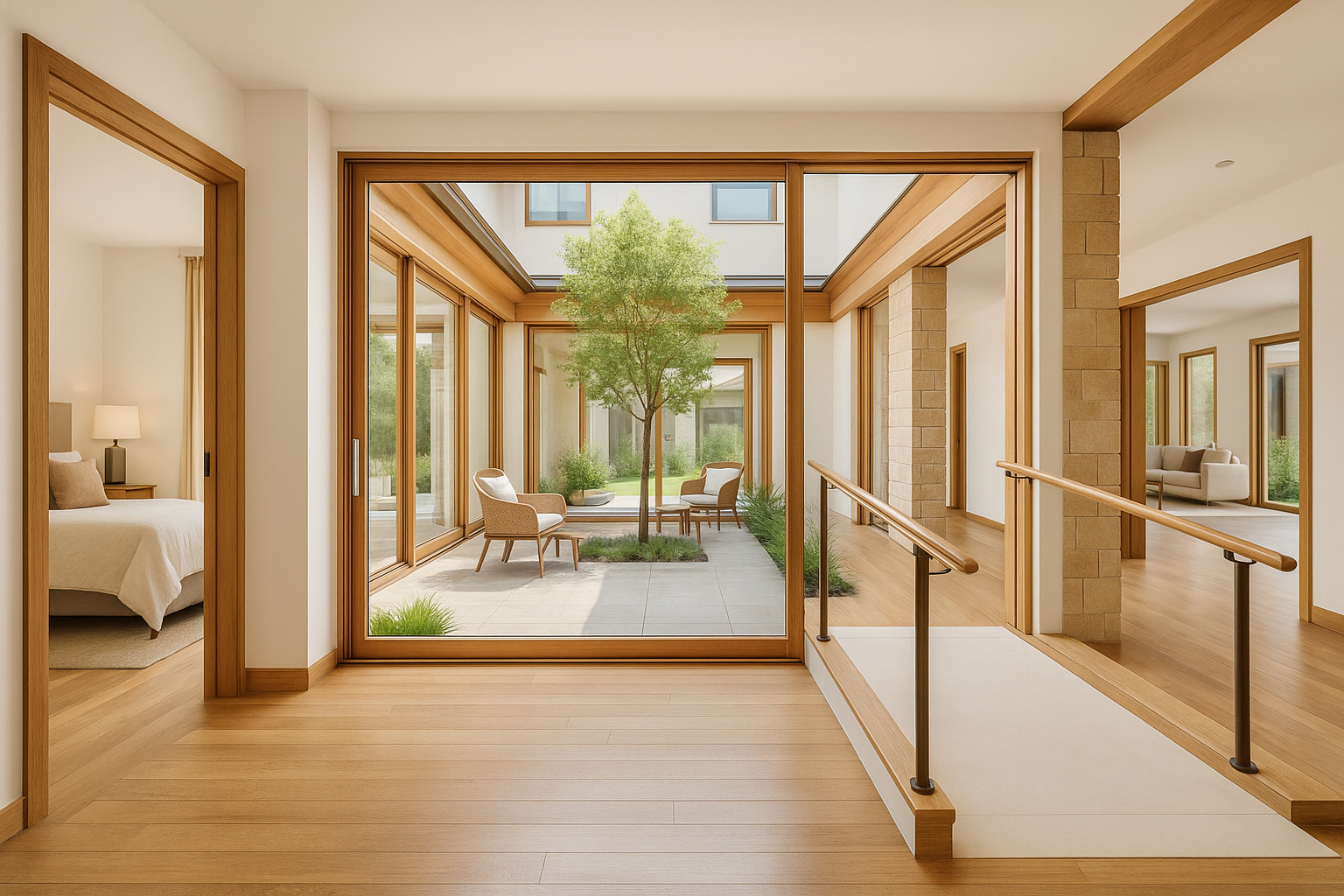
IMAGE: Spacious multi-generational residence with accessible design features like ramps, wide doorways, and private suites, centered around a sunny, open courtyard.
Designing a home for multiple generations means considering various mobility and privacy needs, along with shared spaces for family gatherings.
Real Example: A multi-generational home in Seattle included wide doorways and ramps for accessibility, private suites for individual privacy, and a central courtyard for family interactions. Natural lighting and polished wood created warmth and comfort.
→ Practical Tip: Always tailor home designs to accommodate different lifestyles, mobility challenges, and the desire for both privacy and connection.
How to Do Human-Centered Design Right
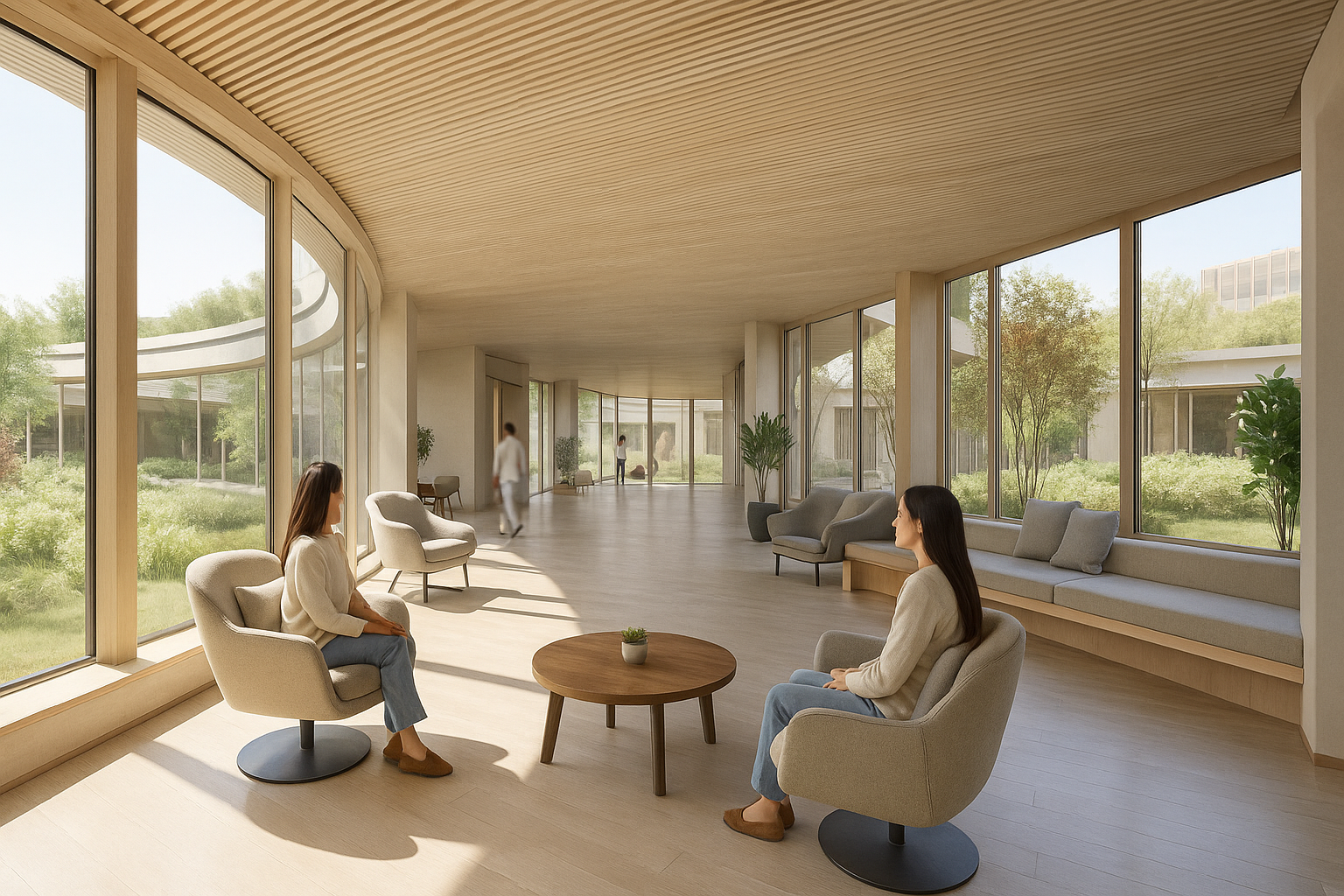
IMAGE: Spacious communal living space featuring floor-to-ceiling windows, soft natural lighting, cozy chairs, and open access to a lush garden, designed for social interaction and relaxation.
Observe Real Life First: Spend time watching how people actually use spaces. Notice what works, what doesn’t, and why.
Talk to Real Users: Engage directly with the people who will use your spaces. Surveys, conversations, and workshops provide genuine insights.
Prototype Early and Often: Test your ideas with quick, inexpensive mock-ups or temporary setups. Rearranging furniture temporarily can help you visualize better solutions.
Stay Flexible: Choose modular and adjustable furniture and partitions. These allow spaces to evolve easily over time.
Prioritize Wellness Basics: Natural lighting, good airflow, plants, and thoughtful acoustics aren't optional—they significantly impact people’s comfort and health.
Making Your Design Count
Human-centered design is about improving lives through thoughtful, practical spaces.
If you’re designing a hospital, school, or home, always start with real human needs at the center. This ensures your spaces remain comfortable, meaningful, and effective.
Related:
- Form in Architecture: Free Courses and Practical Lessons for Aspiring Architects
- Creating Beautiful and Functional Spaces: Expert Tips for All Levels
Worth Reading
- "Thinking Architecture" by Peter Zumthor
The Four Principles of Human-Centered Design
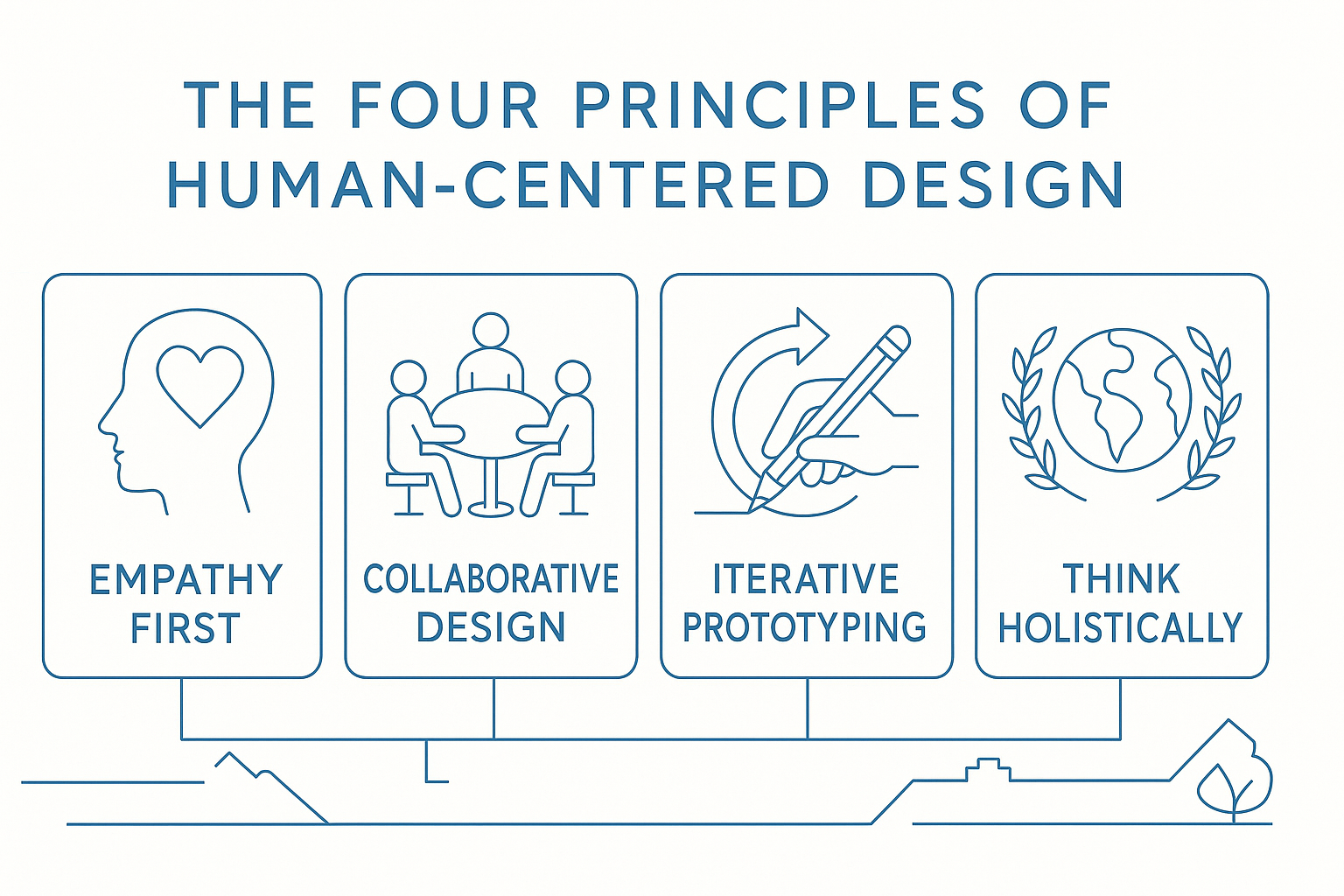
IMAGE: Infographic outlining the four key principles of human-centered design—empathy, collaborative design, iterative prototyping, and holistic thinking—with simple icons and architectural applications on a white background
- Empathy First
- Collaborative Design
- Iterative Prototyping
- Think Holistically
The Four Principles of Human-Centered Design: Real Insights and Applications
Human-centered design isn’t just about ticking boxes or following processes; it’s about rethinking how spaces truly serve the people who use them. Let’s break down the four key principles with practical examples, tips, and insights to make them actionable and impactful.
1. Empathy First: Seeing Through the User’s Eyes
Design starts with understanding the people who will use the space. It’s about stepping into their shoes, observing how they live, and asking the right questions. Empathy ensures the design isn’t just functional but meaningful.
How to Do It:
- Spend time in similar spaces, observing how people interact with their surroundings.
- Use surveys, interviews, or even informal chats to gather user insights.
Real Example:
At a pediatric hospital I worked on, we found children were scared of the sterile, cold atmosphere. To address this, we incorporated playful murals, colorful walls, and small, hidden nooks where kids could play. This didn’t just brighten the space—it made the experience less intimidating.
Tip:
Look for emotional cues. Are users calm, stressed, or disengaged in similar environments? Your design should enhance positive emotions and reduce stressors.
2. Collaborative Design: Building Together
The best designs come from diverse perspectives. Involve users, architects, engineers, community leaders, and even cleaning staff to understand all the angles.
How to Do It:
- Host workshops or focus groups where users share their expectations and pain points.
- Invite a variety of stakeholders to co-create solutions. This can reveal issues you might not have considered.
Real Example:
While designing a school, teachers mentioned that they often struggled with classroom layouts that didn’t allow for flexible teaching styles. By involving them early, we incorporated modular furniture and adaptable spaces. It transformed classrooms into zones for individual learning, group discussions, and presentations.
Tip:
Don’t just rely on professionals. The people who will live, work, or play in the space often have the best insights.
3. Iterative Prototyping: Test, Fail, Improve, Repeat
Design is never perfect on the first try. Creating small-scale prototypes or temporary setups allows you to see what works—and what doesn’t—before committing.
How to Do It:
- Use foam boards, 3D models, or even virtual simulations to visualize spaces.
- Create temporary setups like pop-up seating areas or mock room layouts to test functionality.
Real Example:
In an urban park project, we set up temporary seating areas to observe how people naturally used the space. We learned that users preferred seating near shaded trees and water features, leading us to rearrange the permanent fixtures.
Tip:
Don’t be afraid of feedback—it’s your roadmap to improvement. Look for patterns in what users like or avoid.
4. Think Holistically: The Bigger Picture
Great design doesn’t exist in isolation. It considers cultural, environmental, and social factors to create spaces that feel authentic and relevant.
How to Do It:
- Study the local climate, culture, and community values before starting.
- Ensure the design integrates with its surroundings, both visually and functionally.
Real Example:
For a community center in a desert climate, we included shaded courtyards, natural ventilation, and water features to cool the space. Beyond comfort, these features created gathering areas that became the heart of the community.
Tip:
Ask yourself: Does the design feel like it belongs in its environment? If it feels out of place, revisit your approach.
A Practical Framework for Applying These Principles
- Start Small: Test ideas through sketches, mood boards, or small models.
- Engage Early: Talk to users before the design process begins and keep them involved.
- Iterate Often: Make improvements as feedback rolls in, whether it’s a design tweak or a complete overhaul.
- Context Matters: Consider not just who will use the space but where it exists—its environment, culture, and future use.
Why It All Matters
Human-centered design isn’t a luxury—it’s a necessity. Spaces designed with empathy, collaboration, and adaptability don’t just look good; they work seamlessly for the people who use them. Whether it’s a small park bench or a sprawling urban development, the principles of HCD ensure every element has a purpose.
Quick Tip:
Next time you visit a public space or a building, ask yourself:
- Does this space feel intuitive?
- How does it cater to different needs and emotions?
- What small changes could make it even better?
These questions will help you see design not just as an art but as a tool for improving lives.
The Three Phases of Human-Centered Design
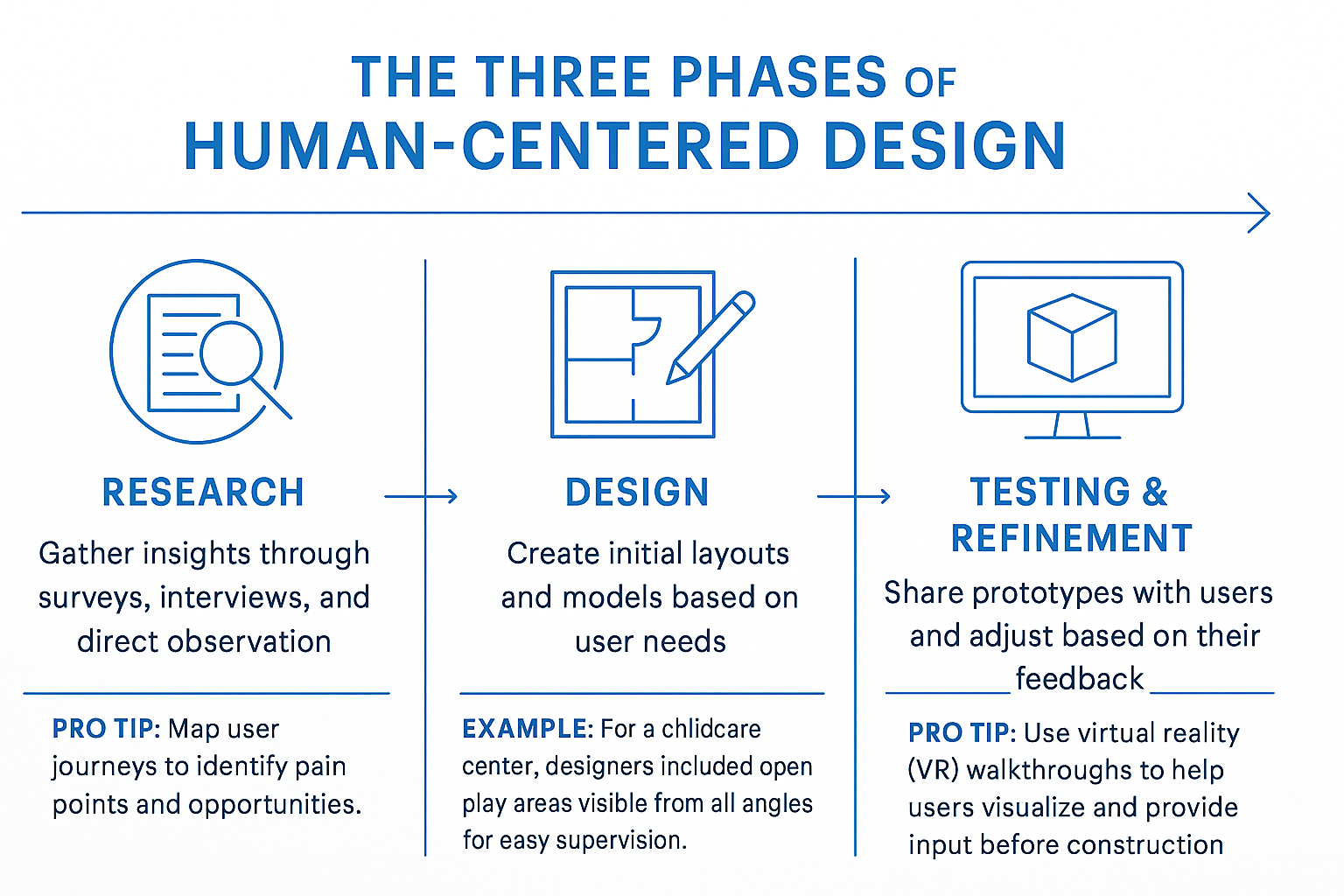
IMAGE: Clean infographic outlining the three phases of human-centered design—research, design, and testing—with practical tips and a childcare design example.
Human-centered design is a living process. It doesn’t follow a fixed formula—it evolves through research, imagination, and honest feedback. Here’s how the three phases of HCD unfold in the real world:
1. Research: Understand People First
Before anything is drawn or built, you need to understand who you're designing for.
- How to do it: Conduct interviews, shadow users in their daily routines, and use surveys to collect both emotional and functional insights.
- Pro Tip: Create user journey maps to track how someone navigates a space—from confusion at entry points to ease or frustration using facilities.
Real Example: For a senior living community in Toronto, architects spent days speaking with residents and staff. They discovered that many residents avoided using certain hallways due to poor lighting and confusing signage. This insight guided an overhaul with brighter lighting, wider corridors, and intuitive color-coded wayfinding.
2. Design: Turn Insights into Ideas
Once you understand what users need, start designing with those insights in mind.
- How to do it: Create sketches, digital models, or physical mock-ups that reflect the priorities gathered in the research phase.
- Pro Tip: Don't just design for one type of user. Think about edge cases—children, people with mobility issues, and neurodivergent users.
Real Example: In a new childcare center in Vancouver, designers created open play areas visible from all staff angles. They also added quiet sensory zones for children needing downtime and included adult-friendly seating for caregivers—blending child safety with adult comfort.
3. Testing and Refinement: Build, Test, Improve
Great design isn’t perfect on paper. It takes real-world testing and adjustment.
- How to do it: Share prototypes with actual users. Set up test layouts or virtual walkthroughs. Collect feedback, tweak, and repeat.
- Pro Tip: Use tools like VR or AR to let users “walk through” the space before it's built, especially helpful for non-technical stakeholders.
Real Example: For a downtown library redesign in Montreal, designers created full-scale cardboard mock-ups of furniture arrangements and invited the public to walk through and give feedback. Parents noted stroller access issues, while teens requested more private nooks. These simple observations shaped the final build.
Key Takeaway: These three phases—research, design, and refinement—aren’t just steps. They’re a cycle. The more you return to your users, the better your design becomes. Because in the end, the best architecture doesn’t just look good—it feels right.
Practical Exercises to Explore HCD
- User Shadowing:
Spend a day observing how people interact with a space. Note inefficiencies, areas of frustration, or things they naturally gravitate toward. - Scenario Testing:
Test different layouts or designs with temporary setups. For example, rearrange furniture in your home to see how flow and comfort improve. - Feedback Loops:
Ask friends or family how a specific space makes them feel and what could be better.
Designing for Neurodiversity
An often overlooked aspect of human-centered design is creating spaces accommodating neurodiverse individuals. This includes people with autism, ADHD, or sensory sensitivities, who benefit significantly from thoughtful design elements like:
- Sensory-friendly areas: Quiet, low-light zones for reduced stimulation.
- Clear spatial organization: Predictable, intuitive layouts for easy navigation.
- Flexible furnishings: Adjustable lighting and modular furniture to suit varied sensory preferences.
Real-World Example: The Els Center of Excellence in Jupiter, Florida, designed specifically for autistic users, includes sensory-calming rooms, clear signage, and predictable layouts. Users report lower stress and improved focus, making daily tasks easier and more enjoyable.
Tip: Small adjustments like dimmable lights and quiet nooks can vastly improve comfort for neurodiverse users.
Best-Selling Books
(and Why They’re Worth Reading)
- "The Design of Everyday Things" by Don Norman: Why read it: Learn how intuitive design makes daily interactions effortless and satisfying.
- "Universal Methods of Design" by Bella Martin and Bruce Hanington: Why read it: Offers practical, easy-to-apply methods for effective human-centered design.
- "Thinking Architecture" by Peter Zumthor: Why read it: Provides thoughtful insights into creating meaningful and emotionally impactful spaces.
Explore these titles for deeper insights into making your spaces truly people-focused.
Final Thoughts
Human-centered design isn't merely good design—it's essential.
By genuinely understanding and prioritizing user experiences, architects can create spaces that resonate deeply, support diverse needs, and significantly enhance everyday life.
When we design with empathy and insight, we don’t just build spaces—we improve lives.
FAQ
Q: How does HCD differ from traditional design?
HCD focuses on people first, while traditional design often emphasizes aesthetics or functionality without considering user experience.
Q: Can small spaces benefit from HCD?
Absolutely! Even a tiny apartment can be optimized for comfort, flow, and usability by prioritizing the occupant’s needs.
Q: How do I start applying HCD principles in my own projects?
Begin with research—observe how people use spaces similar to what you’re designing, and ask them what they wish was different.
Related
- Human Values and Environmental Studies
- Frank Lloyd Wright: Merging Form and Function in Architecture
Resources
- Books:
- Designing for People by Henry Dreyfuss
- The Design of Everyday Things by Don Norman
- Courses:
- Organizations:
- Case Studies and PDFs:
- Download government and academic papers on inclusive and sustainable architecture.