
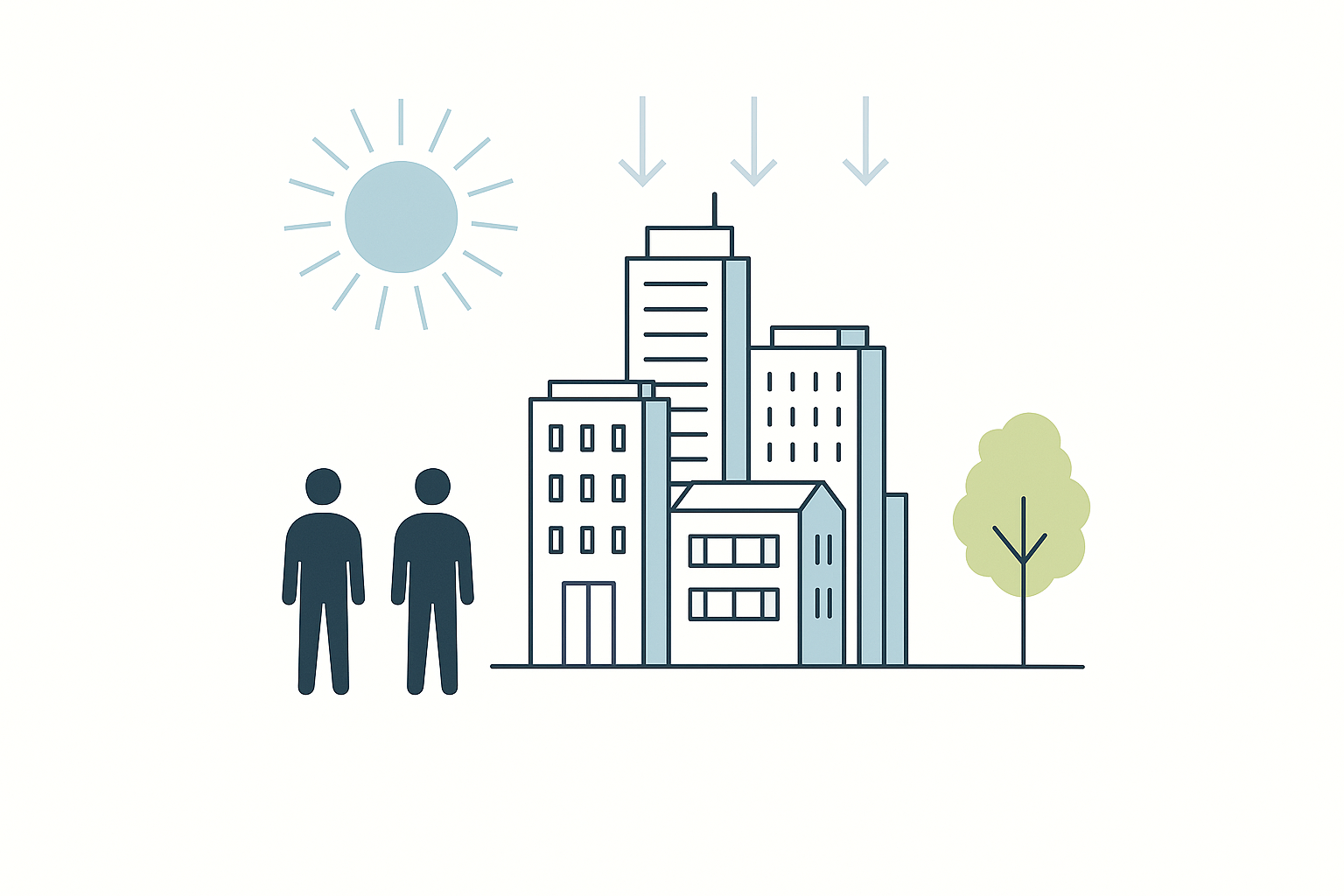
Architecture is shifting because cities are getting denser, the climate is getting tougher, and people want buildings that work better for everyday life. Those three pressures — cities, climate, people — will drive most briefs in the next decade, no matter which software or AI stack is behind the drawings.
If you want the tech side of this topic, see AI-based building design guide. This page stays on the real-world forces.
Cities Are Filling Up Faster Than We’re Designing for Them
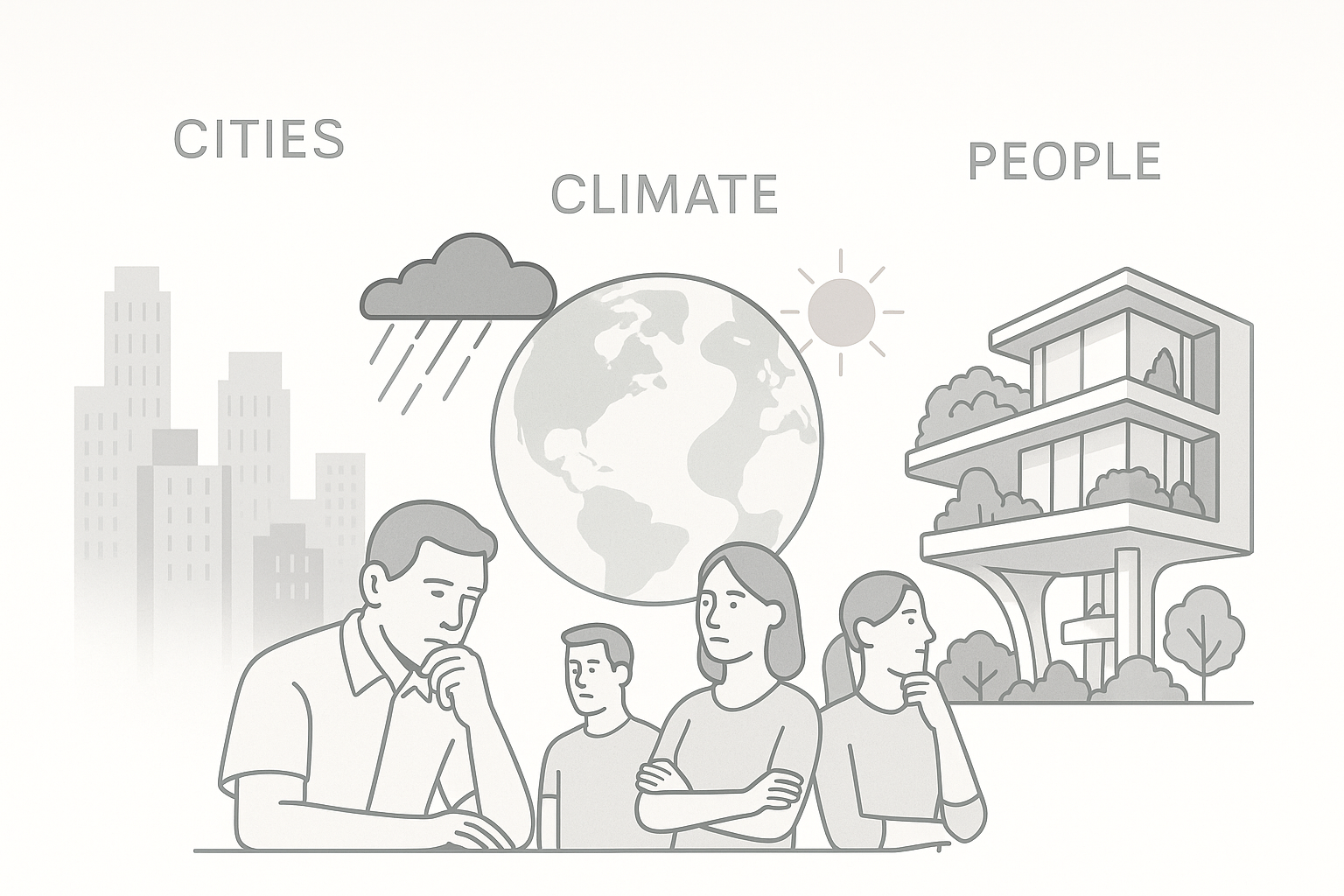
Urban growth means more people on the same piece of land. That breaks the old pattern of wide plots, deep setbacks, and car-first layouts. The answer is to do more on less ground without killing street life.
- Mixed-use instead of single-use: one building doing homes + work + services gives more back to the city than one program only.
- Good ground floors: active street edges, not blank parking walls.
- Transit-aware planning: projects tied to metro, bus, or bikes will age better than “everyone drives here.”
This pushes architects toward tighter sections, clearer circulation, and earlier talks with planning about height, shadow, setbacks, and public realm.
Climate Is a Design Input Now
Flooding, heat spikes, storms, higher energy prices — these are now in the brief. Clients want buildings that still work in 2040 weather, not just in the year the code was written.
- Start low-energy: orientation, shading, envelope, and passive moves before mechanical systems.
- Design to survive events: raised entries, protected plant rooms, safe egress when power is out.
- Lower-embodied-carbon choices: owners will start asking once regulations tighten.
For a broader future view, see forward-looking architecture trends.
People Want Buildings That Feel Good to Use
Accessibility, inclusion, daylight, and air quality are no longer “extras.” Aging populations and post-pandemic users notice comfort fast.
- Equal access built in: proper routes and entries for everyone.
- Healthy interiors: daylight, views, controllable ventilation, and low-VOC materials.
- Human spaces: terraces, breakout areas, shared kitchens — not just efficient floor plates.
Framing it as “better user experience” makes it easier to sell to owners.
Resilient and Readable Buildings
Operations teams want buildings they can understand and tune. That puts pressure on layouts and services.
- Enough space for future kit in plant rooms and risers.
- Sensors and controls planned early so ceilings don’t get hacked later.
- Data for operation so the building can be adjusted, not rebuilt.
As weather and energy costs get harder, owners will ask for buildings that can run lean.
Policy and Codes Will Keep Tightening

Energy, accessibility, stormwater, and even heritage rules are trending stricter. Designing only to today’s minimum makes the building look old sooner.
Designing slightly ahead can mean:
- reserving roof space for PV,
- planning for EV charging,
- sizing stormwater for heavier rain.
That gives the client a building that stays compliant longer.
Different Places, Different Pressure Levels
These forces hit teams differently:
- Students: climate-first and mixed-use should be standard in studio.
- Small residential/interior firms: comfort, daylight, and air are the easiest wins.
- Urban/public projects: density, transit, and resilience dominate.
- Fast-growth or hotter regions: population, heat, and cost come before fancy skins.
Show the Pressure in the Way You Present
When cities, climate, and people are the drivers, the design story should say so:
- “This plan keeps daylight in a dense block.”
- “This roof and entry detail is flood-aware.”
- “This lobby works for wheelchairs and strollers.”
That’s the language planners and public clients understand.
Live-Mode Design
Using AI in the Meeting
Most teams still improve images and notes after the meeting. AI makes it possible to do part of that while the client is still there.
Example: the client asks for a brighter lobby with a warmer finish. Export the view, run it through your AI-enhanced rendering path, and show the updated version in the same review. That turns design into collaboration.
- Less friction: no overnight loop for a small change.
- More trust: the client sees it, not just hears about it.
- Better fee protection: fast answers = fewer late changes.
What’s needed
- a clean BIM/model view to export fast,
- an AI render/polish step,
- someone in the room who can confirm what’s actually buildable.
This works the same way for interiors, urban massing reviews, and contractor clarifications.
Resources for Climate and Performance
For readers who want to dig deeper, these are good follow-ups:
1. Renewable energy and building systems
2. Sustainability fundamentals
3. Materials for lower carbon
- low-carbon concrete choices
- bamboo strategies for warm climates
4. Real projects
Final Take
Tools will change every year. The pressures won’t. Cities will keep getting tighter, weather will keep getting harsher, and people will keep asking for buildings that don’t wear them out. Designing with those three in mind keeps the work relevant even when the AI or rendering trend changes.
FAQ
1. Do I have to rebuild my whole workflow?
No. Keep your current BIM setup and add AI or fast visualization where it clearly saves time.
2. Will AI make everything look the same?
Only if you accept the first output. Feed it your own projects and local materials to keep it regional.
3. Can small studios do this?
Yes. Small teams often get the biggest benefit because one person can now show multiple variants in a day.
4. How do I stop AI from overpromising?
Keep a human gate: AI shows the look, the architect confirms structure, code, and cost.
5. Can AI help with climate-responsive work?
It can flag obvious issues — too much glass, bad orientation, no shading. Final performance still needs real tools and engineering.
6. What about client confidentiality?
Don’t upload sensitive or unreleased drawings to public tools. Use private or on-prem solutions and keep a record of AI-generated material.
7. What’s the easiest way to start?
Export one view, run it through an AI enhancer, and show that version. If it helps the conversation, do more.
8. How do I prove this to the team?
Show time saved on a real task — for example, from 6 hours to 2 hours on a concept package. Time is the clearest argument.