
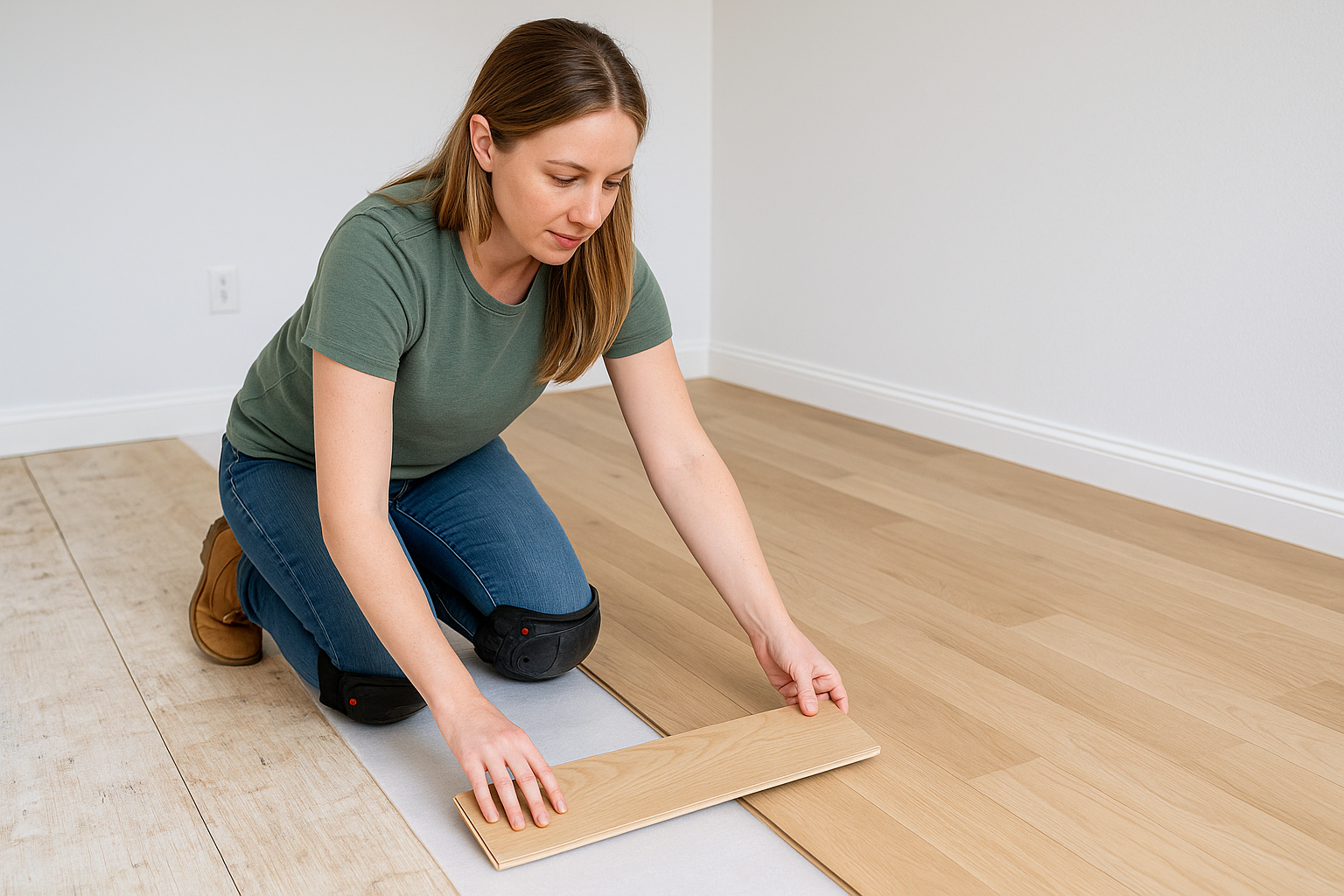
How I Install Hardwood Floors Over Wood Subfloors
I’ve put in enough hardwood floors now to know this: the wood is rarely the problem. Most of the time when a floor squeaks, cups, or opens up, it’s because someone rushed the prep or skipped a step under the finish.
In this walkthrough I’ll show you how I install hardwood over wood subfloors in a typical bedroom or living room. Same process I use in my own house and on jobs where I do not want a callback.
If you want to see where this fits in the bigger picture of the house, it helps to know how the whole floor stack works. I keep this nearby as a quick reference: how floors in a house carry weight from joists to finishes .
A Straightforward Guide To Laying Hardwood Over Wood Subfloors
What I Check Before Installing Any Hardwood Floor
What I Look At Before I Even Buy the Flooring
Before I start talking species and stain colors, I look at three things:
- Is the structure under the room solid?
- Is the subfloor thick and flat enough?
- Is hardwood the right choice for how this room is used?
On older houses I like to go one step down and look at the framing from below. You can tell a lot just by sighting along the joists and seeing if they sag, twist, or change direction at weird spots. If you want a deeper dive on this side of things, this breakdown of how joists, beams, and subfloors actually work together is worth a read before you commit heavy hardwood to a bouncy frame.
Then I think about the room itself. Bedrooms, hallways, and living rooms are usually good candidates for hardwood. Bathrooms and laundry rooms are more risky. Kitchens sit in the middle. If the client is still choosing, I’ll sometimes point them to a simple explainer on picking floor materials by use instead of just by looks . That talk alone has saved a few kitchen floors from bad decisions.
MUST READ
Visual Handbook of Building and Remodeling – Charlie Wing
Nice to have on the bench. Clear drawings of floor layers, subfloors, and details you’ll see in real houses, not just new builds.
Step 1 – Walk the Room and Find the Problems
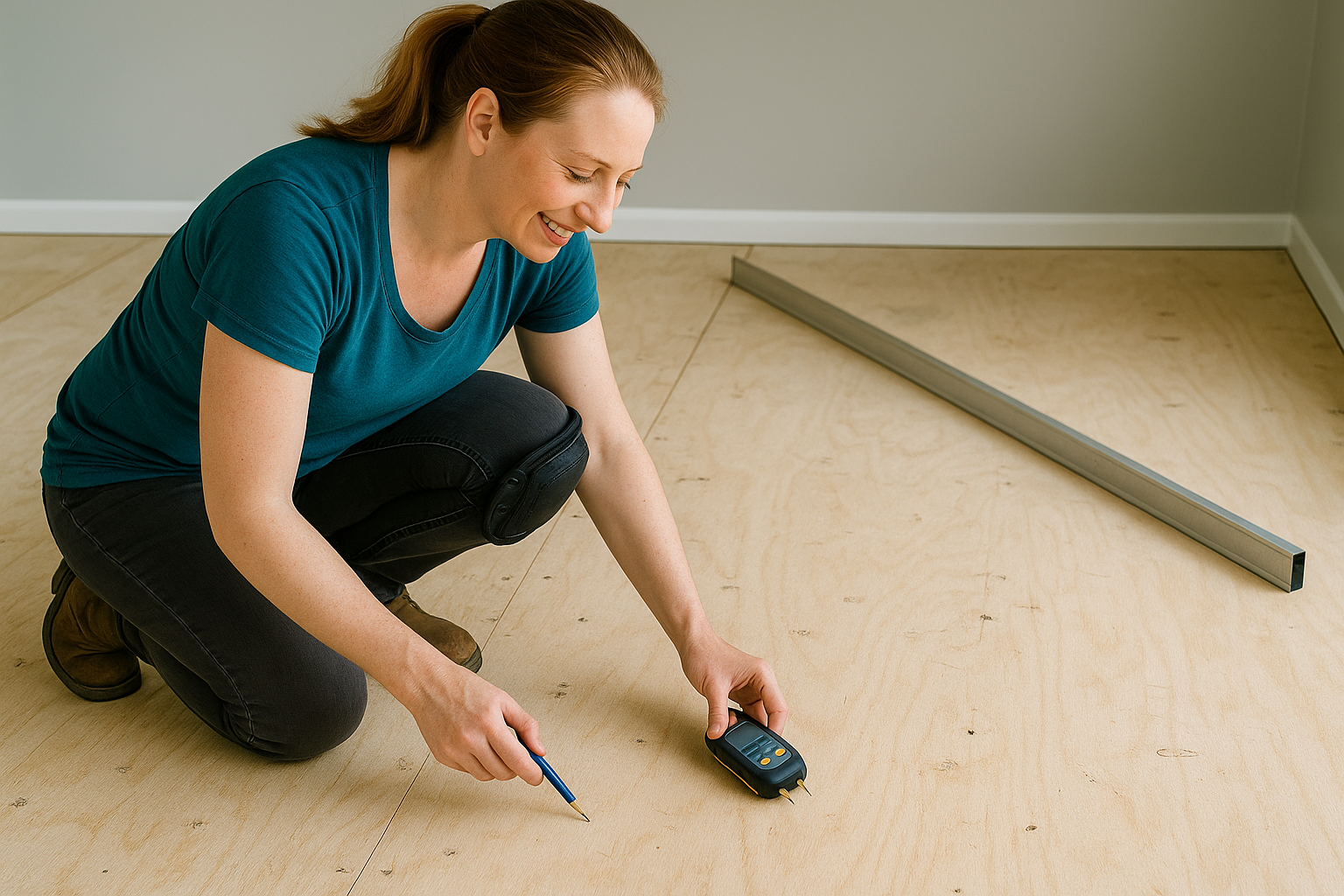
My first “tool” is my feet. I walk the whole room in stocking feet and just feel for trouble:
- Soft spots
- High seams
- Squeaks and pops
- Big dips from one side to the other
If I feel a bounce in one corner or hear a squeak near a doorway, I mark it with a pencil right on the subfloor. Those spots always come back to haunt you if you ignore them.
Then I bring in a long straightedge or an 8' level and drag it across the floor. Anywhere I can slip a pencil under the edge, I know I’ve got a low spot. Anywhere it rocks, I’ve got a high ridge or a crowned joist underneath.
Next, I look for old fasteners and junk that will fight the new floor: carpet staples, broken screws, random nails, stray drywall screws that somebody dropped. All that has to go. A single stubborn staple can make one board refuse to sit flat.
FIELD TOOL PICK
General Tools Moisture Meter
Simple little meter that lives in my tool bag. Not laboratory-grade, but plenty good for “too wet / safe to cover” decisions.
The Sound Test: How I Know If a Subfloor Is Ready Without Looking
Before I install hardwood, I listen to the floor. Literally.
Once the subfloor is screwed down and patched, I walk the room in soft shoes and pay attention to what I hear and feel. A good subfloor sounds “dead” and solid. No echoes, no hollow thumps, no crunching. When I hit a spot that sounds different, I stop and figure out why before I cover it forever.
Here is what different sounds usually mean for me:
- Sharp squeak: wood rubbing on a loose nail or screw, or two pieces moving against each other.
- Hollow thump: a gap between the subfloor and the joist, or a spot that never got proper adhesive.
- Crunch or grit noise: debris trapped between layers or underlayment that was not cleaned up.
I take a short 2×4 and tap the surface in a grid. It takes a few minutes, but it tells me a lot. A tight area sounds dull. A bad area rings or echoes. Once you have heard it a few times, your ear knows the difference faster than your level does.
When I find a suspect spot, I do one of three things. If it is a squeak, I add screws into the joist until the noise disappears. If it is hollow, I may have to pull a panel and fix the support, or drive in structural screws designed to pull the panel down tight. If it is grit, I vacuum, scrape, and vacuum again. No exceptions.
This sound test is how I avoid that phone call six months later: “The new floor is squeaking, can you come back?” Most of those calls come from jobs where nobody listened to the base. They just trusted that if it looked flat, it was fine.
MUST READ
Visual Handbook of Building and Remodeling by Charlie Wing
Good drawings of floor assemblies and subfloor details. Easy to flip through when you want a visual for what is happening under your hardwood.
Step 2 – Check Moisture in the Subfloor and the Room
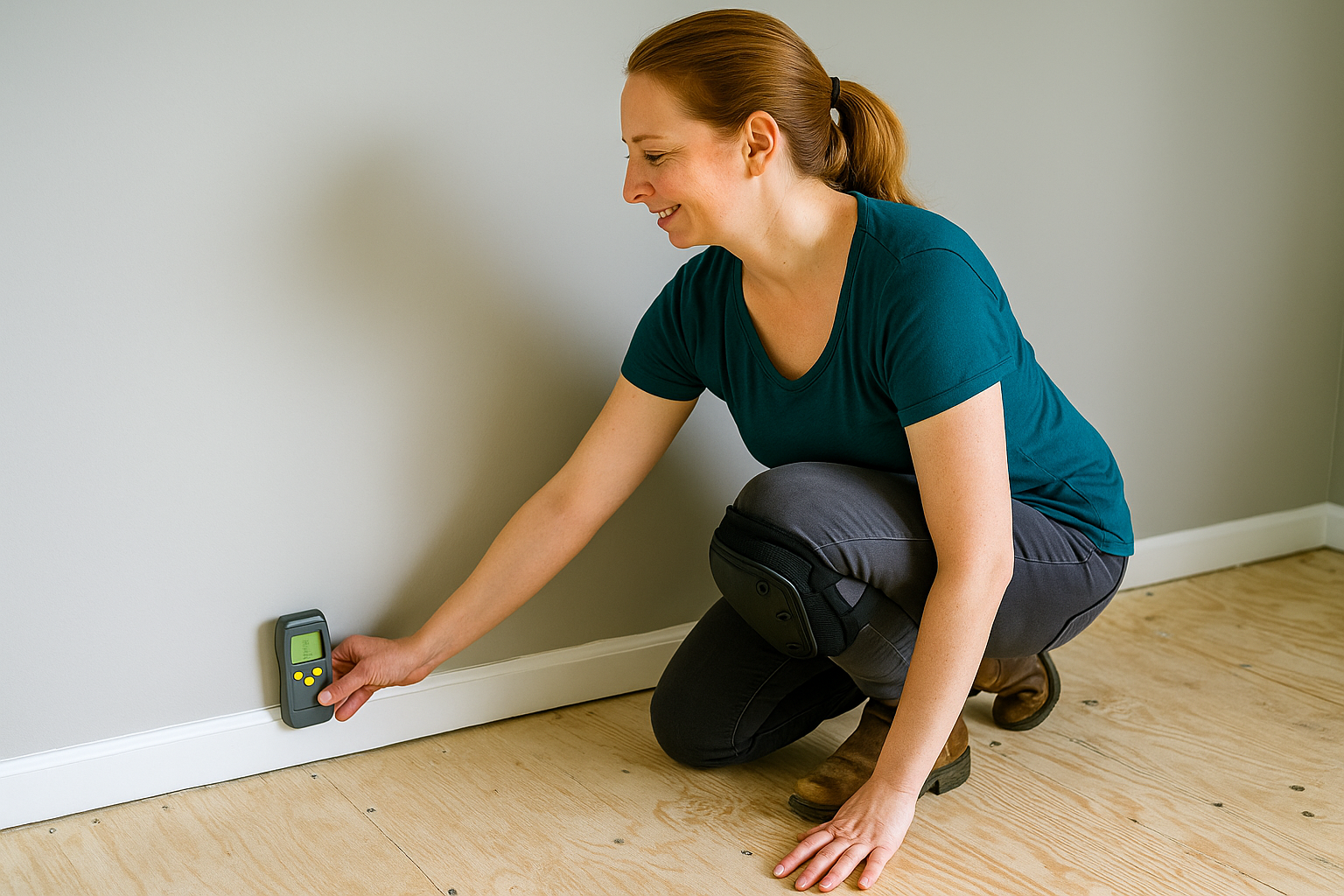
Hardwood and moisture have a long, messy history together. If you rush this part, the floor will remind you later with gaps, cupping, or both.
I start with the subfloor. I press the moisture meter into a few spots:
- Along exterior walls
- Near plumbing stacks or bathrooms
- Over crawl spaces or unheated areas
If readings are way higher in one area, I slow down and figure out why. Maybe the crawl space is damp. Maybe there’s a hidden leak. No point installing expensive hardwood over a sponge.
Then I think about the room itself. Is this a basement bedroom? Does the house live in a very humid climate with no air conditioning? In those cases, I’m extra careful. Sometimes I’ll run a dehumidifier in the space for a week before we even carry in the boxes.
MUST-HAVE TOOL
hOmeLabs Energy Star Dehumidifier
Great for getting a damp room under control before hardwood goes down. Less swelling, fewer surprises later.
Why I Always Check Humidity Before Nailing Anything
Before I fire a single nail, I look at two things: the wood and the air it is about to live in. Wood listens to humidity more than it listens to you. If the air is wild, the floor will be wild later.
I keep a cheap little hygrometer and a moisture meter in my kit. Nothing fancy. One tells me what the room is doing. The other tells me what the boards are doing. If the room is sitting at 35–55% relative humidity and the boards are in the same ballpark, I relax. If the room is damp or bone dry, I slow down.
Here is why this matters. If you nail down hardwood when it is swollen from high humidity, it will shrink in winter and open gaps. If you install it when it is too dry, it will swell in summer and push against itself until something gives. Most “mystery” gaps and buckles are not mysteries at all. They were built in on day one.
On a real job, it looks like this. I bring the flooring inside, open the boxes, and let it sit. While it acclimates, I check the room. If I walk into a house and the windows are sweating, the basement smells damp, and the hygrometer is screaming high numbers, I do not rush. I deal with the moisture first. Sometimes that means running a dehumidifier for a few days. Sometimes it means finding a leak or a wet crawl space before I install thousands of dollars of wood.
I also think about how the house is used. A kitchen that sees a lot of cooking steam or a mudroom that gets wet boots all winter will move more than a quiet bedroom. I build that into my gaps and my expectations. The more the climate swings, the more I respect expansion.
Once the room and the wood are in a reasonable range, I start. Not before. It is boring. No one posts pictures of a hygrometer on social media. But this little pause is what separates a floor that behaves for ten years from one that needs excuses after the first season.
RECOMMENDED TOOL
General Tools Moisture Meter
Simple, small, and good enough to tell you if your subfloor and planks are ready before you lock them in.
FIELD PICK
hOmeLabs Energy Star Dehumidifier
Handy for bringing a damp house back into a healthy range so your hardwood does not take the hit.
Step 3 – Fix the Subfloor Before the Wood Shows Up
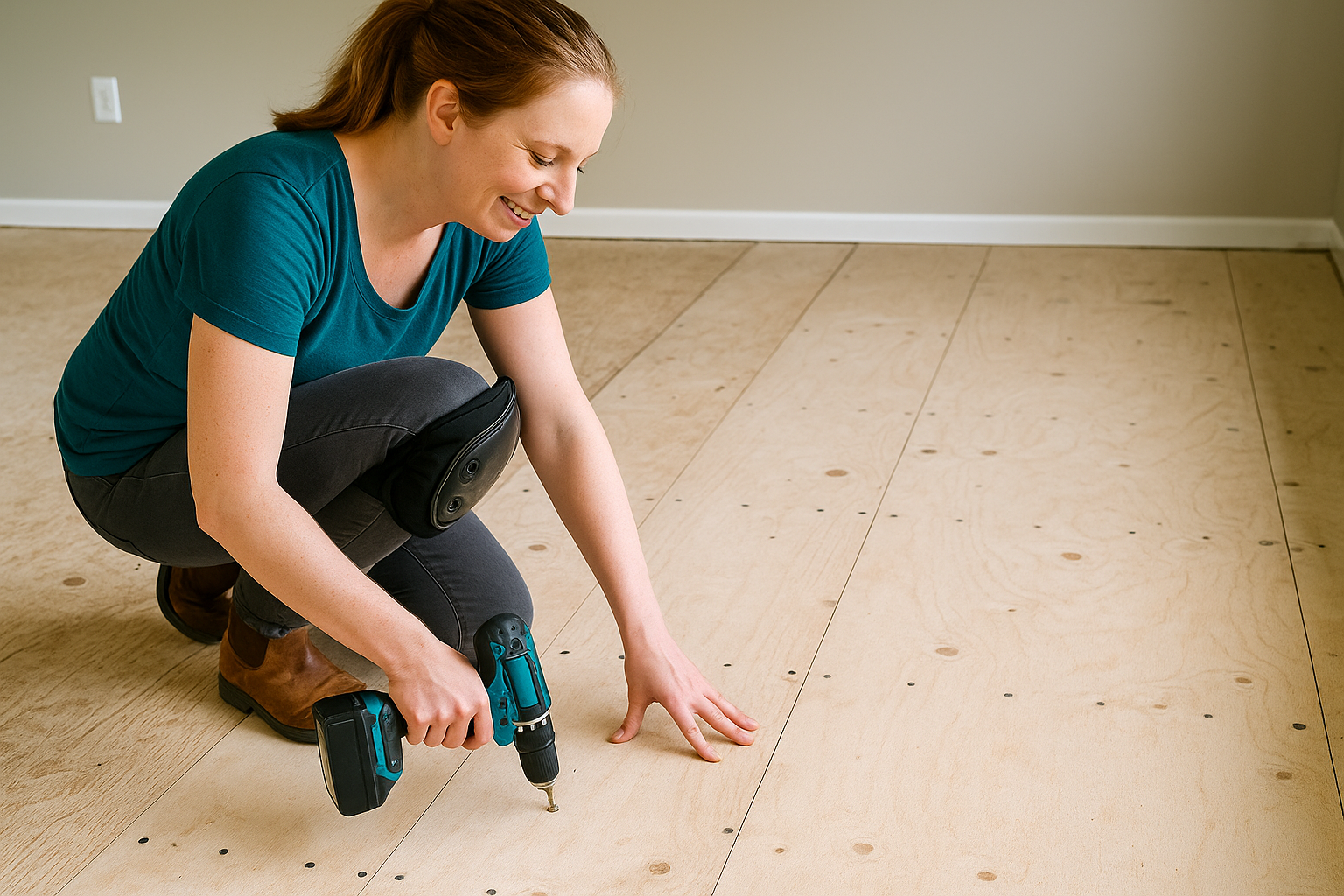
Installer uses a drill to secure subfloor seams, fixing flex and prepping the room for hardwood.
If the subfloor is wrong, the hardwood will tell on you within a year. So I fix as much as I can before the flooring even enters the room.
First, fasteners. I add screws anywhere the floor squeaks or flexes. I like construction screws that bite into the joists. Hit the joist lines every 8–10 inches in squeaky zones and pull the subfloor tight.
Next, flatness. Every manufacturer has its own spec, but as a rule I don’t like more than about 1/8" difference over 6 feet. High seams get sanded with a floor sander or a heavy belt sander. Low spots get filled with a leveling compound or a good patch product.
Sometimes I’ll crawl the structure in more depth and think of it as part of a bigger system. If you haven’t already, it’s worth looking at what I check before I even open a box of flooring so you don’t carry three pallets of hardwood into a room that just isn’t ready.
Once I’m happy with how it feels and reads, I vacuum the whole floor with a shop vac. Dust, drywall crumbs, and wood chips all get pulled up. You want clean wood, not mud, under your new floor.
Fix High Spots & Low Spots
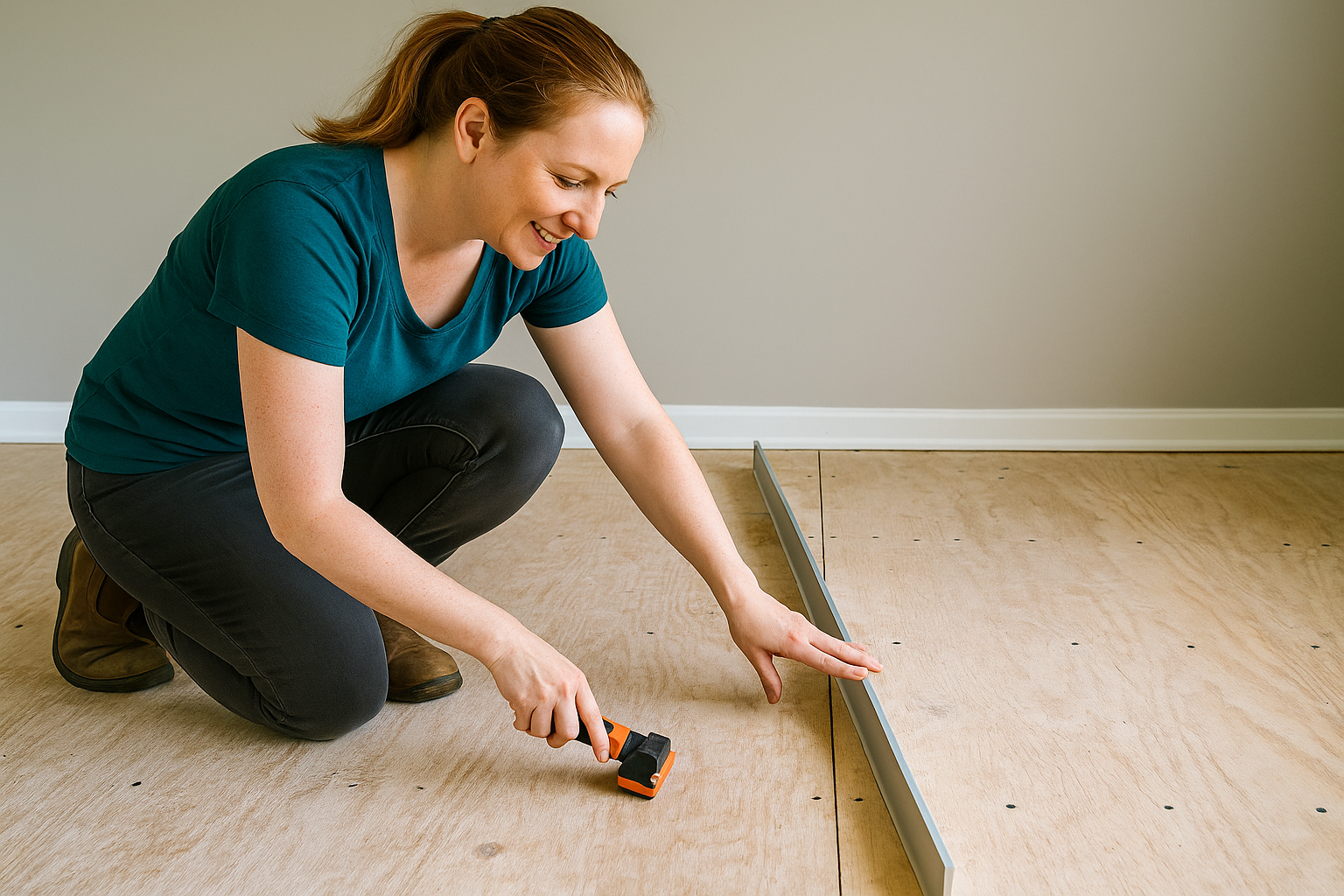
High spots and low spots are the silent troublemakers under every bad floor. They hide beneath hardwood, LVP, and tile, and if you don’t catch them now, they will expose you later. A floor that looks perfect on install day can start creaking, cracking, or drifting months down the road—almost always because the base wasn’t flat.
How I Find High Spots
I slide a long straight board or level across the room. If it rocks, something is sticking up. Sometimes it’s a crowned joist, sometimes it’s a lifted seam, sometimes the plywood just swelled. Whatever it is, I knock it down. Plane it, sand it, or reset the panel if I have to. Once the rocking stops, the floor will behave.
I learned this on a hallway job years ago. Looked flat to the eye. Felt a little proud underfoot. I ignored it. Six months later the client called: “Your floor thumps here.” She was right. That tiny hump echoed through the whole run. Since then, I take the time to fix it before moving on.
How I Handle Low Spots
Low spots show up under the straightedge when a sliver of light sneaks under. If I can slide a pencil underneath, it's too deep. For small dips, I use a feather finish patch. For bigger bowls, I dam the doorway and pour leveling compound. Let gravity do the rest. A flat base makes every step feel solid later.
Low spots are behind most LVP seam issues and a lot of hollow-sounding hardwood. Tile hates dips even more—tiles laid over a bowl tend to crack right across the center.
The Goal: Flat, Not Perfect
Every product has a tolerance. Most want no more than 1/8 inch over six feet. Tile needs better. LVP needs almost perfect. I’m not chasing laser perfection—just honest flatness. Enough that the straightedge doesn’t rock and the light doesn’t slip underneath.
Check Both Directions
I always check flatness both north–south and east–west. Some rooms look good in one direction but dip in the other. A two-minute check saves you a two-day problem later.
Step 4 – Bring the Hardwood In and Let It Settle
This is the part people love to skip because the boxes look ready to go. I don’t install hardwood the day it comes off the truck.
I carry the boxes into the room where they’ll live, cut the plastic, and open the ends so air can move through the bundles. If the house is heated and lived in, I usually let the wood sit two to five days. If the house is new or just had drywall and paint, I wait longer until the humidity drops to a normal range.
While the wood is acclimating, I double-check thickness against adjacent floors. Hallways and doorways are where bad height changes show up. Ideally the new hardwood lines up pretty close with the floor in the next room so I’m not stuck inventing transitions later.
If a client is curious why I’m “just letting it sit,” I explain that the wood is simply catching up with the house. It’s going to expand and contract over its life. I want the first big move to happen before it’s nailed down, not after.
Step 5 – Decide the Direction and Layout
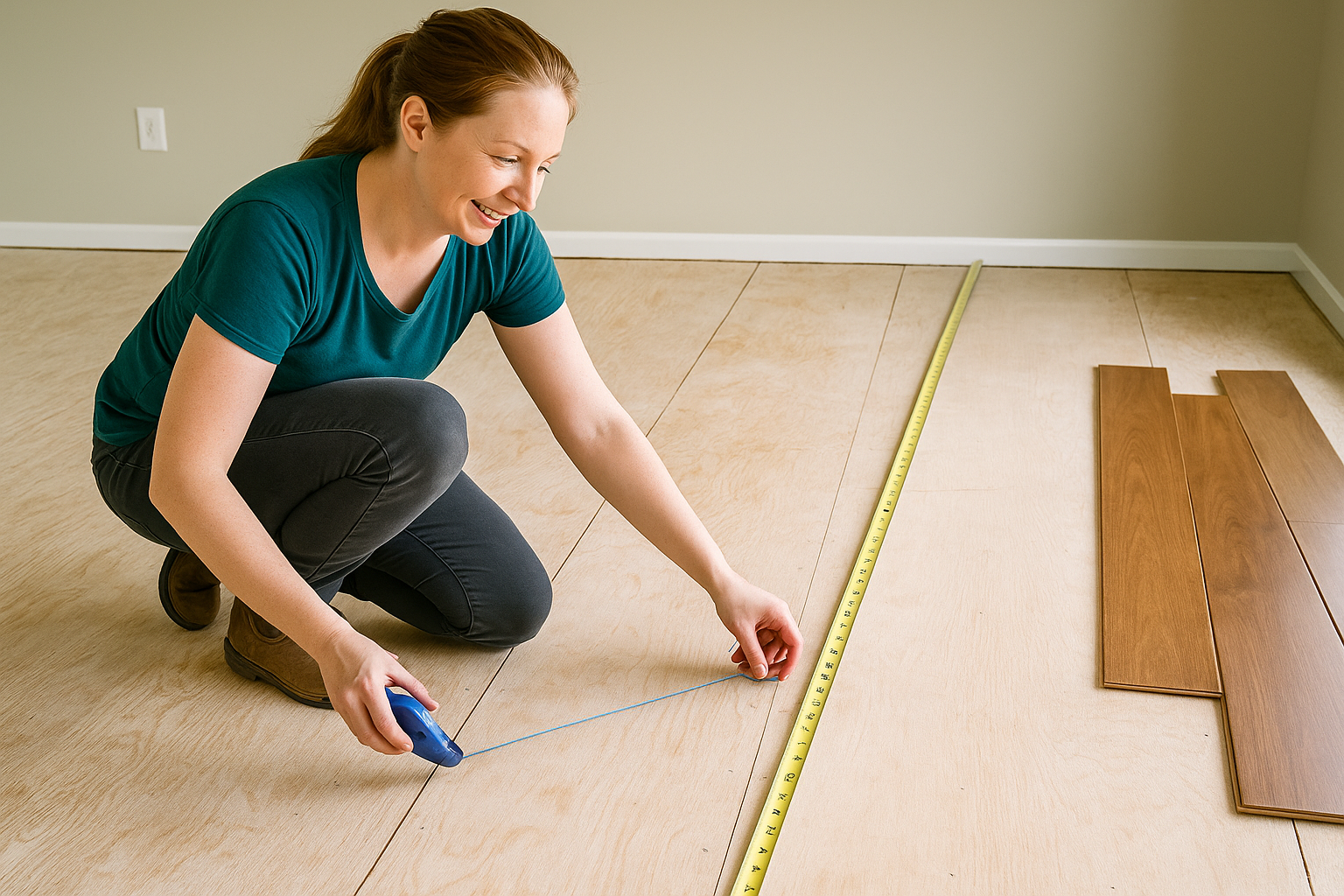
Once the wood and the room are ready, I spend some time on layout. This is where you save yourself from skinny pieces and weird cuts.
Most of the time I run hardwood:
- Perpendicular to the floor joists for stiffness.
- Toward the main light source in the room (like a window) for looks.
Sometimes those two rules fight each other. When they do, I lean toward structure first. If the subfloor is thick and solid, I may bend the rules for a long hallway or a strong visual line.
I find the longest straight wall in the room and snap a chalk line a board or two away from it. Then I measure from that line to the opposite wall at several points. I want to know what size board I’ll end up with on the far side. If the math says I’ll be left with a 1" sliver all the way down the room, I shift the starting line so both sides end up with decent-sized boards.
I also check how this room ties into the next one. If the flooring continues through a cased opening or down a hall, I plan the layout so boards flow cleanly through instead of stepping or zig-zagging at the doorway.
When a Board Fights You: How I Deal With Problem Planks
Every box of hardwood has troublemakers. A plank that bows a little. One that has a twisted tongue. One that looks straight until you go to seat it, then it kicks the whole row off line. If you have never dealt with this, you have never installed enough floors. It is normal.
When I pull a board from the pile, I sight it like a piece of lumber. Eye down one edge, then the other. If it has a slight curve, I decide where it belongs. Sometimes I use it near a closet or under a bed where the run is short. Sometimes I save it for the end of a row where the fasteners will hold it tight.
If the plank is fighting me in the middle of a long run, I do not force it. Forcing a bowed board can push the groove off alignment and mess up three or four boards after it. I learned this early on. One bad stick can infect a whole section of a room. So I pick my battles.
Here is what I do with problem boards:
- I check the moisture. Dry boards misbehave more than conditioned ones.
- I tap the tongue gently and see if it wants to come home. If not, I stop.
- I flip the board around. Sometimes the cut end sits straighter.
- If the board still doesn’t behave, I set it aside. No shame in firing a plank.
On a big job, I end up with a small “reject pile.” Not garbage. Just pieces that work better in cuts, closets, under radiators, or in places where only a short section is needed. A warped board becomes perfectly useful once it’s trimmed down.
This habit saves hours and saves the look of the floor. A floor made only of “good soldiers” goes in faster, seats tighter, and stays quiet for years. A floor made of forced planks will squeak back at you.
If you want a deeper look at how different wood types behave before installation, you can skim this quick guide on how wood behaves as it dries and moves. It helps you understand why some boards fight more than others.
Why I Start in This Corner, Not That One
Where you start a hardwood floor is not random. It is one of the first decisions that makes the job look pro or amateur.
When I walk into a room, I do not just look at the walls. I look at sight lines, light, and how the space connects to other rooms. I ask a few simple questions:
- What wall do you see first when you open the door?
- Where does the most daylight fall across the boards?
- Is there a long hallway or run that continues this floor?
My starting line is almost always tied to the longest, straightest visual line in the space. Often that is an exterior wall or a hallway that pulls your eye. I snap a chalk line off that reference, not off some random crooked wall. That way, the boards run straight where your eye cares most, even if a closet wall ends up a little out of square.
I also think about where cuts will land. If I start at a small, chopped-up wall, I might end up with skinny pieces right in the main doorway. Instead, I plan so that any odd cuts are tucked behind a bed, under a couch, or in a closet. The pretty full boards go where people stand, walk, and look most often.
The last part is matching adjoining floors. I check the thickness of the hallway, kitchen, or next room. I want my starting point and underlayment to land me at a clean transition, not a trip edge. I would rather adjust at the start than be stuck building a weird ramp later.
This sounds like overthinking, but it is not. Once you get used to it, you can decide your starting corner in about a minute. And it is the kind of decision that makes people walk in later and say, “The floor just feels right in here,” even if they cannot explain why.
Step 6 – Underlayment, First Rows, and Expansion Gaps
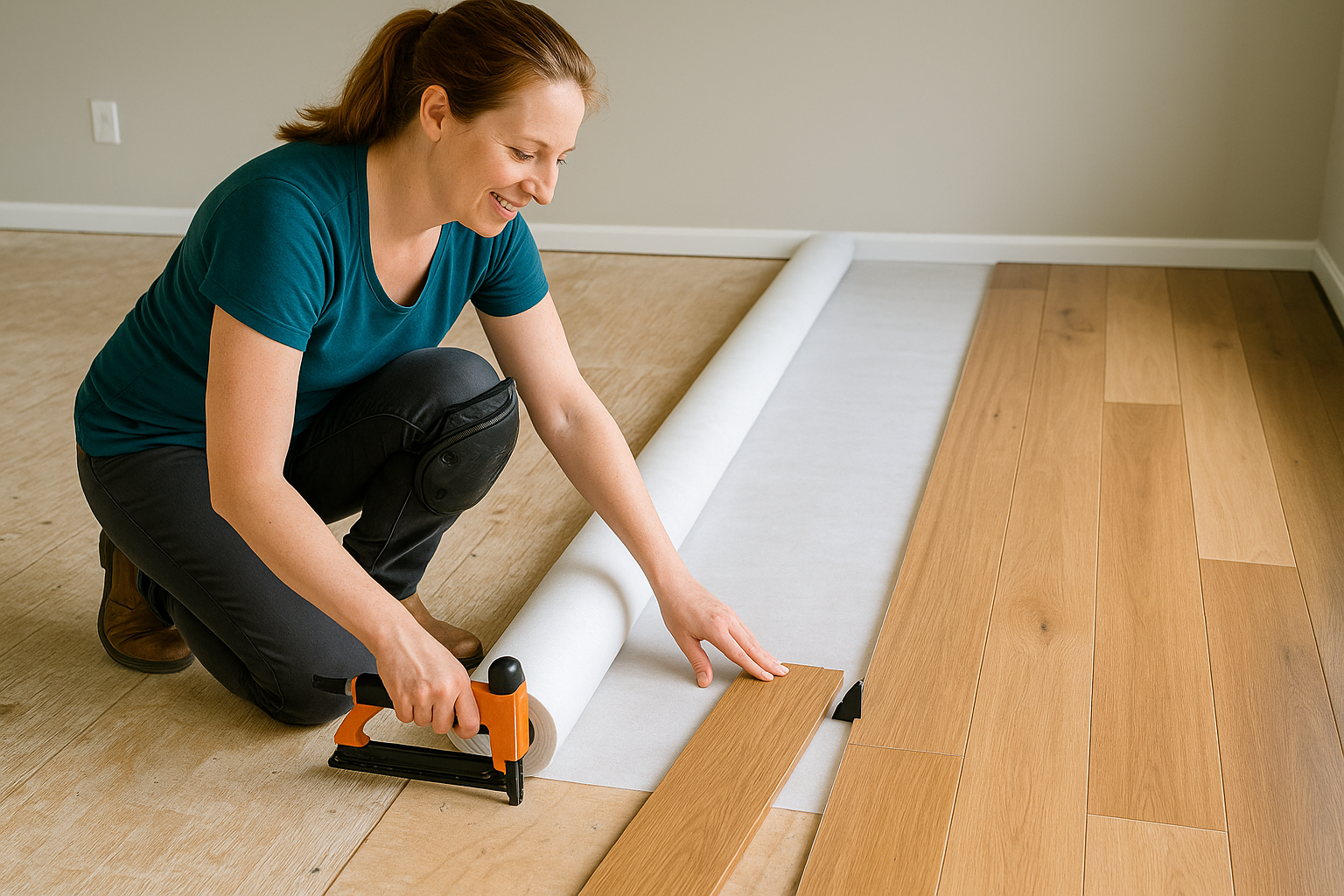
With the layout solved, I roll out the underlayment. On wood subfloors, that’s usually rosin paper or a basic hardwood underlayment. It’s not there to level anything. It’s mainly a slip sheet and a little sound control.
I roll it perpendicular to the direction of the boards and overlap seams a few inches. I staple it lightly so it doesn’t bunch up underfoot.
For the first row, I take my time. These boards set the line for everything else. I set them along my layout marks, check them for straightness, and face nail them near the wall with a finish nailer. Those nails will get hidden later by baseboard and shoe molding.
I always leave an expansion gap at the wall. Typically around 1/2" or what the manufacturer calls for. I use scrap spacers or wedges so the row doesn’t slide tight to the drywall while I’m working.
Hardwood needs room to breathe, just like tile and LVP. If you lock it hard against the walls, it will find a way to push back when the humidity swings. Sometimes that shows up as a buckle. Sometimes as loud pops as boards fight the fasteners.
FIELD PICK
Visual Handbook of Building and Remodeling
The floor sections in here make it easier to see where underlayments help and where they don’t. Good quick check when you’re deciding what to roll out.
How I Build a Perfect First Row Every Time
If the first row is wrong, the whole floor is wrong. It will chase that mistake all the way across the room. So I treat the first row like its own mini project.
First, I snap my reference line based on the straightest, most important wall or hallway. I do not trust the drywall alone. I measure off that line in a few spots to make sure it is truly parallel to the room, not just to one crooked corner.
Then I lay out the first row of boards without fasteners. I mix lengths so the joints look natural, not like a ladder. I check how the tongues and grooves fit. If I see a problem board in that first row, it goes back in the pile for cuts later.
Once I am happy with the dry layout, I leave an expansion gap at the wall using spacers or ripped scraps. I press the row tight to my chalk line, not to the drywall. This is important. Your line is your truth, not the wall that might bend or wave.
On this first row, I usually face nail with a finish nailer close to the wall where the baseboard and shoe molding will hide the holes. I also use a flooring nailer where it fits. The goal is to lock that first row so it cannot wander when the next boards push against it.
Before I commit to the second row, I stand back and sight along the seams. If anything looks like it is drifting, I fix it now. I would rather pull a few nails and adjust than discover a slow curve ten rows in.
Once that first row is dead straight and solid, the rest of the floor almost wants to follow it. Every board after that has something true to lock into. You save yourself hours of fighting tiny corrections later.
If you want more background on how subfloors and joists play into this, there is a bigger picture breakdown in this guide to structural floor systems. It helps to know what you are anchoring that perfect first row into.
Why I Keep a Vacuum Within 3 Feet of Me At All Times
On a hardwood job, dust is not just a mess. It is a mechanic. It gets into every joint, every groove, every tool, and it changes how things fit.
I keep a small shop vac or dust extractor basically on a leash next to me. When I cut a board, I vacuum the edge before I drop it in. When I see sawdust build up along a row, I stop and clean it. When I drill or drive screws in the subfloor, I vacuum the holes and the surrounding area before I go back to laying wood.
Here is what skipping this looks like in real life:
- A ridge of compressed dust along a seam that makes the next board sit a hair high.
- Tiny chips in the groove that prevent a plank from seating fully, so the joint looks tight but rocks underfoot.
- Grit under underlayment that slowly wears through finishes from below.
All of these problems are small in the moment and big later. A board that is held up by a few crumbs might not seem like a big deal while you are nailing it, but it will telegraph under certain light or as the floor moves over time.
Keeping the work area clean also protects the finish. Sanding dust, drywall powder, and general debris act like an abrasive under your shoes and tools. The quickest way to scratch a new floor is to keep working as if it is a concrete slab.
So yes, I vacuum constantly. It slows you down in seconds and saves you hours in repairs. By the time I am nailing the last row, most of the cleanup is already done. The room looks close to finished instead of looking like a sawmill.
If you want a better sense of how all the layers under your hardwood work together, the overview in this simple guide to how floors work in a house is a good companion. It shows why even tiny debris between layers can cause trouble.
Step 7 – Nailing Pattern and Working Across the Room
Once I’m happy with the first two or three rows, I bring out the flooring nailer.
I like to use a scrap of the same hardwood as a tap block. I put it against the board I’m installing and tap that, not the board itself. That way if something chips, it’s the scrap and not the finished edge.
My nailing pattern depends a bit on the board width and manufacturer, but a common setup is:
- A nail every 6–8" along the board.
- At least two nails in any board shorter than 2'.
- Never closer than a couple inches from board ends.
I also pay attention to end joints. I don’t like “H” joints where seams line up in adjacent rows. It looks busy and can make the floor weaker in those lines. Instead, I stagger end joints so they’re at least 6" apart from row to row.
As I go, I keep an eye on the overall line. Every few rows I step back, sight down the boards, and make sure nothing is slowly drifting off the layout mark. If I see a drift starting, I correct it now instead of trying to fix it ten rows later with a wedge.
The Shoes I Wear When Installing Floors
Most people never think about their shoes when they install hardwood. I did not either at first. Then I watched a brand new prefinished floor pick up a trail of tiny dents from a pair of heavy work boots, and I changed my mind fast.
These days, I keep it simple. I wear clean, soft-soled shoes when I am working on finished surfaces. Light sneakers or jobsite runners. No gravel in the treads, no caked mud, no sharp edges. Big clunky boots are for framing and demo, not for walking on a brand new oak floor.
Here is why this small thing matters:
- Dents: Hard soles and heavy heels will leave little moons and dots all over softer hardwoods and pine.
- Scratches: A small stone stuck in a boot tread can cut a long line across several boards before you even notice.
- Noise: Soft shoes let you hear subtle creaks and hollow spots while you work. Loud boots hide them.
I also keep a broom and a vacuum close. Before I step onto a finished section, I give it a quick clean. Sawdust and grit underfoot act like sandpaper. You might not see the damage right away, but you will see it in certain light later.
Another small habit: I do not drag tools or compressors across the floor. I lift or roll them on protection. A folded moving blanket or a scrap of underlayment goes a long way. The goal is simple. The only marks on the wood should be the ones that were there when you opened the box.
Clients rarely notice that you wore the right shoes. But they do notice when a “brand new” floor already looks tired at handover. This is one of those quiet details that separates careful work from rushed work.
Step 8 – Around Vents, Doorways, and Odd Spots
Registers, doorways, and weird corners are where floors tend to look “homemade” if you don’t slow down.
At floor vents, I dry fit the board, mark the opening from below, and cut the slot carefully with a jigsaw or oscillating tool. I’d rather take an extra ten minutes and get a clean opening than rush and chip the face of a visible board.
At door casings, I almost never notch flooring around the trim. Instead, I use a scrap of the hardwood as a height gauge and undercut the casing with a handsaw or oscillating tool. Then the boards slide under the trim for a cleaner, more professional look.
In doorways between rooms, I think about where the eye goes. If the same hardwood continues through, I’ll try to keep the boards running straight so the line flows. If the flooring changes, I stop the hardwood in the center of the jamb and plan for a threshold or T-molding there.
Step 9 – Last Rows, Face Nailing, and Touch-Ups
The last two or three rows are usually too tight to get the flooring nailer in. Here I switch back to a finish nailer or even hand nailing if the space is tight.
I still leave the expansion gap at the wall. I use a pull bar or a flat pry bar with a scrap block and gently pull the boards tight before nailing them through the face, close to where the baseboard or shoe molding will land.
Any tiny nail holes that stick out away from trim get filled with color-matched putty. On most species and stains, you’ll forget where they are by the time you stand up.
Once the last board is in and nailed, I walk the whole room again. If anything squeaks, I’d rather find it now than after furniture is in the room.
Step 10 – Baseboard, Shoe Molding, and Room Clean-Up
Baseboard and shoe molding are not just decoration. They cover your expansion gap and clean up any tiny edge wobbles along the wall.
If I pulled the old baseboard, I put it back or install new trim now. If I left built-in baseboards in place (common in older houses), I’ll usually add a small shoe or quarter round to cover the gap at the floor.
I caulk the top of the baseboard to the wall if needed, but I don’t caulk between the floor and the trim. That bottom joint is where the floor “breathes.” Filling it solid with caulk can pin the floor in place and undo all the care you took with expansion gaps.
Final step is a careful sweep and vacuum with a soft brush. Then I usually tell the homeowner to baby the floor for a bit – no sliding heavy furniture, use felt pads on chair legs, and keep grit off the surface so it doesn’t scratch.
Common Mistakes I See With Hardwood Over Wood Subfloors
Most of the hardwood failures I get called in to look at fall into a few simple buckets:
No Acclimation (or Wrong Acclimation)
Boards brought straight in from a cold truck and nailed down the same day. Or worse, acclimated in a damp garage and then installed in a dry, heated space. Result: gaps, cupping, or both within the first season.
Ignoring Subfloor Flatness
The floor “looked fine,” so nobody checked it with a straightedge. Later the homeowner notices a hollow sound in one area, or boards that bend slightly underfoot. Sometimes you even see a little bounce that loosens fasteners over time.
Not Leaving Expansion Gaps
Boards run tight to drywall, fireplace hearths, and door thresholds. When humidity spikes, the floor has nowhere to go and starts to push up in the middle. You see ridges, buckles, or loud pops as boards crush against each other.
Weak Nailing Pattern
Fasteners too far apart, or not enough nails in short boards. Those boards start to squeak first. Once that sound is in the house, it’s hard to ignore.
If you want to get better at reading floor problems in general, it’s worth spending a bit of time with this overview on how to read floor failures and what they usually mean . You start to see patterns: where cracks point, where dips show up, and what they’re trying to tell you.
The Part Nobody Talks About: How Hardwood Floors Sound
Most guides talk about how floors look. Almost none talk about how they sound, even though that is what people complain about years later. The funny part is, sound tells you more about a hardwood install than any laser level or moisture meter ever will.
When I walk a room before installing hardwood, I listen almost as much as I look. A hollow thump near a wall tells me the subfloor pulled off the joist. A sharp pop means two pieces of plywood are rubbing because the last guy skipped adhesive. A dull “drum” sound in the middle of the room usually means a dip someone tried to hide with felt paper decades ago.
Here is the part worth knowing: every type of bad install has its own noise. After enough jobs, you start hearing patterns before you even start prying things up. I call it “floor language.” Clients always think I am joking until I show them the exact spot under the carpet where the joist bows or a seam is sitting proud.
A good hardwood floor is quiet in a very specific way. Not silent. Just quiet in a steady, confident way. It feels like stepping on something that knows exactly what it is doing. The nails don’t talk. The boards don’t shift. The floor almost feels like one piece instead of a hundred boards.
When I’m done with a job, I take one last slow walk across the room. If the only sound I hear is my own breathing, that’s when I know the install is right. Before the homeowner ever sees the color or grain, the floor already passed the test you cannot photograph.
The One Time I Ignored a Squeak and Regretted It
Every installer has a story they think about on the next job. This is one of mine.
Years ago, I was working on a small bedroom. Old house. Tongue-and-groove subfloor, a few patched joists, nothing I had not seen before. As I walked the room, I found one squeak near the door. I drove in a couple of screws, walked it again, and it still whispered at me. Not loud, just a little noise.
I told myself, “Once the hardwood is down it will probably settle.” I did not want to pull the panel or open up the framing again. I was behind schedule. So I ignored it.
The floor went down fine. Looked good. We moved furniture back in and called it a day. A few months later I got the call: “There is one squeak that is driving us crazy. Right by the door. Can you come back?”
Of course it was that spot. I knew it the second they said “doorway.” To fix it properly, I ended up pulling baseboard, drilling, and using special screws designed to cinch subfloor to joist without ruining the finish. It took twice the time it would have taken to fix when the subfloor was bare.
That job changed how I think about squeaks. Now, if a noise refuses to go away after the first round of screws, I do not argue with it. I find out why it is there. Maybe the joist is crowned. Maybe there is a gap at a beam. Maybe two layers are rubbing. Whatever it is, I fix it at the skeleton, not later at the skin.
If you are new to this and want help reading what different floor problems mean, this guide on how to read floor failures in a house is worth a look. It walks through cracks, dips, ridges, and what they usually point to.
The short version of the lesson: if the floor is trying to tell you something before you cover it, do not tell it to be quiet. Listen and fix it while the fix is easy.
What Clients Never See: Floors Move Every Single Day
Hardwood floors move more than people think. A board can grow, shrink, bow, settle, and twist in the span of one season. The trick is not to stop the movement — the trick is to control it so the floor moves where it is allowed to, not where it wants to.
Most homeowners think a floor “goes bad” suddenly. It never does. Failures start months earlier, quietly. A board that was too tight to a wall. A subfloor seam nobody sanded flat. A wet crawl space under a bedroom. A hallway run that should have been broken with a T molding.
I try to explain this to clients early so they understand what I’m actually protecting them from. The goal is not just “make the floor look good.” It is “give the floor space to live its life without destroying itself.” That is why I obsess about expansion gaps, moisture checks, and long runs across multiple rooms.
The simplest way to explain it is this: wood is honest. It moves. If you try to force it to stay still, it will fight you and win. If you give it a little respect and a little space, it behaves for decades.
Every mistake I’ve seen in hardwood installs comes down to one of three things:
- They didn’t leave the floor anywhere to move.
- They forced the floor to follow a crooked wall.
- They installed wood that was still adjusting to the room.
Fix those three and clients never call you again — in a good way.
Bringing It All Together
Putting in hardwood over a wood subfloor isn’t magic. It’s just a handful of habits you repeat every time:
- Check structure and fix squeaks before you start.
- Get moisture under control in the house and the subfloor.
- Flatten, fasten, and clean the base.
- Let the wood acclimate to the room.
- Plan your layout so you don’t end with tiny slivers.
- Leave proper expansion gaps and nail tight.
You do those things and most of the “mystery” failures never show up.
The nice part is hardwood is honest. If you rush, it will creak. If you skip a step, it will point right at the spot you ignored. If you take your time and do it right, the floor just goes quiet — and you probably won’t hear from that client again for years. That silence is usually the best review you can get.
FAQ
Do I really need to acclimate hardwood?
Yes. Hardwood that goes in the same day it comes off the truck is the fastest way to get gaps or cupping. Let it sit in the room so it adjusts to the house before you nail it down.
How flat does the subfloor need to be?
A good rule is no more than 1/8 inch difference over six feet. If you can slide a pencil under your straightedge, fix it. Hardwood will telegraph dips and ridges more than people think.
Can hardwood go over old flooring?
I avoid it. Old floating floors, vinyl, or laminate create soft spots. Rip them out and get to the real subfloor. The only thing I sometimes leave is old hardwood if it is dead flat, but even then I usually prefer a clean start.
How big should expansion gaps be?
Usually between 1/2 inch and whatever the manufacturer says. The floor needs a place to move. Baseboard and shoe molding hide the gap anyway.
What nail spacing is right?
I shoot for a nail every 6 to 8 inches on each board. Short boards get at least two nails. Keep nails a couple inches away from each board end.
What causes squeaks?
Movement between the subfloor and joists, loose fasteners, or hardwood rubbing on a high seam. Squeaks are almost always the result of skipping adhesive or screws in the prep stage.
Can I nail hardwood parallel to joists?
Only if the subfloor is very stiff or you add additional plywood. Running parallel over weak joists creates bounce and loose boards.
Can hardwood go in kitchens?
Yes, but only if you control moisture. Spills are fine. Long-term humidity swings are the danger. Good ventilation and stable indoor climate help a lot.
Related
Wood Guides You Might Find Helpful
Hardwood flooring is a lot easier when you understand how wood behaves—how it moves, how it absorbs moisture, and why some boards stay straight while others twist like a potato chip. If you want to build that knowledge the right way, here are a few solid guides from our wood library that fit naturally with this project.
- If you want a simple, no-nonsense overview of how wood works in construction, this quick primer is a good place to start: a friendly introduction to wood basics.
- For a deeper breakdown of why different species behave the way they do—density, movement, hardness—this detailed guide explains it in plain language: understanding wood characteristics.
- If you’re comparing species for flooring, trim, or structural work, you can check this clean walkthrough of common species: a closer look at hardwood varieties.
- For browsing real examples, this collection is useful when you want to see how different hardwoods look and where each one is best used: 20 real hardwood types explained.
- If you’re working with softer species—pine, cedar, fir—and want to know how they compare to hardwoods in floors or framing, this guide helps sort it out: softwood basics in one place.
- A lot of modern flooring products are engineered rather than solid wood. This guide breaks down what engineered wood actually is, how it’s made, and where it shines: engineered wood, simply explained.
- If you ever struggle with choosing the right lumber for trim, flooring repairs, or small jobs, this practical page walks through the decision-making: how to pick the right wood for a project.
- And if you’re planning finishes, this little design guide helps homeowners figure out what wall colors pair well with different wood tones: matching wall colors to light wood floors.
You don’t need to read all of these before installing hardwood, but having a sense of how wood behaves makes a huge difference. The more you understand the material, the fewer surprises you’ll have once the floor settles in and starts living with the house.
References, and Industry Guides
Building Codes and Moisture Guidelines
- International Residential Code (IRC)
Moisture control, floor framing, subfloor requirements.
https://codes.iccsafe.org/codes/international-residential-code - U.S. EPA Moisture Control Guide
Official moisture and indoor humidity recommendations.
https://www.epa.gov/mold/moisture-control-guidance-building-design-construction-and-maintenance
Industry Associations for Hardwood Flooring
- NWFA (National Wood Flooring Association)
Installation guidelines, technical PDFs, and certification-level instructions.
https://www.nwfa.org/technical-standards/ - APA – The Engineered Wood Association
Subfloor thickness charts, fastener schedules, and plywood/OSB specs.
https://www.apawood.org/
Flooring Tools and Underlayment Specs
- Schluter Systems (Underlayments & Movement Joints)
Technical data sheets for uncoupling membranes and floor movement control.
https://www.schluter.com - Custom Building Products – Technical Docs
Thinset ratings, underlayment specs, and movement joint information.
https://www.custombuildingproducts.com/technical-documents/
Humidity, Indoor Environment & Wood Behavior
- ASHRAE Residential HVAC Standards
Indoor humidity and environmental baseline conditions for wood stability.
https://www.ashrae.org/technical-resources/standards-and-guidelines - USDA Wood Handbook
The scientific bible on how wood moves, absorbs moisture, and behaves in buildings.
https://www.fpl.fs.usda.gov