
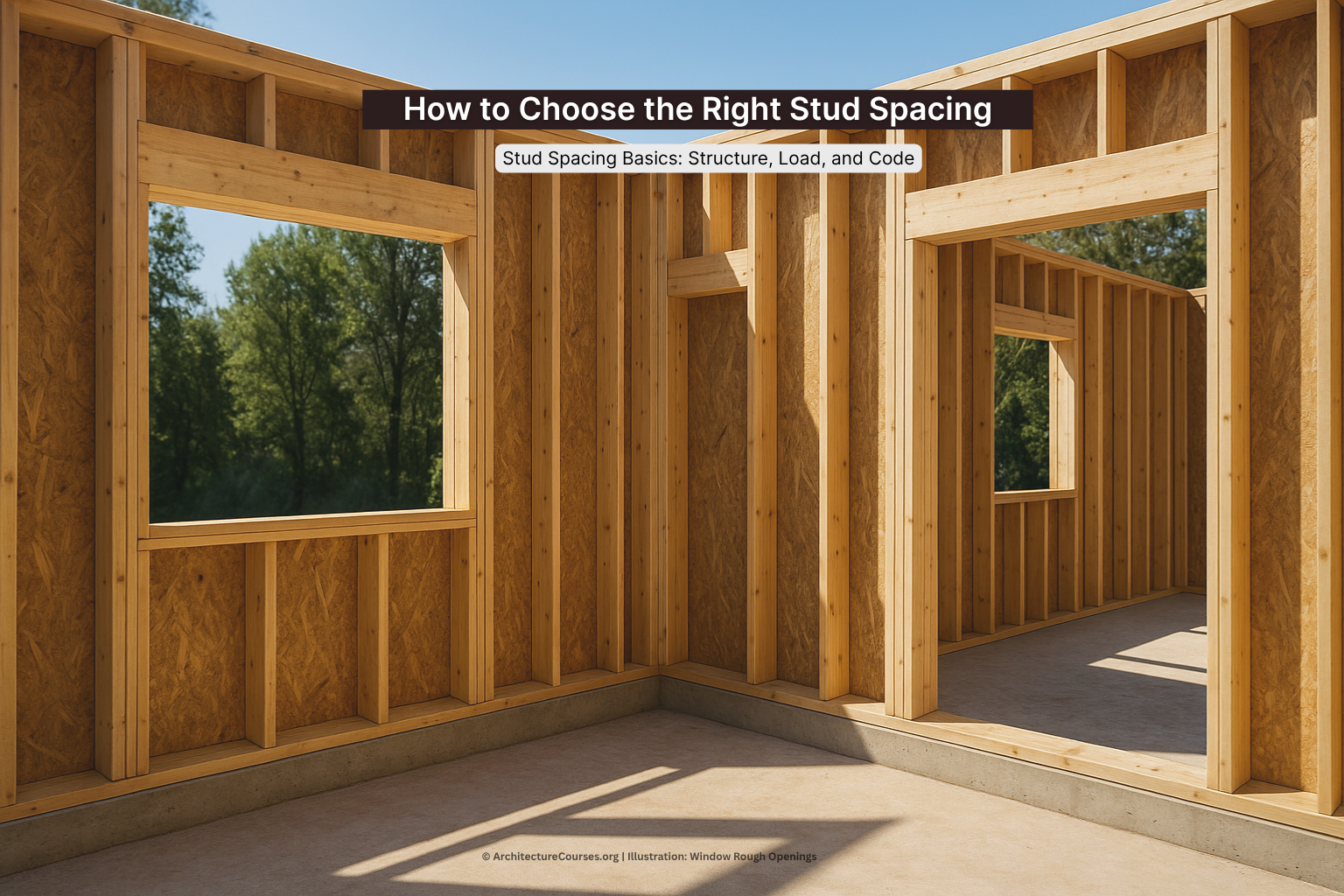
How to Determine Wall Stud Spacing
If the stud spacing is wrong, the drywall bows, the wall won’t hold load, and the inspector won’t sign off. This isn’t an aesthetic choice: framing walls means nailing spacing and layout the way code and load paths expect.
Whether you’re framing interior walls, basement partition walls, or exterior bearing walls, stud spacing drives the strength, weight, and materials of the whole structure. Get it right and the wall works quiet and straight. Get it wrong and every finish guy that follows will curse your name.
This field-ready breakdown covers:
- Standard stud spacing on center (OC), and when it changes
- The real context for 16” OC vs 24” OC spacing
- Exterior wall stud spacing under different energy codes
- Basement studs: spacing, moisture, and insulation zones
- Metal stud spacing in commercial builds
- Old house studs, drywall gaps, plaster differences
- Load-bearing vs non-bearing logic (and cost math)
- Field tools to lay out studs fast and true
Let’s break it down.
What Is Stud Spacing?
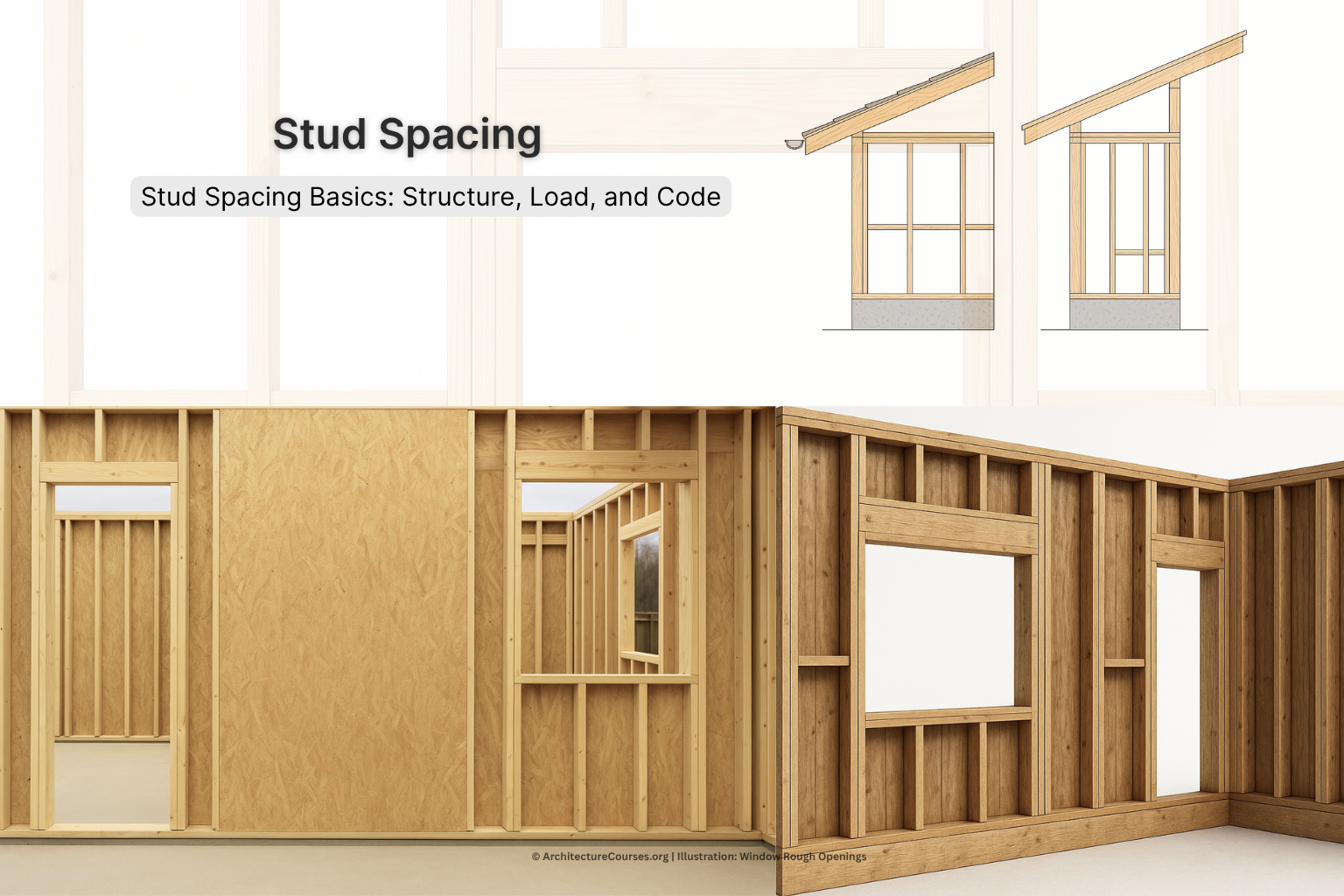
The space between studs is measured “on center” (OC). That means you're measuring from the center of one stud to the center of the next. Not the edge. Not the gap. Stud spacing is about load paths, drywall backing, shear resistance, and finish alignment.
- Typical stud spacing: 16 inches OC
- Alternate spacing: 24 inches OC (in specific cases)
- Old house spacing: Wild — 14, 17, 21, 18.5 — expect nothing
If you’re not sure if a wall is bearing or non-bearing, this quick framing guide helps clarify when spacings change and why headers shift format.
Standard Spacing: 16 Inches On Center
“Sixteen on center” is the most common spacing for wall studs in wood-framed houses. Works for 2x4 or 2x6 framing. Matches 4-foot drywall sheets with stud edges to grab. Also provides enough backing for siding, tile, cabinets, and wall load.
Use 16” OC in:
- Exterior load-bearing walls (2x4 or 2x6)
- Interior bearing partitions
- High-load walls under beams, joists, or roof trusses
- Bathroom walls expected to carry tile or rock board
- Garage firewall and exterior wall finishes with impact zones
If a wall has beams or major loads above, stud spacing alone won’t save you. Beam sizing matters. For quick beam logic, read this guide on lintel and beam types.
MUST READ
Complete Book of Framing
Builder-to-builder field logic about stud layout, spacing, and cutting error out of the frame.
When 24” On Center Works — And When It Fails
“24 inch on center studs” sounds like a good way to save material. And in some cases, it is. But it’s not a free lunch.
Use 24” OC in these cases:
- 2x6 exterior walls built in climate zones with R-20+ code
- Non-load-bearing interior walls with no key fixtures
- Advanced framing layouts designed for energy efficiency
- Roof rafters and ceilings rated for wider spacing
Skip 24” OC in:
- Bathrooms with heavy wall tile
- Walls supporting lofts, stairs, or concentrated load above
- Old houses where stiffness is already low
- Basements with moisture risk — less material = more flex
The real difference is stiffness. Wider spacing can make drywall bow between studs, especially with cheap board or high humidity. Cabinets, tile, or stone work hate 24” OC walls. The finish crew will blame you.
Need a refresher on when studs get doubled or walls tie into floors? This comparison of single-story vs two-story framing walks you through load transfer logic at the wall top.
Stud Spacing in Exterior Walls
Exterior walls carry more than just drywall — they hold insulation, vapor control, exterior cladding, windows, and roof loads. Standard spacing is 16” OC for 2x4 walls and 16” or 24” OC for 2x6 walls depending on span and code.
Wall sheathing must pick up this spacing too. Approved sheathing materials — OSB, plywood, or ZIP — tie studs together and stop racking.
Check this for more: exterior wall sheathing thickness and patterns.
RECOMMENDED TOOL
Kolvoii 16” Layout Tool
Throws 16” or 24” layout without measuring every stud. Good for long runs and crew consistency.
Interior Wall Stud Spacing
Interior walls don’t usually carry vertical loads unless shown in the plans. But they still need to hold finishes and fixtures. That’s why 16” OC remains the default, even where it’s not code-required.
You can often go 24” OC if:
- The wall has no doors, no cabinets, no stone, no TV mount
- It’s truly non-structural (verify, don’t assume)
- The studs are 2x6 — more stiffness per run
Still, most architects and builders default to 16” OC for interiors because it eliminates surprises for drywallers, MEP subcontractors, and trim carpenters.
If you’re unsure whether a wall you’re framing carries load, scan this explanation of bearing vs non-bearing walls.
Stud Spacing in Basements
Basements are different: moisture, insulation, pipes, irregular concrete, and foundation steps all change the game. Typical stud spacing for basement walls is still 16” OC — even if the wall is non-load-bearing. Why?
- Waterproofing and foam need clean backing
- Sills may need pressure-treated lumber, meaning more flex if spaced too wide
- Interior walls often become shear walls in reno cases
- Furring strips and tight ceiling lines work better at 16” OC
Planning to finish the basement? Get a clear idea of footing loads before framing using this pier and beam foundation overview.
FIELD PICK
Stud Finder + Level Combo
Simple tool with fast angle reads — a quick backup even if you frame all day.
Stud Spacing for Metal Framing (Commercial & Residential)
Metal studs aren’t wood studs. They flex more, they don’t hold screws the same, and they need tight drywall screw patterns.
Standard metal stud spacing:
- 16” OC for most interior partitions with 25-gauge studs
- 24” OC in non-rated, low-traffic interior partitions
- 12” OC for lead-lined or high mass walls (medical, acoustic)
Spacing also changes with stud depth:
- 3-5/8” studs = 16” OC fail-safe
- 6” deep studs can go 24” OC, but check span and deflection charts
Metal stud hole spacing is factory punched. That makes electrical runs easier — but don’t compromise flange bracing by cutting extra holes.
Why Stud Spacing Matters for Drywall
Drywall edges must land at stud centers. If stud spacing is wrong or inconsistent, you end up with unsupported seams or floating edges. That leads to cracks, nail pops, sagging ceilings, or bulging tile.
If you mess up layout or the wall slips while assembling, adjust with blocking or add backup strips. Don’t force rock to span unsupported cavities.
How to Lay Out Stud Spacing Fast and Accurately
- Start at the corner or drag point — mark your first stud
- Mark every 16” (or 24”) with a pencil or chalk
- Add the “X” on the correct side — that’s your stud face
- Match top and bottom plates before nailing
- Check line-of-sight before locking studs in place
Remember: everything in framing is measured twice — once on the plates and again by the finish crew staring at it later.
If walls tie into a roof or balcony load path, skim this guide to types of roof bracing to avoid load weirdness.
Old House Stud Spacing
House built before 1960? Stud spacing is not standard. Expect 14”, 17”, 18.5” OC — even split studs or balloon framing. Your tape isn’t wrong. The house is. Fix it with blocking or full reframe, depending on the damage.
Don’t guess what’s load-bearing in an old house. Drill a hole wrong and you’ll drop floor load onto plaster ceilings.
MUST READ
Framing Floors, Walls & Ceilings (Pro Series)
Still one of the best walk-throughs of layout, span, and spacing details for remodels.
Cost Impact: 16” OC vs 24” OC
Using 24” spacing will save studs over long runs, but you’ll often need different sheathing thickness, insulation changes, and more blocking to keep walls stiff. What you save in lumber, you might lose in callbacks or material upgrades.
Quick math:
- 40’ wall at 16” OC = 31 studs
- 40’ wall at 24” OC = 21 studs
If studs are $4 each, you save $40 on one wall. Then you add thicker OSB or double up around fixtures. The savings aren’t always worth it unless you’re building hundreds of walls with the same layout.
What About Lumber Types and Grades (SPF vs DF)?
Not all 2x4s behave the same. You’ve probably noticed how some studs feel lighter, softer, or bow easier. That comes down to two things: species group (SPF vs DF) and lumber grade (like No. 2 or stud grade).
Standard 2x4 Dimensions
-
A “2x4” is actually 1.5 inches x 3.5 inches.
-
Dimensions are based on nominal lumber sizing, so everything is slightly smaller after surfacing.
-
Same goes for 2x6 (1.5 x 5.5 in), 2x8 (1.5 x 7.25 in), etc.
SPF vs DF: The Real Difference
SPF is lighter and cheaper. DF is stronger and stiffer. If you don’t know the difference, span tables and inspectors will remind you.
| Type | Stands For | Density/Strength | Best For | Notes |
|---|---|---|---|---|
| SPF | Spruce-Pine-Fir | Light, easier to nail, less dense | Interior walls, non-structural | Most common framing lumber in Canada and Northern US |
| DF | Douglas Fir | Stronger, stiffer, higher load ratings | Long spans, load-bearing walls, beams, headers | Holds nails well but pricier and heavier |
Field Use Rules
-
Use SPF: Standard walls, 16” OC, one-story builds, interior partitions
-
Use DF: 24” OC layouts, tall walls, headers, king studs, big openings
-
Codes care: If a wall is bearing or tall (10 ft+), inspectors often want DF or higher-grades of SPF
Lumber Grades You’ll See
-
No. 2 SPF: Most common stud material. Strong enough for most walls.
-
Stud Grade SPF: Straighter pieces optimized for vertical use. Less knots. More money.
-
No. 1 or Select Structural DF: For engineered or heavy loads. Also used in exposed timber work.
Tip for Buying
-
Look at the end stamp. It'll tell you the species group (SPF or DF), the mill, and the grade.
-
Don’t just grab what’s closest. Sight down the stud. Reject bows, crooks, and twists.
Why It Matters for Spacing
-
SPF works great at 16” OC
-
DF can handle heavier loads at either 16” or 24” OC, but check your span tables
-
Going 24” OC? Make sure your sheathing and drywall meet minimum span ratings
FAQ
What’s the standard stud spacing?
16 inches on center. Works with drywall, code, and most loads.
Why are some walls 24 inches on center?
To save lumber and increase insulation space in 2x6 exterior walls. But they need stiffer sheathing and better finishes.
Can I space studs 12 inches apart?
Yes, in heavily loaded or high-vibration walls. Not common, but used under stair landings or tiled shower walls.
Is stud spacing different in the basement?
Often stays 16” OC even in non-bearing walls. Basement walls flex more, so tight spacing improves backing for insulation and finishes.
How far apart are studs in old houses?
Random. Expect 12–22” spacing. Reinforce or reframe if needed.
Does stud spacing affect headers?
Yes. Header size depends on span and load above, but spacing affects jack stud support. See header logic in king and jack stud placement.
Keep Building: Where to Go Next
New to full wall systems? Check an overview of stud, plate, and blocking breakdown or dive deeper into roof-to-wall framing using this roof connection guide.
Want to level up? Here’s your next stop: what changes in two-story framing vs one-story.