
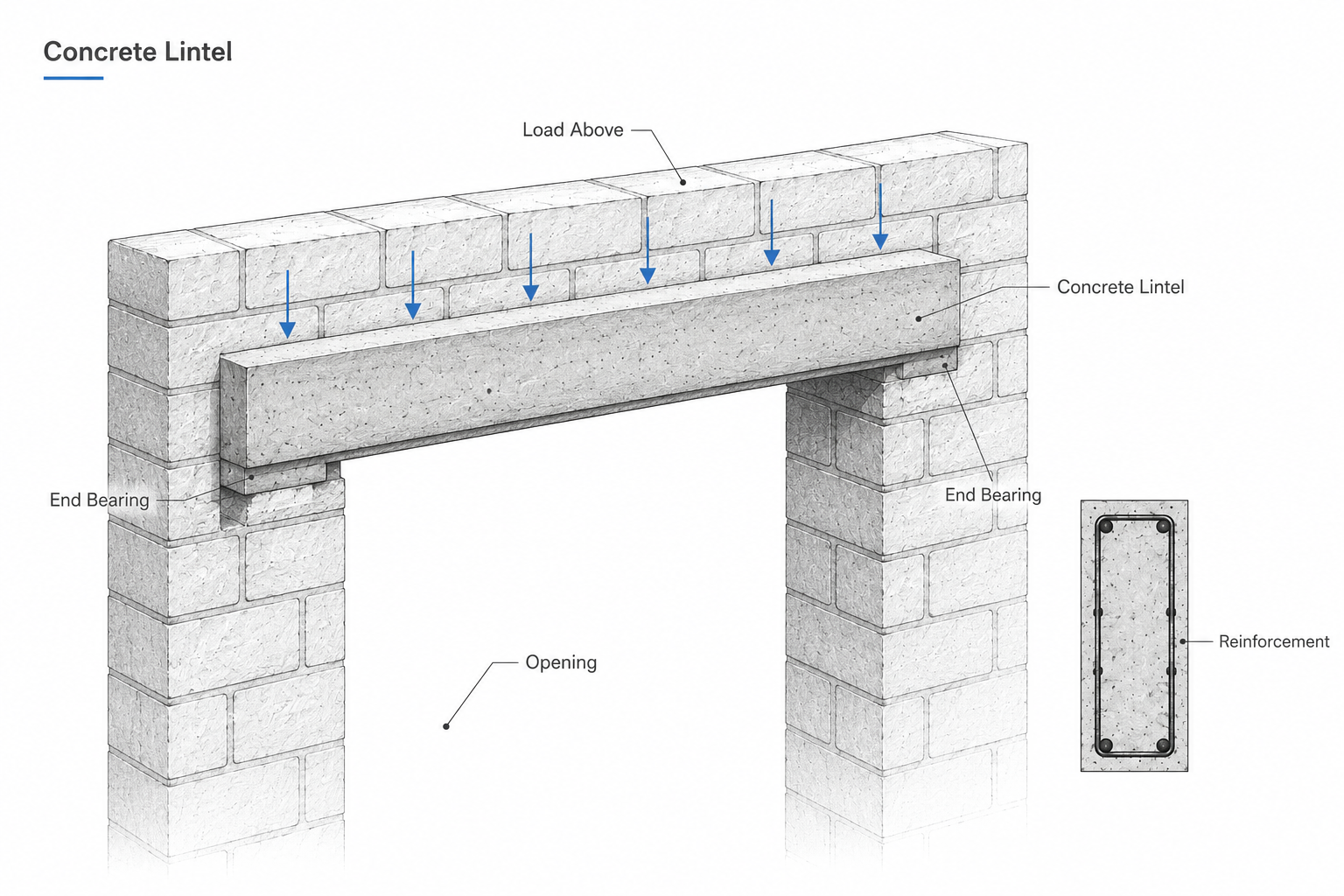
How Lintel Beams Carry Loads Above Openings
Everything over an opening, windows, doors, garage spans, depends on the lintel (header or engineered beam). This hub keeps it tight: what to use, how to size, where padstones go, and the traps that cost money.
TL;DR
- Purpose: carry wall, floor, or roof loads across an opening.
- Common types: steel RSJ/UB/I-beam lintel, precast concrete lintel, engineered wood (LVL/glulam), proprietary box/cavity and Catnic-type units.
- Bearings: typical 100–200 mm each side on a padstone or solid masonry.
- Key checks: span, load path, bearing strength, corrosion/moisture protection, and service penetrations.
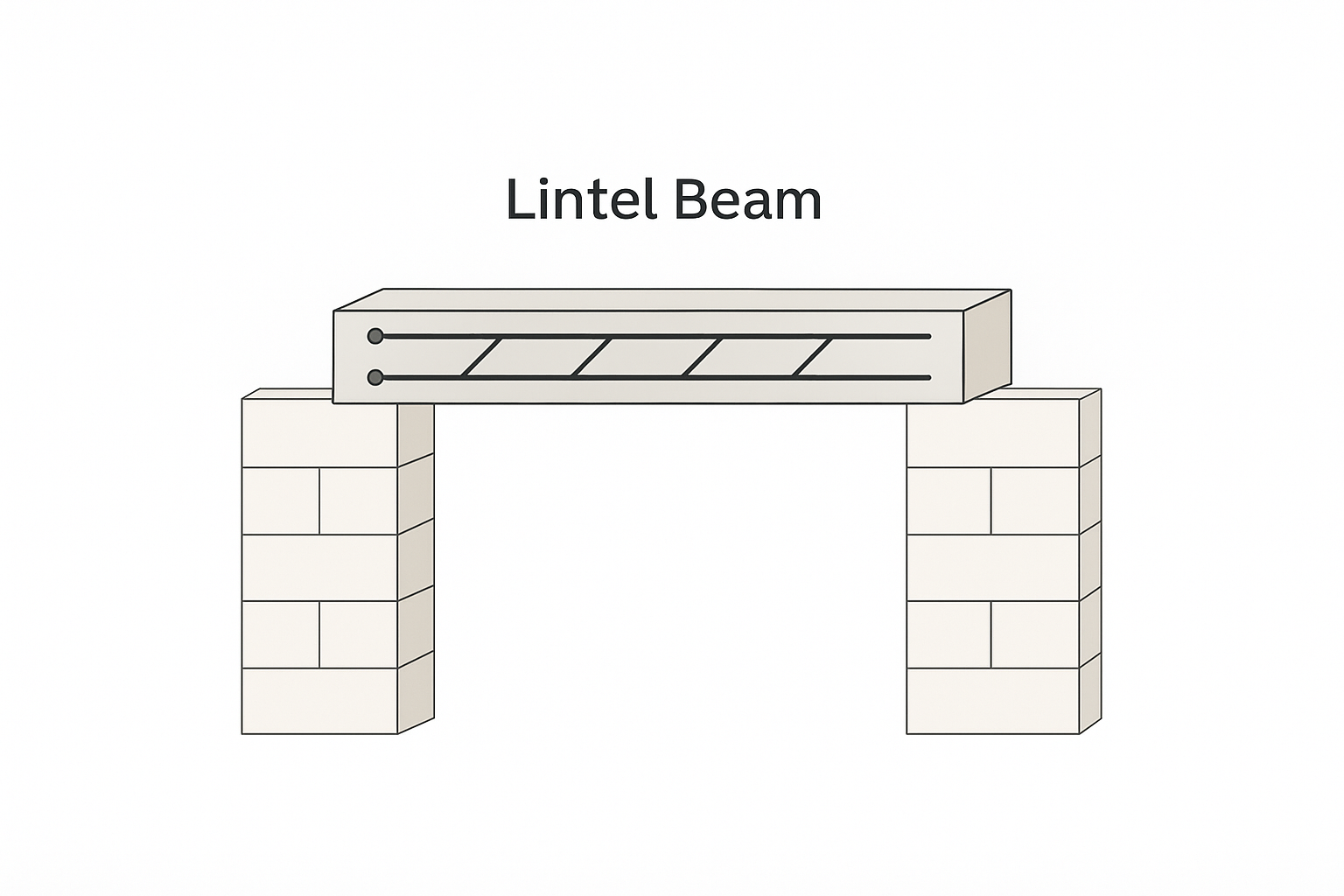
Need context on how openings change loads? See a simple compare on load-bearing vs. non-bearing walls or brush up beam basics with this intro to beam analysis.
Lintel Beams in Construction
A clear, builder-level guide to lintel beams. Types, functions, and how to choose the right design for masonry or concrete structures.
What is a Lintel Beam?
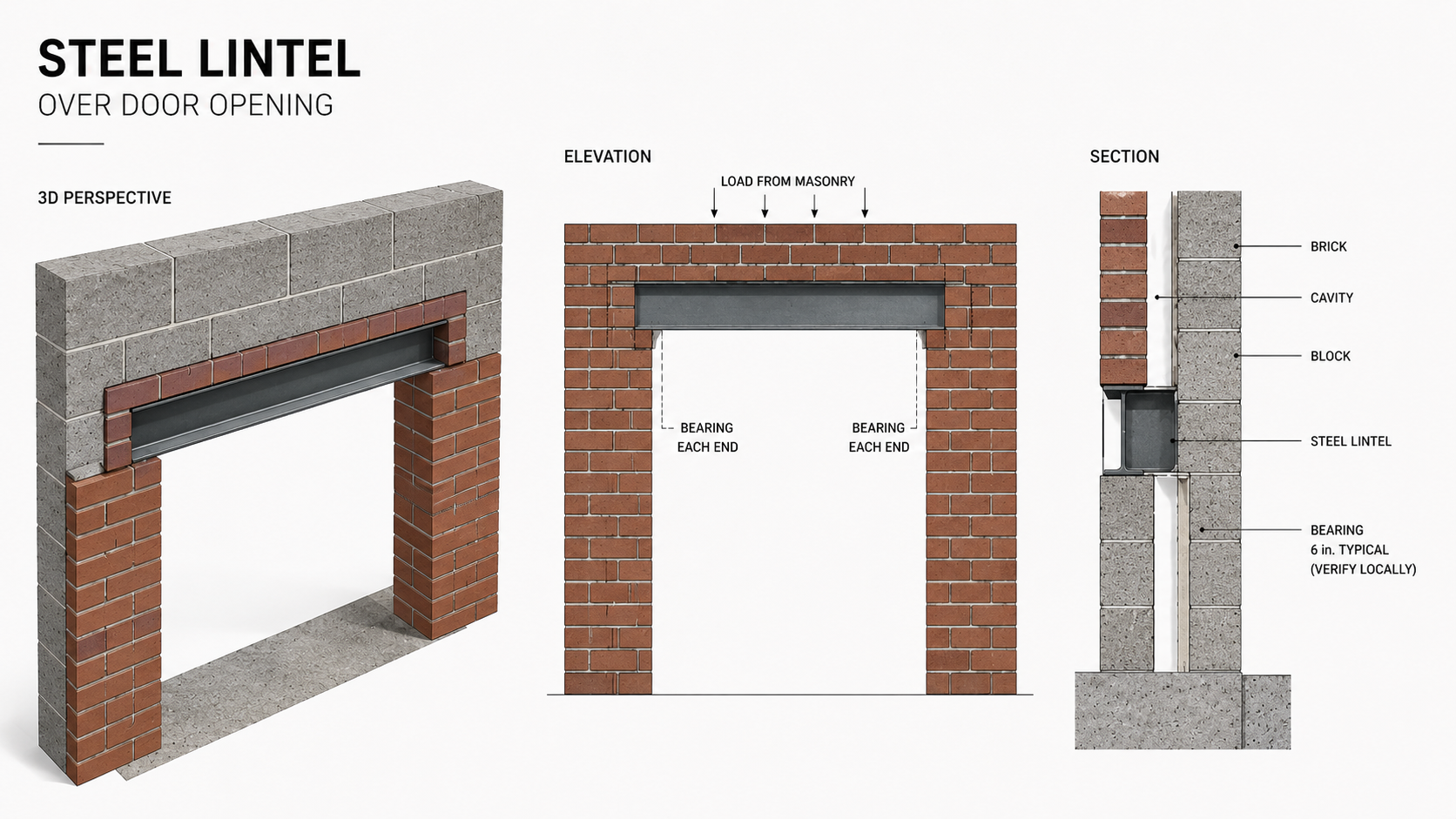
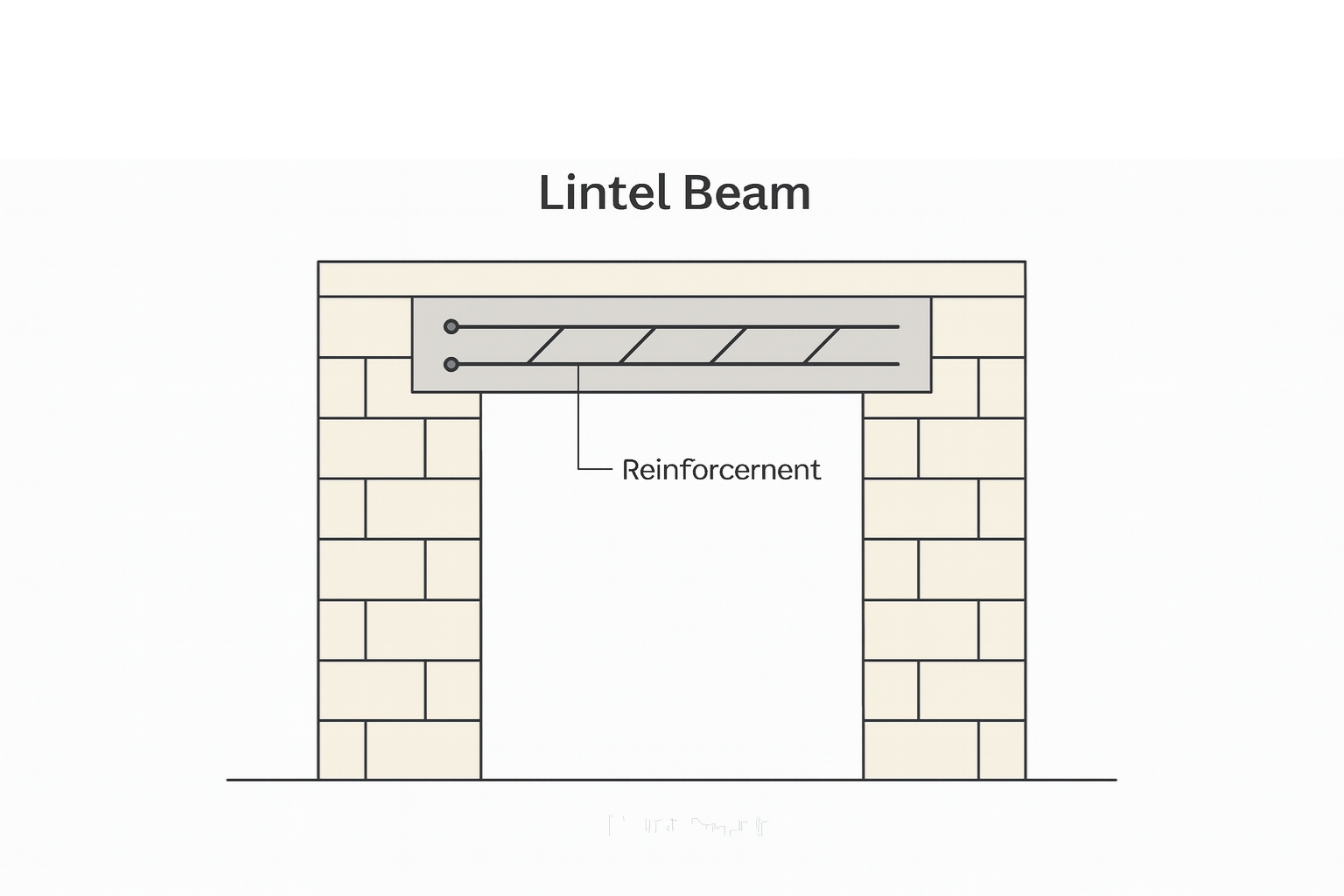
A lintel is a short beam installed over an opening to transfer loads to the supports (jambs). It can be concrete, steel, timber, engineered wood, or a proprietary box/cavity unit. Above doors and windows, lintels prevent cracks and sagging and can also support floor joists or roof loads when specified.
- Window lintel beam: sized for wall + wind + any floor/roof load above.
- Door lintel beam: often taller due to bigger clear span and headroom limits.
- Concrete header beam: a cast-in-place or precast RC lintel used in masonry.
Opening a wall? Align your plan with basic wall framing logic and your foundation’s bearing capacity (pier-and-beam primer).
Lintel Materials (When Each Makes Sense)
Every lintel does the same job—carry load across an opening—but the material choice changes everything: cost, fire rating, finish, and how you actually install it. Below is how each type performs in real field conditions, not in theory.
Steel Lintel Beam (RSJ, UB, I-Beam)
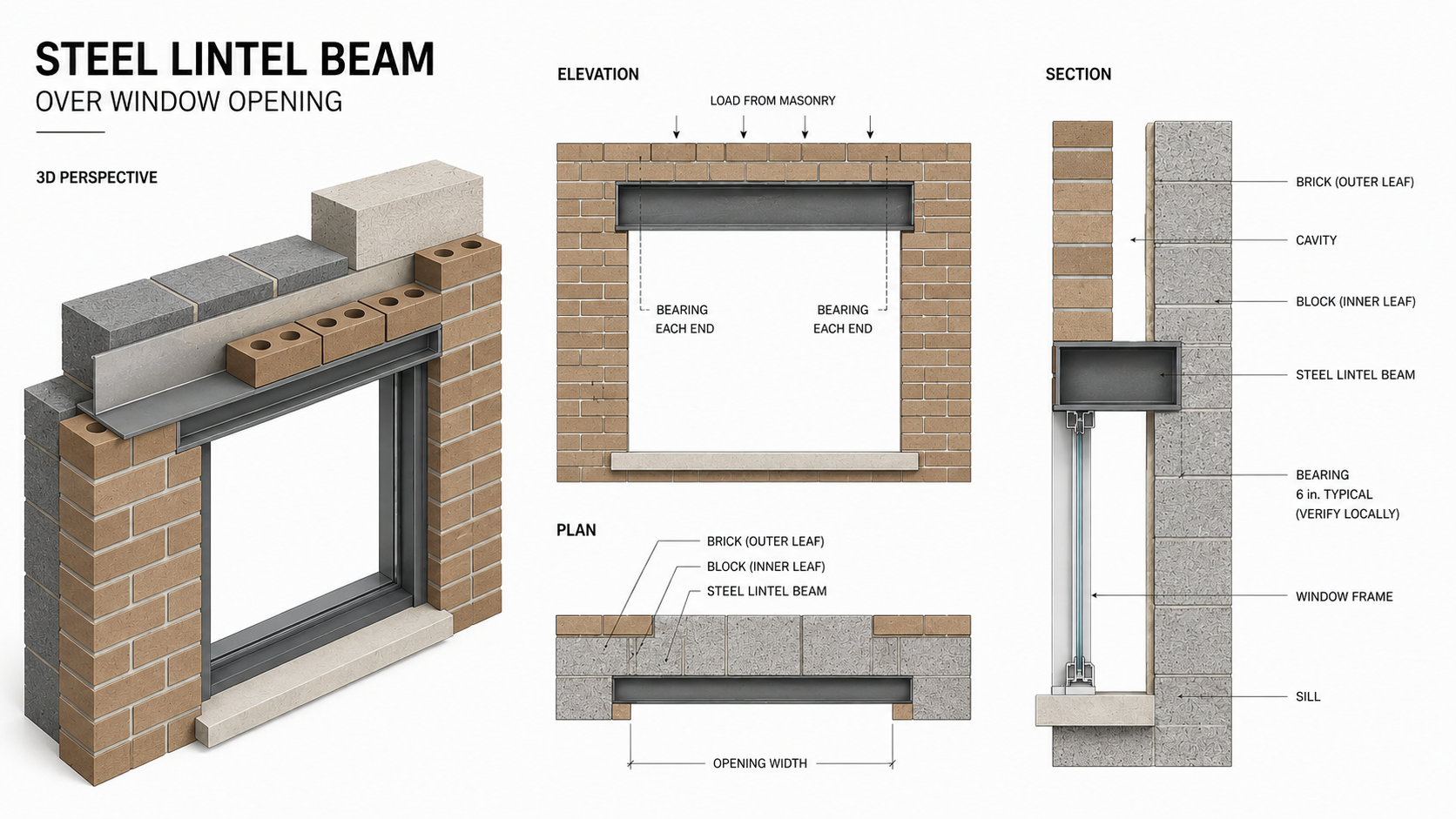
Illustration by ArchitectureCourses.org. A steel lintel over a window opening supports the masonry above and needs proper end bearing, cavity coordination, and local sizing before installation.
Steel is the go-to for strength in tight spaces. A 152×89 UB can carry what a concrete lintel twice the depth would. That matters when you’re fighting for headroom over doors or garage openings. Steel also works cleanly with padstones—no cracking, no guesswork. But protect it. Galvanize or prime it, close the cavity, and cover exposed flanges. Fire strategy matters too; steel softens fast above 500°C, so include board wrap or intumescent coating where required. I’ve seen more failures from skipped coatings than from under-sizing.
Concrete Lintel Beam (Precast or Reinforced Cast-In-Place)
Concrete lintels are the quiet workhorse in masonry. They handle fire beautifully and blend with blockwork. They’re heavy, so plan lifting early—especially if it’s a two-story retrofit. Keep at least 150 mm of bearing on solid masonry, not on mortar slop. On site, I’ve learned to cure them properly before loading; premature loading is the number one cause of hairline cracking near jambs. For rough spans under 2 meters, precast saves time. Beyond that, cast-in-place RC with proper rebar and hooks is safer.
Timber and Engineered Wood (LVL, Glulam, PSL)
Used in Western timber houses all the time. We just call them headers instead of lintels. In new wood-frame builds across the US and Canada, an LVL or glulam lintel sits above most openings. They’re light, fast, and easy to trim flush with the wall finish. Always check moisture class (interior, exterior, or covered) and confirm bearing plates if you’re setting them on block or concrete. LVL and PSL creep slightly under load—keep camber up if the manufacturer includes it. For long spans, double or triple-ply beams are standard; glulam feels more stable when left exposed.
Box Beam, Catnic, and GI Lintels
These are the factory-made options you see in cavity wall systems. They’re light-gauge steel shells (galvanized or stainless) that carry both leaves of masonry. Their insulation cores bridge the cavity, cutting thermal loss. Perfect for brick veneer or cavity block walls in the UK and Canada. The key rule: never guess capacity. Follow the exact span/load chart from the manufacturer. Catnic, IG, or Keystone tables are gospel—every cavity width and leaf load combination changes the safe span. Seal cut ends with zinc spray or paint after trimming; that’s how you stop rust streaks later.
Mild Steel, UB, or Custom I-Beam Lintels
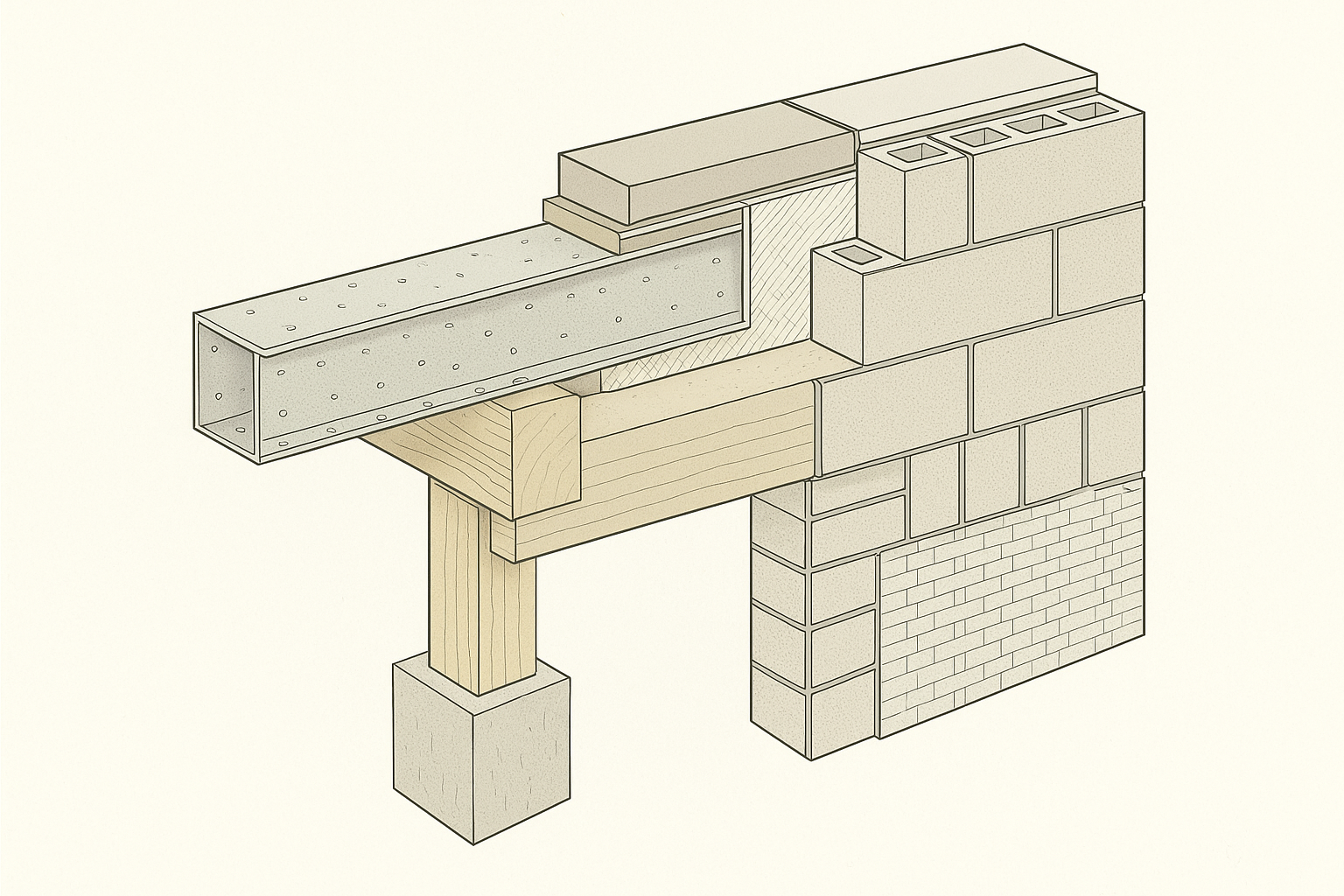
When nothing standard fits, custom steel wins. Fabricators cut, plate, and bolt to match the architect’s details—useful for bay windows, cantilevers, and stacked openings. Always confirm the steel grade (S275 or S355 in most specs) and coating system. Mild steel without protection is a rust magnet. I’ve used simple single-flange angles for light brickwork and full double-flange I-beams for load-bearing. Pack level and never rely on mortar to fix alignment. Once you weld or drill, treat the exposed area fast—field rust shows in weeks.
For roof-heavy openings, review roof tie beam basics so you understand how load travels into the lintel. For moisture and cracking control on wall faces, the exterior wall sheathing guide is worth five minutes—it saves plaster repairs later.
Common Lintel Setups

- RSJ lintel / UB lintel: universal beam with plates/angles as needed for brick/block support.
- RC lintel beam: cast-in-place or precast reinforced concrete with rebar hooks and proper cover.
- Box beam lintel / Catnic beam: cavity lintel with separate inner/outer leaf support and insulation.
- T-beam lintel: formed by concrete lintel and slab acting together (check shear keys and bearing).
- Cantilever lintel: one-sided support for corner windows—strict on deflection/rotation.
- Metal lintel beam (GI/mild steel): galvanized for durability, often in light-gauge systems.
Not sure how a lintel differs from long beams? This short read on tie vs. plinth beams clarifies roles in the stack.
Sizing Basics (No Guesswork)
- Inputs: clear span, wall thickness, load above (masonry, floor joists, roof/truss point loads), service openings.
- Deflection: keep tight to protect finishes and glazing; follow code and manufacturer limits.
- Bearings: typical 100–200 mm each end; confirm bearing stress vs. masonry strength or padstone rating.
- Thermal: cavity lintels need insulation continuity to avoid cold bridging.
For quick sanity checks, see span & load basics for beams. If your opening supports floor joists, coordinate with framing 101.
Padstones, Bearings & Connections
- Padstone for steel beam / RSJ: dense concrete, stone, or engineered block sized to reduce bearing stress.
- Steel beam padstone: length ≥ bearing, width ≥ flange/plate; check compressive strength and grout flat.
- Bolting steel beam to padstone: only if engineer specifies; most steel lintels sit free with anti-roll details and plate packing.
- Padstone for steel / padstone for RSJ: verify with calc sheet; don’t substitute lightweight block.
Changing a structural wall? Read a quick load-bearing check without tearing drywall, then get calcs sealed.
Install Sequence (Door & Window Lintels)
- Prop & prep: shore above, mark bearings, cut neat pockets.
- Seat padstones: level bed, full contact, cure per spec.
- Set lintel: lift level, check camber orientation, pack solid (no shims that crush).
- Ties & DPC: maintain cavity trays, weeps, wall ties, and insulation continuity on box/cavity lintels.
- Load back: re-build masonry, keep joint thickness consistent; remove props per engineer.
Swapping a window? Pair this with a straight how-to on framing a new opening or a door frame options recap.
When Lintels Also Support Floors or Roofs
- Lintel to support floor joists: verify joist reactions, hanger type, and rotation restraint.
- Concrete floor lintels / floor lintels: coordinate composite action and bearing heights across rooms.
- Lintel roof beam: if carrying rafters/trusses, coordinate with bracing and uplift ties.
Roof loads change the spec fast—scan truss bracing essentials and roof bracing basics before you pick a section.
Lintel Beam Cost (What Drives Price)
- Material: steel vs. precast concrete vs. engineered wood.
- Span & load: longer and heavier = deeper section and more labor.
- Details: fire protection, coatings, thermal breaks, custom plates/angles.
- Access: tight sites add lifting and propping cost.
Ballparks vary by region; list line items as lintel beam price, padstones, install, finishes, and inspections. For precast, ask local yards under “concrete lintel beam near me”; for steel, request quotes for mild steel lintel vs. galvanized.
Replacing a Lintel in Existing Walls
- Survey first: cracks, damp, corroded angles, sagging heads.
- Shore safely: needle through joints; keep traffic off the area.
- Match bearings: don’t shorten supports; upgrade padstones if needed.
- Finish smart: flashings, trays, weeps back in place to stop repeat leaks.
If the wall is saturated or unstable, pause and review foundation and wall health—these two guides help: basement wall leak fixes and a simple foundation wall build-through.
Buying Notes (Big Box, Merchants, Online)
- Catalog terms: look for lintel beam screwfix, lintel beam wickes, lintel beam bunnings style listings; always grab the manufacturer’s load table.
- Specs to match: span, cavity width, load case (inner/outer leaf), corrosion class, thermal value.
- Paper trail: keep the data sheet and a calc note in the project folder.
Before checkout, confirm the wall is structural or not and that your bearing substrate meets compressive strength needs.
Quick Answers
- Can wood lintel beams work? Yes for light spans; for long spans or wet zones, use LVL/glulam or switch to steel/concrete.
- Window vs. door lintel beam? Doors often need a deeper section due to taller openings and fewer masonry rows above.
- Steel lintel + padstone: size padstone by bearing stress; grout level; keep full contact—no point loads on block edges.
- Catnic/box units: follow the exact cavity size and leaf load limits; keep trays and insulation continuous.
- GI lintel beam? Galvanized steel—pick the right coating class for exposure and mortar chemistry.
Need a wider structure view? Skim house framing overview and this short piece on tie beams in construction.
Glossary
- RSJ: rolled steel joist (common term for UB/I-beam lintels).
- Padstone: dense block/stone under a beam to spread load.
- UB / I-beam: universal beam section, strong in bending.
- RC lintel: reinforced concrete lintel with rebar.
- Catnic / box lintel: proprietary cavity lintel with insulation.
- LVL / Glulam: engineered wood beams with predictable strength.