
Building Materials Explained by Someone Who’s Used Them
Every good building begins long before the drawings. It begins at a table where someone has to choose what the walls are made of, how the roof sheds water, how the floor feels under bare feet in winter. Materials are not a catalog of substances. They are a chain of consequences. Pick one and you inherit its strengths, its limits, its cost profile, its carbon debt, and the way it will age in front of people. This is an introduction for real projects and real budgets. Calm, field tested, no fluff.
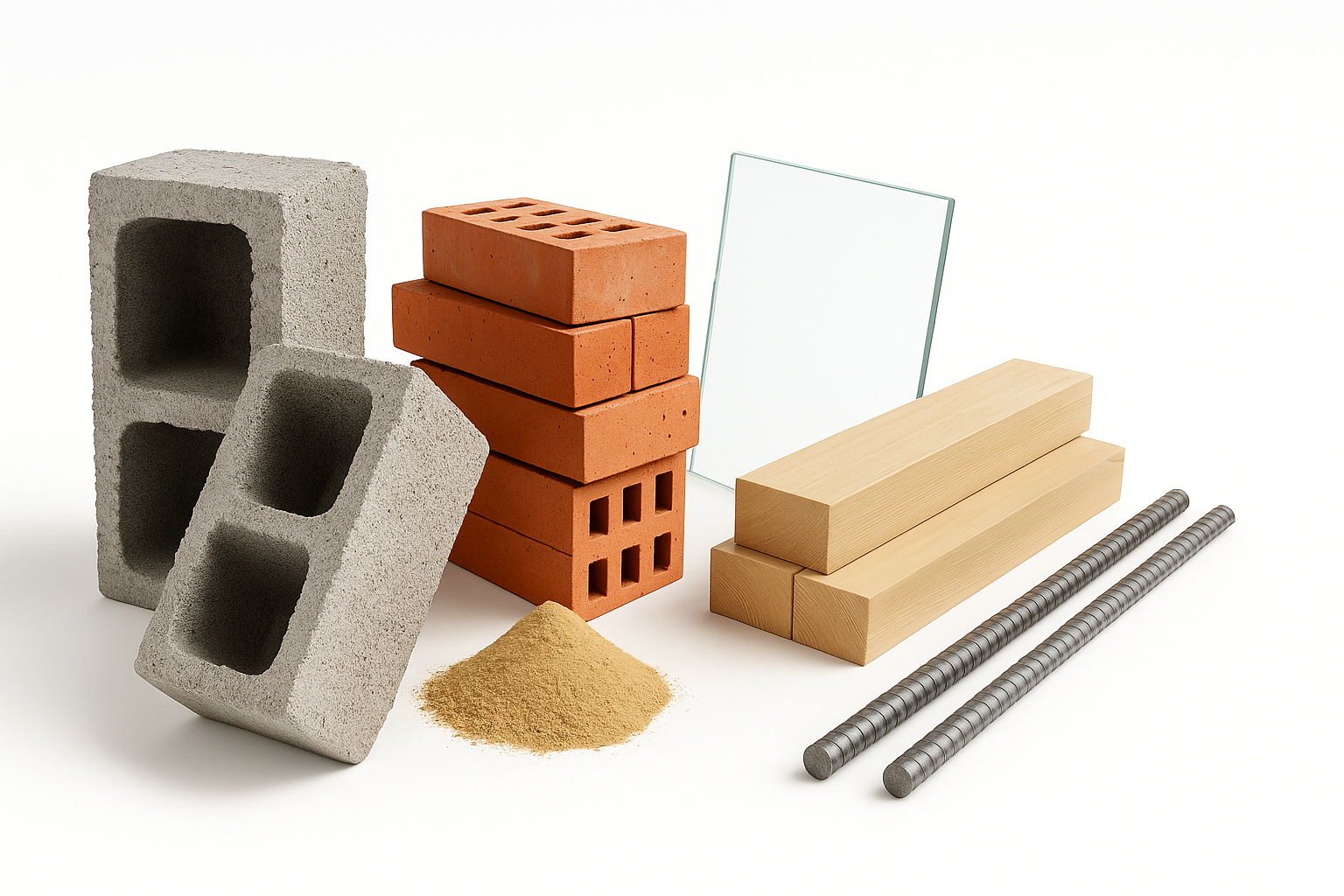
When I say materials, I mean wood that moves and breathes. Concrete that holds heat like a battery. Steel that will do anything you ask if you respect its details. Brick that looks better after the third freeze thaw cycle, not worse. Glass that carries light deep into rooms but demands shade and spacing so it does not punish the people who sit near it. Plastics and foams that can be brilliant as membranes and insulators if you treat them as systems and not as shortcuts. Natural mixes like clay and lime that seem old fashioned until your summer cooling bills arrive.
If you want a simple primer on categories and first decisions, start with a broad overview of what goes where and why. For a quick step up, you can review a practical walk through of common options in our plain language guide to materials choices. If you care about the long arc of how we got here, this timeline of construction materials gives useful context so your project does not repeat yesterday’s mistake with today’s price tag.
What You Actually Need To Know
Materials decide four things that drawings cannot fix later. First is load path. A wall, floor, or roof is only as good as the chain of forces it can deliver safely to the ground. Second is moisture. Water will try to get in as vapor, liquid, and occasionally as wind driven rain that behaves like neither. Third is thermal behavior. You are not heating or cooling rooms. You are managing mass and air films and solar gain. Fourth is time. Everything expands, contracts, weathers, and ages. Choose materials that lose beautifully and forgive small errors. That is the quiet secret of durable buildings.
In studio we talk about form and proportion. On site I carry a small list: where will the water go, where will the heat go, what will this look like after five winters, and who will maintain it. That list has never let me down.
How To Choose Without Guessing
Here is a simple way to make materials decisions that hold up in the field. It works for houses, schools, and small commercial work. It fits into one meeting and saves three.
Start with the physics. Name the main loads, the moisture risks, the fire rating requirements, the spans, the subsoil, and the expected movements. Pick three candidate assemblies that satisfy the physics without heroics. Next, run the people check. How does it sound when you walk on it. What does it smell like when the sun hits it. Will a caretaker be able to fix it with common tools. Then do the planet math. Embodied carbon, recyclability, transport distance, toxins, and end of life. Finally, tell the truth to the budget. Total installed cost now, five year maintenance, and the hidden line items like special fasteners, primers, tapes, and sub trades.
If two options are close, build a mockup. A meter wide, real fasteners, real sealants, set it outside for a week. Pour water over it. Heat it with a work light. Measure, photograph, decide. Tiny mockups beat long meetings.
See Also: The Complete List of Building Materials
If you want to go deeper into how insulation fits within the bigger picture of construction, read The Complete List of Building Materials: Key Types and Their Applications. It explains how structure, envelope, finishes, and mechanical layers all connect—so insulation decisions line up with everything else the building has to do. Think of it as the full map before you zoom in on one system.
Wood, Concrete, Steel, Brick, Glass
Wood is forgiving. It cuts cleanly, spans modestly, and loves to move a little if you allow it. In cold climates a wood frame with continuous exterior insulation remains the most cost effective way to get to comfortable. In wet climates, detail for drying not just for blocking water. Mind the end grain and vent your rainscreen. If you want a deeper dive into natural assemblies and why they still matter, this plain English primer on earth and natural materials is a good companion.
Concrete is a gift when you need mass and fire resistance. It stores heat and smooths out temperature swings. It also carries a carbon burden that you must account for. You can lower the impact with blended cements, supplementary cementitious materials, and smarter mixes. Use it where it does something only concrete can do. Do not pour mass out of habit.
Steel is willpower in a beam. It gives you long spans and slender lines. It asks for fire protection and thoughtful thermal breaks. Rust can be honest and beautiful if it is the right alloy and detail. Otherwise, protect it and give it ventilation so it stays dry.
Brick is slow, steady, and kind to the eye. As a veneer over a ventilated cavity it can last longer than you will. As structure it needs skill and time that many projects no longer carry. If you use brick, show its bond, respect its weight, and let the corners be real.
Glass is light delivered. It needs shade, spacing, and low tech aids like exterior blinds and deep reveals. The trick is not making glass perform miracles, but making the opening do more of the work. Shade from the outside first. Then tune coatings and cavities.
Materials You Think You Know
Plastics and foams are not villains. They are tools. A membrane that stays elastic at low temperatures can save a roof. An airtightness layer you can test and tape is a gift. A foam board can be brilliant as an external layer that relocates dew point and warms the structure. Problems arrive when these materials are used as a cure all without a plan for drying, fire, or pests. Treat synthetic layers like instruments in an orchestra. Tuned and balanced, not blasting solo.
Clay, lime, and plant fiber mixes can look quaint until you stand in a room that stays cool at four in the afternoon without a machine humming. Thermal mass and hygroscopic surfaces smooth the day. They also forgive small drafting leaks by buffering humidity. If you want to try a small scale test, build a full size corner. Clay plaster on one wall, a conventional gypsum board on the other. Live with it for a week. You will feel the difference.
How Real Projects Fail
Water finds the smallest lie. If you promise a path out for bulk water and vapor and you keep the promise with slopes, gaps, laps, and vents, your building will age well. Failures begin at penetrations, at the bottom of walls, and where different trades meet. The cure is not a thicker coating. It is sequencing, mockups, and checklists. Ask each trade to draw how their work overlaps the next layer. If two drawings contradict, fix it on paper. It is ten times cheaper there.
The second failure is thermal bridges. A perfect wall with one steel angle running through it can lose more heat than you think. Learn to see heat as water. If you would not run a pipe through the envelope without a sleeve and sealant, do not run a structural element without a thermal break and air seal plan.
The third failure is wishful maintenance. If a filter lives behind a screwed panel above a storage cabinet, it will not be changed. If a window cannot be safely cleaned, it will not be clean. If a timber cannot dry because mulch is piled against it, it will rot. Design for the day after the ribbon cutting.
Thermal Insulation: The Quiet Workhorse
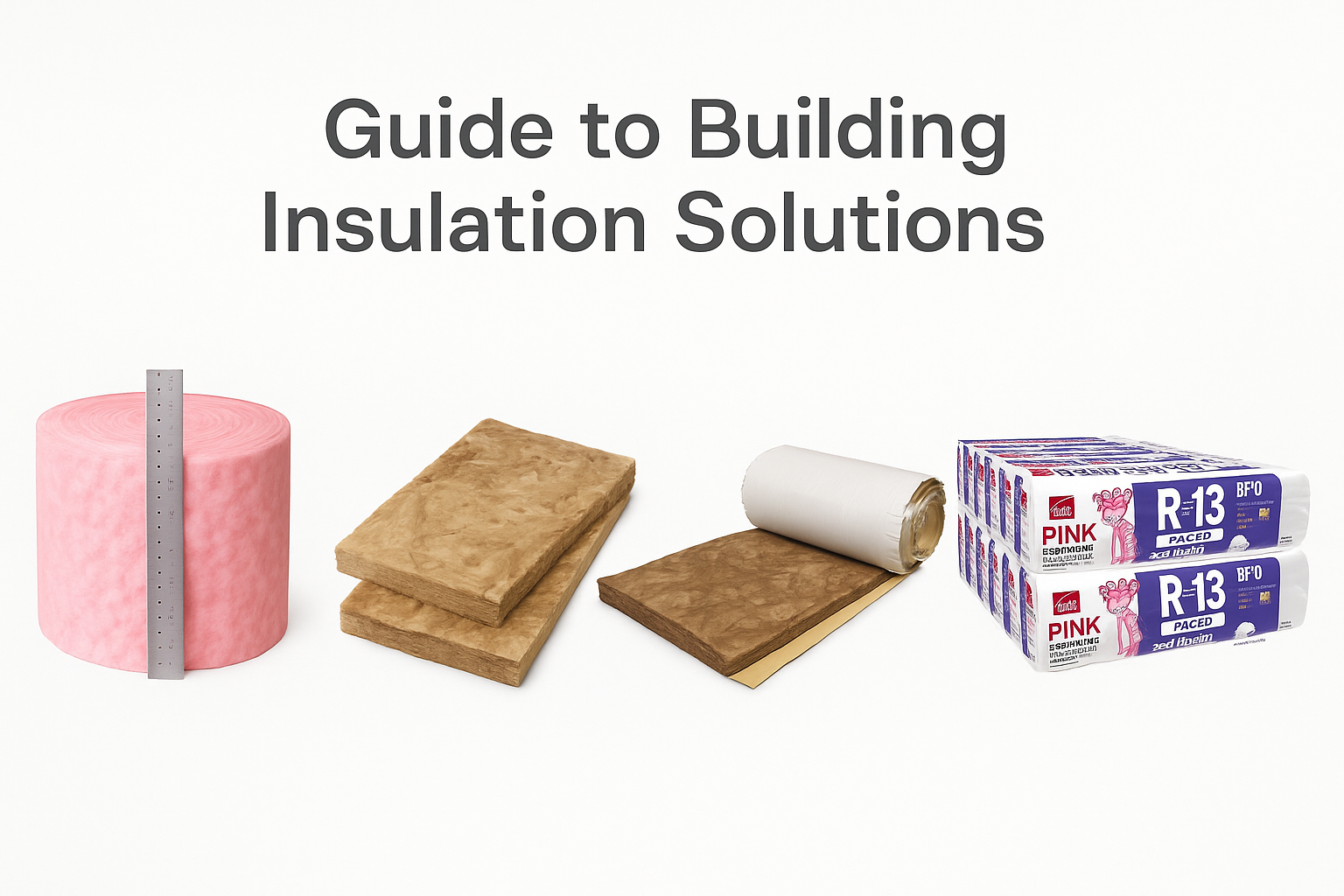
Every strong wall still fails without the right insulation behind it. People chase style, structure, and finishes, but it’s insulation that keeps the comfort stable and the bills low. It decides whether a room stays quiet in rain, warm at dawn, and cool at noon. Most mistakes come not from bad materials, but from mixing the wrong ones or skipping the air sealing that makes them work.
If you want the full breakdown—types, R-values, and where each system wins or fails—read our complete technical guide, The Complete List of Thermal Insulation Materials: Types, Uses, and Best Practices. It covers everything from fiberglass and Rockwool to aerogels, hemp, and vacuum panels, with real installation notes from site crews.
In short, insulation is not decoration. It is a control layer, same as the roof or the slab. It protects air, temperature, and sound all at once. Skip it, and the best architecture feels cheap. Get it right, and even a modest room feels like a quiet, steady machine tuned for life.
Field Notes
A client once asked why their polished concrete floor felt so comfortable underfoot in winter without turning up the heat. We had poured over insulation, used a mix with a little more fine aggregate, and let the slab see sunlight for a few hours a day. The floor became a daily battery. Nothing fancy. Just physics and patience.
Another time we chose a humble pine cladding and spent the money on a ventilated cavity, stainless fasteners, and proper end sealing. Two years later that elevation looked better than a more expensive hardwood across the street because the assembly was right even if the species was modest. Materials are not expensive or cheap in isolation. Assemblies succeed or fail.
Cost Without Surprises
Price the system, not the item. A cheap siding that needs a complex subframe with fire stops, special trims, and custom corners is not cheap. A dear stone that installs on a simple, repeatable cleat may beat it in a full bid. Write three numbers for each option. Material plus labor. Accessories and special trades. Maintenance over five years. You will see patterns fast.
Defer what you can replace easily and invest where change is painful. It is easy to repaint. It is hard to add cavity depth after the fact. It is easy to upgrade light fixtures. It is hard to swap dense insulation in a roof once the membrane is down. Put money where it buys you future options.
Performance You Can Feel
If you cannot measure it, you cannot manage it. On airtightness, plan a blower door test before finishes. On moisture, carry a simple meter. It will pay for itself the first time you catch wet sheathing before you close the wall. On temperature, an infrared thermometer can teach a team more in one afternoon than a lecture. Choose tools that make the invisible visible and bring them to site walks.
RECOMMENDED TOOL
A reliable handheld moisture meter helps you trust but verify during framing and before close up. The General Tools Moisture Meter is inexpensive and accurate enough for field calls. Use it at sill plates, window corners, and roof returns after rain.
Design With Time In Mind
Everything changes. Wood greys. Copper blooms. Concrete darkens where people touch it. Choose finishes that do not fight time. A clear oil on a handrail will look honest and is easy to refresh. A stain that must match a sample forever will become a maintenance contract. Let sun and rain write a slow story on the exterior. Keep the weather off the weak points. Give the building a hat and boots. Deep eaves and tall plinths still work.
Where To Learn Next
If you want a focused step by step on narrowing choices, this simple playbook on how to run a materials selection process is useful for studio and small offices. If texture and how surfaces meet light interests you, take a look at this short read on working with texture. Both pieces connect ideas to details you can draw tomorrow.
A Quick Differentiation Guide
Here is how to tell when two materials or assemblies are pretending to be equivalent but are not.
If one option depends on a flawless seal and the other can get wet and dry safely, pick the one that can forgive. If one option gets stronger as it dries and the other gets brittle with UV, plan for the sun you actually have. If one option looks best on day one and the other looks best after year five, choose based on how long the owner will hold the building. If two options perform the same but one has a local supply chain that can deliver spare parts in a day, choose the local one. Delays are a real cost.
Finally, choose by touch. If the surface feels good to the hand, people will care for it. If it feels cheap or fake, they will treat it that way. Buildings succeed when occupants become allies.
Closing Notes From Site
Stand in the space where the wall will be and ask what you want to hear. Pick materials that make that sound. Imagine the day the first storm blows sideways and ask where the water will go. Choose the assembly that answers without drama. Think about the person who will change the filter or re seal the deck and make their life easy. Good materials decisions are acts of respect. They respect physics, people, and time.
MUST READ
If you want one practical reference that ties systems together from envelope to services, The Whole Building Handbook is the book I hand to interns in their first week. It will not romanticize anything. It will help you make better calls.
Explore More
If you are mapping options for a first project, a simple foundation in the basics helps. This short explainer on what counts as a building material pairs well with a practical review of the core structural families so your design choices match the way loads really travel.
FAQ
What is the fastest way to shortlist materials for a project
Start with physics. Name loads, moisture risks, fire rating, spans, and movement. Pick three assemblies that solve those without heroics. Then run people comfort, carbon, and cost. If you want a step by step checklist, see this simple guide to making materials choices.
How do I prevent moisture problems in walls
Give water a way out. Use a continuous air and water control layer, ventilated cavities, sloped sills, and proper laps. Test airtightness before finishes. Spot check wet areas with a handheld meter after rain and before close up.
What matters more for comfort, insulation or airtightness
Airtightness first, then continuous insulation. Leaky envelopes erase R values. Plan one continuous air barrier you can draw with a single pen line and build it with tapes and transitions you can actually test.
When is concrete the right choice
Use it when you need mass, span, fire resistance, or durability in wet conditions. Lower the carbon with blended cements and supplementary materials. Avoid using concrete where wood or steel would perform with less impact.
How do I handle thermal bridges
Treat heat like water. Anything that crosses the envelope needs a thermal break and an air seal. Watch shelf angles, balcony stubs, lintels, and fasteners. Verify with an infrared thermometer on a cold morning.
Is exterior foam safe to use
Yes if you manage fire, insects, and drying. Use compatible tapes and flashings, protect edges, and continue the insulation across structure to move dew point outward. Add rainscreen ventilation so the sheathing can dry.
Wood cladding or fiber cement
Wood ages beautifully if detailed to dry. Fiber cement is stable and low maintenance but needs careful cutting, sealing, and fixing. Price the full system including trims and labor. Pick the one your trades install well.
Do natural materials really help with comfort
Clay, lime, and timber moderate humidity and store heat gains, which smooths daily swings. They also forgive small air leaks by buffering moisture. For a clear overview of earth based assemblies, see this practical read on natural building options.
What is the best window strategy for summer
Shade from the outside first. Use overhangs, exterior blinds, and trees. Then select glass coatings for orientation. Cross ventilation beats oversized mechanical cooling in temperate climates.
How do I choose between steel and engineered timber for a long span
Run deflection, vibration, and fire criteria first. Steel spans farther and is slender. Timber is lighter, sequesters carbon, and can help acoustics. Compare total depth with services, erection time, and fire protection method.
What is the most common failure point on envelopes
Window corners and transitions between trades. Solve with a mocked up corner that includes real tapes, flashings, and cladding. Photograph the sequence and make that the site standard.
How many internal links should an article include
Keep it natural and useful. Aim for at most two per section or five hundred words and vary the anchor text so it reads like a human recommendation, not a list.
How do I compare two “similar” wall systems
Price installed cost with trims and fasteners, time to weather tight, labor risk, thermal bridge count, and five year maintenance. The cheaper line item often loses when accessories and rework are included.
Which materials age well outdoors
Timbers that are detailed off grade, ventilated brick, zinc and copper with proper back ventilation, mineral plasters with good caps and drips, dense stone on simple anchors. Choose finishes that welcome patina.
What tools should I bring to site to verify performance
Moisture meter for framing and sheathing, infrared thermometer for bridges, a small endoscope for hidden cavities, and a smoke pencil for quick leak checks. Measure early and often.
How do I keep interior acoustics under control with hard finishes
Break up surfaces. Use soft ceilings or wall panels where people talk, add bookcases and deep reveals, and avoid facing parallel hard planes. A little absorption placed well does more than lots placed randomly.
Can I mix materials on one facade without it looking busy
Yes if you let structure and weather logic draw the lines. Change material at a clear shadow joint or a change in plane. Keep the number of textures low and let one be the quiet background.
What is the simplest way to cut operational energy without new tech
Airtight envelope, exterior shade, balanced ventilation with heat recovery, and right sized equipment. Control sun first. Control air second. Right size last.
How do I plan maintenance from day one
Place filters and valves where a person can stand safely with two hands free. Choose finishes that can be touched up. Document sealants and coatings with dates and expected life so replacements are planned, not guessed.
How do I avoid schedule slips caused by materials
Pick assemblies that your local trades install weekly. Confirm lead times for specialty items before design lock. Approve a physical mockup, then freeze details. Ship critical sealants and tapes to site early.
What is a good first step for students learning materials
Handle them. Build a one meter corner with your chosen wall layers and leave it outside for a week. Pour water, heat it, then cut it open. You will learn more than from slides.
Which books actually help with materials and systems
Use a systems text that ties envelope, energy, and detailing together. A good example is The Whole Building Handbook for a clear link between design intent and field performance.
RECOMMENDED TOOL
A compact moisture meter pays for itself the first time you catch wet sheathing before closing a wall. The General Tools Moisture Meter is a solid field pick for quick checks at sills, window returns, and roof edges.