
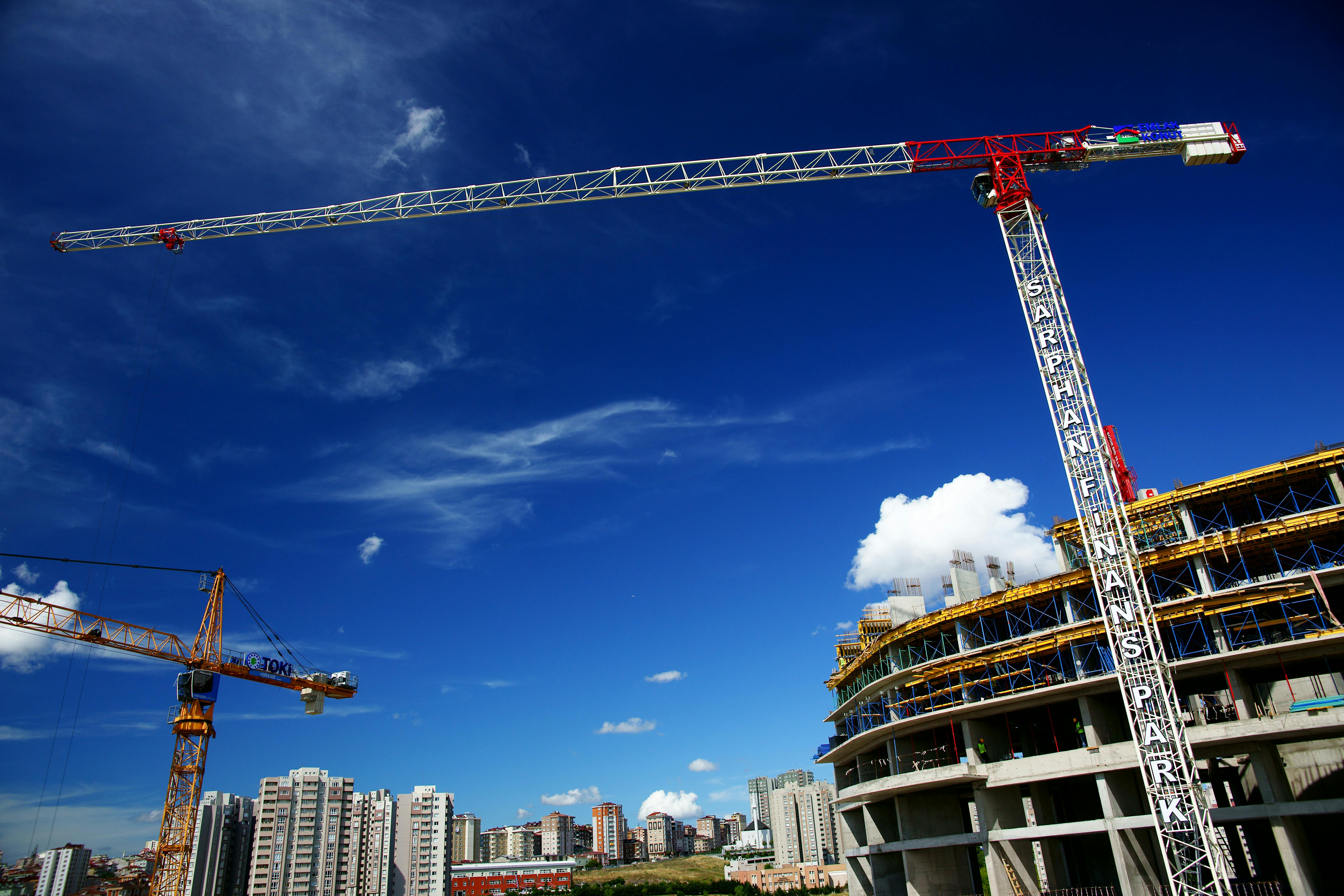
The Essential Guide to Core Structural Materials Every Architect Must Know
Core Structural Materials Explained: Strength, Durability, and Sustainability
Buildings don’t stay standing by magic. Behind every beautiful structure is a set of core structural materials. These materials aren’t flashy or always visible, but they’re doing all the heavy lifting—literally.
When architects pick these materials, they're not guessing. They rely on strength, durability, and practical use. If you're getting serious about architecture, knowing your materials isn't optional—it's essential.
Here’s a real-world breakdown of the most common structural materials, how they're used, and what you should consider when choosing them.
Core Structural Materials in Architecture: What Actually Holds Buildings Together
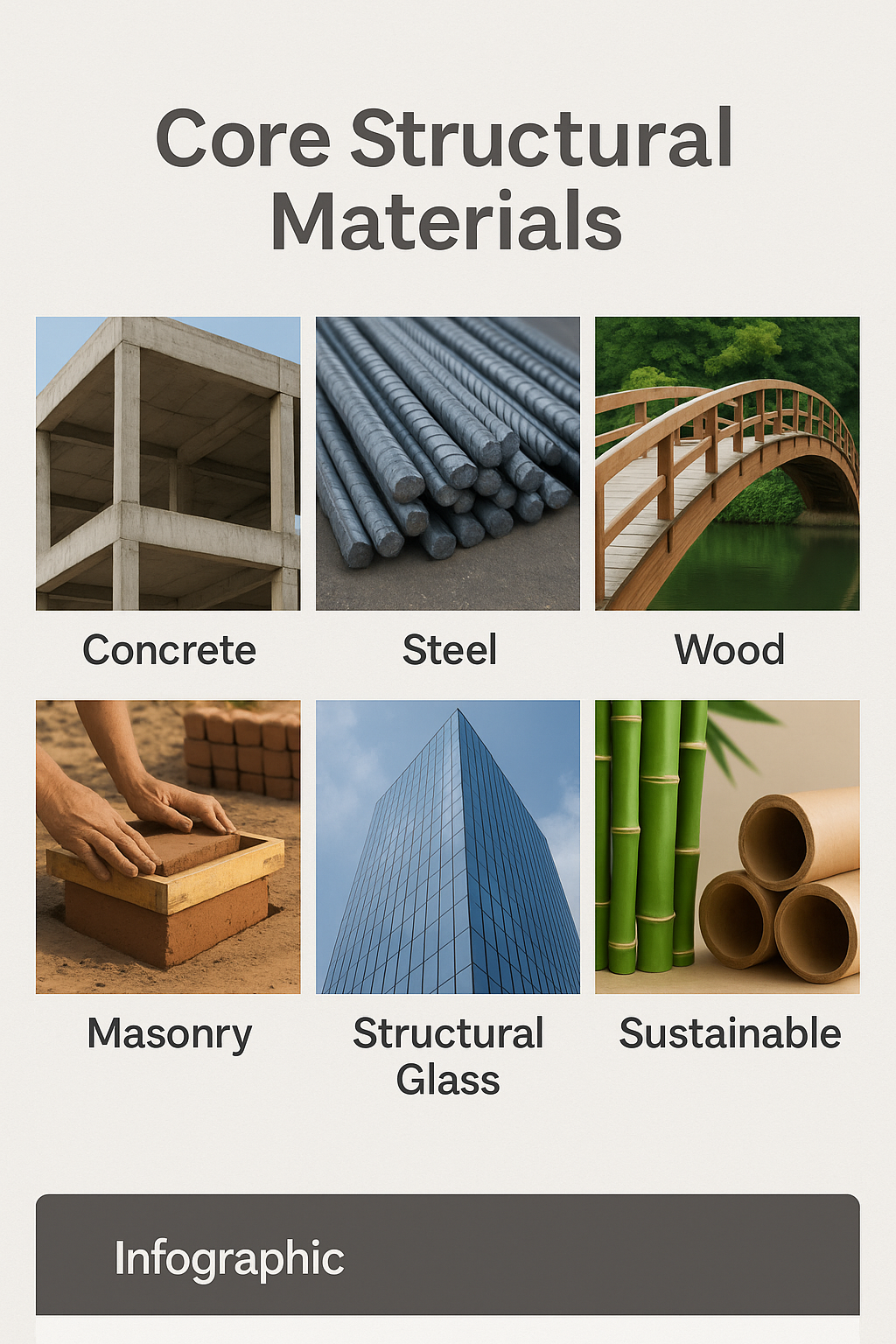
Image: Educational infographic on core structural materials in architecture, covering concrete, steel, wood, masonry, glass, composites, and sustainable materials.
Behind the Walls: Discovering Core Structural Materials and Their Role in Modern Design
Top Core Structural Materials in Architecture: Building Solid Foundations
Essential insights about core structural materials. Learn what they are, why they matter, and how architects choose them for safe, sustainable buildings.
Concrete: The Tough Stuff
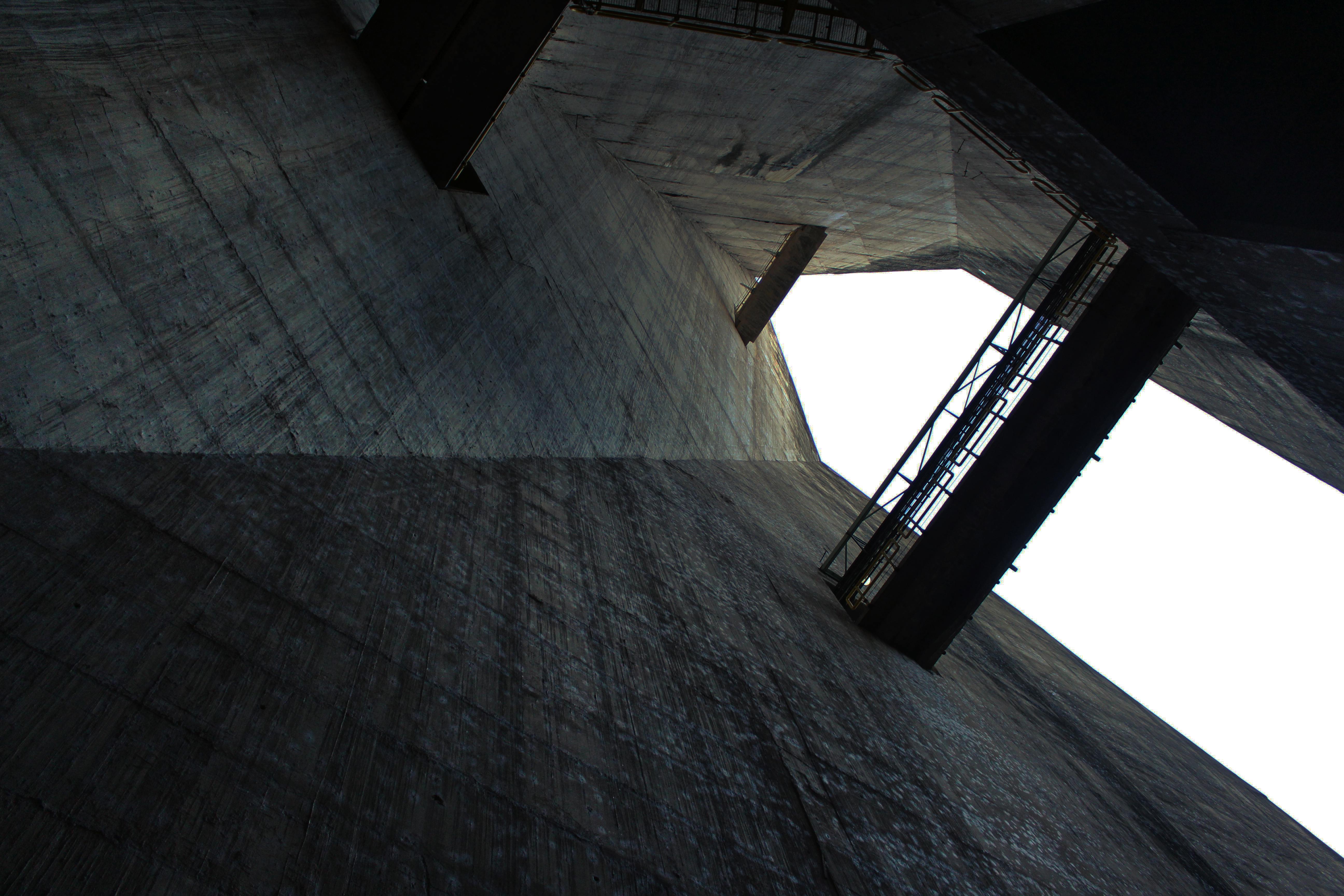
Concrete might seem boring, but there’s a reason it's everywhere—it's incredibly strong, versatile, and durable.
Here's why architects swear by concrete:
- Strength and Durability: Concrete handles serious weight and lasts for decades without much fuss.
- Fireproof: Concrete won't burn or melt—important stuff when you're designing safe buildings.
- Flexible Designs: It can be shaped into just about anything.
But it's not perfect:
- Cracks Happen: Concrete can crack over time, especially if the mix isn't right or if it's exposed to extreme weather.
- Environmental Concerns: Making cement releases a ton of CO₂, a fact architects now have to consider carefully.
Real-life tip: Architects are turning to recycled concrete or additives like fly ash to lower environmental impacts.
Recommended Reading: "Concrete Structures" by Mehdi Setareh
Steel: Strong and Flexible
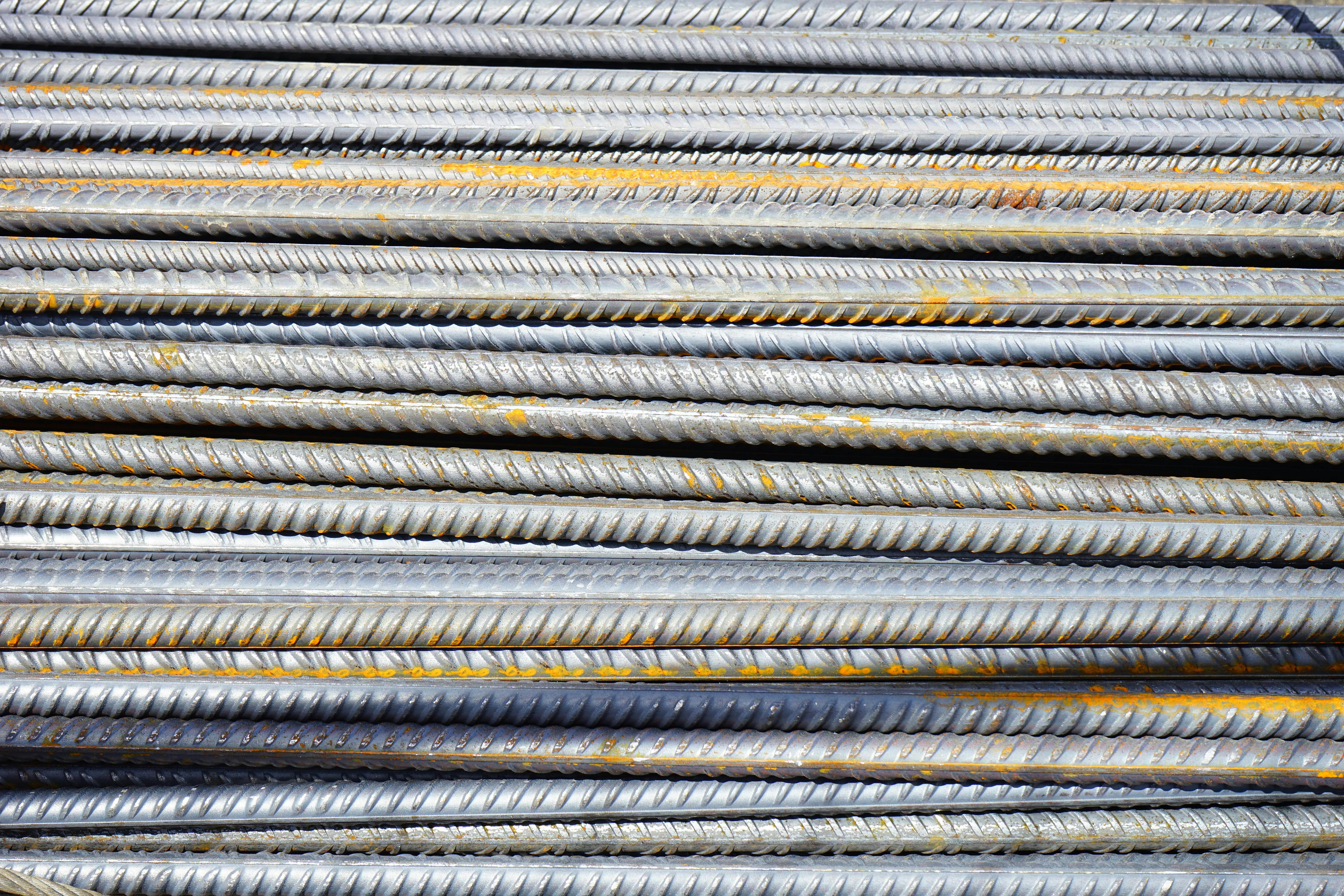
Steel is the reason skyscrapers exist. It’s strong, flexible, and can handle tension without breaking.
Why steel rocks:
- Super Strong, Lightweight: It supports heavy loads without bulky construction.
- Fast Building: Steel components can be prefabricated, cutting down build times dramatically.
- Flexible: Steel bends without breaking—crucial in earthquake-prone areas.
What to watch out for:
- Rust Risk: Steel needs coatings or special treatments to prevent corrosion.
- Heat Issues: Steel weakens significantly at high temperatures. Always use proper fireproofing.
Real-world tip: Composite construction (steel frames combined with concrete floors or cores) gives the best of both worlds—stronger and safer buildings.
Recommended Reading: "Steel Design" by William Segui
Wood: The Classic Choice

Image: Wooden bridge demonstrating the use of timber in construction, highlighting natural texture and strength in traditional architectural materials.
Wood is classic, renewable, and feels good to live around. It’s making a huge comeback, especially with sustainability in mind.
The upsides:
- Eco-friendly: Wood is renewable and stores carbon, making it a solid choice for green buildings.
- Easy to Use: Simple to cut, shape, and build with, saving construction time.
- Great Insulation: Naturally good at thermal and sound insulation.
Things to consider:
- Maintenance Needed: Susceptible to moisture, termites, and rot if not properly treated.
- Load Limitations: Usually requires support from other materials for taller structures.
Practical tip: Use engineered wood products like cross-laminated timber (CLT) for stronger, taller, and greener builds.
Recommended Reading: "Wood Architecture Today" by Ruth Slavid
Masonry: Old-School Reliability

Image: Brickmaking scene showing a man forming clay bricks by hand, illustrating traditional construction material production techniques
Brick, stone, and concrete blocks aren’t flashy—but they last forever. Masonry combines aesthetics with practical strength.
Here’s what makes masonry great:
- Super Durable: Properly built masonry structures easily last centuries.
- Low Maintenance: Once built, masonry requires minimal upkeep.
- Timeless Look: Provides texture, warmth, and character.
The downsides:
- Slow Construction: Skilled masonry work takes time and craftsmanship.
- Limited Flexibility: Not ideal in earthquake zones without careful engineering.
Pro tip: Modern insulating masonry blocks combine strength with better energy efficiency.
Recommended Reading: "Masonry & Concrete Construction" by Ken Nolan
Structural Glass: Strength Meets Beauty

Image: Close-up of glass windows on a modern skyscraper, showcasing contemporary construction materials and reflective architectural design.
Glass isn't just windows anymore. Structural glass supports loads and creates stunning, modern spaces.
Benefits of glass:
- Beautiful, Modern Look: Transparent and elegant, glass brings natural light and openness.
- Advancements in Strength: Special tempered and laminated glass can support significant weight.
- Energy Efficient: Properly insulated glass can significantly reduce energy costs.
Be aware:
- Fragility: Glass is brittle—impact or stress can cause catastrophic failure.
- Thermal Issues: Without careful design, glass buildings can get too hot or cold quickly.
Design tip: Pair structural glass with steel or aluminum framing for strength and safety.
Recommended Reading: "Structural Glass" by Peter Rice
Composite Materials: Advanced Strength
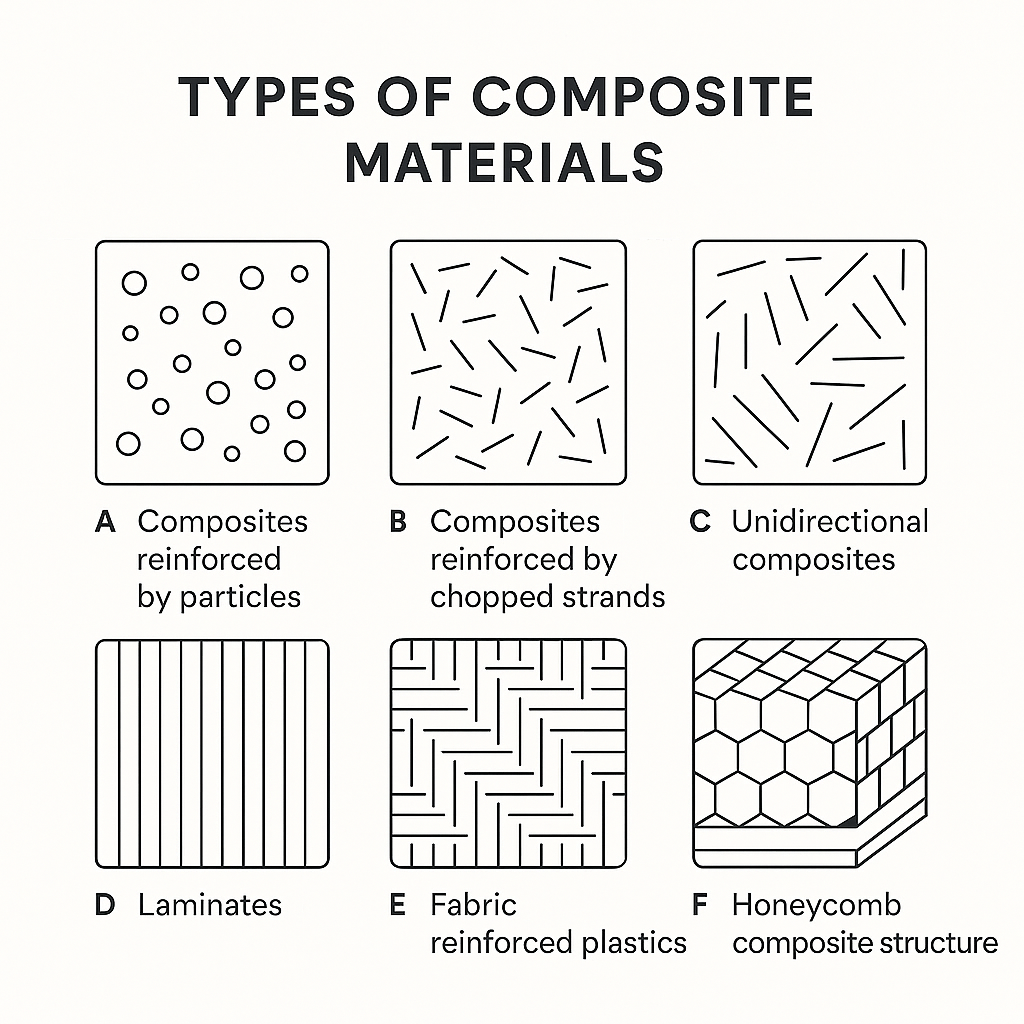
Image: Educational infographic recasting six composite material types, showing their distinct reinforcement patterns with labeled diagrams for easy understanding.
Composite materials blend strengths of different substances—like reinforced concrete or fiber-reinforced plastics.
Why composites matter:
- Super Strong, Super Light: Ideal for structures needing strength without heavy weight.
- Corrosion-Resistant: Excellent choice for harsh environments.
Things to consider:
- Higher Costs: Usually pricier than traditional materials.
- Complex Installation: Requires specialized expertise.
Real-world advice: Composites are ideal for unique challenges like seismic retrofitting or creating long-span bridges.
Recommended Reading: "Introduction to Composite Materials Design" by Ever J. Barbero
Sustainable Materials: Smart Future Building

Image: Sustainable construction materials shown as a stack of cardboard rolls, highlighting eco-friendly design options for modern architecture.
Architects are shifting towards sustainable materials for the planet’s future:
- Recycled Steel and Concrete: Cuts waste and reduces environmental harm.
- Bamboo: Fast-growing and strong, an emerging sustainable choice.
- Earth-based materials: Adobe, rammed earth, and compressed earth blocks offer natural thermal efficiency and minimal impact.
Recommended Reading: "Sustainable Construction" by Charles Kibert
Everything You Need to Know About Core Structural Materials for Durable Buildings
The core structural materials architects rely on to ensure strength, stability, and durability in modern construction. Learn the pros, cons, and expert tips.
In Focus: Bamboo as a Structural Material
Bamboo is emerging as a revolutionary structural material. It’s incredibly strong, rapidly renewable, and surprisingly versatile.
Why bamboo is catching architects' attention:
- Rapid Growth: Bamboo reaches maturity in just a few years, compared to decades for timber.
- High Strength-to-Weight Ratio: Comparable to steel in strength, yet significantly lighter.
- Sustainability: Bamboo absorbs large amounts of CO₂ and grows without harmful pesticides or fertilizers.
Real-world use case: Architects like Vo Trong Nghia are creating stunning, sustainable bamboo structures that withstand severe weather conditions and blend beautifully with their environment.
Recommended Reading: "Bamboo Architecture & Design" by Chris van Uffelen
Why Material Choices Make or Break Architectural Designs
Choosing the right building materials isn’t just technical—it’s what separates a truly great architect from everyone else. Picking the wrong stuff can lead to costly repairs, unhappy clients, or buildings that fail way too soon.
Architects Who Got It Right
- Tadao Ando & Exposed Concrete
Ando’s Row House in Sumiyoshi (Azuma House) proves concrete can be both raw and elegant. He didn’t just pour and pray—he used precise formwork and high-quality mixes. The result? Clean lines, zero cracks, and pure spatial calm, even in a tight urban site. - Antoni Gaudí & Ceramic Tiles
Gaudí’s Park Güell in Barcelona turns basic ceramic tiles into stunning mosaics. Beyond being visually beautiful, these tiles are weatherproof and durable, perfect for Spain’s sunny climate. - Frank Lloyd Wright & Local Materials
Wright’s Fallingwater famously blends sandstone and native timber directly from the site. Choosing local materials saved costs, integrated the home with its environment, and has lasted nearly a century.
Famous Material Mistakes (and What They Taught Us)
✖ London’s "Walkie-Talkie" Building
The glass on this skyscraper curved just enough to focus sunlight like a magnifying glass—so intensely it melted parts of cars on the street. No joke. Lesson? Always model light behavior with curved facades.
✖ Pruitt-Igoe Housing, St. Louis
This housing project fell apart fast. Cheap concrete, poor insulation, and zero long-term thinking led to rapid decay—and eventual demolition. Proof that saving money upfront can cost you everything later.
What You Should Learn From This
✔ Match Materials to the Climate
Don’t put untreated wood in a rainy city. Don’t rely on glass in hot, direct sunlight without UV control. Context matters.
✔ Prototype First
Mockups and testing help catch dumb mistakes before they become expensive disasters.
✔ Think Beyond the First Year
How will this material look in five years? Ten? Will it stain, fade, rot, or crack? Good design plans for the long haul.
✔ Use What Makes Sense, Not Just What Looks Good
Local materials are often more durable, more sustainable, and cheaper to maintain. Style means nothing if your building’s falling apart.
Below, we keep the momentum going with a few wrap-up takeaways…
Great design isn’t just about form and function—it’s about picking the right stuff to build it with. The materials you choose can make a building sing or leave it vulnerable to cracks, corrosion, or worse.
● Antoni Gaudí & Ceramics
Gaudí’s Park Güell in Barcelona turns simple ceramic tiles into a mosaic masterpiece. Those colorful shards aren’t just decoration—they’re durable, weather‑proof, and perfectly suited for a Mediterranean climate.
● Frank Lloyd Wright & Local Stone
Wright’s Fallingwater uses locally quarried sandstone and native wood to blend a house with its waterfall. Choosing local materials cut costs, supported the landscape, and created harmony between nature and structure.
Beware the Pitfalls
✖ The “Walkie‑Talkie” Building in London
This glass façade reflected sunlight so intensely it melted car parts and scorched sidewalks. Lesson learned: always model glare angles when using large glass surfaces.
✖ Pruitt‑Igoe Housing (St. Louis)
Cheap concrete panels and poor insulation led to rapid decay and mold. Within two decades, the complex was demolished. Bottom line: never skimp on quality for volume housing.
Key Lessons
- Match Material to Climate: Heat, cold, humidity, and sunlight all affect longevity.
- Test Before You Build: Prototypes and mock‑ups catch issues early—like glare or thermal bridging.
- Think Maintenance: A material may look great at first but require endless upkeep. Factor that in.
- Respect the Context: Local stone, wood, or recycled aggregates often perform best in their native region.
Below, continue with choosing materials wisely…
Wrap-Up: Choosing Materials Wisely
Selecting the right structural materials is about practical, durable, sustainable construction. Consider the facts, and always keep the end-user in mind.
Do’s and Don’ts

Image: Low-angle shot of modern skyscrapers in Madrid, Spain, highlighting sleek glass facades and structural steel elements used in contemporary architecture.
✅ Do:
- Choose materials suited to your project's climate, design, and budget.
- Think long-term: durability and maintenance matter.
- Embrace innovation but test thoroughly.
🚫 Don’t:
- Sacrifice quality to save a little upfront.
- Ignore local regulations or climate-specific risks.
- Assume traditional materials always beat new technologies.
Understanding Core Structural Materials: The Heart of Strong, Lasting Architecture
Facts
- Concrete production alone contributes about 8% of global carbon dioxide emissions.
- Recycling steel saves up to 74% of the energy required to produce new steel.
- Masonry buildings, when properly constructed, can easily last over 500 years.
Wrap-Up: Choosing Materials Wisely
Selecting the right structural materials isn't about trends—it's about practical, durable, sustainable construction. Take your time, consider the facts, and always keep the end-user in mind. After all, your choice in materials shapes buildings, lives, and legacies.
FAQ
Q: What’s the strongest structural material?
A: Steel generally offers the best strength-to-weight ratio, ideal for tall or complex structures.
Q: Are sustainable materials reliable?
A: Yes—materials like bamboo and engineered wood are highly reliable, provided they're correctly designed and maintained.
Q: Can concrete be eco-friendly?
A: Yes, using recycled materials and additives like fly ash significantly reduces its environmental impact.
Best-Selling Books on Structural Materials
- "Fundamentals of Building Construction: Materials and Methods" by Edward Allen
- "Materials for Architects and Builders" by Arthur Lyons
- "Why Buildings Stand Up" by Mario Salvadori
Related
- The Complete List of Building Materials: Key Types and Their Applications
- Timeline of Building Materials: From Ancient Times to Today
- Materials Selection: Best Practices for Architectural Design and Sustainability