

Image by ArchitectureCourses.org. Architecture sits between design, structure, space, use, and the realities that make buildings work over time.
The Basics of Design, Structure, and Space
If you are asking “what is architecture?” this is the right place to start.
Architecture looks easy to define until you try to do it properly.
It is not just drawing buildings.
It is not just engineering.
It is not just art either.
Architecture sits in the middle of all three.
It deals with space, structure, light, movement, materials, climate, use, and the way people actually live inside buildings over time.
At its core, architecture is about creating spaces that work, feel right, and hold up. That is why the field keeps pulling from art, science, engineering, construction, and human behavior all at once.
Why Architecture Is Hard to Define
You can see that balance in buildings people keep returning to:
- Fallingwater (Frank Lloyd Wright) shows how a building can sit inside a landscape instead of fighting it.
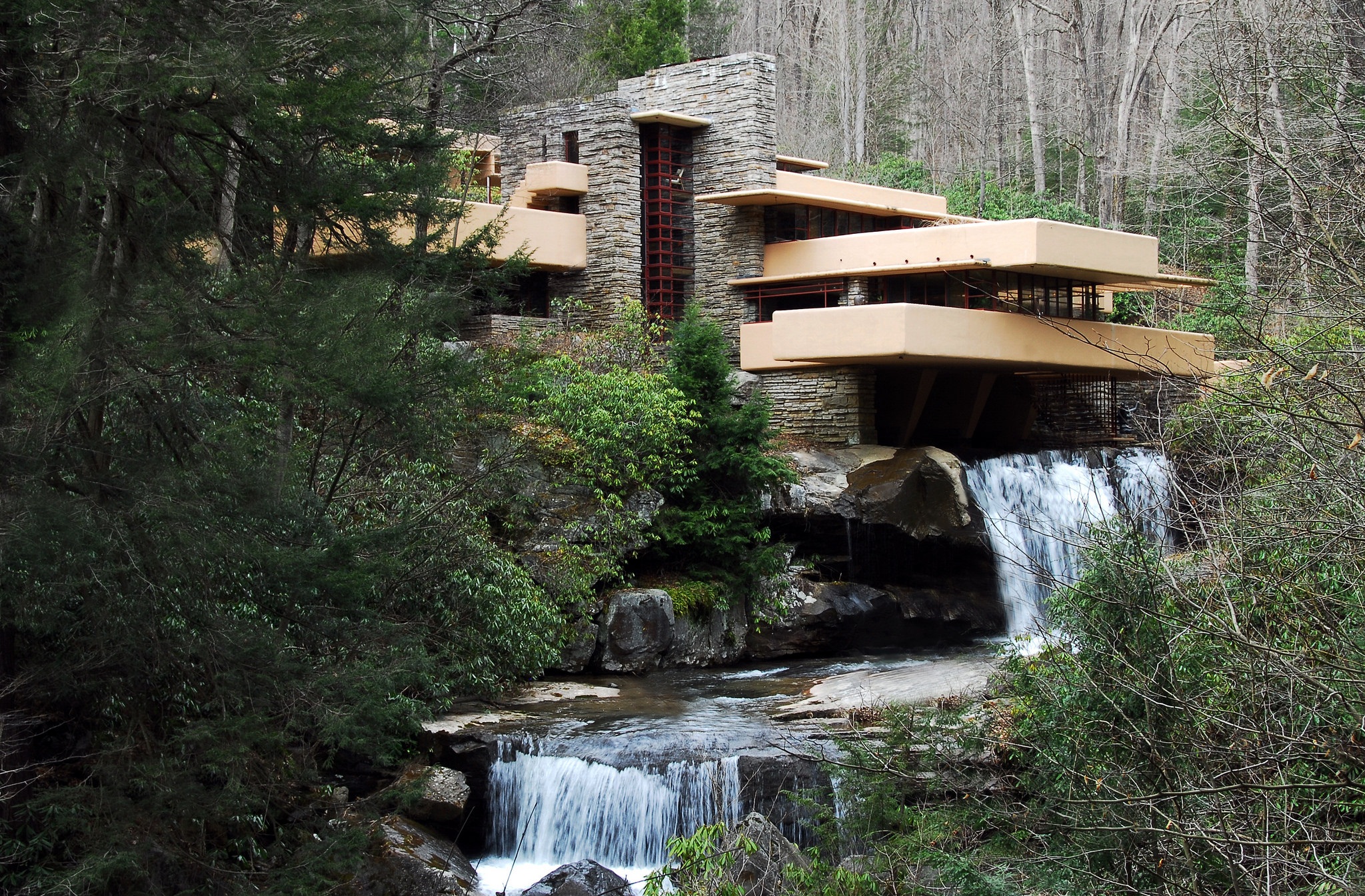
Fallingwater by Frank Lloyd Wright, built above a stream and often used to show harmony between building and site.
- Heydar Aliyev Center (Zaha Hadid) shows how form can become fluid, continuous, and highly expressive.

- Pompidou Centre (Renzo Piano and Richard Rogers) flips structure and services outward and turns function into part of the visual language.
- Sydney Opera House (Jørn Utzon) remains a benchmark for design ambition, structural complexity, and cultural identity.

Sydney Opera House, one of the clearest examples of architecture becoming both structure and symbol.
Great architecture is not only about appearance. It is about use, atmosphere, durability, and whether the building still makes sense once people start living, working, gathering, and aging inside it.
If you are new to architecture, this beginner guide gives you a clean starting point. It covers what architecture is, why architecture matters, the design basics behind it, how architectural styles evolved, what architects do, which tools shape the profession, and why sustainability and digital systems now matter so much.
| Architecture Topic | What You Will Learn | Helpful Next Read |
|---|---|---|
| Design basics | The core ideas behind form, space, proportion, and layout | Architectural Design Basics |
| Design elements | How line, shape, texture, color, and scale affect buildings | Design Elements in Architecture |
| Drawing and communication | How architects explain ideas clearly | Architectural Drawing Basics |
| History and styles | How architecture changed across eras and cultures | Introduction to Architecture History |
| Sustainability | Why climate, energy, and materials now shape design decisions | Sustainable Architecture 101: The Basics You Need |
Good Reading: Introduction to Architecture by Francis D. K. Ching
What Is Architecture?
The most accepted short definition is simple enough: architecture is the art and science of designing buildings and other physical environments.
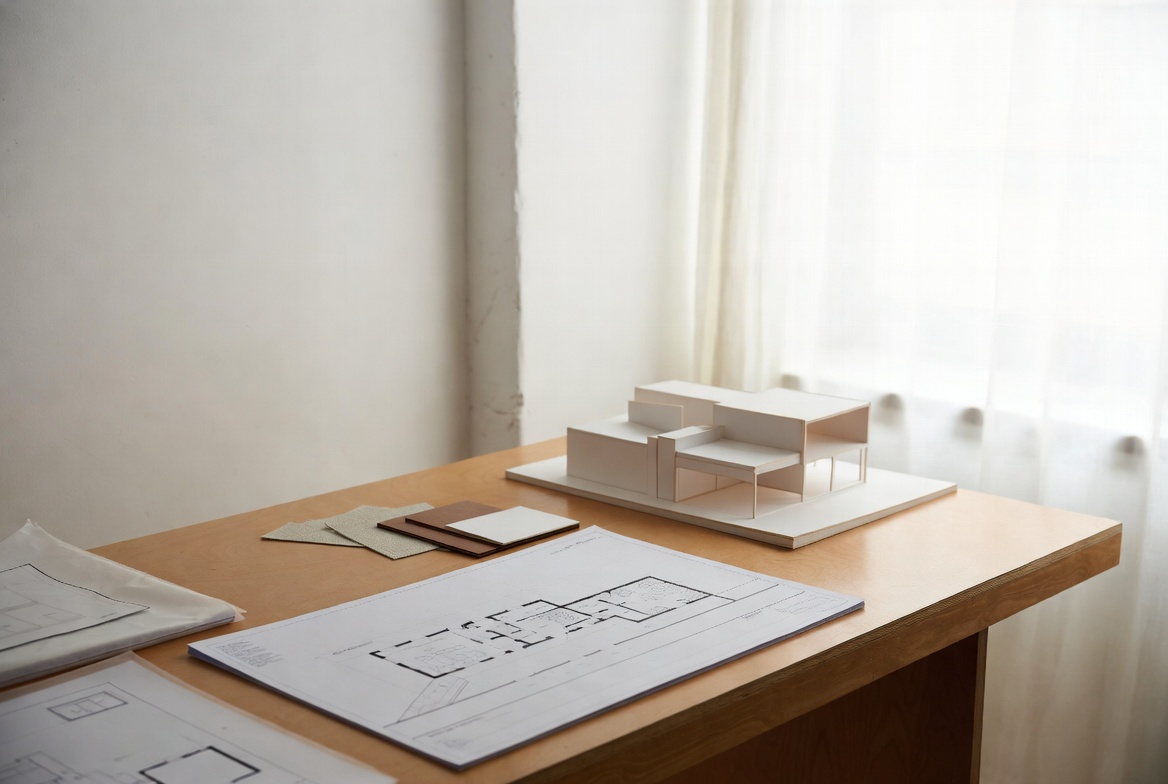
But that still leaves out a lot. Architecture is also about how people move through space, how light enters a room, how a building meets the ground, how a wall assembly holds up, how a plan supports daily life, and how a structure fits a climate, budget, and culture.
That is why architecture is broader than decoration and broader than construction alone. It turns ideas into places people can actually use.
If you want to go deeper into the design side, start with creating beautiful and functional spaces. If you want to understand how design meets making, the next step is construction basics.
A beginner mistake is treating architecture like a clean drawing problem. It is not. It is a coordination problem. Structure, materials, weather, circulation, code, cost, and human use all push back at the same time. If you want to see where that usually breaks down in student work, read Why Good Architecture Diagrams Fail at Review.
That complexity is exactly what makes architecture worth studying. It is one of the few fields where technical constraints and imagination have to coexist from the first sketch onward.
Why the Definition Feels Bigger Than a Dictionary
Architecture is not just shelter. It shapes behavior. It decides what gets emphasized, what gets hidden, how people gather, how they rest, and how they move. A hospital, courthouse, home, school, museum, and train station all ask for different answers, even before style enters the conversation.
That is also why beginners benefit from learning both design basics and spatial organization early. Architectural Design Basics, Space Planning Essentials, and Hierarchy in Architecture all help with that foundation.
The Importance of Architecture
Architecture matters because buildings are not neutral. They shape comfort, safety, mood, productivity, identity, and long-term environmental impact.
Enhancing Quality of Life
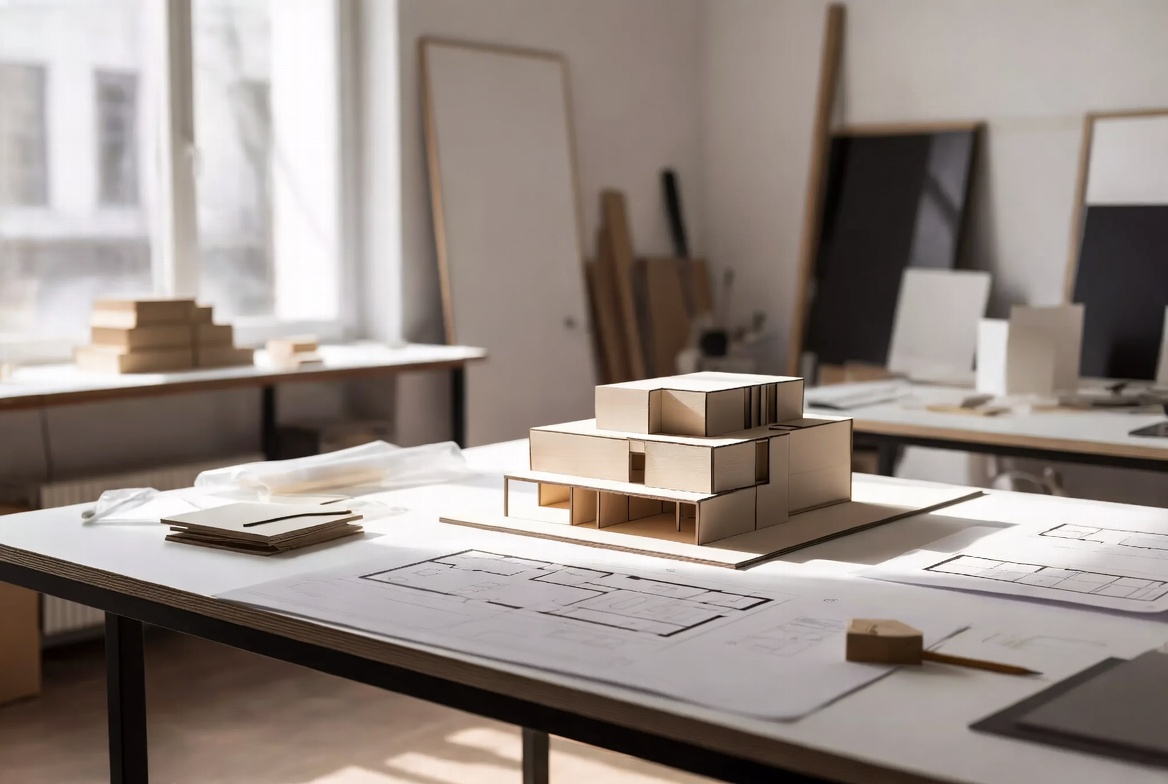
Image by ArchitectureCourses.org. Architectural study model and drawings showing how architecture shapes buildings, use, and everyday life.
Good architecture improves ordinary life. It can make a home easier to live in, a school easier to learn in, a park more welcoming, and a workplace less draining. Light, air, circulation, layout, and proportion all affect how a place feels long before anyone starts talking about style.
This is where design stops being abstract. A well-planned room supports use. A badly planned one creates friction every day.
Cultural Expression
Buildings also carry memory. They reflect local values, climate, technology, religion, politics, and available materials. That is why architecture often becomes one of the clearest records of a culture across time.
The Louvre, the Alhambra, the Sydney Opera House, and even modest vernacular houses all tell stories about the people and priorities behind them.
Economic Impact
Architecture affects value too. Strong civic buildings, well-designed streets, and memorable landmarks can attract visitors, investment, and long-term reuse. Good planning can raise the usefulness of an entire district. Bad planning can do the opposite for decades.
Environmental Stewardship
Buildings consume huge amounts of energy and materials. That makes architecture one of the most important fields for reducing waste, improving building performance, and responding better to climate.
If you want the beginner version of that subject, start with Sustainable Architecture 101.
What Buildings Teach Us Over Time (That Schools Often Skip)
One of the biggest gaps in beginner understanding is this: a design is not fully tested when it is drawn. It is tested years later.
That is when buildings settle, materials move, sealants fail, finishes fade, drainage issues show up, and the gap between a beautiful rendering and a durable building becomes obvious.
Why Aging Buildings Matter
- Doors start sticking.
- Floors slope slightly.
- Sun damage shows up on one side first.
- Water finds small mistakes and makes them expensive.
- People use rooms differently than the plan expected.
None of that is flashy. All of it matters.
What Long-Term Observation Teaches
- Concrete does not just crack. It moves for reasons.
- Wood behaves differently depending on cut, moisture, and detailing.
- Metal can fail quietly when water gets where it should not.
- Ventilation mistakes can become mold and comfort problems fast.
- Buildings age unevenly, and that usually reveals the weak decisions first.
This is one reason old neighborhoods, renovation projects, and building failures are so useful for students. They show architecture after reality gets involved.
MUST READ: The Language of Architecture: 26 Principles Every Architect Should Know
Key Elements and Principles of Architectural Design
Every beginner guide to architecture should eventually get here. Before styles, software, or theory, you need the basic design language.
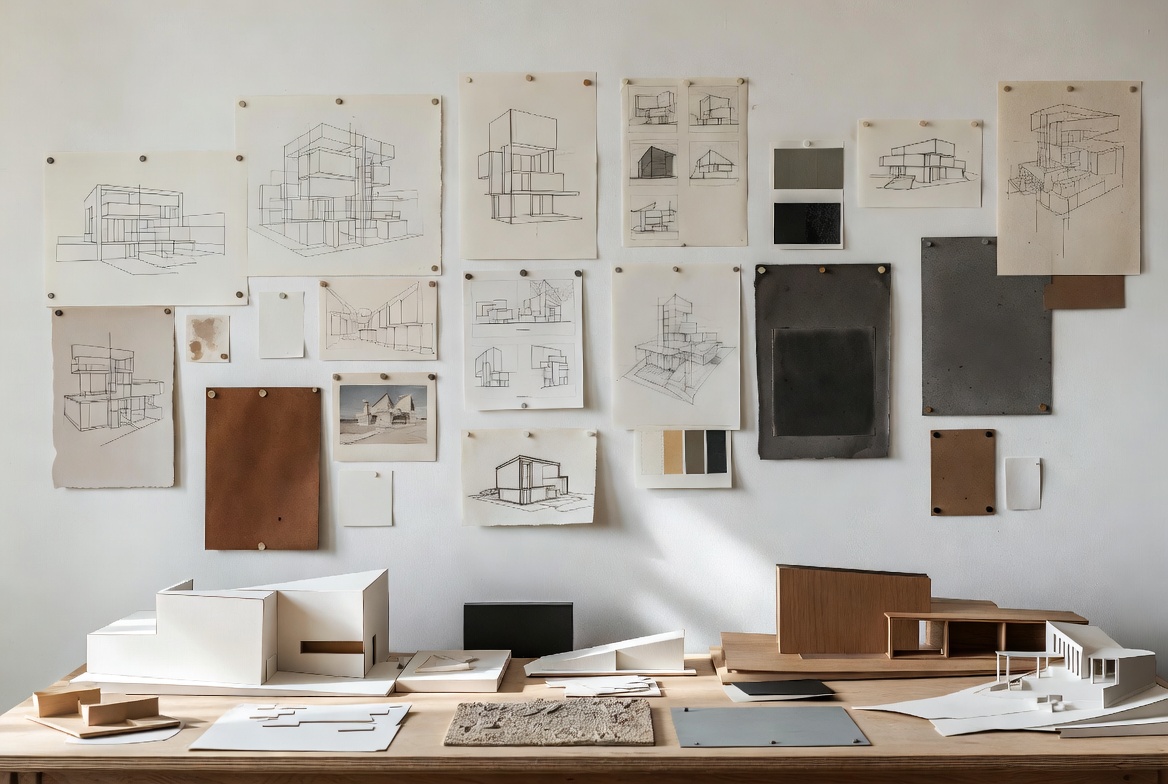
Image by ArchitectureCourses.org. A beginner-focused architectural design study showing how form, space, proportion, rhythm, and hierarchy work together.
Elements of Design
- Space: the room, void, distance, enclosure, and experience between things.
- Form: the shape and mass of a building or part of it.
- Line: the edge, boundary, direction, or graphic control used to define space.
- Texture: the surface quality of materials and how they affect light and touch.
- Color: how hue, tone, and contrast influence mood and emphasis.
- Scale: how large or small something feels compared to the human body or surrounding context.
Principles of Design
- Balance: how visual weight is distributed.
- Proportion: the relationship between parts.
- Rhythm: repetition and variation that create movement.
- Emphasis: what the design wants you to notice first.
- Unity: how all parts feel like they belong together.
- Hierarchy: what dominates, what supports, and how attention is organized.
If these architecture basics still feel abstract, the best supporting reads here are Architectural Design Basics, Basic Design Concepts in Architecture, Architectural Drawing Basics, and Hierarchy in Architecture.
Example
The Guggenheim Museum in New York is a classic example of form, space, and circulation working together. Its spiraling ramp is not decoration. It organizes movement and experience at the same time.
Historical Evolution of Architecture
Architecture changes when materials change, when beliefs change, when cities change, and when technology changes. That is why architectural history is not just a style list. It is a record of shifting priorities.
For a fuller history path, see Introduction to Architecture History.
Concise Timeline of Architectural History
- Prehistoric Architecture – caves, huts, megaliths, survival-based shelter and ritual structures.
- Ancient Architecture – Egyptian, Greek, Roman, Chinese, Indian, and other early systems that formalized monumentality, symmetry, structure, and civic order.
- Medieval Architecture – Byzantine, Romanesque, Gothic, and Islamic traditions that pushed domes, arches, ornament, and religious space in different directions.
- Renaissance and Baroque – renewed interest in classical proportion, perspective, theatricality, and formal control.
- Industrial Age – iron, steel, glass, and new construction methods changed what buildings could span, enclose, and express.
- Modern Architecture – function, new materials, open plans, structural honesty, and stripped ornament.
- Postmodern and Contemporary Work – reaction, complexity, symbolism, sustainability, digital form-making, and hybrid approaches.
Historical Groups Worth Knowing Early
- Ancient Architecture – from Egyptian monumentality to Roman engineering.
- Medieval Architecture – Romanesque solidity and Gothic verticality.
- Islamic Architecture – geometry, courtyards, domes, ornament, and spatial sophistication.
- Modern Architecture – efficiency, abstraction, and the logic of new materials.
Related: Introduction to Architecture History
Types of Architectural Styles
Architectural styles are a useful way to organize history, but they are not the whole story. Real buildings often mix periods, local adaptations, structural constraints, and later renovations.
For the broader style directory, start with List of Architectural Styles.
Classical
Classical architecture grows out of Greek and Roman ideas of symmetry, columns, order, and measured proportion. It remains one of the strongest foundations for learning scale, composition, and formal clarity.
Gothic
Gothic architecture is known for pointed arches, ribbed vaults, flying buttresses, stained glass, and a strong vertical pull. It is one of the clearest examples of structure, light, and atmosphere working together.
Baroque
Baroque architecture pushes drama, movement, contrast, ornament, and theatrical space. It is less restrained than classical work and often uses light and procession in a much more emotional way.
Modern
Modern architecture strips away much of the ornament and focuses on efficiency, structure, light, material honesty, and function-driven form.
Postmodern
Postmodern architecture reacts against modernist restraint with color, irony, historical quotation, and deliberate complexity. It matters because it reopened the question of symbolism in architecture.
Islamic
Islamic architecture is especially important for students studying geometry, ornament, courtyards, domes, light control, and the relationship between structure and pattern.
Sustainable
Sustainable architecture is less a visual style than a design approach. It focuses on climate response, energy performance, material impact, water, and long-term building behavior.
Worth Knowing: style helps you identify a building, but design principles help you understand why it works.
The Role of an Architect
Architects do much more than sketch concepts. They translate needs, constraints, codes, budgets, materials, and coordination into buildable space.
Responsibilities
- Designing buildings and spatial systems.
- Organizing layouts, circulation, structure, and envelope decisions.
- Coordinating with clients, engineers, consultants, and builders.
- Responding to code, safety, accessibility, and project constraints.
- Balancing design ambition with budget, time, and constructability.
Skills Required
- Creative thinking and problem-solving.
- Technical competence in drawings, software, and construction logic.
- Strong communication and collaboration.
- Patience with revision, feedback, and coordination.
- Clear visual organization and presentation skills.
Students usually underestimate how much of architecture is communication. That is why pages like Architectural Drawing Basics matter so much early.
Tools and Technologies in Architecture
The tools have changed. The job has not. Architects still need to think clearly, draw clearly, and coordinate clearly. The software just changes how fast and how precisely that happens.
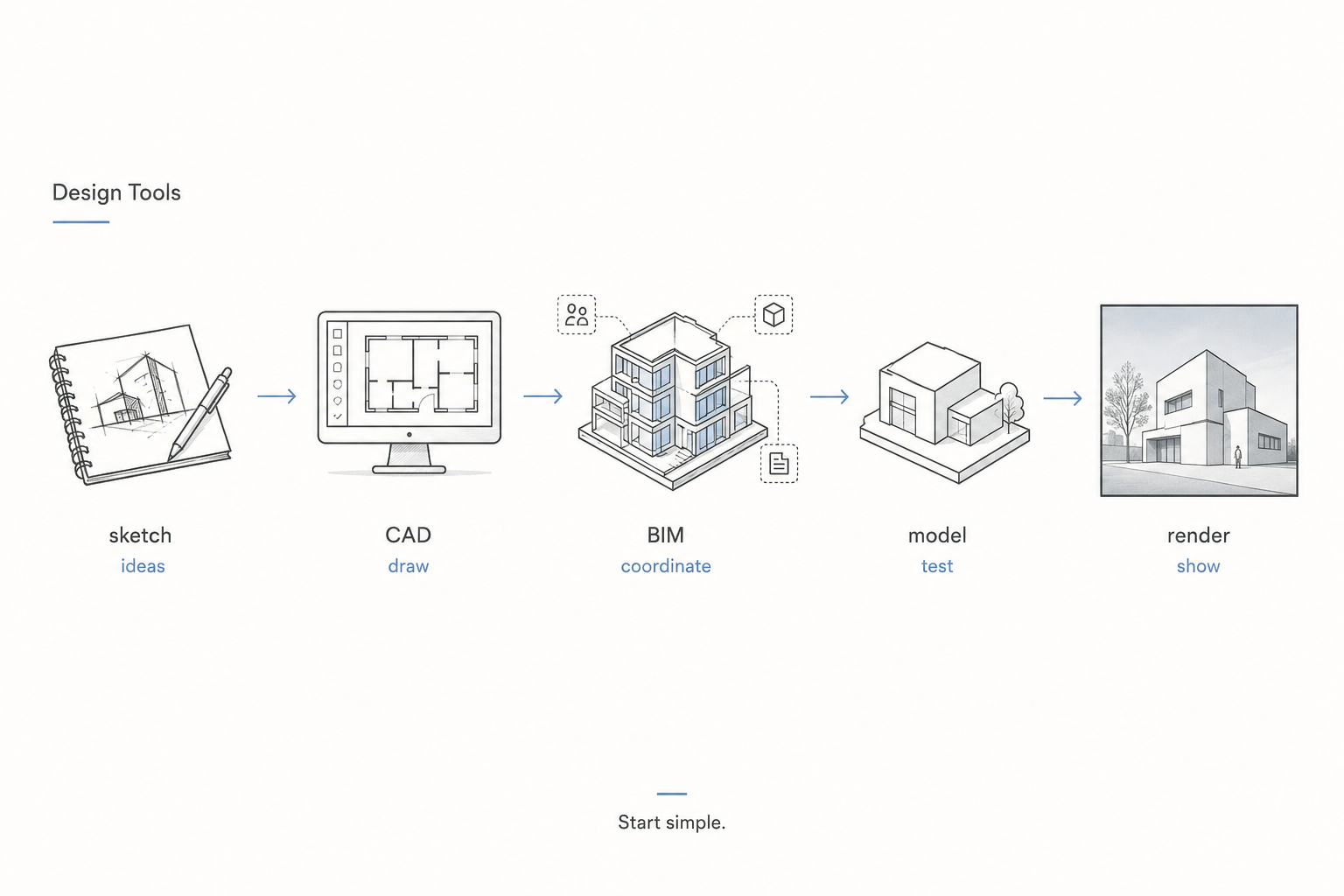
Illustration by ArchitectureCourses.org. Architects still start with simple design thinking, but the workflow now moves through sketching, drafting, modeling, coordination, and digital presentation tools.
Traditional Tools
- Sketchbooks and trace paper for iteration.
- Hand drafting fundamentals for line control and drawing discipline.
- Physical models for proportion, massing, and spatial testing.
Digital Tools
- CAD for drafting and documentation.
- BIM for coordinated 3D building information.
- Rendering software for visualization.
- VR and AR for immersive review and presentation.
- 3D printing for models and rapid prototyping.
Good beginner paths here include AutoCAD Basics for Architects & Engineers, Revit Introduction: Modeling in 3D, and Architectural Sketching for Beginners.
Sustainable Architecture
Sustainability is no longer a side topic. It affects orientation, envelope design, daylight, ventilation, energy use, water, and material selection from the start.
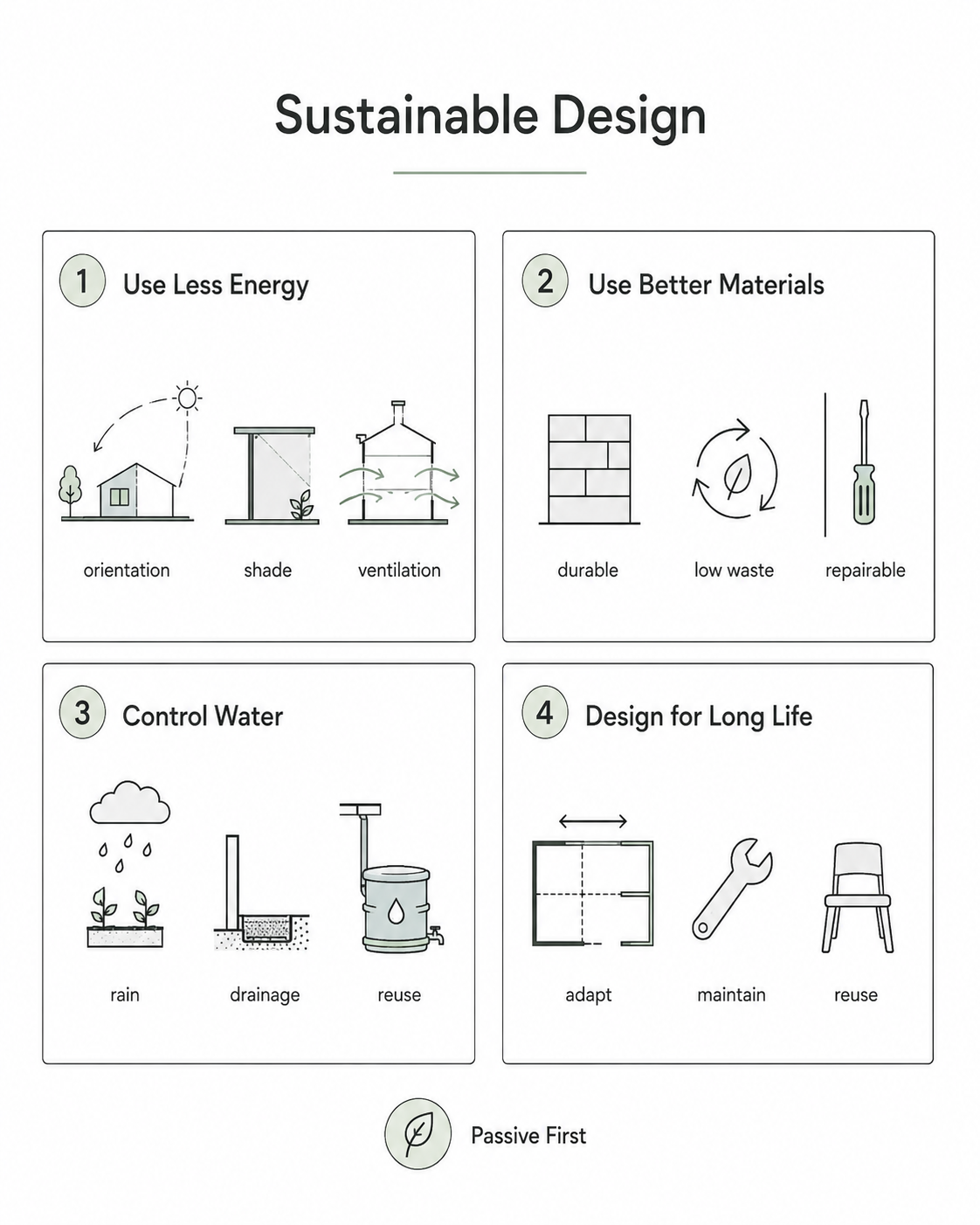
Illustration by ArchitectureCourses.org. Sustainable design works best when the basic moves come first: orientation, ventilation, durable materials, lower energy demand, and building systems that support long-term performance.
Core Principles
- Reducing operational energy demand.
- Using resources more responsibly.
- Designing for durability and lower waste.
- Responding to climate instead of ignoring it.
Common Techniques
- Passive solar design.
- High-performance envelopes.
- Daylight and shading control.
- Rainwater strategies and better site response.
- Material choices with lower environmental impact.
If you want a practical follow-up, read Sustainable Architecture 101: The Basics You Need.
Digital Architecture
Digital architecture refers to the use of software, computation, simulation, and digital fabrication in design and construction. It includes much more than rendering.
- Parametric design helps generate complex relationships and forms.
- VR and AR help clients and teams experience a design before construction.
- 3D printing supports models, components, and prototyping.
- AI-assisted tools can speed up iterations, layout studies, and research support.
Start with Parametric Design if you want the theory side, and AI Design Software: Tools for Architects & Designers if you want the current tool landscape.
Architects and AI: The Future of Collaboration
AI is already changing how architecture research, drafting, image generation, visualization, and option testing happen. It can speed up repetitive work and surface more possibilities early.
What it still cannot replace well is judgment. Architecture is full of trade-offs, context, culture, human behavior, negotiation, and the ability to decide what matters most when every constraint is pushing in a different direction.
That is why AI will matter in architecture, but mostly as a tool. It can help architects move faster. It does not remove the need for architects to think.
Also useful: AI and architecture guides
What To Read Next
Architecture keeps changing because the world keeps changing. Climate pressure, urban density, digital tools, adaptive reuse, smarter building systems, and new material questions are all reshaping the field.
But the center of architecture has not changed much. It is still about making places that work, last, and mean something to the people using them.
So do not rush past the basics. Learn design principles. Learn how buildings age. Learn how drawings communicate. Learn how history, structure, and climate affect decisions. The tools and trends matter, but they sit on top of that base.
If this page gave you the broad overview, the best next step is to go one layer deeper in the area you are still weak on.
- Architectural Design Basics if you want a stronger grip on the core ideas behind form, space, structure, and layout.
- Basic Design Concepts in Architecture if you want studio language explained in a way that is easier to use during crits and early design work.
- Sustainable Architecture 101: The Basics You Need if you want to understand where architecture is heading now and why climate and performance matter so much.
- Why Good Architecture Diagrams Fail at Review if your diagrams look clean but never feel fully believable once structure, light, thickness, and circulation show up.
FAQ
What is architecture in simple words?
Architecture is the design of buildings and spaces in a way that balances function, structure, comfort, and appearance. It is both creative and technical.
What is the main purpose of architecture?
The purpose of architecture is to create spaces that are functional, durable, and meaningful for the people who use them. Good architecture balances utility, structure, comfort, and experience.
Is architecture more art or more science?
It is both. Architecture uses artistic judgment and technical knowledge at the same time. That mix is part of what makes the field difficult and rewarding.
Why is architecture important in everyday life?
Buildings affect how we live, work, rest, learn, and gather. Layout, light, air, circulation, and material choices shape daily experience whether people notice it consciously or not.
What should beginners study first in architecture?
Start with design basics, spatial thinking, architectural history, and drawing clarity. After that, move into structures, materials, sustainability, and digital tools.
How has technology changed architecture?
Technology has improved drafting, coordination, visualization, modeling, and fabrication. It has made architecture faster and more precise, but it has not removed the need for design judgment.
Keep Learning
- Architectural Terms Explained Simply
- Introduction to Architecture History
- Architectural Design Basics
- Architecture Coursework: Tips for Success
- Why Good Architecture Diagrams Fail at Review
Recommended Architecture Books
- The Architecture of Happiness by Alain de Botton
- Form, Space, and Order by Francis D. K. Ching