
What Is Construction? From Dirt to Done
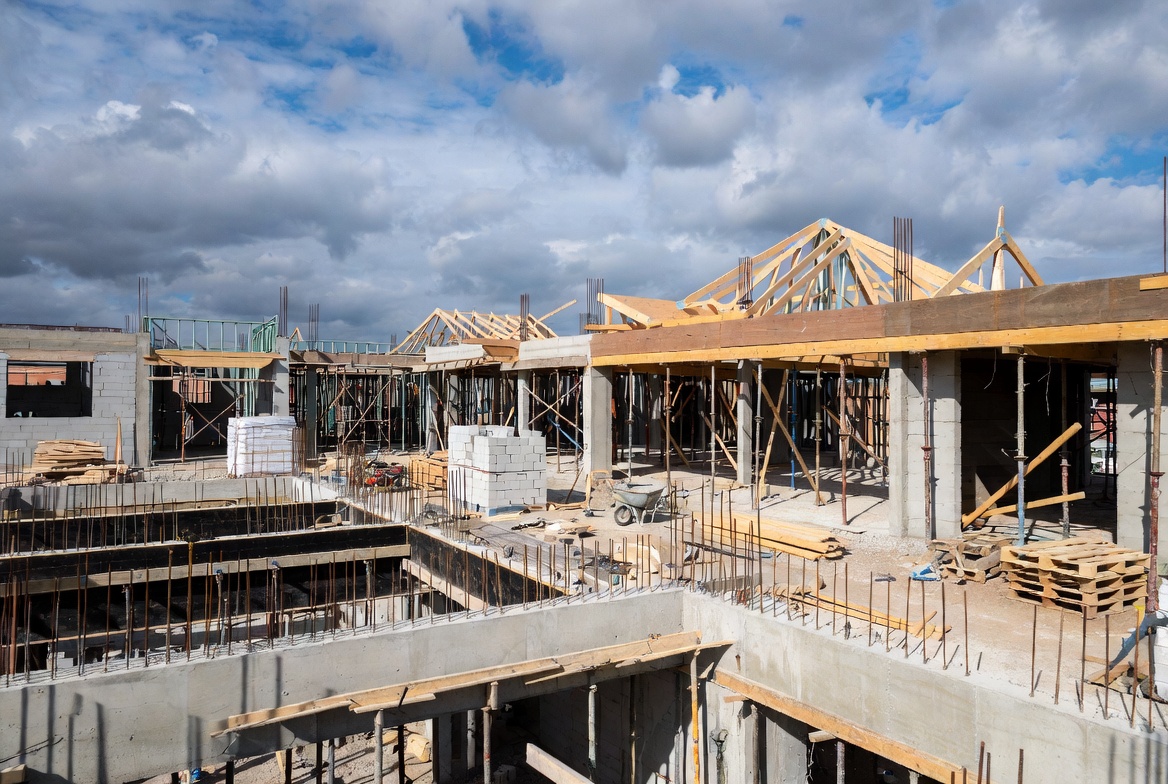
Construction is the process of turning land, drawings, labor, materials, and money into something people can use. Houses, schools, warehouses, hospitals, roads, utilities, and public buildings all go through the same basic chain: planning, site work, structure, systems, finishes, inspection, and handover.
The broad idea is simple. The hard part is sequence. Most construction problems are not mysterious. The site was underestimated. The budget stayed attached to an earlier version of the design. Trades were stacked badly. A detail was left vague because someone assumed the field would sort it out. Then the project spent the next few months paying for it.
This guide explains what construction actually includes, how a building gets built, what modern methods have changed, where the industry connects to architecture and engineering, and what people keep getting wrong when they talk about “how construction works.”
What This Guide Covers
- What construction actually means
- The main stages of a building project
- How modern methods change speed, quality, and coordination
- The major sectors inside the industry
- How construction connects to architecture, engineering, and planning
- The mistakes that keep repeating on real jobs
Introduction to Construction
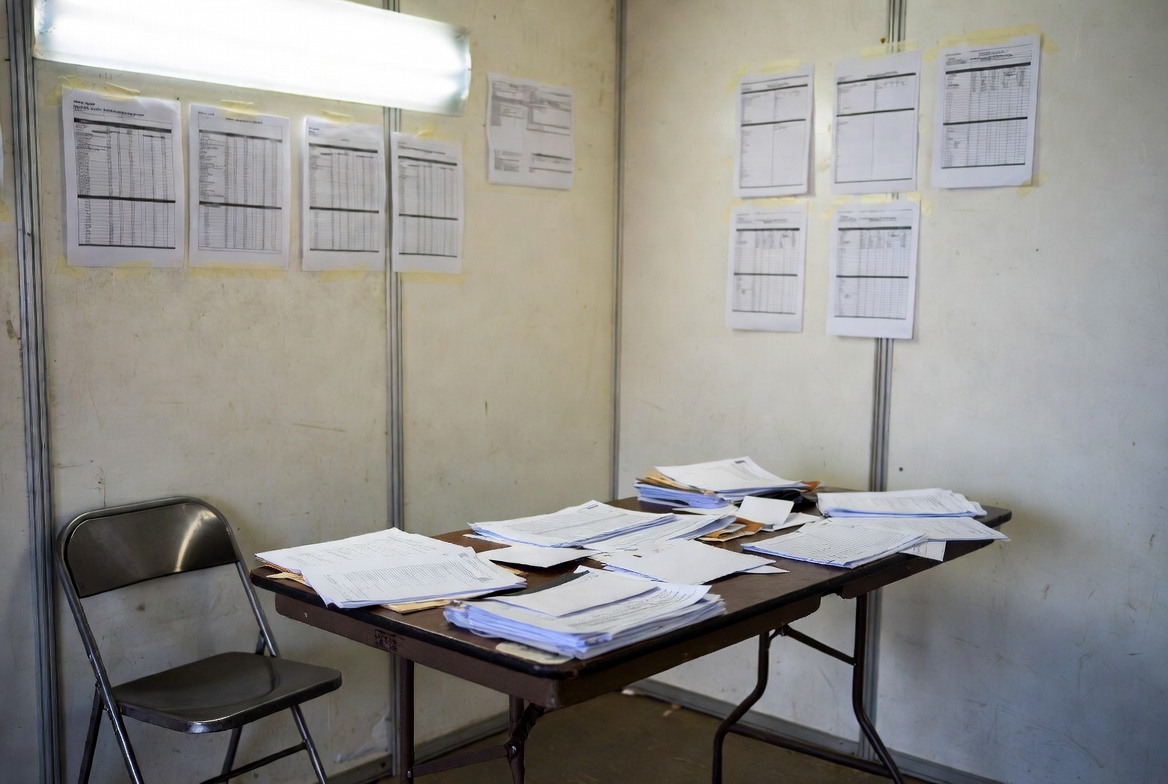
Construction is not just “building stuff.” It is the full process of planning, designing, financing, coordinating, and physically making a project real. That includes permits, codes, procurement, temporary utilities, inspections, closeout, and a lot of decisions that never show up in the finished photos.
That is also why construction is not just a trades topic. Architects need it. Engineers need it. Developers need it. Owners need it. Students who think they are “more design-focused” eventually run into the same reality too: if you do not understand construction, you do not really understand buildings.
| What People Think Construction Is | What It Actually Includes | Why That Difference Matters |
|---|---|---|
| Workers and equipment on a job site | Planning, permits, budgeting, procurement, scheduling, and field execution | The site only works if the earlier decisions were strong enough |
| Concrete, framing, and finishes | Also utilities, logistics, inspections, code compliance, safety, and handover | Most project trouble starts outside the “visible” work |
| A trade-only subject | A core subject for architecture, engineering, development, and project management | Buildings get worse when the disciplines stop understanding each other |
Related reading: Introduction to Architecture and Intro to Architectural Technology: How Buildings Actually Work are the two best next reads if you want the design and technical side around the same subject.
How a Building Actually Gets Built
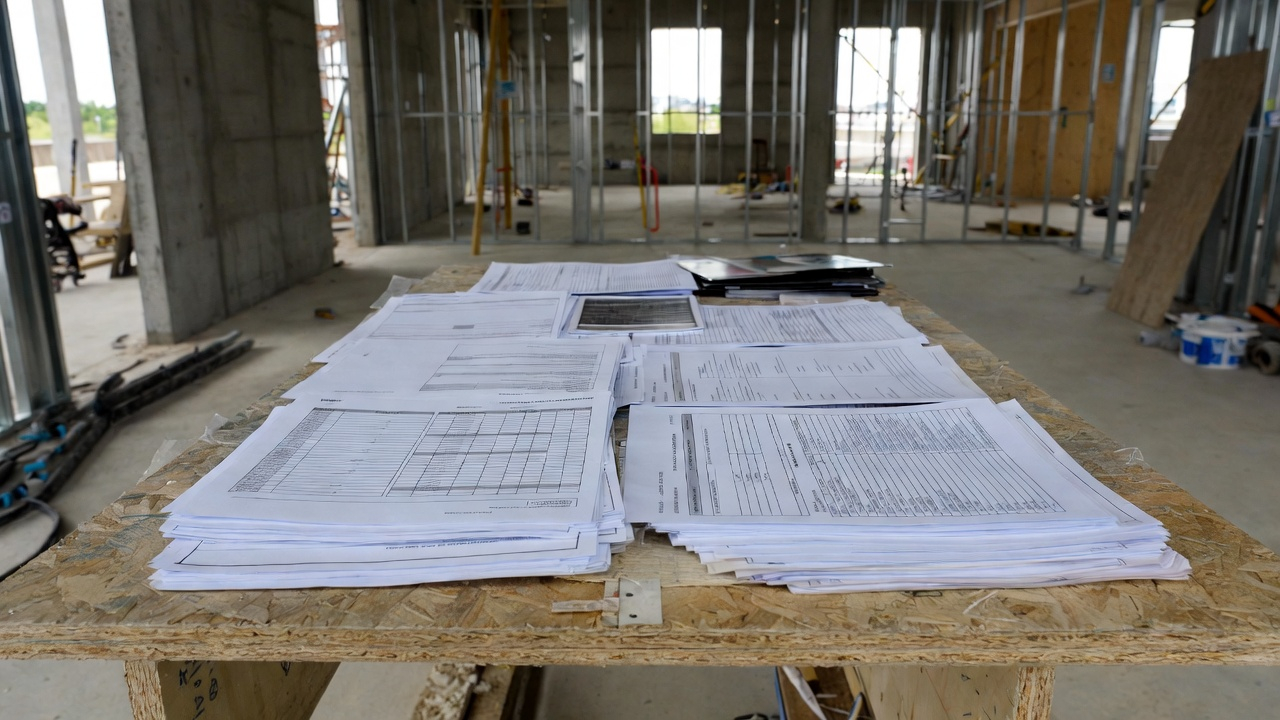
A building does not go up in one smooth motion. It moves through stages, and each stage depends on the one before it being complete enough to support the next one. That sounds obvious. It still gets ignored all the time.
| Stage | What Happens | What People Get Wrong |
|---|---|---|
| Planning and design | Scope, concept, engineering, permits, budget logic, approvals | Thinking drawings alone mean the project is ready |
| Site preparation | Clearing, grading, excavation, access, temporary services | Treating utilities, drainage, and access like small details |
| Foundation | Footings, slabs, piles, retaining work, waterproofing | Underestimating soil, water, and reinforcement discipline |
| Superstructure | Framing, floors, roof, enclosure, exterior shell | Assuming structural work is the only thing that matters here |
| Interior systems and finishes | MEP rough-ins, insulation, drywall, finishes, fixtures | Letting trades stack badly and hoping coordination sorts itself out |
| Inspection and handover | Testing, punch lists, sign-off, occupancy, closeout | Thinking the job is done once it “looks finished” |
1) Planning and Design
This is where most project mistakes begin, because it is the stage where weak assumptions still look cheap. Scope gets set. The site gets tested. Engineers start sizing the structure and systems. Budgets start trying to catch up to the design. Permits and approvals begin shaping the real timeline.
If a project drifts badly, it often starts here. Poor communication between owner, architect, engineer, and builder is still one of the easiest ways to make the rest of the job harder than it needs to be.
2) Site Preparation
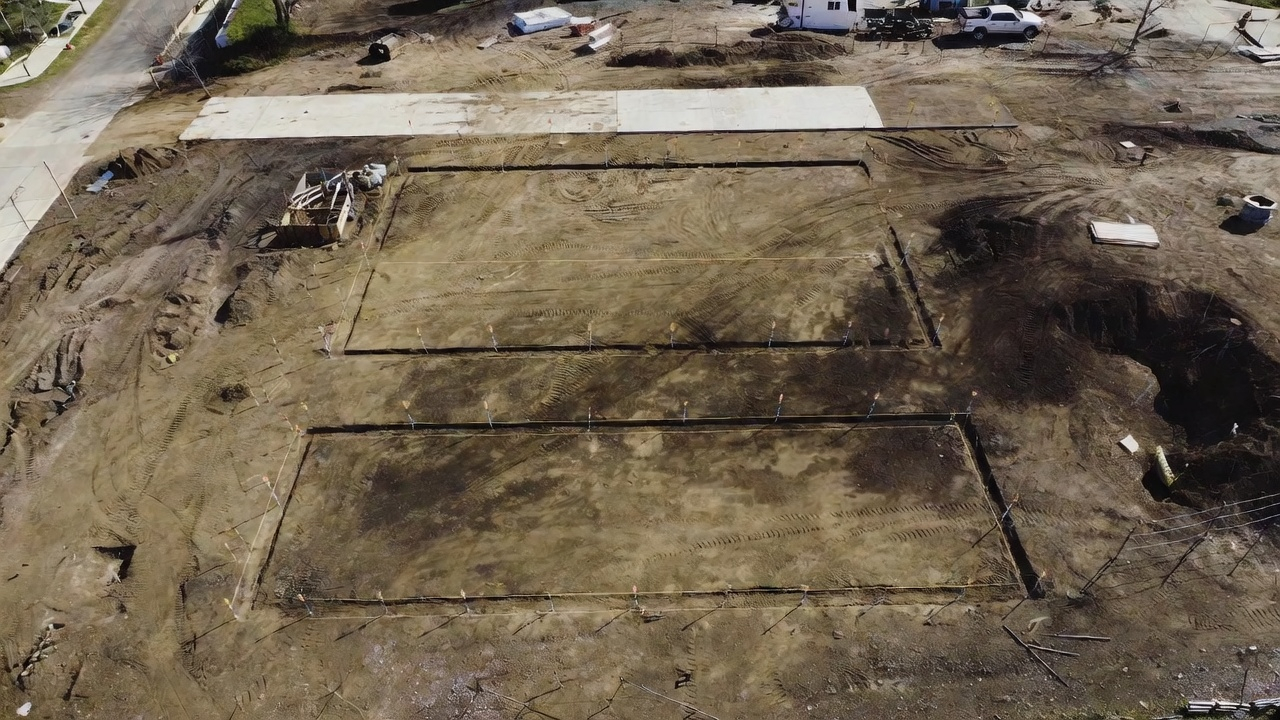
Before anything goes up, the site has to be made buildable. That means clearing, grading, excavation, temporary power and water, and making sure access actually works for the equipment and materials the project is going to need.
Site prep looks simple until it is not. Bad access, missed utilities, weak temporary power, and sloppy grading can push delays into every stage after this.
Read this next: Construction Site and Groundwork Guide if you want the ground, access, drainage, and early-stage work explained more deeply.
3) Foundation Work
This is not the place to cheap out or improvise. Whether the project uses shallow footings, a slab-on-grade, a basement, piles, or another deep foundation system, the work below the building decides how much trouble the rest of the building is allowed to have.
Foundations fail from ordinary things more often than dramatic ones: weak soils, bad drainage, wrong bearing assumptions, poor rebar placement, missed sleeves, cold-weather concrete without protection, or waterproofing details treated like an afterthought.
4) Superstructure
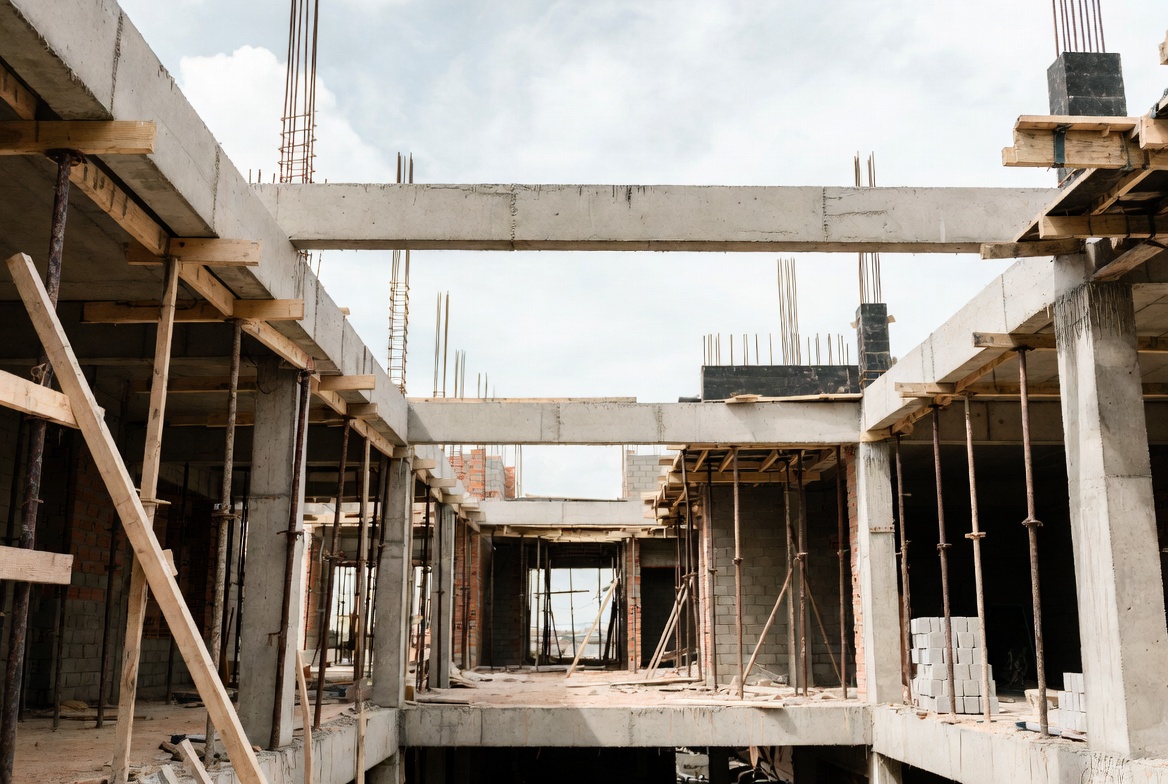
This is the stage most people picture when they hear the word construction: framing, floors, roof systems, structural walls, and the exterior shell. It is also the phase where sequencing problems start getting expensive fast.
Steel, concrete, wood, masonry, and hybrid systems all work differently. Each one has different tolerances, inspection paths, and follow-on trade requirements. The mistake is treating structure like structure alone. In practice, the structure and the next trade are already in the same conversation.
Before you move on: House Framing 101: Everything You Need to Know is the better next read if what you really want is the skeleton of a residential building explained properly.
5) Interior Systems and Finishes
This is where the building starts looking finished, and where trade coordination usually gets tested the hardest. Plumbing, electrical, HVAC, fire protection, insulation, drywall, ceilings, trim, flooring, fixtures, and casework all need access, sequence, inspection, and enough shared discipline that one trade does not keep wrecking the next trade’s work.
A lot of schedule damage happens here because teams start acting like the structure is done, so the hard part must be over. It usually is not.
6) Inspection, Punch, and Handover
Construction ends with checks, corrections, testing, sign-offs, and closeout. The building may look complete before it is actually ready to hand over. Missing guardrails, unfinished firestopping, inspection failures, startup problems, and incomplete documentation can all hold occupancy even after the photos look done.
That is why “substantial completion” and “actually ready to use” are not always the same thing.
Modern Methods That Changed Construction
Modern construction is not only about new materials. It is also about moving work offsite, coordinating more digitally, reducing waste, and catching mistakes before they reach the field.
| Method | What It Improves | What It Usually Costs You | Best Use |
|---|---|---|---|
| Prefabrication | Speed, repeatability, reduced site congestion | Earlier decisions and tighter coordination | Projects with repeatable components and controlled details |
| Modular construction | Fast assembly and factory-controlled production | More design discipline and tougher transport logistics | Projects with repeated room or unit layouts |
| BIM and digital coordination | Clash checking, cleaner drawings, fewer field surprises | More front-loaded coordination work | Projects with complex services, tight sequencing, or heavy consultant overlap |
| Drones and sensors | Progress tracking, site measurement, safety visibility | Tool cost and a need for better data discipline | Larger or more complex sites where visibility matters |
| Lower-carbon materials and systems | Reduced embodied carbon and sometimes reduced waste | More procurement and specification discipline | Projects willing to make earlier, more controlled material decisions |
Prefabrication
Prefabrication means building components somewhere else and bringing them to site ready to install. Wall panels, precast concrete, facade units, service racks, and bathroom pods all fit here. The big gain is cleaner production and less site congestion.
The trade-off is that prefab punishes indecision. If the owner or design team still wants late changes, prefabrication stops feeling efficient very quickly.
Modular Construction
This takes offsite work further by delivering whole room-sized or unit-sized modules. It works best where layouts repeat and the project can commit early. Hotels, student housing, clinics, and some residential products usually fit better than one-off custom work.
The common mistake is thinking modular saves time automatically. It only saves time when the project has the discipline to make decisions early enough to support it.
Sustainable Construction
Modern construction is also shifting under carbon, energy, and waste pressure. Better insulation, better air sealing, lower-carbon materials, offsite fabrication, reduced waste, and smarter systems are now part of mainstream building work, not fringe extras.
The weak version of this is marketing language. The stronger version is when the project actually changes how it designs, specifies, and procures materials.
Also useful: Eco-Friendly Construction is the better next read if you want the sustainability side explained more directly.
Digital Tools
BIM, drones, sensors, and digital tracking tools are now normal on many jobs. That does not mean construction became effortless. It means fewer mistakes need to survive all the way to the field before anyone notices them.
The strongest use of technology is still pretty ordinary: better drawings, earlier coordination, cleaner quantity tracking, and better visibility into what the site is actually doing.
| Better Option | Common Mistake | Why the Better Move Wins |
|---|---|---|
| Use prefab when the design is stable and repeatable | Use prefab on a project full of late design changes | Prefab works best when decisions are made earlier, not later |
| Use BIM to solve clashes before the field | Use BIM as presentation software only | Its real value is coordination, not graphics |
| Choose lower-carbon materials with clear specification logic | Add “green” goals late without changing the procurement path | Sustainability works better when it is built into the method, not bolted on |
How Construction Connects to Architecture, Engineering, and Planning
Construction does not work alone. It sits downstream from design, engineering, codes, land-use decisions, and money. If those disciplines stop speaking the same language, the site becomes the place where the confusion gets paid for.
Architecture and Construction
Architecture sets the form, layout, use, and spatial logic. Construction turns that into an actual building with real tolerances, budgets, sequencing, and materials. When the two stay aligned, the project gets sharper. When they drift apart, the site starts negotiating around drawings instead of building from them.
Read next: Introduction to Architecture.
Engineering and Construction
Engineering makes the building stand, drain, ventilate, power up, resist fire, and stay safe. Construction has to turn those calculations and details into actual installation. If field conditions do not match the engineer’s assumptions, the fix is not to pretend the assumption was close enough.
Read next: Intro to Architectural Technology: How Buildings Actually Work.
Planning and Construction
Urban planning and land-use regulation decide where and how projects can happen. Zoning, density, setbacks, parking, access, drainage, traffic, and environmental restrictions can all change a project before construction even starts. A good design can still be a bad project if the planning path was ignored.
Major Sectors in Construction
| Sector | Typical Work | What Usually Drives the Job |
|---|---|---|
| Residential | Homes, duplexes, apartments, small housing projects | Budget sensitivity, speed, owner decisions, finish quality |
| Commercial | Offices, retail, hospitality, mixed-use buildings | Schedule, leasing pressure, systems coordination, code compliance |
| Industrial | Factories, warehouses, distribution centers, production facilities | Function, logistics, floor performance, mechanical systems |
| Infrastructure | Roads, bridges, rail, utilities, public facilities | Public oversight, phasing, safety, and funding pressure |
Each sector has its own rhythm, but the same construction logic still shows up underneath: scope, sequence, site conditions, coordination, inspection, and cost control.
What People Get Wrong About Construction
- They think construction starts when the crew shows up. It starts much earlier, with scope, design, permits, procurement, and site preparation.
- They think the structure is the hard part and finishes are the easy part. A lot of schedule damage happens after framing, not before it.
- They think technology replaces coordination. It does not. It only makes coordination failures easier to see.
- They think “green” always means more expensive. Sometimes it does. Sometimes it just means the project had to make better decisions earlier.
- They think small jobs are simple. Small projects still fail from the same old problems: weak drawings, bad sequencing, poor communication, and unrealistic budgets.
Do This Instead of This
| Do This | Instead of This | Why It Is Better |
|---|---|---|
| Test the site early | Assume it is buildable because it looks fine | Ground and utility problems get more expensive later |
| Coordinate the design before the field starts improvising | Let the site solve missing decisions under pressure | Field fixes usually cost more and age worse |
| Build inspections and handover into the sequence | Treat them like the final paperwork step | The building can look finished before it is actually ready |
| Use technology to support the method | Assume software replaces judgment | Construction still depends on decisions, not just tools |
What To Do Next
Introduction to Architecture is the right next read if you want the design side of the same conversation.
Intro to Architectural Technology: How Buildings Actually Work is better if you want to understand structure, services, and technical systems more clearly.
House Framing 101: Everything You Need to Know is the best next step if you want to move from broad construction logic into how a building skeleton actually comes together.
Construction Project Development is the better follow-up if you want the full path from project idea through procurement, construction, and closeout.
FAQ
What is construction in simple terms?
Construction is the full process of planning and building physical projects such as homes, buildings, roads, and infrastructure. It includes design, permits, budgeting, site work, structure, systems, finishes, and inspections.
What are the main stages of construction?
The basic stages are planning and design, site preparation, foundation, superstructure, systems and finishes, inspection, and handover. The exact sequence varies by project, but the logic stays similar.
What is the difference between residential and commercial construction?
Residential construction usually focuses on homes and housing, often with lighter structural systems and more direct owner involvement. Commercial construction usually has heavier systems coordination, stricter code demands, and more schedule pressure tied to revenue or occupancy.
What affects construction cost the most?
Size, site conditions, structure, material choice, labor market, schedule pressure, and design complexity all matter. Delays and late changes usually make the number worse faster than people expect.
How do I estimate a construction budget?
Early budgets usually start with square-foot ranges and major allowances. Better budgets get more detailed as the design develops. The biggest mistake is carrying an early comfort number too far into a changing project.
Why do construction projects get delayed?
Common causes include weak planning, permitting delays, late material decisions, bad sequencing, poor trade coordination, weather, and design changes that arrive after the field was already moving.
Is BIM worth learning?
Yes. BIM helps with coordination, clash checking, quantity work, and cleaner communication between disciplines. It does not replace construction judgment, but it does make it easier to catch mistakes earlier.
What careers exist in construction?
The field includes trades, supervision, estimating, project management, site engineering, safety, BIM and digital coordination, architecture, structural and MEP engineering, and development-side roles.