
How Roman Colonnades Worked: What Ruins Still Show
Drawing Light, Shade, and Rhythm
Inside the Roman Colonnade
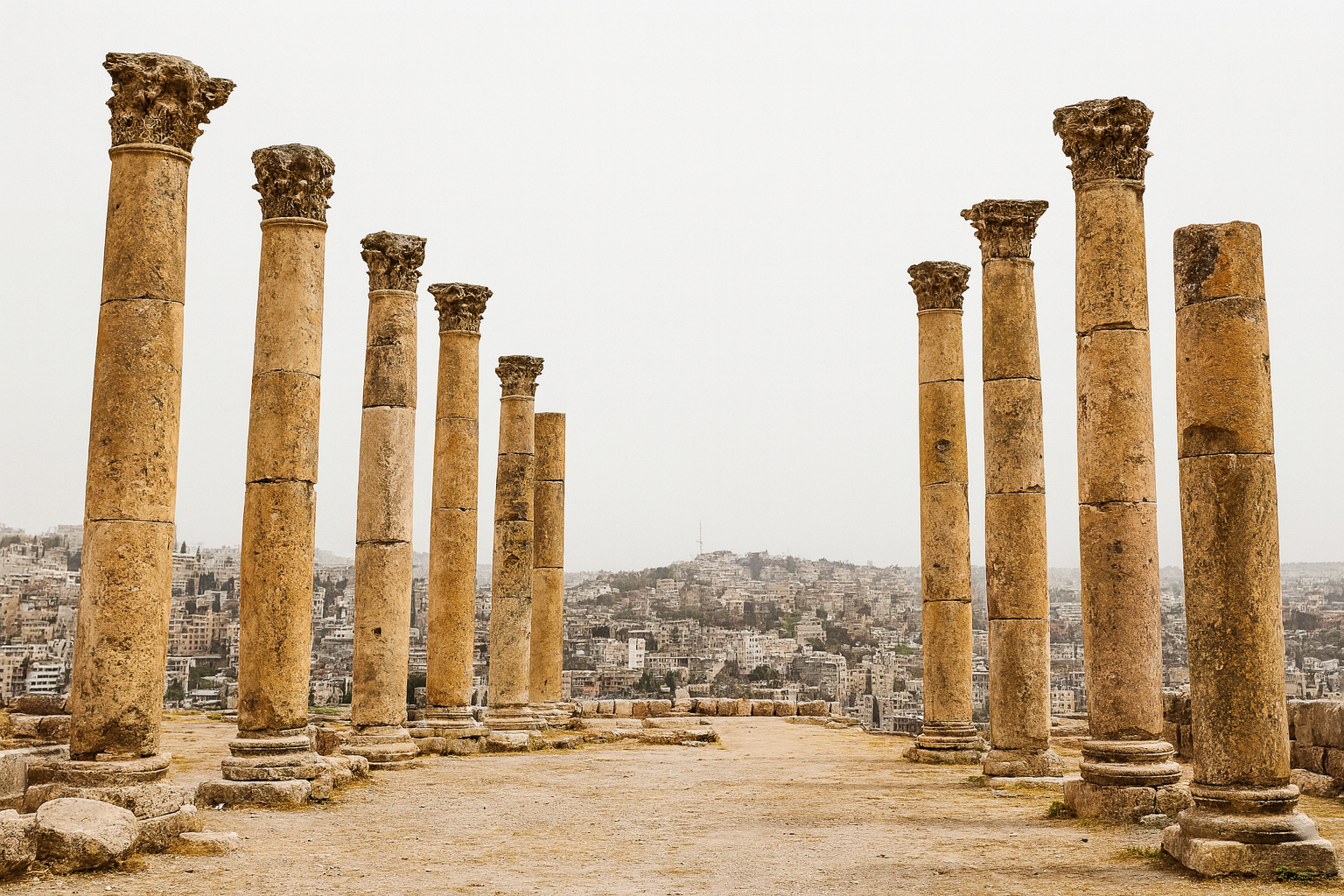
Columns set the beat before you notice anything else. Sun cuts between them, laying stripes of light that shift as the day moves. Stand close and you hear it too: footsteps carry along the line, voices echo under the roof beams. The colonnade is less about ornament than performance. Air drifts through, sound travels, repairs leave their mark.
Look down and the bases are chipped. Look up and the joints never line perfectly. Some drums are swapped out, some seams patched with mortar.
These are working structures, strained and mended over time.
Basic Anatomy of a Roman Colonnade
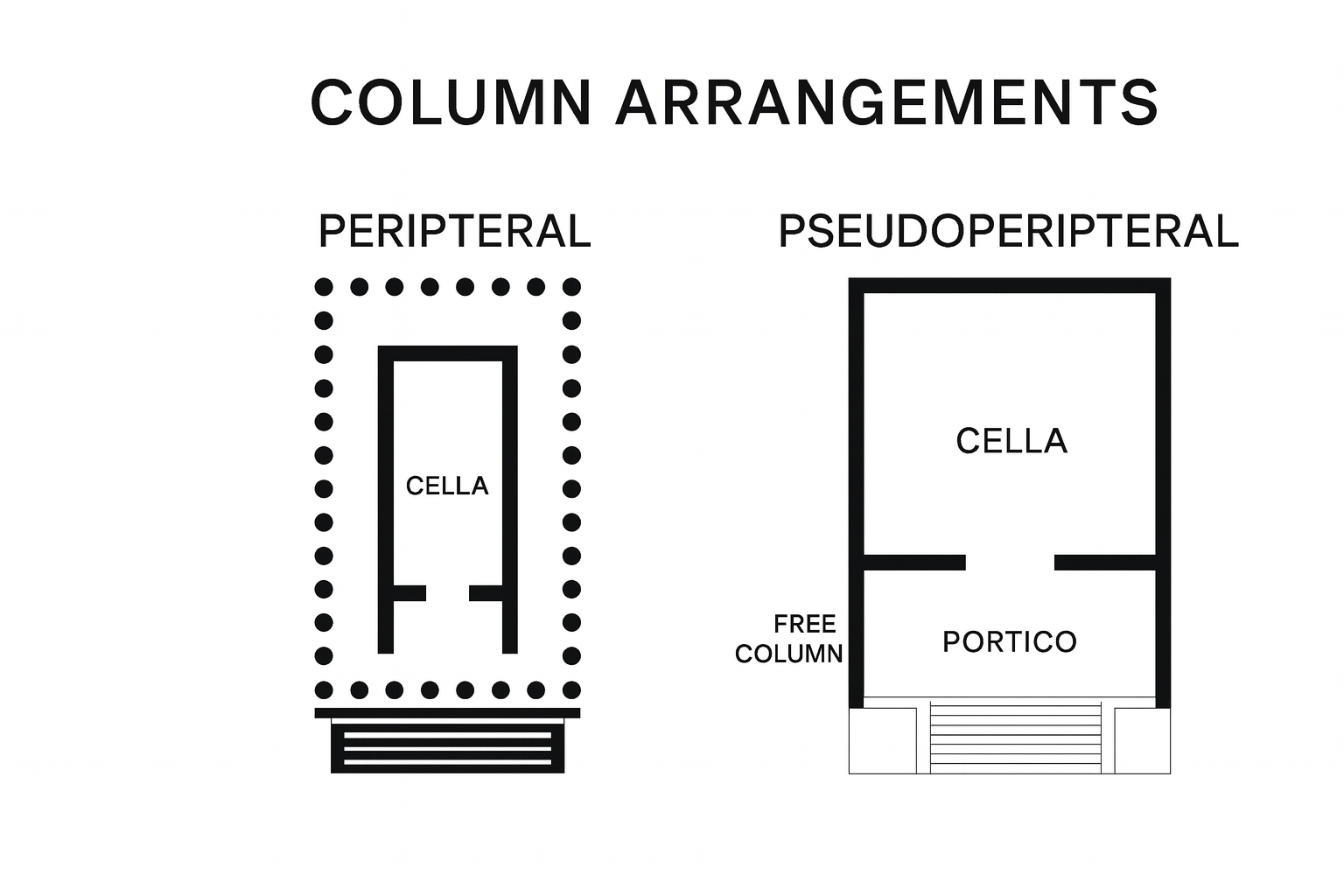
A Roman colonnade begins at the base. The stylobate is a continuous step or platform, sometimes one piece of dressed stone, sometimes a run of reused blocks. In Pompeii you see both. Edges are chipped from carts, surfaces patched with lime mortar where slabs sank unevenly. This is the ground truth of the arcade.
Columns rarely stood as single monoliths. Most were stacked in drums, tufa or marble, pinned with metal dowels. Up close you see where seams open, or where a replacement drum no longer matches the stone above it. The logic is simple: easier transport, easier repair. Books show smooth shafts. On site you count the joins.
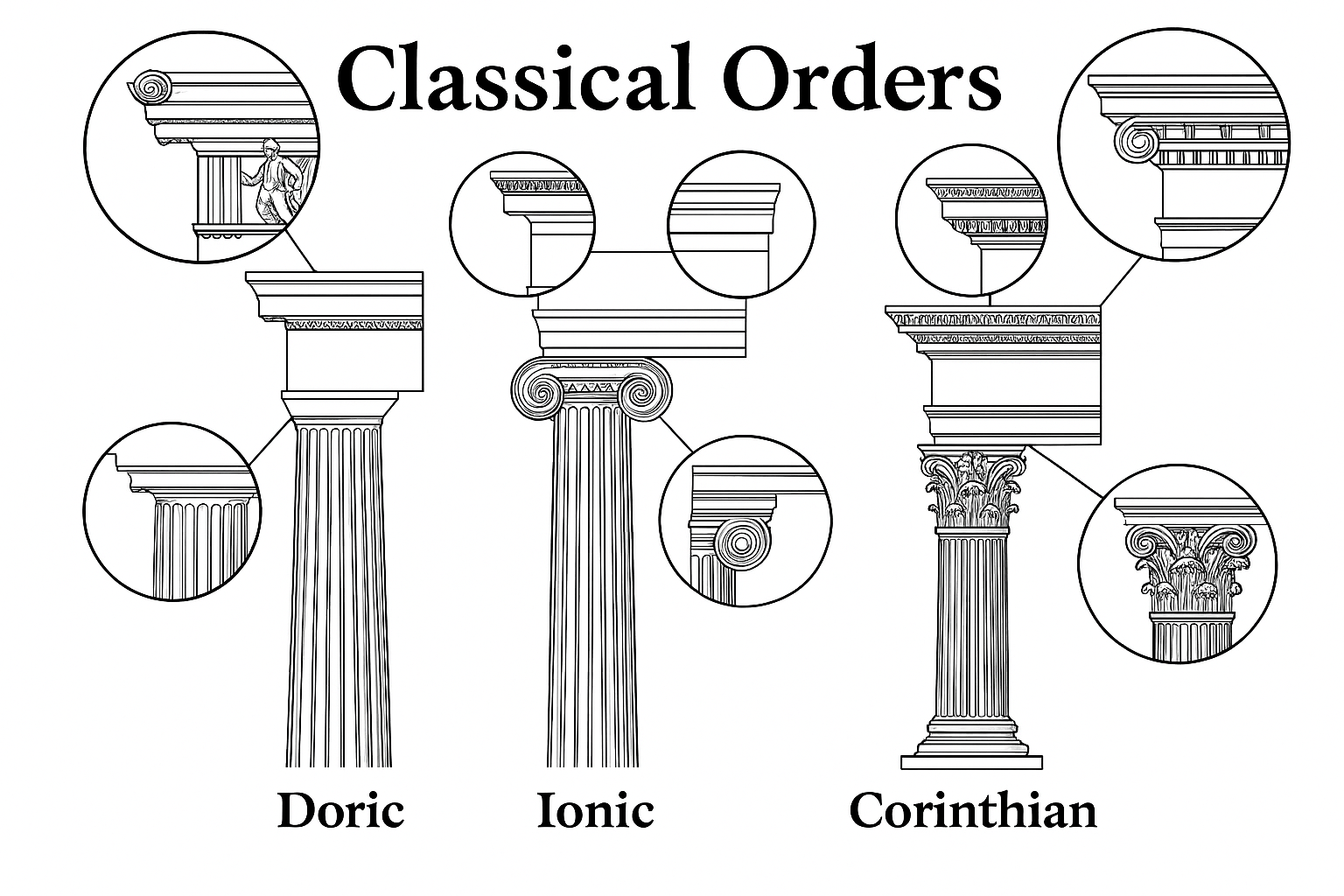
Above the column ran the entablature: architrave, frieze, and cornice. In public forums it carried carved reliefs. In houses it was often plain plaster, painted to imitate marble. Either way it tied the line of columns together, spreading loads across bays. At Ostia and Pompeii, the best place to read this is where fragments lie toppled. Blocks reveal clamp holes, iron stains, grooves cut to set roof beams.
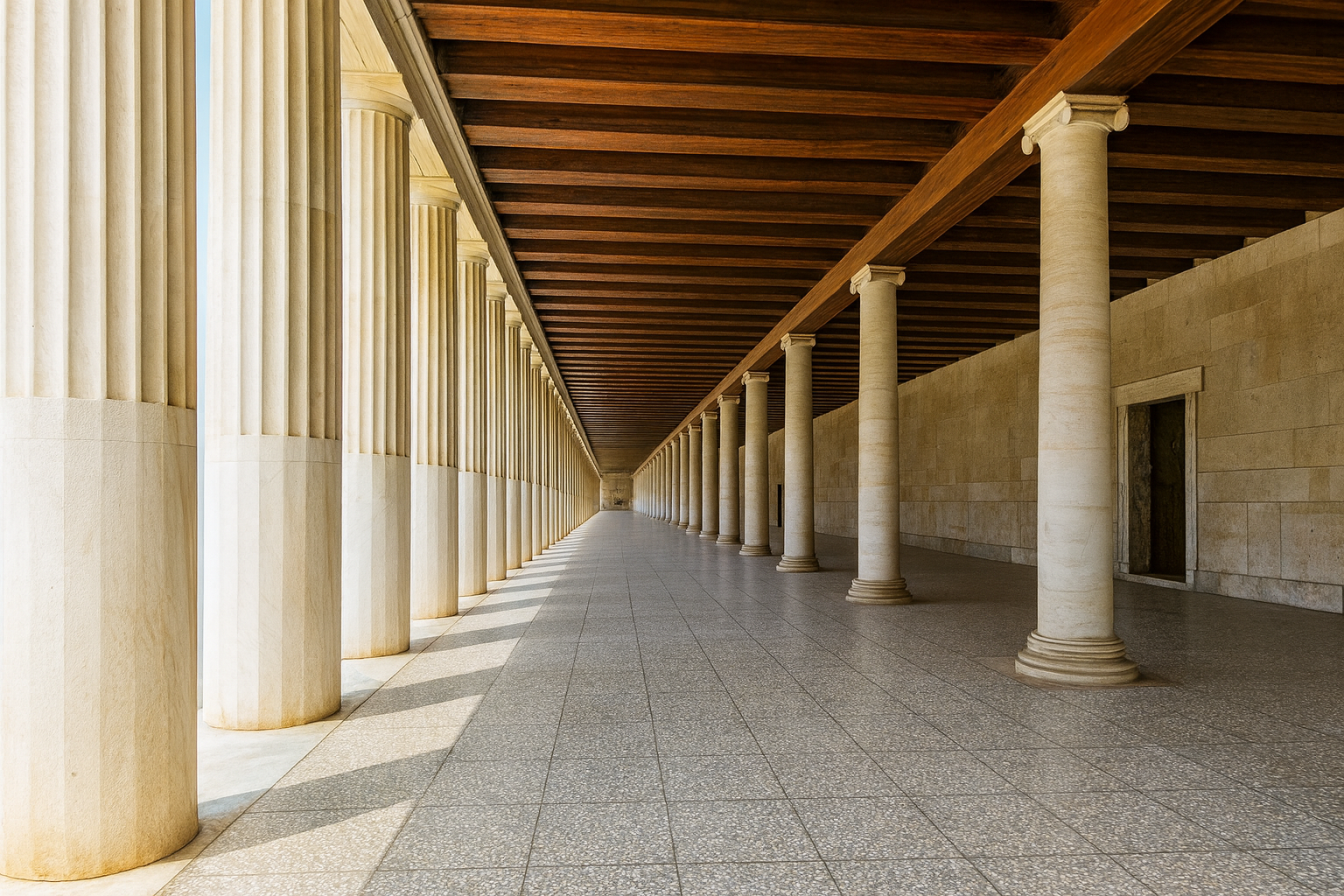
Walk the length of any colonnade and the rhythm is felt through spacing. Intercolumniation, the gap between shafts, was not just style. It set how light fell, how people moved, and how easily roofs spanned. In Palmyra’s mile-long street, the spacing keeps you moving forward like a metronome. In a villa peristyle, tighter spacing pulls you inward, more shelter than avenue.
For a deeper look at how Romans worked these elements into full buildings, see Characteristics of Roman Architecture: Arches, Columns, and Innovation.
Structure and Tolerance: What Keeps the Line Standing
Roman colonnades are forgiving because they were built with tolerance in mind. The stylobate is rarely perfectly level; long runs ride gentle cambers so water leaves the surface. Where slabs settled, you find thin mortar shims slipped under edges to re-pitch the base. Those slips look trivial until you notice they re-aim load paths back through the center of each shaft.
Most shafts are drum-built. Pins and lead sleeves take up irregularities, and bed joints carry a smear of lime that evens micro-steps. This is why mixed stone shows up without panic: a tufa drum under marble is not decoration, it is logistics. When a repair came decades later, the crew matched diameter first, stone type second. You can read that priority in the shadow line where one drum sits a millimeter proud of the next.
Bases and capitals tell you about movement. Look for hairline open joints at the necking and tiny crush marks at base fillets. They mark thermal cycles and crowd loads from processions. In arcades that carried timber roofs, the entablature blocks show iron-stain ghosts where clamps and dogs lived; those stains run like a diagram of how thrust was shared bay to bay.
If you want a concise primer on how Romans made masonry tolerant to time and error, the engineering overview at Roman Architecture and Engineering: How the Romans Built Strong gives a good frame before you study details on site.
Roofs, Water, and Weather: The Colonnade as Climate Tool
A good portico is a machine for shade and shed. Eaves run just far enough to catch the midday sun line without starving the walkway of light. Pan tiles and cover tiles step water outward, but at corners you sometimes find cut channels in the cornice to dump storm flow where paving can take it. Where restoration has removed gutters, watch the paving: darker stone and mineral crusts mark the old drip edge better than any drawing.
Wind paths matter. Long straight colonnades invite a breeze that skims the soffit and bleeds heat from the wall behind. You feel the temperature drop two or three paces in. In villas, peristyle porticos moderate day–night swings; the slab under shade keeps cool and leaks it back to air after sunset. That is why planting beds sit off the walkway by a hand’s breadth: soil moisture and cool stone share the job.
Water leaves traces the textbooks skip. Look for lime stalactites on the back of cornice fragments and splash halos at the foot of columns where downpour hit hard ground. Those marks tell you where gutters failed or overflowed and where a later crew added a quick fix. Once you learn that language, maintenance history reads as clearly as the order.
For materials and construction tricks behind these roof and gutter decisions, see Roman Architecture Style | Materials, Tools, and Style. If you want a builder’s-eye reference with scaffolds, formwork, and tile logic laid out, keep City: A Story of Roman Planning and Construction close by.
Use and Wear: Traffic, Merchants, and the Edge Conditions
Colonnades doubled as streetside rooms. Pavers near the shaft line polish first, then chip where carts kissed bases during deliveries. Look at the outer third of the walkway. You will find shallow ruts that run parallel to the curb and faint arcs where wheels turned in toward shop fronts. At Pompeii and Ostia the cleanest evidence sits beside thresholds that step up one hand from the paving. The step slows water and sets a clear edge between public flow and private trade.
Shop hardware leaves its own record. In the stylobate and jamb stones you can find paired round sockets for timber posts that carried awnings. A little farther in, narrow slots reveal where folding shutters slid into place at night. Iron ghosts stain the stone where tie bars once locked the leaves. If you ever visit, trace one doorway with a fingertip. The groove for a bottom bolt is often still there under dust.
Drainage is written underfoot. Many porticoes pitch a single percent toward a narrow gutter that rides the column line. The gutter collects roof drips and wash water from boutiques. Where maintenance failed, you see splash halos around bases and a collar of mineral crust at the inside edge of the gutter. That crust maps the wet season more honestly than any climate chart.
Seating and stalls were not an afterthought. Low masonry benches sometimes wrap a base on the sheltered side. The seat height is rarely textbook perfect yet it aligns with the local trade. Cobbler, scribe, vendor. The bench face picks up thousands of heels. When a forum was re-planned, benches turn into short plinths and the new paving climbs to meet them. That is how diachronic change hides in plain sight.
For how these public edges negotiated civic traffic and market life, see Roman Forum Architecture: The Center of Roman Public Life. A broader look at streets, curbs, and water in cities sits in Urban Planning in Ancient Rome: Roads, Forums, and Aqueducts.
Field note for readers: count the distances. Columns to curb, curb to shop threshold, threshold to rear wall. The proportions tell you who lingered where and how far canvas awnings reached before summer storms.
Spolia and Substitution: When Columns Change Hands
Many Roman lines are quilts of time. Replacement drums shift color mid shaft. Capitals swap styles yet hold the same timber. The trick that makes this work is tolerance. Bed joints accept thin lime, metal dowels bridge small misalignments, and the architrave spreads eccentricity along the run. When a column arrived from an older building with a slightly different entasis, masons packed the base with a discreet plinth ring and shaved the necking to meet the old impost height. The eye reads a continuous horizon and forgives the rest.
You can spot a borrowed piece by its tool marks. Quarry lines cut at a different angle from local work. Anathyrosis margins on an architrave that do not match the bed width of its neighbor. On reused marble, a varnish of city soot sits in old flutes but not in new trim. Sometimes paint unified the patchwork. Traces of red or ocher under the eaves show that a colonnade once read as one tone even when the stones did not match.
Ports and roads explain the mix. Shipments from Proconnesus or Carrara supplied show fronts and elite courts. Inland towns leaned on tufa, limestone, and whatever spoils a new forum makeover produced. When budgets tightened, whole monoliths gave way to drum stacks, and damaged elements were turned ninety degrees to show a fresh face. The system valued service life over purity.
To situate this habit within wider Roman building practice, the overview at Ancient Roman Architecture: Techniques, Structures, and Impact is worth reading before you walk the ruins.
Field note : stand at mid aisle and sight along the abacus line. Tiny steps in the cornice and hairline jogs in the shaft centers reveal where the old and new handshake. Once seen, the whole maintenance story becomes visible.
Light, Weather, and the Colonnade Microclimate
A colonnade is climate gear as much as structure. Summer sun cuts hard across stone, but the roof edge and rhythm of shafts drop the temperature a few degrees. Stand in midday shade and you feel it: cooler, drier, air stirred by the crossflow. Winter flips the story. Low sun tracks under the cornice and warms the inner pavers. You can still read this at Ostia where moss fades on winter strips yet thrives on summer shade.
Rain reveals another layer. Gutters trace along stylobates, carrying water to street drains. In places the slope is less than perfect, so shallow pools form, green with algae. The stone remembers more rain than any text. At Palmyra, sand carried in on storms still gathers at column bases, piling exactly where wind breaks against the shaft. That build-up maps the flow of air like a smoke test in a modern lab.
Think of these porticoes as passive devices. They cut glare, filter heat, and guide wind without a switch. Their geometry is a form of climate adaptation, working like climate gear while still appearing orderly.
For related context on how Romans built for sun and weather, see Urban Planning in Ancient Rome: Roads, Forums, and Aqueducts.
Colonnades in Domestic Life
Forums show the monumental scale, but villas and houses reveal the intimate one. In peristyles, the line of columns framed gardens, fountains, and dining space. You know this because paths in the gravel align with the bays, and mosaics anchor themselves to the grid set by columns. At Pompeii’s House of the Faun, the colonnade locks the eye along long axes. At smaller houses, tighter spacing and fewer bays make the courtyard feel enclosed, more like an outdoor room than an avenue.
Details surface in the lived edge. Thresholds where plaster meets column base, bench seats cut into the low stylobate, painted vines running up the first shaft. The family used the shade like furniture, dining and resting under the cover while keeping the garden alive in view.
Maintenance is also written in. You can find plaster splatter on column bases where walls were repainted, or tiny wedge fills where a cracked drum was stabilized. These are not monuments frozen in time. They are pieces of a house that worked, failed, and was mended repeatedly.
For more on how domestic courtyards and colonnades meshed, see Roman Courtyards: Atriums, Peristyles, and Everyday Life.
Regional Variations Across the Empire
In Italy, marble was prized but not universal. At Pompeii, softer tufa was common, plastered and painted to imitate richer stone. In North Africa, colonnades at Leptis Magna carry local limestone, heavier and brighter under the sun. In the east, Palmyra’s great street runs more than a kilometer, with uniform spacing that acts like a ruler across the desert floor.
Each region leaned on what it had. Quarry stone, climate, and craft traditions shifted the look. A provincial town in Gaul might show mixed rubble and timber lintels between small columns, while Rome itself could afford imported granite from Egypt. The form is consistent, the execution varies sharply.
For context on how Roman planning adapted to place, see Urban Planning in Ancient Rome: Roads, Forums, and Aqueducts.
Shifts Over Time: Repairs, Quakes, and Rebuilds
A colonnade rarely survived centuries untouched. Earthquakes snapped drums. Fires scorched shafts. Roofs collapsed and left columns half-buried in rubble. Rebuild crews did not aim for perfection; they salvaged what stood and patched what failed. That is why you see seams reset with brick fragments, or capitals re-cut from simpler blocks.
In some cases whole stretches were abandoned, walls infilled between columns to make shops or houses. Walk through Ostia and you find arcades turned into workshops with rough brick blocking the bays. The geometry shifted with use, never frozen in its first diagram.
For a wider view on how Roman structures adapted under stress, see Roman Architecture and Engineering: How the Romans Built Strong.
Colonnades Compared with Modern Arcades
The logic survives. Modern arcades in Italian piazzas or shaded souks in North Africa echo the Roman lesson: a covered walkway that filters sun and rain, and orders space. Materials change — concrete, steel, glass — but the principle stays. Rhythm of bays, transition between street and shelter, light sliced by posts or shafts.
What changes most is maintenance. Romans patched with lime and new drums. Today repairs are engineered with expansion joints and new composite mixes. The feel is different, but the intent — comfort, order, climate response — remains familiar.
For parallels in how covered outdoor rooms continue, see Roman Courtyards: Atriums, Peristyles, and Everyday Life.
Night and Sound: A Field Vignette
At night, a colonnade comes alive differently. Torches throw shifting light; each shaft catches flame and casts a shadow that moves with the wind. Sound carries further — sandals on stone, merchants calling, music bouncing down the covered path. The geometry becomes an amplifier. Even small gestures, like water splashing from a fountain, spread across the arcade.
Standing there, you notice that these were not mute ruins. They worked as acoustic shells, as stages for daily life, as shelters for trade and meeting. The architecture is read as much in the ear as in the eye.
FAQ
Were all colonnades marble?
No. Many used tufa, limestone, or brick cores plastered to look richer. Marble was expensive and often reserved for elite or imperial projects.
How tall were they?
In forums, typical heights ran 7–10 meters. In villas or houses, much shorter, often 3–4 meters, just enough to roof a portico.
Did Romans standardize spacing?
Intercolumniation followed rules of thumb, but practice varied. Some streets keep wide bays for movement, while courtyards closed spacing for shade.
Why are so many columns missing tops today?
Earthquakes, quarrying, and later reuse stripped entablatures. Many shafts were taken as spolia in medieval churches and palaces.